
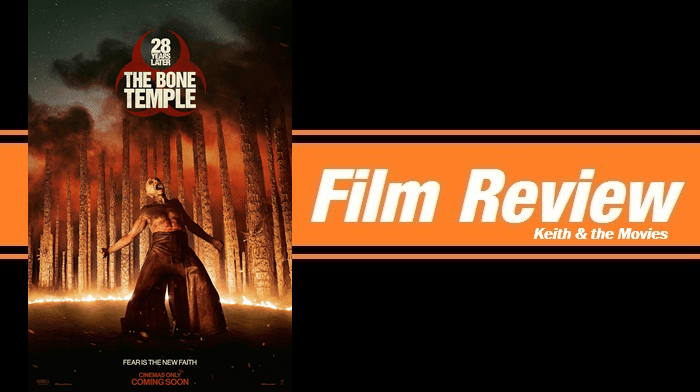
Last year’s “28 Years Later” was Danny Boyle’s return to the bleak and harrowing zombie hellscape he first introduced with 2002’s “28 Days Later”. That world was further explored in 2007’s “28 Weeks Later” and then again in 2025. In the third film, Boyle and screenwriter Alex Garland picked things up 28 years after the second outbreak of the Rage Virus, adding a host of new characters and just as many old references that fans of the apocalyptic horror franchise enjoyed.
My issues with “28 Years Later” wasn’t with its presentation. Boyle nailed the grim representation of a collapsed society and the horrors that exist within its remnants. Instead, the problems were with the lack of cohesion in the rushed final act. Even worse was its preposterous and tone-shattering finish that did more to hurt the film than to set the table for another one.
But some of the best sequels have made the movie that came before it better. Unfortunately that’s not the case with “28 Years Later: The Bone Temple”. Nia DaCosta takes over directing duties and she proves to have her finger firmly on the pulse of this dark and forbidding world. Unfortunately she’s repeatedly undermined by Garland’s script which keeps her handcuffed to two competing storylines that inevitably merge but not in the most satisfying of ways.
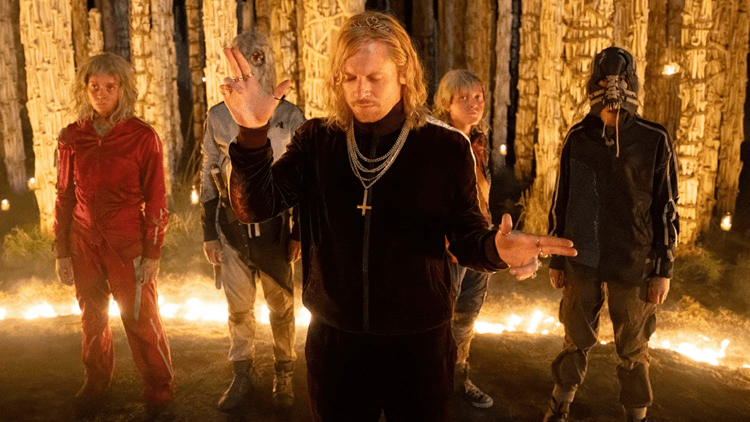
The previous film ends with 12-year-old Spike (Alfie Williams) being ‘rescued’ by a pack of blonde wigged tracksuit satanists with Power Ranger agility. This film picks up their story as the group’s maniacal leader, Sir Lord Jimmy Crystal (Jack O’Connell) is forcing Spike to fight one of his lackeys to the death, all to earn a spot in his cult. Spike manages to survive and reluctantly joins their ranks. He quickly learns these are violently deranged people who gruesomely torture and “sacrifice” anyone they come across.
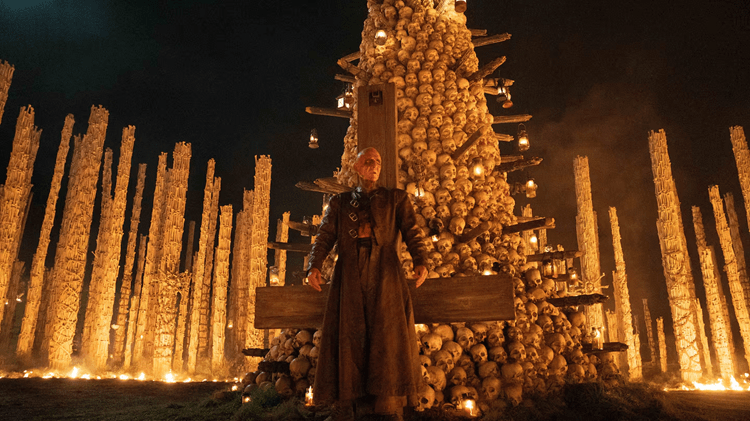
Elsewhere, we get more of the previous film’s most fascinating character, Dr. Ian Kelson (Ralph Fiennes), a reclusive former doctor who had dedicated his life to memorializing the victims of the virus through his haunting Bone Temple. But now, when not jamming out to his Duran Duran records, he’s getting high on morphine with an area Alpha he’s named Samson (Chi Lewis-Parry). This is the same Alpha that was ripping heads off of people in the previous movie. Now he’s the doctor’s test subject and hangout buddy.
Garland’s script bounces back and forth between these two arcs, with neither feeling all that significant to the overall story. Spike’s parade with The Jimmy’s is especially confounding. They’re basically psychopathic killers driven by a blind allegiance to a clownish charlatan. And frankly, they aren’t all that interesting. Even worse, Spike often gets lost in cult’s chaos, leaving his coming-of-age drama stuck on the back burner.
As for DaCosta, she is given the unenviable task of turning Garland’s tuneless story into something meaningful and cohesive. One of her biggest challenges is sorting through the tonal confusion that plagues the majority of the film. Things can switch from grimly serious to comically absurd in a matter of seconds. DaCosta also has to find a way to keep us from asking some glaringly obvious questions. For example, what about the community of survivors on Lindisfarne? What about Spike’s father who was last seen painfully screaming his son’s name. Apparently he wasn’t anguished enough to go out searching.
“The Bone Temple” also seems to forget about the infected (minus Samson). They aren’t the same terrifying threats who kept us on the edges of our seats during the last film. Gone is the nerve-shredding tension of simply walking through the forest. Instead the infected mainly pop up whenever the story needs them to. And when they do, DaCosta simply can’t quite match Boyle’s intensely kinetic style of framing and shooting the action.
Thematically, “The Bone Temple” touches on inhumanity and the nature of evil while single-mindedly skewering the concept of faith. But like much in the movie, its themes are so confined that they don’t really go anywhere. Similarly, the two parallel stories feel restricted to different worlds until finally intersecting at a strangely opportune juncture. We’re left with the sense that very little in the film is moving towards a particular narrative goal. The tonal hopscotch, numbing sadism, and off-balance storytelling only make things worse.
VERDICT – 2 STARS

 Keith & the Movies
So disappointed they flubbed it. A missed opportunity to build the franchise honorably 😦
It’s a movie full of bizarre choices. I’m honestly baffled by some of the directions it takes.
LA LA LA LA LA LA I refuse to dull my hype LOL
Okay, I’ll bring it down a bit but I’m still so excited for this. I wasn’t expecting to be so moved by the last one.
LOL. Most people really like it so you should be good. For me it lacked the frights and the heart of the last movie. And it seems strangely disjointed compared to the other three movies.