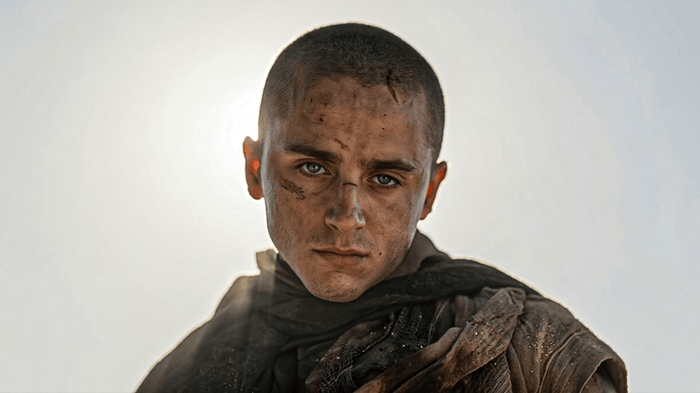
I know there is a ton of excitement from Marvel fans for the mega-blockbuster “Avengers: Doomsday” which hits theaters on December 18th. But it’s not the only big release coming out that day. Denis Villeneuve’s “Dune: Part Three” brings his incredible adaptation of Frank Herbert’s classic space opera to its conclusion. And what better way to ramp up our excitement even more than with an epic final trailer for an all-time epic sci-fi trilogy.
Set nearly twenty years after the events of Part Two, the final film sees Paul Atreides reigning as the ruthless Emperor after seizing control of the Imperium. But the brutality of his rule has far-reaching consequences and now Paul is forced to deal with the fallout. The new trailer gives us the best sense yet of what we can expect. The action looks intense, the set pieces look magnificent, and it certainly packs a stellar cast that includes Zendaya, Jason Momoa, Florence Pugh, Robert Pattinson, Anya Taylor-Joy, Javier Bardem, and Rebecca Ferguson. I hate to overuse the word, but this truly looks epic.
“Dune: Part Three” soars into theaters December 18th. Check out the final trailer below and let me know if you’ll be seeing it or taking a pass.
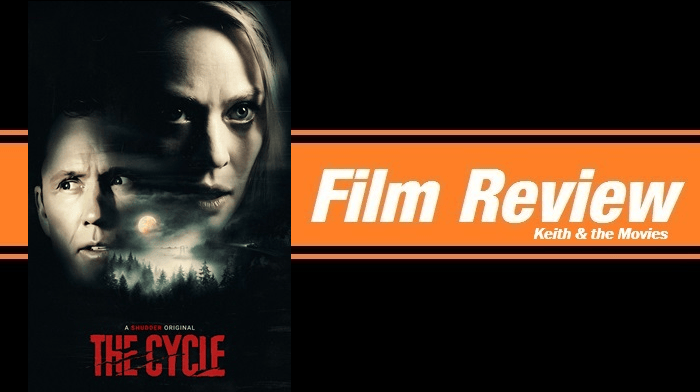
Shudder’s “The Cycle” easily falls among the more surprising horror offerings of 2026. Directed, co-written, and edited by Jordan Downey, this dark and atmospheric genre hybrid tells an inspired story while uniquely blending its inspirations in several unexpected ways. And no matter how much we think we know where it’s going, the movie always stays a few steps ahead of us. That alone is refreshing, especially in a genre where that’s often not the case.
It’s not that “The Cycle” is doing something that has never been done. It just does what it does exceptionally well. Downey keeps his cards well hidden, feeding his audience morsels of information while keeping his twisted mystery firmly intact. And when it’s time to pull back the curtain, Downey does so with gusto, unleashing a ferocious and unflinching payoff worthy of the strong and patient buildup.
Image Courtesy of Shudder
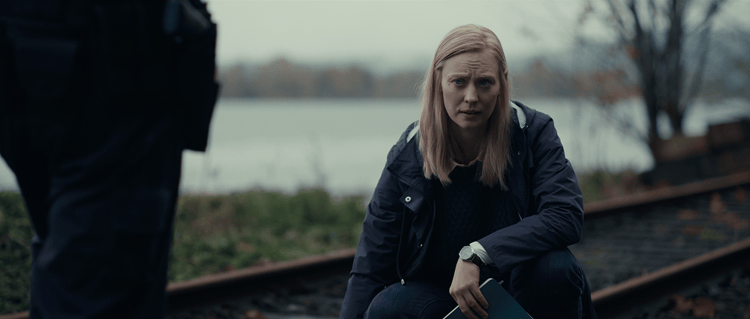
For most of its runtime, “The Cycle” is simultaneously a gritty crime procedural and a macabre horror mystery. Think along the lines of Fincher’s “Se7en” meets “The X-Files”. A terrific Deborah Ann Woll plays Dr. Meg Garland, a forensic anthropologist who oversees “The Body Farm”. It’s a place where she teaches FBI agents how human decomposition can aid in solving cases. It’s that expertise that draws Meg into a case unlike any other she’s taken on.
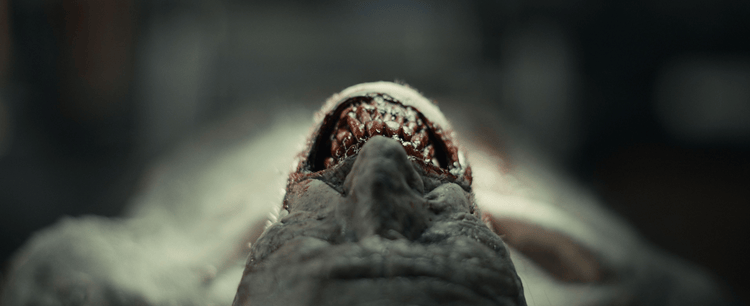
In the small coastal town of Lester Bay, the remains of a mother and her six-year-old daughter are found in their home. Their bodies had been savagely torn apart in a killing that resembles an animal attack. An even bigger mystery surrounds a third body found along some nearby railroad tracks. It’s a naked, emaciated, yet partially preserved corpse of a male who has been dead much longer than the mother and daughter. Even stranger, DNA reveals the body belongs to Meg’s estranged father.
Lester Bay’s police chief Ian (Will Hochman) informs Meg about their findings and invites her to help with their investigation. She initially declines, wanting nothing to do with the man who abandoned his family some 36 years earlier. But she eventually joins Ian and his father, Lt. Marks (Jeffrey Donovan) on a case full of dark revelations and grim discoveries that defies forensics and pathology.
Image Courtesy of Shudder
I’m hesitant to say much more because a big part of enjoying “The Cycle” is discovering how things unfold. This truly is a case of “the less you know, the better your experience will be“, and Downey has a lot of fun slow-feeding us the mystery. He once again teams with Kevin Stewart who serves as the film’s co-writer and cinematographer. In 2018 the pair collaborated on the dark fantasy horror indie “The Head Hunter” (do see it if you haven’t). While it’s a much different movie than “The Cycle”, both see Downey and Stewart taking familiar ideas in some unfamiliar directions.
Once we reach the third act, the story’s slow simmer turns to a violent boil as Downey finally shows all his cards. The mystery unfolds with an audacious twist that will fully satisfy those able to steer clear of spoilers. It also comes with a healthy diet of blood and gore that’s realized through the kind of old-school practical effects that would make the great Tom Savini proud. It’s a fitting finish to a movie that features an engaging mystery with a surprising emotional core and a go-for-the-jugular payoff that delivers in spades for horror fans. And all from a filmmaker with a genre-bending vision and the cinematic knowhow to pull it off.
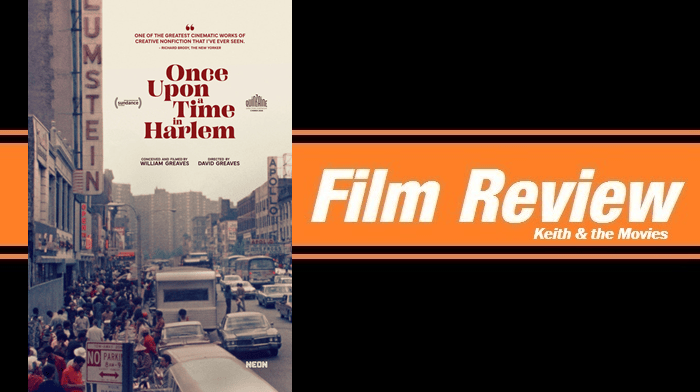
So far 2016 has been a fascinating year for documentaries. And while one prominent film is getting most of the attention, energy, and chatter, it’s hard to believe there will be a better documentary this year than the sublime “Once Upon a Time in Harlem”. Shot in 1972 by filmmaker William Greaves, the movie is a collection of footage gathered during a party for surviving participants in the Harlem Renaissance. And I was enthralled from the very start.
The Harlem Renaissance was an explosion of artistry and intellectualism born out of the African American experience. It was a movement during the 1920s and 1930s that saw the black community taking control of their stories and expressing them through visual art, music, literature, journalism, and activism. For many it was an awakening that laid the groundwork for major cultural events to come. And Harlem was the epicenter.
Image Courtesy of Neon
In August of 1972, documentarian William Greaves sent out invitations to a cocktail party at the home of legendary composer Duke Ellington. His goal was to gather the living luminaries of the Harlem Renaissance for an afternoon of reminiscing, reflection, and perhaps even a little debate. Greaves and his small crew would be there to capture it all on film. Sadly, William Greaves died in 2014 before ever finishing the project.
Twelve years after his death, William Greaves’ son David, who served as a cameraman during the 1972 gathering, revisited his father’s footage. With the help of his daughter Liani, David was able to see William’s vision brought to life in “Once Upon a Time in Harlem”. It’s a transfixing father-son collaboration that contextualizes a significant moment in American history. It’s also an illuminating and transporting cinematic experience that appeals to both mind and senses.
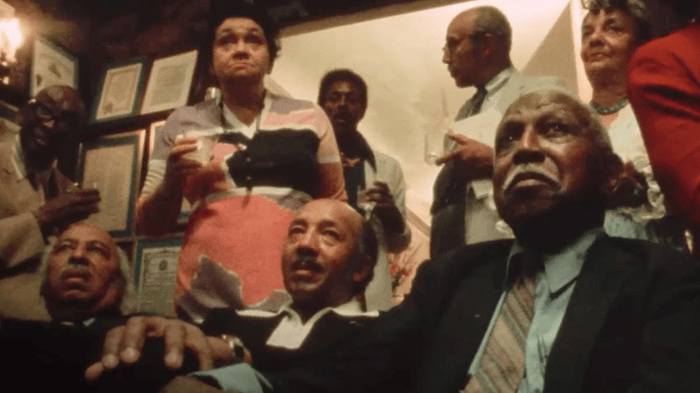
The film begins as a Who’s Who list of prominent figures from the Renaissance arrive at Ellington’s Harlem townhouse. Among the many distinguished guests are poet Arna Bontemps, painter Aaron Douglas, composer and pianist Eubie Blake, journalist George Schuyler, activist Louise Thompson Patterson, photographer James Van Der Zee, actor and founder of the Negro Actors Guild Leigh Whipper, librarian Regina Andrews, theatrical producer Irvin C. Miller, writer and painter Richard Bruce Nugent, prominent socialist, Richard B. Moore, historian John Henrik Clarke, and more.
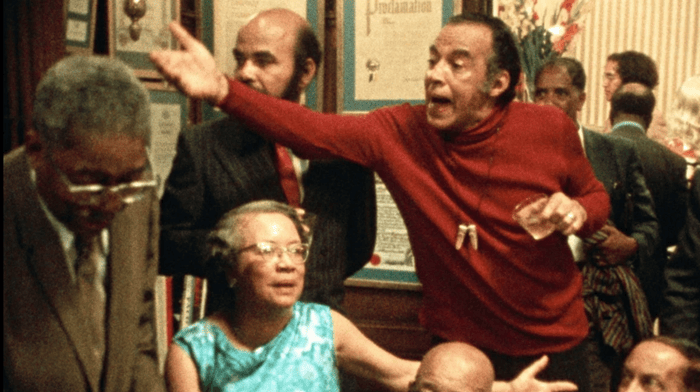
It’s very much a melding pot of thought, insight, and creativity. But the special ingredient that makes it so invigorating is the casual setting Greaves was able to create. It opens the door for much freer and livelier exchanges. The lack of restrictions add a level of comfort that immediately pays off. The guests waste no time telling old stories, sharing good and bad memories, and engaging in a few passionate yet respectful back-and-forths.
Image Courtesy of Neon
Another key strength lies in the film’s ability to make us feel as if we’re there, slipping from room to room, listening in on conversations and absorbing the laidback one-and-one interviews. What we witness is both compelling and eye-opening: painful recollections of the past, observations on the economic, political, and artistic development of Harlem, hearty disagreements on the positions of Marcus Garvey, and so much more.
Just the access to this unfiltered party footage would be enough to make “Once Upon a Time in Harlem” a must-watch. But Greaves also incorporates a number of archival photographs, stock images from newspapers, and more that add context and perspective. When considered together, the film becomes both an essential historical artifact and engrossing entertainment. Rarely has being a fly on the wall felt this enlightening.
For many of us, James Gunn’s cinematic spin on the DC Universe hasn’t gotten off to the most encouraging start. It kicked off with “Superman”, a frustrating and often baffling treatment of the brand’s iconic superhero. Next came the even worse “Supergirl”, which amplified the “Superman” movie’s worst tendencies while adding a few of its own. In fairness, I haven’t watched the DCU’s more recent project “Lanterns” which certainly has its fans. I’m just not interested in a potty-mouthed Green Lantern streaming series that rewrites so much of the characters’ history.
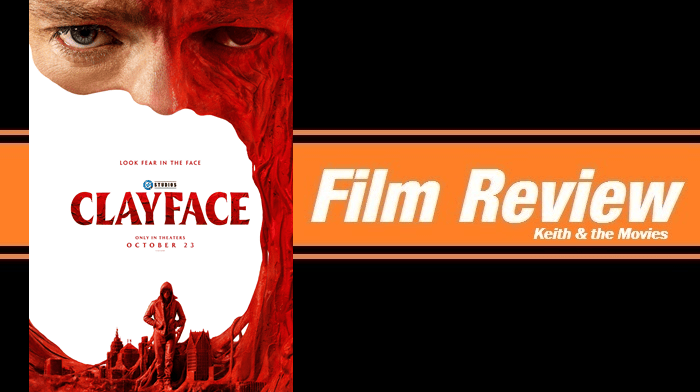
That brings us to “Clayface”, the third feature film in the wobbly GunnVerse, and to my surprise it’s easily the best DCU offering yet. Not bad for a second-tier villain in Batman’s rogues’ gallery. Directed by James Watkins, “Clayface” is a standalone origin story that includes no superhero appearances and has no end credits scene pointing to what’s next. It’s a refreshing reprieve from the normal franchise formula.
Image Courtesy of Warner Bros. Pictures
Clayface has had several different origins throughout the character’s 86-year existence. The original Clayface had no superpowers at all. Later he injected himself with a genetic compound. An even later version stumbled into a pool of radioactive protoplasm. For the movie, writers Mike Flanagan and Hossein Amini pull bits from those past origins while adding their own modern spin. But their biggest twist is in making this a body horror thriller that fully earns its R rating.
Tom Rhys Harries plays Matt Hagen, a rising Hollywood actor who gets the exciting news that he’s been nominated for an Academy Award. Matt and his childhood friend Corey (Joshua James) head to a Gotham nightclub to celebrate. After several drinks, he meets the sultry Mia (Joana Ribeiro) on the dance floor and the two hit it off. Little does Matt know, Mia is the girlfriend of crime boss Markos Szabo (David Dencik). But he learns quick after the two end up spending the night together.
The next morning they are awakened by a jealous Szabo who takes a knife and brutally carves up Matt’s million-dollar face. His career comes to a screeching halt after numerous surgeries leave him horribly disfigured. Meanwhile Szabo uses his connections to start a smear campaign against Matt. Soon he’s dropped by his agent (Nancy Carroll), loses all his money to his corrupt business manager (Eddie Marsan), and is forced to move to the Gotham City slums.
Matt hears about Dr. Caitlyn Corr (Naomi Ackie), a nanotechnology pioneer on the verge of having her research shutdown after losing funding. Caitlyn has developed a groundbreaking treatment that uses nanites to heal damaged tissue. Matt pleads for her help, even volunteering to be her first human trial. She reluctantly agrees. After several carefully administered treatments, Matt fully recovers and quickly returns to the limelight. But when his face grotesquely droops during a red carpet event, he defies Caitlyn and injects himself with more nanites which grant him powers he can’t control.
Image Courtesy of Warner Bros. Pictures
By being unshackled to franchise rules, Watkins is given the rare freedom to take an established comic book property and create something uniquely its own. He doesn’t follow any specific blueprint and he’s not worried about meeting expectations. As a result, “Clayface” has the feel of something fairly original. That originality can be seen in the cool goopy effects and splashes of imaginative gore that aren’t for the squeamish. Even the predictable revenge angle has a freshness about it.
Harries delivers what’s needed from a tormented soul. The reliable Ackie brings credibility and a grounded presence. And Max Minghella fits nicely as Caitlyn’s fiancée / Gotham homicide detective who’s following a trail of murders that may or may not be tied to our puttied protagonist. Watkins ably handles the rest. There are moments where I wish he pushed things a little further. Still, there is no shortage of grisly shocks and psychological bite that gives this wickedly fun and surprising oddity its pulse. I wasn’t expecting to say this, but “Clayface” is the jolt the DCU needed.
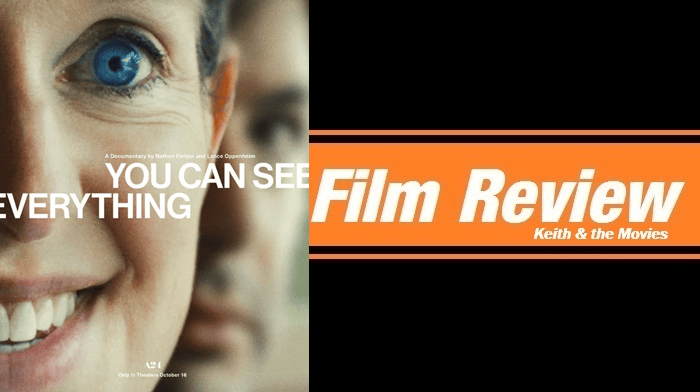
Full admission, I knew nothing about businesswoman and now convicted felon Elizabeth Holmes. It took the help of a critic friend and Wikipedia to give me an idea of who she was, what she had done, and why everyone is buzzing about the new documentary, “You Can See Everything”. I may not be as wildly enthusiastic about the film as most. But there’s no denying co-directors Nathan Fielder and Lance Oppenheim have made something audacious and unique.
For those who don’t know, Elizabeth Holmes was the founder and CEO of the health tech company Theranos. She created a compact medical device capable of running up to 1,000 tests from a drop of blood, quickly, cheaply, and accurately. At least that’s what was claimed. Holmes was able to raise over $700 million from private investors for her heralded invention. By 2015 she had been named America’s youngest and wealthiest self-made female billionaire by Forbes magazine.
But her “iPod of healthcare” was soon revealed to be unreliable with an inordinately high failure rate. Holmes was complicit in concealing the truth from investors and regulators, even going as far as staging phony demonstrations to counter skeptics. But as both journalists and federal investigators dug deeper, Theranos was exposed and Holmes was found guilty of fraud and conspiracy. In 2022 she was sentenced to eleven years in federal prison.
Image Courtesy of A24
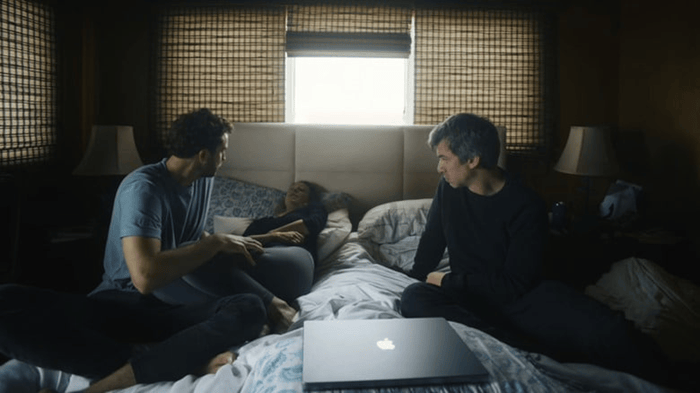
“You Can See Everything” picks up 34 days before Holmes is set to report for her prison sentence. She and her partner, hotel heir Billy Evans, invited Fielder, Oppenheim, and their film crew to live with them and their two children in their rented Del Mar, California beach house. The couple’s idea was to have their lives documented by offering “radical transparency” through unprecedented intimate access. It’s a truly bizarre scenario, made so by the strange motives of the subjects and some equally peculiar choices by the filmmakers.
Fielder takes on the role as interrogator and prodder while Oppenheim stays behind the camera. Fielder’s onscreen presence both helps and hinders the film. He engages in some fascinating conversations with Elizabeth along with some illuminating exchanges with Billy. But Fielder can also come across as a leering creep, peeping around corners and gawking in uncomfortable ways (I’m still trying to understand the random inclusion of Fielder and a cameraman shooting a fully nude Billy in the shower).
It doesn’t take long to see who the film’s true villain is. They make it obvious early on. We see Billy taking more control over Elizabeth and the conversations Fielder attempts to have with her. Plus he routinely runs interference whenever he thinks too much is being revealed. He only gets slimier in the second half. As for Elizabeth, Fielder and company don’t necessarily absolve her of her sins. But they find numerous ways of pointing fingers elsewhere. It’s a far more sympathetic portrayal than the real-life facts might allow.
Throughout the first half we get treated to several memorable moments. Some are subtle yet strikingly revealing, such as a debate on semantics and bickering over Wi-Fi. Others stand out more, like Billy’s aggressive push for Theranos 2.0, a back-and-forth over the famous “Who’s On First” bit from Abbott and Costello, and a scene where Fielder shows the couple Amanda Seyfried’s miniseries about Holmes called “The Dropout”.
Image Courtesy of A24
But the movie takes an odd turn around the midway mark as Elizabeth heads to prison and Fielder’s attention turns towards Billy and himself. You could argue that Fielder makes himself the main character of the second half which leaves us questioning his overall intent. Further blurring the film’s credibility is its meta twist which comes across as more indulgent than necessary. It gets even more bizarre when Seyfried shows up, joining Fielder as detectives attempting to solve a psychological mystery.
The second half is further obfuscated by Fielder and Seyfried engaging in a series of unnecessary reenactments of conversations the directors weren’t able to get on camera. They add a degree of experimental panache. But they mostly protract the film’s already plump three-hour runtime. Not all of Seyfried’s scenes are frivolous. She poses some intriguing questions about Elizabeth’s relationship with Billy. And she inadvertently finds herself on both sides of an ongoing conversation about creative license.
By the end of “You Can See Everything”, I found myself both compelled and confounded. In many ways it’s a tale of two halves. The first is a mostly daring and provocative probe smothered in psychological gamesmanship and overly aggressive closeups. The second is an exercise in egocentric filmmaking that both indulges and exposes itself. A case could easily be made that it didn’t need to be three hours, and by the end we haven’t learned much new. At the same time, the movie remains a fascinating and at times riveting watch. And with an enormous undertaking like this, that’s saying something.
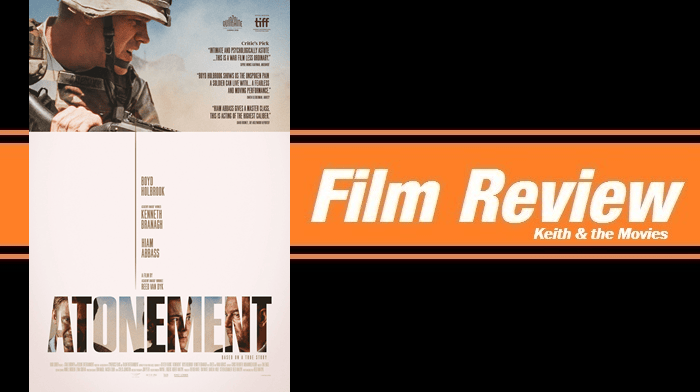
The emotionally charged war drama “Atonement” takes three unique perspectives on one violent tragedy and weaves them into a story that shows there are no easy paths to absolution. Three compelling central characters, portrayed through three equally compelling performances, explore the collateral damage of war, which isn’t something left on the battlefield. Instead, the scars are often permanent and the effects can impact generations.
This is the kind of weighty subject matter at the core of “Atonement”, a film based on a 2012 New Yorker article of the same name by Dexter Filkins. It’s the first feature for writer-director Reed Van Dyk, although you wouldn’t know by this overall impressive debut. His grounded and layered storytelling matches well with his sharp visual eye and keen instincts. And it helps to have three central performances that cut to the hearts of the characters and the devastating calamity that will forever link them.
Image Courtesy of Kino Lorber
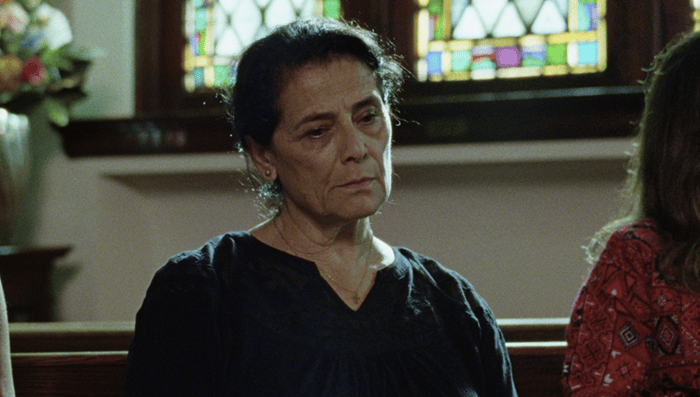
Opening his film in 2003 Iraq, Van Dyk begins by introducing us to the Khachaturians, a local Iraqi family going about their routine despite the tightening tensions all around them. Three generations fill their spirited home in Baghdad, including Mariam (Hiam Abbass), the stabilizing force in this tight-knit family. But after an explosion goes off near their home, the family loads up their cars and heads across town to safety. Or so they believe.
Elsewhere in the city, Second Lieutenant Lou D’Alessandro (Boyd Holbrook) and his company of US Marines are called to offer support for a squad taking fire near a Baghdad police station. While on a rooftop exchanging gunfire with the Iraqi militia, Lou sees two cars approaching a roundabout. The militia were known for hijacking vehicles, so his company’s orders are to fire on any vehicle that refuses to stop. So they do. But instead of the enemy, it’s the frightened Khachaturian family who accidentally drive into the chaos. As a result, Mariam’s husband and two adult sons are mistakenly shot and killed.
Image Courtesy of Kino Lorber
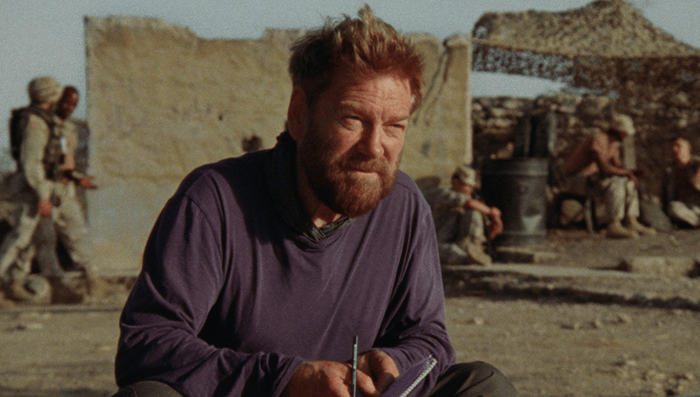
The third person in this uniquely connected trio is Michael Reid (Kenneth Branagh), a New York Times war reporter stationed in Baghdad. He gets word about the tragedy and sets out to interview the family and soldiers involved. His findings inspire an article that will eventually become a crucial narrative device within the storytelling. While Holbrook and Abbass are the emotional centerpieces, the ever reliable Branagh could be considered the glue that holds the story together.
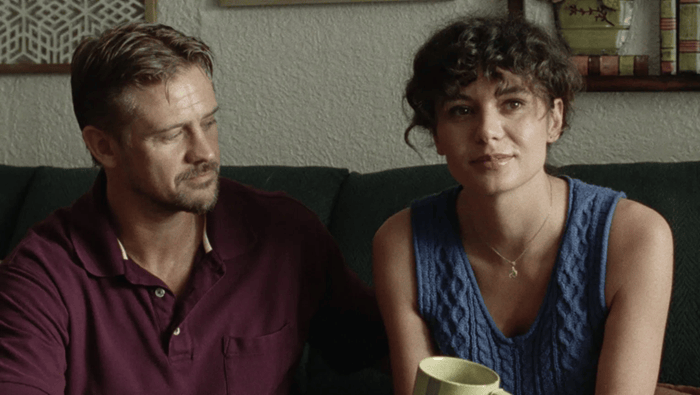
Ten years after the tragedy, Lou is living in San Diego where he operates heavy machinery by day and works event security at night, all while attempting to get into law school. But his war-torn psyche keeps pulling him back to that day in Baghdad. After coming across the article, Lou reaches out to Michael to see if he could broker a meeting with Mariam who now lives in Glendale with her daughter Nora (Iraqi-Dutch actress Gheed) and Nora’s husband Asaad (Majd Eid).
Image Courtesy of Kino Lorber
Van Dyk’s buildup is superb, remaining intensely character focused throughout. It begins with the crushing opening, where his staging of the violence is centered on emphasizing the people involved rather than thrilling the audience. It’s even more affecting ten years later. Holbrook offers a powerful and moving portrayal of a restless veteran tormented by guilt. Abbass works in a different tenor but is equally effective. She gives a quiet yet unflinching performance, masterfully conveying the toll that years of grief can take. Yet her Mariam also possesses a near divine measure of grace. It leads to an internal conflict that Abbass navigates with a striking precision.
With “Atonement”, Van Dyk doesn’t just tackle tough themes. He poses meaningful questions and trusts his audience to engage with them. Never is this seen more than in the film’s understated yet powerfully allegorical final shot. It potently punctuates a movie of such rich humanity and honest emotion. One that doesn’t shy away from the reality of its subject matter. And one driven by three awards-worthy performances and an exciting first-time director who has made one of the year’s best films.