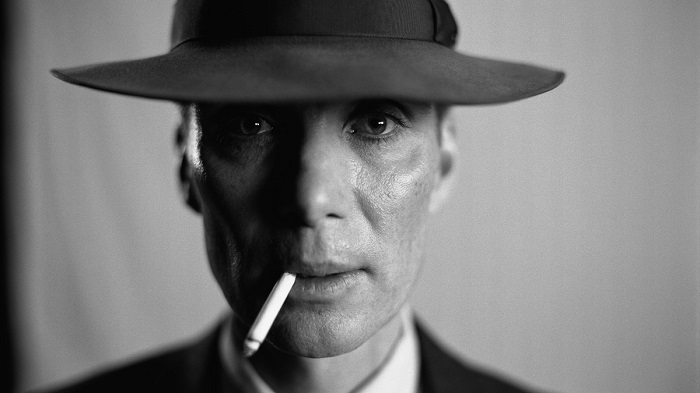
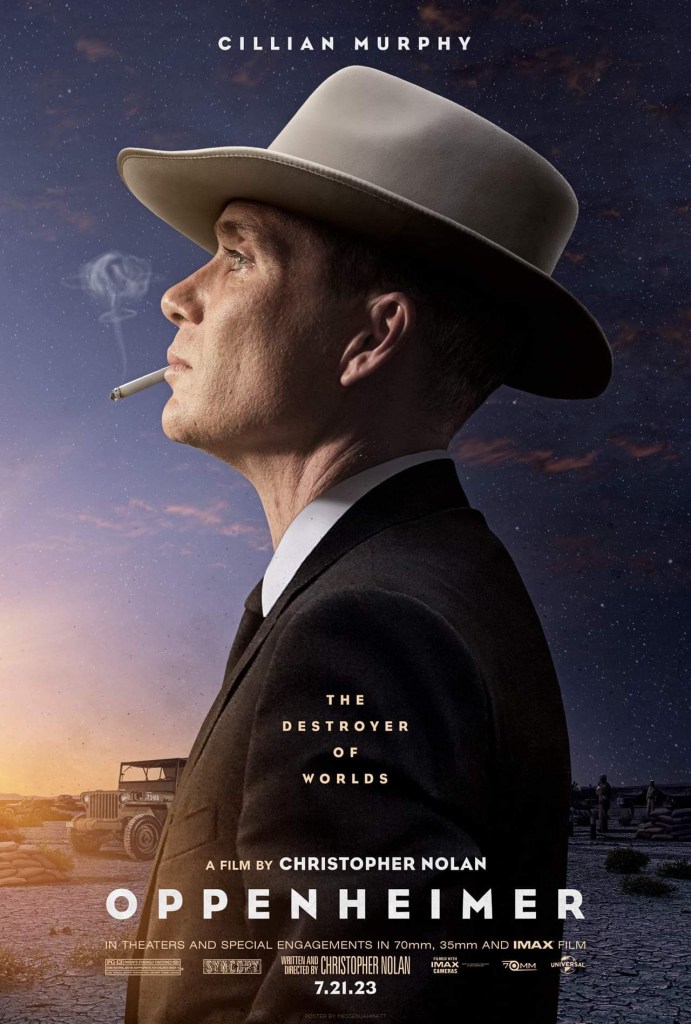
Anyone who reads this site regularly knows I’m a huge Christopher Nolan fan. Any Nolan film is an event for me. His next film sounds considerably different than his past work but just as intriguing. It’s “Oppenheimer”, a biographical drama that sees Cillian Murphy playing the “father of the atomic bomb” J. Robert Oppenheimer. Sporting an absolutely star-studded cast, Nolan’s “Oppenheimer” should be phenomenal. And now we have the striking first poster. Check it out.
DIRECTOR – Christopher Nolan
WRITER – Christopher Nolan
STARRING – Cillian Murphy, Emily Blunt, Matt Damon, Florence Pugh, Kenneth Branagh, Robert Downey, Jr, Rami Malek, Josh Hartnett, Benny Safdie, Dane DeHaan, Matthew Modine, Jack Quaid, Alden Ehrenreich
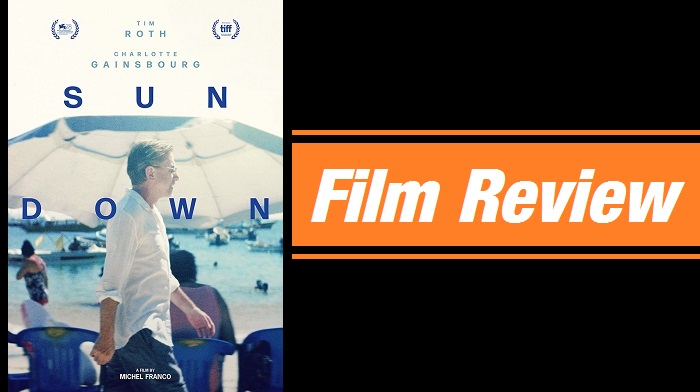
“Sundown” from writer-director Michel Franco opens with a shot of several fish on the deck of a boat. As they make their last gasps for oxygen, a man stares down at them with a solemn melancholy gaze. It’s a scene rich with meaning that over time will become clearer and clearer. And while the metaphor is easy to grasp, the details surrounding it are far more opaque.
With “Sundown”, Franco has crafted a shrewd and methodical story that’s as much of a puzzle as it is a drama. Information does come, but slowly and only when Franco sees fit to share it. That gives him plenty of room to challenge his audience. As things begin to happen, we’re lured into jumping to our own conclusions and making our own judgments. And that’s when Franco has us where he wants us.
The man in the opening scene is Neil Bennett and he’s played by a perfectly calibrated Tim Roth. Neil, a woman named Alice (Charlotte Gainsbourg) and two college-aged kids, Colin (Samuel Bottomley) and Alexa (Albertine Kotting McMillan), are vacating at a posh high-end resort in Acapulco. Franco deliberately holds back details, allowing us to piece together what we can through the characters and their interactions. They’re clearly wealthy as evident by their luxury accommodations, servers at every turn, and steak dinners costing a car payment apiece.
Image Courtesy of Bleeker Street
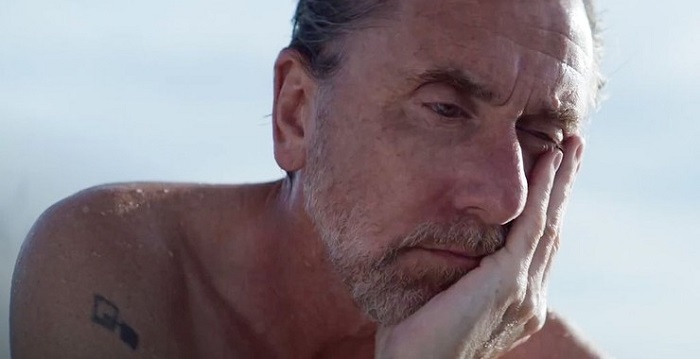
Another thing is clear – Neil is troubled. Despite the swims in the beautiful turquoise waters, the sunbathing on a private beach, and being treated to the best cuisine, Neil seems detached, often lost in his thoughts and staring into oblivion. What’s wrong with him? Do Alice and the kids know? Is it due to something we’ve yet to learn or is it just a mark of their relationship? Franco eventually sheds light on it all, but only after his story takes some unexpected turns.
Their vacation abruptly ends after Alice gets a call from London that her mother is being rushed to a hospital. The four immediately pack and head to the airport, but once there, Neil informs his family he forgot his passport at the resort. He sends a distraught Alice and the kids ahead insisting he’ll catch the next flight. But rather than going back to the resort, Neil takes a cab to a cheap beachside hotel.
While Alice thinks he’s working with the consulate to get back to London, Neil actually spends the next several days slouched in a plastic chair on a crowded beach surrounded by locals, downing buckets of beer and staring up into the sun. His behavior becomes even more revolting once we learn Alice’s mother has died and she needs his help with with funeral arrangements. Instead of heading to London, Neil stops taking Alice’s calls altogether.
Image Courtesy of Bleeker Street
So what’s going on with this guy? Is it a midlife crisis? Is it deep depression or existential dread? Is he a bad person or is it something deeper than that? Franco’s deliberate and calculated approach to answering to those questions are what make Neil’s story so brutally compelling. And Roth, with his droopy oversized shirts, long shorts and sandals, gives a brilliantly cryptic performance that keeps his character’s emotions so tightly locked inside that he’s nearly impossible to read.
The only glimpses of potential happiness in Neil comes when he meets a local shop owner Berenice (Iazua Larios). The two hit it off and begin a relationship which raises even more concerns about this man. Everything seems to be careening towards a not-so-happy ending, but to get there Franco takes his story places you’ll never expect. Along the way he explores themes often found in his films – class, family dysfunction, violence, etc.
“Sundown” had its world premiere last September at Venice and it’s finally set for its US release (via Bleeker Street). It packs a lot into its lean 83 minutes. The story is bleak and at times appalling, but Franco never casts judgement on Neil or his actions. He leaves that to us. But he does so in such a crafty way that figuring things out and reaching our own conclusions is much of what makes the film so effective. “Sundown” is now showing in select cities.
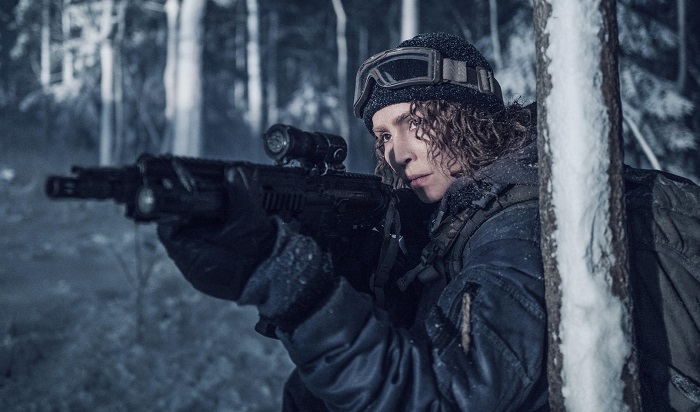
Ok, so don’t let the wacky sounding title fool you. “Black Crab” is a Swedish action thriller coming to Netflix next month and the first trailer does a great job selling the film. It’s based on a novel of the same name by Jerker Verdborg and it thrusts its audience into a harsh and dangerous post-apocalyptic world. Noomi Rapace stars and Adam Berg directs this movie that could turn into a surprise hit for the streaming giant.
Rapace plays Caroline, one of six soldiers sent on a daring covert mission across a frozen archipelago. Their mission is to carry a mysterious package to an unknown party waiting on the other side. But for Caroline, it’s about something else entirely – something much more personal. As they make the trek, the team encounters countless threats from both nature and man. The snippets we get from the trailer look incredible, and it seems like Berg is really leaning on his perilous setting. I can’t wait to see where this one goes.
“Black Crab” premieres March 18th on Netflix. Check out the trailer below and let me know if you’ll be seeing it or taking a pass.
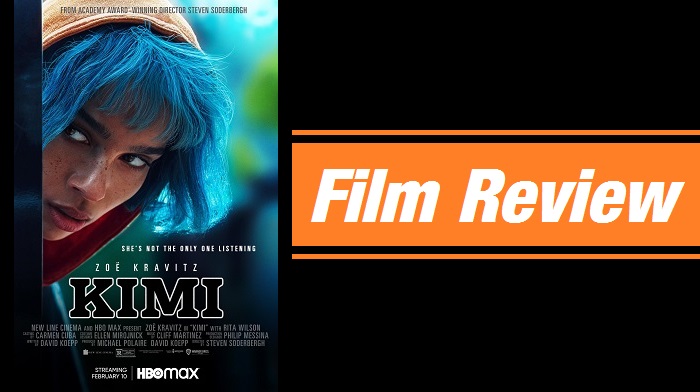
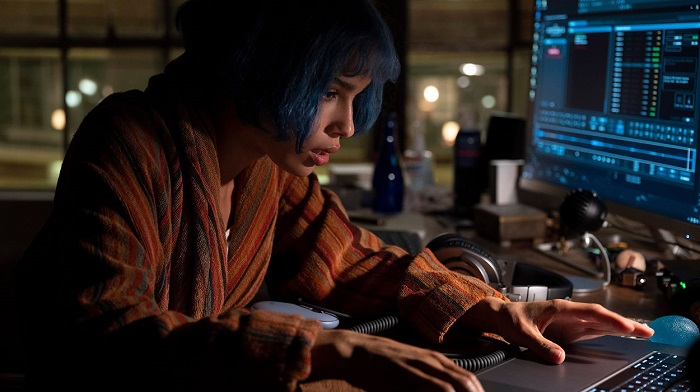
In “Kimi”, the new pandemic-era tech thriller from Steven Soderbergh, Zoë Kravitz plays Angela Childs, an employee of a Seattle tech company called Amygdala. She works from home as a voice stream interpreter, monitoring data streams recorded by the company’s premiere device Kimi. Kimi is a smart speaker similar to Amazon’s Alexa. But this one uses human monitoring to better tune the devices with their owners. It’s an understandably controversial practice that has put the company’s CEO Bradley Hasling (Derek DelGaudio) on the defensive.
Angela suffers from agoraphobia and anxiety which was only made worse by the COVID-19 lockdown. Now she stays holed up in her apartment listening to her streams and watching the people in the apartment building across the street. She’s fond of a neighbor named Terry (Byron Bowers), but she can’t even bring herself to step outside and meet him at a nearby food truck much less go out on a date.
Image Courtesy of HBO Max
All of that sets the table for Soderbergh’s latest, his third consecutive movie to release straight to streaming on HBO Max. The script is by screenwriter David Koepp whose career is littered with some big hits and some big misses. Here Koepp keeps a tight focus, putting together a clever and engaging story that’s driven by a terrific lead performance from Kravitz. Meanwhile Soderbergh brings his usual technique and sense of style that fans of his have come to expect.
The story really kicks into gear after Angela overhears a potential violent crime on one of her data streams. She goes through the proper channels and tries to report it to her bosses. But with the company set to hold an initial public offering, a huge scandal could cost Hasling millions of dollars. So upper management is in no rush to draw unwanted attention. But Angela digs deeper, and with the help of her Romanian tech colleague Darius (Alex Dobrenko), she uncovers something that Amygdala will go to any length to keep hidden.
The movie has two very different halves, but they come together seamlessly under Soderbergh’s direction. The first half is very much a character drama, and it puts a heavy focus on Angela and her struggles. Soderbergh and Kravitz do a good job in these early scenes of defining Angela for us. Soderbergh also does a great job making it feel very much like a film of our current time. Face masks, hand sanitizer, references to quarantine, etc. all will be looked at in years to come as a reminder of the challenges to normalcy all of us have faced.
Image Courtesy of HBO Max
The second half is when the film’s thriller element amps up. It’s also where we see most of Soderbergh’s creativity both with sound and the camera. There are certain tricks that really stand out and work well. Such as running certain scenes at a slightly higher speed or slyly tilting the camera an unusual angle. Both add a tense and disorienting feeling to specific moments in the story.
While its ending nearly comes unglued, Soderbergh keeps it together in large part due to the rooting interest we have in Angela. The film’s commitment to fully developing her into a character we care about pays dividends in the final 15 minutes as the movie goes full genre nuts. But I’d be lying if I didn’t admit to liking how this thing ends. It’s a fitting finish to a movie that immersed, entertained, and surprised me throughout. “Kimi” is now streaming on HBO Max.
Those darn creepy kids. I can’t even count how many movies have been made about spooky children. Certainly enough to be a horror sub-genre all their own. The latest is a catchy little chiller called “The Twin”. It comes from director Taneli Mustonen and it seems to have an interesting release model – in theaters, on VOD, and streaming exclusively on Shudder.
The often underrated Australian actress Teresa Palmer stars as the mother of twin boys. When one of the twins is killed in a tragic accident, she and her husband (Steven Cree) relocate with their surviving son to Finland to try and start a new life. But (as you might expect considering this is a horror movie) their retreat to the quiet and tranquil Finnish countryside turns into a nightmare. I’ll let you watch the trailer to see what I mean. I’m intrigued.
“The Twin” is set for release May 6th on the above spots. Check out the trailer below and let me know if you’ll be seeing it or taking a pass.
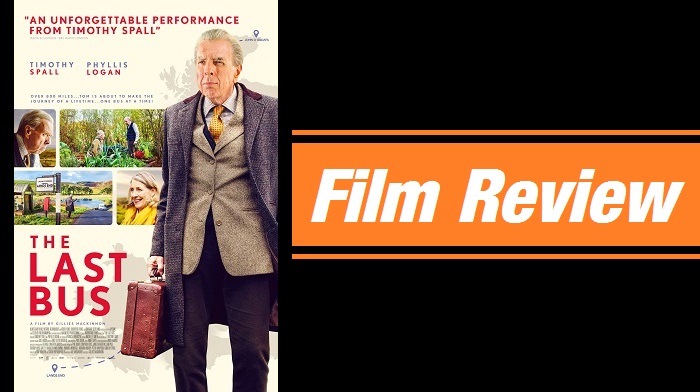
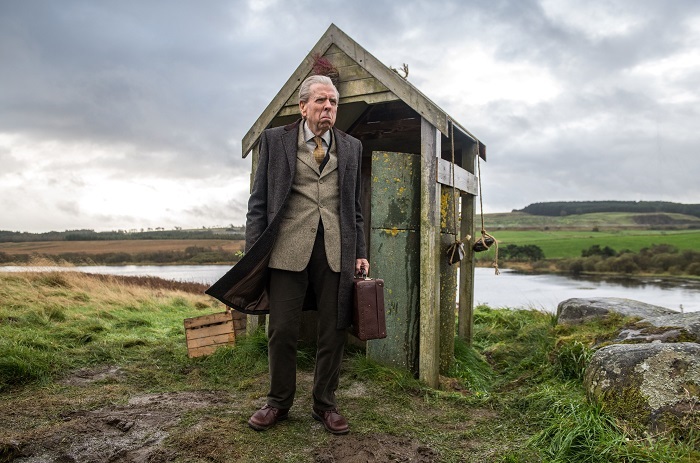
With “The Last Bus” Scottish director, writer, and accomplished painter Gillies MacKinnon gives us a warm-hearted road-trip movie that happens to be right up my alley. Driven by an outstanding lead performance from screen vet Timothy Spall, “The Last Bus” tells a simple and straightforward story. But that’s exactly what this tender and bittersweet drama needs to be.
Written by Joe Ainsworth, the story centers on an elderly man named Tom Harper (Spall) and most of what we learn about him is fed to us throughout his journey. What journey, you ask? The 838 mile trip from John O’Groats on the U.K.’s northeastern tip to Lands End, the mainland’s most southern point. And why is he making such a trip? Because of a pledge he made to his late wife Mary.
Image Courtesy of Samuel Goldwyn Films
“The Last Bus” is several things, but above all it’s a moving meditation on life, love, and the commitments we make to those closest to us. It’s also a beautiful reminder of the blessing of memories. Tom’s journey is intercut with well handled flashbacks to key moments with Mary – highs and lows that defined their loving marriage. They’re framed as memories brought to Tom’s mind during different stops on his meticulously planned pilgrimage.
With his free bus pass in hand, Tom moves from town to town, stopping at diners and B&Bs that he and Mary visited in their youth. Along the way he encounters an eclectic blend of strangers, often relying on their kindness to keep him going, especially as the arduous journey begins to take its toll. Yet he pushes on, determined to reach his destination. “I just want to keep my promise.”
Image Courtesy of Samuel Goldwyn Films
It turns out the more we learn about Tom and Mary’s backstory the more predictable the movie becomes. With each stop things become more obvious and the conclusion, though undeniably sweet, seems like an inevitability. There’s also a strange addition to the story as word of Tom’s travels gets around. He unknowingly becomes a social media sensation with radio stations broadcasting his progress as reported by people who catch a glimpse of him on the road. It’s an amusing and well-meaning twist, but one that feels tacked on and that doesn’t really lead anywhere.
Recently there have been several movies about widowers reckoning with grief and/or mortality. Some have taken serious looks at those themes while others have been more whimsical. “The Last Bus” falls somewhere in between. It certainly has the whimsy, but it also has its serious moments too. And much like all these movies, it has a big heart that finds its way into every scene. And even though you know where things are going, you’ll still want to stay on the bus and see it through till the end. Just like Tom. “The Last Bus” is now available on VOD.






 Keith & the Movies