REVIEW: “The Vigil” (2021)

VIGILposterr

In the upcoming indie chiller “The Vigil” a troubled young man encounters a malevolent spirit while watching over the body of deceased man from his Jewish community in Brooklyn. It’s a religious ritual where the person watching (called a shomer if male, a shomeret if female) both protects and comforts the deceased’s soul until time for burial. First time director Keith Thomas uses this Jewish practice as a catalyst in his small-scale supernatural horror film about the psychological ravages of oppressive guilt.

“The Vigil” premiered way back at the 2019 Toronto International Film Festival and has since released in a handful of markets. Now it has finally found its way to the States thanks to IFC Films. The troubled young man is Yakov (Dave Davis) who we first meet at a support group for struggling Jewish twenty-somethings who have left their Orthodox roots. He shares with the group his bad news of losing a job opportunity and of how his financial woes “having to choose between medication and meals“.

VIGIL2

Image Courtesy of IFC Films

As Yakov leaves the meeting he’s greeted by his former rabbi Reb Shulem (Menashe Lustig) who’s in a pickle. He needs Yakov to fill in as a shomer for the recently deceased Mr. Litvak, a Holocaust survivor who lost his entire family in the concentration camps. After the war Mr. Litvak started a new family but the scars from his last drove him to become a recluse, estranged from his children and grandchildren. For the last several years he had stayed shut-up inside his home with his frail dementia-addled wife. The shomer who was there left in a panic. Reb Shulem needs Yakov to cover the final five hours until morning when Mr. Litvak is set to be buried.

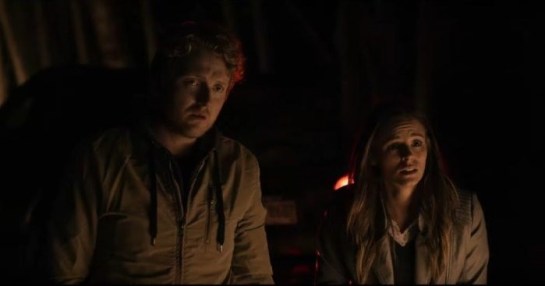
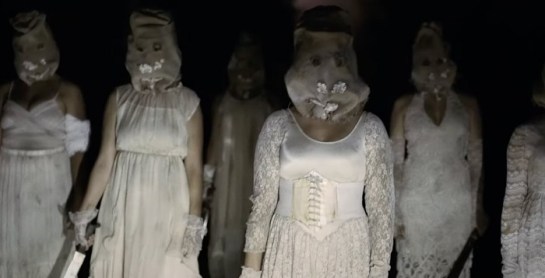
Cash-strapped and a bit desperate, Yakov works his payment up to $400 and heads to the Litvak home. Most of the film takes place in this shadowy townhouse which Thomas uses to great effect. Within moments of settling in, Yakov begins hearing noises upstairs where Mrs. Litvak (Lynn Cohen) is sleeping. The bumps, creaks and flickering lights are nothing compared to the horrifying visions that follow and intensify as the night goes on. Meanwhile Mr. Litvak’s body ominously lays in the living room covered in a sheet and bathed in an eerie off-white glow.

VIGIL1

Image Courtesy of IFC Films

Some of the film’s biggest strengths lies in Thomas’ ability to manage his unsettling tone while developing and sustaining a spooky atmosphere despite the constrictions of such a small setting. There is a time or two where he gives in and goes for some unneeded jump scares. They’re made worse by an uneven sound design that had me constantly adjusting the volume on my television. It’s as if in those few moments Thomas lost faith in his vision and went the cheap route. But thankfully those moments are few and the film’s deeper meaning quickly comes to the surface.

Over the course of the film we learn more about what drove Yakov to leave his Orthodox roots – a particular tragedy that has not only left him disillusioned but also burdened by guilt. The evil spirit in the house hones in on that weakness turning “The Vigil” into an unexpectedly compelling supernatural and psychological blend. And it’s all realized through a smart visual technique that centers on building its foreboding mood rather than leaning on blood-soaked special effects. So we end up with a crafty theme-conscious horror film with an interesting cultural perspective and mostly good instincts when it comes keeping its audience squirming. “The Vigil” premieres February 26th.

VERDICT – 3.5 STARS

3-5-stars

SEFCA Announces Our Award Winners for the 2020 Movie Year

As a proud member of the Southeastern Film Critics Association I’m excited to share our organization’s awards for the 2020 movie year as voted on by the body. Below you’ll find our official press release.

February 22, 2021 – The Southeastern Film Critics Association (SEFCA) has named Nomadland as its Best Film of 2020. Chloé Zhao’s intimate, elegiac drama about life in America after the Great Recession also earned the organization’s awards for Best Actress for Frances McDormand, Best Director and Best Adapted Screenplay for Zhao, and Best Cinematography for Joshua James Richards.

“Nomadland was an overwhelming favorite among our members in this year’s award season,” said SEFCA President Matt Goldberg. “It’s clear that Zhao’s thoughtful, deeply humanistic and heartfelt portrait of life at the fringes of our country connected with our members across the Southeast, and it is our pleasure to name it the Best Film of 2020.”

SEFCA also bestowed its Gene Wyatt Award, which goes to a film that best embodies the spirit of the South, to Lee Isaac Chung’s Minari, the story of a Korean immigrant family that moves to Arkansas so the patriarch can realize his dream of becoming a farmer. Like Nomadland, Minari was a clear favorite among our members, and there’s no question that Chung’s film is a moving and authentic portrait of our part of the country.

Due to the COVID-19 pandemic and changes made across various guilds and academies, SEFCA stretched its voting period from January 1, 2020 to February 15, 2021. Despite a trying and difficult year, we are proud of the membership for continuing their devotion to film criticism and celebrating the best that cinema has to offer.

Founded in 1992, the Southeastern Film Critics Association brings together a diverse coalition of critics across the Southeast to celebrate the year’s best films and craftsmanship in cinema. Winners from past years can be found at sefca.net.

Top 10 Films

1. Nomadland
2. Minari
3. The Trial of the Chicago 7
4. Promising Young Woman
5. Sound of Metal
6. One Night in Miami…
7. Da 5 Bloods
8. Ma Rainey’s Black Bottom
9. Soul
10. Mank

Best Actor

Winner: Chadwick Boseman, Ma Rainey’s Black Bottom
Runner-Up: Riz Ahmed, Sound of Metal

Best Actress

Winner: Frances McDormand, Nomadland
Runner-Up: Carey Mulligan, Promising Young Woman

Best Supporting Actor

Winner: Sacha Baron Cohen, The Trial of the Chicago 7
Runner-Up: Paul Raci, Sound of Metal

Best Supporting Actress

Winner: Youn Yuh-jung, Minari
Runner-Up: Maria Bakalova, Borat Subsequent Moviefilm

Best Ensemble

Winner: The Trial of the Chicago 7
Runner-Up: One Night in Miami…

Best Director

Winner: Chloé Zhao, Nomadland
Runner-Up: Regina King, One Night in Miami…

Best Original Screenplay

Winner: Lee Isaac Chung, Minari
Runner-Up: Emerald Fennell, Promising Young Woman

Best Adapted Screenplay

Winner: Chloé Zhao, Nomadland
Runner-Up: Kemp Powers, One Night in Miami…

Best Documentary

Winner: Time
Runner-Up: Dick Johnson Is Dead

Best Foreign-Language Film

Winner: Another Round
Runner-Up: Bacurau

Best Animated Film

Winner: Soul
Runner-Up: Wolfwalkers

Best Cinematography

Winner: Joshua James Richards, Nomadland
Runner-Up: Erik Messerschmidt, Mank

The Gene Wyatt Award

Winner: Minari
Runner-Up: One Night in Miami…

First Glance: “Cruella”

cruella

Full disclosure: I’m not the most knowledgeable individual when it comes to Cruella de Vil or the beloved Disney animated classic “One Hundred and One Dalmatians”. But even I know Cruella is an iconic Disney villain. She’s a greedy, vain and demented London heiress who kidnaps puppies in order to harvest their fur. See! Utterly reprehensible. She’s also getting her own movie and after seeing its first trailer it’s hard to figure out what Disney is going for.

Emma Stone plays the infamous Cruella in what looks like an origin story of sorts. Stone sports the signature black-and-white head of hair fitting for the punk-rock 1970’s setting. The tone is what’s hard to grasp. The film looks to going for a “Joker” or “Birds of Prey” vibe but I can’t imagine Disney would ever push it that far. And will this be another attempt at making a ruthless villain sympathetic? I hope not. Whatever it is, “Cruella” is a big wait-and-see for me. I like Stone but too much is still up in the air for me to get excited for this one yet.

“Cruella” opens in theaters May 28th. Check out the trailer below and let me know if you’ll be seeing it or taking a pass.

REVIEW: “Blithe Spirit” (2021)

BLITHEposter

The new period British comedy “Blithe Spirit” has both the concept and the cast for a fun and hearty romp. The film stars Dan Stevens, Leslie Mann, Isla Fisher, and Judy Dench. It’s built on a delightfully wacky premise that would fit right in with the screwball comedies of old. Director Edward Hall along with the writing trio of Nick Moorcroft, Meg Leonard, and Piers Ashworth deliver bursts of farcical mayhem and maintain a subtly deranged comic energy. Yet throughout I kept thinking something was missing.

“Blithe Spirit” is based on Noël Coward’s 1941 play of the same name. It was first adapted for the big screen in a 1945 film starring Rex Harrison. This brisk and lightly entertaining version rides on the backs of its charismatic cast who bring out the best in material that isn’t always certain of the kind of movie it wants to be. It leaves us with a film that has its funny moments and is easy to digest, but lacks the flavor to stick with you once the end credits have rolled.

BLITHE1

Image Courtesy of IFC Films

The story is set in 1937 England and opens with an exasperated Charles Condomine (Stevens) staring at a blank page in his typewriter. Charles is an acclaimed crime novelist who has been hired to write the screenplay for an upcoming adaptation of one of his books. But a severe case of writer’s block has set in, something that his supportive yet quietly frustrated wife Ruth (Fisher) patiently puts up with. She gives him plenty of space in their lavish Art Deco estate to hammer out his words. She even tolerates him gazing at an old photo of his late wife Elvira in hopes that it might provide some kind of inspiration.

Finally Charles is struck with a new idea for a story, one inspired by a disastrous stage show he attends (and probably the amphetamines he’s been popping). He hires a medium and clairvoyant named Madame Arcati (Dench) to come to his home and conduct a private séance for the purpose of gathering material for his new story. Charles and Ruth along with their snobby upper-class chums George (Julian Rhind-Tutt) and Violet (Emilia Fox) snicker their way through Madame Arcati’s conjuring, brushing off the flickering lights and blown-open doors to a passing storm.

But once everyone is gone Charles finds out Madame Arcati has inadvertently summoned the spirit of Elvira (Leslie Mann) who we learn died seven years earlier in an equestrian accident. It turns out that only Charles can see and hear Elvira and she doesn’t take kindly to Ruth being in their house. It sets up a series of comic mischief and slapstick gags as two women on opposite sides of the astral plane battle for their husband’s affections. As for Charles, he wants to find a way to send Elvira back to wherever she came from. But he has second thoughts once his screenplay starts coming together with her help. The complications go without saying.

Hall keeps things pretty light, only teasing us with the devious black comedy that this could have been. There’s definitely the material for something equally wacky but more darkly funny. But those things are left for the what-could-have-been. Instead “Blithe Spirit” is content with a more playful approach, sneaking in some occasional innuendo and leaving the darker potential buried under the surface. It’s a shame really because even though what we get is breezy and easy to watch, the movie lacks an edge that it hints at but doesn’t embrace.

BLITHE2

Image Courtesy of IFC Films

It’s the performances that end up carrying the audience through. Stevens has a real knack for playing offbeat and slightly neurotic men. Here he once again shows off his comic chops, skittishly fluttering about in various states of distress. Some of the film’s funniest moments lean on his wild-eyed physicality. Fisher brings a needed charm to an otherwise constrained character. Mann is entertaining and does the best she can with Elvira who is in desperate need of more depth. Together the trio have a fun chemistry and play off each other well. Dench ends up being the odd person out. She gives a terrific performance but unfortunately her character seems disconnected at times and operating at a completely different temperature. It’s not Dench’s fault. It’s simply how the Madame Arcati is written. It’s as if she belongs in a much different movie.

“Blithe Spirit” isn’t without its charms and their are some laugh-out-loud moments of sly dialogue and slapstick humor that really work. But there’s still the feeling that the movie misses an opportunity to be more. The characters need more work which leaves the story in a weird place. On one hand it’s a knowingly silly and diverting comedy. On the other it lacks the vigor and go-for-it spirit to make it something memorable. “Blithe Spirit” opens today in select theaters and on VOD.

VERDICT- 2.5 STARS

2-5-stars

REVIEW: “Red Dot” (2021)

REDposter

There’s more than frigid weather and armed stalkers threatening a young couple in the tight and tense Swedish film “Red Dot” from director and co-writer Alain Darborg. Despite its familiar framing, “Red Dot” mixes ingredients from several genres to come up with its own unique flavor. It’s a run-for-your-life horror movie one minute and a gritty survival thriller the next. But when blended together the story has some heavy things to say about humanity and the world we live in.

The film is driven by two terrific lead performances. Nadja (Nanna Blondell) and David (Anastasios Soulis) are so in love when we first meet them. He has just graduated from engineering school and they’re about to move to Stockholm where she will finish medical school. But before they go David pops the big question and asks Nadja to marry him. She enthusiastically accepts and the two are ready to spend the rest of their lives together. “It all begins here“, David lovingly pledges.

RED1

Image Courtesy of Netflix

Jump ahead eighteen months and things have changed. Now married in Stockholm, David has a great job but works long hours and does nothing but lounge when he’s home. A frustrated Nadja resents that she’s left with all the housework on top of her studies. She’s also hiding a secret from her husband that adds to her stress. After five tests to be certain Nadja has learned she is pregnant. Normally that’s exciting news, but considering the state of their marriage she’s terrified.

Realizing they desperately need to rekindle their fire, David surprises Nadja with a romantic weekend getaway to snowy Northern Sweden. There they can focus on each other, do a little skiing, and camp out under the beautiful Northern Lights. The trip starts by hitting a lot of familiar notes. For example this isn’t the first time we’ve seen city folks venturing into wilderness and having a run-in with some backwoods locals. For David and Nadja it begins with two creepy-acting brothers at a gas station. Then an uncomfortable encounter with oddballs at a lodge. But everything gets on track and after a fun day outdoors they retire to their tent underneath the famed aurora borealis.

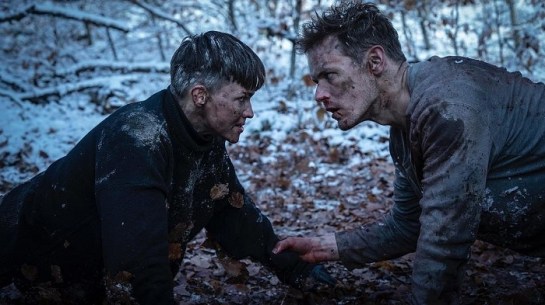
Then their night is interrupted when a bright red laser dot (hence the title) appears on the canvas of their tent, moving around like a laser pointer. But as you can probably guess, it’s no laser pointer. Within minutes the two are indeed running for their lives into the ice-cold darkness with bullets zipping by their heads from a shooter they can’t see. At the same time this is where the movie’s survival elements really kick in with Darborg utilizing his snowy environment extremely well. There are a couple of times where the sensation of freezing from the cold is vivid and palpable.

RED2

Image Courtesy of Netflix

As things play out the movie does struggle with an issue that many of these films do – questionable and head-scratching decisions. Yes, you can chalk some of it up to the anxiety of the moment and not thinking clearly. But more than once I caught myself asking things like “Why didn’t you grab the gun?” or yelling “Go back and get the snowmobile!”. But the story makes up for it with a twist-filled and slightly subversive final act that does some spirited things with the themes of making shallow judgements and running from your past.

By the end of “Red Dot” I found myself surprised by what it had become. What started as a familiar concept with a routine setup turned into something with a lot more meat on its bones. It fully embraces elements of its genre influences, but the film is built on some heady ideas that are brought together well in a visceral second half that completely throws out any notion of black and white; good or bad. It looks at an ugly side of humanity and what we as people are capable of doing. And of course it looks at the consequences for those actions which we too often fail to consider. “Red Dot” is now streaming on Netflix.

VERDICT- 3.5 STARS

3-5-stars

REVIEW: “I Care A Lot” (2021)

CAREposter

Rosamund Pike once again taps into her dark side for her latest film “I Care A Lot”, a snidely titled drama written and directed by J Blakeson. The film had its world premiere at the 2020 Toronto International Film Festival with its US distribution rights grabbed by Netflix. The film sees Pike stepping into the skin of a delightfully caustic character so unashamedly ruthless and vile that it makes her Amy character from “Gone Girl” look like a Girl Scout.

I’ve been poor. It doesn’t agree with me.” That’s a telling introduction to Pike’s character Marla Grayson, but even it doesn’t come close to fully representing the depths of her depravity. Marla is a social racketeer who makes her living scamming elderly people out of their money. It works like this: She appears in court convincing naive judges to appoint her the ‘legal’ guardian of seniors who can no longer take care of themselves. She then shuts out potentially troublesome family members, takes control of the person’s finances, puts them in a nursing home, and then drains their bank accounts dry. To add another sickening layer, her court-sanctioned elder abuse comes with the help of unscrupulous doctors who point her towards vulnerable marks and crooked nursing home administrators who house her wards for profit.

CARE1

Image Courtesy of Netflix

How’s that for detestable? And just think, she’s the movie’s protagonist! An impossible one to root for, but the protagonist nonetheless. She’s essentially a horrible person in a movie about horrible people. Still Marla is the toxic centerpiece, a ravenous predator with a devilish radiance who wields her blonde bob and illusive smile like a weapon. And what’s so unnerving is how unmoved she is by her actions; how she can sell her pack of lies to the court and never blink an eye. Pike’s Marla is cruel, perversely callous and with the help of her partner-in-crime and fellow leech Fran (Eiza Gonzalez), she manipulates her way through the system without a second of moral pause.

There are things about her hustle that doesn’t make sense, namely how she’s able to manage and pocket her victim’s assets once they’re put in a facility when in reality assets count against the patient and go towards their nursing home expenses until they run out. In real-life residents have to account for all of their assets from property to insurance policies with cash value before the state will pick up the cost. Then again maybe the movie is saying that in a system full of flaws who’s to say there aren’t holes big enough for snakes to crawl through?

Marla’s perfect scam is complicated when she hones in on a wealthy new target named Jennifer (played by a superb Dianne Wiest). She seems like the perfect score – nice house, never married, no family. What follows is one of the film’s best sequences as Blakeson shows Marla in action. She and Fran coldly and methodically execute their well-oiled racket, from scouting out their potential victim to broadsiding Jennifer with a court order. In a snap Jennifer goes from having tea and reading the newspaper in her dining room to being shown her new ‘home’ at a nearby senior facility as a “ward of the state”. Meanwhile Marla strips the house bare, sells off Jennifer’s possessions, and begins funneling the money into her own account.

But this time Marla missed a key detail in her pre-scheme investigation. It turns out Jennifer has a very unique connection to an underworld figure named Roman Lunyov (Peter Dinklage) and he doesn’t take kindly to Marla’s actions. First he tries to handle it the ‘clean’ way by sending his lawyer Dean Erickson (Chris Messina) to meet with Marla. In my favorite scene of the film the two cunningly spar over Jennifer’s release in a meeting full of insincere smiles and poorly veiled threats. Marla refuses to cave while demanding to know who Dean works for. Dean not-so-subtly warns her that not complying could have…”uncomfortable” consequences. It’s such a good scene.

I Care A Lot: Rosamund Pike as “Martha”. Photo Cr. Seacia Pavao / Netflix

Image Courtesy of Netflix

Blakeson introduces some good tension in the middle act as Marla tries to figure out who she’s up against while Roman begins utilizing his unsavory resources to free Jennifer. Unfortunately it all comes unglued in the final third where the story relies on a series of absurdities to get us to the finale. Wiest who is so good vanishes from the screen and Marla goes from a sinister manipulator of the system to a half-baked 00 Agent of sorts. In a flash I went from repulsed (in a good way) and utterly fascinated to laughing out loud at how unintentionally preposterous things had become. The very end has a satisfying kick, but the lead-up to it feels like it belongs in an entirely different movie.

“I Care A Lot” starts as a wickedly potent dive into elder abuse, unethical healthcare practices, and unfathomable greed all channeled through a character so morally bankrupt that you can’t help but be mesmerized by her every word and action. Pike’s brilliantly hellish lack of compassion is burned into every scene, at least in the film’s first half. But then it takes its turn into something far less interesting and much harder to buy. It unravels in a way that’s both baffling and frustrating, so much so that its solid ending can’t fully get the movie back on track. “I Care A Lot” premieres this Friday on Netflix.

VERDICT – 2.5 STARS

2-5-stars