REVIEW: “A Girl Missing” (2020)

MISSINGposter

There is so much packed into the new Japanese drama “A Girl Missing” – jealousy, spite, brokenness, and revenge. It looks at elderly care and rabid news media. Guilt by association and the dangers of keeping quiet only scratch the film’s thematic surface. You would think a movie with this many narrative tendrils would have its hands full covering so much ground. Instead “A Girl Rising” is every bit of a slow burn – a movie almost too casual to add punch to any of its interests.

“A Girl Rising” comes from writer-director Kōji Fukada and is the follow up to his highly acclaimed 2016 film “Harmonium”. Fukada has some interesting ideas most notably starting his one single storyline in two different places and then walking them to their inevitable convergence. It’s crafty storytelling no doubt. Unfortunately the parallel stories clash more than they connect adding a level of confusion to much of the film. But when Fukada does bring it all together, it paints a big picture that I couldn’t help but admire.

MISSING2

Photo Courtesy of Film Movement

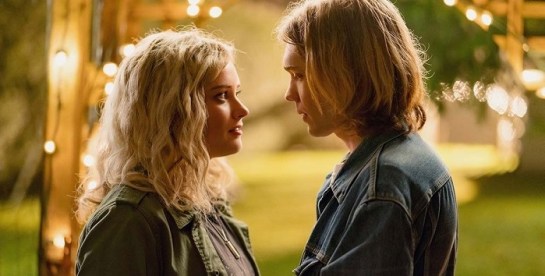
Mariko Tsutsui gives a terrific two-pronged lead performance. We first meet her as Risa, a troubled and downcast woman who develops what seems like an obsessive attraction to a hairstylist named Yoneda (played by Sosuke Ikematsu). Next we see Tsutsui playing Ichiko, a caring and compassionate home health nurse who loves her job and is engaged to be married. Two very different lives at two dramatically different junctures.

Ichiko’s story gets the bulk of the attention and it’s by far the most cohesive of the two. She works as a caregiver for an elderly ex-painter and through her caring service she has become close with the matriarch’s family. Especially the two granddaughters, the moody Motoko (Mikako Ichikawa) and her outgoing younger sister Saki (Miyu Ogawa) who Ichiko helps with their studies.

After one of their study sessions Saki disappears and her story quickly makes citywide headlines. Police believe it’s an abduction and Ichiko’s nephew Tatsuo (Ren Sudo) the prime subject. Motoko convinces a reluctant Ichiko not to share her family connection to Tatsuo for fear that she’ll be fired. But Motoko’s motivations are murky and keeping that kind of a secret adds suspicion whether deserved or not.

MISSING1

Photo Courtesy of Film Movement

Interestingly the abduction of Saki (and the film’s title itself) plays a relatively small part in the story. Instead the film’s main focus is on how quickly the walls of Ichiko’s happy life crumble. Meanwhile Risa’s pursuit of Yoneda turns into a patchwork romance that essentially springs out of nowhere. Most of the character detail and patience put into Ichiko’s angle is missing from Risa’s. Thankfully Fukada does eventually connect the dots in a satisfying way that makes you rethink Risa’s story. But getting that point is a little rocky.

So “A Girl Missing” ends up being both fascinating and frustrating. One angle puts ample attention into building its character and exploring the unfolding drama surrounding her. The other feels like an appendage, tagging along and waiting for the movie to finally grant it relevance. Once together, Fukada’s vision is impressive, even audacious. And I really admire Mariko Tsutsui’s performance and the depth she brings to her Ichiko character. She infuses that storyline with a wealth of humanity and Fukada gives her plenty of room to work. If only the other story angle worked as well.

VERDICT – 3 STARS

3-stars

First Glance: “Minari”

The Sundance hit “Minari” has been among my most anticipated films and yesterday A24 only solidified my excitement by dropping a new trailer. This family drama from writer-director Lee Isaac Chung won the festival’s Grand Jury Prize and its Audience Award earlier this year and many believe it is primed and ready for an awards season run. Everything about this beautiful first look shows why it could be a serious contender.

Set in the 1980’s, the film follows a Korean-American family who move from the West Coast to a farm in the rugged Arkansas Ozarks to pursue their American dream. The hardships of starting a farm quickly surface and eventually put a strain on the family. Things are complicated even more with the arrival of their unruly grandmother. The film stars Steven Yeun, Han Ye-ri, Youn Yuh-Jung, Alan Kim, and Noel Kate Cho. The cinematography, the score, the deeply human story – I can’t wait.

“Minari” is still listed as coming soon but A24 said it will be out in time for Oscar consideration. Check out the trailer below and let me know if you will be seeing it or taking a pass.

REVIEW: “Dick Johnson is Dead” (2020)

DICKJOHNSON1111

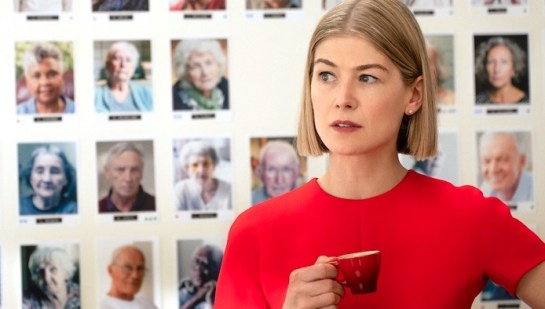
It may not sound like it but “Dick Johnson is Dead” may be one of the most unique love letters ever put on screen. This unusual documentary mixes together a near morbid playfulness with genuine heartbreak. Through its off-beat process the film becomes an uncomfortably funny and strangely cathartic mediation on mortality. And it’s examined through an intensely personal lens – that of a daughter chronicling the decline of her ailing elderly father.

Documentarian Kristen Johnson puts the camera on her father Richard Johnson, a happy, gentle, and well-respected clinical psychiatrist. When we first meet him “a few years ago” Richard is still seeing patients in his Seattle office. He’s still driving to work and living by himself in the family home. So why is his filmmaker daughter from New York making a movie of his life? Because her father has been diagnosed early stage dementia. “He’s a psychiatrist. I’m a camera person. I suggested we make a movie about him dying. He said yes.”

Johnson1

Photo Courtesy of Netflix

Lest you think this is a simple personal video journal, the movie quickly differentiates itself in the strangest of ways. It’s encapsulated in one particular scene. Richard is walking along a downtown Seattle sidewalk carrying an Amazon package. Suddenly a window air conditioning unit falls down striking him in the head. And just like that “Dick Johnson is Dead”. Or is he? Well no. Actually it’s one of several staged accidental deaths that Richard happily participates in. Anything for his daughter.

You might (understandably) ask why the younger Johnson would want to film this subject in such a provocative way and why the elder Johnson would go along with it. We get a good idea in a brief moment where Kristen talks about her mother who also died of Alzheimer’s. Kristen laments that the only video memories she has is footage taken well after the disease had taken her mother’s mind. This film allows Kristen to document and conserve the memories of her father, his playfulness and his lovingkindness. For Richard it provides ample bonding time with his daughter, full of laughter and fun as both brace for the inevitable.

It may sound cold but it’s actually far from it. Yes, we do get some jet-black humor such as Richard praising the comfort of his soon-to-be coffin in his church’s sanctuary. But the humor ultimately takes a backseat to the humanity of it all. For all of the elaborate (and sometimes graphic) renditions of death or surreal stage sets of heaven, we get far more poignant moments of deep emotional truth. It may be a quiet moment in a clothes closet where Kristen shares some personal feelings or Richard expressing concern over the burden he is on his daughter.

A key to the movie’s success is its ability to make us feel like we truly know Mr. Johnson. We can’t help but be charmed by his kind spirit and jovial demeanor. We learn of his love for chocolate, Mel Brooks’ “Young Frankenstein”, and his favorite black leather chair. All of this captures our emotions which become inseparably linked to his situation. So it’s painful to watch this lively lover of life begin showing real-life signs of decline – forgetfulness, uncertainty, and at times fear.

JOHNSON2

Photo Courtesy of Netflix

But Kristen Johnson doesn’t allow her film to wallow in dread or sorrow. Instead she showers it in a cascade of unfettered love. There is an unshakable warmth in the daddy/daughter relationship at the movie’s core but also in the way she shoots it as a filmmaker. As she tells her father when asked why she makes documentaries, “Real life is often more fascinating than what you can make up.” She brings that conviction to every scene, every closeup, and every conversation.

“Dick Johnson is Dead” takes an honest look at the inevitability of death, coping with loss, and making the most of the time we have with those we love. It does so with a wacky yet infectious sense of humor and moving clear-eyed observations rooted in intimate human attachment. It takes some time to get in a rhythm, but once it does you’ll find yourself laughing and holding off tears. You also can’t help but admire both the audacity of Kristen Johnson the filmmaker and the loving admiration of Kristen Johnson the daughter. “Dick Johnson is Dead” premieres October 2nd on Netflix.

VERDICT – 4 STARS

4-stars

REVIEW: “Happy Happy Joy Joy – The Ren & Stimpy Story” (2020)

HAPPYposter

I wasn’t long out of high school when a short-tempered sociopathic Chihuahua named Ren Höek and a kind-hearted but dense Manx cat named Stimpy made their debut on Nickelodeon. It was August of 1991 and it only took one episode for me to be hooked. During its run the darkly funny and sometimes surreal cartoon gave a much needed jolt to the stale state of animation, earning two Emmy nominations and gaining a passionate cult following.

The new documentary “Happy Happy Joy Joy – The Ren & Stimpy Story” eyes the creative side of the rowdy and sometimes controversial cartoon. More specifically it highlights the show’s creator John Kricfalusi, an immensely talented artist responsible for not only building the show but eventually tearing it down. Kricfalusi’s innovation and willingness to push boundaries made Ren & Stimpy household names. However it was his controlling nature and dictator-like leadership that eventually led to the show’s demise.

HAPPY2

Photo Courtesy of Gravitas Ventures

“The Ren & Stimpy Show” broke the mold of the generic prepackaged cartoons that appeared more interested in selling toys and merchandise than being creative and entertaining. Kricfalusi wanted to push back against what he called “the decay of animation“. Along with partners Lynne Naylor, Bob Camp, and Jim Smith, Kricfalusi co-founded the animation studio Spümcø and began creating Ren & Stimpy for Nickelodeon. From its genesis Spümcø and in turn Ren & Stimpy were artist-centric. While the writing was wacky and off-the-rails, the animation embraced a classic style with artists not just drawing but also hand painting and hand inking.

Documentarians Kimo Easterwood and Ron Cicero give a brief intro to the Ren & Stimpy craze before diving into their biggest interest – the behind the scenes talent and turmoil at Spümcø. Interviews with key studio figures give good insight into the joyous but uncertain early days and their rise to fame once the cartoon seemed to take on a life all its own. While interesting and necessary, these scenes are a little drawn out (no pun intended) and left me eager to move on to the darker side of he story.

HAPPY1

Photo Courtesy of Gravitas Ventures

That comes with the second season of “The Ren & Stimpy Show” as the pressures of success and expectation begin chewing away at the studio, specifically Kricfalusi. Through the words of his co-creators, Easterwood and Cicero reveal Kricfalusi’s tumble from demanding boss to abusive megalomaniac. An even darker turn comes when it’s revealed that Kricfalusi allegedly used his status to lure and groom underage girls, aspiring cartoonists, into sexual relationships. Easterwood and Cicero not only speak candidly with Kricfalusi about the accusations, but also one of his accusers Robyn Byrd. It’s disturbing stuff.

“Happy Happy Joy Joy” adds a bitter taste to what was one of my favorite cartoons featuring two of my favorite animated characters. After seeing this documentary some will have a hard time seeing Ren & Stimpy in the same light. At the same time the film shows there were many other artists and creators who were just as essential to the show’s success during and after Kricfalusi’s tumultuous reign. Still, the revelations hang a cloud over the show’s groundbreaking early days branding the once celebrated animated television series with a dark and troubling legacy.

VERDICT – 3.5 STARS

3-5-stars

REVIEW: “A Call to Spy” (2020)

SPYposter

In August of 1941 the German occupation of Europe was well underway. Northern France was next to fall leaving Great Britain alone and vulnerable. With Hitler poised to cross the English Channel a desperate Winston Churchill orders a section of his Special Operations Executive (SOE) to begin recruiting and training women as spies. Their goal would be to infiltrate and disrupt the occupying German forces in France while building a clandestine network of resistance.

This is the compelling premise of “A Call to Spy”, a mature character-driven historical drama that examines yet another shamefully untold true story from World War II. It may be a tad too ambitious when it comes to scope, but for a small budget indie it’s a remarkable accomplishment. More importantly the film never loses sight of its characters, their individual plights, and their dedication to service. Not only are their stories informative and inspirational, but they’re rich with lessons still relevant today. Better yet this is a female led movie that shines on both sides of the camera. Take note Hollywood.

CALL4

Photo Courtesy of IFC Films

The film features an Oscar-nominated director in Lydia Dean Pilcher who ably covers a lot of ground while never allowing the dialogue-heavy story to bog down. That’s made easier by Sarah Megan Thomas who is the heart of the film both on screen and behind its production. Thomas stars, produces and writes the screenplay with passion, motivation and empathy. Extensive research and family interviews led her to make something far more intimate and illuminating than your typical genre period piece.

The story focuses on three woman, each with their own personal obstacles to overcome but joined in their determination and courage. The first is Vera Atkins (brilliantly portrayed by Stana Katic), Romanian by birth and positioned as the secretary to SOE section head Colonel Maurice Buckmaster (Linus Roache). In reality Vera was his head of intelligence, but due to constantly being declined British citizenship she was restricted from officially holding an officer’s position. Despite often being the smartest person in the room, Vera frequently comes face-or-face with the military’s longstanding patriarchy. And even Buckmaster’s unwavering trust can’t protect her from some of the quieter prejudices that surface later in the film.

SPY2

Photo Courtesy of IFC Films

Vera is tasked with finding and vetting their initial batch of female recruits. “Women would be more inconspicuous.” They would be tested, trained and then sent off “to build resistance and set France ablaze“. Vera in instantly drawn to Virginia Hall (played by Thomas), an American eager to serve as a diplomat but repeatedly denied by her country because she’s a woman and due to her “condition”. She has a wooden leg which she affectionately calls Cuthbert, the result of a tragic hunting accident years prior. Intelligent and committed, Virginia instantly shows grit and leadership, both invaluable assets in the “ungentlemanly warfare” she would be facing.

Next is Noor Inayat Khan (Radhika Apte), a gentle, unassuming Indian pacifist and top-notch wireless operator. She’s immediately met with skepticism by many of the men who view her small stature and kind spirit as weaknesses. But Noor earns the confidence of Vera and Buckmaster and begins training for fieldwork. Meanwhile Virginia is sent to Lyon to establish a secret hub for the growing resistance. Once there we follow her as she makes connections and works to win the trust of the already embedded operatives. With England desperate for information and the German occupation intensifying, Noor soon joins Virginia despite not finishing her training.

SPY1

Photo Courtesy of IFC Films

Thomas’ script nimbly moves back-and-forth between the stories of the three women. Each story thread is neatly connected to the others while still feeling very personal to the individual characters. For example Virginia quickly develops into a keen resistance leader, managing the many lives hinging on her decisions and making tough calls when need be. But her disability is a very real part of her story. Thomas doesn’t gloss over it, acutely showing it as both a strength and a struggle. She shows the same sensibility for Noor, a brave young woman out of her element, moving from place to place while narrowly avoiding capture. Same for Vera who follows her recruits from back home, parsing through messages and supporting their efforts while feeling the breath of sexist and anti-Semitic sentiment.

“A Call to Spy” is exactly the movie I hoped for. An eye-opening true story of uncommon valor, told through capable direction, a smart affecting script, and three central performances that vividly portray these heroes. And their heroism wasn’t just reserved for the arena of war. Whether in the trenches or the war room, these woman fought uphill showing their true mettle in the face of hardship. The film also works as a thoughtful World War II history piece with an immersive setting and ample reminders of what was at stake and the sacrifices made. “A Call to Spy” opens October 2nd in select theaters and on VOD.

VERDICT – 4.5 STARS

4-5-stars

REVIEW: “The Trial of the Chicago 7” (2020)

TRIALposterrr

In one way Aaron Sorkin is the perfect person to make a meaty courtroom drama about the notorious Chicago Seven. The accomplished wordsmith is more than capable of covering such a dense story and its numerous players. On the other hand Sorkin has never been shy about his firm political leanings, and this particular subject (especially in our current hyper-partisan climate) could offer temptations too tempting for him to pass up.

Sorkin’s new film “The Trial of the Chicago 7” proves to be a bit of both. It’s an enthralling, fast-moving and at times unexpectedly funny courtroom drama. At the same time you never doubt where Sorkin’s sympathies lie and history occasionally takes a backseat to the film’s obvious relevance-seeking predilections.

First slated as a Paramount Pictures big screen release before being sold to Netflix, “The Trial of the Chicago 7” follows a group (originally made up of eight and then eventually seven) of anti-Vietnam War and counterculture protesters who were arrested and charged with conspiracy and inciting riots (among other things) at the 1968 Democratic National Convention. They were considered leaders of various anti-establishment groups with diverse backgrounds and motivations – political activists, flower children, anarchists, and revolutionary socialists. Their reputations put them in the sites of the authorities and made them quick targets for the already defensive state and local governments.

TRIAL1

Photo Courtesy of Netflix

Sorkin tells the story completely from the points-of-view of the eight men charged and their supporters. Outside of a brief table-setting opening montage and a handful of flashbacks, the entire film is set in and around the courtroom. Sorkin puts a strong spotlight on the gross mishandling of the proceedings by a biased Judge Julius Hoffman (Frank Langella) even throwing in some fictional demonizing as if history needed it. He also shows the sheer circus the trial became in large part due to Judge Hoffman’s unconstitutional antics, but equally due to the showmanship of the defendants, specifically from yippie leader Abbie Hoffman (Sacha Baron Cohen).

The story proper begins with Joseph Gordon-Levitt’s Richard Schultz, a young, idealistic federal prosecutor handpicked by the Attorney General John Mitchell (John Doman) to get a conviction in the trial against the activists. Schultz is one of the only people outside the protesters circle with the slightest bit of nuance. He’s essentially a government pawn but he’s also the only one who sees the potential risks of prosecuting this particular case. “We are giving them exactly what they want” he warns his boss, “a stage and an audience.”

Across from him is defense attorney William Kunstler (Mark Rylance), a radical lawyer and activist who knows the law and quickly begins to realize the deck is stacked against him. He has the toughest job of any – defending in a trial ripe with corruption while trying to keep his motley band of clients on the same page. The wild card is Black Panther co-founder Bobby Seale (Yahya Abdul-Mateen II). He’s the eighth man with no real attachment to the other seven but connected by the government solely so the feds can target the Panthers. Stripped of his constitutional rights and dehumanized in the very courtroom that should stand for justice, Seale’s plight is the most tragic.

The Trial of the Chicago 7

Photo Courtesy of Netflix

Rounding out the film’s plump star-studded cast: Eddie Redmayne is shaky in places but mostly solid playing disaffected leftist cage-rattler Tom Hayden. John Carroll Lynch is a nice fit playing non-violent socialist activist and family guy David Dellinger. Michael Keaton gets a small but welcomed role playing former Attorney General Ramsey Clark. The one flatline performance comes from the usually solid Jeremy Strong. He seems out of sync playing hippie counterculture radical Jerry Rubin. He both underplays and overplays several scenes and never quite feels comfortable with his approach to his character. Still, the biggest head-turners are Cohen and Langella. Oscar nominations wouldn’t be undeserved.

Sorkin’s snappy pacing and signature rapid-fire dialogue zips us through the story, giving us a good sense of the legal turmoil while providing plenty of memorable character moments. As you would expect from a Sorkin film, most of the dialogue is whip-smart and flows with an energetic rhythm that keeps you honed in on every exchange. But surprisingly there are instances where it can come across as stilted and self-conscious. Characters will drop lines that feel custom written for a movie scene rather than natural to the story. And then there’s the ending, a rushed “notice me Oscar” finish that lays on the melodrama complete with swelling orchestration. Considering everything the film does well, the ending resembles something packaged from an awards-conscious studio.

Unfortunately in an effort to venerate his protagonists Sorkin ends up robbing his film of its true-story complexities. The Chicago Seven weren’t without blemishes – Rubin’s affection for Charles Manson, Hoffman’s cocaine dealing, Kunstler’s rogues gallery of clients. And while Sorkin tosses in a ten-second clip of Rubin and Hoffman teaching followers how to make Molotov cocktails, there’s really nothing morally complex about them. Sorkin writes a very white hat/black hat tale that leaves practically nothing for us to wrestle with. Still, he’s a good enough writer to energize the many characters and tell a mesmerizing story even if it’s only a subjective CliffsNotes version.

VERDICT – 3 STARS

3-stars