Today I’m continuing my annual ritual of recognizing the very best performances from the movie year that was (you can see my Supporting Actress picks HERE). Now it’s time to shine the spotlight on the Supporting Actors. Just like yesterday, this is another really good category full of great choices from a variety of different movies. Narrowing them down to five wasn’t easy. Here we go…
Honorable Mentions: James Badge Dale (“Violent Ends”), Ethan Hawke (“Black Phone 2”), Paul Mescal (“Hamnet”), William H. Macy (“Train Dreams”), Miles Caton (“Sinners”), Delroy Lindo (“Sinners”), Michael Cera (“The Phoenician Scheme”), Chiwetel Ejiofor (“The Life of Chuck”), Andrew Garfield (“After the Hunt”), Stephen Lang (“Avatar: Fire and Ash”), Ralph Fiennes (“28 Years Later”), Christoph Waltz (“Frankenstein”)
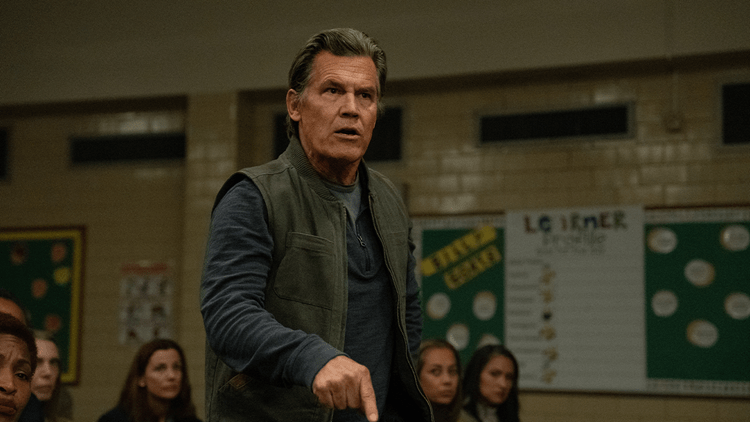
#5 – Josh Brolin (“Weapons”)
When discussing “Weapons”, most of the awards season chatter has concentrated on Amy Madigan, and rightly so. But we shouldn’t forget what Josh Brolin brings to this fascinating chiller. He wasn’t the first choice for his role. But when Pedro Pascal was forced to back out, it opened the door for Brolin who shrewdly delivers a character driven by grief, anger, and determination. He’s such a key part of the movie’s success.
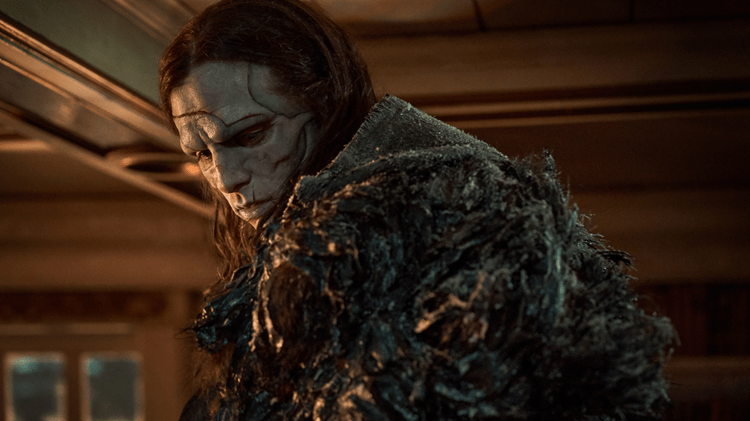
#4 – Jacob Elordi (“Frankenstein”)
After seeing Jacob Elordi’s phenomenal erformance as The Creature in Guillermo del Toro’s “Frankenstein”, it’s hard to imagine that he (like Brolin above) wasn’t the first pick for the role. Yet by the end, he had erased any doubt by proving to be the perfect choice. He not only impresses with his physical transformation, but he gives an emotionally layered performance that’s hauntingly tragic and grounded in humanity. It’s a tricky assignment, and Elordi nails it.
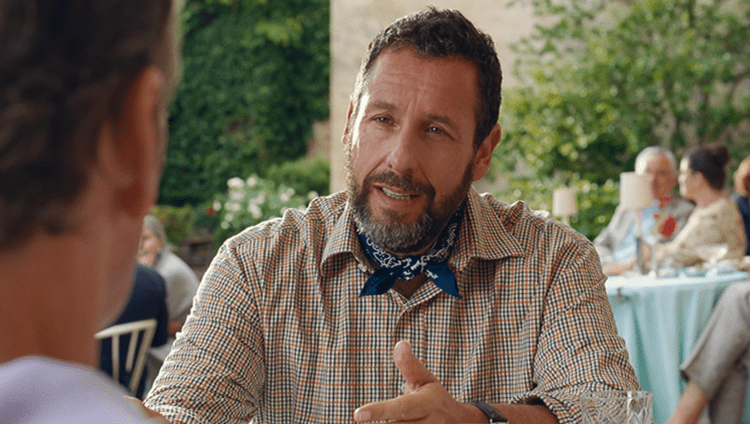
#3 – Adam Sandler (“Jay Kelly”)
At this point it has been well established that if given the right material, Adam Sandler can deliver truly great performances. He gets the right material in “Jay Kelly”, and to no surprise, he gives another great performance. Mixing dry humor with drama, Sandler forms the beating heart of Noah Baumbach’s latest, earning our admiration, our empathy, and even a few laughs along the way. This is Sandler at his best.
#2 – Sean Bean (“Anemone”)
Good actors and actresses have proven that you don’t need pages and pages of dialogue to speak volumes. Case in point – Sean Bean in the criminally underappreciated “Anemone”. Bean shares most of his scenes with Daniel Day-Lewis which is no easy task. But he more than holds his own in a role that often requires him to simply be silent. Yet Bean conveys so much through his pain-filled eyes and cast-iron stare. It’s masterful work.
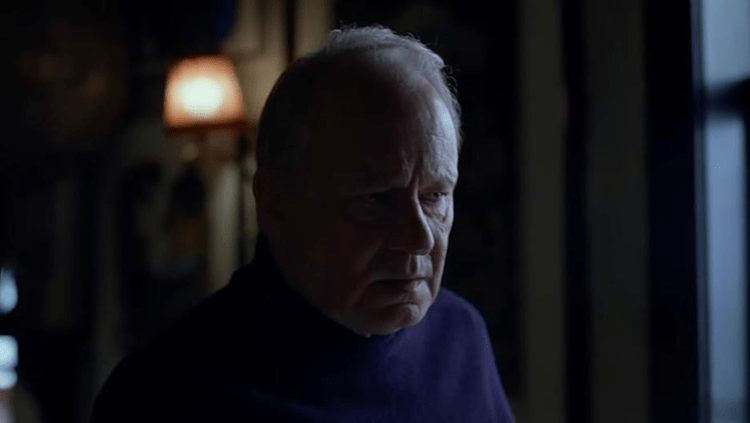
#1 –Stellan Skarsgård (“Sentimental Value”)
Whether he’s starring in a franchise series set in the galaxy far, far away or in independent features telling intimate human stories, Stellan Skarsgård always seems perfectly in-tune with the character he’s playing. Never has that been more true than in Joachim Trier’s “Sentimental Value”. Trier creates a fascinating character who could have easily fallen into an archetype. But in Skarsgård’s capable hands, we fully realize his complexity and texture. It’s the best supporting performance of the year, and not much out there comes close to it.
That wraps up the supporting actor category. Do you agree or disagree with my picks? Let me know in the comments below. And check back tomorrow as we put the lead actresses in the spotlight.
At the risk of sounding like an old man, where has the year gone? A few days ago I shared my Top 10 movies of 2025 (check it out HERE). I always have fun putting that list together, but I also enjoy giving some attention to the year’s very best performances. So over the next few days I’ll be sharing my five favorites for each of the four major acting categories. As I normally do, today I’m kicking it off with Supporting Actress.
Honorable Mentions: Kerry Condon (“F1”), Alana Haim (“The Mastermind”), Inga Ibsdotter Lilleaas (“Sentimental Value”), Samantha Morton (“Anemone”), Mia Sara (“The Life of Chuck”), Hailee Steinfeld (“Sinners”), Jayme Lawson (“Sinners”), Wunmi Mosaku (“Sinners”), Sigourney Weaver (“Avatar: Fire and Ash”), Odessa A’Zion (“Marty Supreme”), Laura Dern (“Is This Thing On?”), Felicity Jones (“Train Dreams”), Regina Hall (“One Battle After Another”), Erin Kellyman (“Eleanor the Great”)
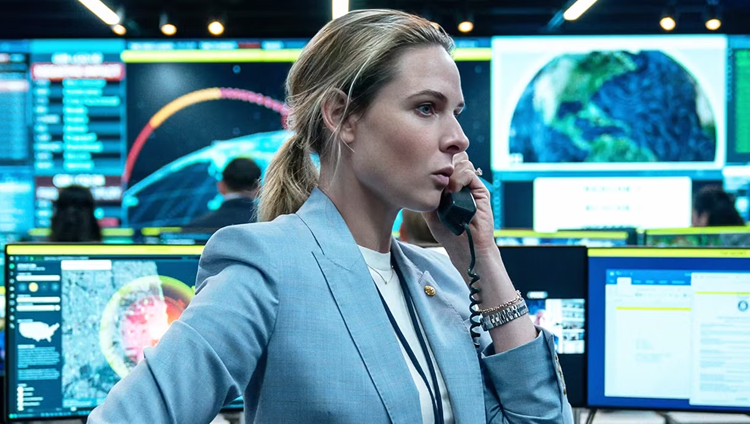
#5 – Rebecca Ferguson (“A House of Dynamite”)
Katherine Bigelow’s “A House of Dynamite” worked for so many reasons. Chief among them were the performances led by Rebecca Ferguson. She mostly appears in the film’s first act, but the in-the-moment emotional intensity she brings sets the table for this captivating, real-time nailbiter. This is yet another brilliant performance from an actress who has routinely delivered, no matter what genre she’s working in.
#4 – Caitríona Balfe (“The Cut”)
Over the next few days you’ll hear me mention several 2025 movies that came and went without getting the attention they deserved. One was “The Cut”, a film featuring another powerful supporting turn from Caitríona Balfe. The talented Irish actress was robbed of an Oscar nomination for 2021’s “Belfast”. Here she shows that was no fluke, delivering an emotionally textured performance that’s full of grit, compassion, and conflict.
#3 – Emily Blunt (“The Smashing Machine”)
With A24’s “The Smashing Machine”, most of the attention understandably went to Dwayne Johnson’s revelatory performance. But equally good was Emily Blunt as Kerr’s girlfriend Dawn, an emotional whirlwind whose volcanic relationship with Mark fuels some of the film’s very best moments. She fiercely mixes volatility with vulnerability in a way that’s both raw and realistic. Blunt continues to be one of the industry’s best.
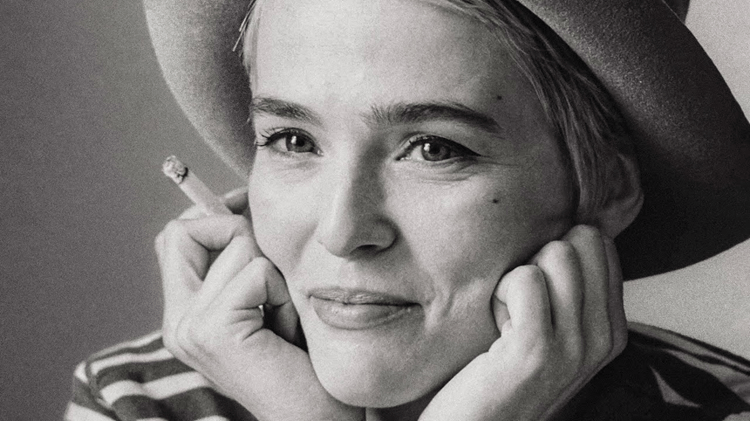
#2 – Zoey Deutch (“Nouvelle Vague”)
Richard Linklater’s time capsule masterpiece “Nouvelle Vague” recaptured the making of Jean-Luc Godard’s “Breathless”. A key piece of that French New Wave classic was its star, Jean Seberg. An equally key part of Linklater’s film is the delightful Zoey Deutch who portrays Seberg. Not only does she look the part, but she enthusiastically captures Seberg’s charm and vitality. It’s an amazing transformation for Deutch.
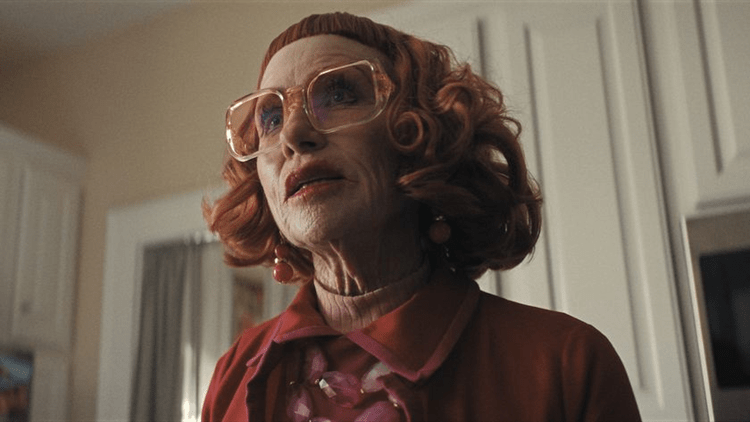
#1 – Amy Madigan (“Weapons”)
It’s great to see Amy Madigan back in movie conversations and it’s happening for good reason. She stole the show in one of the year’s surprise hits, “Weapons”. Madigan doesn’t appear until later, but once she does the film only gets better (and noticeably creepier). Madigan offers up a beguiling blend of pure terror and pitch-black humor. And she’s clearly having a blast playing a villain. I know I had a blast watching her.
That wraps up the best supporting actress performances from 2025. What picks do you agree or disagree with? Let me know in the comments below. And check back tomorrow as we put the support actors in the spotlight.
There’s so much to admire about Charlie Polinger’s gripping directorial debut, “The Plague”. It may also be one of the toughest films you watch due to its uncomfortably honest treatment of its serious subject matter – preteen bullying. This psychological drama pulls no punches in its depiction of cruelty masked as horseplay. And it doesn’t shun from showing the consequences. It can be bleak, but urgent and enlightening as well.
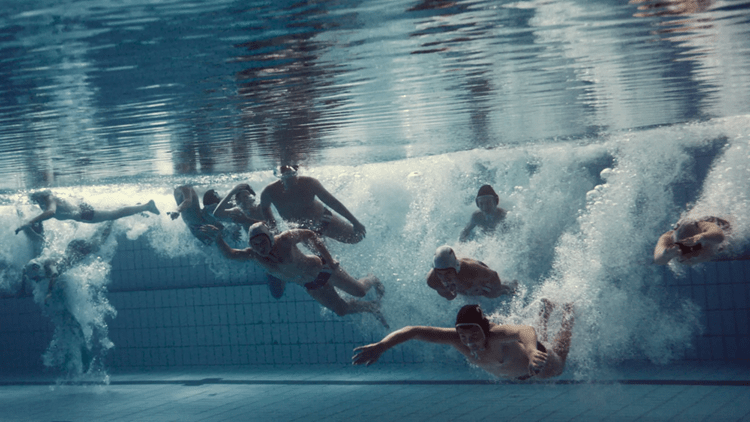
Polinger writes and directs the film which takes place in the summer of 2003 at the Tom Lerner Water Polo Camp for Boys. Ben (Everett Blunck) is a sensitive twelve-year-old who recently moved to the area from Boston. Ben’s home life isn’t the best, which is why he doesn’t mind going away to summer camp. But not knowing anyone has its challenges, especially for the anxious and awkward Ben. He finds support with his coach (Joel Edgerton), but fitting in with the other boys proves difficult.
Image Courtesy of Independent Film Company
Among the many compelling elements to Polinger’s story is his recognition of social structures, even among preteens. Here it’s a tight-knit group of six boys, who by shallow external measures might be considered the “cool kids”. Ben desperately wants to join their ranks, even enduring mockery from the pack’s alpha, Jake (Kayo Martin) in order to be accepted into their circle.
But deep down, Ben is a good kid, which is why he’s alarmed when witnessing some of the group’s antics. They’re openly loud and rowdy. But Ben learns they’re also crude and vulgar. Much worse is their cruelty which is seen most in their targeting of Eli (Kenny Rasmussen), an eccentric and introverted outcast. Jake claims Eli is the carrier of a highly contagious “plague” which the group uses to mock and ostracize him. As for Ben, his desire to win the group’s approval ends up blinding him to his own complicity.
Yet Ben’s conscience weighs on him which keeps him from being as cold and callous as the others. But his internal conflict seeps through to the surface after he dares to show compassion to Eli, even befriending him when no one else is looking. It immediately puts him in Jake’s crosshairs. Suddenly the group Ben desperately wanted to join has made him their prime target. It all makes for a heartbreaking chain of events that moves towards a finish that is as inevitable as it is troubling.
Polinger’s stylish and confident direction is helped by some truly standout performances from the mostly young cast. Blunck and Martin are especially strong, with each being fully convincing in dramatically different roles. Blunck conveys as much through observations as interactions, expressing Ben’s insecurities and anxiety despite his character working hard to conceal them. It can be a quietly devastating performance, but not without nuance. Martin is surprisingly sinister, hiding his ruthlessness behind a seemingly harmless smirk and curly mop of blonde hair. He’s both infuriating and terrifying.
Image Courtesy of Independent Film Company
As the film plays its hand, any obviousness is discarded in the final act. What begins as a unique spin on the coming-of-age formula turns darker, using dashes of shock and body horror to make us squirm. But Polinger never loses his grip on the material. And the final shot offers a ray of hope, depending on your interpretation. DP Steven Breckon shines, especially with his otherworldly underwater photography, while Johan Lenox’s score offers an unnerving mix of experimental and orchestral.
“The Plague” can feel a bit too broad at times, both with its handling of certain characters and anything resembling their motivations. It will also leave you with a handful of questions, none bigger than wondering where is the adult supervision? It can also be tough distinguishing between the real and metaphorical. But Polinger shows himself to have a remarkable vision, using the various arms of cinema to open our senses to a profoundly serious topic. Overall, “The Plague” is a remarkable and significant big screen debut.
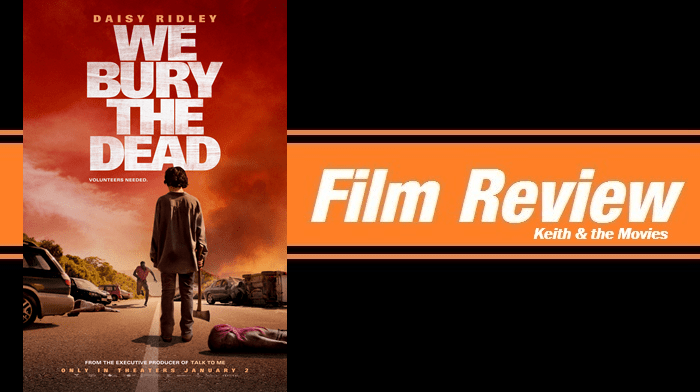
The new movie year kicks off with an unexpectedly moving feature that puts a thoughtful spin on the well-travelled zombie subgenre. Its story is no less grim, and the movie doesn’t fully forsake its horror roots. But the narrative focus is more intimate, and the emotions that surface come from a place of raw authenticity that pack a surprising punch. Those are the things that make “We Bury the Dead” more than your standard zombie fare.
“We Bury the Dead” comes from Australian writer-director Zak Hilditch whose past credits include the overlooked and underappreciated “1922” (if you haven’t seen it, add it to your Netflix queue). His latest sees him once again doing new and interesting things within an established genre. He finds the right star in Daisy Ridley who latches onto her character’s deeper emotions and conveys them with sensitivity and control. Her performance is the linchpin.
Image Courtesy of Vertical
The film’s originality begins in Hilditch’s world-building. We learn that an estimated 500,000 people have been killed in Tasmania after the United States military accidental deploys an experimental weapon just off the coast. It released an electromagnetic pulse that resulted in the immediate neural failure of all living things on the island. With its capital city Hobart in flames and entire populations dead, the global community reaches out to assist in any way possible.
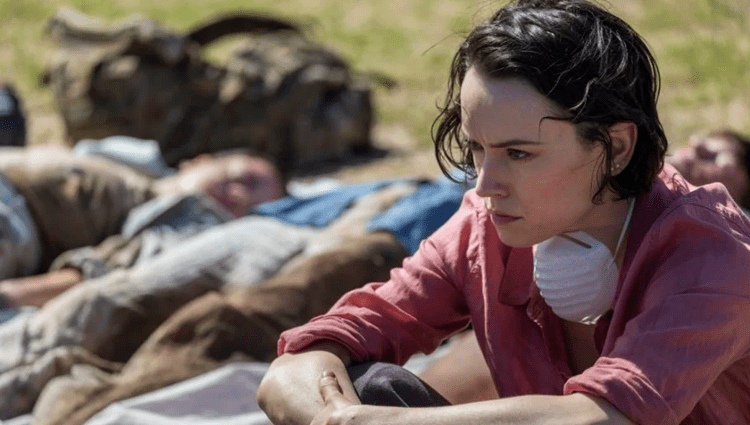
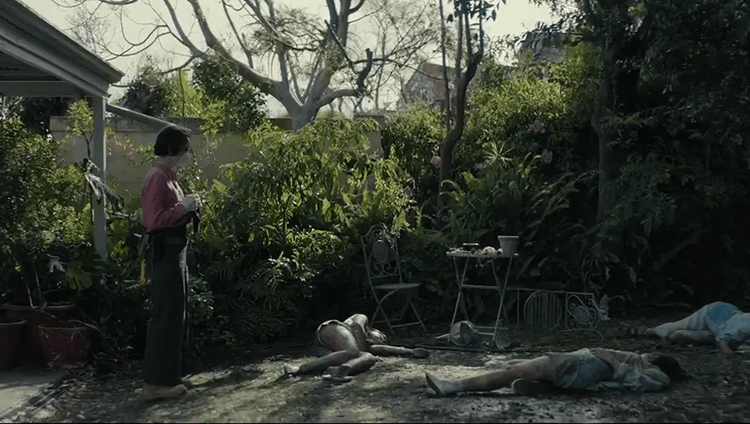
Among those volunteering to help is Ava (Ridley), a physical therapist who has joined a body retrieval unit. She’s partnered with the brash yet efficient Clay (Brenton Thwaites) and tasked with searching homes and bringing out the bodies of the dead to be identified. It’s grisly work and what they find ranges from heartbreaking to all-out unsettling. But what’s most alarming is a warning issued by the general in charge. He tells the volunteers that a small number of the dead are coming back “online” (aka reanimating).
The “whys“ and “hows” are never really explained, mainly because everyone at ground zero is in dark too. All that’s known is that the living dead start docile and slow-moving. But the longer they remain ‘alive’ the more aggressive they get. For that reason, the volunteers are instructed to inform their military escort who goes in and “respectfully” shoots the undead in the head. While they act differently, one thing the undead all share is the creepy way they grind their teeth. It makes an unnerving sound akin to eating glass. That sound alone leads to some truly chilling encounters.
As Ava aides this global effort, we learn its personal calamity that brought her to Tasmania. Her husband Mitch (Matt Whelan) was on a work retreat at a resort in the southern part of the island when the detonation occurred. Devastated, Ava is determined to find him, either dead or reanimated. But it’s a dangerous 200-mile trek through restricted areas with no military support. And of course there are numerous threats, both living and undead.
Image Courtesy of Vertical
Ava’s journey springs from a compelling premise that plunges the audience into a bleak and forbidding world. There’s no deadly infection or fighting undead hordes. In fact, the “z” word is never once uttered. Yet there is an ever-present sense of danger as Ava is ushered from one place to the next. Despite its modest budget, Hilditch develops and maintains an impressive sense of scale. So much so that I wish he had explored more of his world and better defined its rules.
But at its thematic core, “We Bury the Dead” tells a thoughtful story about navigating grief and finding closure. The “horror” element of the movie is more of a backdrop that propels Ava into her own personal purgatory. Hilditch maintains a good grasp of his material, balancing his rich themes with his obvious love for genre. And while his world can feel too sparse, the story’s human element always finds its way to the surface. And that’s what sets the film apart from its genre counterparts.
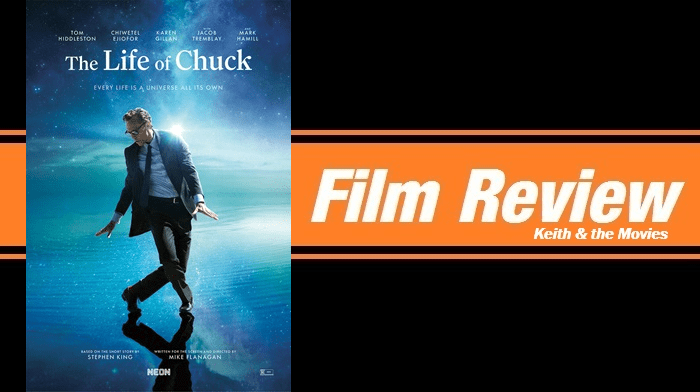
2025 saw writer-director-producer-editor Mike Flanagan taking on one of Stephen King’s more strikingly unique and surprisingly moving stories. “The Life of Chuck” was a previously unpublished novella from King that was finally released in a 2020 collection titled “If It Bleeds”. It told a peculiar yet engaging story that ended up in a much different place than where it began. The film follows that same course.
Flanagan passionately takes on the daunting task of adapting King’s story which is split into three acts. Each act is set at a key juncture on the film’s timeline. The tricky part comes in telling the three acts in reverse chronological order. It’s an approach that sounds unnecessary and even a little gimmicky at first. But Flanagan follows King’s lead, finding emotional purpose in the structure while posing a number of thoughtful questions along the way.
Image Courtesy of NEON
Nick Offerman’s narration ushers us through this existential treatise, starting with Act Three which is titled, “Thanks, Chuck”. It introduces us to an earth that is on the brink of destruction. The domino effect begins with news of a devastating earthquake in Northern California. We later hear of floods, sinkholes, volcanic eruptions, strange animal deaths, and even suicides. Shortly after, the entire world is knocked offline as the internet crashes. Television stations go off the air, mobile phone networks go down, and entire cities lose electricity.
We see most of the unfolding cataclysm through the eyes of a middle school teacher named Marty Anderson (Chiwetel Ejiofor) and his ex wife Felicia (Karen Gillan). Rather than making a spectacle of the disasters, Flanagan concentrates on the personal impact on Marty, Felicia, and a handful of people in their lives. No one knows what to expect, but they all have one thing in common. As they collectively brace for what’s to come, they all wonder who the heck is Charles Krantz – the bespectacled man plastered across billboards who’s being thanked “for 39 great years”.
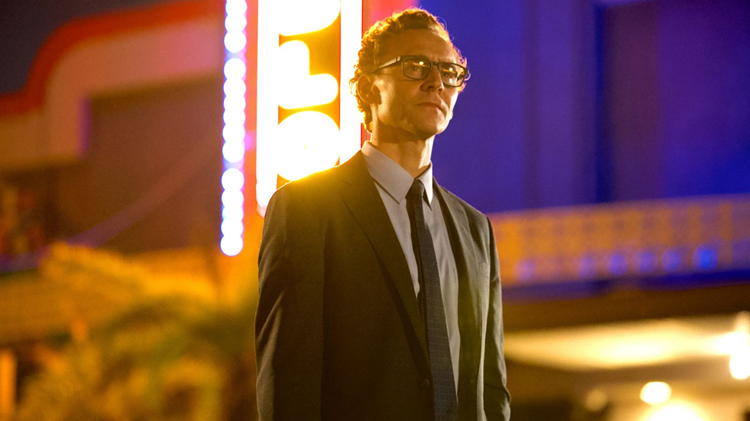
Act Two, titled “Buskers Forever”, transports us back in time nine months. It’s where we meet a mild-mannered accountant named Charles “Chuck” Krantz (Tom Hiddleston). He’s in town for a week-long banking conference but is sidetracked by the rhythms of a street drummer named Taylor (Taylor Gordon). Chuck breaks out in an impromptu dance and is joined by a heartbroken stranger named Janice (Annalise Basso) who was just dumped by her boyfriend of sixteen months.
This extended dance sequence is a dramatic shift from anything that came before it, and any connection to the previous act is vague in the moment. But its bursting with energy and pizzazz, all while showing an impressive new side of Flanagan. And by the time the end credits roll, the sequence’s heartfelt relationship with the movie’s central themes come more into focus.
Image Courtesy of NEON
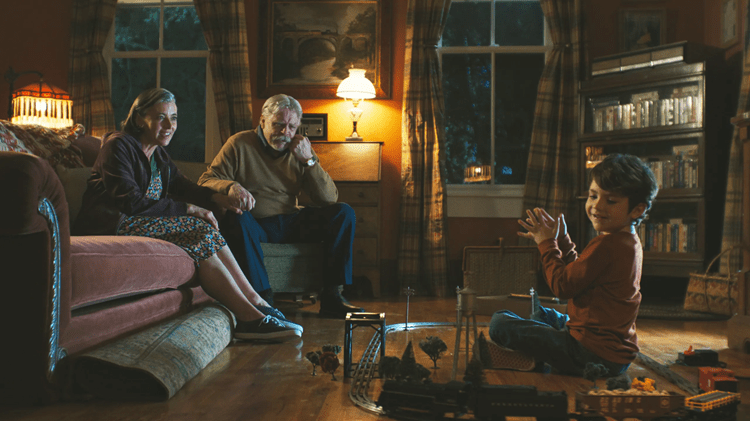
Act One, titled “I Contain Multitudes” takes us even further back in Chuck’s life. He was only 7 years old when his parents were killed in a car crash. As a result, young Chuck (played at different points by Benjamin Pajak and Jacob Tremblay) was raised by his loving grandparents, Albie (Mark Hamill) and Sarah (Mia Sara). We get some wonderful moments between Chuck and his grandmother who Sara plays with such maternal tenderness. There’s also a touch of mystery, especially regarding the mysterious cupola that sits perched atop of their old Victorian home.
By the end of Act One, you may be left with feelings of confusion and frustration. But as “The Life of Chuck” moves from one point to the next, the story begins to take shape. Its questions turn more insightful and its themes grow richer. As for the non-linear approach to storytelling, it may not be essential, but it does keep us more involved while allowing Flanagan to examine characters through several different lenses. Interestingly, none of the cast gets a ton of screen time. But the film is full of terrific performances that bring emotional truth to this curious, otherworldly story. All that’s missing is a Rod Serling introduction.
And just like that, another year has come and gone. 2025 has been a strange one for movies. As expected, it has had its share of noteworthy surprises and several unfortunate letdowns. There has been the usual big box office successes, even more undeserved bombs, and a handful of trendy darlings that are being ushered through awards season. Like last year, things started slow but thankfully picked up in the final quarter.
Now here we sit in late December, that time of the year where we critics commit to our silly but fun annual ritual of choosing the ten best movies from the year that was. While a lot of the same movies are popping up on most lists, I found many of the popular picks to be massively underwhelming. So mine may not line up with others, but that’s part of the fun. So enough jabbering. It’s time to get down to business.As always, let me start by showing some love to my #11-20….
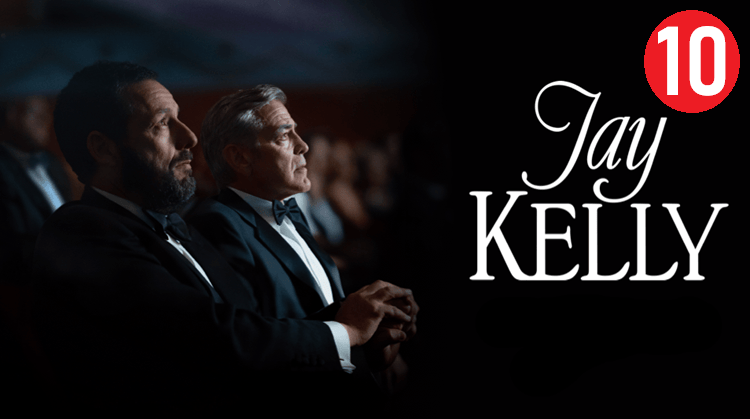
“Jay Kelly” – Now here’s a movie that has steadily grown on me since first seeing it. To no surprise, Noah Baumbach’s “Jay Kelly” has far more depth than any single viewing might reveal. And the more you consider it, the more emotionally resonant it becomes. The film features many Baumbach signatures. But it also stands out with its noticeably grander scale, broader story, and classic Hollywood style. George Clooney seamlessly plays a version of himself while Adam Sandler delivers one of his best performances in years. [REVIEW]
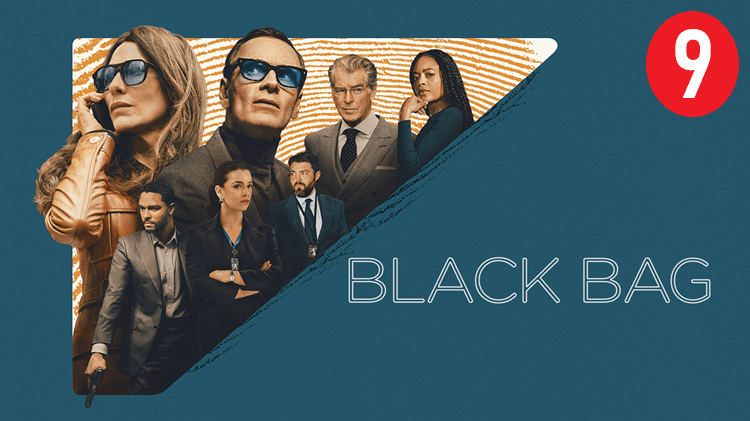
“Black Bag” – Steven Soderbergh delivered in spades with “Black Bag”, a taut spy thriller from earlier in the year that deserves to be part of the awards season conversation. The film could sell itself on its two stars alone, Cate Blanchett and Michael Fassbender. The pair have a crackling chemistry which is fueled by screenwriter David Koepp’s sizzling dialogue. Soderbergh does the rest, surrounding the tightly plotted script with the kind of visual craftsmanship that has become a hallmark of his movies. All together it’s one enthralling recipe. [REVIEW]
“Eddington” – The politically-fueled and wildly entertaining “Eddington” is the latest off-kilter venture from writer-director Ari Aster. It’s an exceptional feature that excels as a classic neo-Western and a sharp modern-day satire, consistently making us laugh and squirm at the same time. Setting his film amid the chaos of the COVID-19 pandemic, Aster leaves no political side unscathed, equally using edgy violence and pitch-black humor to spotlight the depths of our nation’s division and the consequences that come with it. And that only scratches the thematic surface of this blistering case study. [REVIEW]
“The Phoenician Scheme” – While almost all of my fellow critics and awards season voters have lined up behind another filmmaking Anderson, it’s Wes who delivered one of the best films of 2025. Wes Anderson is a director who remains compelling even when his movies don’t fully land. “The Phoenician Scheme” most certainly does. It’s another film marked by Anderson’s distinct visual and narrative style, but it has a surprisingly big heart. It features another great cast littered with new faces and Anderson favorites, who are all in-tune with the film’s wonderfully wacky wavelength. [REVIEW]
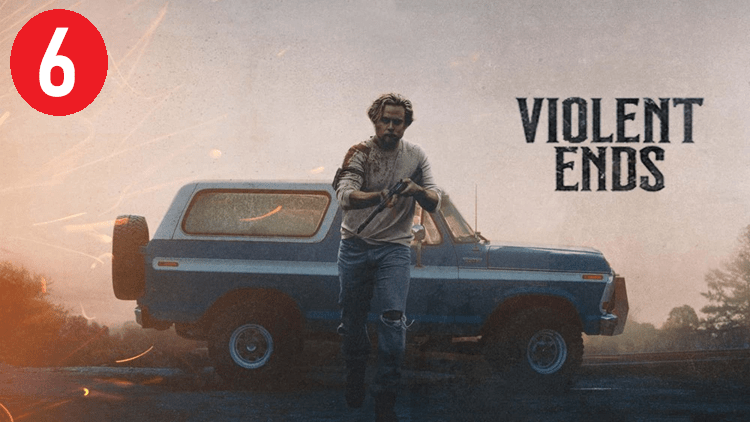
“Violent Ends” – One of the biggest and best surprises of the year was “Violent Ends”, a tough and textured independent film from writer-director John-Michael Powell. Highlighted by a career-best performance from Billy Magnussen and a chillingly vile James Badge Dale, the film has a distinct regional flavor and a script that’s part crime story, family drama, and revenge thriller. It all coalesces into a gritty and tragic feature that’s keenly crafted, narratively, visually, and thematically. [REVIEW]
“Warfare” – Distributor A24 released several good movies in 2025. For my money, their best was “Warfare”, a grounded, no-frills war film that more people should be talking about. It’s co-directed by Alex Garland and Iraq War veteran Ray Mendoza. It’s a real-time account drawn from Mendoza’s own experiences and other personal testimonies about a platoon of Navy SEALs whose mission goes awry, leaving them trapped in a two-story house as insurgents converge. Incredible attention to detail, riveting storytelling, and a superb ensemble make the film an unforgettable experience. [REVIEW]
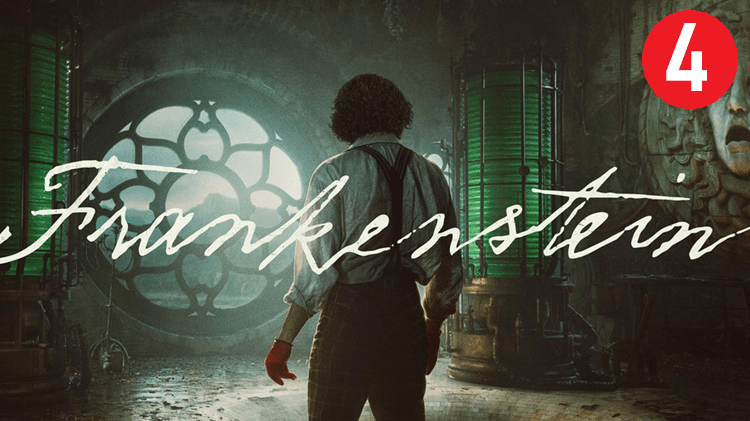
“Frankenstein” – I’m not sure you could find a better match of director and source material than Guillermo del Toro and “Frankenstein”. It’s a story so perfect for del Toro’s narrative and visual style. The cast is superb, led by Oscar Isaac as Victor Frankenstein and Jacob Elordi as The Creature. But it’s the Oscar-winning filmmaker who exceeds the already high expectations with a transcendent adaptation that mines more from Mary Shelley’s 1818 novel than most other films have. His film crackles with creative energy while setting a new standard for Frankenstein movies. [REVIEW]
“Anemone” – It’s hard to believe “Anemone” came and went with such little fanfare. It’s further proof that even the best movies don’t always get the appreciation they deserve. Sure, the movie had its detractors. But I found myself glued to the powerhouse return of Daniel Day-Lewis. The acclaimed actor pours every ounce of himself into this incredibly complex role. And he’s helped by a criminally underrated supporting performance from Sean Bean. “Anemone” is a rich, dense, and at times searing character study that shouldn’t be missed or dismissed. [REVIEW]
“Nouvelle Vague” – Richard Linklater’s “Nouvelle Vague” is a film so in-tune with the bygone French New Wave that it runs the risk of pushing away any viewers who aren’t. While it certainly comes with some modern day polish, Linklater’s love letter captures the very essence of the movement, from its restless style to its maverick spirit. Sure, it’s a niche project. But it’s impeccably made by an inspired filmmaker who has a clear vision, a strong affection, and a willingness to take big risks. [REVIEW]
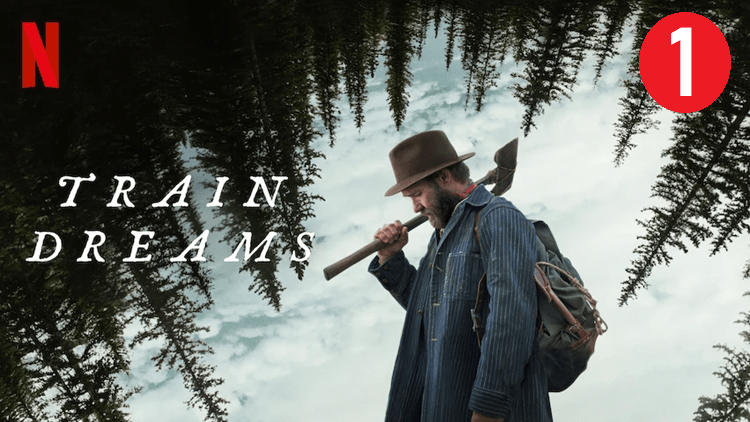
“Train Dreams” – No movie in 2025 moved me quite like “Trains Dreams”. Powered by the assured direction of Clint Bentley and arguably the best performance of Joel Edgerton’s career, “Train Dreams” offers a rich and affecting snapshot of life as seen through one solitary man’s odyssey. It’s a quiet and soulful meditation that’s also a visually captivating experience. Bentley says as much through his camera as his dialogue which only enriches the film even more. This is cinematic storytelling at its finest and a movie that will stick with you well after the final credits. [REVIEW]
And that wraps up my Top 10 Films of 2025. What are your thoughts on my list? What are your feelings on the movie year as a whole? What would top your list? Let me know in the comments section below. Until next year…