REVIEW: “The Secret Agent” (2025)

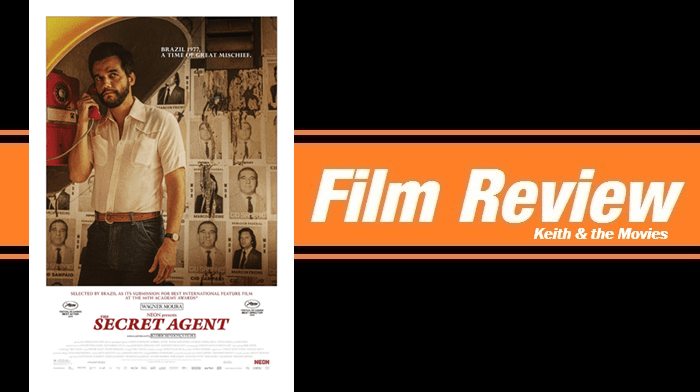
“The Secret Agent” opens with a sequence that highlights how beautiful filming in PanaVision can be. In sun-soaked rural Brazil, Marcela (Wagner Moura) pulls his canary yellow Volkswagen Beetle into a rundown gas station to fill up. After an encounter with a crooked local policeman, Marcela hits the road, eventually making his way to the city of Recife which is where the majority of the movie unfolds.

This opening sequence is an impressive introduction to the stunning look of this fascinating thriller. Brazilian director Kleber Mendonça Filho and cinematographer Evgenia Alexandrova shot “The Secret Agent” with PanaVision anamorphic lenses and vintage gear which not only captures the wider field of view, but it recreates the distinct visual style of the 1970s. And it’s not just some homage. The camera transports and immerses us into the story’s vibrant setting.

You could say “The Secret Agent” isn’t an overtly in-your-face political movie, but the politics of 1977 Brazil runs throughout this captivating period thriller. It’s described as “a time of great mischief” in the opening titles. But that seems gentile compared to the true Brazil of the time. The country was in the middle of a two-decade-long military dictatorship which saw the systematic persecution and silencing of those who opposed the authoritarian regime.

Image Courtesy of NEON

Once in Recife, Marcela seeks out Dona Sebastiana (a fabulous Tânia Maria) who secretly owns an apartment building that houses political refugees in hiding. We learn Marcela is one such refugee. His real name is Armando and he once was an engineering teacher and researcher. He was far from being a major threat to the regime’s stranglehold on power – a revealing point that Filho uses to emphasize the breadth of the era’s persecution.

We learn through a lengthy flashback segment that Armando was heading a university project on the verge of being shut down by a corrupt federal official named Ghirotti (Luciano Chirolli). Seeing the lucrative potential of Armando’s lithium battery studies, Ghirotti moves to shut down their department before selling their research to a private company that he owns stock in. But Armando and his wife Fatima (Alice Carvalho) resist, making them an enemy of Ghirotti.

Back in 1977, we learn that Armando’s wife died a short time ago and their son Fernando (Enzo Nunes) lives with her parents. Armando tells Fernando that his mother died from pneumonia, but we can’t help but be suspicious, especially after their run-in with Ghirotti. Speaking of Ghirotti, he gets wind that Armando is somewhere in the Recife. So he hires two hitmen from São Paulo, an ex-military thug Augusto (Roney Villela) and his step-son Bobbi (Gabriel Leone), to track down and assassinate Armando.
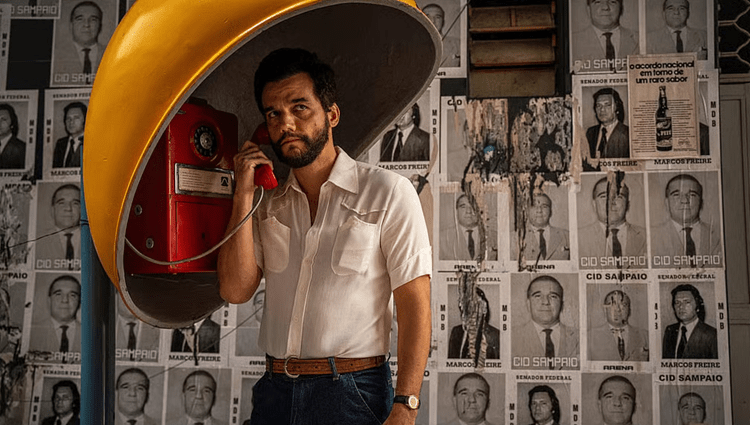
Image Courtesy of NEON

As you can tell, “The Secret Agent” has a lot going on and I’ve only scratched the surface. There are other key players with significant parts to play. We get some great scenes with Armando’s concerned father-in-law Alexandre (Carlos Francisco) who is a projectionist at the local cinema. The Chief of Police, Euclides Cavalcanti (Roberio Diogenes), is a corrupt lackey for the regime, doing their dirty work with the help of his two obedient sons. Even more intriguing is Elza (Maria Fernanda Cândido), the leader of a resistance network working to get Armando out of the city.

Wrangling together this many moving parts is no easy task. Yet watching Filho succeed is nothing short of fascinating. He works with an unhurried assurance, following his own set of rules at every narrative turn. At no point does he or his movie seem bound by formula or expectation. It brings a certain freedom to his filmmaking and storytelling. Yet that very freedom doesn’t always work in his film’s favor. Take his choice include a scene of a sentient severed leg attacking locals having open-air sex in a public park. In fairness, it’s based on an absurd newspaper cover-up story and it’s meant to symbolize the regime’s oppression of minority groups. But it’s such a preposterous and tonally distracting detour.

With this much story it’s not surprising that some characters and their storylines get shortchanged. Yet there is so much in Filho’s film to soak in. His richly detailed compositions transport us back to 1970s Brazil, vividly capturing every detail and never wasting an inch of the frame. From the sweltering heat to the chaos of the Carnival celebration, Filho immerses us into this turbulent period. Meanwhile Moura shines in a role that gets increasingly more complex as the story progresses. He is a terrific centerpiece to terrific movie.

VERDICT – 4 STARS

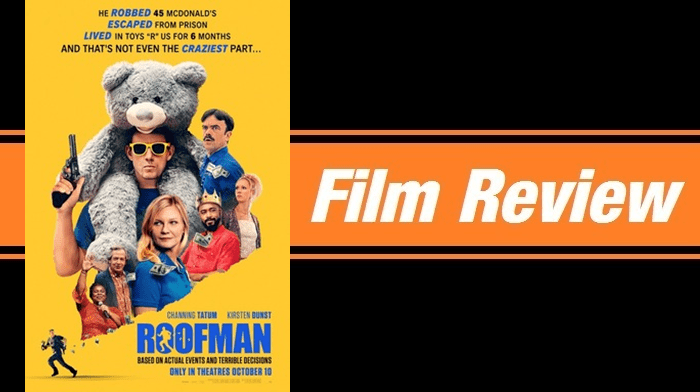
REVIEW: “Roofman” (2025)

“Roofman” is based on the real-life story of Jeffrey Manchester, a former U.S. Army Reserve officer turned small-time robber. Manchester committed as many as 60 robberies, mostly McDonald’s restaurants. He was finally caught in North Carolina and sentenced to 45 years in prison. But he would eventually escape, making his way to Charlotte where he secretly lived inside of a Toys “R” Us store. He hid there for months, unknown by the employees, living on baby food and candy.

Manchester’s story seems too ridiculous to be true making it prime material for a big screen adaptation. “Roofman” is directed by Derek Cianfrance who works from a script he co-wrote with Kirt Gunn. Channing Tatum plays Jeffrey Manchester who we first meet as he’s successfully robbing a local McDonald’s. While in the service, Jeffrey was a unique soldier known for catching details, recognizing systems, and memorizing routines. Those particular set of skills have made him a successful robber but they haven’t helped him at home.

Image Courtesy of Paramount Pictures

Jeffrey is crazy about his young daughter Becky (Alissa Marie Pearson). But his ex-wife Talana (Melonie Diaz) has grown tired of his flaky antics. And that only gets worse after he’s finally apprehended and sent to prison. Missing his daughter, Jeffrey uses the very same skills that made him a good thief to escape. While on the run, he finds the most peculiar hiding spot – inside of a Toys “R” Us store where he stays hid during the day and rummages during the night.

But the story’s wackiest turn comes when Jeffrey falls for Leigh Wainscott (Kirsten Dunst), a single mother who works at the store. Despite being all over the television, Jeffrey tracks Leigh to her church’s toy drive where he pretends to be new in town, brought there by his top-secret government job. He begins attending services, and even goes to a singles social where he charms the church ladies and eventually Leigh. Before long the two are going on walks in the park and hanging out with her teen daughters, the proudly geeky Dee (Kennedy Moyer) and the angsty older Lindsay (Lily Collias).

Some of the film’s silly additions make the already crazy real-life account even crazier, and not necessarily in a good way. Whether it’s lazier stuff like Tatum running around Toys “R” Us naked or the dumbing down of characters to make Jeffrey’s ruse work. Also, this is one of those predictable stories where you know everything is going to blow up in Jeffrey’s face. There’s simply no scenario where he can settle down with his old life or his potentially new one.

Image Courtesy of Paramount Pictures

Still “Roofman” remains watchable thanks to a cast who all seem to be having a lot of fun. This isn’t the first time Tatum has played an endearing dunderhead so he knows what he’s doing. Peter Dinklage gets some moments playing the bully Toys “R” Us manager, Mitch. Notorious screen villain Ben Mendelsohn has a blast going against type as Leigh’s pastor. LaKeith Stanfield gets a handful of good lines as Jeffrey’s cranky friend and former squad mate. And best of the bunch is Kirsten Dunst, an actress who is infinitely better than the material she’s working with.

“Roofman” certainly has its moments of fun, and Cianfrance mines some pretty good emotion and the occasional big laugh out of a wonky story. But the movie often feels tonally confused. And the writers seem more interested in telling a sanitary good guy tale than considering Lancaster’s crimes and what drove him to continue committing them. It leaves you with the feeling that there is a much better version of this gonzo true story still waiting to be told.

VERDICT – 2.5 STARS

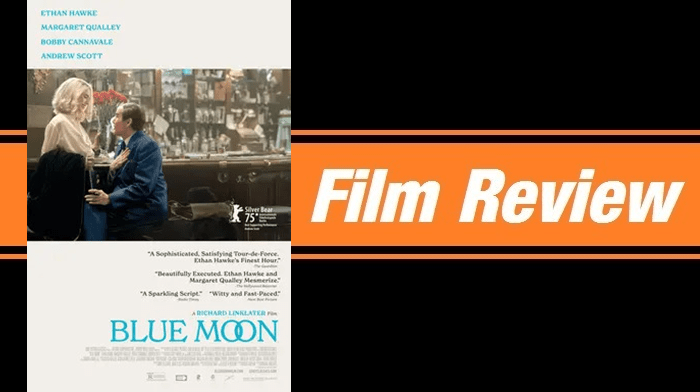
REVIEW: “Blue Moon” (2025)

The fact that Ethan Hawke has yet to win an Academy Award is nothing short of absurd. Throughout his remarkable 40-year career, the 55-year-old Austin, Texas native has delivered countless top-tier performances. Yet he’s only received two Oscar nominations for acting (and another two for screenwriting). And some of the snubs he has received still baffles me (nothing for “First Reformed”???).

Well 2025 could be his time as Hawke delivers a fascinating performance in “Blue Moon”. Reteaming with his old friend and frequent collaborator Richard Linklater, Hawke commits every ounce of himself into portraying lyricist and Broadway songwriter Lorenz Hart. He’s terrific, and to no surprise Linklater’s direction is focused and precise. But their film as a whole does too good of a job showing why Hart was ditched by his longtime musical partner, Richard Rodgers.

Image Courtesy Of Sony Pictures Classics

Rodgers and Hart collaborated for over 20 years, delivering a string of musical hits including “Blue Moon”, “Isn’t It Romantic”, “The Lady is a Tramp”, and many others. But Hart’s erratic behavior due to bouts with alcoholism and depression would lead Rodgers to partner with Oscar Hammerstein II. As a result, Rodgers and Hammerstein would become one of the most successful and celebrated creative duos in the history of stage and music.

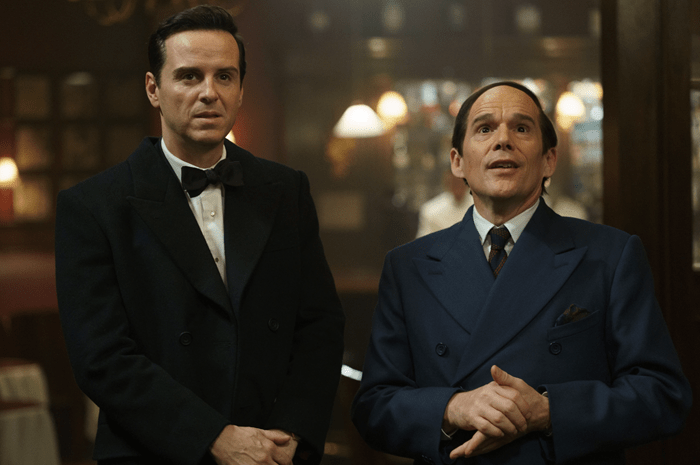
“Blue Moon”, written by Robert Kaplow, takes place on the evening of March 31, 1943. Acclaimed lyricist Lorenz Hart (Hawke) sits in the balcony with his mother Frieda (Anne Brogan) watching the opening night performance of the soon-to-be Broadway hit “Oklahoma!”. Noticeably uncomfortable, Hart slips out of the theater and makes his way to Sardi’s restaurant and bar where an after-show celebration is set to be held.

Once at Sardi’s, the crass and cynical Hart (known as Larry by those who know him) spends the next fifteen minutes ranting about “Oklahoma!” to the amused bartender Eddie (Bobby Cannavale) and the restaurant’s young piano player Morty (Jonah Lees). Deep down Larry may be hurt and even bitter, but he puts on a good show for his audience of two. From the start Hawke is fun to watch, impressively managing the dense dialogue despite some scenery chewing along the way. And Cannavale is a stabilizing force amid the verbal chaos.

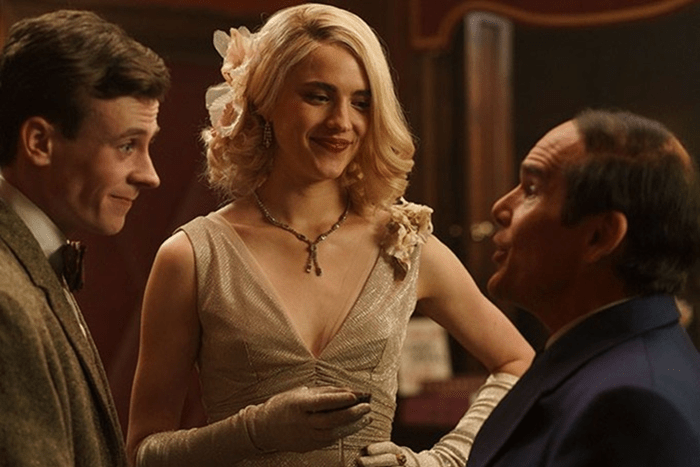
Larry’s attention soon turns towards what’s really on his mind – a 20-year-old Yale student named Elizabeth (Margaret Qualley). The two have been corresponding for months and even spent an innocent weekend together. Larry is smitten with Elizabeth and has used his connections to get her an invite to the after-party where he has promised to introduce her to his former partner, Richard Rodgers (Andrew Scott). But like so much in Larry’s life, their relationship is not what he believes it to be.

Image Courtesy of Sony Pictures Classics

The rest of the film takes place over the course of the evening, never leaving Sardi’s. Larry has a lengthy and mostly one-sided conversation with author E.B. White (Patrick Kennedy). He has his reluctant face-to-faces with Richard and Oscar Hammerstein (Simon Delaney). And he meets with Elizabeth, trying to muster the strength to share how he really feels. Between each exchange Larry retreats to the bar where Eddie listens, strokes his customer’s bruised ego, and attempts to keep Larry off the sauce.

“Blue Moon” is an interesting cocktail of drama, comedy, and biography. Despite being a fictionalized account, it will have a special appeal for the historically inclined. And the theater initiated will find nuggets buried all throughout that others might not recognize. But there are still things for the rest of us to appreciate, namely the uniformly strong performances led by Hawke. He energizes this talky bio that can sometimes be as obnoxious as its central character.

VERDICT – 3 STARS

REVIEW: “Sisu: Road to Revenge” (2025)

One of 2022’s biggest surprises was the historical action-fueled revenge thriller “Sisu”. The word “sisu” is Finnish and it has no single one-to-one English translation. It’s a word used by Finns that represents their national character. It conveys courage, grit, tenacity, and stoicism, especially in the face adversity. The movie “Sisu” embodied all of that and packaged it in a bonkers and bloody genre blast.

Now equally surprising, we have a sequel, “Sisu: Road to Revenge”. It’s pure and proud genre entertainment that’s more bonkers, much bloodier, and with a noticeable bigger budget. Writer-director Jalmari Helander is back, serving up a full-course meal for action lover’s. And Jorma Tommila returns as the film’s fury-filled silent protagonist, dishing out heaping helpings of justice on a variety of well-deserving Nazi and corrupt Soviet scumbags.

Image Courtesy of Sony Pictures

The story takes place in 1946. The Nazis have been defeated and the Soviets are taking advantage of the regional instability. Finland had been forced to cede a large portion of its land to Russia. Sitting within the now Soviet-owned territory is the old homeplace of Aatami Korpi (Tommila). He’s a former Finnish Commando still grieving the brutal murders of his wife and two sons by Nazi soldiers while he was away at war. Aatami is a quiet, solitary man. But as we saw in the first film, he’s not someone you want to upset.

Together with his beloved Bedlington Terrier, Aatami crosses the border and returns to his old home. The cabin that remains is all that’s left of his past life. So he dismantles it and loads the wood beams onto his truck, determined to transport it back to Finland and rebuild it in his family’s honor. But as he works, the Soviets get wind of Aatami’s presence. Knowing his violent reputation, a KGB officer (Richard Brake) travels to Siberia where he approaches imprisoned Nazi war criminal Igor Draganov (Stephen Lang).

We learn Draganov is the man who murdered Aatami’s family. He ruthlessly and proudly boasts of cutting Aatami’s wife and children to pieces with a shovel in order to save bullets. The KGB offer Draganov a deal – track down and kill the legend he created and he can go home a rich man. So as Aatami and his pup make their way back to the border, they’re suddenly pursued by the maniacal Draganov who throws everything at them including an APC full of troops, armored bikers, fighter planes, and more.

“Road to Revenge” opens and closes with two surprisingly moving sequences. Everything in between is quite literally non-stop action. Helander crafts one wild set piece after another, each a little bigger and a little bloodier than the one than came before it. By the end the movie reaches a point that some could argue is simply too absurd. But it works gloriously because Helander never takes the action too seriously. In fact, there are injections of black humor all throughout which ensures we never lose sight of what the movie is at its core.

Image Courtesy of Sony Pictures

It’s true, there’s not a much of a story and the characters are who they are from beginning to end. But that’s okay in a movie so assured of its identity. “Road to Revenge” prides itself in being a no-holds-barred action romp. Helander pulls no punches in letting the bullets spray, the blood splatter, and the limbs fly. As for his key players, Lang is no stranger to playing snarling villains and Blake is always fun on screen.

But it’s Tommila who sells it all the best and without uttering a single word. His steely intensity, the fury burning behind his eyes, and his fearless physicality infuse the action with grit and purpose. His straight-faced handling of humor makes the funny scenes funnier. And the amount of raw heartfelt emotion he brings to the story’s bookends begins and ends things on just the right notes. Impressively he manages it all in an openly over-the-top genre movie that never pretends to be something it isn’t.

VERDICT – 4 STARS

New on Home Video: “The Conjuring: Last Rites” on 4K Ultra-HD + Digital

Warner Bros. Discovery Home Entertainment and New Line Cinema are bringing one of the best horror movies of 2025 to home video. “The Conjuring: Last Rites” is the fourth and final installment in the wildly popular horror franchise centered around paranormal investigators Ed and Lorraine Warren. Patrick Wilson and Vera Farmiga reprise their roles as the renowned demonologists who reluctantly take on one final case that ends up threatening their family in ways they never expected. It’s a strong and fitting final chapter. Read my review [HERE].

This terrific 4K Ultra HD Blu-ray edition of “The Conjuring: Last Rites” includes a digital copy and will be available to purchase on November 25th. See below for a full synopsis of the film as well as a list of special features.

About the Film:

Year: 2025

Runtime: 135 Minutes

Director: Michael Chaves

Screenwriters: Michael ChavesIan Goldberg, Richard Naing, and David Leslie John-McGoldrick

Cast: Vera Farmiga, Patrick Wilson, Mia Tomlinson, Ben Hardy, Steve Coulter, Rebecca Calder, Elliot Cowan, Kila Lord Cassidy, Beau Gadsdon, Molly Cartwright, Tilly Walker, Peter Wight, Kate Fahy

Rating: R for bloody and violent content along with intense terror

“The Conjuring: Last Rites” delivers another thrilling chapter of the iconic Conjuring cinematic universe, based on real events.  Vera Farmiga and Patrick Wilson reunite for one last case as renowned, real-life paranormal investigators Ed and Lorraine Warren in a powerful and spine-chilling addition to the global box office-breaking franchise.

Special Features:

“The Conjuring: Last Rites” Digital, 4K UHD and Blu-ray contain the following special features:  

  • Last Rites: An Era Ends – featurette (8:45)
  • The Conjuring: Crafting Scares – featurette (8:40)
  • Michael Chaves: Believer – featurette (7:04)

REVIEW: “Train Dreams” (2025)

Throughout his thirty-year career, Joel Edgerton has shown himself to be an incredibly versatile actor. It’s a fact that is highlighted by the sheer array of roles he has taken on, whether in gritty crime films like “Animal Kingdom”, twisted psychological thrillers like “The Gift”, or hushed yet affecting human dramas such as “Loving”. His latest film falls into that latter category. In “Train Dreams”, Edgerton’s performance is quiet and understated yet with deep emotional depth. It’s a tremendous turn.

“Train Dreams” is the sophomore directing effort from Clint Bentley who also wrote the screenplay with his frequent writing partner Greg Kwedar. The two are coming off an Academy Award nomination for “Sing Sing”. Now they’re adapting Denis Johnson’s award-winning work which began as a 2002 short story in The Paris Review before being published as a novella in 2011. The duo bring the heart of Johnson’s story to the screen under Bentley’s assured direction. It results in one of the year’s very best films.

“Train Dreams” is a deeply affecting snapshot of life, with all of its joys and tragedies, as seen through the eyes of one man trying to find his place in a changing world. In one sense it plays like an echo of a bygone era, when the world seemed bigger and taming it came at the expense of men on the margins who tirelessly worked in the background of the rapidly expanding America. It’s also a moving and firmly grounded character study, spanning decades of one such man’s life.

Image Courtesy of Netflix

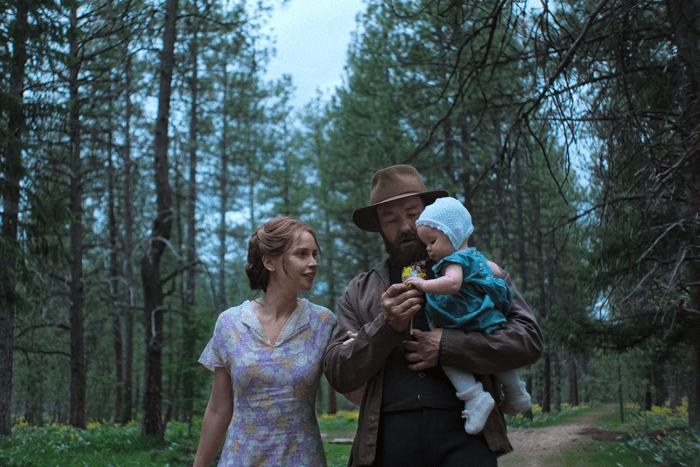
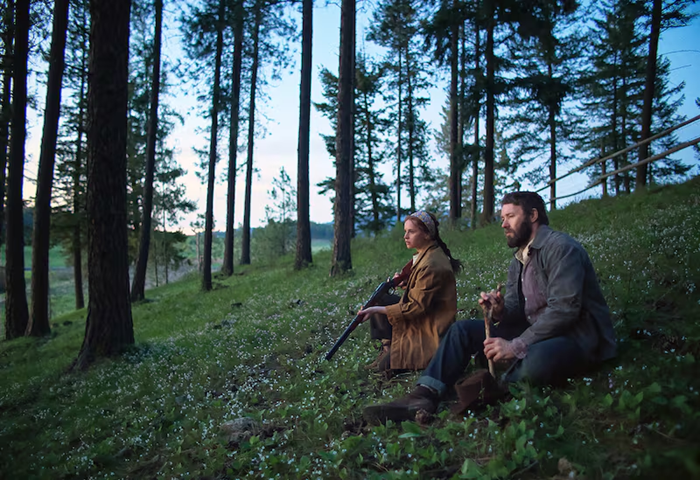
The story opens in the early 20th century during the boom of Western expansion. It follows Robert Grainier (Edgerton), an unremarkable man by the world’s standards who works as a logger in the Pacific Northwest. It’s solitary work done mostly by solitary men – a description that fits Robert well. He’s a hard worker who blends right in with the beautiful yet rugged wilderness. But underneath his burly exterior is a gentle and soft-spoken soul who mostly keeps his thoughts to himself. He’s more of an observer than a talker, yet we learn so much about him through Edgerton’s ability to speak volumes with very few words.

Robert takes a job with a railroad company, building a lengthy trestle bridge over a river gorge. It’s decent money, but it’s a decision he soon regrets. Robert witnesses the senseless killing of a Chinese immigrant co-worker in the name of justice. Despite not having a part, the guilt of not stopping it haunts Robert, prompting him to wrestle with an existential question for the remainder of the movie, “Do the bad things we do follow us in life?” After the job, he leaves the railroad and goes back to logging.

Robert’s solitude is interrupted when he meets and instantly falls for the forthright Gladys (Felicity Jones). In no time, the two end up married. They purchase an acre of land where they build a cabin on the banks of the tranquil Moyie River. Shortly after, they have a baby girl. For Robert, it’s the happiest he has ever been. And for the first time in his life he feels as if he has found his purpose. But just as he would get used to being at home, logging season would roll back around. And the jobs were taking him further and further away from home.

From the elegant opening frames, it’s obvious that Bentley is remarkably in-sync with the story he’s telling and the period he’s recreating. There is a poetic lyricism anchoring his storytelling which patiently progresses with an observant eye and a soul-stirring rhythm. There’s also a fascinating subtlety in Bentley’s handling of things, even later as Robert’s life takes a heart-shattering turn. Bentley maintains a quiet control of his material. And he knows what he has in Edgerton – an actor who can do heavy lifting with a single expression.

Image Courtesy of Netflix

There’s also Bentley’s reliance on visual language to convey feeling while also visualizing this very distinct era. The rapturous cinematography of DP Adolpho Veloso utilizes natural lighting and an assortment of striking lens choices to capture evocative compositions that offer more than simple eye-candy. His Malickian view of nature uses the camera to show how big and vast his world is. Yet the same camera gives us rich moments of heartfelt intimacy. And it’s all complimented by Bryce Dressner’s stirring score.

While Edgerton’s sturdy stoicism and gut-wrenching authenticity firmly centers the story, some fine supporting work proves equally valuable. As Gladys, Jones finds the perfect balance between delicate and determined. A terrific Kerry Condon gets a small yet touching role as a U.S. Forestry Service worker. William H. Macy is an absolute scene-stealer playing Arn Peeples, a talkative old-timer who is good with dynamite and at avoiding hard work. And the story is guided by the mellow narration of Will Patton who also did the original audio reading for Johnson’s book.

“Train Dreams” astonishes, both as an unvarnished slice of American history and a contemplation of our intrinsic bond with nature. But it connects most as the soulful birth-to-death odyssey of one solitary man navigating a life of small triumphs and immense tragedies. Clint Bentley has delivered something so deftly crafted and richly organic while Joel Edgerton does his best work in a career full of dynamic performances. They transport us to an impeccably realized period that is ruggedly textured and lived-in. But it’s the deeply human moments between the superbly etched characters that left me speechless and overwhelmed.

VERDICT – 5 STARS