

Writer-director Kogonada makes his third trip to the Sundance Film Festival with his latest feature, “Zi”. More of an experimental meditation than a plot-driven story, “Zi” speaks to the senses through Kogonada’s arresting visual style and three lights-out performances. For most of its running time, the film sweeps you away with its soulful spirit and thoughtful ruminations. That’s why it’s so frustrating to watch it veer off course at the final act.
Michelle Mao is terrific playing Zi, a quiet and somewhat detached young woman who we meet as she’s roaming the streets of Hong Kong. We listen in as she calls her manager to inform him she won’t be going on her orchestra tour. We watch as she pays a visit to the cemetery where her parents are buried and pours her heart out to them. But stranger than anything, we also witness her having visions of her future self which she tries keep up with. But her future self keeps slipping further and further away.
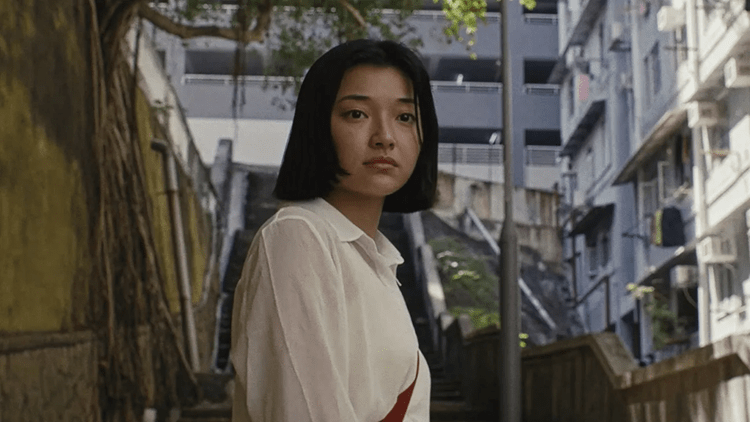
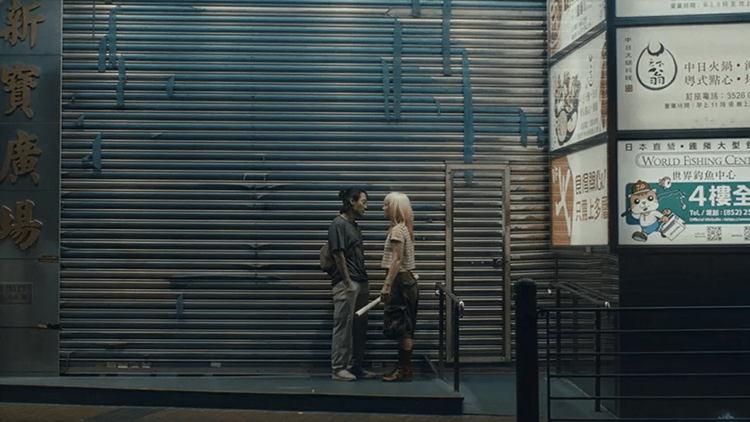
So what does it all mean? Kogonada asks us to go along with him, observing what he chooses to show and picking up morsels of information he drops along the way. Without giving away too much, Zi has received some devastating news and she has never felt more alone. But her seemingly hopeless path comes to a life-changing intersection when she meets a young American woman wearing a bad wig who introduces herself as Elle (Haley Lu Richardson).
Elle is a blustery free spirit from Arizona who is wandering around Hong Kong “collecting sounds”. Zi tries to blow her off, but the persistent Elle sticks around, finally getting Zi to open up about her problems. Elle insists they go see her friend Min (Jin Ha), a researcher who may be able to explain Zi’s visions. What unfolds is a night on the town where the trio reveal some compelling old connections and some not so compelling new ones.
There is an air of mystery surrounding the story which Kogonada embellishes through his striking visuals and rich sound design. He and cinematographer Benjamin Loeb employ a 4:3 aspect ratio which adds intimacy while giving the film an ethereal vibe. Meanwhile pulsating in the background is a shrewdly calibrated assortment of sounds, from gentle wind gusts to melancholic piano chords to rhythmic electric buzzes. All contribute to the shifting tenors of the story.
But sadly Kogonada loses his way in the final minutes by throwing in an abrupt and rather heavy-handed spin that feels tacked-on rather than organic. It tilts the story in a direction that doesn’t feel earned, and it takes time away from other story threads that need more explaining. It’s a frustrating shift that shortchanges the soulful and captivating experience Kogonada had built to that point.
“Zi” is not a movie angled towards casual audiences. It’s aimed at those who can get onboard with its unique wavelength. But even then, in-tune viewers might find themselves discouraged at how a beautifully beguiling story can go off track so quickly. It’s unfortunate because Kogonada shows some of the same creative verve that has made him one of the most interesting filmmakers working today. But here he stubbles with a slapdash finish that undermines much of what came before it.
VERDICT – 2.5 STARS







 Keith & the Movies