
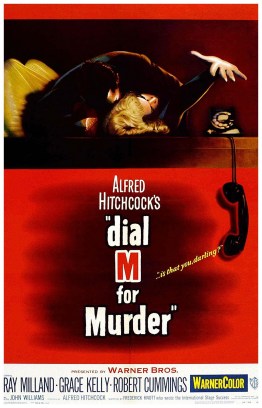
 It may not be the most acclaimed Alfred Hitchcock film, but “Dial M for Murder” is an intelligent and capable murder mystery adapted from Frederick Knott’s play. While there are special Hitchcock touches throughout the film, it’s Knott who really makes this such a memorable picture. He wrote the screenplay and kept most of his original work intact. The movie sharply resembles a play particularly by the fact that the majority of the film takes place in one single setting, a London apartment. Also, the dialogue flows in a way that favors what you would see on stage. But it’s that same dialogue delivered by some really strong performances and mixed with Hitchcock’s slick use of the camera that gives this movie it’s appeal.
“Dial M for Murder” explores the idea of the perfect murder. Ray Milland plays Tony Wendice, a professional tennis player who has enjoyed a lavish lifestyle thanks to his wife Margot’s wealth. After growing frustrated with Tony’s constant absence and busy schedule, Margot (Grace Kelly) begins a fling with an American writer named Mark Halliday (Robert Cummings). Tony finds out about the affair and fearing the loss of his meal ticket, he plans the murder of his unfaithful wife, leaving him her fortune. It’s a foolproof plan, carefully thought out to the smallest detail. But what may look good on paper doesn’t always translate well into real life.
The story is straightforward but structured and it pays great attention to the details. Clues are littered throughout the film with almost every seemingly small action from the characters having some type of relevance. It’s such a tight-knit and well-crafted story and watching it unfold is very satisfying. The story never trips over itself and Hitchcock let’s Knott’s script do most of the heavy lifting. The dialogue drives the film and it doesn’t rely on twists, turns, or red herrings. In fact, the narrative moves in a fairly straight line and never strays from it’s path. But I found it effective especially considering the movie is basically a single location cinematic play.

A movie of this sort only works with strong and grounded performances and “Dial M for Murder” certainly has them. I love watching Ray Milland’s shrewd and savvy Tony. He perfectly relays Tony’s arrogance and overconfidence in a way that never feels disingenuous or overwrought. He has a remarkable screen presence and is perfectly cast. Speaking of screen presence, the gorgeous Grace Kelly is mesmerizing. Whether it be her physical beauty and elegance or her graceful and authentic performance, Kelly steals almost every scene she’s in. I also loved John Williams as Inspector Hubbard. He’s fun, smart, and never misses a beat.
I suppose the location restrictions and the straightforward story could be considered faults especially for those comparing this film to some of Hitchcock’s other movies. But I loved how Hitchcock keeps the Wendice’s apartment fresh with inventive camera shots and clever angles. I can also appreciate the direct although conveniently tidy narrative. It’s an intelligent film that puts a solid story in the hands of some fantastic actors and lets them go from there. I always have fun with “Dial M for Murder” and it’s strongest message is this – keep up with your latchkey!
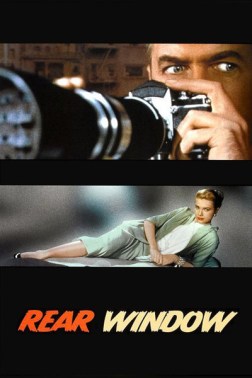 Alfred Hitchcock’s suspense thriller “Rear Window” is revered by many as one of the director’s finest films. You would have a hard time getting me to disagree. “Rear Window” is a voyeuristic mystery picture that takes place in one single confined location and is all shown from the perspective of the main character. It’s an interesting approach to storytelling but one that’s very effective. There are many recognizable Hitchcockian touches throughout the picture yet it retains a uniqueness that separates it from most of his other films.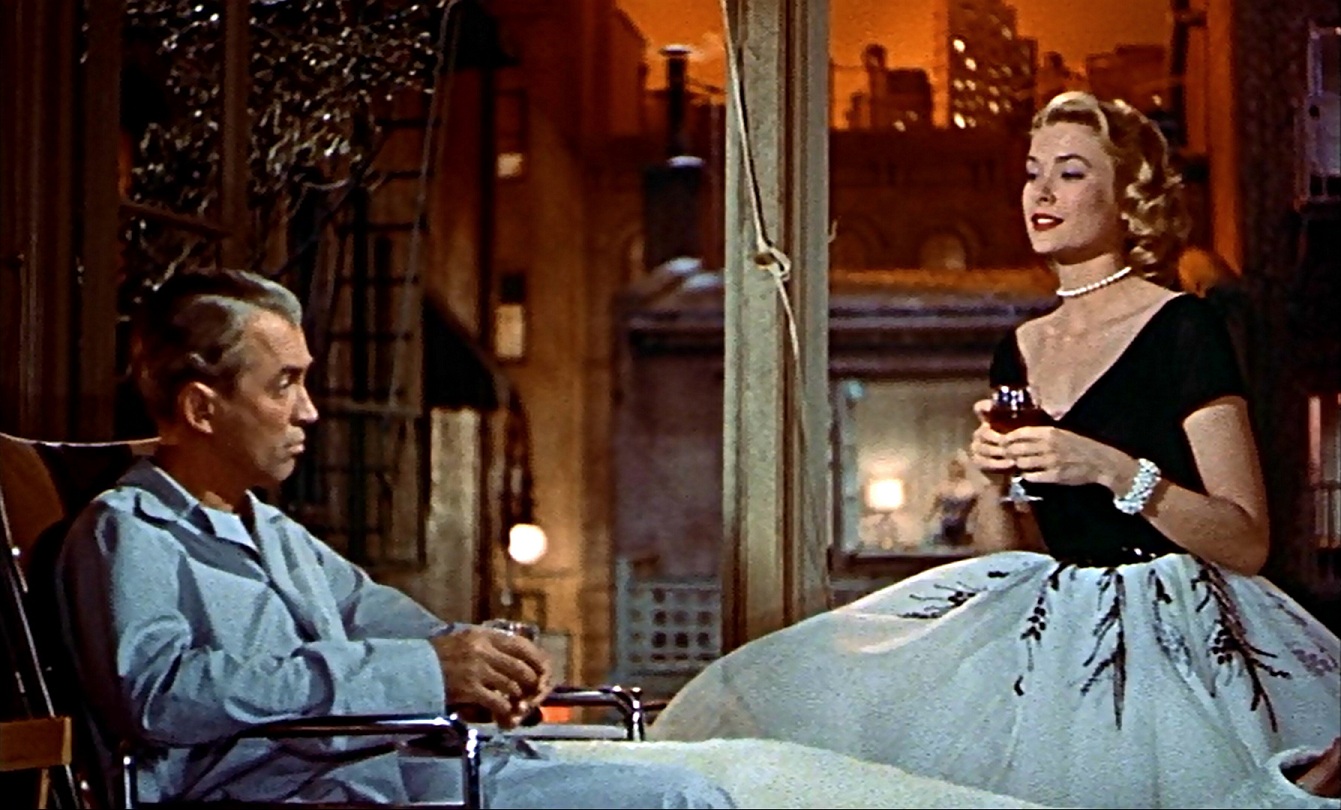


 Keith & the Movies