REVIEW: “A Hero” (2021)

(CLICK HERE to read my full review in the Arkansas Democrat-Gazette)

For my own personal money, there are only a handful of must-see filmmakers in the business today. I’m talking about consummate storytellers with a cinematic vision and/or voice so profound that I’m compelled to see every movie they put out. When talking about those uniquely gifted few, Iranian auteur Asghar Farhadi is unquestionably near the top of my list.

Farhadi’s filmmaking talents are explicit in every movie he makes and the more you watch him the more you see him returning to many of the same themes. His movies often feature layered stories that poke at both social and cultural norms of modern day Iran. They also tend to dig deep into human nature often through the prism of everyday family conflict. And Farhadi has never shied away from using his characters and their situations to pose thought-provoking moral questions. He wraps it all in a slow-simmering down-to-earth suspense.

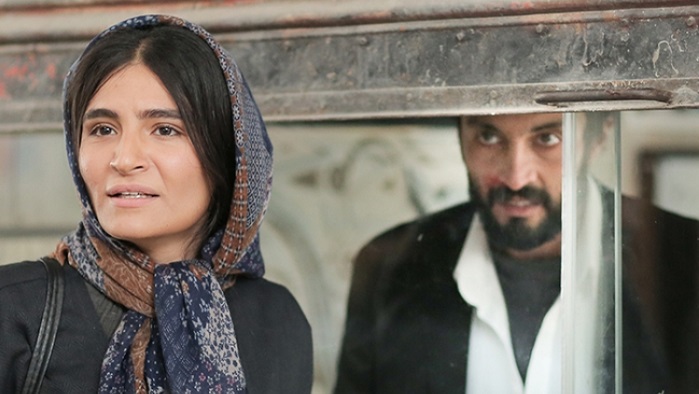
“A Hero” is yet another mesmerizing Farhadi tale that highlights his strengths both as a screenwriter and a director. In terms of script, the story is dense and dialogue-heavy, resembling a modern day morality play with a touch of mystery. It has a fascinating cyclical structure that repeatedly brings us back to the story’s central conflict while adding more pieces to the puzzle with each visit. As for his direction, Farhadi maintains a tight control of his story, moving it along at an organic pace and often using his camera as much as his pen to capture both emotion and perspective.

Image Courtesy of Amazon Studios

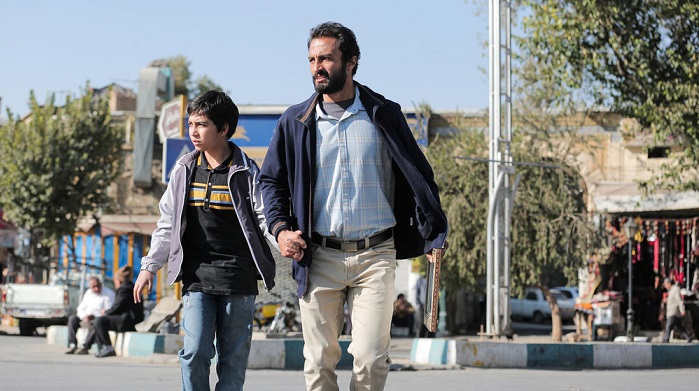
The story revolves around a man named Rahim who’s serving jail time due to an unpaid debt. The film opens as Rahim is given a two-day furlough which he hopes to spend mustering up a plan to pay back the money rather than going back to prison. Rahim is played with a disarming gentleness by Amir Jadidi. It’s a shrewdly subtle lead performance that at times feels like it has a baked-in Bressonian influence.

As with most of Farhadi’s characters, there’s more to Rahim than meets the eye. His backstory is untangled through a number of conversations and revelations. We learn he borrowed money from a loan shark to start a business but was double-crossed when his thieving partner ran out on him. So Rahim sought the help of a family friend Bahram (Mohsen Tanabandeh) who bailed him out with the loan shark under agreement that Rahim would pay him back. When he couldn’t, the surly Bahram filed a complaint and had Rahim put in jail.

That all may sound pretty cut and dry and those unfamiliar with Farhadi’s storytelling cadence may be tempted to make quick judgments on who’s the hapless hero and who’s the unforgiving villain. But there’s much more to unpack as pieces of the story fall in and out of place. And as with everyday life, things are often more complicated than they first appear.

Image Courtesy of Amazon Studios

The tricky part comes in the form of a handbag containing 17 gold coins. Rahim’s secret fiancé Farkhondeh (Sahar Goldust) finds the purse at a bus stop and immediately believes she has found a solution to her beau’s problem. The two first try selling the coins hoping to get enough money to pay Bahram so that he’ll withdraw his complaint. But after learning gold prices have tanked, they’re forced to think of something else. They decide to put up fliers around the city hoping the owner will see them and respond. After all , a little good press certainty wouldn’t hurt his plight. And news of a good deed from a man in need just might earn the sympathies of people willing to help his cause.

To talk much more about the story would be doing a disservice because “A Hero” is all about methodically peeling back its layers one by one. I’ll just say things get complicated especially when the bag’s grateful owner answers one of his fliers. There’s also a poignant father/son dynamic between Rahim and his speech-impaired son Siavash (Saleh Karimai). Their relationship not only has a significant role to play, but it features the film’s most moving moments (one especially evocative scene instantly called to mind De Sica’s “Bicycle Thieves”).

Farhadi unwraps it all without ever passing judgement or looking down on his characters. His eye-level storytelling enables us to understand every key player and grasp their points-of-view. He then counts on his audience to be the final judge. Along the way, he has things to say about social media, class, and the justice system while plowing into deeper themes of honor, integrity, and self-respect. It may not pack as big of a punch as some of his past work, but “A Hero” embodies everything I love about an Asghar Farhadi film, from its visually arresting opening to its beautifully understated finish. “A Hero” is now streaming on Amazon Prime.

VERDICT – 4.5 STARS

Sundance Review: “Alice” (2022)

Genres galore make up the craziness that is Krystin Ver Linden’s “Alice”, a film that teases big things but is ultimately undone by both its ambition and execution. It’s a movie centered around an idea that has all the potential to be a wild and stylish Tarantino-esque revenge thriller. Instead, “Alice” never gets its footing and is compromised by woefully underdeveloped characters, a scattershot script, and narrative shortcuts galore.

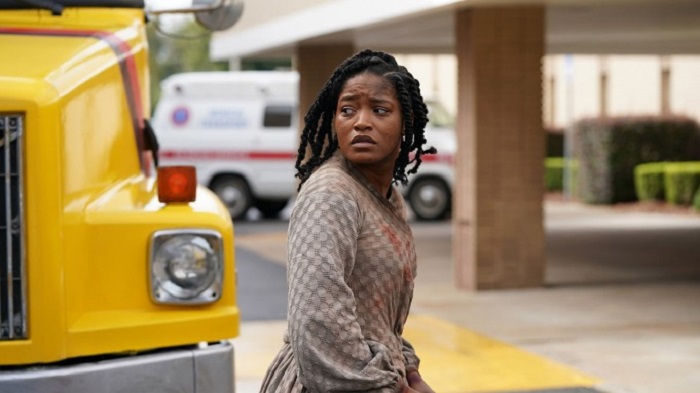
With a twist that would make M. Night Shyamalan blush, the title character Alice (Keke Palmer) escapes from a late 19th century Georgia plantation only to discover the year is actually 1973. If the premise sounds familiar that’s because 2020’s “Antebellum”, a movie that wasn’t nearly as horrible as the pounding it took would indicate, was built around a similar twist. With “Alice” it’s mostly about the revenge…kinda.

Without question, Palmer is the film’s biggest strength and she does her best with the haphazard screenplay (written by Ver Linden). But neither the early scenes on the plantation or the 1973 scenes that follow allow her room to do anything interesting with her character. And as the movie spirals from perplexing to laughably bad, Palmer is left stranded with little to do but stick with it till the end.

Image Courtesy of Sundance

Minus some missing details (possibly due to budget constraints), the early scenes are pretty convincing. In fact, another strength is in the production design and how well Ver Linden captures two vastly different periods. The plantation setting is believable in large part thanks to the location, costumes, and the immersive way Ver Linden shoots it. The issue (as it is throughout the film) is the storytelling.

While the antebellum plantation scenes look great and the performances are solid, they check more boxes than tell a good story. You have the slaves working the crops while the berating white foreman looks on. You have the by-the-book wicked plantation owner Paul Bennet (Jonny Lee Miller). You have the seemingly mandatory one scene of a slave being tortured. And you have the various attempts to escape. In between it all is Alice who we first meet as she secretly weds her love Joseph (Gaius Charles), a smart, strong and passionate fellow slave.

After learning he’s about to be shipped away to another plantation, Joseph attempts an escape, vowing to come back for Alice. But when he’s captured and beaten to a pulp, Alice can’t take it. She tries an escape of her own, running to the point of exhaustion. With little strength left, she wanders out of the woods onto a paved highway where she’s nearly hit my a big rig. Yep, it’s 1973. After fainting, the truck’s driver, Frank (Common, working at the exact same temperature and tenor as he does in every film) takes her to an area hospital, convinced she has amnesia. Oh how little he knows.

Image Courtesy of Sundance

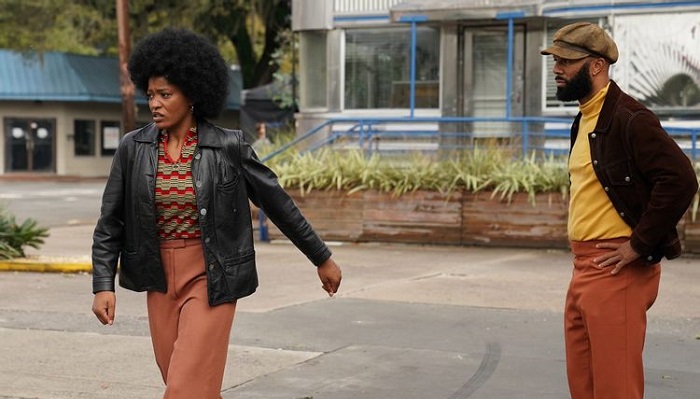
After some truly silly and narratively convenient guesswork, Frank decides to take her to his house (with little thought and practically no buildup) to help jog her memory. He starts by sharing life’s finer pleasures such as “Sanford and Son”, soul music, and bologna sandwiches. But who knew all it would take was an encyclopedia, a few newspaper clippings, and Pam Grier’s “Coffy” for Alice to get caught up on African-American history and current day fashion. Quite literally, within 24 hours Alice is fully adjusted to 1973 society and in full avenging angel mode.

“Alice” hits a point where its Blaxploitation motifs kick into gear and the movie teases something it never fully delivers. Yes, Alice puts together a plan to return to the plantation so she can free her people and dish out some good old-fashioned revenge on the Bennets. But the Pam Grier vibes are paper-thin, and other than her look, Alice never feels anything like her inspiration. Nor does this movie have any of the energy or style of those 70s era genre flicks.

“Alice” is a movie chock-full of squandered potential. Outside of Keke Palmer’s committed performance and some visual touches showing Ver Linden’s promise as a director, there’s little here to latch onto or get excited about. Its issues really come back to the writing which ranges from dreadfully shallow to glaringly on the nose. It keeps “Alice” stuck in a weird gear and never allows it to get as crazy as it could be or as insightful as it should be.

VERDICT – 1.5 STARS

Sundance Review: “After Yang” (2022)

(CLICK HERE for my review in the Arkansas Democrat-Gazette)

One of my favorite directorial debuts in recent years came from the South Korean-born American filmmaker Kogonada. His artful and quietly stirring “Columbus” from 2017 really left its mark on me. It was a movie full of longing and soul-searching. It also showed off Kogonada’s moving contemplative style. One he honed while working as a video essayist, spotlighting legendary auteurs from cinema’s rich history.

His latest film “After Yang” has a similar emotional depth and texture as “Columbus”. Set in the not-to-distant future, the story hits me in one of my soft spots – daddy/daughter relationships. In this case, it’s a father looking for a way to repair his little girl’s beloved android companion named Yang. The science-fiction twist may give pause to fans of Kogonada’s previous work. But rest assured, “After Yang” features the same mix of emotion and craft that made “Columbus” such a joy.

Already nabbed for distribution by A24, “After Yang” has rightfully received mostly positive reviews following its North American premiere at Sundance. Much like “Columbus”, this is far from a mainstream film and those unable to get in tune with its quiet patient rhythm and introspective gaze may find themselves checking out. But without question, it’s completely worth your effort.

What Kogonada has given us is essentially a reflection of humanity, full of thoughtful meditations on life, loss, the meaning of family, and finding our place in the world. He takes his fairly simple premise and adorns it in sci-fi dressing. But at its heart, the movie seeks to engage your mind, heart, and senses. But for that to work, we have to be immersed in its world. Kogonada does that by using some of his favorite ingredients – nature, architecture, rich colors, the soothing piano chords and aching strings of the score. These familiar creative strokes help give Kogonada’s films their identity.

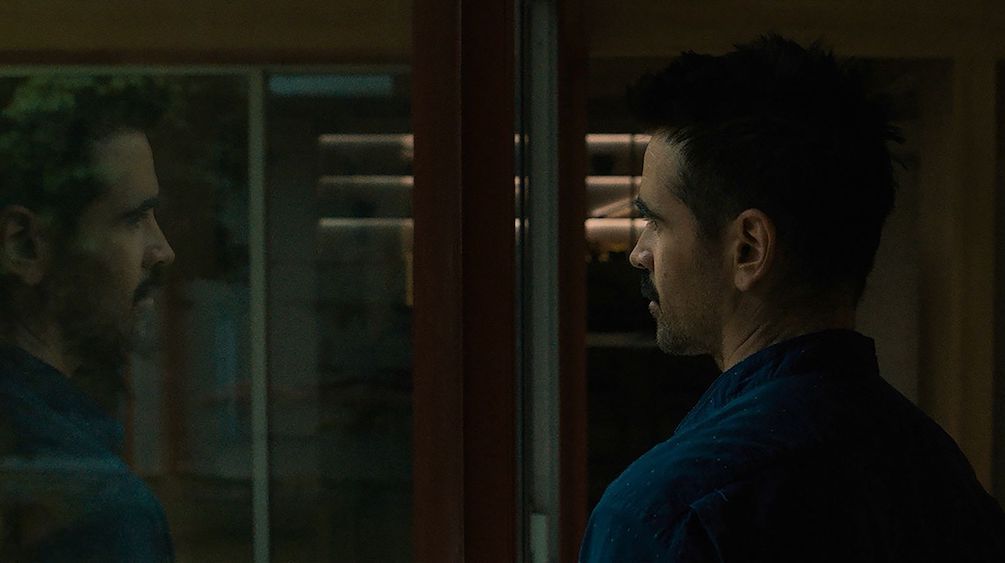
Jake Flemming (Colin Farrell), his wife Kyra (Jodie Turner-Smith), their adopted daughter Mika (Malea Emma Tjandrawidjaja), and their android Yang (Justin H. Min) make for a sweet and happy family. Jake owns a tea shop where he spends much of his time exploring new recipes. Kyra is a businesswoman whose job requires her to work long hours. That leaves Mika with Yang, a “certified refurbished” big brother figure, purchased by Jake and Kyra to help their daughter connect with her Chinese heritage. The two become inseparable to the point where Yang knows Mika better than her parents do.

But then one evening Yang shuts down and won’t restart. Jake sets out to have him repaired, begrudgingly at first but urged on by his daughter’s heartbreak. He quickly learns that buying an android (called “techno-sapiens”) secondhand was a mistake. Yang should still be under warranty, but finding the dealer to honor it proves impossible. He tries an uncertified repairman (Ritchie Coster), but all he gets are half-baked conspiracy theories about techno-surveillance and secret android spyware.

Image Courtesy of Sundance

Meanwhile Yang’s absence has a ripple effect across the household with each member feeling the weight of their loss. While he was chosen and bought specifically with Mika in mind, Yang was a sweet, compassionate and supportive presence for the entire family. Kyra and especially Jake quickly begin to understand the power of their attachment to Yang and the sense of loss that comes with his absence.

Running out of options, Jake seeks out an A.I. museum curator named Cleo (Sarita Choudhury) who helps him connect to a database of recorded memories stored inside of Yang. As Jake begins perusing these short video clips (one for every day of Yang’s ‘life’), he’s taken on a bittersweet journey of self-discovery. He finds himself deeply affected by Yang’s warmly poetic way of looking at the world. It moves him to take stock of himself and reflect on the life he’s been living. Like George Bailey in a much lower key, he has a wonderful life and it takes him seeing it through an android’s eyes for him to open his own.

But there are also secrets buried deep within Yang‘s memories. A mysterious young woman (Haley Lu-Richardson) who Jake has never seen before pops up in several of Yang’s memory clips. It’s forms the heart of a sweet and subtle mystery that Kogonada delicately unpacks to reveal something unimaginably beautiful yet in its own way even more heartbreaking.

Kogonada’s goal is to engage you emotionally and a key means of accomplishing it is through the visuals. There are subtle yet undeniably artful choices with things like color and aspect rations that help convey the film’s solemn and soulful mood. Take the distinctions between Jake’s world and Yang’s memories. Jake is routinely surrounded by dim gloomy shadows accented by the dull glow of orange and blue neon – a perfect way to convey his feelings of sorrow and detachment. Contrast that with Yang’s memories where the colors grow richer and brighter and even the framing of shots lends to the sensation of innocence and wonder.

If there is one gripe I have, it’s that I wish we were given a few more scenes with Yang prior to his malfunction – scenes that would let us develop our own connections to him. Instead, we’re solely dependent on pieces of memory from his family. It’s enough, but I can only imagine the punch it would pack if we had been given more time to nurture our own feelings. But ultimately that’s a small gripe and one that I barely struggle with.

Despite its compelling sci-fi elements, “After Yang” is very much an intensely human drama, quietly profound and gracefully subdued. Loosely adapting an Alexander Weinstein short story, Kogonada uses his camera just as much as his script to pull us into his world and tell this metaphor-rich story. There’s so much detail, from the East Asian influence guiding Alexandra Schaller’s production design and Arjun Bhasin’s costumes to the meticulously conceived compositions. But there’s also the performances, so grounded and rooted truth. Ultimately all of its pieces prove vital to the experience. And what an experience it is!

VERDICT – 4.5 STARS

Sundance Review: “A Love Song” (2022)

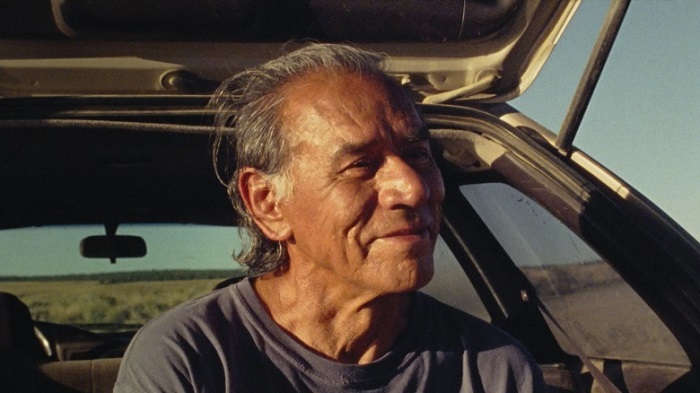
I’ve always had a deep admiration for Wes Studi and what he brings to his movies. Whether it was his role as the brutal yet complex Magua in Michael Mann’s “The Last of the Mohicans”, his often underappreciated portrayal of Geronimo in Walter Hill’s “Geronimo: An American Legend”, or playing a police detective alongside Al Pacino and Robert De Niro in “Heat”. There’s an unmistakable sincerity and gravitas Studi brings to every film he’s a part of.

So what better way to start my 2022 Sundance Film Festival than by screening a new drama that sees the 74-year-old Studi given a nice meaty role. The film is “A Love Song”, written and directed by Max Walker-Silverman. As the title suggests, this isn’t the kind of movie Studi is most known for. But for fans of his work, it’ll come as no surprise to hear that he, much like the film itself, is a joy to watch.

But the real star of “A Love Song” is Dale Dickey, an outstanding character actress who may be best remembered for her scene-stealing work in 2010’s “Winter’s Bone”. This is a rare leading role for Dickey whose name you may not remember, but whose face is impossible to forget. It’s a remarkable face chiseled out of real life and with bone-deep honesty found in every look and every expression. She’s a perfect choice for Walker-Silverman’s film which sees him working on the same lyrical meditative wavelength as Kelly Reichardt and pre-“Eternals” Chloé Zhao. But Walker-Silverman brings enough of himself to “A Long Song” to give the film its own special identity.

Image Courtesy of Sundance

In “A Love Song”, Dickey brings her signature quiet intensity but this time to a much different character. Here she plays a widow named Faye who hitches her small camper trailer to her Chevy S-10 and drives it to a remote Colorado campsite. She sets up next to a small lake with the Rocky Mountains sitting in the distance like a watercolor painting still wet on the canvas. This is where she’ll stay for the rest of the film’s lean 80-minute running time.

At first, it may be tempting to get caught up in Faye’s similarities to Frances McDormand’s Fern from last year’s Best Picture winner “Nomadland” or to Robin Wright’s Edee from Sundance 2021’s “Land”. But while all three woman unquestionably have things in common, Faye has several distinctions that separates her from the other two. Those distinctions also set this movie on a different course which I was delighted to see.

We don’t learn a lot about Faye or where she came from, but that actually serves the minimalist storytelling perfectly. We do find out she once flew planes for the forestry service. She’s also one heck of a mechanic. And she loves listening to music on her Longines Symphonette World Traveler AM/FM radio. “It always plays the perfect song,” she says in a tender scene later in the film, “even if in the moment you ain’t sure why.” Faye birdwatches (poorly) during the day. Then it’s Busch beer and crawfish for dinner as she watches the sun set over the mountains. After dark, she searches the starry sky for constellations. And that’s her routine.

As you watch Faye, it’s hard to miss her melancholy gaze; the sense of loneliness; the shallowly buried heartache. The source of her sadness is the death of her husband Tommy. He’s been gone for seven years, yet you can tell she’s still carrying the weight of grief. But unlike Fern, who finds contentment in unplugging and living on the road or Edee, who disconnects from society altogether, Faye is at the lake for a specific reason. She’s waiting for someone she hopes will come.

Image Courtesy of Sundance

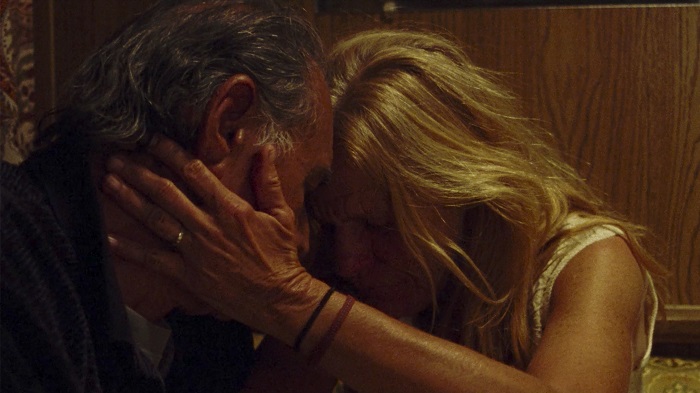
That someone is Lito, an old classmate and crush who Faye hasn’t seen in decades. Much like Faye, Lito has recently lost his spouse, Shirley. It’s not really a spoiler to say that Lito does come and the two wounded souls reconnect. Walker-Silverman’s script allows for all of the awkwardness, uncertainty, and even guilt to bleed through. And the restraint of two performances feels as natural as the painterly surroundings that adorn nearly every frame. Their conversations are simple but true, and it’s often what goes unsaid that resonates the most. And while nothing about their reunion is assured, Faye and Lito long so deeply for companionship that it’s worth a shot.

While the theme of loneliness reverberates throughout the movie, Walker-Silverman also makes it a point to show us the essential nature of human connection. Faye has reoccurring encounters with an assortment of quirky side characters. My favorite is a well-mannered young cowgirl and her four significantly older brothers (the little sister clearly runs the show). They would feel right at home in a Coen brothers comedy. There’s also the camp’s courteous postman and a couple camped out on the other side of the lake. Their appearances may seem inconvenient, but they always pop up when Faye seems at her lowest. And their presence takes her mind off of her sadness.

With “A Love Song” Max Walker-Silverman has given us a delicate, honest, and soulful study of loss, loneliness, and navigating grief. It’s a beautiful and touching exploration, handled with keen instincts, remarkable control, and a clear affection for the story being told. Not only does the film showcase an exciting emerging voice, it also gives starring roles to two exceptional veteran actors. And that’s something all too rare in movies these days.

VERDICT – 4.5 STARS

REVIEW: “A Journal for Jordan” (2021)

Denzel Washington directing? Michael B. Jordan starring? You bet I’m in on the new romantic drama “A Journal for Jordan”. The film is based on the 2008 memoir written by Dana Canedy about her fiancé, United States Army First Sergeant Charles Monroe King. It tells the true story of how the couple met and eventually fell in love. It also tells of Charles’ deployment during the Iraq War, while a pregnant Dana Was back home waiting to deliver their baby boy, Jordan.

Adapted by Oscar-nominated screenwriter Virgil Williams, “A Journal for Jordan” tells a story that you can’t help but admire. Its romantic angle is sweet and sincere while the inescapable sense of tragedy looms over the entire film. On screen, the movie is energized by the chemistry between stars Jordan and Chanté Adams. Behind the camera, Washington’s patient approach is both a blessing and a curse. It gives the movie’s central relationship room to breathe and take root. But it also drags things out longer than they need to go.

In a way “A Journal for Jordan” feels like a movie from another time. Most of today’s franchise-formed preferences have all the patience in the world for the latest big tent-pole blockbuster. But an old-fashioned straight-shooting melodrama (the kind audiences 30 years ago would gobble up no questions asked) is a hard sell these days. That’s one reason I wouldn’t be surprised if the film gets a mixed reception.

Image Courtesy of Sony Pictures

Another reason is the overall conventional feel of the story, specifically during the first half. Though sweet and genuine, watching the sprouting relationship between Dana and Charles, complete with its highs and lows, rarely gets out of first gear. Jordan and Adams add a romantic spark and Washington’s unrushed direction allows us time to get to know these characters. But outside of the lingering hand of fate waiting to be dealt, the story never generates much buzz. Washington seems to know this so he shakes things up a bit by moving back-and-forth across the timeline.

Adams gives an eye-opening performance playing Dana who we first meet as an ambitious and hard-working reporter for the New York Times. While visiting her parents for the weekend, she meets Charles for the first time. He’s a noble and gentlemanly soldier who has been in the army for 11 years. The two opposites attract and begin a long distance relationship that (eventually) blooms into a full-blown love story.

But as the world changes post 9/11, Charles is sent to Iraq adding an extra obstacle to their relationship. But Dana is convinced she’s ready to start a family so the two decide to have a baby. She gives Charles a journal to write to his on-the-way son Jordan while overseas. The journal becomes a key piece of the story once Charles is killed by an IED during a mission.

Image Courtesy of Sony Pictures

That may sound like a spoiler, but it’s a plot point the movie doesn’t try to hide. In fact, Washington uses it as the film’s emotional center as he traverses his timeline. It adds a tragic layer to the romance we see in the flashback sequences, and it’s the catalyst for how the later-set scenes play out.

When you put it all together it’s hard to knock what “A Journal for Jordan” is going for. The characters feel authentic and true. The true story of their relationship is both inspiring and heartbreaking. And Washington’s deliberate and unvarnished direction is the kind we rarely get these days.

Yet there’s something missing that I can’t quite put my finger on. It’s a little too long and the story doesn’t feel particularly balanced. But there’s something else – something that doesn’t quite give the movie the gut-punch it needs. It tries to compensate with a really effective final scene. But it seems like there was so much more the movie could have done with this deeply moving story. “A Journal for Jordan” is now showing in theaters.

VERDICT – 2.5 STARS

REVIEW: “American Underdog” (2021)

(CLICK HERE for my full review in the Arkansas Democrat-Gazette)

NFL quarterback Kurt Warner’s journey from stocking shelves at a grocery store in Cedar Falls, Iowa to being inducted in the Pro Football Hall of Fame in Canton, Ohio is nothing short of remarkable. The personable, faith-driven graduate of the University of Northern Iowa spent four years after college fearing his dream of playing pro football was over. But when a near providential opportunity came his way, Warner went from the supermarket to the Super Bowl.

“American Underdog” sets out to tell the story of Kurt Warner’s rise to football stardom, chronicling the numerous highs and lows that made his journey such an inspiration. The film is directed by Andrew and Jon Erwin whose faith-based catalog includes movies like 2018’s “I Can Only Imagine” and last year’s “The Jesus Music”. Here the brothers deliver a sports biopic that really is about the person more than their accomplishments. That doesn’t mean it avoids all of the usual sports movie trappings. There’s plenty of melodrama and of course we get the overly dramatic ‘big game’, complete with swelling music and obligatory slow-motion. But at its heart, the movie sticks to the personal side of Kurt Warner’s story which proves to be the right move.

Image Courtesy of Lionsgate

This is one of those movies that’s hard for me to dislike even with its noticeable flaws. I’m a sucker for true underdog stories and Warner’s is undoubtedly one of the most amazing in sports history. Here he’s played by the effortlessly likable Zachary Levi (“Shazam”) who may be a tad too old for the film’s early scenes, but who quickly sinks into his role. He gives an earnest and committed performance that highlights Warner’s character yet doesn’t shy away from his shortcomings.

By focusing more on Warner’s personal journey, screenwriters Jon Erwin, David Aaron Cohen and Jon Gunn hand Levi a surprisingly meaty role. While football certainly has its part in the story, the movie is really about overcoming impossible odds to succeed. More than that, it’s about grasping what’s truly important in life. We learn that for much of Kurt Warner’s life, football was most important. But it takes losing his dream and meeting his future wife Brenda Meoni (played with a striking mix of strength and vulnerability by Oscar-winner Anna Paquin) to finally open his eyes to what matters most.

The film’s early scenes touch on Warner’s time as a fifth year senior quarterback for Northern Iowa. After sitting on the bench for four years, Kurt is finally named the team’s starter. Soon he’s cutting his own “highlight” reels to send out to pro scouts. But an unknown quarterback with only one year of college experience at a small Division I school automatically sets him up as an underdog.

It’s during this time that he first meets Brenda, a divorced single mother raising two kids, one being her legally blind son Zack (Hayden Zaller), an underdog in his own right. Despite there being a clear spark between them, Brenda fears a repeat of her painful first marriage, and is quick to push Kurt away. But the movie’s inescapable predictability kicks in (the first of several times) and the two eventually become a couple.

While none of the film’s major plot points will surprise you, it’s what happens in between them that gives the movie its heartbeat. Football takes a backseat to Kurt and Brenda’s struggles. We see them buying groceries with food stamps and scrapping together loose change just to put gas in the tank. They’re hit with both tragedy and hardship leading Kurt to finally swallow his pride and accept a job playing quarterback for the Iowa Barnstormers, a new team in the fledgling Arena Football League. Not only does it help pay the bills, it finally opens the door to his dream of playing in the NFL.

Image Courtesy of Lionsgate

Interestingly, the last 20 minutes is all we get of Warner’s NFL career. We see him get the call to St. Louis where he faces the ire of offensive coordinator Mike Martz (Chance Kelly). “You’re too old to be a rookie. You’re too green to be a pro,” Martz barks. But Kurt has one powerful ally – a gravelly voiced Dennis Quaid playing Rams head football coach Dick Vermeil, yet another fellow underdog who believes Kurt is ready for his shot.

Strangely, “American Underdog” downplays the spiritual side of Kurt Warner’s journey, something he himself has been very vocal about. It’s definitely woven throughout the movie, but there seems to be a concerted effort to be as subtle with it as possible. Perhaps it’s to avoid the schism that often comes with “faith-based” movies. At least it’s there and it helps give a well-rounded and honest portrayal of the man beyond the touchdowns and accolades. A man with a truly inspiring story worth being told. “American Underdog” opens in theaters on Christmas Day.

VERDICT – 3.5 STARS