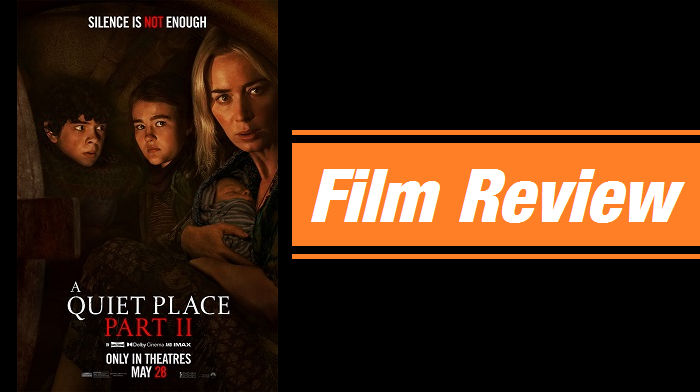
REVIEW: “A Quiet Place Part II” (2021)

A lot of people were caught off-guard by 2018’s terrific “A Quiet Place”. Director, co-writer, and star John Krasinski not only put together one of the best horror movies in recent years, but he made a touching family story that really hit this father-of-two right in the feels. The modestly budgeted chiller was both a hit with critics and a box office smash for Paramount. And while a sequel wasn’t originally planned, the first film’s success eventually led to Krasinski putting ideas together for a follow-up. Soon he was hired to both write and direct the film.

“A Quiet Place Part II” is a sequel in the literal sense but it’s more of a direct continuation of the first film. It takes no time for Krasinski to pull his audience right back into his tense and terrifying world. And while it lacks the intimacy of its predecessor, the story’s chief focus remains on the tight-knit Abbott family. Emily Blunt returns as Evelyn who’s still reeling from the death of her husband Lee (Krasinski’s character) yet is determined to protect her kids at any cost. Millicent Simmonds is back as Evelyn’s deaf daughter Regan and Noah Jupe reprises his role as her son Marcus.
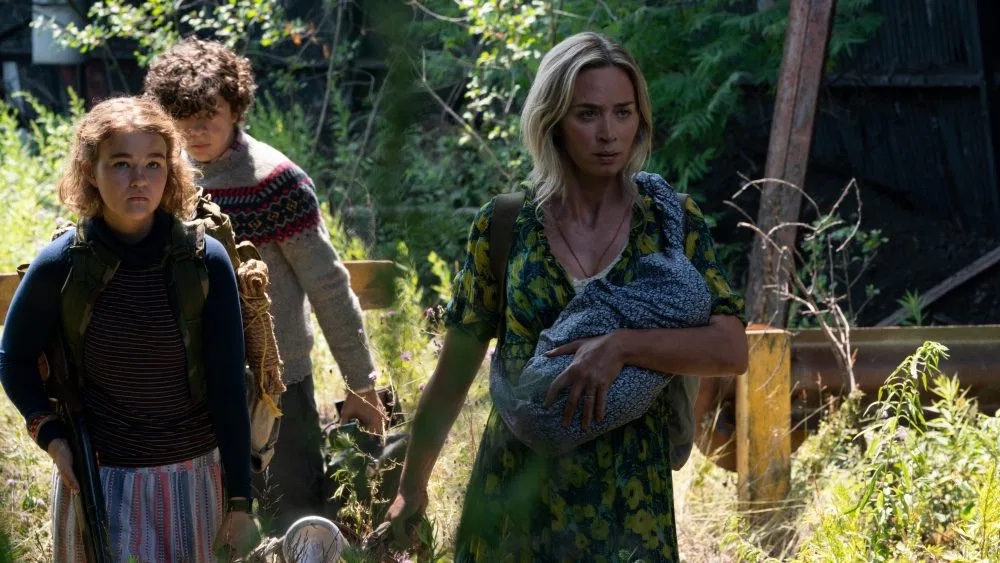
Image Courtesy of Paramount Pictures

The film opens with a fantastic flashback sequence showing the day that the blind but hyper-sound-sensitive alien creatures first arrived and began savagely attacking humanity. Krasinski wisely doesn’t get bogged down in the details, instead showing the chaos that follows from the terrified Abbott family’s perspective. The sequence makes for a perfect reintroduction to the characters. And the impeccable mix of camerawork, sound design, and editing create the kind of nail-biting tension that will run throughout the film’s taut 97-minute runtime.

After the title card we move ahead 474 days to the scene that ended the first film. Evelyn, the resilient Regan, the timid younger Marcus, and newborn baby leave their farm after taking out the creatures who killed the family’s patriarch Lee. With the house in shambles the remaining Abbotts are forced to relocate, hoping to find other survivors who can take them in. After several miles of walking they run into an old friend of Lee’s named Emmett (Cillian Murphy) who’s holed up in a rusted-out steel mill. Emmett isn’t keen to help them at first, having lost his own family and essentially given up hope. He’s a tragic character and a nice fit with the story.

One of the things I love most is that Lee’s death hasn’t been forgotten. In fact it’s woven into much of this film. It’s seen most in Regan who becomes more and more like her father as the story progresses. She has his smarts, stubbornness, and ingenuity. It’s how she learned that pairing her cochlear implant with a portable guitar amp can emit a high-frequency screech that hurts the creatures. And it’s what drives her (against her mother’s wishes) to venture off on her own to try and reach the source of a radio signal that she can use to broadcast the screech to other survivors. Simmonds is a star, deaf from birth but using her impairment as a strength. She’s very much a co-lead, full of grit and determination. It’s such a good performance.
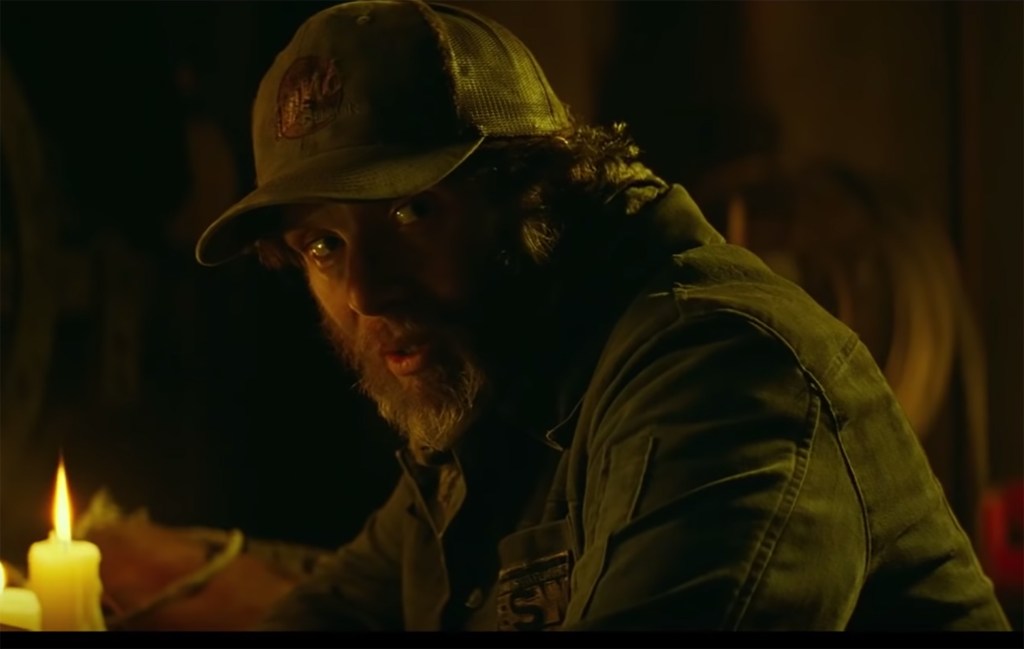
Image Courtesy of Paramount Pictures

For the most part the action plays out on two fronts (and for a brief time three). Evelyn stays at the steel mill to protect Marcus and the baby while Emmett is convinced to go out and find Regan who is on her own in a perilous world filled with dangers of both the alien and human kind. A couple of cheap jump scares aside, Krasinski’s smart and effective ‘less-is-more’ approach allows us to watch, anticipate, and experience ourselves. And clever touches such as utilizing silence to unsettle his audience is a big reason why Krasinski can still wring a steady stream of edge-of-your-seat suspense out of his simple yet gripping premise.

Where the first film left the door open for a potential sequel, this film all but confirms there will be a third installment. Its abrupt ending leaves several glaring questions. It’s hardly a graceful finish and one of the only places where Krasinski doesn’t quite hit his mark. And as he broadens his world inevitable questions pop up, mostly about the creatures. One way he gets around it is by always seeing things from the family’s perspective. As their knowledge is limited, so is ours. But the former star of “The Office“ and real-life husband to Emily Blunt puts his money on the audience being onboard and along for the ride. And when that ride is this thrilling and the characters this appealing, those aforementioned questions become less and less significant. “A Quiet Place Part II” opens today (May 28th) in theaters.

VERDICT – 4.5 STARS

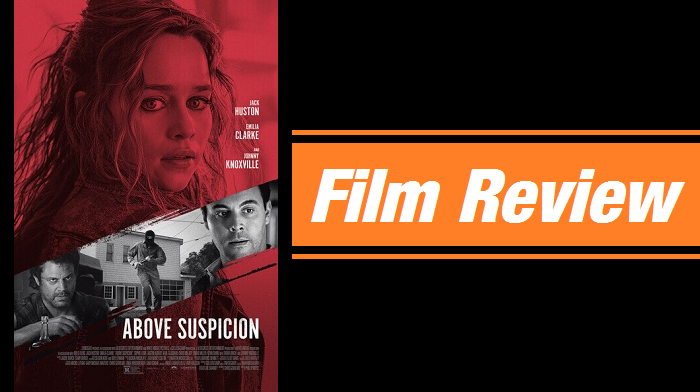
REVIEW: “Above Suspicion” (2021)

Emilia Clarke stores away her English accent (and Mother of Dragons renown) in the new movie “Above Suspicion”, a grimy southern noir from Australian director Phillip Noyce. The film was shot all the way back in 2016 but is just now finding its way to American screens. That type of hesitation doesn’t exactly exude studio confidence. While watching the film it’s pretty easy to detect the cause for concern. At the same time, the movie is kept afloat by its compelling lead and just enough surface-level treatment of its true story inspiration to keep things interesting.

“Above Suspicion” is based on Joe Shakey’s book of the same name, a non-fiction work that tells the tragic story of Susan Daniels Smith. I’ll stay away from detailing Smith’s story as doing so would leave no real reason (other than Clarke) to watch the movie. I say that because one of the film’s biggest issues is that it leaves too much meat on the bone. The movie we get seems content with touching on the high points of the story which are certainly worth covering. But Noyce never seems confident in his approach to the material and screenwriter Chris Gerolmo can’t make the story as compelling as it should be.

Image Courtesy of Lionsgate

Clarke is the one real highlight here. She puts a nice accent onto dialogue that’s caught somewhere between authentic and full-blown Southern stereotype. Set in the Appalachian Mountain valley town of Pikeville, Kentucky in 1988, Clarke plays Susan Smith, a young mother whose life has been one bad beat after another. She’s always wanted to get out of Pikeville, yet she almost seems bound to the tragic hand she has been dealt. Instead she’s stuck living in a trailer park with her abusive ex-husband Cash (Johnny Knoxville). “There’s only two ways to make money in this town since the mine shut down,” she says at one point. “One is the funeral business and the other is selling drugs.” Cash is certainly no funeral director.

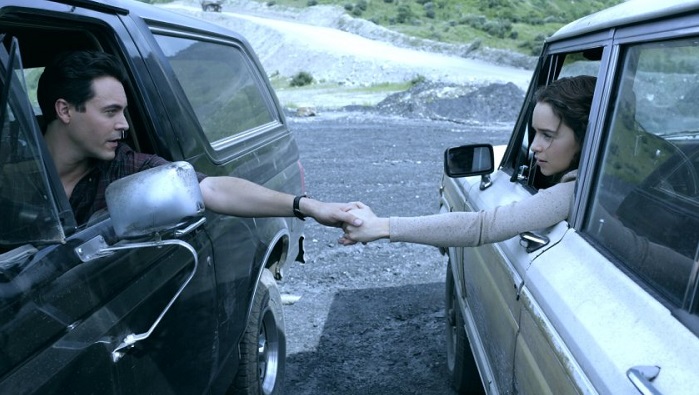
Stuck in a dead-end world of drugs and rural poverty, Susan sees a way out when ambitious clean-cut FBI agent Mark Putnam (Jack Huston) moves into town with his wife (Sophie Lowe) and their new baby. Hungry to climb his way up the Bureau’s ladder, Mark is there to track down a serial bank robber, something that would put a significant notch in his belt and get the attention he craves from his bosses.

When Susan and Mark eventually meet, he convinces her to become an informant. Professionally, their partnership proves fruitful for both of them. Mark gets closer to his big bust and Susan gets some much needed cash for every bit of information she provides. But then they cross the line and the two begin a steamy affair that quickly sours. Feeling he has too much at stake (professionally more so than at home), Mark decides to moves on. But Susan is having none of it which leads their story down a darker and more sordid path.

Image Courtesy of Lionsgate

As you can tell, there is plenty here for a good rural crime thriller especially with two capable leads like Clarke and Huston. Yet from start to finish, the movie remains as tepid as its generic title. It’s never boring. It simply fails to explore the human complexities that should be the centerpiece of a story like this. Even the film’s well-meaning style choices feel dated and unneeded. Susan’s narration, the drab color palette, the sweaty close-ups – none of it enhances the story or the characters in any meaningful way.

“Above Suspicion” has a story worthy of being told but it’s emphasis is too often on the wrong thing. It’s a shame because even amid the clichés and character types Emilia Clarke gives a strong performance that will probably go unseen by many. That’s because the film does little to stand out and set itself apart. And it isn’t helped by all the time spent sitting on the shelf and the almost non-existent promotion once it was finally set for release. Still, if you’re looking for something to watch at home you could do a lot worse, even though the film itself could have been a lot better. “Above Suspicion” is now streaming on VOD.

VERDICT – 2.5 STARS

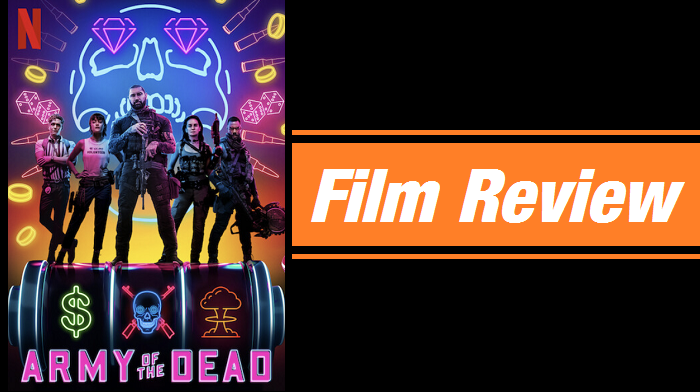
REVIEW: “Army of the Dead” (2021)

Zack Snyder has had quite the 2021 and we aren’t even halfway through the year. Back in March, fans of his DC Extended Universe movies finally got their eyes on his much-hyped and long-awaited “Justice League” extended cut (aka The Snyder Cut). As expected it stirred up plenty of buzz both from die-hard fans and committed haters. But Snyder had another movie in his back pocket, one backed by Netflix and only a couple of months away from release.

The news of Snyder’s “Army of the Dead” caught a lot of people’s attention. In a nostalgic sense you could call it a return to his zombie roots for the 55-year-old filmmaker who made his directorial debut with his 2004 “Dawn of the Dead” remake. Since then Snyder has used some big hits and a few flops to hone his own distinct cinematic style. One that’s rooted in visual storytelling and that isn’t afraid to ‘go big’. In many ways “Army of the Dead” is an agglomeration of Snyder’s past work – a movie ripe with his signature flourishes, excesses, and indulgences. It pulls from nearly every film in Snyder’s catalogue to delivery something beefy, action-packed, often gory, at times funny, and always self-aware.

Image Courtesy of Netflix

At its core the story (written by Snyder, Shay Hatten, and Joby Harold) can be best described as a zombie heist film with a strong survival-horror flavor and a dash of family drama. As with most of Snyder’s movies, a heavy emphasis is placed on setting up his richly detailed world. It begins with a prologue revealing what led to Las Vegas becoming the epicenter of a zombie outbreak. That’s followed by a very Snydery slow-motion mini-movie with the opening credits baked in. As various covers of “Viva Las Vegas” play in the background, this grisly yet almost jaunty interlude shows how the infection spread across Sin City, plunging it into chaos and turning the vacationers, gamblers, showgirls, and even the Elvis impersonators into flesh-eating ghouls. Meanwhile soldiers blast through the undead, eventually walling off the city with stacks of shipping containers.

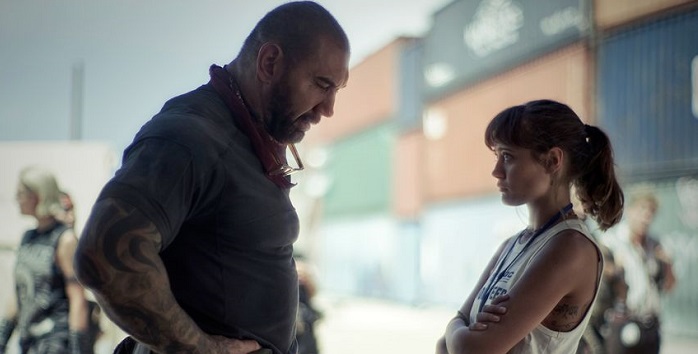
From there Snyder moves to his characters, fleshing out some of them and wisely sticking with big personality over lengthy backstory for others. It’s the right move because in films like this one thing is for certain, some characters are destined to be zombie food. Here, the beefy wrestler turned actor Dave Bautista stars as Scott Ward, a short-order cook and the former leader of a mercenary group known as Las Vengeance. He was among the soldiers who fought to contain the zombies in Vegas, but all he got for his efforts was a dead-end job, an infected wife, and a fractured relationship with his daughter Kate (Ella Purnell) who works as a volunteer at a quarantine camp just outside of the wall.

While flipping patties at a dried-up burger joint, Scott is approached by billionaire Bly Tanaka (Hiroyuki Sanada) who has $200 million stuck in a vault beneath his Vegas hotel and casino. He offers Scott a job – infiltrate the zombie-infested wasteland and smuggle out the cash before the government drops a small nuke on the city. If Scott succeeds he can keep $50 million and divide it among his crew any way he pleases. And just like that, the basis for the heist angle is established.

Image Courtesy of Netflix

It doesn’t take long for the embittered down-on-his-luck Scott to take the job. He put his life on the line to save the world and got nothing in return. Maybe a big cut of a $50 million payout will help make up for it. So he assembles his team of specialists: his old flame Maria (Ana de la Reguera), the buzzsaw-brandishing Vanderohe (Omari Hardwick), Dieter the safecracker (Matthias Schweighöfer), Mikey the sharpshooting YouTuber (Raúl Castillo), and the stogie-chomping pilot Marianne (Tig Notaro). Tagging along is Tanaka’s shady head of security Martin (Garret Dillahunt) who seems to have other interests besides retrieving his boss’ money. Even Kate finds a way to join the team.

Leading them behind the walls is a coyote for hire named Lily (Nora Arnezeder). She not only knows her way around the treacherous living-deadscape, but she’s a key source of information both for the team and for the audience. She’s how we learn about a stronger, faster, and more organized group of zombies. Ones that communicate, strategize, and even have their own leadership. As you can probably guess, that adds a whole new layer of danger to the mission. And all while the government is only hours away from nuking the city. The clock is ticking.

From there it’s pretty easy to get a sense of where things are heading, but watching Snyder fill in the details is half of the fun. Who makes it out and who doesn’t? Do they get the money? What’s with that roaming zombie tiger? All obvious questions and Snyder has a great time answering them. He full-on embraces the well-established zombie tropes of the past (you know, shoot them in the head, kill the brain, don’t get bit, etc.). At the same time he stretches the genre’s bounds by adding some twists of his own. Most of them work and help distinguish his film from other zombie flicks. But other choices, though original, aren’t as effective and occasionally slow the film’s otherwise kinetic pacing.

Image Courtesy of Netflix

In addition to the terrific slow-motion opening montage and the fun world-building, the film is full of other Zack Snyder signatures from the hilariously fitting song drops to its longer running time. And Snyder shot the film himself which means you can expect a visually immersive setting and plenty of eye-popping (and head-popping) action sequences. Yet amid the blood, brains, and bravado he still manages to give each character their moments. Bautista gets high marks as does Schweighöfer, Arnezeder and the scene-stealing Hardwick.

“Army of the Dead” comes with pre-packaged franchise ambitions and Netflix has already shown they are ready to invest. A prequel and an animated series are already in the works. Meanwhile “Army” makes for a good launching point and ends in a place tailor-made for a sequel. While Snyder’s obvious creative freedom adds some bloat to the story, you have to love his vision and his commitment to it. And as far as big blockbustery popcorn entertainment goes, Snyder delivers exactly what he promises. “Army of the Dead” is now show in select theaters and premieres on Netflix May 21st.

VERDICT – 3.5 STARS

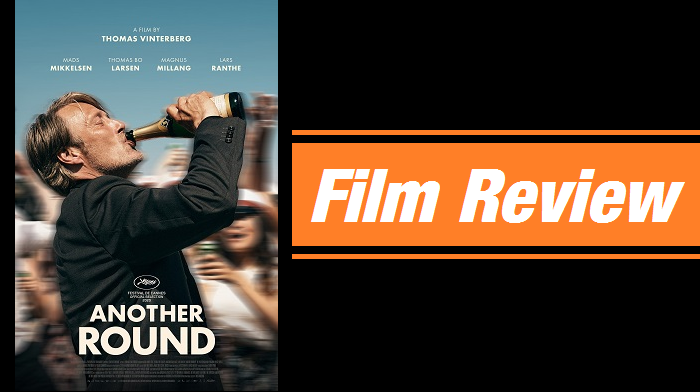
REVIEW: “Another Round” (2020)

ANOTHERpost

Filmmaker Thomas Vinterberg and actor Mads Mikkelsen struck gold with 2012’s “The Hunt”, a searing drama about a man wrongfully accused of sexually abusing a child and the hysteria that engulfs a small close-knit community as a result. The two team-up again for “Another Round”, an absorbing character study about middle-aged disillusionment and another home-run for the Danish duo.

A large part of the film was shaped by a personal tragedy. The movie was original set to star Vinterberg’s 19-year-old daughter Ida. But just four days into filming Ida was killed in a car accident. Utterly devastated but determined to make his movie in honor of his daughter, Vinterberg reworked the script with co-writer Tobias Lindholm and made what is “Another Round”. Vinterberg’s goal was to change it to something “life-affirming”, but you can’t miss the undercurrent of sadness that’s felt from the film’s pre-title montage to its exhilarating yet heartbreaking final scene.

Mikkelsen has always been an actor able to root out the inner complexities and conflicts of his characters. Here he is magnificent playing a high school history teacher named Martin. Mikkselsen’s emotionally detailed performance reveals a detached man, his eyes lightless, melancholy etched into every expression. Martin is in the throes of a midlife crisis, stuck in a mire of unfulfillment and uncertainty. “I don’t know how I ended up like this,” he laments. He’s lost his fire both at school and at home. His grades-conscious students notice it, even putting together an intervention of sorts. His wife Anika (Maria Bonnevie) also notices and is constantly taking on night shifts at work (you get the sense it’s to get away from her husband).

ANOTHER1

Image Courtesy of Samuel Goldwyn Films

One evening Martin and fellow teachers Tommy (Thomas Bo Larsen) and Peter (Lars Ranthe) attend a birthday dinner for friend and colleague Nikolaj (Magnus Millang). After some needling Martin agrees to join them for some light drinking. As the four begin loosening up Nikolaj shares a hypothesis from Norwegian psychologist Finn Skårderund. His idea was that the blood alcohol content in humans is 0.05% too low and that light day drinking would lead to “increased social and professional performance.” Martin has reached a point where he’s willing to try anything so the four decide to test Skårderund’s theory.

First they set the rules for their cockeyed social experiment. It would consist of daily alcohol consumption maintaining but not exceeding 0.05% BAC. There would be no drinking after 8:00 PM and none on weekends. Throughout the ‘experiment’ each would take notes and report back with the results. Their sets of rules and procedures attempt to give it all a sense of legitimacy, but it’s clear each are trying to fill holes in their individual lives. For a desperate Martin it’s about being able to feel again; about finding the zest for life he once had. It’s about rekindling the relationship with his wife and rediscovering his enthusiasm for the classroom. In other words, for Martin it’s about living again.

It’s really a nutty premise, the kind Hollywood is almost certain to remake and probably botch. But it works here because Vinterberg isn’t as enthralled with the concept as much as he is the people involved. Even when the movie ventures into black comedy territory, Vinterberg’s focus is set firmly on Martin and the other characters. And as silly as the concept sounds, it opens up the characters in a number of surprisingly intimate ways, allowing us to see deeper inside them. This is where the acting shines brightest, especially from Mikkelsen who gives a subdued yet full-bodied performance that can be darkly funny but that is undergirded with an unshakable sense of tragedy.

ANOTHER2

Image Courtesy of Samuel Goldwyn Films

Interestingly (and wisely) Vinterberg doesn’t judge the four men or their actions. In fact he even hints that there may be some truth to Skårderund’s wild theory after the buzzed teachers begin seeing success both at work and at home (I guess there are reasons for the nicknames “spirits” and “liquid courage”). Also the experiment brings the friends closer together than they’ve ever been. At the same time Vinterberg subtly reminds us that the potential consequences, both personal and professional, are enormous. This becomes even clearer when the four begin stretching their own rules by increasing their daily intake. We know they’re in a precarious position and the tightrope they’re walking could snap at any moment.

I’m still astonished by how effectively Vinterberg brings all of his parts together to make something playful yet perilous; something that sounds absurd but ends up being as captivating as it is provocative. And despite its smattering of dark humor, you can’t miss the elements of Vinterberg’s real-life personal anguish that permeates scene after scene. And what better actor to soulfully channel it than Mads Mikkelsen who (here I go again) gives what’s easily one of the year’s best performances.

For the most part there isn’t a lot of variety when it comes to movies strictly about drinking alcohol. There are your care-free party movies full of boozing but often free of consequences and repercussions. The others are usually sad somber tales of people languishing in the grip of alcoholism. “Another Round” nimbly finds its place somewhere in the middle. It fully acknowledges the pleasures and appeal of drinking for some people. At the same time the film shows that the gap between social drinking and dependency can close quicker than you think. And while a couple of glasses of wine may loosen you up, it’s no cure for deep-seated psychological pain. And in the end that pain is what “Another Round” is most interested in exploring.

VERDICT – 4.5 STARS
4-5-stars

REVIEW: “All My Life” (2020)

LIFEposter

You would be hard pressed to find a more wildly diverse group of films than the last four made by director Marc Meyers. In 2017 he made “My Friend Dahmer”, a biopic about serial killer Jeffrey Dahmer’s high school years. Next he made the blood-soaked horror-dark comedy “We Summon the Darkness”. And earlier this year he released “Human Capital”, a family drama, crime thriller, and mystery all wrapped into one. So what’s the fourth film you ask? Meyers’ latest is “All My Life”, a warm and fuzzy tearjerker. See, diverse.

“All My Life” (written by Todd Rosenberg) is based on the true relationship of Solomon Chau and Jennifer Carter. The film is carried by the expressive Jessica Rothe, a talented rising star with a pretty diverse resumé of her own. Here she plays Jenn, a young woman who has spent most of her life looking ahead but rarely living in the moment. Everything changes when she goes to a sports bar with friends and has that chance meeting of a lifetime (dramatic music swells) with Solomon (Harry Shum Jr.), a hunky amateur chef. The very next day the two go out for a jog, sparks fly, and off we go.

LIFE1

Image Courtesy of Universal Pictures

The first half of “All My Life” is a sweet and fairly grounded story of a young couple falling in love, moving in together, and setting their eyes on a future together. There’s a really nice chemistry between the two leads and a surprising amount of heart which makes them not only a likable couple but people we feel good about rooting for. Everything is ideal in these early scenes and they’re even shot with this radiant storybook glow. We get the tender romantic moments, some hip music, and eventually a flash mob marriage proposal sequence with enough cheese to clog every artery.

But then there’s the second half where their modern day romance is cut short after Sol is diagnosed with terminal liver cancer. It’s the flip-side of the story that we know is coming from the start. Meyers doesn’t go deep into the internal conflicts or dive into themes like mortality and fate. Instead he keeps it mostly on the surface, offering plenty of tissue-worthy moments while (thankfully) avoiding the annoying sap that you may get in a Nicholas Sparks flick. Meyers and Rosenberg make their film all about living. More specifically, about making the most out of the time you’re given.

null

Image Courtesy of Universal Pictures

With the help of their fun but nondescript group of friends, Jenn and Sol decide to go ahead with their wedding, determined to make every day they have together memorable. The film wisely doesn’t gloss over the bumps in the road. “People will see a widow in white,” Sol tells Jenn during one particularly dark and crushing scene. But the film mostly keeps its head up as the friends start a GOFUNDME account to cover expenses and help Jenn and Sol have the best wedding possible under the circumstances.

Despite its best efforts there are still those gooey moments that seem custom made for the movies rather than plucked from real life. But every time the film gets too close to schmaltzy Meyers is able to rein it back in. And while we could have learned more about their characters (does Sol even have a family???), there is an infectious charm to the young couple and this is a case of a film being helped by its ‘true story’ element. Sure it’s all pretty familiar and it misses opportunities to do something original. But it also avoids many of the usual trappings and has genuine heart, something quite honestly I wasn’t expecting. “All My Life” is now playing in theaters.

VERDICT – 3 STARS

3-stars

REVIEW: “A Rainy Day in New York” (2020)

RAINYposterr

Even if you question Dylan Farrow’s accusations, you have to admit Woody Allen’s personal life has been suspect and that’s putting it nicely (many would say repugnant is more accurate). In the wake of #MeToo few have seen their careers take a hit quite like his. Despite his fervent denials, Allen has been shunned by many in the film community. As a result he was released from his contract with Amazon Studios and his latest film pulled from their release schedule.

Allen has since acquired the film rights from Amazon and has slowly been releasing “A Rainy Day in New York” across the globe. It’s now out in the States and within minutes of watching I had spotted practically all of Allen’s most recognizable signatures: the neurotic and insecure narration, a strong sense of location, classic piano chords dancing in the background, the cloud of melancholy hanging over numerous characters. And while several of Allen’s later efforts feel like exercises in rinse-and-repeat, I still find his movies effortlessly watchable, this one included.

“A Rainy Day in New York” certainly won’t fall among Allen’s very best works. It’s a movie that gets off on the right foot and for the first 45 minutes or so I was enamored with it despite some noticeable flaws. But then the few threads of plot begin to unravel leading to a messy final act full of thinly sketched characters and underdeveloped ideas. It doesn’t completely undo the film, but it highlights an unfortunate lack of depth and focus.

RAINY1

Photo Courtesy of Signature Entertainment

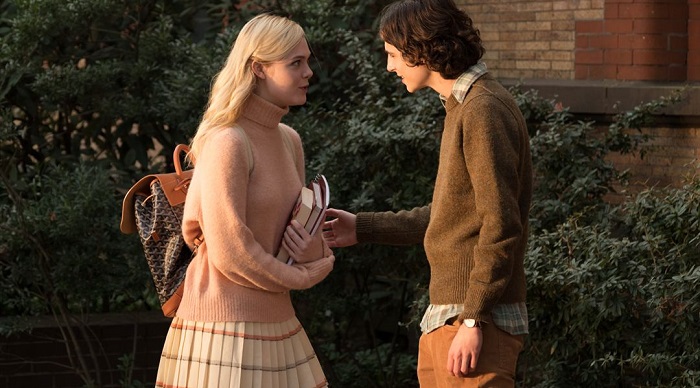
This time around Allen’s avatar is Timothée Chalamet. He plays Gatsby Welles, the eccentric son of stuffy upper-crusters and boyfriend to Ashleigh (Elle Fanning), a sweet and flighty girl from Tucson. The two attend Yardley University, a small liberal arts college in upstate New York. Ashleigh enjoys school and is a reporter for the university’s newspaper. Gatsby doesn’t have much interest in grades, class or anything else school related. Instead he’d rather be lounging at a Manhattan piano bar or buying into a high-stakes poker game. When asked about his plans for the future he quickly replies “floundering“.

Ashleigh lands a big interview with tortured indie director Roland Pollard (Liev Shreiber) in (where else?) New York City. Gatsby jumps at the chance to return to the Big Apple and immediately starts planning their time together. But his plans get shot down when Ashleigh’s one-on-one interview turns into a madcap caper of sorts as three highfalutin movie men strangely vie for her affections.

RAINY2

Photo Courtesy of Signature Entertainment

The men – the brooding Pollard, his nervy screenwriter Ted Davidoff (Jude Law) who suspects his wife Connie (Rebecca Hall in little more than a cameo) is having an affair, and a heartthrob actor (and easily the most shallow of the three) Francisco Vega played by Diego Luna – shuttle Ashleigh from one scenario to the next eventually stranding her character at a frustrating narrative dead-end. Fanning deserves credit for charming her way through scene after scene, but ultimately she’s let down by a storyline that gives her no meaningful place to go.

That leaves Gatsby to mope around the rainy city in his tweed jacket and unruly mop, waiting for Ashleigh to call and offering up sardonic musings whenever the script calls for it. While strolling he bumps into Chan (Selena Gomez), the snarky younger sister of an old girlfriend and they decide to kill some time together. It’s clear the two are supposed to have some kind of spark, but the chemistry between Chalamet and Gomez is inconsistent at best. Still, there is some fun and witty chatter between them that may not sound like anything real college kids would actually say yet it feels right at home in a Woody Allen movie.

WA17_09.28_0287.ARW

Photo Courtesy of Signature Entertainment

As an out-of-her-element Ashleigh rubs noses with the entertainment elite, Gatsby goes to the Metropolitan with Chan, visits his buffoonish brother who wants out of his upcoming wedding due to his fiance’s “fatal laugh“, sits in on a big-money poker game, and meets a call girl named Terry (Kelly Rohrbach) in a dive bar. All of this while trying to avoid his aristocratic parents who are throwing a lavish party for their friends in the 1%. Both of the dual storylines are a bit scattered but have their own quirky Allen-esque allure. That is until the aforementioned final half-hour when Allen throws all of the characters at the screen before limping to the finish line.

And that leads to my other issue, one that I just couldn’t shake – Chalamet. For starters he seems way too young for the role Allen has penned. That’s not so much his fault as it is the writing and/or casting. There’s also an inconsistency with his delivery. There are plenty of times where Chalamet could pass for an authentic person. But there are far too many instances where it looks as if he’s doing an impression of a traditional Woody Allen character. It’s difficult to put into words, but in these scenes you can see Chalamet straining to fit in a mold.

It’s hard to watch “A Rainy Day in New York” and not feel like it’s something you’ve seen before. Simply put, Allen doesn’t have much new to say in this, his 48th movie. Yet there are times when the film pulsates with the same satisfying energy of Allen’s past work. Its soaked with familiar feelings of nostalgia, from its anachronistic lead character unwittingly channeling a bygone era to more personal Allen obsessions that spring up throughout. It may not paint the most modern portrait, but in many ways I think that’s the point. Allen has often dabbled in real-world fantasy as a way of wrestling with ideas and longing for the past. It’s no different here, just a bit messier.

VERDICT – 3 STARS

3-stars