REVIEW: “The Artist”

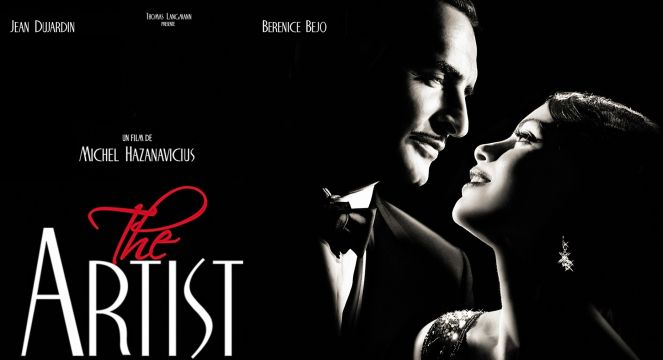
Many modern moviegoers may be tempted to skip a new black and white silent movie. That’s a shame because to do so would be to miss a near motion picture masterpiece that is one part celebration of cinema and another part exercise in masterful storytelling. Michel Hazanavicius wrote and directed this gorgeous film that exudes nostalgia and imagination in every scene. His willingness to tackle the handicaps that accompany a black and white silent picture is admirable but I must admit I was a little worried. Could Hazanavicius recreate a believable bygone era of filmmaking or would the results be a well-intended mess? A large grin spread across my face after seeing the classic-styled opening credits and I immediately knew I was in for something special.

“The Artist” reminds us of everything that is magical about movies. It reminds us of a time when creativity trumped huge elaborate effects and million dollar set pieces. It uses black and white to it’s advantage and even though there are times that you can tell it’s intentionally being nostalgic, I never doubted it’s sincerity or integrity. Making this a silent picture was a risky approach but it works perfectly here. From Harold Lloyd to Nosferatu, I’ve been a fan of silent cinema and “The Artist” could blend right in with the best of those films. It may be a flashback to an earlier style of filmmaking but this silent movie speaks louder and says more than most of what we see coming out of Hollywood.

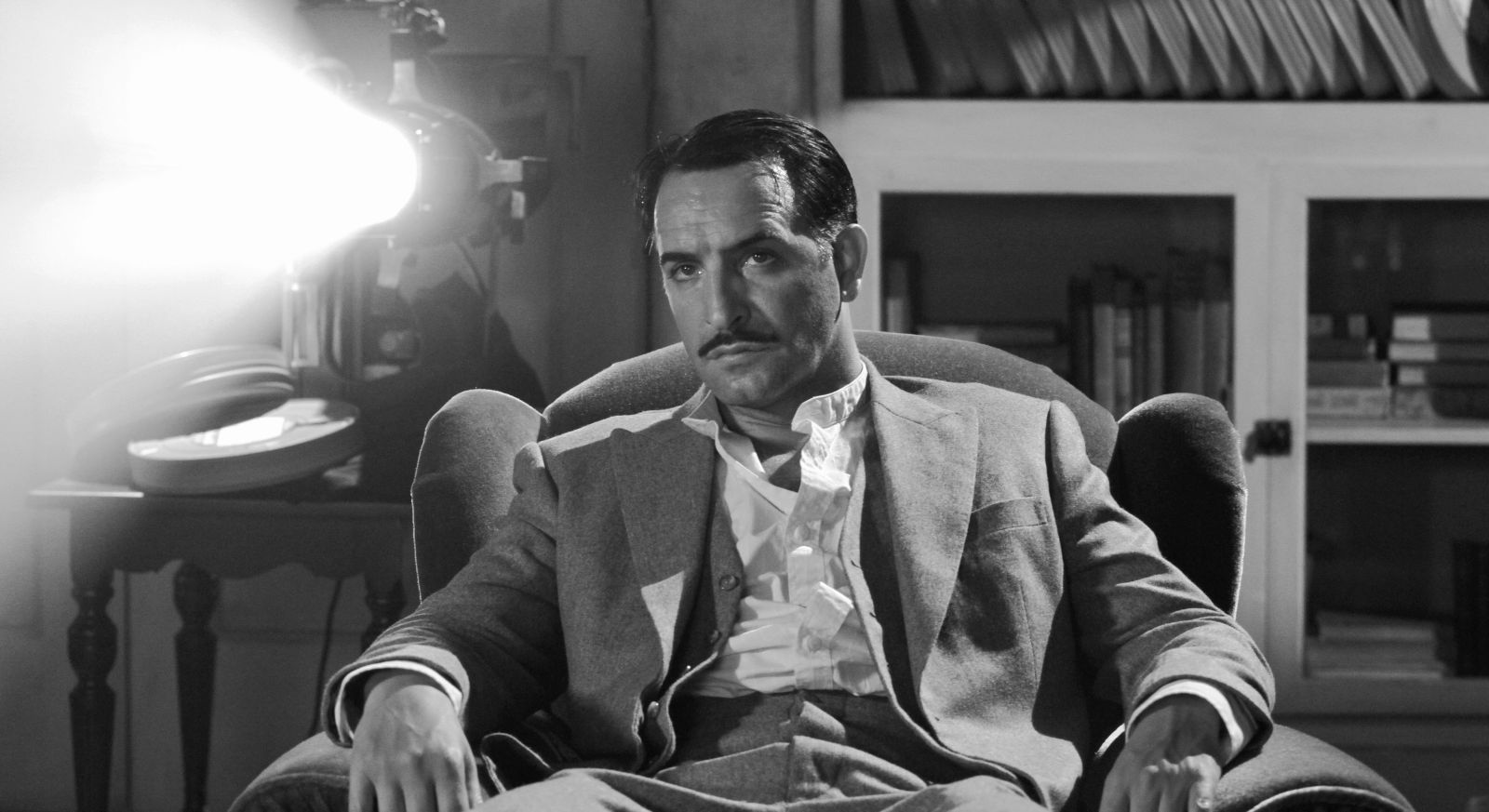
One of the key ingredients to the success of “The Artist” can be found in the brilliant performance of Jean Dujardin. He plays George Valentin, a popular silent movie star with the world in his hands. He revels in the attention and limelight that he gets from the starry-eyed public, an obsessed media, and the head of Kinograph Studios, Al Zimmer (John Goodman). But when the studio makes the shift from silent pictures to talkies, George finds himself pushed out and replaced by younger, fresher faces, most notably an energetic and beautiful actress named Peppy Miller (Berenice Bejo). George’s world crumbles around him but it’s his pride that may be his ultimate undoing. Dujardin loses himself in his character and captures the essence of a silent movie performance. But as the film progresses he draws you in with his crushing and deeply moving work. Expression is essential to his performance and Dujardin nails every grin, wink, head tilt, or mannerism. It’s beautifully expressive and his charm and command of every scene makes it unforgettable.

Bejo’s performance lives up to her character’s name. She’s spirited and lively and while it could be said that she over does it in a few scenes, she encapsulates what you would expect from a young aspiring actress from that era. And her chemistry with Dujardin is magnetic. It’s also fun to see such a wonderful supporting cast many of which have small roles. The great James Cromwell, Ed Lauter, and Malcolm McDowell each have small but entertaining roles in the film. Hazanavicius uses them perfectly. And how could I not mention one of the best animal performance in movie history from Uggie the dog?

“The Artist” is a phenomenal cinematic accomplishment and Hazanavicius’ vision is rendered brilliantly through sparkling black and white and sharp direction of his incredible cast. I genuinely felt that I had traveled back in time to a more authentic and purer period of movie making. But “The Artist” isn’t all about nostalgia. At it’s core it’s a simple but beautiful drama laced with humor and romance. “The Artist” is a wonderful package from it’s visual style to it’s perfect score, from it’s razor sharp direction to it’s captivating leading man. In a year of love letters to cinema, none are better than this and it’s certainly worth all of the awards it’s sure to get.

VERDICT – 5 STARS

5 STARSs

5STAR K&M

REVIEW: “Another Year” (2010)

British director Mike Leigh’s latest project “Another Year” is a classic example of what you get when you create good characters and then just let great actors act. It isn’t a film that depends on an intricate or multi-layered plot, nor does it ever pretend to be something it’s not. In many ways this film is an observation.

As it’s title suggests, the movie follows a year in the life of Tom (Jim Broadbent) and Gerri Hepple (Ruth Sheen), an older couple who have been married for years and still have a relationship rooted in their unwavering love for one another. On the surface watching an older married couple for a year may not sound all that entertaining, but as we are introduced to some of Tom and Gerri’s friends and family, Leigh quickly shows us the power of the couple’s stability.

Mary (Lesley Manville) is a middle-aged divorcee and co-worker of Gerri’s. She’s impulsive, overly chatty, a bit neurotic, and her life seems to have no direction. Ken (Peter Wight) is an old school friend of Tom’s who is a compulsive eater, an alcoholic, and is unhappy with how his life has turned out. Ronnie (David Bradley) is Tom’s introverted brother who is dealing with the recent death of his wife as well as his fractured relationship with his self-absorbed son. Each of these people with their own set of problems but who find an almost cathartic peace in the Hepple’s home.

I found this film to be a mesmerizing study of family and a testemant to the influence of love, compassion, and devotion. It’s a film centered around a firm and stable marriage, a rare thing to see in movies these days, that doesn’t depict it as stuffy or old-fashioned. While their wonderful relationship in many ways accentuates the flaws in the other characters, Leigh does a fantastic job portraying the Hepple’s as caring and sympathetic. They are impossible to dislike and their marriage is seen as something the audience and characters should envy.

Leigh really lets his actors go and the result is a film that feels genuine and authentic. Leigh’s unique style of character development employs dedicated one-on-one time with the actors and plenty of improvisation prior to the completion of the script. This approach seems to really connect the actors to the characters and it shows throughout the film. The dialogue is fluid and natural and it’s almost impossible not to be drawn in by the numerous kitchen table and back yard discussions. In fact at times I felt as if I was sitting at the table with them listening as each actor lose themselves in their character.

It’s hard to find many flaws in this movie. I did think it was a tad too long and it seemed to get just a little sluggish in the middle of the film. I was also a little frustrated at the ending. Granted, it allows the viewer to come up with their own conclusions and develop for themselves where one particular character is heading. But I had become so completely invested in these people that I didn’t want it to end on such a quick and abrupt note. Is that really a reasonable gripe or is it the byproduct of a great director selling his characters perfectly?

There is so much more that could be said about this picture. I could mention Leigh’s subtle but effective camera work or I could talk more of the great individual performances (I didn’t even mention Oliver Maltman who brilliantly plays the Hepple’s 30 year old son). But instead I’ll just say “Another Year” is a great film. It won’t resonate with those who restrict their movie tastes to fast paced action pictures or contrived and unfunny modern comedies. But I found “Another Year” to be intelligent, witty, touching, and most importantly real. I’ll take that from my movies any day.

VERDICT – 4.5 STARS

REVIEW: “A Better Life” (2011)

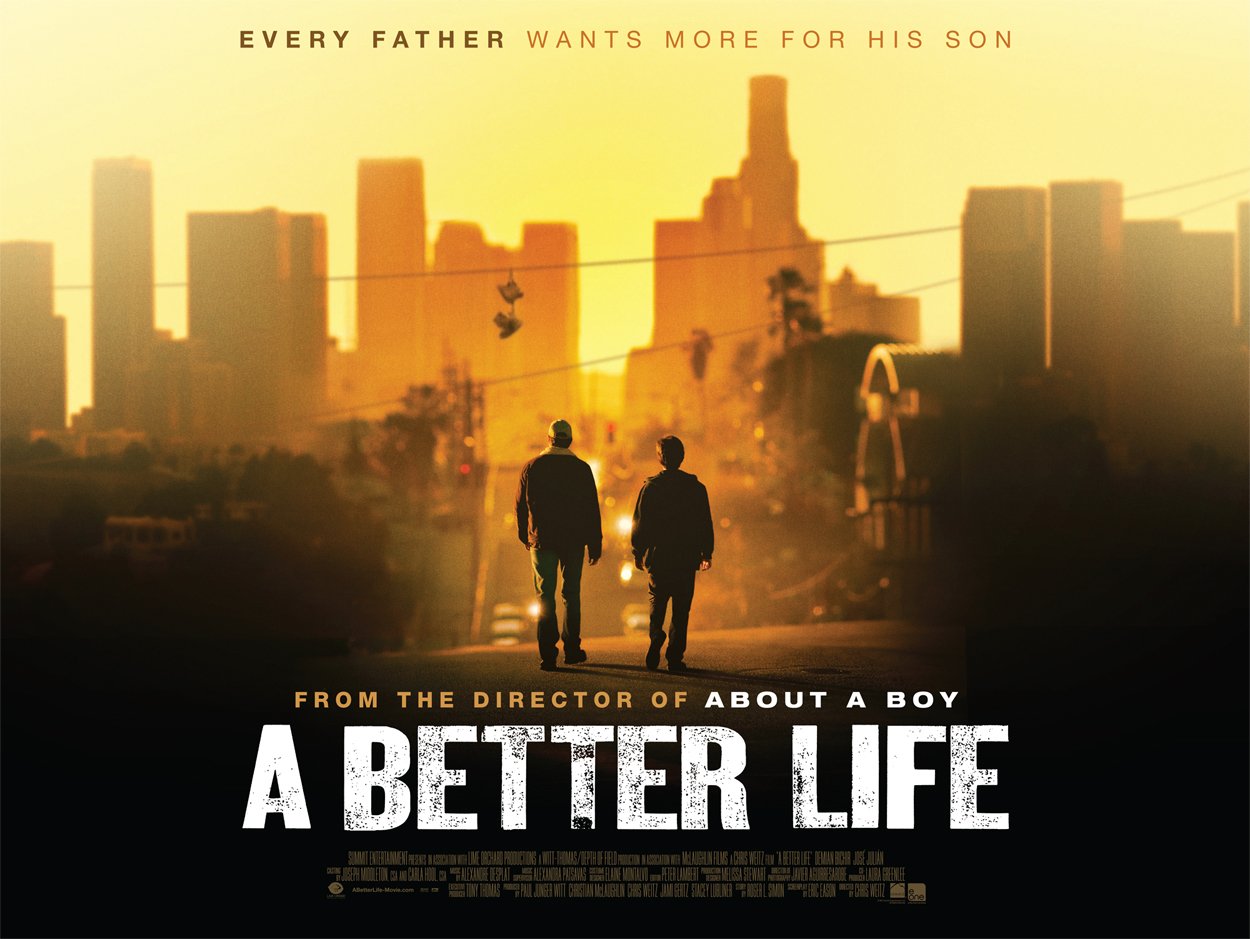
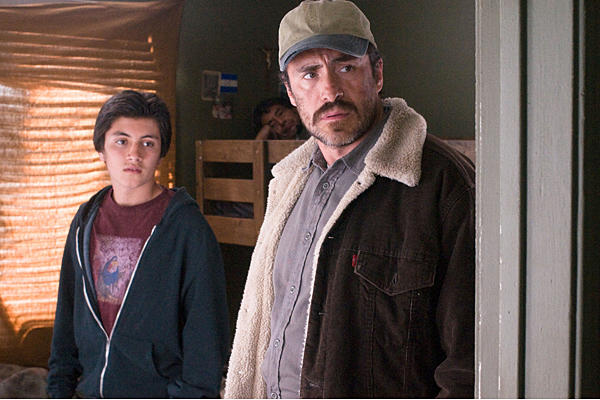
“A Better Life” is a touching and poignant drama and a surprisingly different movie for director Chris Weitz. It’s a story about Carlos, an illegal immigrant and single father played brilliantly by Mexican actor Demian Bichir. Carlos works as a landscaper to provide for his son Luis (Jose Julian) in East Los Angeles. Hoping to improve his and his son’s circumstances, Carlos agrees to buy his employer’s work truck and go in business for himself. But he finds this to be a difficult and daunting task and things quickly go wrong.

Carlos is certainly a likeable character and you can’t help but sympathize with his motivations. You see his dedication to his work which flows from his dedication to Luis. He’s up early and off to work and then comes home late and immediately goes to bed. This probably contributes to the disconnect between him and Luis. While Carlos is spending all his time earning a living, Luis has fallen in with a rough crowd at school and finds himself being drawn to the street gang lifestyle. At first Luis has no intention of ending up like his father. But later he begins to see the contrast between his father’s life of integrity and the trouble-filled dead end that gang life brings.

“A Better Life” is all about the relationship between a father and son. The movie is really at it’s strongest when it focuses on Carlos and Luis and their struggle to stay close in light of their circumstances. Bichir’s earnest performance is completely natural and organic. He sells his character and you truly want him to succeed. Julian’s performance isn’t quite as consistent although he and Bichir share some wonderful moments in front of the camera. 

While ”A Better Life” does sometimes seem to overlook that Carlos is actually breaking the law by being here, it still manages to show that illegal immigration can cause numerous problems. It’s that backdrop that gives the story a slight bit of tension. The stakes are high and Carlos knows he could lose everything in a heartbeat. There are a couple of slightly underwritten plot points but otherwise it’s a well paced and well structured story and I found myself completely invested.

There’s so much to like  about “A Better Life” even with it’s few flaws. While the father and son dynamic works on many levels, it doesn’t take many chances and goes down a more conventional path. Also, Julian’s performance was a bit wooden in some of the film’s more important scenes. But this is still a strong picture anchored by a fascinating performance from Bichir. It’s hard not to get wrapped up in the lives of these two people even if we pretty much know how everything is going to end.

VERDICT – 4 STARS