Revisiting “Avatar” (2009)

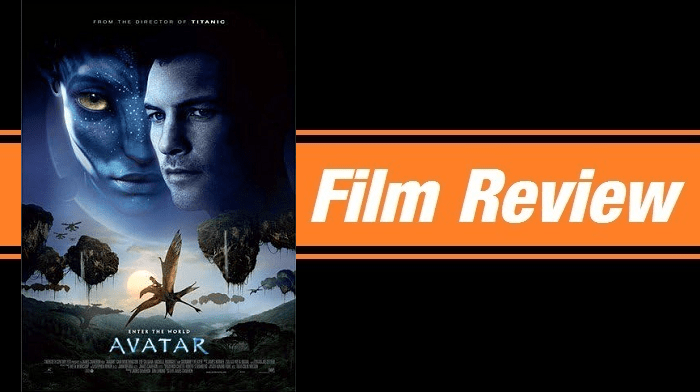
I’ve had an interesting relationship with James Cameron’s “Avatar”. Without question the 2009 science-fiction epic was a landmark box office achievement. It took theaters by storm, earning its first billion dollars in only 19 days on its way to becoming the highest grossing movie of all time. “Avatar” shattered numerous records, many of which it still holds today. It was a global phenomenon, accompanied by a vast marketing campaign, several companion books, and even its own Disney World attractions.

As for the movie itself, there’s no denying it was cutting edge moviemaking. Cameron made the most of his massive budget in creating one of the most visually breathtaking worlds ever put on screen. But it was the story that I had trouble getting past. I ended up having three main complaints – the copy-and-paste plot, the heavy-handed messaging, the over-the-top characterizations. They drew too much attention away from the extraordinary technical wonder that was “Avatar”.

Over the years and several watches later I’ve softened up on my criticisms of “Avatar”. The most recent call to reevaluation came after seeing the long-awaited 2022 sequel “Avatar: The Way of Water”. It’s a terrific follow-up that (for me at least) shined a new light on the first film. I’ve actually rewatched “Avatar” three times since “The Way of Water” released and have seen my perspective and opinion evolve. Yes, I still think it borrows liberally from other films (“Dances With Wolves” always comes to mind). It’s still a bit clumsy in its messaging. And there are absolutely some exaggerated characterizations.

Image Courtesy of 20th Century Studios

But after a lengthy reconsideration, I’ve come to some unexpected conclusions. For starters, I think using “copy-and-paste” to describe Cameron’s story is reductive and frankly unfair. He’s clearly pulling inspiration from a number of places. The idea of a foreign invaders persecuting an indigenous people is nothing new. In this case it’s humanity who have depleted Earth’s natural resources. Now they’ve arrived on Pandora to mine a valuable mineral to send back home. The operation is ran by the Resources Development Administration (RDA), an oppressive corporation who force their will on the Na’vi, the blue-skinned humanoid inhabitants of Pandora who live in harmony with nature.

Again, the general outline for the story is familiar, but there’s so much originality in Cameron’s vision, from the world he imagines to the Na’vi culture he creates. Both are key in taking a well-used framework and shaping it into something that pulsates with new creative life. You can’t help but be enamored with Pandora and it’s variety of wildlife, fascinating array of flora, towering waterfalls, and floating mountains. It’s not only an incredible work of imagination, but also visualization. There’s never a moment where Cameron and his VFX wizards aren’t giving us something to take in that’s both stunning and transporting.

As for the messaging, it’s still pretty on-the-nose with Cameron spelling out his numerous stances with varying degrees of effectiveness. His views on the environment, big corporations, and even the military are most impactful when he allows the natural flow of the story to do the talking for him. But there are still lines of dialogue so awkwardly blunt that you can’t help but roll your eyes and laugh. Interestingly, they’re not as noticeable to me as in earlier viewing. But they’re still there.

Image Courtesy of 20th Century Studios

And then there are the characterizations. In my earliest viewings, Stephen Lang’s Colonel Miles Quaritch, the RDA’s head of security, was the epitome of a ridiculously over-the-top character. He’s a military meathead made even more absurd by Lang’s exaggerated performance. Yet over time I’ve warmed up to the character and the performance. Yes he’s silly to the point of caricature. But Lang has a blast as the chief antagonist and delivers some really good laughs. I can’t say the same for Giovanni Ribisi’s Parker Selfridge, the corporate head of the RDA mining operation. He too is cartoonishly over-the-top, but without a hint of humanity or humor. He’s impossible to take seriously.

Still Cameron gives us a number of great characters including the film’s lead. Sam Worthington plays Corporal Jake Sully, a former Marine and a paraplegic sent to Pandora to take part in the Avatar program. It’s where scientists genetically match a human operator to a Na’vi body. Whether as his human self or in motion-capture, Worthington is terrific in conveying Jake’s frustrations, conflict, and courage. Matching him scene for scene is Zoe Saldaña as Neytiri, the daughter of a local Na’vi clan leader. In many ways she’s the film’s heart and soul.

In addition to building an imaginative world and compelling mythology, Cameron packs a surprising amount of emotion into his story. And of course there is the inevitable final showdown – an edge-of-your-seat thrilling and visually stunning spectacle built around some well developed stakes. Yes, it still has some nagging issues. But over the years I’ve found them to be less pronounced and far less distracting. And even with them, “Avatar” remains a transporting experience – an entertaining blend of old-fashioned adventure and technological wonder.

VERDICT – 4 STARS

REVIEW: “Argylle” (2024)

In the mood for some goofy and altogether mindless fun? Let me tell you about “Argylle”, the new action spy comedy from director Matthew Vaughn. Full disclosure: I’ve been pretty lukewarm when it comes to Vaughn’s past work. That said, there has always been a certain flair to his filmmaking that I appreciate (he was in line to direct “Man of Steel 2” which sadly never came about).

His latest film takes that signature flair and mixes it with a silliness, self-awareness, and genre tropes galore. And that’s not necessarily a bad thing. Mainly because “Argylle” makes no mistake about what kind of movie it wants to be. It’s unmistakably ludicrous from the get-go which is really the only way a movie like this could ever work. Vaughn and screenwriter Jason Fuchs embrace their gonzo premise, adding an equally all-in cast of big names to bring it all together.

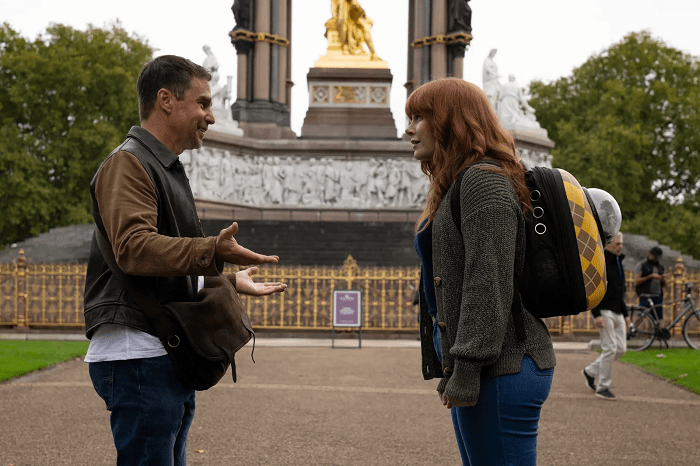
Armed with a $200 million budget, “Argylle” sets itself up as the first film in a trilogy, complete with a surprise ending and even a mid-credits scene. It begins by introducing us to spy novelist Elly Conway (Bryce Dallas Howard) who is trying to put the finishing touches on the fifth book in her popular Argylle series. In need of help with her ending, the introverted Elly loads up her cat Alfie and hops a train for her parents house after her mother (Catherine O’Hara) agrees to help her write the final chapter.

Image Courtesy of Universal Pictures

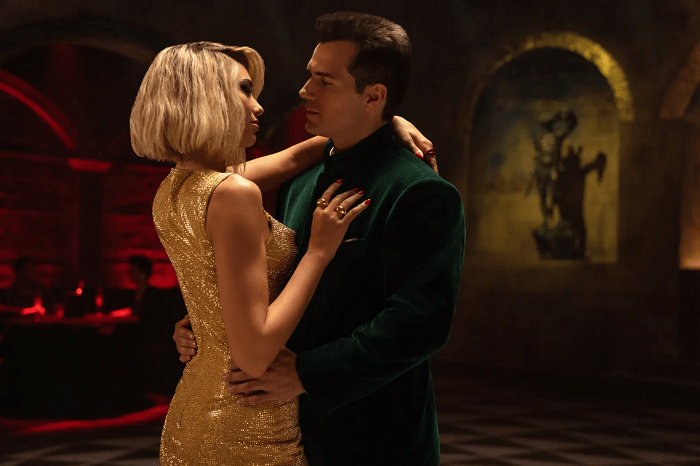
That kickstarts one side of the “Argylle” story. The other side takes part in Elly’s imagination and features the characters she has created for her book series. As Elly types away Vaughn transports us to the fictional world inside her head where super spy Aubrey Argylle (Henry Cavill) and field agents Wyatt (John Cena) and Keira (Ariana DeBose) attempt to stop a voluptuous terrorist known as LaGrange (Dua Lipa). These scenes are intentionally over-the-top and hilariously follow the spy movie formula to the action-packed letter.

Back in the real world, Elly is approached on the train by an animated fellow named Aiden Wilde (Sam Rockwell). He claims that a nefarious spy organization known as the Division are targeting her for the most unexpected reason and he’s there to save her. After beating down a parade of assassins, Aiden grabs Elly and Alfie and makes an improbable escape.

Once to safety, Aiden informs Elly that her novels have intersected with reality. It turns out that her stories have supposedly paralleled with real events in the actual spy world. He tells her about the existence of a flash drive containing detailed files that could expose the Division and bring them to their knees. The head of the Division, Director Ritter (Bryan Cranston) believes that Elly knows the location of the drive and is about to reveal it in upcoming book. So while Ritter wants to neutralize her, Aiden wants to save her in hopes of finding the drive and bringing down the Division.

Image Courtesy of Universal Pictures

Before we know it Elly’s two worlds begin to blur as she’s thrust into a life of espionage, globetrotting, and double agents. We’re hit with big reveals and bigger twists by the dozen, and they come from all possible directions. Sometimes they’re genuinely surprising and other times they’re utterly preposterous. But that’s exactly what Vaughn and company are going for and the movie is better for it. In fact, any time I began to worry that things were getting too serious, something absolutely bonkers would happen to put me at ease.

This is summed up best in the film’s action-fueled finish which I won’t dare spoil. But let’s just say it’s one of the most gleefully outrageous things you’ll see on a screen this year. If I were guessing, I’d say for some people the ending will perfectly encapsulate why they dislike this movie. But for others (myself happily included), the final 15 minutes or so is a fittingly nutty culmination of everything the movie has been working towards.

“Argylle” sees Matthew Vaughn having a blast with the campy spy movie formula, taking its many tropes and stretching them to absurd limits. It results in something proudly ridiculous and consistently entertaining. The script is a little messy in spots and making sense out of some of its twists is nearly impossible. It’s also hampered by an unnecessarily long running time. But the steady humor and the big stylish action land well. And what a treat seeing Bryce Dallas Howard getting such a fun and meaty lead role. Pair her with the effortlessly charming Sam Rockwell and you have a duo I’ll follow on any mission. “Argylle” opens today in theaters.

VERDICT – 3.5 STARS

REVIEW: “American Star” (2024)

Director Gonzalo López-Gallego is perhaps best known for 2011’s “Apollo 18”, a creepy found-footage sci-fi horror film that never got the respect it deserved. After a few direct-to-video feature films and some work on television, López-Gallego returns with “American Star”, a captivating thriller led by its equally captivating star, Ian McShane.

Set in the Canary Islands, “American Star” tells the tried-and-true story of a hitman on what might be that one final assignment. But rather than going the more conventional action-packed route, López-Gallego and screenwriter Nacho Faerna give us something existential and melancholic. They give us a slow-burning character study that’s far more interested in exploring humanity than generating genre thrills.

Image Courtesy of IFC Films

What better actor to lead a movie like this than Ian McShane. The 81-year-old Englishman, more recently of John Wick fame, oozes sophistication and charm like few others. Here he plays Wilson, a contract killer who seems worn down by the life he has chosen. He’s quiet and somewhat cryptic; easygoing yet clearly burdened with emotion. McShane conveys it all through a brilliantly tempered performance that allows us to glean as much through sheer observation than anything we hear or are told.

We first meet Wilson as he arrives on the island of Fuerteventura. After renting a car, he drives out to a posh ultra-modern residence in the middle of nowhere only to discover his target isn’t home. So Wilson drives out to the coast and checks into a beachside hotel, intent on waiting for his target to return so he can carry out his job. But over the next couple of days he finds himself drawn to the cozy island and its community which prompts him to contemplate the life he has lived.

There are several things that spur Wilson’s self-reflection. Among them is his reoccurring encounters with a young woman named Gloria (Nora Arnezeder). She’s a bit of a free spirit who immediately takes a liking to him. There’s also a young boy named Max (Oscar Coleman) who’s staying in the same hotel. He’s vacationing with his parents and forms a sweet bond with Wilson. Then there’s his feelings of kinship to an old shipwreck on the other side of the island – a massive vessel called the American Star that has been grounded since the early 1990s.

But no matter how much he entertains these tastes of inner peace, Wilson is frequently reminded of who he is and what he’s there to do. His employer sends a younger fellow hitman named Ryan (Adam Nagaitis) to the island. The two colleagues know each other well and even share dinner. But the more Wilson keeps running into Ryan the more suspicious of his presence he becomes.

Image Courtesy of IFC Films

López-Gallego’s patience is one of the film’s greatest assets. His deliberate pacing allows the story to develop and unfold organically. And he wisely leans into McShane’s scene-carrying charisma and the gorgeous cinematography of José David Montero who artfully captures the many facets of the alluring island, often using his images to convey something much deeper than just pretty scenery.

I can almost sense specific criticisms “American Star” will face. Some may feel it meanders while others may say nothing happens. There may even be some who are hungry for more action. I get those critiques to a degree. But (respectfully) they almost seem rooted in a misunderstanding of what this film is going for. “American Star” is far less interested in intricate plotting or genre expectations. It’s a pensive yet slightly opaque character study that delves into the complexity of life via one man’s soulful reckoning. He just happens to be a hitman with a job to do. “American Star” releases January 26th in select theaters and on VOD.

VERDICT – 4 STARS

REVIEW: “Anyone But You” (2023)

Sydney Sweeney and Glen Powell make an attractive pair for sure. But that’s not enough to save the lackluster “Anyone But You”, a sparkless romantic comedy that checks off plenty of boxes while trying to get by on mere looks alone. Director Will Gluck offers up yet another spin on Shakespeare’s “Much Ado About Nothing”. But aside from a few glimmers of promise, this by-the-numbers rom-com never gets off the ground.

“Anyone But You” has one of those annoying stories where the driving conflict could easily be avoided or solved with one simple and obvious conversation. But that conversation doesn’t come until the very end which is a contrivance the flimsy script (penned by Gluck and Ilana Wolpert) desperately needs to keep going. And even then, it hits you with nothing that you won’t see coming from a mile away.

Image Courtesy of Sony Pictures

Bea (Sweeney) and Ben (Powell) meet in a coffee shop and proverbial sparks fly. They end up going back to his place where they spend all night talking before falling asleep in each other’s arms. Bea wakes up first and quickly slips out, terrified of the strong feelings she suddenly has for Ben. Heartbroken because she left without saying a word, Ben feels that he’s been duped, leading him to trash Bea to his best friend Pete (GaTa). But what he doesn’t notice is that Bea has returned to share how she feels and overhears Ben. She again slips away unnoticed. But as fate would have it, the two meet again six months later, both bitter and angry at the other but for much different reasons.

In a stroke of convenience, it turns out Bea’s sister (Hadley Robinson) is engaged to Ben’s friend (Alexandra Shipp). They’re set to be married in Sydney, Australia so everyone flies down under where they’ll spend the next few days at a luxurious oceanside estate. Bea and Ben’s growing animosity begins to threaten the wedding. That is until the two form a pact. In another convenient turn, both of their exes arrive for the wedding. So Bea and Ben agree to pretend they’re together in hopes of solving their problems with their former flames. Of course hijinks ensue.

The bulk of the film’s 100 minutes has us following this uninteresting group of rich and privileged people as they navigate their rich and privileged problems within their very rich and privileged world. There are moments of charm and there are times when we get flickers of romantic tension between Sweeney and Powell. But two good-looking people doesn’t automatically equal chemistry.

Image Courtesy of Sony Pictures

Powell is up for the task, but too often he’s handed dialogue that no amount of good acting could sell. It’s a little more complicated for Sweeney. Her room-temperature performance more closely resembles flat line-reading than anything from the heart. It isn’t until late into the movie that we actually see something from her that feels like real emotion. The mixed bag of supporting work doesn’t help. Some are able to overcome the material, but none can make their characters the slightest bit compelling.

And if the corny dialogue, bland characters, and predictable story weren’t enough, the vain attempts at humor only makes things worse. This is especially true with the physical comedy, most of which is embarrassingly bad for everyone involved. So many of the other gags land with a thud as well. It’s all so painfully unfunny that the movie is never able to recover once it does try to be more serious. It leaves us with an uninspired mess of a movie lacking even a trace of heart, humor, or humanity to cling to. “Anyone But You” is in theaters now.

VERDICT – 1.5 STARS

REVIEW: “Aquaman and the Lost Kingdom” (2023)

For some of us there’s a pinch of sadness baked into the new Aquaman movie. This marks the final film in what was once called the DC Extended Universe. The DCEU started incredibly strong and offered moviegoers with a healthy alternative to the lighter Marvel formula. Sadly, some poor studio decisions combined with dismissive reactions from many cut from the MCU cloth led to the superhero universe’s demise before it ever had the chance to fulfill its original vision.

James Gunn has been hired to reboot the DC Universe but who knows how that’s going to turn out. As it is, “Aquaman and the Lost Kingdom” clears the way for Gunn. In terms of expectations, this is a movie that felt doomed from the start as critical pitchforks were already sharpened and torches pre-lit. That’s a shame because “Aquaman 2” is a hoot – a proudly wacky and over the top romp full of wild world-building and cool action. Color me surprised.

Image Courtesy of Warner Bros. Pictures

James Wan returns to direct following the massive box office success (over $1.1 billion) of the 2018 first film. And of course Jason Momoa reprises his role as the rambunctious and reluctant King of Atlantis, Arthur Curry. As the movie begins, Arthur has married Mera (Amber Heard) and the two have a healthy baby boy, Arthur Jr. All is well in the world, right?

Well, of course not. First off, being King of Atlantis has proven to be a lot harder and more demanding than Arthur expected. In addition to his underwater peacekeeping and diplomatic duties, there’s also political turmoil between him and the Atlantean council of bureaucrats. He believes it’s past time they reveal themselves and form an alliance with the surface dwellers. The cynical council is determined to keep their existence a secret.

But a bigger and far more deadlier challenge arises with the return of David Kane (Yahya Abdul-Mateen II), a ruthless high-seas mercenary whose burning drive to avenge his father’s death has pushed him over the edge. David has recruited Dr. Stephen Shin (Randall Park), a marine biologist obsessed with proving the existence of Atlantis. Together they search for Atlantean artifacts which David needs to repair and upgrade his Black Manta armor before he can take on Aquaman.

While searching in the Arctic David discovers the mysterious Black Trident, a weapon of immense power that connects its wielder with its creator, Kordax (Pilou Asbæk), the ruler of the lost Atlantean kingdom of Necrus. Kordax pledges to provide David with the means to defeat Aquaman in exchange for freeing him from his icy prison. David and Arthur inevitably clash, fighting to a draw. Realizing David is more powerful than when they first met (see the first film), Arthur seeks help from the last person he wants to ask, his imprisoned half-brother Orm (Patrick Wilson).

Image Courtesy of Warner Bros. Pictures

As the movie progresses we see Wan dabbling in numerous genres, nodding to several of his inspirations, and just doing his own wild and crazy thing. It’s a bit like what you’d get if you rolled together a buddy comedy, a creature feature, and sci-fi fantasy. Certain moments will have you thinking it’s underwater Star Wars while later scenes give off distinct Lord of the Rings vibes. And then there’s Wan’s own inventive world-building. From deep-sea cities, to a mutated volcanic island, to a decayed kingdom buried under ice, Wan and his digital effects team have a field day creating fantastical places and populating them with a gonzo variety of life. Bouncing from one visually stunning location to the next turns out to be an absolute blast.

Wan’s vision for “Aquaman 2” is often awe-inspiring, sometimes thrilling, routinely funny, and consistently entertaining. The great comic chemistry between Momoa and Wilson provides some big laughs. Temuera Morrison’s return as Arthur’s father brings some heart. The film’s self-awareness adds to the fun, providing us with such patent silliness as loyal octopus sidekicks and Dolph Lundgren riding a seahorse. It’s such a bonkers mix and I get that mileage may vary depending on your tastes. But Wan has mostly delivered beyond what I expected. And even with some noticeable flaws, “Aquaman 2” is a satisfying swan song for the late and sometimes great DCEU.

VERDICT – 3.5 STARS

REVIEW: “Anatomy of a Fall” (2023)

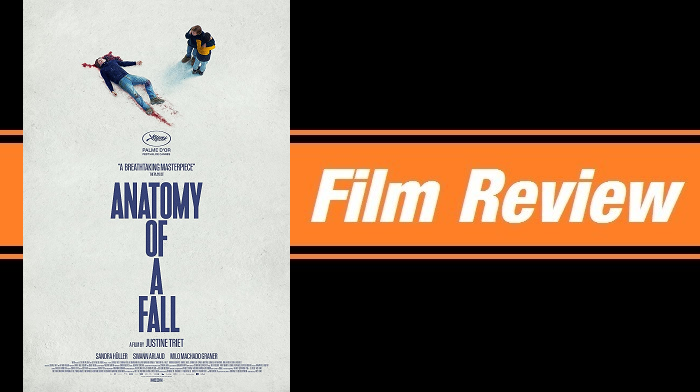
Justine Triet’s scintillating French feature “Anatomy of a Fall” was the big winner at this year’s Cannes Film Festival, taking home the coveted Palm d’Or along with the praise of most critics. Picked up by NEON for distribution, the film is on its way to a wider audience who will get to experience what is one of the most riveting courtroom dramas of recent years.

But narrowing Triet’s film down to the courtroom would be a gross disservice. There’s so much more packed into this lengthy but compelling feature. It’s also a well-crafted crime mystery. It’s an insightful analysis of a broken marriage. And it takes a look at a touching yet complex mother-son relationship. There is a lot to unpack along the way. And there’s enough ambiguity throughout to have you second guessing much of what you see. But that’s a testament to Triet’s craftiness and a big part of what makes the film work.

Image Courtesy of NEON

In what is one of the year’s best performances, Sandra Hüller plays Sandra Voyter, a translator living with her novelist husband Samuel (Samuel Theis) and their 11-year-old visually impaired son Daniel (Milo Machado-Graner). The family lives in a cozy mountain chalet at the base of the French Alps. This gorgeous scenic setting will soon become the site of tragic accident, the scene of a crime, or perhaps something else entirely. Trier and production designer Emmanuelle Duplay get us well acquainted with the location – a place under great scrutiny for the first half of the film.

One sunny day Daniel takes his guide dog out for a walk. Upon arriving back home he discovers his father laying in the snow, dead from an apparent fall from the house’s third-floor attic window. Sandra rushes outside after hearing her son’s cries and soon the police are on the scene to begin their investigation. A deep head wound immediately raises suspicions and Sandra finds herself as the chief suspect. Before long she’s officially indicted.

Sandra seeks the help of a savvy lawyer friend named Vincent (Swann Arlaud) who takes her case and begins building her defense. Sandra is adamant that her husband fell. “Yea but nobody’s going to believe that”, Vincent bluntly professes. “I don’t believe that.” The inconclusive autopsy results don’t help. From there new details arise and new evidence comes to light. Fresh revelations prompt an array of new questions about the family and their relationships.

Image Courtesy of NEON

Of the film’s many strengths, perhaps tops on the list is Triet’s extraordinary screenplay. It’s highlighted by her handling of characters, by the depth of her story, and by some of the most engrossing dialogue you’ll come across this year. This comes out most in the courtroom scenes where old baggage is spilled out and shallowly buried secrets are unearthed. Together with Hüller’s superbly calibrated performance, Triet shows small cracks in Sandra’s veneer as her entire life is laid bare by the prosecution. But she holds it together, leaving us with even more uncertainty.

“Anatomy of a Fall” can be a bit cold at times yet it’s not without an emotional current. And while it will never lose your attention, it probably didn’t need to be two-and-a-half hours long. But those are minor beefs especially when considering what Triet has achieved. She has put together a smart and sophisticated story, brought to life through her precise and confident direction. It’s pretty easy to see why it has received so much praise from Cannes and beyond.

VERDICT – 4 STARS