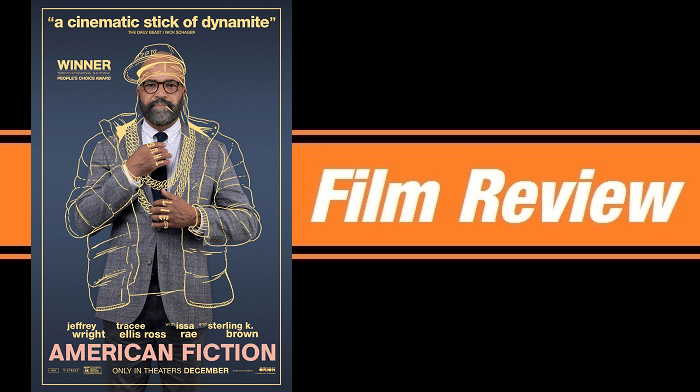
REVIEW: “American Fiction” (2023)

The great Jeffrey Wright remains one of the sturdiest and most reliable actors working today. Whether it’s a big budget superhero movie or a quirky Wes Anderson comedy, as cliche as it is to say, he tends to make every movie he’s in better. His latest, “American Fiction” is a testament to that truth. Based on author Percival Everett’s 2001 novel “Erasure”, the film hands Wright some tricky material that not just anyone could handle.

Written and directed by Cord Jefferson (making his feature film debut), “American Fiction” was presented as a straight satire in most of the marketing. It’s actually something quite different. The movie certainly has its funny moments, and the wacky premise from the advertising is still there. But “American Fiction” is much more of a family drama. These two sides of the story work together well enough for a while. But over time they begin to pull apart and feel more separated. By the third act it’s almost as if we’re watching two different films. Thankfully the one constant is Wright who is the glue that holds it all together.

Wright plays Thelonious “Monk” Ellison, a brilliant college professor and talented novelist who is going through a rough patch. He’s been asked to take a leave of absence from the university after a family complained about his….frankness. And as for his writing, he can’t get a publisher to pick up his new book, a modern-day retelling of Aeschylus’ “The Persians” (I wonder why). But what sours him most is how society has corralled Black voices into one small narrowly-defined box.
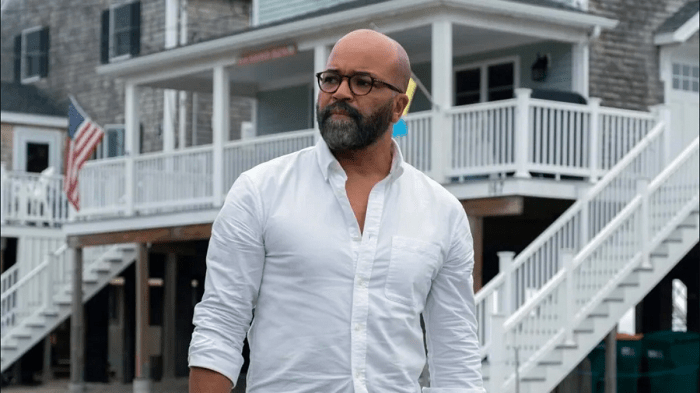
Image Courtesy of Amazon MGM Studios

Monk heads from California to Boston to reconnect with his family who he’s barely spoken to since his father died years earlier. He begins with his sister Lisa (Tracee Ellis Ross) who was left to take care of their ailing mother (Leslie Uggams) on her own. The siblings have a feckless and unreliable brother, Cliff (Sterling K. Brown). But he’s much more interested in sewing his wild oats than chipping in to help with his mom. So we have a strained family dynamic. But interestingly there’s more to these characters beyond our first impressions, and Jefferson pours a lot of time into defining them.

Meanwhile back on the more satirical side of the story, Monk grows more angry with each new rejection he gets from publishers. His agent, Arthur (John Ortiz) tells him books like his are a hard sell in the current climate. He tells him that publishers are after more “Black” books. Something like the current bestseller “We’s Lives in Da Ghetto”, a novel by the “groundbreaking” Black author Sintara Golden (a fabulous Issa Rae).

Annoyed, Monk facetiously writes his “Black” novel, mockingly embracing every cultural stereotype and societal depiction. He titles it “My Pafology” and uses the pseudonym Stagg R. Leigh to heighten the absurdity. Monk gives it to Arthur demanding that he send it out to publishers. He does so as a prickly joke, but he’s floored after his book is quickly picked up. It becomes a huge hit much to Monk’s chagrin. Soon he’s being asked for interviews, to do promotional tours, and there’s even talks of a movie adaption (Adam Brody is hilarious playing a Tarantino wannabe director).
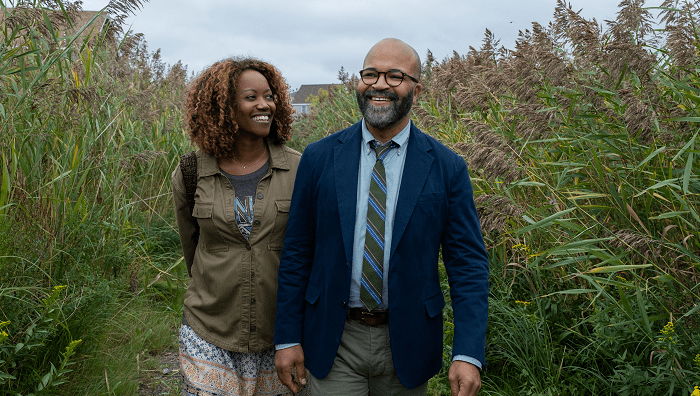
Image Courtesy of Amazon MGM Studios

While all of this is going on, Monk’s life back home seems as if it’s happening in another universe. He hits it off with a neighbor named Coraline (Erika Alexander). Meanwhile his mother is diagnosed with Alzheimer’s leaving the family with some difficult decisions to make. And that just scratches the surface of the story’s domestic angle. Again, Jefferson puts a lot of time into building these relationships. It’s what he seems most interested in. And so much so that the craziness of the comedy side rarely seeps into the family drama.

As a result of juggling what feels like two different movies in one, “American Fiction” ends up longer than it needs to be. Despite being thoughtful and compelling for most of its running time, the family stuff leans a little too melodramatic near the end. At the same time, the satirical stuff wraps up on a clever yet slightly unsatisfying note.

All of that aside, both the drama and comedy have good things to say about racial politics and more specifically Black representation. The song choices and Laura Karpman’s jazzy score are pitch-perfect (I was hooked the moment “Without You” by Ace Spectrum starts playing over the opening credits). There are several other good ingredients scattered throughout (Myra Lucretia Taylor as the Ellison family’s housekeeper is pure gold). And of course there’s Wright. It’s so good to see him get this kind of meaty, well-conceived lead role. Hopefully Hollywood takes notice.

VERDICT – 3.5 STARS

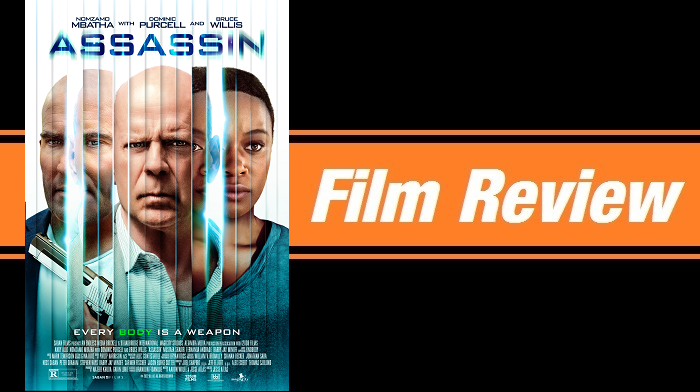
REVIEW: “Assassin” (2023)

As a long-time fan of Bruce Willis, it grew tough watching his movies go from box office gold to straight to video garb. But when news came out of his declining health (he’s since been diagnosed with frontotemporal dementia), it became clear why he had moved away from big studio productions and to smaller and easier roles. As a result of his condition, last year Willis’ family announced his retirement from acting. Suddenly movies didn’t seem all that important.

Since 2019 he has appeared in 26 straight direct-to-video movies, many of which used him heavy in their promotions. Interestingly, he only had small supporting roles in most of them. The same is true with “Assassin”, a sci-fi thriller from first-time director Jesse Atlas that turns out to be the final film appearance of Willis’ impressive 43-year career.

Unfortunately “Assassin” is yet another VOD dud but it certainly can’t all be put on Willis. There are several significantly bigger problems that end up dragging the movie down. Based on the short film “Let Them Die Like Lovers”, the movie has a premise that is ripe with potential. But it doesn’t have the budget or (more importantly) the creative know-how to pull it off. And it definitely doesn’t do enough for us to look past the uninspired performances, cringy dialogue, and painfully dull action.

Image Courtesy of Saban Films

The story (written for the screen by Atlas and Aaron Wolfe) follows Alexa (Nomzamo Mbatha) who is shocked when her husband and fellow U.S. Army soldier Sebastian (Mustafa Shakir) comes back from his tour in a coma. Desperate to learn more about what happened to him, Alexa begins digging and discovers that Sebastian was actually on a super-secret mission working for a man named Valmora (Willis).

Valmora and his associates Olivia (Fernanda Andrade) and Marko (Barry Jay Minoff) makeup a poorly defined black ops team who possess a technology that enables them to digitally map an agent’s consciousness into another person’s body. They can then use that body to carry out all kinds of missions, most notably assassinations. How it all works is anyone’s guess. The movie certainly doesn’t seem to care. All they need to pull it off is a bathtub, a laptop, and something that looks like an old car part (that’s what the movie tries to pass off as state-of-the-art tech).

When Alexa finds Valmora he informs her that a dangerous fixer and smuggler named Adrian (Dominic Purcell) has stolen a tiny piece of their tech that must be recovered if Sebastian is to ever wake up from his coma (don’t ask). So Valmora recruits Alexa to take over the the minds of strangers and assassinate those close to Adrain leaving him vulnerable. Then she can take him out and steal back the tech that can bring back Sebastian.

Image Courtesy of Saban Films

As you might expect they hit a few snags that by design usually adds tension to a story. That’s not the case here mainly because the movie shows no sense of urgency. There’s no energy or excitement. It toys with thought-provoking ideas and poses some meaty questions especially when digging into the moral queasiness of entering and controlling another’s body. “We kill the bad guys. Someone else takes the fall.” That line alone should provoke some compelling considerations. Unfortunately “Assassin” doesn’t do anything with the boxes it opens up.

And that speaks to the movie’s biggest problem. Yes, “Assassin” is plagued with bad performances throughout and the action never (and I do mean never) gets to room temperature. But it’s the script that turns out to be the biggest liability. The wafer-thin characters fumble through equally shallow (and sometimes astonishingly lame) dialogue. There’s no worthwhile hero or villain. And the story has so many holes it quickly devolves into something impossible to latch onto.

It’s truly heartbreaking to see Willis’ career end on such a sour note. But that doesn’t take away from the years of great characters, great energy, and great personality he has given us. From “Moonlighting” to “Die Hard” to “Pulp Fiction” to “The Sixth Sense” to “Moonrise Kingdom”. What a terrific filmography. And because of that, we will always be grateful. “Assassin” is streaming on Hulu”.

VERDICT – 1.5 STARS

REVIEW: “Asteroid City” (2023)

It seems unnecessary, but for some reason I begin every Wes Anderson movie review with a PSA. That’s because after eleven feature films to his credit, one thing is for sure – Anderson has a profoundly unique style all his own. It’s unmistakably his and he has stuck with that style throughout his career. It’s equally evident that his same strikingly unique style isn’t for everyone. And if you’ve seen any of Wes Anderson’s movies you should have a good idea of what to expect whenever a new one comes around.

The newest comes in the form of “Asteroid City”, another star-studded comedy full of Anderson faithfuls and a few new names hopping into the filmmaker’s sphere for the first time. Old reliables like Jason Schwartzman, Tilda Swinton, Adrien Brody, Edward Norton, and Willem Dafoe (among others) pop up throughout his latest yarn. And then newcomers like Tom Hanks, Scarlett Johansson, Margot Robbie, Maya Hawke, and Steve Carell take swings at Anderson’s specific brand of humor. It’s a robust cast who really help bring this wacky world and even wackier story to life.

Throughout his career Anderson has used quirk like a French impressionist used oil paints. In “Asteroid City” it colors nearly every inch of his cinematic canvas. If you’ve watched any of the trailers it’s obviously seen in the film’s peculiar yet eye-popping visual style. But true to Anderson’s other work, it’s also seen in the gaggle of eccentric (and routinely funny) characters. And of course there’s the story itself which has quirk sewn into its very fabric.

Image Courtesy of Focus Features

In “Asteroid City” we’re treated to a light and playful yet warmhearted and philosophical Wes Anderson. He bounces back-and-forth between two connected stories, each brimming with scenes that are unapologetically silly but often laced with a surprising amount of heartbreak.

This is also one of Anderson’s most visually arresting films, with his deliberately crafted artificiality and meticulous attention to detail resulting in one coffee-table art book-quality shot after another. It’s a stunning movie to simply look at and absorb. And just as much humor is conveyed through the compositions and framing as through anything in Anderson’s script.

The movie opens up like a 1950s television special – one with an unnamed host played by a fantastic Bryan Cranston. The show chronicles the creation, development, and premiere performance of Asteroid City, a stage production from acclaimed playwright Conrad Earp (Norton). Anderson shoots these scenes in crisp black-and-white and the boxy Academy ratio which is in sharp contrast to the bright dreamlike glow of the reenactment scenes. More on them in a second.

Earp connects with a stage actor named Jones Hall (Schwartzman) who serves as inspiration for his play’s lead character, Augie Steenbeck. Earp reaches out to an teacher at a local acting school named Saltzburg Keitel (Dafoe) to help finish his script and recruit a reliable cast. Then there is the play’s director, Schubert Green (a scene-stealing Brody). He’s a bit of a slime, strangely likable yet oblivious to his own womanizing.

Then the you have the reenactment of the play itself with its vivid sun-baked colors and shot in gorgeous widescreen. In these scenes we’re transported to Asteroid City, a small desert town with a population of 87 people and one curious roadrunner. The ‘pay attention or you’ll miss it” community is built next to a crater created by a meteorite years earlier. Asteroid City is set to host their annual Junior Stargazer convention hosted by General Grif Gibson (Jeffrey Wright) and astronomer Dr. Hickenlooper (Swinton). That’s where a select group of young students will share their space-inspired inventions for a chance to win a $5,000 fellowship award.

Image Courtesy of Focus Features

War photographer and recently widowed Augie (Schwartzman again) arrives at Asteroid City early with his son Woodrow (Jake Ryan) and three younger daughters. After his car breaks down Augie calls his father-in-law Stanley (Hanks) to drive out and help with the girls. In the meantime, disenchanted television actress Midge Campbell (Johansson) arrives with her daughter Dinah (Grace Edwards) as does a busload of elementary school children and their teacher June (Hawke) and a group of singing cowboys led by their lead singer Montana (Rupert Friend). Meanwhile they’re all being secretly monitored by a team of hysterically not-so-covert government agents.

The two-sided story mostly comes together as Anderson’s inherently goofy dialogue and equally goofy characters combine to deliver one smile-inducing comic bit after another. Most of Anderson’s choices gel much better this time around than in his last film, 2021’s “The French Dispatch” although a few feel arbitrary and out-of-the-blue (such as one seemingly pointless flash of nudity that serves no other purpose than cementing an R rating).

While Anderson’s unique style and perspective takes center stage, his carefully chosen and top-to-bottom great ensemble are essential. With a couple of exceptions most have small roles and intermittently pop up at different times throughout the film. It’s such a good recipe and everyone operates on the same wacky wavelength. They’re key in making “Asteroid City” a truly delightful entry into the Anderson oeuvre. Not quite in the upper echelon, but pretty much exactly what this Wes Anderson fan was hoping for. “Asteroid City” is in theaters now.

VERDICT – 4 STARS

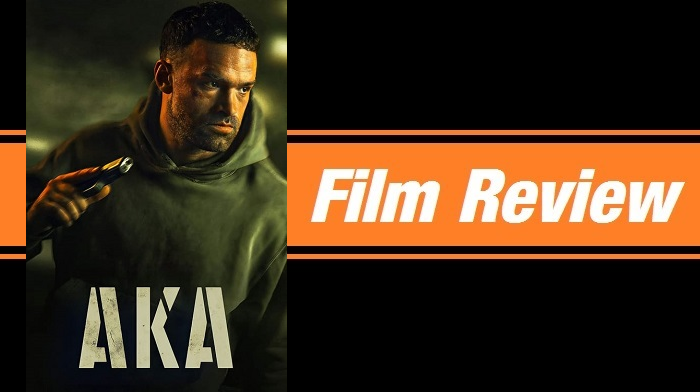
REVIEW: “AKA” (2023)

I’ll say it until I’m blue in the face – one of the best things about Netflix is the international flavor they bring to their streaming library. New movies from nearly every corner of the world routinely premiere on their platform. Of course some of their choices are better than others. But they do provide an avenue to filmmakers from around the globe to get their movies to wider audiences. And that’s a kind of exposure the film industry has long needed.

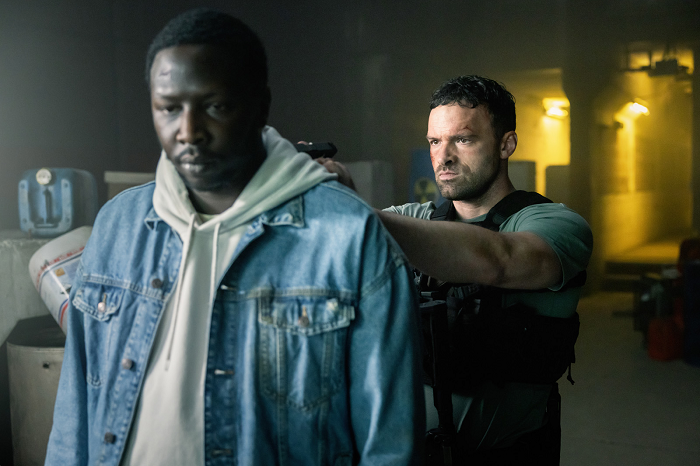
A prime example is the gritty French-language action thriller “AKA”. It comes from director Morgan S. Dalibert who also co-writes the script alongside the film’s star Alban Lenoir. In the film Lenoir plays a lethal black ops asset named Adam Franco (at least that’s one of his many identities). He works on behalf of the French government, doing their dirtiest of jobs outside of the public’s eye (a terrifically shot opening sequence gives us a taste of the kind of work he does).

Adam is contacted by his government handler Kruger (Thibault de Montalembert) who briefs him on a deadly hotel bombing in Paris. It was carried out under the command of a Sudanese warlord and former French ally named Moktar Al Tayeb (Kevin Layne). The government has received intel that Al Tayeb he has an even bigger attack planned and they need Adam to help them stop it.

Image Courtesy of Netflix

Since they have no idea where Al Tayeb is, Kruger tasks Adam with infiltrating the operation of a powerful drug runner named Victor Pastore (Eric Cantona) who has a close relationship with the terrorist. The not-so-simple job consists of working his way up the ranks and earning Pastore’s trust so that he can find where Al Tayeb is hiding. It gets even more complicated after Adam takes a liking to Pastore’s neglected young son Jonathan (Noé Chabbat).

As the complications mount Dalibert does a good job of keeping the story focused and moving forward at a steady pace. What’s surprising is that he and Lenoir spend a lot of time developing their characters. It’s not especially deep, but we get a good sense of everyone’s position, perspective, and personality. And it all unfolds with a reasonably satisfying amount of suspense. We know Adam is going to make his way up the ladder and that he’ll eventually have to fight. But Dalibert builds and maintains some good tension.

Along the way things are spiced up with several well done action scenes that really lean on Lenoir’s tough-as-nails presence. His look, build, and pure physicality make him an easy sell. Yet there’s something about him that makes his character feel like more than just a meathead. Lenoir brings an internal complexity to Adam that I wish was explored more. Still I like what we get both with the character and the movie as a whole. It turns out to be yet another good international grab for Netflix. “AKA” is streaming now.

VERDICT – 3.5 STARS
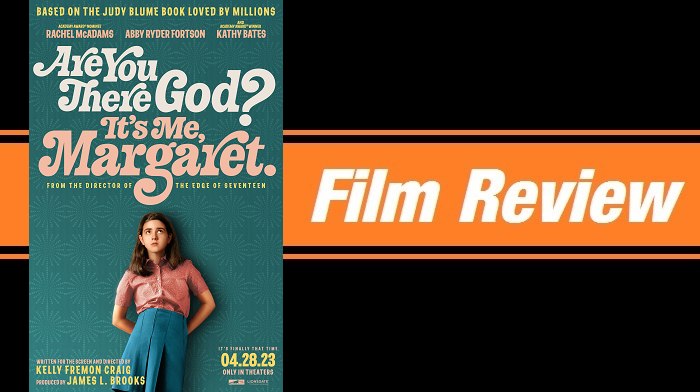
REVIEW: “Are You There God? It’s Me, Margaret.” (2023)

Kelly Fremon Craig surprised many with her 2016 feature film debut “The Edge of Seventeen”. The film was a smart, sincere, and funny hit that won over critics and audiences. Now she’s back with “Are You There God? It’s me, Margaret.”, a big screen adaptation of Judy Blume’s award-winning 1970 middle-grade novel of the same name. And what a delightful sophomore effort it is.

As she did before, Craig once again shows an impeccable grasp of her craft both as a writer and a director. It’s abundantly clear through her handling of characters, the pacing of her storytelling, her keen instincts with the camera, her management of tone, and her clear-eyed understanding of her material. She may be only two movies in, but Craig is already a treasure.

This faithful adaptation of Blume’s beloved novel is full of warmth, feeling, and well-placed laughs. It’s also clear-eyed and honest in its examination of a young girl’s quest for self-discovery. Thankfully Craig doesn’t pander to more modern expectations or feel some need to drastically overhaul the source material. But she doesn’t cut corners either. She stays true to the spirit of the book while also creating something pertinent for today. The result is a film that’s sure to resonate with women of all ages.

Image Courtesy of Lionsgate

Much like she did with “The Edge of Seventeen”, Craig amasses an outstanding cast. With “Are You There God?” it all begins with her star, Abby Ryder Fortson. After being dropped by Marvel Studios following two really good “Ant-Man” movie performances (a blessing in disguise), Fortson landed the role of Margaret which she takes on with effervescence and charm. At the same time she also deftly captures a young girl’s awkwardness and angst with a wide-eyed authenticity. It’s tricky material yet Fortson never misses a step. She’s great.

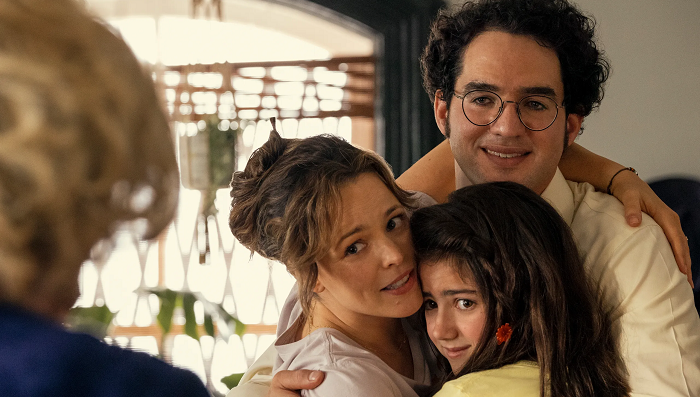
Tagging “Are You There…” as a coming-of-age story seems like a disservice. It’s that and so much more. Much like Blume’s book, Craig’s film looks at growing up through an 11-year-old’s eyes. But it’s also about her deeper relationships with those within her small yet intimate family circle. Margaret is hands-down the story’s protagonist. But much of what makes the film great involves the wonderful collection of supporting characters, specifically Margaret’s mother Barbara (a sublime Rachel McAdams – more on her in a second).

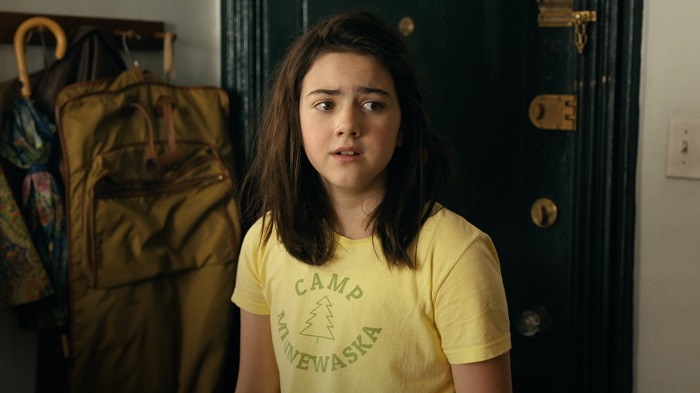
Set in 1970, we first meet 11-year-old Margaret returning home from a fun-filled summer at Camp Minnewaska. But back home she’s broadsided with some surprising news. Her father Herb (a delightful Benny Safdie) has gotten a promotion and their family is moving to New Jersey. Anxious about leaving her friends, her school, and her loving yet aggressively opinionated grandmother Sylvia (Kathy Bates), Margaret reaches out to God, offering up awkwardly sweet petitions like “Please stop this move from happening” or “Please don’t let New Jersey be too horrible.”

Religion played a significant role in Blume’s book and does so in Craig’s film. Margaret lives in an interfaith household – her mother is Christian, her father is Jewish. But Barbara and Herb made a decision to let Margaret figure it out for herself. Her faith-finding journey not only reveals a young girl’s confusion and frustration, but it also unveils some long-standing family tensions which Craig handles with tenderness, empathy, and candor.

But just as much time is put into sorting through the highs, the lows, and the unknowns of girlhood. The story spans one year as Margaret adjusts to a new neighborhood, a new school, and new people. She’s befriended by the snotty and gossipy Nancy (a fantastic Elle Graham) whose lacerating slights are as hilarious as they are insulting (“I live in the bigger house up the street,” she utters without a thought.). Together with pals Gretchen (Katherine Kupferer) and Janie (Amari Price), the four form a secret girls-only club and have hilariously earnest discussions about such topics as cute boys, wearing bras, and getting their periods. Of course everything is perception for these young girls on the cusp of womanhood. They don’t really know what they’re wishing for and that’s what makes their conversations so endearing.

Image Courtesy of Lionsgate

Through it all Margaret keeps conversing with God, wrestling with faith, and sorting through an array of conflicting feelings. Sweet visits with her grandmother bring back the warm comforts of the way things used to be. At the same time she’s growing impatient with her body in her rush to become a woman. It’s such a wonderfully chaotic representation of the whirlwind emotions girls can experience at that stage of their life.

Back to McAdams, is it too early to start my Best Supporting Actress campaign? She gives an award-worthy turn that I was connected to from her very first scene. Perfectly calibrated, she plays more than just a prototypical movie mom who slips in from time to time to offer motherly support. Barbara is a loving parent who McAdams captures with warmth and grace. She’s also suppressing her own vulnerability and insecurities for the sake of supporting her family – something that plays out in a thoughtful compelling side story. It’s a great character and an even better performance.

“Are You There God?…” is a joy-filled straight-shooting feature brimming with heart, humor, honesty, and a broad appeal that makes it a must-see for ANY audience. It never condescends to its younger viewers. It never comes across as mawkish or contrived. And it completely earns its big emotional payoff. It’s energized by the star-making performance from Abby Ryder Fortson and grounded by some of Rachel McAdams’ best work to date. And it all coalesces under the care and craftsmanship of Kelly Fremon Craig, a relatively new filmmaker who has already cemented herself as one of our most exciting voices. “Are You There God? It’s Me, Margaret?” Opens in theaters Friday.

VERDICT – 4.5 STARS

REVIEW: “Andor” (2022)

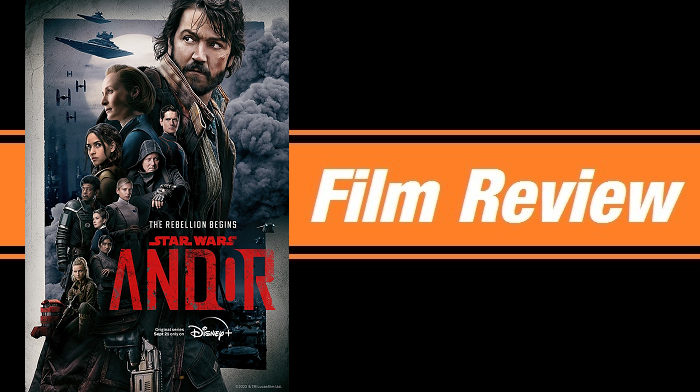
Out of the many Star Wars streaming shows Disney has put out, I’m not sure any have been as well received as the first season of “Andor”. The amount of love it has gotten from both fans and critics has been surprising and (in some cases) suspicious. While some like pretty much anything Star Wars related, there are those who are put out with the franchise and like “Andor” simply because it bucks traditional Star Wars trends. Cynical nonsense aside, what matters most is “Andor” is good – legitimately good and among the best of the franchise’s streaming series.

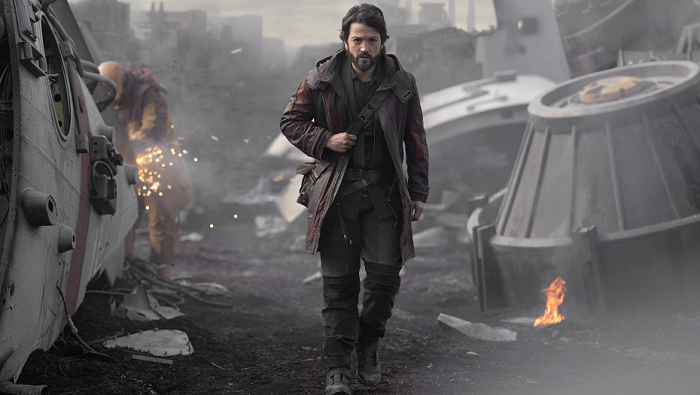
Without question, “Andor” was quite the gamble for Kathleen Kennedy and the heads at Disney. The character for which the show is named, Cassian Andor (exceptionally played by Diego Luna), first appeared in the 2016 film “Rogue One: A Star Wars Story”. He was hardly a top-tier player in the ‘galaxy far, far away’, so a lot of people were surprised to see him getting his own dedicated streaming series. But like every show thus far, his series doesn’t have a singular focus. It’s not wrapped up in following one character alone. It is just as interested in broadening our understanding of the greater Star Wars universe.

“Andor” certainly gives us a a better picture of Cassian by showing his life leading up to the events of “Rogue One”. But it’s just interested in the tumultuous galaxy around him. Creator and showrunner Tony Gilroy takes us to new places, introduces us to new characters, and offers up new perspectives during the volatile time between “Episode III: Revenge of the Sith” and “Episode IV: A New Hope”. It’s a time when the evil Empire was tightening its grip on planets and peoples. It’s also the time where we see the genesis of a young rebellion. It’s an interesting period made even more compelling thanks to Gilroy’s incredible vision.

Image Courtesy of Lucasfilm

Oppression breeds rebellion.” It’s a line that gets to heart on “Andor”. Gilroy gives us a clear-eyed view of what drives people to rise up and revolt. Poverty, oppression, subjugation – they’re just some of the things we see that plants the first seeds of rebellion. The series also puts a heavy emphasis on the chasm between the ‘haves’ and the ‘have-nots’; between those reaping the benefits of the Empire’s aggression and those being crushed by it. There are fascinating dynamics of all kinds scattered throughout its twelve episodes.

“Andor” starts slow and deliberate and the first couple of episodes may try the patience of those looking for a more traditional Star Wars experience. But from the very start, Gilroy is working towards something and he takes his time getting there. He doesn’t gloss over his world. He wants us to feel a part of it. And he doesn’t just introduce characters. He gives them depth which helps us understand their place in his world. Those are signatures of good storytelling, and they prove to be the backbone of the entire series.

Much of the show’s story is a chain reaction of events leading to its many pieces coming together in a combustible season-ending episode. Early on we spend time with Cassian who’s forced to go on the run after killing two antagonizing security guards on the industrial planet of Morlana One. It catches the attention of Syril Karn (Kyle Soller), an overambitious Deputy Inspector for a corporate trade conglomerate called Preox-Morlana. While Cassian heads to his home planet of Ferrix to cook up an alibi, Syril disobeys the direct order of his superior and begins an aggressive investigation into the two deaths.

Image Courtesy of Lucasfilm

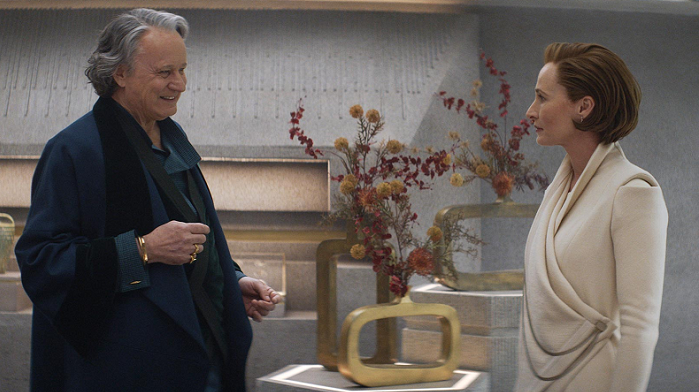
Elsewhere we’re introduced to the Imperial Security Bureau, the Empire’s secret police and intelligence agency that’s in the same vein as the KGB and Gestapo. It’s headed by Major Partagaz (an outstanding Anton Lesser) who reports directly to Emperor Palpatine. Rising fast within the ISB ranks is a motivated young supervisor Lieutenant Dedra Meero (Denise Gough). Her keen instincts lead her to suspect that recent heists of Imperial weaponry might be a coordinated effort, potentially by a fledgling rebellion. Convincing her superiors won’t be easy.

Another key player is Senator Mon Mothma (wonderfully played by a returning Genevieve O’Reilly). She works on the political frontlines on the capital planet of Coruscant, slowing down the Emperor’s intensifying power grab the best she can without exposing her opposition to the Empire. Behind the scenes she’s secretly funding the growing rebel efforts, a task that is growing more difficult and that’s even harder to hide.

Then you have the mysterious Luthen Rael, played by the beguiling Stellan Skarsgård. Luthen is a fierce underground orchestrator of the new Rebel Alliance who secretly masquerades as an flamboyant dealer of fine antiquities on Coruscant. He takes a special interest in Cassian, yet throughout the series we never quite know what to make of him. He’s a fascinating presence.

Image Courtesy of Lucasfilm

As it progresses the show expands even further. We spend more time on Ferrix where those close to Cassian, including his old flame Bix Caleen (Adria Arjona) and adopted mother Maarva (Fiona Shaw), do their best to evade the suspicious Empire. We go on a heist with Cassian and a group of rebels on the planet Aldhani. Lead by Vel Sartha (Faye Marsay), the mission’s target is an Imperial garrison that houses the bankroll for an entire sector. There’s even a prison storyline where we’re introduced to Kino Loy, played by the indomitable Andy Serkis.

There’s just so much to explore, experience, and unpack in the twelve episodes of “Andor”. While it’s visually captivating on many different levels, it’s really the writing that sets the series apart. The team of Tony Gilroy, his brother Dan Gilroy, Stephen Schiff, and Beau Willimon handle the script duties. Admittedly, as a longtime fan I do like a little more action in my Star Wars. That said, the show’s intense focus on character is both exhilarating and rewarding. And while there may be less action, every episode offers lovers of Star Wars mythology and world-building (like me) so much to chew on.

I could write another ten paragraphs on “Andor”. There’s that much to dig into. What was expected to be a revealing series about a main character from “Rogue One” turned out to be so much more. We definitely do get a clearer picture and better understanding of Cassian Andor. He’s our conduit into the story and the connecting tissue that brings all the show’s moving parts together. But we also see the trials, tribulations, and tragedies of a young rebellion. We see how the growing Empire spreads its power and how people are pushed to point of fighting back. We see oppressive strategies, overzealous ambition, and lust for power. But we also see resilience, heroism, self-sacrifice, and a love for freedom. The clashing ideals and the characters behind them are the meat and potatoes of “Andor” Season 1. Now bring on Season 2.

VERDICT – 4.5 STARS