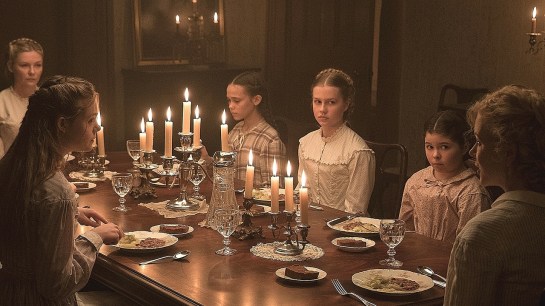
REVIEW: “The Ballad of Buster Scruggs”

SCRUGGS poster

One of the most exciting yet baffling movies of 2018 is none other than “The Ballad of Buster Scruggs”. Exciting in that it’s the latest film from Joel and Ethan Coen, a filmmaking tandem that always has me champing at the bit for what they have up their collective sleeves. Baffling in trying to figure out what this movie intended to be (it’s said that it was originally written as an episodic television series). Also Netflix’s promotional model didn’t exactly help things.

Now the movie is out and we have a clearer vision of what “Buster Scruggs” is all about. It’s far from what you would consider a conventional movie. Instead it is a collection of six unrelated short stories, each telling its own tale “of the American frontier”. Each has its own unique flavor and each highlight different aspects of the Coen’s filmmaking brilliance which has long cemented them among the very best in modern cinema.
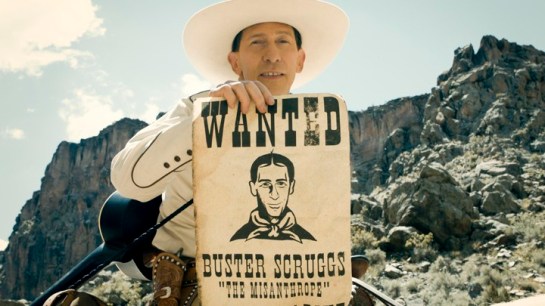
THE BALLAD OF BUSTER SCRUGGS CR: NETFLIX

The first is “The Ballad of Buster Scruggs”, a tale of a sharpshooting singing cowboy hysterically played by Tim Blake Nelson. Think Gene Autry with a violent edge. It’s followed by “Near Algodones” where James Franco can’t seem to keep his head out of a noose. Third is “Meal Ticket” featuring Liam Neeson as a struggling traveling showman and his lone atraction – a limbless thespian orator played by Harry Melling.

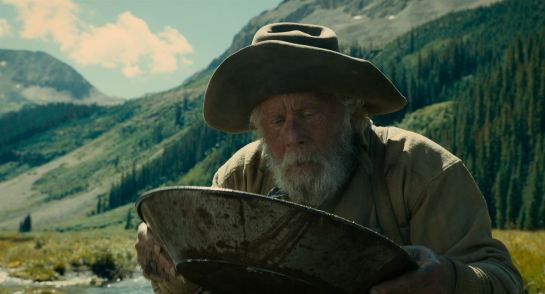
“All Gold Canyon” starts the second half with Tom Waits as a grizzled prospector mining for gold in a pristine mountain valley. It’s the slowest of the six yarns but it meanders in the best possible way. “The Gal Who Got Rattled” is the most surprising and bittersweet tale of the bunch. Zoe Kazan plays a young woman traveling by wagon train to Oregon. And the film ends with “The Mortal Remains”, a gothic tale with a tilt about five people on a late evening stagecoach ride. Think of an offbeat Western episode of The Twilight Zone.

SCRUGGS3

While each tale is completely distinct they still feel cut from the same cloth. Each find the Coens tipping their wide-brimmed hats to a genre they clearly love, embracing classic tropes and paying homage along the way. Yet the tones from story to story couldn’t be more different. They bounce from whimsical to heartbreaking, hysterical to tragic, violent to serene.

If there is one throughline connecting all of these stories it would be the theme of death. It’s something familiar to Coen brothers movies and here they explore in a variety of ways. Their handling of it is sometimes bloody and downright gruesome. Other times it lingers in the distance and we see more of its effect. And in typical Coen brothers fashion they’ll have you laughing at it in one scene and shocked by it in the next.
SCRUGGS2

From start to finish “Buster Scruggs” flaunts the stamps of its creators. It’s rich with their signature dense wordplay and bursts of rib-splitting absurdity. Yet there are moments of tenderness and heart that are sure to catch people by surprise. Toss in Bruno Delbonnel’s dazzling cinematography and yet another fabulous score from Carter Burwell (a composer who has never had a problem operating on the Coen brothers’ quirky wavelength).

“Buster Scruggs” is sure to leave some people scratching their heads and may not satisfy those hungry for a full-length feature. But for those willing to get onboard, it is a sparkling example of an anthology done right. From the opening credits to the final scroll the Coens lean into their creative freedom and show off an undeniable joy of filmmaking. And whether they are honoring or satirizing the Western genre, they adoringly navigate their brilliant ensemble cast through the violence of the ‘Old West‘ and through the indelible complexities of the human spirit. It ends up being a truly delightful romp.

VERDICT – 4.5 STARS

4-5-stars

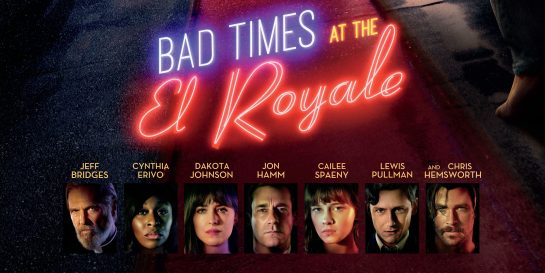
REVIEW: “Bad Times at the El Royale”

EL Royale poster

It’s hard to watch Drew Goddard’s new neo-noir crime-thriller and not think of Quentin Tarantino. For better or for worse “Bad Times at the El Royale” plays like a Tarantino picture. It leans heavily on its style, its characters are a shady lot, violence comes in bloody bursts, and the whole thing is a bit gonzo. But while QT’s unshakable dedication to his brand can often push things over the top, Goddard dials it back. It turns out to be both a strength of the film and perhaps a weakness.

“El Royale” is built almost entirely around secrets and revelation. Goddard (serving as both writer and director) crafts a story thick with plot and every person we encounter is a mystery to be unpacked. He does that through a series of chapters, each focused on a particular character, that tells their backstory and connects them to the main narrative.

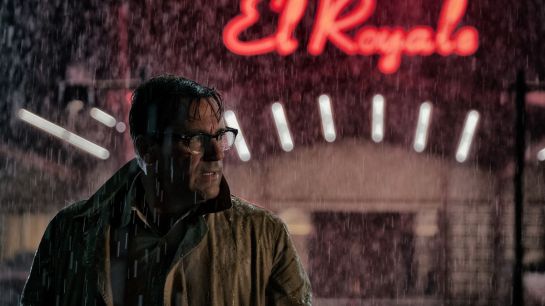
El Royale 1

The film is set in 1969 at the El Royale Hotel, a once hopping motor lodge not far from Lake Tahoe. The end-of-the-road property straddles the California/Nevada border with a set of rooms in each state. Upon checking in, the guest can choose between the “warmth and sunshine” of a California room or the “hope and opportunity” on the Nevada side. The lone employee is a less-than-motivated concierge named Miles (Lewis Pullman). But don’t let the bright welcoming neon sign fool you. The El Royale has just as many secrets as the characters we encounter.

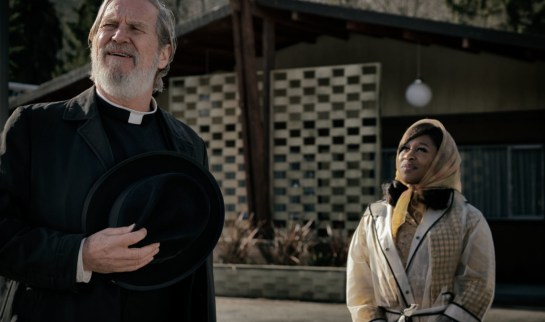
The first person we meet is Darlene Sweet (Cynthia Erivo) a struggling nightclub singer on her way to a show in Reno. There is also Father Daniel Flynn (Jeff Bridges), a priest from Indiana heading to visit his brother. In the lobby they both meet an obnoxious and prattling vacuum cleaner salesman Laramie Seymour Sullivan (John Hamm). The final piece of this twisted human puzzle to arrive is an attitude-rich hippie named Emily Summerspring (Dakota Johnson).

Miles is caught off guard by actual guests and after listening to his scripted spiel they all head off to their rooms. Revealing much more past that would be doing a disservice especially considering how dependent the film is on twists and surprises. What was most surprising was Goddard’s patience before showing all his cards. There are far more dialogue-driven character moments than I ever expected. This undeniably adds to the rather long 141-minute running time (which many have criticized). In some instances they slow things down, but I found these moments worked far more often than not.

El Royale2

It’s hard to say anything bad about Goddard’s presentation. “El Royale” looks fantastic and the camera is constantly doing cool things with angles, shadows and perspectives. Almost every frame is showing off some level of pulpy noir style. Goddard’s past work (“Cloverfield” and “The Cabin in the Woods”) has shown a flair for utilizing evocative imagery. He pushes it further here, really digging into his setting. And he never passes up an opportunity to slip in some 60’s tunes (from Motown to Deep Purple).

“El Royale” is a movie I found to be kind of fascinating. Goddard deftly maneuvers his unconventional narrative while playing with time, tinkering with points of view, and tossing in a MacGuffin or two. At the same time he constantly offers his ensemble cast plenty of meaty moments. And things only get crazier once Chris Hemsworth shows up (I’ll let you figure him out on your own). There is no doubt the movie has a couple of slow spots and its best scenes are during its early ambiguity. But I still had a ton of fun with this weirdly delicious concoction.

VERDICT – 4 STARS

4-stars

REVIEW: “Black Panther”

PANTHER POSTER

Over the last several months my thoughts on “Black Panther” went from cautious to optimistic; lukewarm to generally excited. What nearly dampened my enthusiasm was the rabid, unbridled praise from early viewers who were quick to throw out words like “masterpiece” and “the greatest superhero movie ever made”. My personal favorite may be that the film will be “taught in school” and “debated among intellectuals”. Director Ryan Coogler has even been heralded as “the new Spielberg”.

All of this does more to fuel my skepticism than stoke excitement. After all, there are some legitimate reasons to want a film like this to succeed and it seems many are doing their part to ensure the hype is through the roof. But here’s the thing, I don’t need prodding in order to find reasons to be excited: Coogler is a fantastic young filmmaker. I absolutely love the cast. I couldn’t wait to see how cinematographer Rachel Morrison follows up her Oscar-nominated work in “Mudbound”. Ultimately all of the fawning puts undeserved pressure on “Black Panther” which when brought down to reality is an extraordinary genre picture that stands strong on its own merits.

Panther1

With two feature films under his belt (the good “Fruitvale Station” and the even better “Creed”) Ryan Coogler has shown himself to be an astute director with a fresh cinematic perspective. He brings all of that to “Black Panther” which he also co-writes with Joe Robert Cole. His venture into the superhero genre feels epic in scale yet maintains an intimacy that some of Marvel’s other efforts lack. It’s a careful balance that helps the movie excel in a variety of ways.

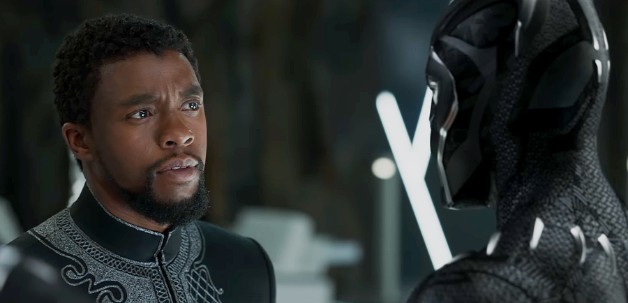
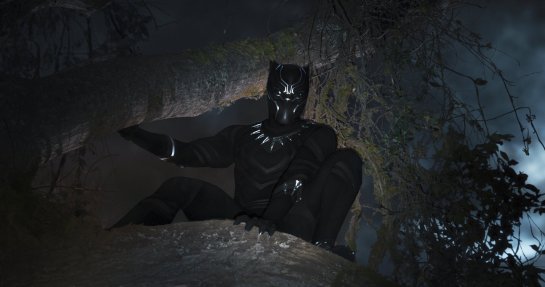
The wonderfully cast Chadwick Boseman returns as T’Challa, a character first introduced in Marvel’s “Civil War”. In that film his father, the king of the small African country of Wakanda, is killed during a terrorist attack in Vienna. “Black Panther” begins shortly after with T’Challa set to take his father’s place as Wakanda’s king as well as its super-powered protector. He’s quickly faced with a host of challenges both from inside and outside of his nation’s secret borders.

PANTHER2

Much like “Wonder Woman” a year ago, “Black Panther” reinvigorates its genre in a number of ways and the two movies share similarities. In that film it was the mythical island of Themyscira that remained hidden and untainted by the outside world. Here it’s Wakanda posing as a poor third-world country but actually rich in energy and technology thanks to a powerful alien mineral known as vibranium which they keep hidden from the rest of the world. Isolationism is one of the many subjects explored as the leaders of Wakanda’s five tribes debate their traditional stance versus a more open-world position. There is no easy answer as I’m sure the inevitable sequels will prove.

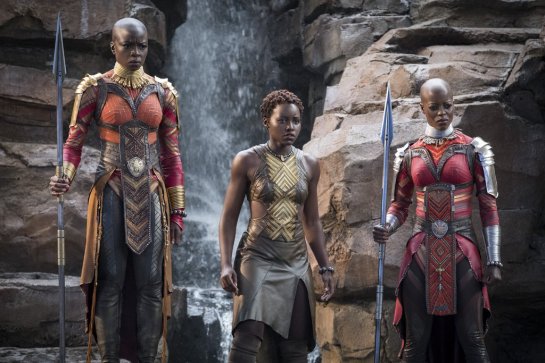
While T’Challa is the centerpiece you could say it’s the supporting characters who make this such a rich and full experience. First you have his allies, a delightful collection of powerful and personality-rich women. Lupita Nyong’o is fabulous as T’Challa’s principled ex-flame and Wakandan secret agent Nakia who’s guided by conscience over crown. Danai Gurira is lights-out as Okoye, leader of the female special forces unit known as the Dora Milaje. Letitia Wright plays T’Challa’s live-wire younger sister Shuri. She’s to her brother what Q is to James Bond. We also get great names like Martin Freeman, Angela Bassett, and Forest Whitaker.

PANTHER4

In the bad guys corner is Ulysses Klaue (Andy Serkis) who knows Wakanda’s big secret and has a sweet tooth for vibranium. There’s something I love about Serkis’ performance that I can’t quite put my finger on. Klaue is as bizarre as he is brutal and you can tell Serkis is having a ball portraying him.

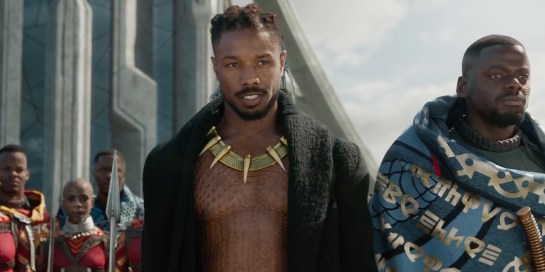
But the name most people will be talking about (and rightly so) is Michael B. Jordan who plays Erik “Killmonger” Stevens. His story is setup in the film’s prologue and comes more into focus as the movie moves forward. As his name denotes, Killmonger has been raised in violence and therefore acts through violence. He is an essential piece to Coogler’s story and offers more complexity than the bulk of Marvel villains we’ve seen. In many ways Killmonger is the product of choices made by others and he is driven by a whirlwind of internal chaos, much of it aimed at Wakanda.

Jordan is an absolute scene-stealer and you get the sense Coogler wants him to be. The two have collaborated on both “Fruitvale” and “Creed” and they definitely operate on the same wavelength. Here the charismatic Jordan brings a swagger to Killmonger as well as a palpable rage which fuels his every move. Ultimately he is a misguided soul yet at the same time a sympathetic one with much more driving him than the generic quest for ‘world domination’.

PANTHER3

In each of his films Coogler has shown a big interest in his characters and it’s no different here. He also gives a lot of attention to visualizing Wakanda as a majestic place full of cultural beauty and aesthetic diversity. Production designer Hannah Beachler and costume designer Ruth Carter make the most with their chunk of the film’s $200 million budget. And it’s all captured through Rachel Morrison’s vibrant camera.

As much as I loved “Black Panther” it isn’t without a few nagging issues. There are plenty of action scenes, several of which are fabulous. But the ending is the only time the movie falls in with the traditional Marvel formula – a massive final battle with a ton of CGI. While some of it is exhilarating, the effects aren’t what you would expect and sometimes come off as a little cartoony. There are also a handful of unanswered questions and a couple of relationships that felt underserved. Minor quibbles in light of what all the movie manages to do right.

PANTHER5

“Black Panther” is indeed a socially relevant movie as many have said and it is so without depending on obvious narrative crutches or hammer-to-the-head sermonizing. It’s socially relevant because it simply is. That may sound a bit tripe, but it’s the best way to state it. The film’s setting, its characters, its conflicts all feel natural and authentic within the world Coogler and company create. The story’s message and underlying themes are rooted in conviction and earnestly explored within the flow of the narrative itself. Really good filmmakers can do that.

In the end “Black Panther” is a rousing success not because critics propped it up or commentators screamed its importance. It’s a success because of the people who made it – immense talents in front and behind the camera who are hopefully opening the eyes of moviegoers and moviemakers. But “Black Panther” isn’t just a cultural statement. It’s a terrific film that energizes a genre as it has a community. Not many movies can say that.

VERDICT – 4.5 STARS

4-5-stars

REVIEW: “Blade Runner 2049”

BLADE poster

Green-lighting “Blade Runner 2049” could be considered one of the gutsiest movie moves in recent years. Ridley Scott’s 1982 original landed with mixed reactions both from critics and moviegoers. It’s unique and unconventional approach to practically everything pushed many viewers away and it failed to bring in the money Warner Brothers was banking on. Yet over time perceptions have changed and the film is widely regarded as a science fiction classic.

Now, 39 year later, along comes “Blade Runner 2049” and you could say it has followed the same path as its predecessor. While critics weren’t as divided, audiences didn’t come out for it and the movie fell well short of what it needed at the box office to break even. Yet just like the ’82 film, it wouldn’t be a stretch to expect a re-evaluation over time and a greater appreciation for what “2049” is doing.

BLADE1

Talks of a “Blade Runner” sequel had been ongoing for years with names like Christopher Nolan and a returning Ridley Scott attached. Denis Villeneuve eventually signed on to direct and with him came long-time collaborator and top-tier cinematographer Roger Deakins (fourteen Oscar nominations without a win and counting). What quickly became obvious was Villeneuve’s intention to keep certain things very close to the original. The look, the tone, even the deliberate storytelling all hearken back to Scott’s picture.

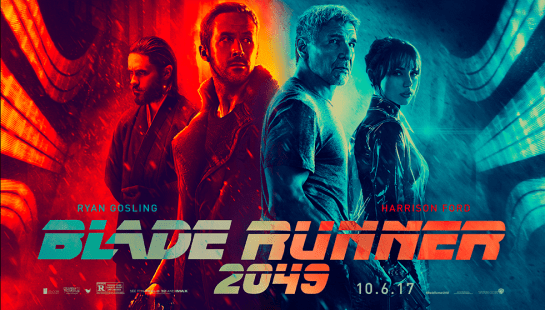
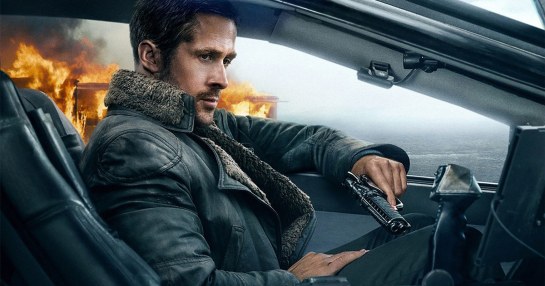
Ryan Gosling plays K, a Blade Runner for the LAPD. In case you need a refresher, Blade Runners are tasked with hunting down and “retiring” bioengineered humans known as replicants. K’s superior Lt. Joshi (Robin Wright) puts him on the trail of a rogue replicant of interest (Dave Bautista) who needs to be put down. In his encounter with his target K discovers evidence of a child born possibly from two replicants. Joshi believes this startling knowledge that replicants can reproduce could start a war so she orders K to hunt down the child and erase any evidence of its existence.

BLADE3

The devilish Tyrell Corporation from the first film is no more and the even more nefarious Wallace Corporation has risen to take its place. It’s ran by a mannered, milky-eyed Jared Leto who has also learned of the miracle child’s possible existence. And as you can probably guess, he wants it for his own reasons. He sends his personal strong-arm Luv (Sylvia Hoeks) to tail Agent K and capture the child for the company.

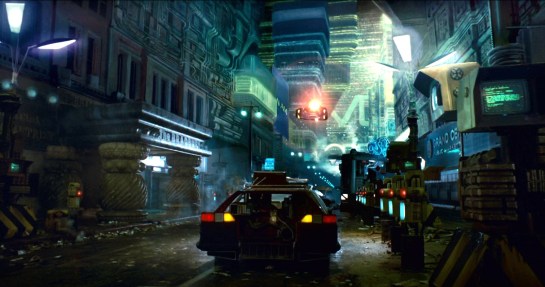
The writing team of Hampton Francher (co-writer of the original film) and Michael Green (who contributed to four 2017 screenplays) wisely steer clear of altering the “Blade Runner” formula. Much like its predecessor, 2049 is a methodically structured puzzle, solved through slow but persistent drips of revelation. Surrounding that central mystery is a visually jaw-dropping world – a consistent evocation of the original film’s unforgettable aesthetic. Production designer Dennis Gassner deserves a ton of credit for visualizing such a stimulating dystopia, from the exquisitely dank and dreary Los Angeles to the glowing orange hue of the sandy and barren Las Vegas. Then Deakins elegantly shoots the world in a way that amplifies the moody sci-fi/neo-noir vibe and immerses the audience.

BLADE2

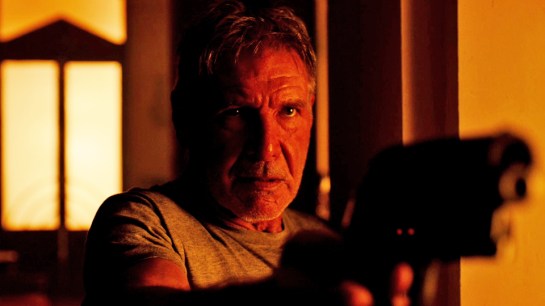
Gosling (known for often acting in a perpetual state of lethargy) is a perfect fit for his role. K is a character hungry to feel and there is a surprising emotional resonance in Gosling’s portrayal. K is a tragic figure, mutually disliked or dismissed by both humans and replicants. He attempts to fill that void with a holographic companion called Joi (Ana de Armas). But ultimately it’s his mission to hunt down the child that puts the pieces together for him. One of those pieces is a returning Harrison Ford who brings an unexpected subtlety and nuance to the now older and wiser Rick Deckard.

“Blade Runner 2049” isn’t the first movie to pose the question ‘What does it mean to be human?’ Ridley Scott has long been fascinated with variations of that question and Villeneuve’s movie is no different. It’s an idea that lies under the surface of “2049” and its entire two hours and forty-five minute runtime. It is a bit long which certainly contributed to the lower box office. And viewers attuned to more action-packed rhythms have undoubtedly had a hard time with the picture. That’s a shame. “2049” has more to say, has more visual ingenuity and takes more risks than the bulk of the genre films we get today.

So for now it appears the gutsy call hasn’t paid off. But I can’t help but believe that over time “2049” will be reassessed by many who dismissed it and I can honestly see it someday being heralded as a new science fiction classic just like its predecessor. Sure, those are bold words but some people were saying the same thing in 1982.

VERDICT – 4.5 STARS

4-5-stars

REVIEW: “The Bachelors”

BACHposter

Kurt Voelker’s “The Bachelors” opens with a father walking into his son’s bedroom in the middle of the night. He sits on the edge of the bed and says to his groggy son “I can’t stay here anymore.” Even without context this simple line of dialogue packs the emotional heft that is threaded throughout this entire film.

“The Bachelors” is a movie about grief which is nothing spectacular or especially new. But Voelker (who both wrote and directed the picture) does something many of these explorations miss. He never loses sight of the human element or the importance of conveying truth in every relationship. Whether he’s juggling drama or comedy, his characters and their emotions always feel genuine.

Bacheors1

The father is Bill (J.K. Simmons) who recently lost his wife to cancer after 33 years of marriage. It’s an extraordinary performance by Simmons who maintains a steady heartbreaking tenderness. It’s not nearly as flamboyant or showy as his Oscar-winning performance in “Whiplash” but just as impressive in a much more measured way.

Bill packs up and moves with his son Wes (Josh Wiggins) to southern California where he hopes a change of scenery will do him good. Wes is equally sympathetic as a teenager who not only loses his mother but also his father to a worsening state of depression. On top of that he’s forced to move to a new town and a new school with new friends. There is an almost natural shyness to Wiggins that comes through in his acting. We saw in “Walking Out” from earlier this year and now here. His understated approach is serves his character which make later scenes when his emotions boil over more effective.

The coming-of-age side of Voelker’s two-headed story has its moments. Many of them are between Wes and a beautiful but troubled wild-child named Lacy. She’s portrayed by Odeya Rush who played a similar role in Greta Gerwig’s “Lady Bird”. The two are designated homework partners which allows their unconventional relationship to take form. Wes’ time with his two new outsider friends is a little more hit-or-miss. Some of their banter is funny but other times seems too contrived for the moment.

BACH2

The other side of Voelker’s story consistently surprised me especially in how deep it was willing to dive into the area of depression. I wasn’t expecting it. There are no soft perspectives or dulled edges. Simmons doesn’t ‘go big’ to add a dominating dramatic effect to the issue. His performance is mannered yet emotionally rich and always believable. There are some wonderful and revealing scenes between Simmons and Harold Perrineau who plays his therapist. And also with Julie Delpy who plays a math teacher who takes an interest in Bill.

The film’s ending could be misconstrued as too tidy, but I was never left with that impression. I think the struggles still ahead of this father and son are implied but Voelker offers us hope. And we want that for these characters. We want it to work out. We want them to heal. We want all of this because Voelker does such a good job making us care for them. That sympathetic and emotional connection he creates is more than enough to carry us through this delightful yet poignant story.

VERDICT – 4 STARS

4-stars

REVIEW: “The Beguiled”

beguiled poster

There are so many benefits to going into a movie blind. Such was the case for me and Sofia Coppola’s latest film “The Beguiled”, a movie that made her the second (ever) female to win the Best Director award at Cannes. I had no real reference point. I haven’t read Thomas P. Cullinan’s novel. I’ve never seen the 1971 Clint Eastwood movie. I didn’t read a plot synopsis or a single review prior to seeing it. I’m glad for it and I’m sure it fed into the film’s hypnotic effect.

Set in 1864 Alabama and three years into the Civil War, Coppola’s vision for the aptly titled “The Beguiled” is far more focused and contained than expected. The war and its side-effects linger in the background mostly reminding us of its presence through the booming cannon fire in the distance. Instead the entirety of Coppola’s film is restricted to a remote girls school and the drama that unfolds there.

beguiled3

The Southern Gothic vibe is almost immediately noticeable. Both look and tone convey a subtle sense of isolation and unease. From the very start everything feels a bit off-kilter and Coppola’s management of her tight, tense little world keeps it that way.

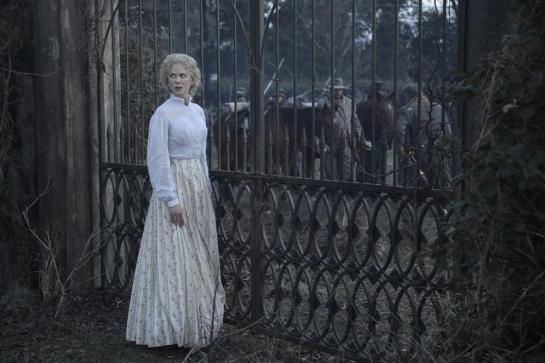
The characters drive this deftly conceived drama. Nicole Kidman is the right actress to play the school’s wary and stoic matriarch. Kidman’s portrayal reveals someone firmly dedicated yet clearly drained by her responsibilities. Kirsten Dunst is equally good as the school’s doleful teacher who struggles to maintain a sense of belonging. Elle Fanning plays a young free-spirited Southern belle who is as cunning as she is charming. Each, along with four young girls under their care, go about their melancholy day following their same melancholy routine.

But oh how things change when one of the young girls (wonderfully played by Oona Laurence) stumbles across a wounded Union soldier and helps him back to the school. He’s played by Colin Farrell and his presence in the house immediately causes a stir as each woman is forced to deal with their own pent-up frustrations. As he is slowly nursed back to health the character dynamics between him and each individual woman takes their own sensuously wicked turns.

beguiled2

Farrell fits his part well – a good-looking charmer aimed at survival. But despite being a key plot piece, he quickly becomes secondary to Coppola’s greater interest – the female perspective. It’s the women who are the most fascinating as they maneuver between empowerment and outright self-destruction. Coppola’s approach, both as writer and director, handles their emotions more through suggestion than laying things bare. And the slow-burning dramatic fuse makes it all the more compelling.

There are several other pivotal ingredients that Coppola utilizes to great effect. There is the haunting minimalist score from the French band Phoenix. Exquisite costume design from Coppola favorite Stacey Battet. And perhaps the biggest find, cinematographer Philippe Le Sourd. Every frame he shoots features some interesting angle or technique. All of these talents join a stellar cast in realizing Coppola’s tense, simmering vision.

beguiled1

I suppose I should mention the backlash from some who have problems with the film’s avoidance of the slavery issue and subsequent absence of any African-American cast members. There are certainly films where this is a valid gripe. This isn’t one of them. Not every Civil War era movie needs to address the slavery issue especially when the scope of the story being told is so precise. And if Coppola did try and wedge in the slavery issue would it be given the attention it deserves?  Truth is the subtly brewing war inside the walls of the school is far more in focus than the war outside. In fact the isolation of these women is a key point.

Serving as a refuge from the blockbuster-thick summer movie schedule, “The Beguiled” is a refreshing change of pace. Isolation, sexual repression, jealousy, and several other themes are handled with smarts, and Coppola’s understated approach makes it hard to take your eyes off of the film’s steady boil. The slow pace may not work for everyone (there was a moment when I wondered myself), but it never spins its wheels. It keeps moving forward to its fabulous finale which was just icing on the proverbial cake.

VERDICT – 4.5 STARS
4-5-stars