REVIEW: “The Best Christmas Pageant Ever” (2024)

I personally enjoy Christmas movies. Old ones, new ones, serious ones, silly ones – there is a wide variety that my family and I watch each year. But they only really resonate with me during the Christmas season. For me that starts in earnest on the day after Thanksgiving. So watching and reviewing a new Christmas movie outside of those silly self-imposed parameters is a risky prospect.

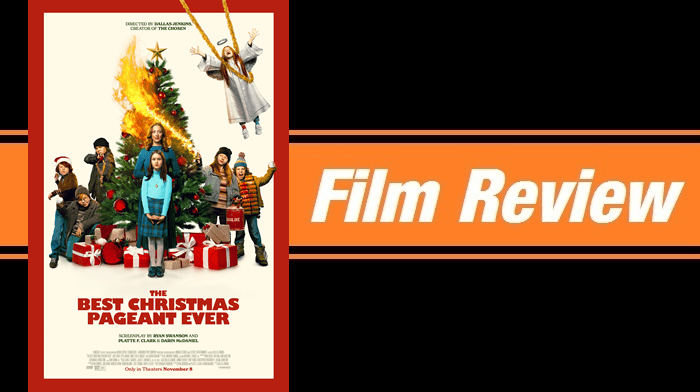
But a big tip of the toboggan to “The Best Christmas Pageant Ever”, a genuinely funny and uplifting holiday dramedy from director Dallas Jenkins. Written for the screen by the trio of Ryan Swanson, Platte Clark, and Darin McDaniel, this big-hearted family-friendly feature is an adaptation of Barbara Robinson’s beloved 1972 children’s novel of the same name. And what can I say – it has all the makings of a new perennial Christmastime favorite.

Image Courtesy of Lionsgate

“The Best Christmas Pageant Ever” uses a similar framework as the beloved yuletide classic “A Christmas Story”. It features a narrator sharing a meaningful story from their childhood. But instead of the bespectacled Ralphie, here it’s young Beth Bradley (Molly Belle Wright) who lives with her mother Grace (a terrific Judy Greer), her dad Bob (Pete Holmes), and her kid brother Charlie (Sebastian Billingsley-Rodriguez) in the cozy little town of Emmanuel.

Emmanuel is perhaps best known for two things: their annual Christmas pageant which is about to celebrate its 75th anniversary, and the Herdman kids – unruly terrors from the proverbial other side of the tracks who are known to lie, fight, bully, cuss, steal, and occasionally set a fire or two around town. Needless to say, everybody in Emmanuel knows the six rowdy Herdmans – Ralph, Leroy, Claude, Ollie, Gladys, and their tough-as-leather leader Imogene.

Everyone is anticipating this year’s pageant to be the biggest one ever. But things take a turn after its long-time organizer and director, the stern Mrs. Armstrong (Mariam Bernstein) takes a spill and breaks both her legs. With no one stepping up to take the reins, Grace volunteers to head this year’s pageant. It’s a noble undertaking that proves to be more challenging than she ever expected.

As Grace holds her first casting meeting at the local church, she’s shocked by the sudden appearance of the Herdmans who stake their claims on the Nativity’s biggest roles while daring any of the other kids to try out. The rough and gruff Imogene is expressly intent on playing Mary which raises the ire of several other parents. So Grace finds herself in a pickle. Does she let the unchurched Herdmans participate and risk ruining the biggest Christmas pageant in its 75-year history? Or does she take the safe route and replace them, losing the true meaning of the season in the process?

Image Courtesy of Lionsgate

It’s not too hard to figure out where things go, especially considering movies like this tend to follow similar paths. And you’ll spot several well-worn Christmas tropes scattered around. Yet “The Best Christmas Pageant Ever” maintains an irresistible charm and a heartfelt sincerity that never turns saccharine. It’s also consistently funny and surprisingly self-aware. And while it clearly has something to say, it doesn’t beat anyone over the head. Instead, its message flows naturally throughout the story, from its playful opening to its affecting finish.

“The Best Christmas Pageant Ever” turns out to be a bona fide delight that’s sure to warm the heart of the jolliest elf or the most hardened Grinch. A perfectly tuned Judy Greer is a treat while Beatrice Schneider as Imogene is a revelation. They’re joined by a fun and festive ensemble who help make this holiday feature one of the most joyous surprises of 2024. “The Best Christmas Pageant Ever” is in theaters now.

VERDICT – 4 STARS

REVIEW: “Beetlejuice Beetlejuice” (2024)

After the commercial success of Tim Burton’s 1988 dark fantasy horror comedy “Beetlejuice”, Warner Bros. Pictures was thinking about a follow-up as early as 1990. Several scripts were written and considered, with some of the ideas sounding much better than others (believe it or not, “Beetlejuice Goes Hawaiian” was actually pitched). But numerous delays and distractions pretty much buried any hopes of a sequel. That is until now.

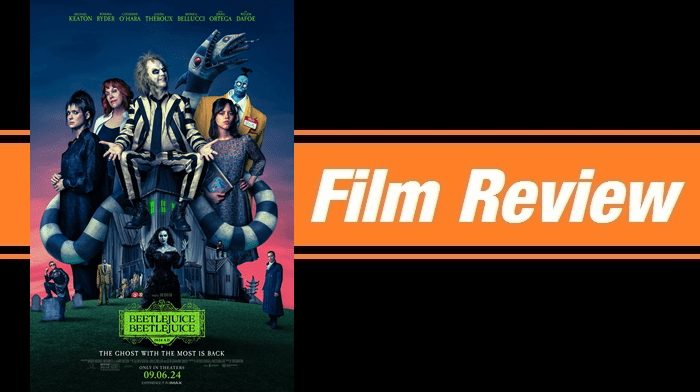
Here we are 36 years later with Burton reteaming with Warner Bros. for “Beetlejuice Beetlejuice”, the second installment in this oddball (dare I say it ) franchise. I enjoyed the original “Beetlejuice”, but I wasn’t the kind of fan who was hungry for more. Perhaps that’s why I’m so surprised by how much enjoyed this sequel. Is it because it’s a nostalgic blast? Or is it just great seeing Tim Burton let loose with his morbid sense of humor? I think it’s a lot of both.

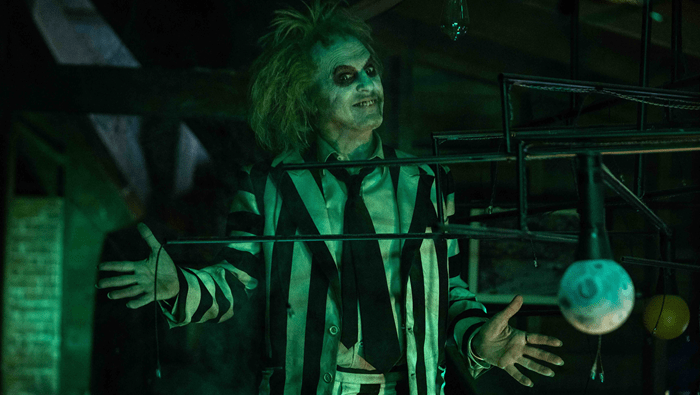
“Beetlejuice Beetlejuice” welcomes back the familiar faces of Winona Ryder, Catherine O’Hara, and of course the indelible Michael Keaton while introducing several well-tuned new faces including Jenna Ortega, Justin Theroux, Monica Bellucci, and Willem Dafoe. Tonally, “Beetlejuice Beetlejuice” is perfectly in-sync with its predecessor. It’s full of wacky effects, cool animatronics, and a slew of macabre gags, all of which generate the kind of horror-inspired zaniness that energized the ‘88 film.

Image Courtesy of Warner Bros. Pictures

In the 36 years since the events of the first film, Lydia Deetz (Ryder) has went from the eccentric goth girl who was nearly married off to a loony demon named Betelgeuse (aka Beetlejuice) to an anxious psychic mediator with her own television show called “Ghost House”. She has a daughter, Astrid (Ortega) who is away at border school, but their relationship has been strained since the tragic death of her husband and Astrid’s father, Richard (Santiago Cabrera).

Lydia gets a phone call from her stepmother Delia (O’Hara) informing her that her father, Charles died while on a bird watching expedition in the South Pacific. So they both return to the little town of Winter River, Connecticut to plan the funeral, picking up Astrid on the way. Once there, Astrid is introduced to Rory (a hilarious Theroux), her mother’s boyfriend who has a knack for always saying the wrong things. Astrid also meets a local boy named Jeremy (Arthur Conti) and the two hit it off.

But things take a bonkers turn after Astrid is lured into the afterlife where she hopes to reconnect with her father. But she finds herself trapped in the hereafter with a hilariously gonzo assortment of Burton-conceived grotesqueries. Desperate to rescue her daughter, Lydia calls on her old nemesis Betelgeuse for help. For those who may have forgotten, Betelgeuse is a rambunctious spirit from the afterlife who desperately wants back in the land of the living. And he still thinks marrying Lydia is his ticket to get there.

Image Courtesy of Warner Bros. Pictures

So Lydia says his name three times, summoning Betelgeuse. They then make a pact – he helps her retrieve Astrid and she agrees to marry him. But Betelgeuse has some problems of his own, namely his furious ex-wife Delores LaVerge (Bellucci). It turns out Delores was a member of a soul-sucking death cult who Betelgeuse hacked to pieces after discovering she had poisoned him. Now she wants revenge. Tracking it all is Wolf Jackson, a character who doesn’t make much sense but who is still a lot of fun thanks to an all-in Willem Dafoe. Wolf was a B-movie action star when living and now works as a semi-hard-boiled afterlife detective.

There are countless callbacks to the 1988 film including the Deetz’s creepy hilltop house overlooking the town, a brief rendition of Harry Belafonte’s “Day-O (The Banana Boat Song”), even the returns of the stop-motion sand worm and everyone’s favorite Shrinker, Bob. The movie also keeps it’s gleefully irreverent and politically incorrect tenor which fuels several of the funniest moments. And then there is the cast who are all fully committed yet clearly having an absolute blast with everything they’re asked to do.

On the negative side, “Beetlejuice Beetlejuice” packs a little too much into its story which leaves some characters and their arcs noticeably underdeveloped (Bellucci’s Delores being a prime example). But it’s hard not to be drawn to the movie’s distinct sense of humor and black heart charm. And who wouldn’t want to watch the great Michael Keaton hop back into one the wackiest roles of his storied career? “Beetlejuice Beetlejuice” is in theaters now.

VERDICT – 4 STARS

REVIEW: “Blink Twice” (2024)

Zoë Kravitz makes her feature film directorial debut with “Blink Twice”, a movie built upon a few interesting ideas but without enough original ones of its own. What is intended to be a firm statement of gender dynamics and empowerment ends up being a hollow and borderline exploitative exercise that’s nowhere near the clever and insightful social satire it aims to be. That’s a shame because Kravitz clearly knows how to handle a camera.

“Blink Twice” stars Kravitz’s fiancée Channing Tatum. He plays a disgraced billionaire tech mogul named Slater King who just recently stepped down as CEO of his company King-Tech following some unspecified inappropriate conduct. Since then, Slater has made numerous public apologies, sought therapy, and bought his own island where he can retreat and reflect. Yea, right.

Image Courtesy Amazon MGM Studios

Frida (Naomi Ackie) is a designer nail artist and part-time waitress who happens to be working tables at a charity event sponsored by Slater King. She and her best friend Jess (Alia Shawkat) smuggle in two cocktail dresses and sneak into the gala as guests. While there, Frida bumps into to the hunky Slater and the two hit it off. It prompts Slater to invite Frida and Jess to join him and his privileged friends on a getaway to his private island. Of course they agree and soon are whisked away on a King-Tech private jet.

One scene later and we’re at Slater’s palatial island estate where Frida and Jess are joined by his pals Vic (Christian Slater), Cody (Simon Rex), Tom (Haley Joel Osment) and Lucas (Levon Hawke) along with three other female guests, Sarah (Adria Arjona), Camilla (Liz Caribel), and Heather (Trew Mullen). It’s a dream vacation, but we realize it’s too good to be true (something that should have been obvious to our protagonists the second Geena Davis pops up to collect everyone’s cell phones).

From there, measuring time is impossible as Kravitz moves us through one day of alcohol and drug-driven revelry after another. Meanwhile her story (which she co-wrote with E.T. Feigenbaum) has a hard time nailing down its tone. The movie seems to have as much fun filming the hard-partying scenes as the characters do partaking. There are sudden bursts of comedy and we get several head-bobbing needle drops. But it also wants us to feel uneasy, especially once Frida starts noticing strange things that she can’t quite figure out.

Image Courtesy of Amazon MGM Studios

But the movie comes completely unglued in its third act, losing every shred of nuance and devolving into an uber-bloody girl-boss phantasmagoria. That may sound like a fun, go-for-the-jugular finish and it could have been if not for the heavy-handed messaging, some laughably on-the-nose dialogue, and the simple fact that none of the film’s shallow one-dimensional characters earn our investment. Not to mention it adds yet another shift in tone that further distracts from the movie’s thematic intentions.

“Blink Twice” sets itself up nicely, teasing us with a story that mixes Hitchcockian suspense with a little Shyamalan wackiness. But as is often the case, the issues are in the execution. The suspense never reaches a simmer and the wackiness almost feels unintentional. To Kravitz’s credit the film looks great which testifies to her sharp instincts with the camera. But so much remains underdeveloped that the message loses its power, no matter how hard we’re hit over the head with it. “Blink Twice” is in theaters now.

VERDICT – 2 STARS

REVIEW: “The Beast Within” (2024)

“The Beast Within” opens with a line from an old proverb, “There are two wolves inside all of us … they are always at war.” The Two Wolves legend has often been attributed to a Cherokee elder speaking to his grandson. It’s essentially a metaphor for the inner conflict where the two wolves represent doing good and doing evil. When asked which wolf would win, the elder responded, “The one you feed.”

That proverb emphasizes a compelling struggle that “The Beast Within” attempts to explore through the guise of an old-fashioned werewolf movie. But at its heart, this patient and measured horror thriller has human interests that stretch well beyond genre. Father-daughter relationships, loss of innocence, and generational trauma are just some of the thematic through-lines that become easier to spot as the story unfolds.

Image Courtesy of Well Go USA

Director Alexander J. Farrell, who wrote the script alongside Greer Ellison, seems to do a lot with a little. I’m guessing some choices were made with budget constraints in mind. Other choices simply show good instincts. The small cast and fairly limited setting certainly help with cost. But they’re also fitting for this particular story. And we don’t see much in terms of creature effects because Farrell keeps his lycan offscreen for the vast majority of the movie. It may seem like a shortcut, but it effectively works in the story’s best interest.

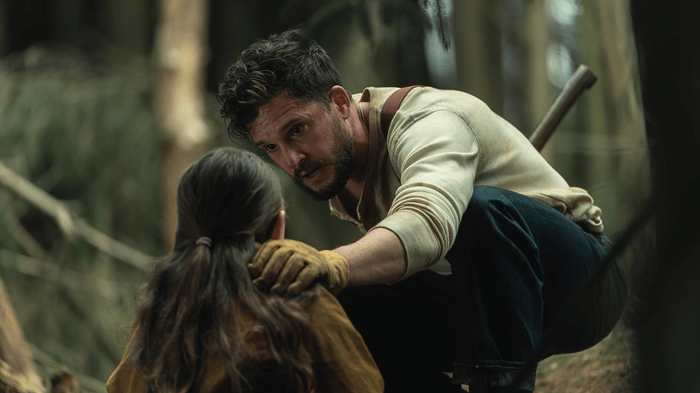
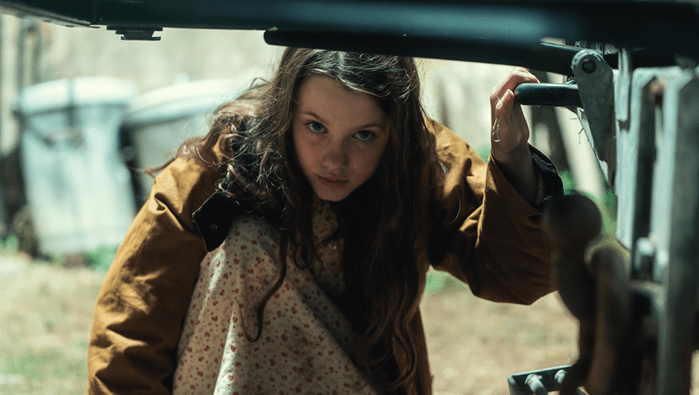
Set mostly in and around a remote country manor, the bulk of the story is told through the perspective of a young girl named Willow (played by the talented Caoilinn Springall – also great in this year’s “Stopmotion”). Willow has an unexplained respiratory disorder that forces her to use oxygen whenever she gets anxious. And that’s often in their troubled household. Her mother, Imogen (Ashleigh Cummings) tries her best to shield her daughter from a dark family secret. But the more the curious and observant Willow secretly probes, the closer she gets to a painful truth.

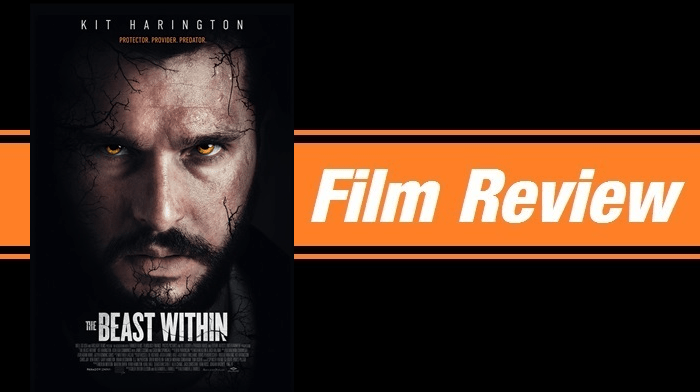
While Willow has a close bond with her mother and grandfather Waylon (James Cosmo), her relationship with her father Noah (Kit Harington) is more complicated. She both adores and fears him – conflicting feelings stemming from Noah’s unpredictable manner which vacillates between loving and seething. But no one wants to talk about the real issue, preferring to keep Willow in the dark despite her father’s growing volatility, especially during a full moon.

Image Courtesy of Well Go USA

Noah lingers on the periphery for much of the film, adding an uneasy presence that Farrell takes advantage of on multiple occasions. It allows us to hone in on the characters and the intricacies of their relationships which is ultimately what the movie is most interested in. But it also adds a thick layer of tension than only intensifies as the inevitable revelations come to light. Harington ably embodies each of the “two wolves” while young Springall does a good job earning our empathy.

By the end, the story’s allegory may be a bit on-the-nose, but it’s plenty impactful. Farrell adds some subtle twists and the mystery is made more effective by his ability to plant questions in our minds. Meanwhile cinematographer Daniel Katz cements the tone with his clever framing, moody interiors, and beautiful yet ominous drone shots of the countryside. It’s crucial to connecting us to this slow-paced yet savvy family story that both demands and rewards our patience. “The Beast Within” is now available on VOD.

VERDICT – 3.5 STARS

REVIEW: “Borderlands” (2024)

With “Deadpool & Wolverine” still sucking up most of the oxygen in theaters, it was going to be an uphill climb for “Borderlands”, the big screen adaptation of the popular Gearbox Software video game series. But what has been most concerning is the complete lack of buzz leading up to its release. And when some opening weekend box office projections came in as low as $8 million, let’s just say there are plenty of reasons for the studio to worry.

I’ve played most (if not all) of the “Borderlands” video games. For the most part, the movie gets a lot right which is both good and not so good. The world of “Borderlands” is like a Wild West wasteland. It’s vast, violent, and full of chaotic comic energy. That also describes the crazy collection of colorful characters and creatures who exist in it. All of these things come alive in the movie.

Image Courtesy of Lionsgate

But for me the games could be exhausting. The action could turn repetitive; some characters grew obnoxious; the humor wore thin. Those very same things are true about “Borderlands” the movie. Directed and co-written by Eli Roth, this $120 million sci-fi action-comedy attracted a terrific and overqualified cast that includes two Oscar winners, Cate Blanchett and Jamie Lee Curtis, Kevin Hart, Jack Black, Gina Gershon, Ariana Greenblatt, Edgar Ramirez, Haley Bennett, and Florian Munteanu. They keep the film watchable but can’t cover its blemishes.

The story, penned by Roth and Joe Crombie, follows a ragtag group of misfits brought together through some convenient circumstances. A rogue soldier named Roland (Hart) infiltrates a space station to kidnap Tiny Tina (Greenblatt), the young daughter of megacorporation magnate Atlas (Ramirez). With the help of the hulking “Psycho” Krieg (Munteanu), Roland snatches the girl and heads to the treacherous planet of Pandora.

Atlas hires a bounty hunter named Lilith (Blanchett) to travel back to her home planet of Pandora and retrieve his daughter. Aided by a chatty one-wheeled robot named Claptrap (Black), Lilith eventually tracks down and confronts Roland only to learn a not-so-surprising secret. Atlas doesn’t actually care for his daughter’s safety. Tina is key to opening a hidden vault believed to house powerful ancient tech that could have cataclysmic consequences if in the wrong hands. Atlas wants her back so he can open the vault and claim the tech for himself.

So Lilith, Roland, Tina, Krieg, and Claptrap employee the help of Pandora expert Dr. Patricia Tannis (Curtis) and set out to find the vault first. But hot on their heels is the dogged Commander Knoxx (Janina Gavankar), armed with Atlas’ private army and one hideous haircut. They also encounter a gang of deranged subterranean psychos, giant titan-sized monsters, and eventually Atlas himself. It leads to a number of action sequences that range from outrageously fun to glaringly unremarkable.

Image Courtesy of Lionsgate

Roth and company do manage to create a visually exciting Pandora. It’s covered in sand and rust, with jagged canyons and grimy cities. It’s dirty and unwelcoming yet richly detailed both practically and digitally. If only it was filled with compelling inhabitants. As fans will attest, the “Borderlands” games have been known for their wacky array of personalities. But despite adding characters like Mad Moxxi (Gershon) and Marcus Kincaid (Benjamin Byron Davis), we’re never given a sense of what makes them fan favorites.

But the film’s problems extend further. For starters, Hart’s casting is puzzling. He doesn’t have the grit to be a good tough guy and he isn’t given the lines to be a funny guy. Meanwhile an insufferable Jack Black stays cranked up to ten and is really hard to endure. And it doesn’t help that Atlas is just another bland corporate villain. Add in the cobbled together and mostly empty story, and you have a movie that captures the look of the video games more than the spirit that made them so successful.

VERDICT – 2.5 STARS

RETRO REVIEW: “Bloody Mama” (1970)

Roger Corman’s exploitation crime thriller “Bloody Mama” was the filmmaker’s second-to-last feature for American International Pictures and it was a far cry from his best. Though moderately successful, the film was handcuffed by Corman’s steadfast desire to milk the recent success of Arthur Penn’s Oscar-winning “Bonnie and Clyde”. His efforts in “Bloody Mama” were so apparent that it prompted Los Angeles Times film critic Charles Champlin to label it “Mommie and Clyde“.

While the film was lambasted by critics, it earned enough of an audience to inspire Corman to fund “Boxcar Bertha” and hire a young Martin Scorsese to direct it. But that doesn’t mean “Bloody Mama” is a good film. Despite its wealth of young on-screen talent, the movie struggles under the weight of its own inconsistency. While Corman’s inspiration is clear, it doesn’t seem like he’s at all sure about the kind of movie he wants to make. His tonal hodgepodge is maddening, hopping from lighthearted to dark on a whim and unwisely mixing such things as rape, murder, and incest with elements of comedy.

“Bloody Mama” is very loosely based on the antics of Kate “Ma” Barker. While Barker’s reputation as a hardened crime matriarch have been debated over the years (J. Edgar Hoover called her “vicious” and “dangerous” while those who knew her said she had no role in her sons’ many crimes). Corman sticks with the pop culture interpretation, even taking it further by portraying Ma barker as an absolute monster. She’s played by a tempestuous Shelly Winters who fully commits to the role.

Set and filmed in rural Arkansas, “Bloody Mama” takes place during the Depression as Ma Barker leaves her husband George (Alex Nicol) and takes her gaggle of unruly twenty-something sons with her. Her pack consists of the unhinged Herman (Don Stroud), the more reserved Arthur (Clint Kimbrough), the masochistic Fred (Robert Walden), and the drug-addicted Lloyd (Robert De Niro). The five set out on a crime spree across 1930’s Arkansas, picking up a few tag-alongs and killing more than a few along the way.

There isn’t much in the way of character development as Corman is far more interested in the luridly violent exploitation that helped solidify his legacy. The lone exception may be De Niro’s Lloyd, the troubled outcast of the backwoods brood whose inner turmoil resonates the most realistically. He’s very much a part of the family, and his sociopathic bend takes him down some rather sinister paths. But he also comes across as alienated and alone which only fuels his self-destruction. Stroud doesn’t get nearly as much to work with, but he does make the psychotic Herman a terror.

As for Ma Barker, she mostly comes across as a collection of character types. We get some early flashes to her incestuous and abusive childhood which somewhat explains her own vile deviancy. But the bulk of the film sees Winters as a blustering swirl of anger and resentment. Her Ma Barker lives up to the sensationalized portrayal that has found its way into many movies, songs, and stories. It’s a performance that’s both fascinating and frustrating, much like “Bloody Mama” as a whole.

VERDICT – 2 STARS