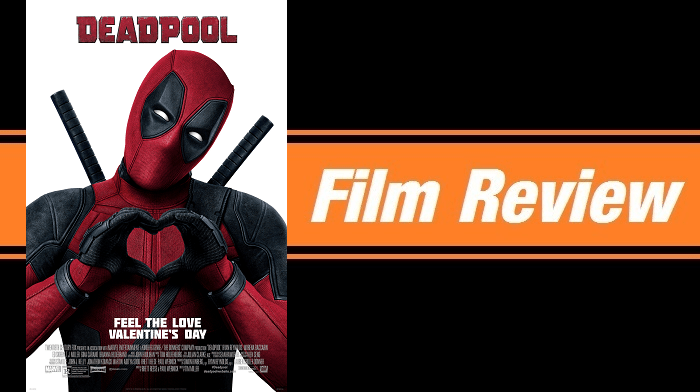
REVIEW: “Deadpool” (2016)

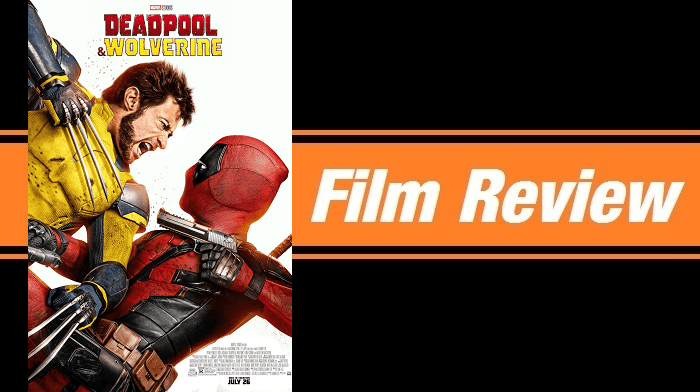
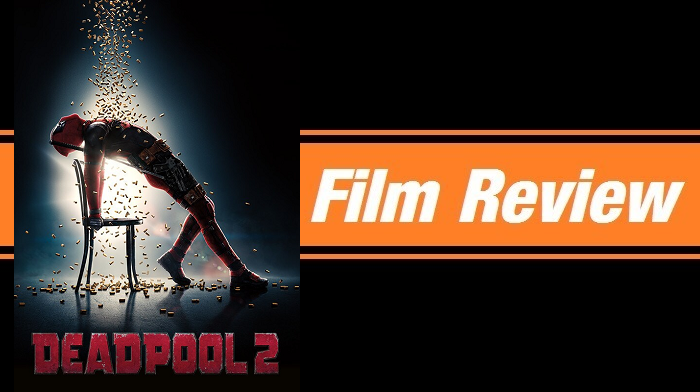
Before Disney gobbled them up, 20th Century Fox had quite a run with its X-Men universe. Surprisingly, of the thirteen X-Men related films, the highest grossing were the two Deadpool movies. 2016’s “Deadpool” was a spin-off from the X-Men films and a big departure from the PG-13 brand of superhero movie. It was a film deliriously dedicated to obtaining an R rating through a force-fed diet of over-the-top violence and pointless profanity. To no surprise, it wooed and won over a lot of people.

First time director Tim Miller, co-writers Rhett Reese and Paul Wernick, along with producer and star Ryan Reynolds, take a later iteration of the Deadpool character from the comics and ramp up everything, from the “mature” content to the relentless silliness. Through most of the movie they go out of their way to poke fun at everything superhero related, soaking us with goofy banter, routinely breaking the fourth wall, and peppering the film with absurd needle drops.

Image Courtesy of 20th Century Studios

“Deadpool” is essentially an origin story and not a particularly original one. But its hope is that you’ll be so involved in the comic mayhem that you won’t care. Reynolds plays Wade Wilson, a wisecracking tough guy who works as mercenary-for-hire, helping the city’s weak and needy. He meets and falls for an escort named Vanessa (Morena Baccarin), and just as their warped storybook romance is about to take off, he is diagnosed with terminal cancer. Rather than let her watch him die, a devastated Wade leaves Vanessa.

Now that sounds like pretty heavy stuff and for a few brief minutes or so “Deadpool” lightly tugs at your heartstrings. But its gag-a-second proclivity and origin story constrictions makes it hard to take even its most heartfelt moments seriously. Baccarin is especially good considering Reynolds’ act sucks most of the air out of every scene. Not only is she a good match, but she’s pretty much the only character who doesn’t feel like she’s doing a comic routine.

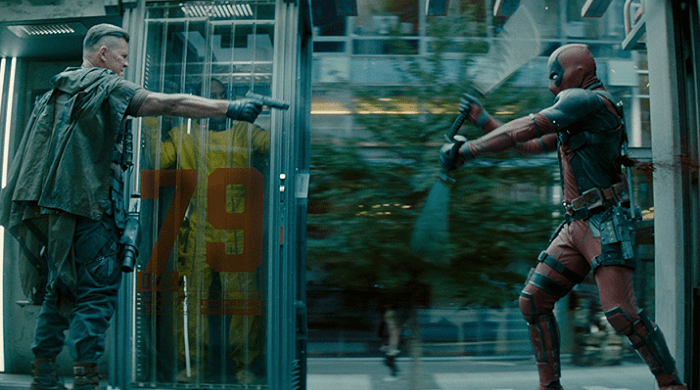
One day Wade is approached by a mysterious man who tells him of an experimental treatment that will not only cure his cancer but potentially grant him super powers in the process. Though hesitant at first, the prospect of reuniting with Vanessa drives him to accept. But after he’s sent to a laboratory ran by the film’s paper-thin villain, Ajax (Ed Skrein), Wade learns he’s little more than a lab rat for a torturous experiment meant to trigger mutations within the subject.

The agonizing procedure leaves Wade horribly disfigured but grants him healing factor, super strength, and agility which he uses to escape the laboratory. Fearing his appearance will scare Vanessa away for good, Wade makes it his mission to track down Ajax in order to find a cure. But before doing so, he creates his own super-powered vigilante he names Deadpool. Anti-hero hijinks ensue.

Image Courtesy of 20th Century Studios

The astute among you may ask the obvious question, why doesn’t Wade’s newly acquired healing abilities heal his disfigurement? It heals gunshots, it heals broken bones, it even grows back severed limbs. There’s a very convenient explanation in the comics about his normal cells forever battling the cancer cells. But the movie never addresses it. And that’s pretty much how it approaches most of the questions that arise from its patchwork story – don’t ask.

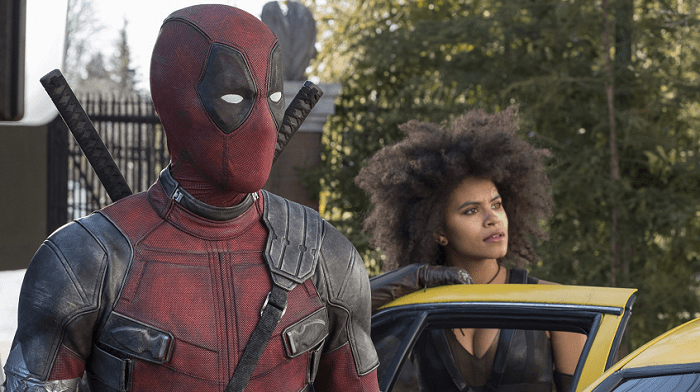
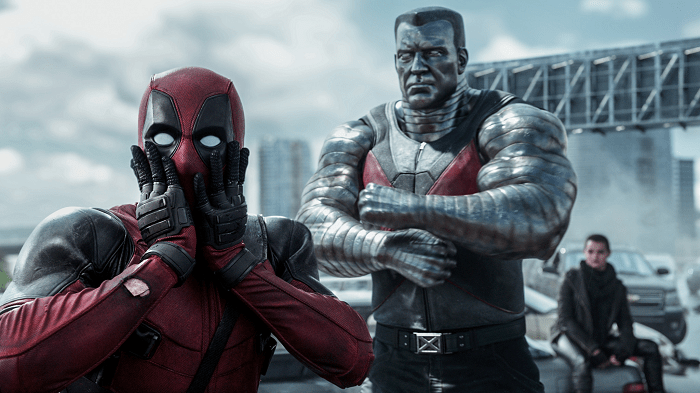
“Deadpool” tosses numerous other side characters into the mix, the better ones being a solid-steel (and solely CGI) Colossus (Stefan Kapičić), Wade’s roommate Blind Al (Leslie Uggams), and Deadpool fanboy Dopinder (Karan Soni). Like everyone else, they’re only there to spit jokes but their’s are some of the funnier one. As for the jokes, just enough of them land to keep things amusing. And while the film’s gimmick grows old, there was still a freshness factor that helped “Deadpool” overcome its annoyances.

VERDICT – 2.5 STARS

REVIEW: “Daddio” (2024)

Written and directed by Christy Hall, the terribly titled “Daddio” is built upon the simplest of concepts – two people in a car talking. That’s the movie from start to finish. It’s a self-imposed limitation that keeps things intimate and focused while allowing the two stars (Dakota Johnson and Sean Penn) to be the centerpieces. At the same time, it’s a limitation that demands a sharp and engaging script that keeps the audience locked in and involved. And that’s where “Daddio” sometimes struggles.

Johnson plays a young woman who arrives at JFK International Airport after a late-night flight home from Oklahoma. She hops in a cab with a driver named Clark (Penn) who sets out for her apartment in Midtown. As they travel through the New York City night, the shamelessly chatty Clark opens up a series of conversations that go from paltry and crass to intimate and personal. And that’s “Daddio” in a nutshell.

Image Courtesy of Sony Pictures Classics

As you would expect, we learn a lot about the young woman and the cabbie over the course of their drive. We learn the crude and oblivious Clark has no filter and doesn’t mind saying or asking anything that comes to mind. We learn he has driven a cab for 20 years which apparently has turned him into some kind of gritty, tough-minded sage. Over that time he has formed a variety of pessimistic (and frankly warped) views on life, love, and being a man. And he’s not afraid to share them (as we quickly discover).

As for the young woman, she’s a computer programmer returning from a trip to see her half-sister. A lot of pent-up pain comes to light that’s directly related to her family history. Much of her story comes out through her boyfriend who we mostly get to know through a series of lewd and perverted texts that she receives throughout the cab ride home. And the more she and Clark open up to each other, the heavier her revelations get.

“Daddio” isn’t built upon the most original idea. But strong, lived-in performances from Johnson and Penn make this a mostly competent two-hander. Still, they can only do so much, and the film’s ultimate undoing is the script. Aside from essentially going nowhere, there’s a level of implausibility with it that’s hard to get past.

Image Courtesy of Sony Pictures Classics

For example, call me skeptical, but would a broad probing conversation like this ever really happen in a taxi? Who knows – maybe there are professional cabbies who also moonlight as deep-thinking psychologists and philosophers. Even more out there, I find it hard to imagine that any woman would willingly stay in the car with a man this bawdy and invasive. Perhaps I’m too skeptical, but these things are dubious enough to make us question what we’re seeing.

“Daddio” may be worth seeing for the performances alone. Johnson only gets better with each new role (we will pretend “Madame Webb” never happened), and Penn has long shown a confidence and sturdiness when given the right material. But Hall has a hard time maintaining a steady sense of drama and she stretches her story out for a little too long. She smartly leans on her two more than capable stars, but doesn’t always give them what the need to make her movie click. “Daddio” is now playing in select theaters.

VERDICT – 2 STARS

REVIEW: “The Dead Don’t Hurt” (2024)

I realize that the Western genre has fallen out of fashion (case in point – just check out some of the early reactions to Kevin Costner’s upcoming frontier epic “Horizon” which just premiered at Cannes). Sure, there are those rare exceptions. But they often consist of cynical deconstructions or genre mashups. As for the more traditional Westerns, they just aren’t in demand these days and frankly that’s a shame.

I’ll admit to being a little picky when it comes to them, but I really enjoy a good Western. And Viggo Mortensen gives us a good one with “The Dead Don’t Hurt”, a uniquely intimate and heartfelt drama set within the margins of an old-fashioned movie Western. Mortensen stars, writes, directs, produces, and even composes the score for this distinctly character-driven feature that manages to embrace the old while still feeling quite new.

Image Courtesy of Shout Studios

Mortensen opens his film on a shocking note that gives us a candid look at where things are heading. We see an ailing woman named Vivienne (Vicky Krieps) lying on her deathbed, sharing her last words with her husband, Holger (Mortensen). It’s a somber beginning that adds an air of tragedy to the story about to be told. From there Mortensen transports us back to the moment the couple first met, and for the rest of the way he employs this flashback/flashforward technique, uncoiling his story in a way that challenges his audience yet rewards them as well.

Set in pre-Civil War 1860, Danish immigrant Holger Olsen sits on a dock in San Francisco where he had ventured to see “the end of the world”. There he catches the gaze of Vivienne Le Coudy, an unassuming yet independent French Canadian woman who just happily gave the boot to her rich and insufferable fiancé (Colin Morgan). The modest but playful Vivienne is immediately drawn to the quiet and ruggedly handsome Holger. Their mutual attraction soon turns into a full-blown romance which Mortensen handles earnestly and grounds in authenticity.

As their relationship grows, Vivienne agrees to ride away with Holger and start a life together at his remote Nevada cabin which is notable only for how strikingly plain it is. “This is the place you chose?” Vivienne asks in a playfully prodding manner (one of many wryly funny lines that Krieps absolutely nails). In one of several flashbacks within a flashback, we learn that Vivienne was a florist and she wastes no time putting her skills to use, planting, sowing, and bringing her own vibrancy to their homeplace.

But their tender love story takes a fateful turn when Holger, almost on a whim, answers the call to join the Union army. As he heads off to war, Vivienne is left alone to tend to their home, all while haunted by memories of her father who left in a similar way and never returned. She gets a job at a saloon in nearby Elks Flats, a small frontier town ran by its corrupt mayor, Rudolph Schiller (Danny Huston). In reality, he’s nothing but a lapdog to a greedy land baron named Alfred Jeffries (Garret Dillahunt).

Image Courtesy of Shout Studios

But the film’s biggest villain is the baron’s psychotic son, Weston (Solly McLeod). With his father constantly turning a blind eye to his violence and cruelty, Weston terrorizes the townsfolk and eventually takes a fancy to Vivienne. The horror that follows draws Holger’s impulsive decision to enlist more into question and makes the revelations awaiting him once he finally returns even more visceral. Surprisingly, these weighty events never quite lead to the kind of emotional reckoning you might expect. It doesn’t damage the ultimate payoff, but their feelings upon reuniting are still a little confounding.

Mortensen’s character-focused script works well with his patient and tactful direction, resulting in a movie that embraces elements of the classic Western but never makes them its focus. His nonlinear narrative can make things a little harder to follow than necessary, but it also cleverly contrasts multiple compelling facets of his story. On the screen, Mortensen steps aside and makes Krieps the centerpiece, surrounding her with the picturesque lensing of cinematographer Marcel Zyskind. Krieps steals the show, bringing grace, fervor, and spirit to a type of powerful female role we don’t often see in movie Westerns. “The Dead Don’t Hurt” releases in select theaters on May 31st.

VERDICT – 4 STARS

Retro Review: “Death Race 2000” (1975)

The recent passing of Roger Corman has sparked a new wave of interest in the career of the independent film icon and trailblazer. Known by such monikers as the “King of B-movies” and the “Pope of Pop Cinema”, Corman helped kickstart the careers of numerous young directors including Martin Scorsese, Francis Ford Coppola, Ron Howard, Peter Bogdanovich, James Cameron, and Jonathan Demme. He also helped launch such stars as Jack Nicholson, Peter Fonda, Dennis Hopper, and Diane Ladd among many others.

Corman began his career in 1955 directing and producing over fifty movies. In the 1970s he moved to almost exclusively producing. In May 1970, he and his brother Gene co-founded their own independent production and distribution studio, New World Pictures. They were perhaps known best for their many exploitation films that put countless directors and actors on the map. But New World Pictures also distributed an array of foreign films from such celebrated filmmakers such as Fellini, Bergman, and Truffaut.

“Death Race 2000” fits snugly into Corman’s exploitation era of producing. Directed by Paul Bartel, this satirical action film was based on a 1956 Ib Melchior short story titled “The Racer”. The movie has all the markings of 1970s grindhouse cinema – a low budget, an anything-goes style, bursts of gratuitous violence, and at times shamelessly sleazy.

The movie is set in the year 2000 (posing as the near future) and takes place in a dystopian America. After what’s referred to as the “World Crash of ’79”, a totalitarian regime took power in the remains of the economically ravaged United States. To offer some solace to the suffering people, the government under ‘Mr. President’ (Sandy McCallum) instituted an annual Transcontinental Road Race – a grueling and violent trek from New York to Los Angeles.

Broadcasted live, the race is known for its flamboyance and brutality. It features five racers, each with their own over-the-top personas and souped-up custom-themed cars. In addition to finishing first, the drivers can also earn bonus points for hitting pedestrians they encounter along the way. Women are worth more points than men, children even more, and the elderly earns the most. It’s a sadistic twist that speaks to the movie’s glaringly obvious satirical edge.

There’s an undeniable wackiness to the entire premise that begins with the racers themselves. There’s the two-time champion and proverbial fan favorite Frankenstein (David Carradine hilariously decked out in a black leather bodysuit, cape, and mask). There’s also the blustering Chicago mobster, Joe “Machine Gun” Viterbo (Sylvester Stallone in one of his earliest credited roles), the tough-as-nails cowgirl, “Calamity Jane” Kelly (Mary Woronov), the proudly racist Neo-Nazi, Matilda “The Hun” (Roberta Collins), and a wannabe Roman gladiator, Ray “Nero the Hero” Lonagan (Martin Kove).

As the drivers and their ride-along navigators tear out across the continental United States, the race is covered by play-by-play announcer Junior Bruce (played with an unhinged enthusiasm by famed Los Angeles disc jockey Don Steele). But while most of the country is locked onto the race, Thomasina Paine (Harriet Medin), descendant of founding father Thomas Paine and the leader of the American resistance, has cooked up a plan to sabotage the event, taking special aim at the beloved Frankenstein.

Vehicular violence and mayhem ensues as the racers fight against each other and against Paine’s loyalists who set up an assortment of traps all along their routes. Weird groupies, priestly political figures, and self-promoting media types give shape to the world and offer screenwriters Robert Thorn and Charles B. Griffith plenty of opportunities for sociological satire. Director Paul Bartel squeezes all he can out of the film’s modest budget, putting together some thrilling race sequences and visualizing a dystopian future that admittedly looks cheap at times but also shows insightful imagination.

And then you have the Roger Corman influence. Corman wanted a violent futuristic sports film in the similar vein as “Rollerball”. He made sure his was particularly brutal, adding plenty of pasty fake blood and crushed bodies. Bartel would later talk about how Corman removed the bulk of the comedy which was a key part of the director’s vision. But there are still hilarious lines delivered with a deadpan seriousness that make them even funnier. It all coalesces into something delightfully campy and just as twisted – a wildly entertaining B-movie that fits snugly into Roger Corman’s eclectic filmography.

VERDICT – 3.5 STARS

REVIEW: “Damsels in Distress” (2011)

Whit Stillman’s “Damsels in Distress” was a nice surprise back in 2011 and it was just as delightful after a recent rewatch. Written and directed by Stillman, “Damsels” is a quirky little comedy that is almost impossible to put in a box. It has its own uniquely wacky sensibility and is driven by its slick dialogue, cleverly constructed narrative, and a delightfully peculiar sense of humor. It’s not a comedy that will have you constantly laughing out loud. But if you’re like me, you’ll be smiling all the way through it.

The story takes place at the East Coast College of Seven Oaks and focuses on a group of three eccentric girls with very unusual perspectives on college, boys, and life in general. Violet (a lights-out Greta Gerwig) is the somewhat awkward group leader. Rose (Megalyn Echikunwoke) is Violet’s cynical long-time friend. Then there’s the peppy and ever agreeable Heather (Carrie MacLemore).

When not talking about fashion or hygiene, the group makes it their goal to enlighten and influence the degenerated student body around them. At freshman orientation the trio locks onto an incoming new student, Lily (Analeigh Tipton). They immediately (and almost forcibly) take her under their wings, teaching her the keys of survival and achievement at the university.

The first thing you notice about the film is the razor-sharp writing which is most evident in the terrific dialogue. The girls converse about everything from frat houses to soap fragrances, and their conversations often wander off into hilariously absurd directions. Gerwig, Echikunwoke, and MacLemore deliver their lines with a deadpan sincerity that sell them completely.

Most of the group’s goals come from Violet and her need to be needed as well as her desperate pursuit of purpose. She heads the campus suicide prevention center. She prefers loser guys (or “doufi” as we come to know them) because they need stable and calming forces in their lives. And she wants to start a new dance craze because of the emotional value past crazes have had on society. There is a sad undercurrent to Violet and certain scenes portray her as pitiful and sympathetic. In fact, Stillman cleverly baits us into laughing at the her and then makes us feel bad for doing so.

But there’s more going on than just this small group of eccentrics talking back and forth. We meet moronic frat guys who make the girls seem like Rhodes Scholars; a clinically depressed group who find tap dancing therapeutic; a self-absorbed Frenchman with a…shall we say…backwards religion; and several other side characters who work well within the story.

“Damsels in Distress” certainly doesn’t fit within the traditional Hollywood comedy mold and that’s actually a strength. I can still see it being too quirky for some audiences. But for me, I couldn’t get enough of the bizarre back-and-forths, the straight-faced line deliveries, and its overall goofy perspective on college life. There’s also heart mixed in with the humor that adds an extra layer to a film that is just as refreshing today as it was 12 years ago.

VERDICT – 4.5 STARS

REVIEW: “Damsel” (2024)

Netflix’s new girl-power dark fantasy, “Damsel” sees Juan Carlos Fresnadillo, perhaps best known for directing the 2007 apocalyptic horror thriller “28 Weeks Later”, helming his first feature film since 2011’s “Intruders”. Working from a script by Dan Mazeau (“Fast X”), Fresnadillo has loads of fun both embracing and subverting the fantasy genre. The results are a little underwhelming but entertaining, in large part thanks to the energy and charisma of the film’s star, Millie Bobby Brown.

Brown plays a dutiful young woman named Elodie. She’s a member of a benevolent family who rules a people suffering from starvation in a harsh and barren land. One day Elodie’s father, Lord Bayford (Ray Winstone) and her stepmother, Lady Bayford (Angela Bassett) are surprised when an emissary from the extremely wealthy faraway kingdom of Aurea arrives with an offer they can’t refuse. The king and queen of Aurea want to arrange a marriage between Elodie and their son. If Lord Bayford agrees, it would mean an abundance of riches that could save his land.

Image Courtesy of Netflix

Shocked at first yet willing to sacrifice for her people, Elodie agrees to marry the prince she’s never met. She, her parents, and her younger sister Floria (Brooke Carter) travel to Aurea with its rolling green hills, lush vineyards, immaculate gardens, and of course the lavish royal castle. Oh, there is that one towering jagged mountain looming ominously in the distance. Otherwise everything looks plucked right out of a storybook.

And that gets to one of the film’s biggest strengths – “Damsel” looks great. The effects team creates some stunning digital environments to go with the beautiful on-location shots in Portugal. And did I mention the dragon? Yep, there’s a marvelously rendered and quite terrifying fire-breathing dragon voiced by the brilliant and distinguishable Shohreh Aghdashloo. More on it in a bit.

Upon arriving at the castle Elodie and her family are greeted by Queen Isabelle (Robin Wright), the meager King Roderick (Milo Twomey) who basically stands in the background and says nothing (and I mean that literally. I’m not sure Twomey gets a single line of dialogue in the entire movie), and of course the quiet but charming Prince Henry (Nick Robinson). As the parents begin making wedding plans, Elodie and Henry start spending time together in hopes of getting to know each other before their big day.

But Mazeau’s story isn’t some ‘happily ever after’ fairy tale. Elodie’s dream wedding takes a dark turn after the just-married bride is cast into the depths of the aforementioned ominous mountain by her new “family” – a sacrifice to the ancient fire-breathing dragon living within. From there “Damsel” turns into a survival tale as the courageous and resourceful Elodie tries to escape from the treacherous belly of the mountain with it’s many dangers, chief among them one angry and embittered dragon.

Image Courtesy of Netflix

As she usually does, Brown gives a fully committed performance which helps keep the film on course. She has to maneuver through a handful of cheesy moments, yet delivers a movie heroine who is easy to root for. Not only does Brown effortless fit in with the period fantasy setting, her fierce physicality meets the demand of her role. It also helps to be surrounded by names like Robin Wright, Ray Winstone, and Angela Bassett. While the writing doesn’t always help their characters, the performances are spot-on.

As you watch “Damsel” you’ll probably notice that it wears its girl-power motif on its sleeve. It’s admirable yet at times comes close to crossing the line into heavy-handedness. Certain choices are glaringly obvious and will probably earn the movie some scrutiny it didn’t need. But even with that and other shortcomings with the script, “Damsel” still makes for a mostly fun fantasy adventure. It proudly embraces several classic fantasy tropes yet the film has an edge. And it offers another highlight for Millie Bobby Brown, who at only 20-years-old continues to build a fascinating career. “Damsel” premieres Friday, March 8th on Netflix.

VERDICT – 3 STARS