REVIEW: “Freaky Tales” (2025)

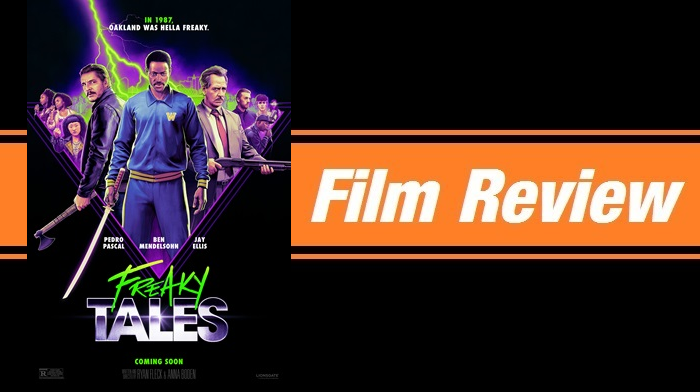
From the writer-director duo of Anna Boden and Ryan Fleck, “Freaky Tales” is a pulpy smorgasbord of genres, style choices, and characters, coagulating into an overstuffed Bay Area pastiche that has a hard time finding its footing. But once it does (roughly halfway through), the movie almost generates enough grindhouse goodness to save itself…almost.

“Freaky Tales” is Boden and Fleck’s first feature film since their 2019 MCU blockbuster “Captain Marvel”. During that gap they have worked mostly in television, directing four episodes of “Mrs. America” for FX and two episodes of the underappreciated “Masters of the Air” for AppleTV+. With “Freaky Tales” they turn back towards their indie filmmaking roots with a story that borrows a ton from other projects that came before it.

Image Courtesy of Lionsgate

Set in 1987 Oakland and narrated by hometown rapper and executive producer Too $hort, “Freaky Tales” is told through four loosely interconnected stories set in and around the city. I say loosely because most of the connections are minor at best. About the only continuity between all four stories are reoccurring television commercials for some meditation seminars and a “green glow” that seems to represent nothing more than that ‘special something’ Oakland had at the time.

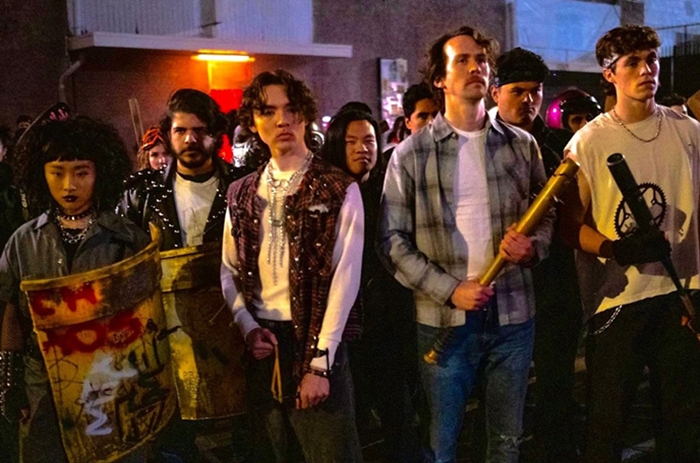
The first chapter centers on the East Bay punk scene where three friends leave a movie and head to a local punk rock club for a nightcap. While there, Lucid (Jack Champion) tries to muster the courage to tell Tina (Ji-young Yoo) how he feels about her. But their night is interrupted by a pack of neo-Nazi skinheads. The second chapter follows Entice (Normani) and Barbie (Dominique Thorne), an aspiring female rap duo who get their chance to show what they can do in an on-stage rap duel against Too $hort (Symba).

Neither of the first two stories leave much of an impression outside of the digitally enhanced violence in chapter one and the terrific first performance from Normani in chapter two. Both sluggishly play out over a long and unremarkable 45 minutes. Worst of all, neither add any real weight to the overall narrative. They play like snippets of different subcultures rather than meaningful parts of something bigger.

Image Courtesy of Lionsgate

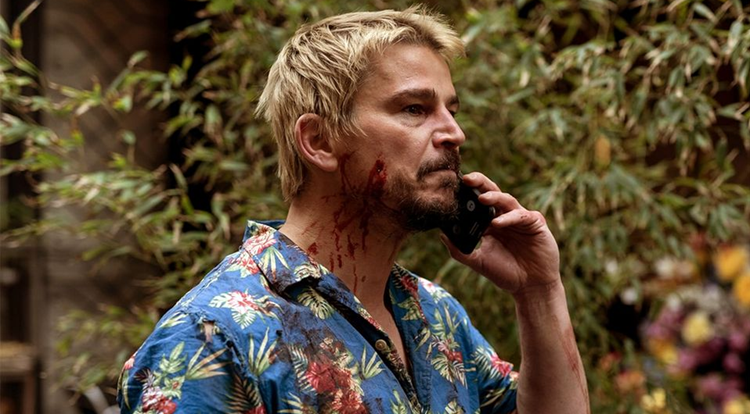
But things noticeably pick up in chapter three. Pedro Pascal plays an underworld strong-arm and debt collector who’s looking to retire and settle down with his pregnant wife (Natalia Dominguez). But those aspirations are shattered after a violent run-in with an echo from his past. Then chapter four ends things on a glorious gonzo note as local NBA legend turned kung fu killer Eric “Sleepy” Floyd (Jay Ellis) unleashes vengeance on a dirty cop (Ben Mendelsohn) and his minions in a blood-splattered ode to 1970s blaxploitation.

While the final two segments give the movie the dramatic jolt it desperately needs, they can’t make “Freaky Tales” work as a cohesive whole. Their intentions are good and obvious, but Boden and Fleck struggle to provide a compelling narrative through-line. As a result their film comes across as inspired yet disjointed and unfocused. Not even Tom Hanks popping up as a crusty video store owner can save the day. “Freaky Tales” is now showing in select theaters.

VERDICT – 2.5 STARS

40 Years Later: “Fright Night” (1985)

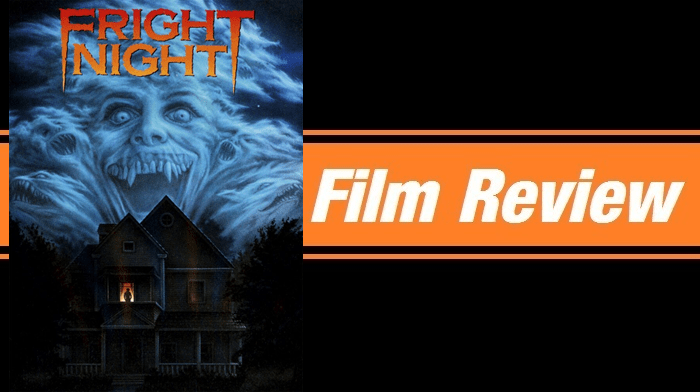
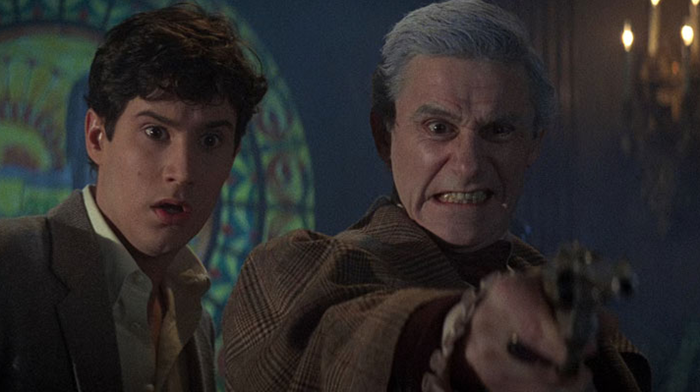
As a proud kid of the 1980s, I cut my cinema-loving teeth on the wild array of movies from that decade. Sitting comfortably among the features I watched most during that time was the horror gem “Fright Night”. Everything about it won over my mid-teen self and I would watch it whenever I had the chance. But sadly I never had the opportunity to see it on the big screen. That is until last night, when “Fright Night” screened at the 2025 El Dorado Film Festival in celebration of its 40th anniversary.

“Fright Night” marked Tom Holland’s directorial debut and over time the film evolved into a bona fide cult classic. To no surprise to its fans, the movie still holds up remarkably well, offering a delightful mix of horror and humor. In 1985, part of the charm of “Fright Night” was in how it celebrated elements of classic horror that came before it. That enjoyment is two-fold for fans watching it today. We look back on it with the same appreciation it had for the movies it was paying homage to.

Image Courtesy of Columbia Pictures

Charley Brewster (William Ragsdale) is a normal suburban 17-year-old with a nice life, a caring mother (Dorothy Fielding), and an adoring girlfriend named Amy (Amanda Bearse) who he’s crazy for. About the only thing he loves as much as Amy is Fright Night, a late night horror television show that is hosted by the famed (and fictional) vampire hunter extraordinaire, Peter Vincent (Roddy McDowall).

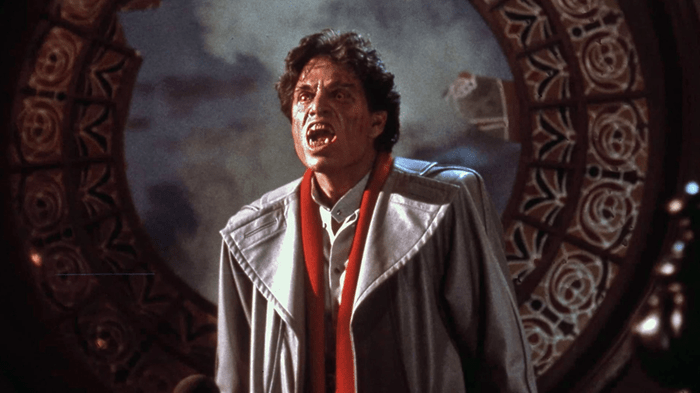
The movie kicks into gear after a new resident moves into the creepy old house next door to Charley. His new neighbor is Jerry Dandrige who’s played by a perfectly cast and devilishly alluring Chris Sarandon. Over the next several days, a nosey Charley secretly (and sometimes not so secretly) observes some alarming happenings at the Dandrige house eventually leading him to a shocking conclusion – his new neighbor is a vampire.

Both Amy and his mother are quick to dismiss his theory as ridiculous. He next calls the police who investigate. But they find nothing to back his claims and he manages to irritate Dandrige in the process. Out of options, a determined Charley seeks the help of his hero, Peter Vincent. Bad ratings has the disillusioned television host ready to give up the whole vampire hunter act. But Charley’s persistence (and a little cash from his friends) wins Peter over and he reluctantly agrees to humor his loyal and sincere fan.

Of course this is horror movie so we learn quick that Charley is right about Dandrige. But the real fun is in watching him trying to convince Peter and their eventual tag-team effort to vanquish this “foul creature of the night”. Together, Ragsdale and McDowall have a terrific mix of dramatic and comic chemistry. Holland has said “Charley Brewster was the engine, but Peter Vincent was the heart.” I agree yet neither works without the other. And together they don’t work without the energy brought by Ragsdale and McDowall.

Image Courtesy of Columbia Pictures

A healthy bulk of the movie’s $9-plus million budget went to the special effects and you can certainly tell. Academy Award winner Richard Edlund led a talented team of VFX wizards and makeup artists who used an impressive array of pre-digital trickery including optical photography, matte paintings, furniture dollies, contact lenses, facial prosthetics, and body suits. It gave us what remains a true highlight of the bygone practical effects age.

In the grand scheme of vampire movies, I wholeheartedly believe “Fright Night” to be an underrated classic. And as mentioned above, it’s a horror movie that still holds up today. It’s driven by a fabulous collection of characters, an unabashedly fun story, some deliciously gory effects, and a steady seasoning of good humor. Along the way Holland has a blast in the vampire movie sandbox, playing with the well-established mythologies that so many of us know by heart.

VERDICT – 4.5 STARS

REVIEW: “Flight Risk” (2025)

January might be the weirdest month on the movie calendar. It’s the time of the year where we get no major studio releases. And much of what we do get are movies that the studios don’t have a lot of faith in. Yet January isn’t a total loss. It’s when a lot of the big awards movies finally make their way into theaters. And there are usually one or two unexpected surprises that we never see coming.

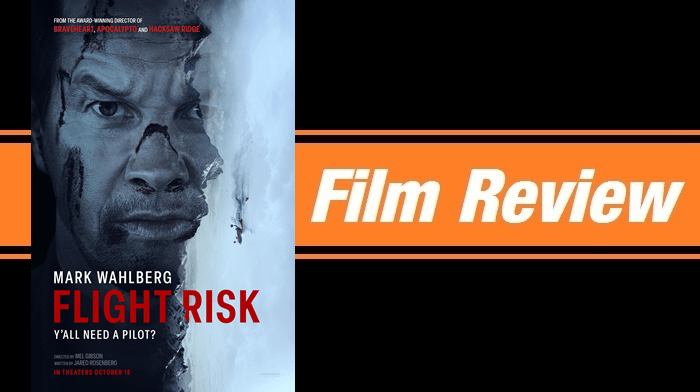
I thought “Flight Risk” might qualify as one of those January surprises. A big reason is because it’s directed by Mel Gibson – his first venture behind the camera since 2016’s Oscar-nominated “Hacksaw Ridge”. While he’s mostly known for directing sweeping period films, this time around he has made a straightforward no-nonsense suspense thriller that is very open about its ambitions. From the very start start you should know exactly what you’re in for.

Image Courtesy of Lionsgate

Unfortunately “Flight Risk” doesn’t quite deliver the silly yet entertaining thrill-ride it hopes to. It’s light and easily digestible with the kind of wacky premise that you almost expect to have fun with. But the film struggles to get off the ground (glaringly bad pun intended). And once in the air it remains stuck on auto-pilot, unable to generate anything resembling the kind of white-knuckled excitement it desperately needs.

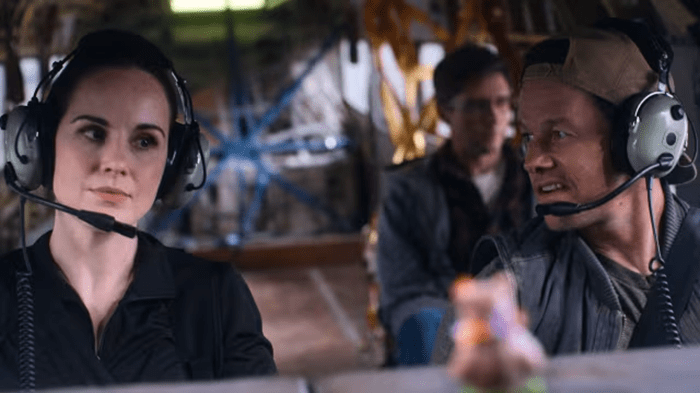
The film is written by Jared Rosenberg whose screenplay spent several years on the Hollywood Black List. His story revolves around three characters caught in a bonkers scenario. Michelle Dockery plays Madelyn Harris, a Deputy U.S. Marshal who tracks down and arrests a man named Winston (Topher Grace) at an off-the-grid motel in rural Alaska. We learn he’s a wanted mob accountant who quickly becomes a high-value government witness after agreeing to testify against a powerful kingpin.

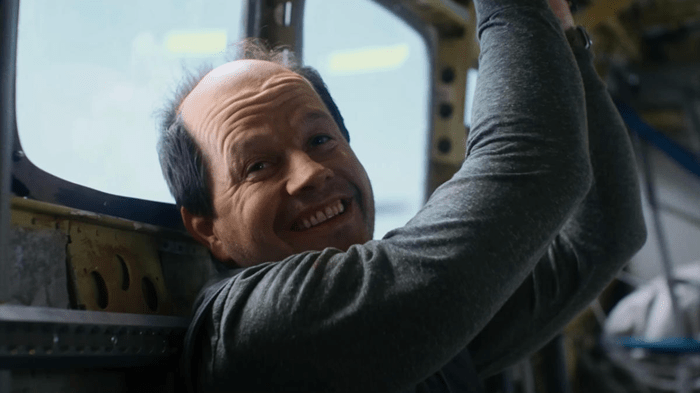
In order to get Winston to New York for the trial, Madelyn first has to get him to Anchorage. So she charters a beat-up Cessna piloted by Daryl Booth (Mark Wahlberg) to make the 90-minute flight. But while cruising at 3,000 feet high over a range of snow-covered mountains, we get a not-so-shocking reveal – Daryl is not who he says he is. In fact, he’s a psychotic contract killer hired by the mob to kill Winston. Daryl finally makes his move, but after an intense fight Madelyn is able to subdue him.

Image Courtesy of Lionsgate

Most of the film takes place inside the cramped plane with Daryl tied up but attempting to free himself; Madelyn (who’s not a pilot) trying to figure out how to fly the plane; and Winston bouncing back-and-forth between being annoying and providing comic relief. The drama between the three fluctuates between nearly reaching its potential and languishing in long stretches of dullness. And the film’s finish is even worse – serving up a frustrating non-ending that makes us wonder if a chunk of the story is missing.

On paper, “Flight Risk” seems like a movie ready-made for people looking for a diverting escape. But its laundry list of problems prove to be insurmountable. It’s a movie hampered by a lack of imagination, clashing performances, half-baked plotting, and an overall absence of any real excitement. Over the years Gibson has proven himself to be an exceptional filmmaker. But it’s hard to see “Flight Risk” as anything other than a misfire.

VERDICT – 2 STARS

REVIEW: “The Front Room” (2024)

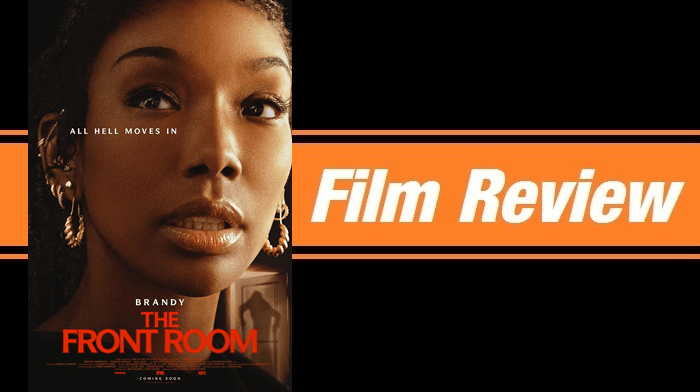
In “The Front Room”, Brandy Norwood plays Belinda Irwin, a woman who has a lot on her plate. Professionally, she’s an anthropology professor who is fed up with being mistreated by her department. On a more personal level, she’s still struggling with the tragic death of her first born son, Wallace. On top of all that, she’s VERY pregnant. It all leads to bouts with anxiety, fear, and uncertainty. But things only get worse once her stepmother-in-law comes into the picture.

“The Front Room” is based on the 2016 short story of the same name from Susan Hill. It is co-written and co-directed by Max and Sam Eggers. If that last name sounds familiar to you, it’s because they are the brothers of acclaimed filmmaker Robert Eggers. Their adaptation is a fascinating and frustrating creation built around some wickedly cool ideas that unfortunately never materialize into much.

While “The Front Room” is a psychological horror film, it has the makings for a really funny dark comedy. We get flashes of it in scenes that had me and the small audience at my screening laughing out loud on several occasions. That is when the movie is at its best. Unfortunately the horror angle isn’t nearly as effective. The Eggers brothers do some genuinely creepy table-setting, but they struggle getting their movie beyond that.

Image Courtesy of A24

Belinda and her husband Norman (Andrew Burnap) live in a fixer-upper that they’re having a hard time finishing. He is a struggling young attorney who needs to score one more big client to gain a position at his law firm. She loves teaching at her university but finds herself losing opportunities from a dean who refuses to meet with her or take her calls. Both still feel the emotional weight of losing their infant first born which adds an understandable concern for Belinda’s current pregnancy.

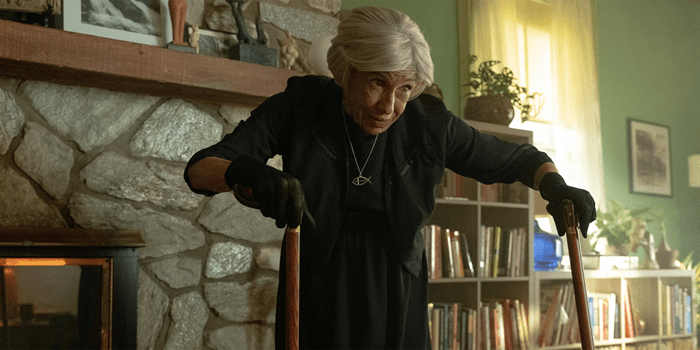
To add to their stress, Norman receives a surprise call from his estranged stepmother, Solange (Kathryn Hunter) who informs him that his father has died from stomach cancer. Norman doesn’t want to attend the funeral due to abuse he experienced as a child. He confesses to Belinda that Solange claims to be “Holy Spirit empowered” and her twisted pseudo-religious beliefs led to trauma he still struggles with today.

Belinda convinces Norman to attend the funeral for his father’s sake. After the service, Solange informs Norman and Belinda that it was his father’s will that she leave them their substantial fortune. It would be enough to finish paying for their house and set up their nearly due baby for life. But it comes with one stipulation – Solange would move in with them and live out her remaining days with family. It’s pretty clear to us that it’s a terrible idea, but Norman and Belinda agree to take her in.

Image Courtesy of A24

It doesn’t take long for the frail and hunched Solange to become a menace. From seemingly small but nagging things like belittling Belinda’s cooking to taking the nursery to be her room. Norman is quickly fed up but Belinda plays mediator to try and make things work. But the situation soon spirals to more sinister depths as Solange’s real motives eventually come into focus.

Hunter is no stranger to playing eccentric characters and it’s no different here. Her shrill gravelly voice is as discomforting as her unapologetically crass demeanor. Hunter does her job in making us as uncomfortable as Belinda and Norman. But the film leans on her too much and she begins to wear out her welcome with the audience before she ever does with the couple. This is compounded by the fact that we get very little in terms of big twists or fun surprises. It’s just Hunter doing essentially the same thing for the duration.

The Eggers brothers do attempt to add an unexpected spin in their film’s final moments. But it and their ending as a whole lands with a thud. And that summarizes “The Front Room”. It’s a movie that has the source material and the ambition to be an eerie, disturbing, yet darkly funny psychological horror experience. But it never takes its cool ideas far enough which leaves us impressed by the course it sets for itself but annoyed by its inability to get where it’s going. “The Front Room” is in theaters now.

VERDICT – 2.5 STARS

REVIEW: “Fancy Dance” (2024)

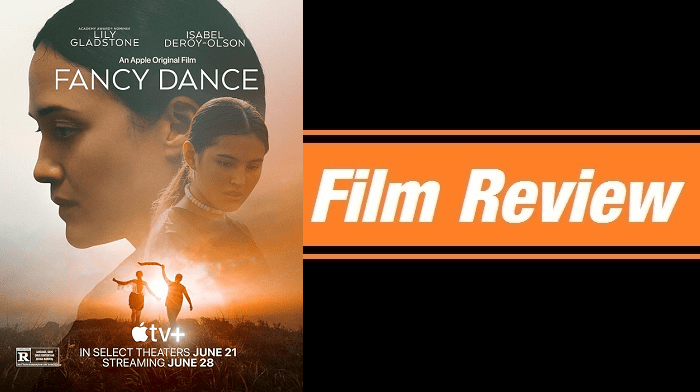
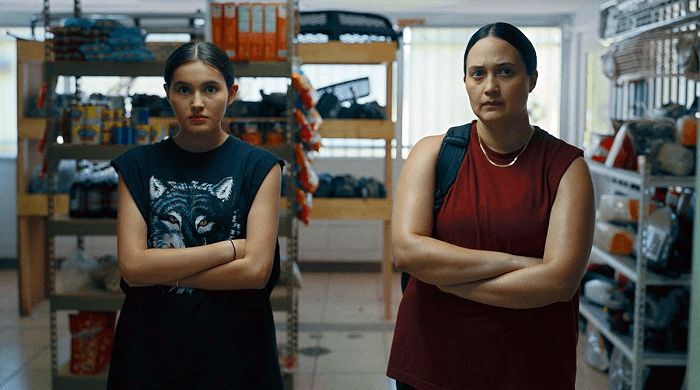
Hot on the heels of a sublime performance in last year’s “Killers of the Flower Moon” (and a subsequent Oscar night robbery in the Best Actress race), Lily Gladstone is back in “Fancy Dance”, a film that in some ways makes for a great companion piece to “Killers”. Directed by Erica Tremblay in her feature film debut, “Fancy Dance” premiered several months ahead of “Killers” at the 2023 Sundance Film Festival. It took a while but it finally received a limited theater release and is now available to stream.

Tremblay and her co-writer Miciana Alise hand Gladstone some tricky material which leads to an equally tricky performance. Throughout the film Gladstone projects a tough yet weary exterior. And there’s almost an emotionless quality to her performance which really comes through in her stoic and at times monotone deliveries. It’s a choice that doesn’t always work. But then there are those brilliant moments where Gladstone lets us know there is more than what we see on the surface. Over time, she gives us glimpses of fear, anger, and pain that change our entire perception of her character.

Gladstone plays Jax Goodiron, a young woman living on the Seneca–Cayuga reservation in Oklahoma. Her sister Tawi lives a troubled life which leaves Jax as the primary caregiver for her 13-year-old niece Roki (Isabel DeRoy-Olson). Making matters worse, Tawi hasn’t been seen in two weeks which has raised the attention of the Indian Child Welfare agents. Jax is used to her sister taking off but never for this long. She’s reported Tawi missing, but with the exception of her half-brother JJ (Ryan Begay), a member of the Indian tribal police, neither the Sheriff’s Department or the feds seem interested.

Among Jax’s more intriguing facets is the fact that she isn’t a particularly good person. She shoplifts, steals cars and sells them to a salvage yard, and even runs drugs for a local hood named Boo (Blayne Allen). Worst of all, she often involves her niece in many of her crimes.

Yet the film still manages to earn our sympathy for Jax by revealing her to be a victim of her seemingly unbreakable circumstances. Her world is presented through an authentic and distinctly indigenous lens that reveals a segment of society too often ignored. Trembley’s clear-eyed and unvarnished representation immerses us into a firmly grounded setting. In essence, we sympathize for Jax’s plight because we’re able to understand the obstacles she has faced and the barriers she still endures.

Another reason we’re sympathetic is because Jax genuinely loves Roki and is taking care of her the best way she knows how. It’s clear that Jax was thrust into a maternal role she was never equipped for. Yet she only wants Roki to be happy, even if it means telling her that Tawi will be back in time for the mother-daughter dance at a powwow in Tulsa. But Jax knows that grows more and more unlikely the longer Tawi is missing.

While one aim of the film is to shine a light on the epidemic of missing Native American women and the ambivalence towards their disappearances, another hones in on the thorny subject of foster care and child welfare within the indigenous communities. This is explored most when Child Protective Services remove Roki from her home and temporarily places her with Jax’s estranged white father Frank and his new wife Nancy (Audrey Wasilewski). It spurs Jax to make some well-meaning yet rash choices that sends the film’s second half in a much more dire direction.

There are instances in “Fancy Dance” where characters and their intentions aren’t fully fleshed out, and the film’s pacing sometimes undermines the potency of its messaging. But for the most part Tremblay speaks volumes and not through heavy-handed sermonizing. Instead, she speaks through her richly textured and detailed depiction of reservation life. And she conveys an array of real-life social issues through the experiences of individuals navigating that life. It shows her competency as a filmmaker and her trust in the audience to put in the effort. “Fancy Dance” is now streaming on AppleTV+.

VERDICT – 3 STARS

REVIEW: “Fly Me to the Moon” (2024)

Likable lead characters and good old-fashioned star power can often carry a movie a long way. Such is the case with “Fly Me to the Moon”, a fun and undeniably charming new film starring Scarlett Johansson and Channing Tatum. It could best be described it as a romantic comedy and a historical reimagining mixed together into a breezy and accessible summer feature. Even better, it turns out to be one of the season’s bigger surprises.

Directed by Greg Berlanti and written for the screen by Rose Gilroy, “Fly Me to the Moon” turns back the clock to deliver the kind of well-made feel-good entertainment that we don’t get much of these days. It’s ready-made to be seen on the big screen and offers audiences a welcomed break from the usual summer blockbuster diet of sequels, prequels, reboots, and remakes.

The bulk of the story takes place in 1969 during the height of America’s space race with the Soviet Union. With the horrors of the Vietnam War dominating the headlines, the country’s interest in the space program was waning. So the government needed a new strategy if they were ever going to realize Kennedy’s ambition of reaching the moon. The bulk of the pressure fell on the underfunded and understaffed NASA who had endured a number of setbacks, some of them tragic.

Image Courtesy of Columbia Pictures

With only seven months left to prepare for the Apollo 11 mission to the moon, NASA’s image was in need of a makeover. Not only did they need to win back the public, but they needed to win over key Senators who were leaning towards cutting funding to their program. Enter Kelly Jones (a luminous Johansson), a tenacious marketing specialist from Manhattan with a rather eventful history.

One evening Kelly is approached by Moe Berkus (Woody Harrelson), a mysterious suit who works for the White House. He tells her that he wants to hire her, and if she agrees he can make certain troubling blemishes from her past disappear. The job is to sell the country on NASA’s space program and more specifically its upcoming moon mission. Without many options, Kelly agrees and immediately heads off to John F. Kennedy Space Center in Florida.

Once there, Kelly kicks into marketing mode much to the chagrin of the Apollo 11 Launch Director, Cole Davis (Tatum). He’s a ‘strictly business’ kind of guy who quickly grows annoyed by Kelly’s slick and savvy salesmanship despite his obvious attraction to her. Before long she has major advertisers lining up to partner with NASA including Tang, Fruit of the Loom, Peter Pan, and Omega watches. And no matter how hard Cole tries to push back, Kelly is always one step ahead of him (and having the support of the President doesn’t hurt).

Image Courtesy of Columbia Pictures

Despite being workplace adversaries, a romantic spark ignites between Kelly and Cole. And I emphasize “spark” because this isn’t what you would call a romantic movie. There is a hint of sexual tension between the characters and Johansson and Tatum have good chemistry. But it’s a small part of a bigger story. And that’s a big reason “Fly Me to the Moon” works as well as it does. Sure it’s light and frothy in spots, but it’s a movie that’s not easy to pigeonhole.

Berlanti and Gilroy try to add some emotional depth which for the most part works. For Kelly, it’s the weight of the missteps she’s made since losing her mother. For Cole, its the haunting memory of the Apollo 1 tragedy which happened under his watch. Gilroy’s script doesn’t really see these subplots through, but they do help open up and define these characters. As for Harrelson, he doesn’t have a big role but he livens up every scene he’s in which has become his MO in recent years. He’s a hoot.

If you’ve seen the trailer you know the movie also includes the filming of a fake moon landing. Interestingly this doesn’t unfold until the final act and it’s where the movie is at its most far-fetched. But surprisingly even it has more layers than you might think. It leads to a semi-satisfying ending to what is mostly a well-made, well-acted, and well-paced throwback movie – the kind I admittedly miss. Its blend of humor with romance and history with fiction makes for a lighthearted crowd-pleasing joyride that anyone can get onboard with. “Fly Me to the Moon” is in theaters now.

VERDICT – 4 STARS