
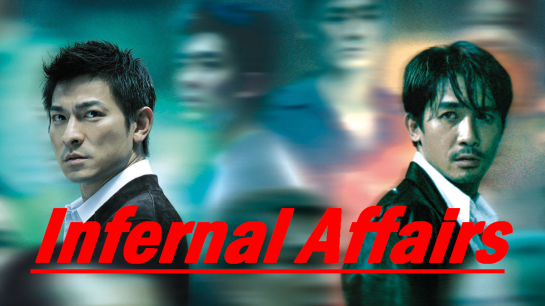
Back in 2006 Martin Scorsese’s “The Departed” grabbed a lot of attention. It received universal acclaim and would go on to win four Oscars including Best Picture. For many it also brought attention to the 2002 Hong Kong crime drama “Infernal Affairs” – the direct inspiration for Scorsese’s “The Departed”. Scorsese would later say “Infernal Affairs” was an example of why he loved Hong Kong cinema.
“Infernal Affairs” was a critical and box office hit when first released winning seven of its sixteen Hong Kong Film Awards nominations. Over time it has gained a global appreciation and has influenced a number of prominent filmmakers. Much of its impact is due to a riveting script featuring two rich, intersecting storylines and a near flawless pacing. Once it starts it keeps you locked in for the duration.

Following the same timeline a young police cadet is sent to infiltrate a local triad while a young gang member is sent to infiltrate the Hong Kong police department. Ten years pass and both men climb the ranks to higher and more trusted positions. Chen (Tony Leung) is a top dog to triad boss Sam (Eric Tsang) but has grown tired of undercover cop life. Lau (Andy Lau) has become Sam’s top insider within the police department. As both feed more information to their bosses it becomes evident to each they have a mole that needs exterminated.
What follows is a tense game of cat-and-mouse as one tries to root out the other. The Alan Mak and Felix Chong screenplay impressively weaves together its two narrative threads while steadily building towards its inevitable explosive conclusion. And while action is a component of their story, Mak and Chong are much more interested in moral dilemmas and inner conflicts. They deal personally with themes of identity, loyalty, and suffering – specifically a continued state of suffering.
You could say suffering is the main theme. The film begins and ends with two Buddhist verses which speak of a “continuous hell” and the actual Chinese movie title is translated “The Unceasing Path”. Chen and Lau are trapped in their own unending personal hells with no discernible escapes. It’s a concept the movie explores to great effect and all within a riveting, tightly-wound crime thriller.
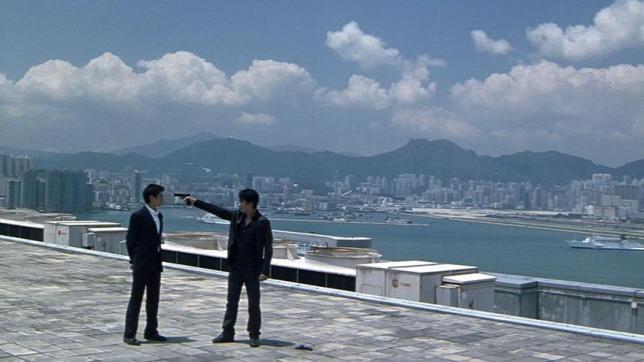
The casting of charismatic leads Tony Leung and Andy Lau energizes the movie even more. Both give focused, understated performances that earned them critical acclaim. But that’s no surprise. By that time both actors were immensely popular and have since been established as two of Hong Kong’s most successful and bankable movie stars. They have very little screentime together but the scenes they do eventually share serves as a most satisfying payoff.
“Infernal Affairs” is recognized by many as one of the signature Hong Kong movies of its era. It’s easy to see why. It features a highly original crime/police story brimming with drama and tension. The small bursts of action we get are thrilling and the film is shot with an impeccable attention to tone. But the characters are the story’s lifeblood and everything the movie puts around them reveals more of the struggle within them. It’s an unexpected ingredient that separates the movie from the bulk of action movie fodder.
VERDICT 4.5 STARS





















 Keith & the Movies