REVIEW: “Kill Bill: The Whole Bloody Affair” (2025)

Quentin Tarantino originally conceived, wrote, and produced Kill Bill as one single film. But marketing an over four-hour movie concerned his producers. So Tarantino and Miramax compromised, deciding to divide the film into two feature-length volumes to be released six months apart. The acclaimed director wouldn’t have to cut major scenes and the producers could release two movies in an effort to maximize profits. It worked out for both. Tarantino’s creative control was kept in tact while the films were box office hits.

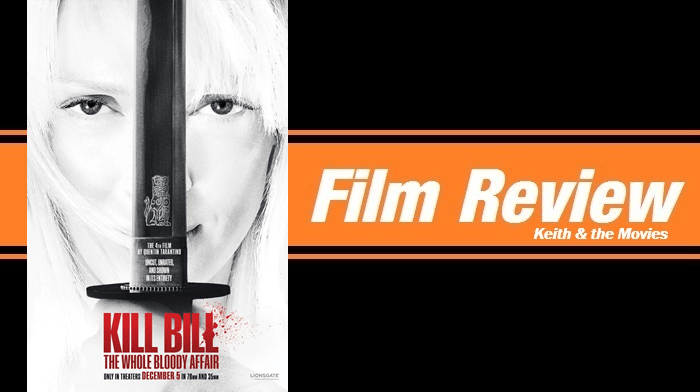
Now here we are, some 23 years later, and Tarantino still hasn’t changed his creative perspective on Kill Bill. Sure, he was forced to compromise to a degree for certain commercial demands. But he still sees it as one movie. And now that he fully owns the rights, he is able to give fans the single-film experience that he always envisioned. And he does so with “Kill Bill: The Whole Bloody Affair”.

Considered to be the fourth film by Quentin Tarantino, Kill Bill remains one of the most audacious genre mash-ups ever put to screen. “The Whole Bloody Affair” brings a noticeable cohesion to what was previously two movies, allowing Tarantino’s many creative flourishes to work more in unison. It also energizes his nonlinear storytelling, adding a near seamless fluidity to his frequent timeline jumping.
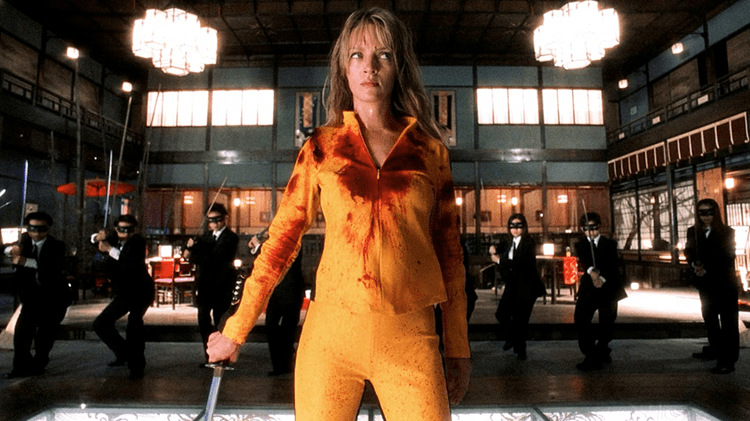
Image Courtesy of Lionsgate

But more than anything, “The Whole Bloody Affair” fully immerses us in Tarantino’s full-throttled celebration of the movies and genres that have helped define him as a filmmaker. He finds inspiration everywhere from the grindhouse to the arthouse, plucking ideas and style choices from spaghetti westerns, kung fu cinema, samurai films, pulpy exploitation, and even anime. But it’s his ability to wrangle it all together that impresses most. It’s one thing to pay homage. It’s something else to turn it into such a singular experience as this.

I won’t rehash my thoughts on Kill Bill’s sprawling revenge-fueled story (you can read them [HERE] for Volume 1 and [HERE] for Volume 2). All of its killer beats still hit with the same exhilarating force – the now iconic fight sequence at The House of Blue Leaves; the superbly crafted wedding rehearsal flashback; the tension-soaked duel with O-Ren; the tight-quartered throwdown with Elle; the fierce confrontation with Veronica; the suffocating buried alive scene. They remain extraordinary. But when viewed together as one piece, everything feels bigger, bolder and vastly more epic in size, scale and personal stakes.

Similarly, Uma Thurman’s spectacular lead performance can be appreciated as an even grander achievement. The multi-faceted brilliance of what she accomplishes stands out even more when absorbed in one sitting. She brings grit, resilience and ferocity, but also a striking vulnerability to the Bride’s blood-drenched revenge tour. She anchors the incredible action while finding the rich emotional complexity that Tarantino wrote into the character.

Even the already exceptional supporting cast seems to shine just a tad brighter in this fully realized version. David Carradine, Lucy Liu, Daryl Hannah, Michael Madsen, Vivica A. Fox, Sonny Chiba, Michael Parks, and Gordon Liu bring layers of personality and charm. And they only scratch the surface when it comes to memorable characters in Tarantino’s vibrant and violent world.
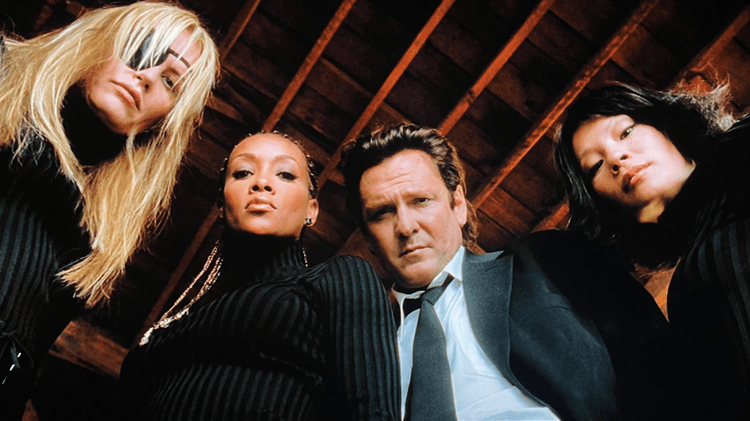
Image Courtesy of Lionsgate

“The Whole Bloody Affair” brings with it a handful of additions and subtractions that enhance the overall experience. For starters, Tarantino cuts a major spoiler that was slapped onto the end of Volume 1 as a cliffhanger finish. Without it, the true ending has far more dramatic impact. He also removed the transitions to black-and-white during the epic fight against the Crazy 88s which was originally added to satisfy the ratings board. And he added an extended version of Production I.G.’s terrific anime sequence. Overall, with its extra footage, “TWBA” runs 27 minutes longer than the two original films combined.

It’s also easier to appreciate Tarantino’s willingness to take big swings – narratively, technically and stylistically. His screenplay remains daring and defiant, both in structure and in substance. It veers here and there and we enjoy every detour his story takes. And Kill Bill is still a visual feast, with Tarantino and DP Robert Richardson indulging in split-screens, closeups, tracking shots, trucking shots, slow-motion pans, quick zooms, and more. And of course there is Tarantino’s unabashed style which impacts every frame. The movie wouldn’t be the same without it.

“The Whole Bloody Affair” is Quentin Tarantino’s uncut, unrated, and unleashed magnum opus. It’s the fulfillment of a former video store clerk’s dream and a virtuosic showcase for one of the most defining auteurs of our time. Tarantino’s definitive version is a visceral experience that retains everything we love from Volumes 1 and 2 yet makes it feel as if we’re discovering something new for the very first time. It’s a remarkable feat and we’re fortunate to be here for it.

VERDICT – 4.5 STARS

REVIEW: “Killer Whale” (2026)

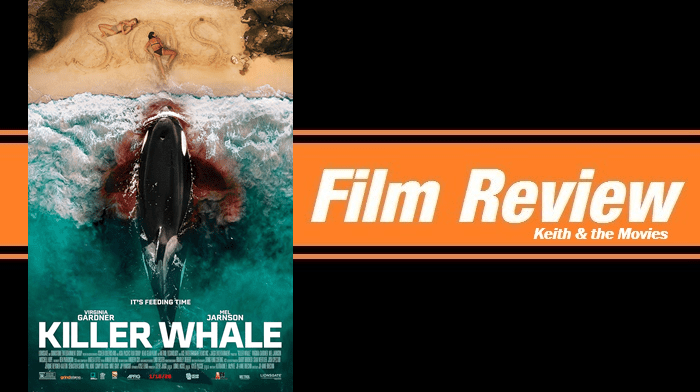
In “Killer Whale”, director Jo-Anne Brechin attempts to add a slightly new spin to the sharksploitation genre by making an orca the chief antagonist. Unfortunately that’s not enough to save the movie from the sea of well-worn tropes and its obvious budget constraints. The latter issue grows especially burdensome, specifically in the second half where the glaringly obvious digital effects distract from the experience more than enhances it.

Co-written by Brechin and Katharine McPhee, “Killer Whale” follows best friends Maddie (Virginia Gardner) and Trish (Mel Jarnson), who reunite after a tragedy tore Maddie’s world apart. Only a year earlier, Maddie lost her prospective boyfriend Chad (Isaac Crawley) and most of her hearing during a robbery at a burger restaurant where she worked. Since then she has mostly disconnected from the things she loves, including Trish.

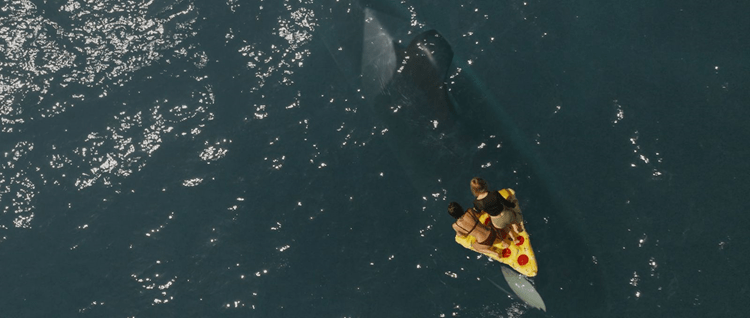
But Trish pays Maddie a visit, insisting that her grieving friend joins her on a seven-day, all expenses paid trip to the Andaman Sea Islands in Thailand. Maddie reluctantly agrees and the two take off, settling in at a swanky beachfront resort. During a night of drinking and dancing, the two meet a local bartender named Josh (Mitchell Hope). The next morning Josh sweeps Maddie and Trish away for an afternoon of fun at a remote lagoon. But their fun turns to terror after they’re attacked by an enormous killer whale.

We learn the angry orca has wandered into the lagoon after escaping from a cheap SeaWorld knockoff. Named Cito, the whale was the main attraction at a theme park called World of Orca. That is until mistreatment and one specific tragic event drove Cito to kill a couple of her handlers. Now she’s trapped in the lagoon with those same killer instincts and three hapless humans as her prey. And so sets the table for another man vs beast showdown.

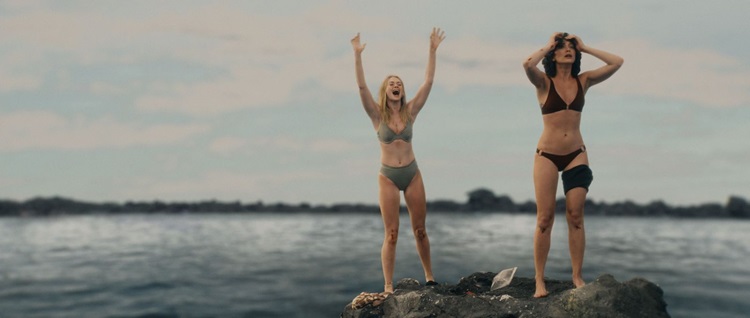
To Brechin’s credit, she attempts to make her film more than a copy-and-paste horror thriller. For a while she leans into the survival element, especially when the friends end up stranded on a small rock surrounded by water that’s being patrolled by a bloodthirsty orca. She also makes time for drama, giving the emotionally wounded Maddie the space to deal with her grief and potentially find closure. Unfortunately the drama is undermined by an ill-advised late twist that I’m sure sounded better on paper that it appeared on-screen.

As for any thrills, Brechin manages to generate some tension and suspense although not enough to put us on the edges of our seats. Her problem lies with the comically cheap digital effects that too often yanks us out of key scenes. The noticeable CGI isn’t just restricted to the massive killer whale, but to scenes where characters look superimposed onto their backgrounds. The artists do what they can, but they simply don’t have the funds to sell us on what we see.

We also encounter parts of the story that feel remarkably shortchanged. None more than the drama at World of Orca which is woefully underdeveloped despite having a rather significant impact on the story. Again, Brechin deserves credit for trying to make a movie that isn’t more of the same. She also smartly makes the human element central to her storytelling. But budget limitations and a few too many shortcuts keep this well-intentioned feature from delivering on its ambition.

VERDICT – 2 STARS

REVIEW: “Keeper” (2025)

Osgood Perkins first grabbed my attention with his 2024 movie “Longlegs”. Prior to it, he had already directed three feature films. But it was “Longlegs” that blew me away – making me genuinely uneasy one minute and laughing unexpectedly the next. It was one of the very best movies from last year. His follow up, “The Monkey” from earlier this year didn’t reach the same heights as its predecessor. It was a tonally chaotic and tension-free misfire.

Now Perkins is back with his third film in two years. His latest is “Keeper”, a movie he has kept mysterious since it was first announced. While it doesn’t earn itself the same lofty status as “Longlegs”, “Keeper” is an impressive improvement from “The Monkey” both in tone and tension. Yet a small handful of frustrations keep the movie fully reaching its nightmarish potential.

Image Courtesy of NEON

The story begins with Malcolm (Rossif Sutherland) taking his girlfriend Liz (Tatiana Maslany) on a weekend getaway to his family’s cabin in the woods. From the earliest frames we can sense that something is off. They say the right things and put on good faces. But the hesitation in their voices and the uncomfortable body language speaks differently. Over time we see even bigger clues such as Liz’s unconvincing defenses of Malcolm in her phone calls to her friend Maggie (Tess Degenstein). Or Malcolm routinely rebuffing Liz’s efforts at intimacy.

Once they reach the remote rustic cabin, Perkins takes a moment to visually and audibly emphasize the beauty – the wind blowing through the tall pine trees; the calming sound of water rushing in a nearby stream; the creaking of the two-story home’s cedar wood walls. It’s a truly gorgeous natural setting that will soon clash with the horror that Perkins cooks up.

The story has a slight mystery element in that we’re immediately aware something is amiss. The more we observe Liz and Malcolm together, the more obvious it becomes to us. Perkins also throws in some other outside pieces to his puzzle – the appearance of Malcolm’s obnoxious cousin Darrin (Birkett Turton) and his new girlfriend Minka (Eden Weiss); a chocolate cake left by some unseen caretaker; and a strange pendant Liz finds lying in the stream.

Maslany gives an emotionally compelling performance despite having a character who we never really get to know. Liz is a city girl and an artist. And we later discover that she’s in an ill-advised relationship with Malcolm. That’s about all we get. In pure horror fashion, everything goes south for Liz after she begins hearing strange noises and seeing stranger visions that range from bizarre to horrifying. Malcolm’s sometimes cold and oddly cryptic demeanor only adds to her anxiety (and our suspicions).

Image Courtesy of NEON

“Keeper” is a slow-burning chiller built around growing tension and an uneasy atmosphere. Perkins does a nice job keeping us in the dark before finally pulling back the curtain in the film’s bonkers final 15 minutes. We get some truly twisted makeup and visual effects work as Perkins lets the sinister side of his imagination run wild. Maslany really leans into it all, adding weight to the scenes that would otherwise be missing.

Sadly, the ending is also where the movie falls apart. The film’s themes are glaringly obvious, giving us yet another story centered around warped masculinity, manipulation, and control. While these types of stories are running their course, it’s the absence of basic necessary details that hurts the movie most. The ending is a patchwork of eerie images that look great but have no real explanation. So we’re left admiring the haunting visuals while scratching our heads at what any of it means. It’s enough of an issue to end the movie on a disappointing note.

VERDICT – 2.5 STARS

REVIEW: “Killing Faith” (2025)

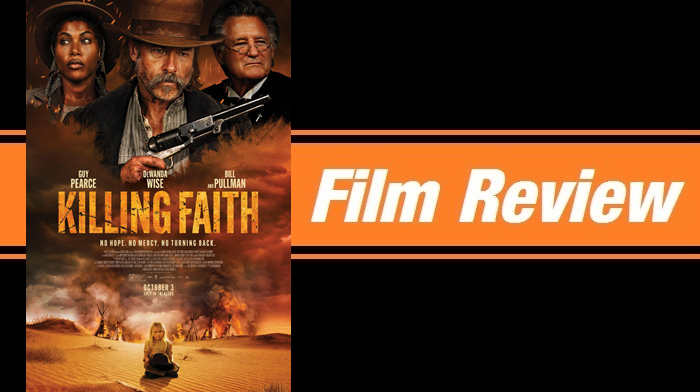
Recent Oscar nominee Guy Pearce in a supernatural thriller set in the Old West is the recipe for a dish I’d happily consume. Written and directed by Ned Crowley, “Killing Faith” brings those ingredients together with DeWanda Wise and Bill Pullman adding a little extra seasoning of their own. The result is a wildly original feature that bends several genres into a peculiar yet entertaining experience.

The story is set in 1849 in the aftermath of a widespread sickness which broke out some ten years earlier. Wise gets an extra meaty role playing Sarah, a recently freed slave who is convinced that her blonde-haired caucasian daughter (Emily Katherine Ford) is possessed by the devil. It’s a wild and eerie premise which Crowley slickly mixes with his Old West setting to create something that sounds at odds with itself but that fits together perfectly.

Image Courtesy of Shout! Studios

Sarah’s daughter is forced to wear big pink mittens because living things instantly die whenever they come into contact with her bare hands. The unexplained power/curse has the local one-horse townsfolk spooked to the point they have banned Sarah from bringing the child around. In need of some supernatural help, Sarah resolves to make the long and perilous trip to the Ross Corner, home of a renowned (or notorious) self-proclaimed faith healer named Preacher Ross (Pullman).

Unfortunately for Sarah, no one in town is willing to escort her to Ross Corner, not even for the sizable payday she’s offering. That is until she meets Dr. Bender (Pearce), a widowed physician tormented by loss and ostracized by the community he once served. Bender is a tragic soul who spends more of his time getting high on ether than practicing medicine. He has his own issues with the town and is in need of money. So he agrees to take Sarah and her daughter to Ross Corner.

Bender is a broken man who has lost his faith. Sarah is convinced something evil was taken residence inside her daughter. Bender scoffs at her theory, insisting the child is just a carrier of the plague that had swept across the territory. It leads to some compelling conversations on the trail and around the campfire. Through them Crowley gives us closer looks inside the two characters while also revealing an unexpected connection that comes more into view as the story progresses.

As the three outcasts venture across the unforgiving countryside they encounter an array of dangerous hombres, eccentric individuals, and downright chilling psychopaths. They’re followed by Edward (Jack Alcott), Sarah’s simple yet bighearted ranch hand. They’re tracked by a ruthless bounty hunter named Whitey (Jamie Neumann). They run into a mysterious Native American who goes by Shakespeare (Raoul Max Trujillo). And in the film’s most memorable scene, they come across a chilling family consisting of a creepy matriarch (played with demented sophistication by Joanna Cassidy), a nonverbal young woman, and a guitar-plucking brute with a burlap sack over his head.

Image Courtesy of Shout! Studios

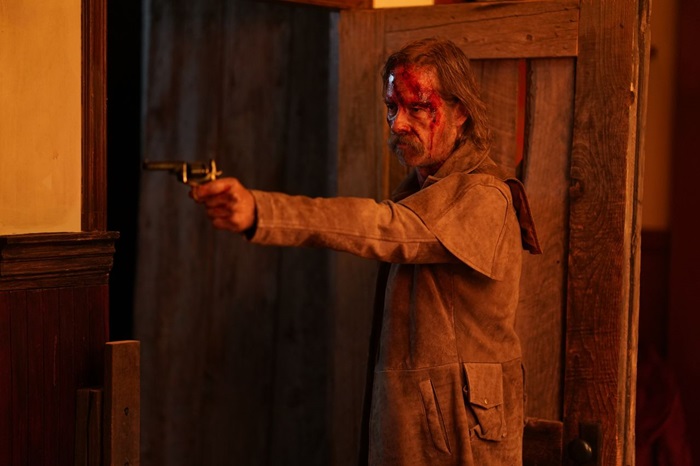
Bender’s faith is tested with each unexplainable turn in their bleak and unsettling journey. As he’s squaring off against his own personal demons, Sarah gets cruel reminders of the reality she lives in. Crowley uses them, along with their internal and external conflicts, to astutely critique American history, marginalization, and man’s penchant for violence. He exposes the sins of humanity through the grim depravity of his story. But it’s also through his unnerving imagery, specifically a series of brutal nightmare sequences and bursts of extreme bloody violence.

For most of its runtime, “Killing Faith” remains a dark yet absorbing genre-bender that does things with the Western that we rarely see. It’s only in the final act that the movie struggles to keep its footing. But even then Crowley makes some interesting choices and takes some unexpected chances. And that’s something that can be said about “Killing Faith” as a whole. Crowley’s audacious vision combined with some firmly committed and capable performances ensure we are never disengaged from this mysterious and macabre Old West odyssey.

VERDICT – 3.5 STARS

REVIEW: “Kraven the Hunter” (2024)

It’s unfortunate, but it seems that “Kraven the Hunter” was dead in the water before it ever hit theaters. It’s all because both audiences and critics have long lost faith in Sony’s Spider-Man Universe. Sony’s superhero endeavor began with some early cynicism (especially from a segment of MCU loyalists). But it was the disappointing quality of the movies that eventually led to the negativity.

But is that fair to “Kraven the Hunter”, the sixth and some believe final film in Sony’s struggling Spider-Man Universe? Probably not. But the movie doesn’t exactly make a strong case for itself. “Kraven” falls in line with other SMU movies in that it takes a genuinely interesting character and completely underwhelms in its effort to bring them to the big screen. ”Kraven” isn’t bafflingly bad like “Madame Web”. But it’s hampered by problems that have plagued most of these films.

What’s frustrating is that there is a good movie somewhere inside of “Kraven”. It has a strong lead in Aaron Taylor-Johnson. It backs him up with two Academy Award winners in Russell Crowe and Ariana DeBose. It’s made by an intriguing director, J. C. Chandor. It certainly has plenty of compelling source material to draw from. And it’s grittier and bloodier than any of the previous movies.

Image Courtesy of Sony Pictures Releasing

But none of those things are able to overcome the script from the screenwriting trio of Richard Wenk, Art Marcum, and Matt Holloway. It’s all built around an undeniably silly premise which can be okay if the movie has fun with it. “Kraven” doesn’t seem to recognize its own silliness. Worse are the underdeveloped characters who are given more bad dialogue than believable motives or emotional range. The cast tries hard to work through it. But it’s too much for even this level of talent to overcome.

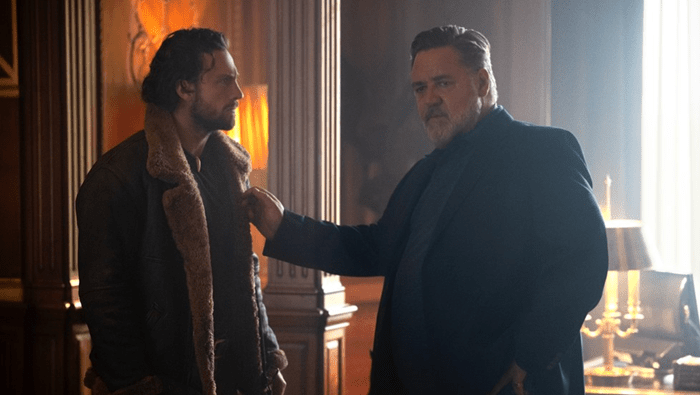
The film’s flashback opening introduces us to Sergei Kravinoff and his kid brother Dmitri. They’re the sons of Nikolai Kravinoff (Crowe), a ruthless crime lord who is as tough on his boys as he is his enemies. Nikolai clearly favors the older Sergei who he hopes will be a worthy heir in his hyper-masculine eyes. And while Dimitri is starved for his father’s approval, he’s repeatedly shunned for his supposed weakness.

While in Ghana on a big game hunt with their father, Sergei is attacked by a massive lion while protecting a terrified Dmitri. The lion savagely maims Sergei and drags him away where he’s later found near death by a young girl named Calypso. She slips him a mystical healing potion that mixes with a little lion’s blood. Sergei makes a miraculous recovery but never meets the girl who saved him. And after his father berates him for showing weakness, Sergei runs away from home.

Image Courtesy of Sony Pictures Releasing

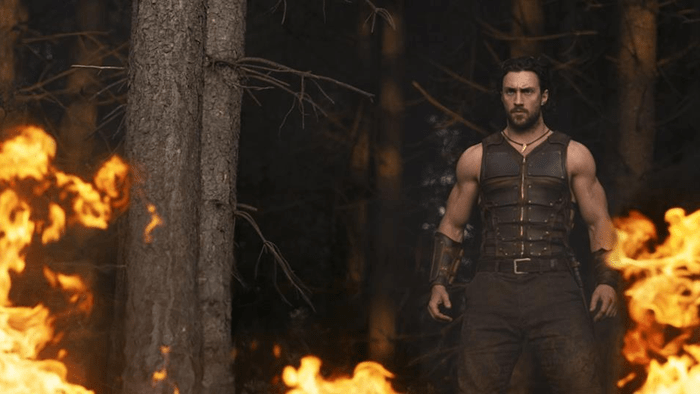
Years later, Sergei (a chiseled Taylor-Johnson), now imbued with unexplainable powers from the potion, secretly hunts and kills certain criminals under the name Kraven. In between kills he has been trying to find Calypso (DeBose) who now is a successful lawyer in London’s largest firm. In the meantime Dmitri (Fred Hechinger) is kidnapped by one of Nikolai’s rivals (Alessandro Nivola). With his father unwilling to pay the $20 million ransom, Sergei reveals his Kraven persona and sets off to rescue his brother.

The movie has several good ideas working simultaneously but not harmoniously. There’s a bonkers superhero movie; a bloody action flick; a piercing family drama; a gritty crime thriller. Those are a lot of threads and they speak to the movie’s attempt at doing something different. They add some decent drama to the Kravinoff’s family dynamic and fuel some brutally fun action sequences. But Chandor can’t weave them together into something cohesive.

An argument can be made that “Kraven the Hunter” is the best movie in Spider-Man Universe. You could also say that’s a pretty low bar. Regardless, it’s not as bad as the critically- charged shredding it has received. At the same time, it’s not what I would call a good movie. Even with a well cast and fully committed Aaron Taylor-Johnson doing everything he can to earn our investment, it’s hard to find much to rave about in what may be the death knell for Sony’s Spidey-Venture.

VERDICT – 2.5 STARS

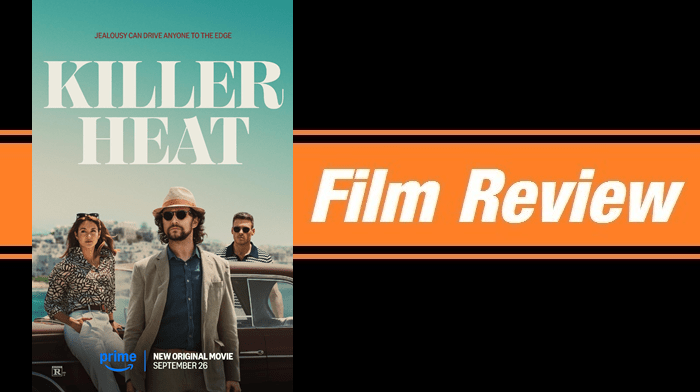
REVIEW: “Killer Heat” (2024)

With “Killer Heat”, director Philippe Lacôte takes crime novelist Jo Nesbø’s short story, “The Jealousy Man” and spins it into a old-fashioned film noir complete with a hard-boiled private investigator, a mysterious femme fatale, cynical voiceover, moral ambiguity, and of course a possible murder. This decent adaptation from screenwriters Roberto Bentivegna and Matt Charman doesn’t add anything new to the classic noir formula. But it does capture much of what makes these movies so appealing.

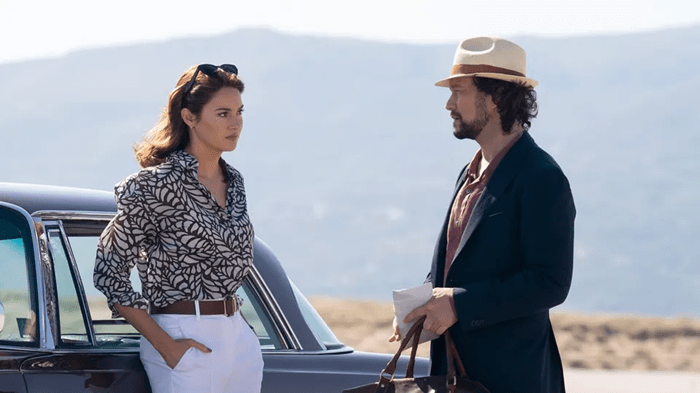
“Killer Heat” features Joseph Gordon-Levitt playing Nick Bali (a very film noir appropriate name). He’s our down-on-his-luck private eye with a curly mop of hair packed under a tan Panama hat. Nick is a bit unkept and you can imagine the smell of booze that enters every room before he does. But he has keen instincts, a photographic memory, and is a stickler for details. It’s what makes him a good detective in spite of his flaws.

Image Courtesy of Amazon Prime Video

Nick arrives on the island of Crete at the request of Penelope Vardakis (Shailene Woodley), a member of a wealthy and powerful family who run the island through violence and corruption. Just recently Penelope’s brother-in-law Leo (Richard Madden) was killed while free solo climbing an area cliff. The local police (who are on the Vardakis family payroll) were quick to rule it an accident. But Penelope isn’t convinced. So she secretly hires Nick to determine what really happened.

It doesn’t take long before we’re introduced to some of the key players in the mystery via Nick’s investigation. First is Elias (also Richard Madden), Penelope’s husband and the late Leo’s twin brother. There’s Audrey (Clare Holman), the Vardakis family matriarch. And there’s a local cop named Georges (Babou Ceesay) who may or may not be trustworthy. Of course there are several other pieces to the puzzle that I won’t spoil, but they’re nicely woven into Bentivegna and Charman’s script.

The mystery itself throws enough curveballs to keep things interesting while the pacing ensures that we never slow down enough to overthink things. Lacôte does a good job mixing in some clarifying flashbacks. They shed some much-needed light on the icky pasts of the Vardakis clan while also revealing Nick’s own rocky history. Put together, all of it gels into a fairly lively crime story but not a particularly inventive one. When the revelations eventually come, none really catch us by surprise.

Image Courtesy of Amazon Prime Video

“Killer Heat” certainly has the look with Lacôte and DP Andrew Dunn shooting on location around sun-soaked Crete. It also has the cast, with Gordon-Levitt managing to be a serviceable gumshoe and Woodley a suitable femme fatale. The people they play resemble types more than well-rounded characters which strips them of any nuance or intrigue. Nevertheless the performances are solid all around.

What this old-fashioned noir lacks most is old-fashioned tension. We gets hints of it here and there, especially as Nick begins to wear out his welcome. But the heat never gets above room temperature nor does the mystery grip us the way it needs to. And Nesbø’s underlying theme of jealousy gets lost in all the dot-connecting and box-checking. Still, the film holds our interest throughout its fleet-footed 90 minutes, and you could do a lot worse than hanging out in the Greek Isles with JGL. “Killer Heat” is now streaming exclusively on Prime Video.

VERDICT – 2.5 STARS