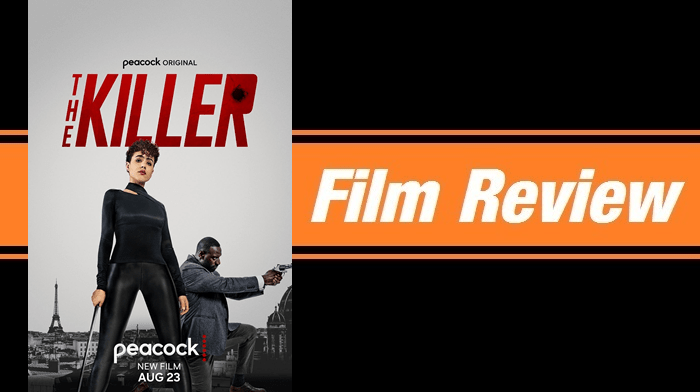
REVIEW: “The Killer” (2024)

Not to be confused with David Fincher’s 2023 thriller of the same name, the latest film called “The Killer” is cut from a different clothe. It comes from the legendary filmmaker John Woo which automatically makes it a movie worth talking about. “The Killer” is a remake of Woo’s own seminal 1989 Hong Kong action classic which has been heralded as one of the most influential action films ever made and paved the way for Woo’s eventual move to Hollywood.

This new version of “The Killer” features a reimagined story written by Oscar-winner Brian Helgeland, Josh Campbell, and Matt Stuecken. They take the general framework of the 1989 film and add their own spin. They move the location to Paris, rework key characters, and add several new layers to the narrative. Woo handles the rest, directing the film with his usual verve while including all of his signatures: slow-motion, split-screens, religious imagery, duel-wielding pistols, white doves. It’s all here.

Image Courtesy of Peacock

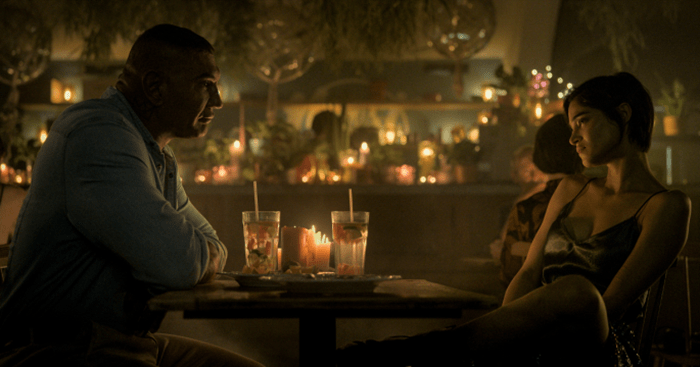
A well-cast Nathalie Emmanuel plays Zee, a beautiful yet lethal Paris-based assassin who works under her mentor and handler, Finn (Sam Worthington). Zee is a proficient contract killer, and like most assassins she operates by a strict code. Hers is quite simple – no civilian targets. That code is put to the test after Finn gives Zee her next assignment. She’s to slip into an upstairs office at a popular night club and kill a group of gangsters. “No one leaves that room alive,” Finn instructs her. Sounds easy enough. What could go wrong?

As it turns out, a lot. Zee disposes of her targets in glorious John Woo fashion but spares the life of one person in the room – an unarmed American singer named Jenn (Diana Silvers) who loses her eyesight during the clash. As you can probably guess, that one act of mercy doesn’t sit well with Finn who knows that his client, a crime lord named Jules Gobert (Eric Cantona), won’t be happy. He immediately encourages Zee to track down Jenn and finish the job.

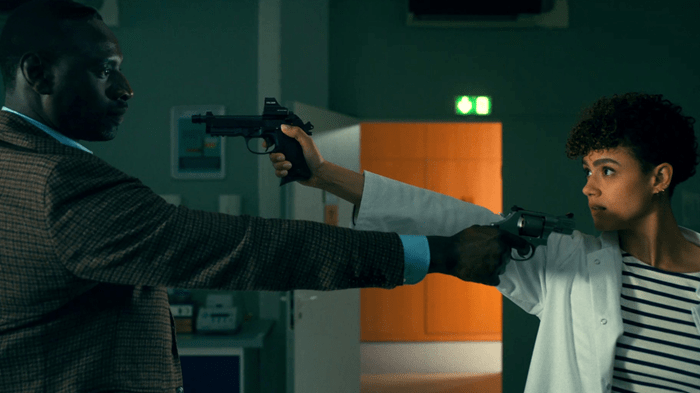
Meanwhile a street savvy but frustrated Paris police detective named Sey (Omar Sy) is assigned to the night club case. His investigation leads him to a pampered Saudi Prince (Saïd Taghmaoui), $350 million in stolen heroin, and a hospitalized Jenn who suddenly finds herself targeted by some mysterious men she doesn’t know. In an unexpected turn of events, it’s Zee who comes to Jenn’s rescue which immediately puts her on Sey’s radar.

The script doesn’t bring much new to the assassin movie formula, but it throws us some fun twists and creates characters who keep us locked into the story. Chief among them is a really good Nathalie Emmanuel who brings a certain charm as well as an illusive innocence to Zee. But she also shows off the kind of physicality that a John Woo film demands. Meanwhile the always sturdy Sy is a strong complement, both to Emmanuel and to Woo’s style.

Image Courtesy of Peacock

But as with any John Woo film, the action is the centerpiece. He treats us to several good chase sequences, a thrilling hospital shootout, and an electric final showdown in and around a decommissioned church. They are all fiercely shot and choreographed while being laced with most of Woo’s easy to recognize trademarks. And that’s exactly what we fans expect.

Interestingly, while “The Killer” has clear similarities to the 1989 film, Woo doesn’t attempt to recreate what many consider to be his masterpiece. Instead, the changes to characters, setting, and even tone allow him to explore his previous work in a new light. It also adds enough freshness to keep this from being a retread. And it provides Woo with new inspiration to do what he does best – create proudly violent and stylishly over-the-top action that leaves fans like me giddy. “The Killer” is streaming on Peacock.

VERDICT – 4 STARS

REVIEW: “Kill” (2024)

The blistering and brutal Hindi action-thriller “Kill” is an action movie that certainly stands out in this year’s crop. “Kill” earned a lot of attention following its premiere at last year’s Toronto International Film Festival. And some are already throwing out the label “cult classic”. India loves the action genre, but their movies don’t always make it to big screens here in the States. Thanks to Lionsgate, you’ll have your chance to see this one starting this weekend. And it’s a chance you should take advantage of.

Written and directed by Nikhil Nagesh Bhat, “Kill” certainly lives up to its name. The film is extremely violent and considerably more gruesome than the majority of Indian action cinema. It takes place in a mostly single setting and introduces the world to a bonafide action star in Lakshya who’s making his feature film debut. The 28-year-old actor can really ratchet up the intensity, and the physicality he brings to film will leave your jaw on the floor.

Image Courtesy of Roadside Attractions

Lakshya plays Captain Amrit Rathod, a National Security Guard commando who is madly in love with a young woman named Tulika (Tanya Maniktala). The two have big dreams of getting married, but those dreams are shattered after Tulika learns that her father (Harsh Chhaya), a powerful businessman, has arranged her engagement to another man. Wasting no time, Tulika’s family rushes her off by train to New Delhi where she is to be married. But Amrit is able to slip onboard, hoping to stop the wedding with the help of his close friend and fellow commando Viresh (Abhishek Chauhan).

But little do they know, also onboard is a large gang of knife-wielding bandits led by Fani (Raghav Juyal), a reckless and ruthless sociopath. The thugs begin moving from coach to coach, beating and robbing the passengers. Amrit and Viresh do their best to stop the bandits and protect the innocent. But when the violent wildcard Fani targets Tulika, Amrit turns from noble soldiering to pure rage-fueled savagery. That all unfolds in the first 45 minutes and then when get the title screen.

Image Courtesy of Roadside Attractions

Then remaining 45 minutes is a nearly non-stop barrage of close-quartered brutality as Amrit unleashes his fury on the seemingly endless parade of blade-swinging baddies. The fight sequences are blood-soaked and primal to their core. Bhat and DP Rafey Mehmood superbly capture the ferocity of the brawls, shooting predominantly in narrow, confined spaces. Lakshya does the rest, showing a physical and emotional commitment that drives his character and the combat.

While the constraints of the train setting add a compelling component to the action, it doesn’t offer much in terms of variety. As the fighting moves from one car to the next, you can’t help but notice how they all look the same. And I can see where some may be worn down by the near endless waves of violence. But those seem like such minor complaints considering “Kill” will easily end up being one of the very best action movies of the year. Don’t go into it expecting a new “John Wick”. But if something like “The Raid” on a train sounds good to you (as it should), get your ticket now.

VERDICT – 4 STARS

REVIEW: “Kingdom of the Planet of the Apes” (2024)

Aside from their hilariously clunky titles, the rebooted Planet of the Apes series has repeatedly delivered while surprising me in a number of ways. Going back to the first film, 2011’s “Rise of the Planet of the Apes”, the series has told thematically rich and emotionally impactful stories to go along with state-of-the-art motion capture and visual effects. So I was expecting more of the same with the long-awaited fourth installment, “Kingdom of the Planet of the Apes”.

Directed by Wes Ball, “Kingdom” is a standalone sequel to 2017’s “War for the Planet of the Apes”. Its story takes place 300 years after “War”, but the DNA of the previous three films can be seen all throughout it. Unfortunately the execution doesn’t quite live up to its predecessors. To no surprise “Kingdom” looks great and it hits a few good emotional beats. But it struggles mightily to capture the vision and narrative breadth of the Caesar trilogy.

Image Courtesy of 20th Century Studios

The issues with “Kingdom” grow more evident over time. First, it’s incredibly slow developing and it takes a long time for the story to gain any traction. That’s made worse by the fact that the movie is far longer than it needs to be. We tread a lot of familiar ground in the arduous 145 minutes which leads to another issue – “Kingdom” has a tough time distinguishing itself, not just from the other three Apes movies, but from other dystopian sci-fi adventures. It walks its own path but utilizes a few too many formulas to get where its going.

Set generations after the death of Caesar, apes have become the dominant species while humans are considered wild and untamed. A young chimpanzee named Noa (Owen Teague) is part of an ape clan devoted to nurturing and training eagles. While out collecting an eagle egg as part of his coming-of-age ritual, Noa witnesses a party of raiders, led by a foreboding gorilla named Sylva (Eka Danville), heading towards his village. Worried, Noa rushes home to find his village under siege.

Sylva attacks Noa and leaves him for the dead in the ashes of his village. But Noa survives and when he wakes he finds his father dead and his clan abducted. Heartbroken and driven, Noa sets out to find and rescue his clan. On his journey he crosses paths with Raka (Peter Macon), an erudite orangutan who is faithful to Caesar’s teachings. Raka begins to enlighten Noa on Caesar’s message of peaceful coexistence, especially after noticing they’re being watched by a human girl who they name Nova (Freya Allan).

Image Courtesy of 20th Century Studios

After saving Nova from another roundup by Sylva, the girl reveals that she can speak. She tells them that Noa’s clan has been taken to a coastal settlement ran by an ape monarch named Proximus Caesar (Kevin Durand). We learn Proximus is obsessed with a heavily sealed vault that he believes contains old human tech. His zeal has led him to abduct and enslave several ape clans, forcing them to work on opening the vault. As you can probably guess, Noa’s journey leads to a clash with Proximus which is both inevitable and surprisingly unremarkable.

Unremarkable best describes “Kingdom”. There’s nothing glaringly bad about the film. It just never comes close to the thrilling or emotional highs of its predecessors. Neither Noa or Nova are especially compelling, and (judging by the ending) the film seems too focused on setting up yet another Apes trilogy. But perhaps most discouraging is how dull the movie can be. There is plenty of fat that could have been trimmed to make this a tighter and more riveting experience. As it is, “Kingdom” will sit as a serviceable but rather prosaic early summer feature.

VERDICT – 2.5 STARS

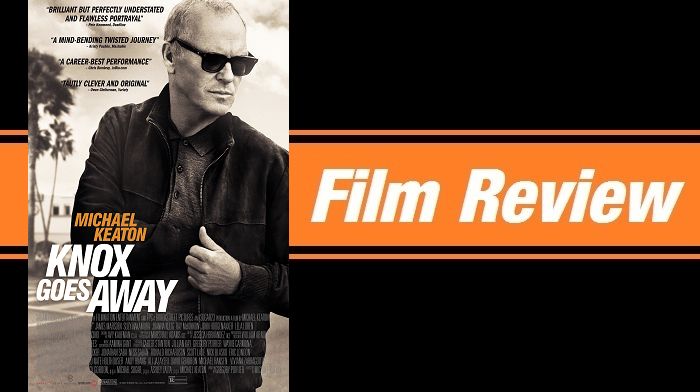
REVIEW: “Knox Goes Away” (2024)

Comfortably seated within that small group of actors who I’ll watch in anything is Michael Keaton. From his early comedies of the 1980s to his time as Gotham City’s Caped Crusader to the more character driven dramas of the last ten years, I’ve always been drawn to Keaton’s wit, charm, and versatility. So naturally I was going to check out his latest film, “Knox Goes Away” which sees him not only starring but also in the director’s chair.

“Knox Goes Away” is the kind of low-key thriller that’s much more into studying its main character than delivering anything that resembles nail-biting tension. It’s deliberately paced and stealthily hypnotic – a result of Keaton’s sure-handed direction. It’s also emotionally layered, resonating in a number of unexpected ways – a testament to Keaton’s shrewd and well-modulated performance. Then add an intriguing supporting cast that includes Al Pacino, James Marsden, Marcia Gay Harden, and one of my very favorite character actors Ray McKinnon.

Image Courtesy of Saban Films

The script is written by Gregory Poirier who pens a story as much about one man’s mental conflict as the crimes that unfold on screen. Keaton plays John Knox, a seasoned contract killer who has his world shaken when he is diagnosed with a rapidly progressing and incurable form of dementia. Given only weeks before his mind completely fails him, John meets up with his partner and fellow hitman Tommy (McKinnon) to carry out a final contract. They’re tasked with taking out a human trafficker, but the job goes south and Tommy ends up dead.

The botched job convinces John that his days as a hitman are over and it’s time to “cash out”. But then he’s paid a visit by his estranged son Miles (Marsden) who he hasn’t spoken to in years. Panicked, covered in blood, and in big trouble, Miles tells his father how he just stabbed to death a racist scumbag (Charles Bisset) who got his 16-year-old daughter Kaylee (Morgan Bastin) pregnant. Knowing his father’s line of work (but not knowing his deteriorating mind), Miles begs for his help. “I’ve never asked you for anything in my life.”

John immediately goes to work, instructing his son to go home and say nothing while he visits the blood-drenched crime scene. It’ll take a meticulous plan with attention given to every single detail to cover up the grisly murder. But can he pull off a plan so precise with his failing mind? That becomes a key conflict in the film. John begins writing down each step of the plan in a pocket notebook as reminders. And he contacts a trusted old friend, Xavier Crane (Pacino), to help him stay on point. But hot on his heels is the stiff and overly grumpy Detective Emily Ikari (Suzy Nakamura) who begins investigating both murder scenes.

Image Courtesy of Saban Films

Using weeks like chapters, Poirier’s story follows John as he races against two clocks. One sees him trying to pull the ultimate cover-up in an effort to protect his son before the dogged detective can put the pieces together. The other sees him personally facing his cognitive decline, something Keaton captures realistically and with empathy. He truly is the film’s anchor, bringing strength, vulnerability, and nuance to the central character.

Not all of the stellar supporting cast get much to do, most notably Al Pacino and Marcia Gay Harden. But they do fill in some important story gaps. And you could also make the case that the film’s ending isn’t the most plausible. Yet I found it to be clever, satisfying, and unexpectedly moving. Either way, “Knox Goes Away” works thanks to the savvy Michael Keaton who shines in what is an absorbing character study masquerading as a hitman movie. “Knox Goes Away” hit theaters on Friday, March 15th.

VERDICT – 3.5 STARS

REVIEW: “The Killer” (2023)

It’s hard to say whose return I’m excited about more – director David Fincher’s or actor Michael Fassbender’s. Both are back with the new film “The Killer”, a scintillating action neo-noir for Netflix. It’s Fincher’s first feature since 2020’s “Mank” and only his second in nearly ten years. As for the once notoriously busy Fassbender, following 2019’s “X-Men: Dark Phoenix” he took a break from acting and tried his hand at auto racing – a long held passion of his.

“The Killer” is a perfect vehicle for the return of both Fincher and Fassbender. It’s true that hitman stories are nothing new. They’ve come in droves lately. But rarely has one featured the kind of artistry and verve that Fincher delivers here. And Fassbender’s ice-cold charisma and steely magnetism creates and maintains a gripping presence throughout this lean, stylish, and utterly captivating thriller.

Image Courtesy of Netflix

“The Killer” is based on the French graphic novel series of the same name written by Alexis “Matz” Nolent and illustrated by Luc Jacamon. Fincher doesn’t lose sight of his film’s roots but he does incorporate his own distinct style which you’ll notice from the opening credits onward. While Fincher’s touches are easy to identify, this is hardly a simple rinse and repeat of his past work. The film is a richly crafted fresh spin on a well-traveled genre that’s every bit as meticulous and calculated as its titular lead character.

As for Fassbender, he’s the centerpiece of nearly every scene. The film opens with a prolonged introduction to his character – a proficient assassin on a job in Paris. Through observation and a series of absorbing internal monologues, we’re able to put together a revealing profile of a methodical and efficient killer – a fiercely focused no-named protagonist who visualizes every detail and calculates ever scenario.

In this brilliantly precise opening Fincher and screenwriter Andrew Kevin Walker paint a vivid portrait of the hitman and his psyche. We first meet him as he patiently watches for his target from an abandoned top-floor office suite in Paris. As he waits he routinely monitors his heart rate, does yoga exercises, and listens to music from The Smiths to help him mellow out.

He operates by a very strict set of rules which he constantly repeats inside his head. “Stick to your plan. Anticipate, don’t improvise. Trust no one. Forbid empathy. Never yield an advantage. Fight only the battle you’re paid to fight.” It’s the kind of intense laser focus that makes him good at his job but also chilling. Call it professionalism meets sociopathy.

Image Courtesy of Netflix

After thoroughly convincing us of his protagonist’s expertise, Fincher throws us a curveball when the hitman botches the job and misses his target. He quickly flees into the city, blending in like a chameleon until he can catch a flight undetected. Soon he’s leaving Paris en route to his hideaway in the Dominican Republic. But when he arrives he discovers his girlfriend (Sophie Charlotte) beaten within an inch of her life by assassins sent to clean up all the loose ends from the Paris job.

But what they don’t realize is that they’ve stirred up a hornet’s nest. Suddenly our protagonist is ready to break his own rules in order pay back those who’ve come after him. First he pays a visit to his handler Eddie Hodges (the always enjoyable Charles Parnell) in New Orleans. Afterwards he squares off against a hulking brute (Sala Baker) in Florida. Later he sits down with a more cerebral assassin (Tilda Swinton) in New York.

Fincher splinters his story into chapters, each named after the next city the hitman visits on his hunt for revenge. Each stop plays like its own procedural as he rigorously tracks down and ruthlessly executes his targets. Through it all Fincher’s steady screw-tightening builds some great tension within the film’s effectively deliberate and deceptively layered frame. And it’s driven by Fassbender’s shrewdly calibrated performance. He projects an impenetrable and ever-composed exterior. Yet inside, his betraying inner voice makes us question much of what we see.

Image Courtesy of Netflix

“The Killer” has a cool and alluring style but with a gritty veneer. It’s as if Jean-Pierre Melville’s “Le Samourai” was reimagined by Brian De Palma. The action comes in spurts and often leaves indelible impressions (Fincher shoots one of the best hand-to-hand fight sequences you’ll see). And it’s all accentuated by yet another simmering score from Trent Reznor and Atticus Ross.

But perhaps most appealing is how Fincher embraces and subverts genre expectations. From one angle he has delivered a pretty straightforward hitman movie. But as you look closer you see the markings of a filmmaker with more on his mind. They’re markings that go beyond mere craftsmanship and execution (although those things are critical). And ultimately that is what sets this film apart. “The Killer” will show in select theaters on October 27th before streaming on Netflix November 10th.

VERDICT – 4.5 STARS

REVIEW: “Killers of the Flower Moon” (2023)

“Killers of the Flower Moon” is one of the year’s most anticipated movies and it’s not hard to see why. It’s the 43rd feature film from the 80-year-old legendary director Martin Scorsese. The movie also marks Scorsese’s sixth big screen collaboration with Leonardo DiCaprio and it’s his tenth collaboration with Robert De Niro.

Equally exciting is the setting and subject matter. “Killers of the Flower Moon” is based on journalist David Grann’s 2017 nonfiction book of the same name. It’s a period crime drama set at the turn of the 20th century that tells the horrifying true story of the Osage Murders. That’s when over sixty (some believe closer to 100) Native Americans were killed in Osage County, Oklahoma between the years of 1918 and 1931. The reasons – oil rights.

Scorsese’s three and a half hour and $200 million feature sees the acclaimed filmmaker in top form. Here he has made an enthralling epic fueled by powerful performances, truly terrific production design, and outstanding cinematography from DP Rodrigo Prieto – a Scorsese regular. Collectively it all works to tell a gripping and heartbreaking story about greed, corruption, and entitlement. Simply put, it’s one of the year’s best films.

Image Courtesy of Apple Original Films

Along with his co-writer Eric Roth, Scorsese has crafted an absorbing story of many layers. As the drama builds, those layers are meticulously and gradually peeled back, exposing a vile scheme and the many men who have a part in it. There’s not much mystery to it. Scorsese wants us to know what’s going on pretty quick. The suspense is in watching how far things go and in recoiling at the sickening consequences (and there are many of them).

By 1920 the Osage people had become some of the wealthiest people in America after oil reserves were discovered on their land. Soon they were driving the newest cars, wearing the fanciest clothes, and living in the nicest houses. Yet the Osage weren’t allowed to manage their own money. Based on a belittling premise, the United States government assigned them white “guardians” who turned out to be easily corrupted. Even worse, the steady flow of money drew the attention of opportunists who flooded the area in hopes of getting a piece of the pie.

Among the earliest of the opportunists was William “King” Hale (De Niro), a wealthy cattle baron who worked the political system to gain a foothold in the bustling city of Fairfax. He also slithered his way into the good graces of the Osage landowners and their families. He works them both to line his own pockets and gain even more power in the region. But the true depths of his greed-fueled depravity comes to light with the arrival of his nephew Ernest Burkhart (DiCaprio).

Image Courtesy of Apple Original Films

Naive, a bit shallow, and easy to manipulate, Ernest is the perfect pawn for King’s game. He arrives in Fairfax after serving in World War I and is immediately hired by his uncle. Ernest begins as a glorified cabbie, ushering rich Osage to and from town. That’s how he meets Mollie (Lily Gladstone), a wealthy Osage local who catches his eye. Ernest is ok with a little flirting, but King encourages him to court her. Mollie has her reservations, but she’s drawn to Ernest’s gentlemanly charms. Before long the two marry and start a family.

This actually falls right into King’s dirty hands. One of the more sinister schemes of the white interlopers was to marry into the Osage families. If a wife and her fellow heirs were to die, that would leave their land rights, oil, and accompanying wealth to the husband. It’s a devious racket.

We see this wicked plan in action once members of the Osage community begin mysteriously dying at an alarming rate. Many by an unexplainable “wasting disease”. Others are found murdered. Even Mollie’s mother Lizzy (Tantoo Cardinal) and her sister Minnie (Jillian Dion) suddenly fall sick. No one in Fairfax seems concerned and the authorities aren’t interested in investigating. But it’s clear to the audience what’s going on. Scorsese is painting us an unsettling picture of evil operating in plain sight. And their nauseating numbness to their crimes makes them even more monstrous.

Image Courtesy of Apple Original Films

The film’s incredible ensemble is such a crucial component. De Niro is at his very best, putting a deceptively pleasant voice to evil and stamping it with a sociopathic smile. DiCaprio is equally good, restraining a character who could have easily veered off track. Jesse Plemons is great as a G-man sent by Hoover to investigate the murders, as is Cara Jade Myers playing Mollie’s wild-child older sister. And there so many other great faces sprinkled throughout (take Ty Mitchell as John Ramsey – rugged, simple, and fascinating to watch and listen to).

Yet most people will leave the film talking about Lily Gladstone and rightly so. She’s just as good as the early hype described. Gladstone masterfully conveys both strength and vulnerability. Her Mollie may be a woman of few words, but she’s purposefully quiet, observant, and wisely skeptical. But there’s a softer side to her – one that’s ready to let her guard down and trust. That’s when Mollie comes face-to-face with her shattering reality. And we can see her spirit slowly being drained from her just by looking into Gladstone’s eyes. It’s a devastating performance

Still, in the end everything comes back to Scorsese who has not only visualized but has fully realized what is a tremendous cinematic achievement (especially in our current movie climate). He has poured great effort into historical and cultural accuracy while never losing sight of what’s essential for good cinema. It may be too long for some, but the movie earns its lengthy running time. And I love his choice to make a feature-length film rather than some fragmented miniseries. I know some have pushed back on his decision to tell the story from Ernest’s perspective. But this is Scorsese’s story to tell. And sometimes looking through the villain’s eyes can be even more enlightening and effective. Especially when done by a master filmmaker.

VERDICT – 5 STARS