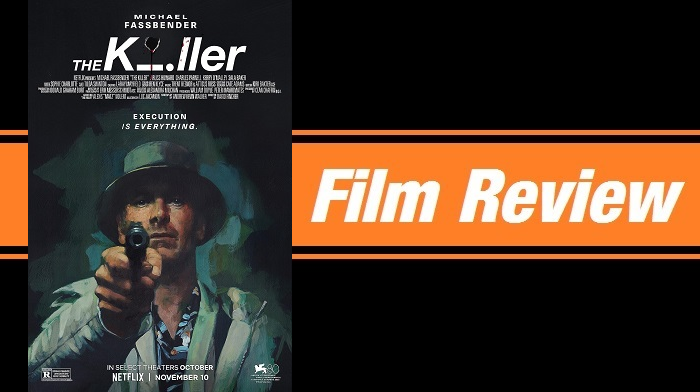
REVIEW: “The Killer” (2023)

It’s hard to say whose return I’m excited about more – director David Fincher’s or actor Michael Fassbender’s. Both are back with the new film “The Killer”, a scintillating action neo-noir for Netflix. It’s Fincher’s first feature since 2020’s “Mank” and only his second in nearly ten years. As for the once notoriously busy Fassbender, following 2019’s “X-Men: Dark Phoenix” he took a break from acting and tried his hand at auto racing – a long held passion of his.

“The Killer” is a perfect vehicle for the return of both Fincher and Fassbender. It’s true that hitman stories are nothing new. They’ve come in droves lately. But rarely has one featured the kind of artistry and verve that Fincher delivers here. And Fassbender’s ice-cold charisma and steely magnetism creates and maintains a gripping presence throughout this lean, stylish, and utterly captivating thriller.
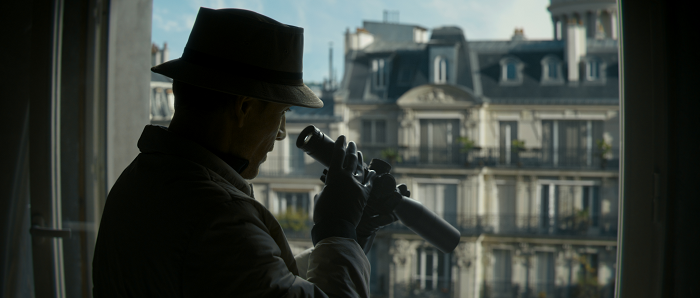
Image Courtesy of Netflix

“The Killer” is based on the French graphic novel series of the same name written by Alexis “Matz” Nolent and illustrated by Luc Jacamon. Fincher doesn’t lose sight of his film’s roots but he does incorporate his own distinct style which you’ll notice from the opening credits onward. While Fincher’s touches are easy to identify, this is hardly a simple rinse and repeat of his past work. The film is a richly crafted fresh spin on a well-traveled genre that’s every bit as meticulous and calculated as its titular lead character.

As for Fassbender, he’s the centerpiece of nearly every scene. The film opens with a prolonged introduction to his character – a proficient assassin on a job in Paris. Through observation and a series of absorbing internal monologues, we’re able to put together a revealing profile of a methodical and efficient killer – a fiercely focused no-named protagonist who visualizes every detail and calculates ever scenario.

In this brilliantly precise opening Fincher and screenwriter Andrew Kevin Walker paint a vivid portrait of the hitman and his psyche. We first meet him as he patiently watches for his target from an abandoned top-floor office suite in Paris. As he waits he routinely monitors his heart rate, does yoga exercises, and listens to music from The Smiths to help him mellow out.

He operates by a very strict set of rules which he constantly repeats inside his head. “Stick to your plan. Anticipate, don’t improvise. Trust no one. Forbid empathy. Never yield an advantage. Fight only the battle you’re paid to fight.” It’s the kind of intense laser focus that makes him good at his job but also chilling. Call it professionalism meets sociopathy.

Image Courtesy of Netflix

After thoroughly convincing us of his protagonist’s expertise, Fincher throws us a curveball when the hitman botches the job and misses his target. He quickly flees into the city, blending in like a chameleon until he can catch a flight undetected. Soon he’s leaving Paris en route to his hideaway in the Dominican Republic. But when he arrives he discovers his girlfriend (Sophie Charlotte) beaten within an inch of her life by assassins sent to clean up all the loose ends from the Paris job.

But what they don’t realize is that they’ve stirred up a hornet’s nest. Suddenly our protagonist is ready to break his own rules in order pay back those who’ve come after him. First he pays a visit to his handler Eddie Hodges (the always enjoyable Charles Parnell) in New Orleans. Afterwards he squares off against a hulking brute (Sala Baker) in Florida. Later he sits down with a more cerebral assassin (Tilda Swinton) in New York.

Fincher splinters his story into chapters, each named after the next city the hitman visits on his hunt for revenge. Each stop plays like its own procedural as he rigorously tracks down and ruthlessly executes his targets. Through it all Fincher’s steady screw-tightening builds some great tension within the film’s effectively deliberate and deceptively layered frame. And it’s driven by Fassbender’s shrewdly calibrated performance. He projects an impenetrable and ever-composed exterior. Yet inside, his betraying inner voice makes us question much of what we see.
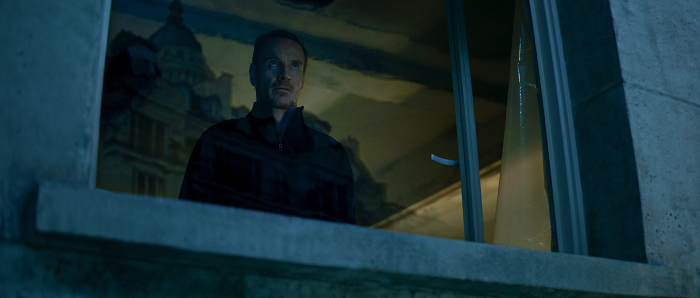
Image Courtesy of Netflix

“The Killer” has a cool and alluring style but with a gritty veneer. It’s as if Jean-Pierre Melville’s “Le Samourai” was reimagined by Brian De Palma. The action comes in spurts and often leaves indelible impressions (Fincher shoots one of the best hand-to-hand fight sequences you’ll see). And it’s all accentuated by yet another simmering score from Trent Reznor and Atticus Ross.

But perhaps most appealing is how Fincher embraces and subverts genre expectations. From one angle he has delivered a pretty straightforward hitman movie. But as you look closer you see the markings of a filmmaker with more on his mind. They’re markings that go beyond mere craftsmanship and execution (although those things are critical). And ultimately that is what sets this film apart. “The Killer” will show in select theaters on October 27th before streaming on Netflix November 10th.

VERDICT – 4.5 STARS

REVIEW: “Killers of the Flower Moon” (2023)

“Killers of the Flower Moon” is one of the year’s most anticipated movies and it’s not hard to see why. It’s the 43rd feature film from the 80-year-old legendary director Martin Scorsese. The movie also marks Scorsese’s sixth big screen collaboration with Leonardo DiCaprio and it’s his tenth collaboration with Robert De Niro.

Equally exciting is the setting and subject matter. “Killers of the Flower Moon” is based on journalist David Grann’s 2017 nonfiction book of the same name. It’s a period crime drama set at the turn of the 20th century that tells the horrifying true story of the Osage Murders. That’s when over sixty (some believe closer to 100) Native Americans were killed in Osage County, Oklahoma between the years of 1918 and 1931. The reasons – oil rights.

Scorsese’s three and a half hour and $200 million feature sees the acclaimed filmmaker in top form. Here he has made an enthralling epic fueled by powerful performances, truly terrific production design, and outstanding cinematography from DP Rodrigo Prieto – a Scorsese regular. Collectively it all works to tell a gripping and heartbreaking story about greed, corruption, and entitlement. Simply put, it’s one of the year’s best films.

Image Courtesy of Apple Original Films

Along with his co-writer Eric Roth, Scorsese has crafted an absorbing story of many layers. As the drama builds, those layers are meticulously and gradually peeled back, exposing a vile scheme and the many men who have a part in it. There’s not much mystery to it. Scorsese wants us to know what’s going on pretty quick. The suspense is in watching how far things go and in recoiling at the sickening consequences (and there are many of them).

By 1920 the Osage people had become some of the wealthiest people in America after oil reserves were discovered on their land. Soon they were driving the newest cars, wearing the fanciest clothes, and living in the nicest houses. Yet the Osage weren’t allowed to manage their own money. Based on a belittling premise, the United States government assigned them white “guardians” who turned out to be easily corrupted. Even worse, the steady flow of money drew the attention of opportunists who flooded the area in hopes of getting a piece of the pie.

Among the earliest of the opportunists was William “King” Hale (De Niro), a wealthy cattle baron who worked the political system to gain a foothold in the bustling city of Fairfax. He also slithered his way into the good graces of the Osage landowners and their families. He works them both to line his own pockets and gain even more power in the region. But the true depths of his greed-fueled depravity comes to light with the arrival of his nephew Ernest Burkhart (DiCaprio).

Image Courtesy of Apple Original Films

Naive, a bit shallow, and easy to manipulate, Ernest is the perfect pawn for King’s game. He arrives in Fairfax after serving in World War I and is immediately hired by his uncle. Ernest begins as a glorified cabbie, ushering rich Osage to and from town. That’s how he meets Mollie (Lily Gladstone), a wealthy Osage local who catches his eye. Ernest is ok with a little flirting, but King encourages him to court her. Mollie has her reservations, but she’s drawn to Ernest’s gentlemanly charms. Before long the two marry and start a family.

This actually falls right into King’s dirty hands. One of the more sinister schemes of the white interlopers was to marry into the Osage families. If a wife and her fellow heirs were to die, that would leave their land rights, oil, and accompanying wealth to the husband. It’s a devious racket.

We see this wicked plan in action once members of the Osage community begin mysteriously dying at an alarming rate. Many by an unexplainable “wasting disease”. Others are found murdered. Even Mollie’s mother Lizzy (Tantoo Cardinal) and her sister Minnie (Jillian Dion) suddenly fall sick. No one in Fairfax seems concerned and the authorities aren’t interested in investigating. But it’s clear to the audience what’s going on. Scorsese is painting us an unsettling picture of evil operating in plain sight. And their nauseating numbness to their crimes makes them even more monstrous.

Image Courtesy of Apple Original Films

The film’s incredible ensemble is such a crucial component. De Niro is at his very best, putting a deceptively pleasant voice to evil and stamping it with a sociopathic smile. DiCaprio is equally good, restraining a character who could have easily veered off track. Jesse Plemons is great as a G-man sent by Hoover to investigate the murders, as is Cara Jade Myers playing Mollie’s wild-child older sister. And there so many other great faces sprinkled throughout (take Ty Mitchell as John Ramsey – rugged, simple, and fascinating to watch and listen to).

Yet most people will leave the film talking about Lily Gladstone and rightly so. She’s just as good as the early hype described. Gladstone masterfully conveys both strength and vulnerability. Her Mollie may be a woman of few words, but she’s purposefully quiet, observant, and wisely skeptical. But there’s a softer side to her – one that’s ready to let her guard down and trust. That’s when Mollie comes face-to-face with her shattering reality. And we can see her spirit slowly being drained from her just by looking into Gladstone’s eyes. It’s a devastating performance

Still, in the end everything comes back to Scorsese who has not only visualized but has fully realized what is a tremendous cinematic achievement (especially in our current movie climate). He has poured great effort into historical and cultural accuracy while never losing sight of what’s essential for good cinema. It may be too long for some, but the movie earns its lengthy running time. And I love his choice to make a feature-length film rather than some fragmented miniseries. I know some have pushed back on his decision to tell the story from Ernest’s perspective. But this is Scorsese’s story to tell. And sometimes looking through the villain’s eyes can be even more enlightening and effective. Especially when done by a master filmmaker.

VERDICT – 5 STARS

REVIEW: “Killher” (2023)

Stop me if you’ve heard this before: a camping trip goes south after a group of young friends are terrorized by a deranged killer. It’s a premise that’ll be familiar to any level of horror fan. We’ve seen variations of it for decades. The filmmakers of the new low-budget slasher “Killher” understand that. In fact, director Robyn August and screenwriter Tom Kiesche rely on their audience’s familiarity. What better way to appreciate the fun they’re having with this well-traveled sub-genre.

Unfortunately “Killher” doesn’t have enough in its tank to keep us onboard for the duration. Even at under 90 minutes, the movie runs out of gas well before the finish. It takes well-worn slasher tropes and wrings everything it can out of them. But it’s too strapped for original ideas to fill in the gaps. Even worse, the woeful final act zaps what remains of our goodwill and ends things on a really sour note.

Image Courtesy of Dark Sky Films

With her wedding day approaching, Mattie (Jenna Z. Alvarez) celebrates by setting out on a camping trip planned and put together by her best friend Eddie (M.C. Huff), a notorious prankster and horror movie enthusiast. Much to Eddie’s chagrin, Mattie invites two of her stuffier friends, Jess (Emily Hall) and Rae (Nicole Lovince), to come along. So the four embark on a supposed fun-filled weekend getaway.

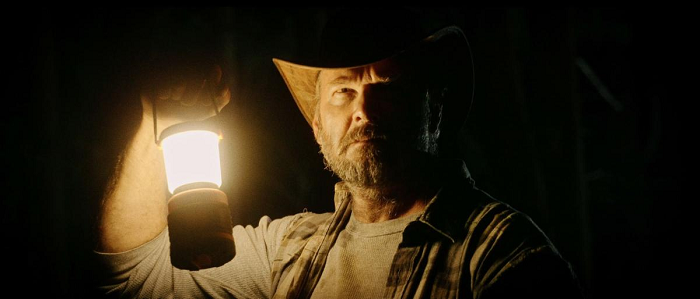
The group drives deep into the forest and sets up camp next to a tent that Eddie claims belongs to (SURPRISE) Mattie’s fiancé, Jagger (Jack Schumacher). But they discover it actually belongs to a burly loner named Ed Rogers (Tom Kiesche). Mr. Rogers tries to keep to himself. But the girls, led by Eddie, are obnoxious to the point that a conflict is inevitable. To make matters worse, cracks begin to form in their “friendships” with each hour they stay in the woods.

Without going into detail, we soon learn there is a killer in the woods (you’ll figure out who it is within the first half-hour). It’s supposed to lead to an entertaining hack’em-up final act but what we get isn’t nearly as fun as it tries to be. In the last 30 minutes the campiness wears off, the characters become dull and tiresome, and the dialogue turns incredibly hokey. Worst of all is the actual killer whose desperate and vain attempts at being maniacal grows more annoying by the minute.

Image Courtesy of Dark Sky Films

I don’t want to come down too hard on “Killher” as it can only do so much within its noticeable budget constraints. And I’ll go as far as to say that August deserves a lot of credit for delivering beyond the limitations he faces, specifically in the film’s first half.

But once we hit the midway point things unravel pretty fast. By sloppily telegraphing the killer’s identity we’re left with no tension whatsoever. And the killer’s grating over-the-top performance helps turn the movie into an endurance test rather than the fun-filled genre romp that it could have been. And sadly no amount of cool practical effects or gnarly makeup can make up for the second half frustrations which end up burying this well-intended misfire. “Killher” opens October 20th in select theaters and on VOD.

VERDICT – 2 STARS

REVIEW: “King of Killers” (2023)

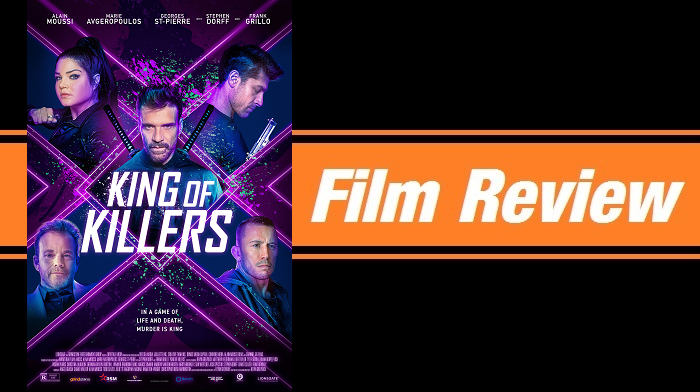
Actor, stuntman, martial artist, and fight coordinator Alain Moussi stars in “King of Killers”, a new action thriller based on the Darkstorm Comics Graphic Novel by Kevin Grevioux. The film marks the feature film directorial debut for Grevioux who is perhaps best known as the co-creator of the popular “Underworld” film series.

To his credit, Grevioux brings along some of the same stylish and violent action that helped energize the “Underworld” movies (both the good early ones and the not so good later ones). Unfortunately it’s the dressing around the action that brings “King of Killers” down. Some of it is due to the writing; some of it is due to the performances. Either way, Grevioux has a hard time selling us on anything other than the bloody headshots, brutal throat slashes, and nasty bone-breaks.

Image Courtesy of Lionsgate

Moussi plays Marcus Garan, a Chicago-based hitman working for his good friend, mentor, and connected middle-man Xane (Stephen Dorff). Marcus has earned the reputation of being a reliable “company man” who carries out his jobs quickly and efficiently. But he also has a much different life away from his job. He’s happily married to his wife Karla (Amy Groening) and together they have a precious daughter named Kimberly (Zoe Worn).

The opening 15 minutes or so offers an excruciating introduction to Marcus’ secret double life. We watch him carry out a hit with deadly precision, but there’s a silliness to it (intentional or not, I’m still not sure) that lessens the impact. Then you have the family stuff which amounts to little more than hokey sentimental mush meant to show the storybook perfect home life. Mercifully we don’t have to wait long before one secret life inevitability meets the other.

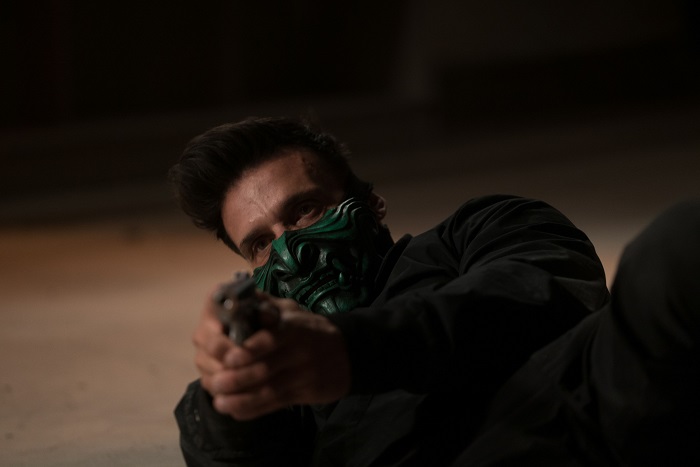
I won’t give away how, but the oblivious Karla is killed after Marcus ludicrously botches a last-minute job. Devastated, he steps away from contract killing to focus on his daughter. But this is an action movie so you know something has to draw him back into the game. In this case it’s his daughter’s out-of-the-blue heart illness and a timely offer of $10 million – just enough for her medical procedure. All he has to do is travel to Tokyo where he’ll be offered an exclusive contract to eliminate “the world’s greatest assassin”, Jorg Drakos (Frank Grillo).

Upon arriving Marcus learns that the contract has been offered by Drakos himself. Dubbed the King of Killers, Drakos has brought Marcus and six other best-of-the-best assassins from around the world for his own personal vanity competition. The game is to see who among his peers can navigate his trap-rigged high-rise and kill him before he kills them. Whoever succeeds will win the $10 million prize. But as Marcus and his competitors soon learn, the game is rigged.

Image Courtesy of Lionsgate

Grevioux’s competent direction gives the movie a fighting chance and it especially shines in the slick and often gruesome action sequences. It’s his screenplay that turns out to be the biggest liability. Cringy dialogue, shallow characters, gaping holes in logic. And it’s not helped by Moussi who gives it his all but simply can’t pull off what the movie needs from its lead. He especially struggles with selling the more emotional stuff, partly because of the material, but also because he tends to overact and often comes across as stiff and unconvincing.

The death knell comes in the ridiculous out-of-nowhere ending that offers a few cheap and unearned twists built for what looks like some kind of franchise ambition. You can see the movie grasping in the final 15 minutes and it leaves things in a ridiculously half-baked place. Again, it’s certainly ambitious, but it does nothing to earn our investment in what may or may not come next. “King of Killers” releases September 1st in select theaters and on VOD.

VERDICT – 2 STARS

REVIEW: “Kandahar” (2023)

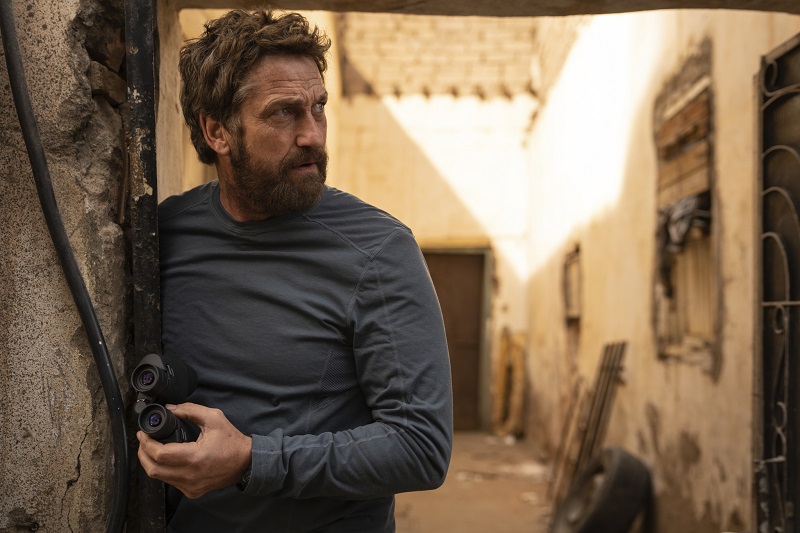
It had always been hard to know what to expect from a Gerard Butler movie. The very same guy who was so good in the crowdpleasing “300”, the unexpectedly great “Coriolanus”, and the captivating “The Vanishing” has also given us such misfires as “Playing for Keeps”, “Gods of Egypt”, and “Geostorm”. I genuinely like Butler and he’s an actor I root for. But for a long time it seemed like his stinkers were a lot more common than his good movies.

Yet in recent years Butler seems to have found a sweet spot. With last year’s “Last Seen Alive” being the lone exception, he has put out some quality genre entertainment with film’s like 2020’s “Greenland”, 2021’s “Cop Shop”, and especially “Plane” from earlier this year. Now you can add “Kandahar” to the list. This well made action thriller sees Butler re-teaming with director Ric Roman Waugh (the two last worked together on “Greenland”).

The story is written by Mitchell Lafortune, a former military intelligence officer who pulls from his own experiences of being deployed in Afghanistan. His script features a lot of moving parts and at times it can be hard keeping up with the various players, their alliances, and their allegiances. But Lafortune does a good job showing the region as a geopolitical powder keg. A place where ancient wars and modern interests clash in a number of violent and deadly ways. A place where peace almost seems like a pipe dream.

Image Courtesy of Open Road Films / Briarcliff Entertainment

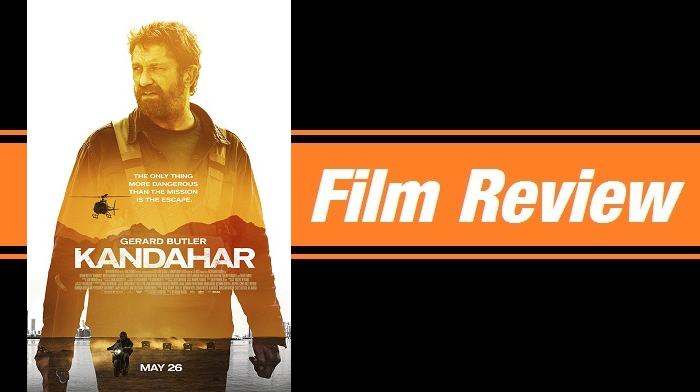
Butler plays Tom Harris, a deep cover CIA operative who we first meet in Qom, Iran. He and his mission partner, Oliver (Tom Rhys Harries) are posing as technicians hired by the Iranian government to work on telephone lines for better internet service. In reality they’re secretly working with the Pentagon to sabotage a nearby nuclear weapons facility. It’s the latest move in a shadow war being carried out by the U.S. as a way to circumvent their public ‘no boots on the ground’ policy. The nuclear facility is soon destroyed and Tom preps to head home.

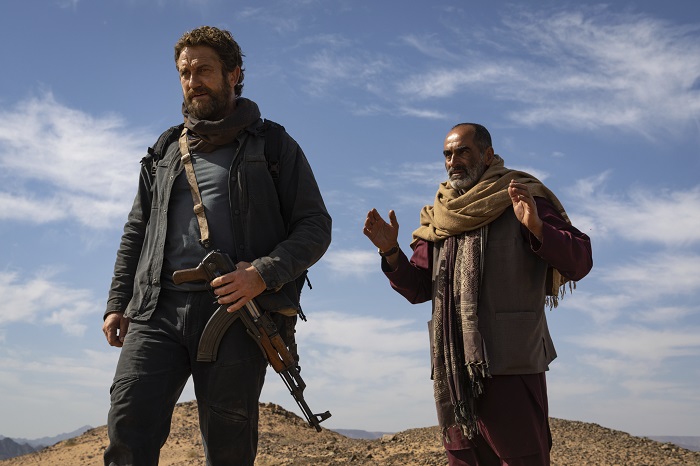
But rather than leaving, Tom is convinced by an embedded U.S. asset and friend named Roman (Travis Trimmel) to help with an “easy” three-day mission. Assisting Tom is an Afghan translator named Moe (Navid Negahban) who we learn has his own personal reasons for being in the region. But before they can even begin preparations everything falls apart.

An ambitious whisteblower working in Iran named Luna Cajai (Nina Toussaint-White) is desperate to blow the lid off the Pentagon’s covert operations in the Middle East. Following the nuclear site’s destruction she gets leaked intel exposing the U.S. involvement. In her rush to get her story to the airwaves, Luna gets sloppy. The Iranian government gets wind of her intel and take her into custody. Meanwhile the press recklessly runs with Luna’s story, blowing Tom and Moe’s cover.

Image Courtesy of Open Road Films / Briarcliff Entertainment

The bulk of the film’s runtime focuses on Tom and Moe’s race to reach their extraction point located at an old CIA base in Kandahar province. They have a limited time to get there and 400 miles to cover. But in between is territory crawling with Taliban forces and hostile warring militias. To make matters worse, Iranian intelligence agents led by Agent Farzad Asadi (Bahador Foladi) are hot on their trail. And Pakistan’s I.S.I. has hired a ruthless mercenary (Ali Fazal) to capture Tom first in hopes of selling him on the open market.

As you can tell there are a lot of pieces to put into place and we get plenty of table-setting in the first 30 minutes or so. As mentioned it’s not always easy to follow who’s with who, but the film always keeps your interest. Along the way Lafortune’s script attempts to reveal the humanity of the characters by showing glimpses of their family lives. It works better for some than it does others.

The majority of “Kandahar” was shot in Saudi Arabia which does a great job filling in for Afghanistan and Iraq. And while it isn’t the thrill-a-minute ride the trailer suggests, the action scenes we get are intense and exciting, especially in the riveting final third where things really ratchet up. As for Butler, he’s given a character who fits his strengths nicely – rugged and resolute yet sympathetic and even vulnerable at times. “Kandahar” let’s him convey each of those traits, all while offering a candid portrayal of a troubled part of the world and throwing in a little popcorn entertainment to boot. “Kandahar” opens in theaters this Friday.

VERDICT – 3.5 STARS

REVIEW: “K.G.F: Chapter 2” (2022)

On the heels of the successful “K.G.F: Chapter 1” and following a rather lengthy COVID-19 delay, writer-director Prashanth Neel delivered the second chapter of his two-part action-fueled crime saga. The highly anticipated sequel is the most expense Kannada-language film ever made and currently stands as the highest grossing Kannada-language movie of all-time. After finally seeing it, I can understand why.

Not only does Chapter 2 have a bigger budget, but it also has a bigger scope. Everything about it feels larger and the stakes are most certainly higher. But most importantly, the second chapter sticks to the same wild, over-the-top blueprint – high on style, heavy on action, and still driven by the powerhouse presence of its charisma-oozing star, Yash. And while Neel runs into some of the same problems as he did with the first film, they’re not nearly as pronounced this time around. He tightens up the storytelling and he does a better job with some of his characters – two slight beefs I had with Chapter 1.

If you remember, the first film was built around a veteran reporter and author, Anand Ingalagi (Anant Nag) being interviewed by television journalist Deepa Hegde (Malavika Avinash). After having his book banned by the Indian government, Anand comes to the television station to share his story which the Prime Minister (Raveena Tandon) is determined to erase. Chapter 2 uses that same framing device but with a twist.

After suffering a sudden stroke, Anand lies in intensive care unable to finish his story. While at the hospital, Deepa meets Anand’s son Vijayendra (Prakash Taj) who tells them his father was obsessed with the story of the Kolar Gold Fields (K.G.F.) and the rise to power of a renowned assassin named Rocky (Yash). Despite their troubled family history, Vijayendra insists that the rest of his father’s story be told. So he takes Deepa and her crew to his father’s library where they begin piecing together the second half of Anand’s tale.

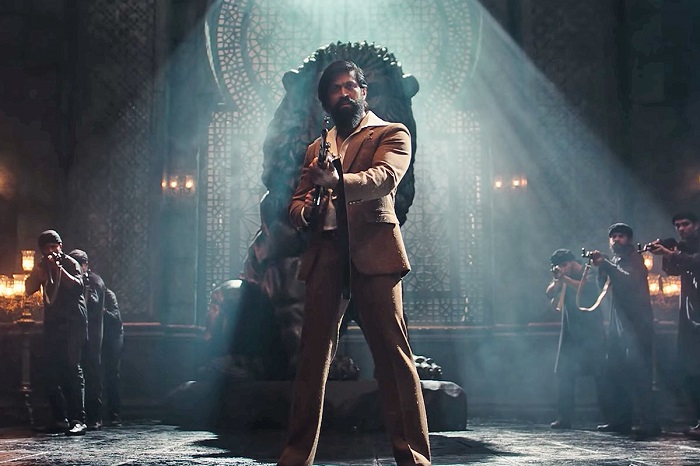
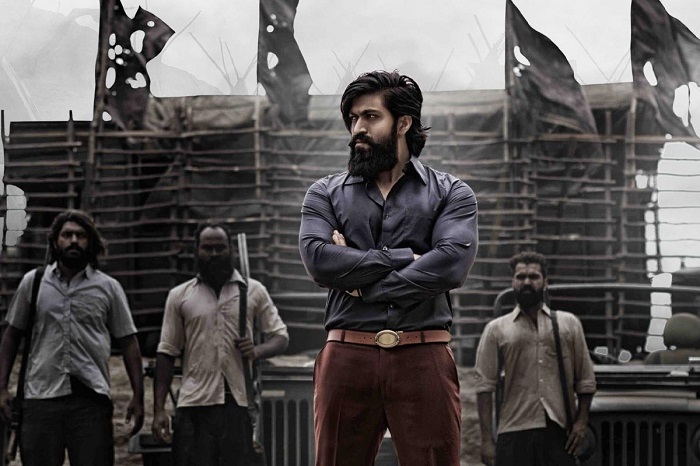
From there we shift to the story of Rocky who (after killing the ruthless Garuda in Chapter 1) has taken over as the new boss of the K.G.F. He now runs the most precious piece of land on earth, funneling gold through the black market and amassing enormous wealth. It’s all in keeping with a pledge he made to his ailing mother when he was a child. While on her deathbed, she makes Rocky pledge to one day become rich and powerful so that people would remember his name. It’s what drives his out-of-control hunger for more.

Despite having dirty hands, Rocky is loved by the miners and their families, winning their adoration by supplying them clothing and building them homes. While the adults praise his benevolence, the children herald him as a superhero. But there are forces on the outside who are unhappy with Rocky’s ascension. So he does what anyone would do in his situation – he builds an army to protect his empire.

Meanwhile, outside of the K.G.F. walls, the five crime bosses who hired Rocky in the first film now begin plotting against him. They don’t like than an outsider has disrupted their enterprise, and they’re not giving it up without a fight. At the same time, Rocky is branded “the biggest criminal in India” by the self-serving Prime Minister Ramika Sen who’s willing to use the full resources of the government to shut him down. But there’s a new player in the game; a violent wild card no one saw coming – Adheera (Sanjay Dutt), the brother of the ruthless kingpin Rocky killed in the first film.

As I’m sure you expect, all of these combustible elements lead to some insanely fun action sequences as Rocky defends his fortune from all sides. Yash’s unmatched (and often hilarious) bravado energizes the fight sequences and shootouts, and returning DP Bhuvan Gowda once again shoots him as a near mythological force of nature. It’s the same unique visual language from the first film, but with crisper editing and even more ambitious. That means we get action scenes that are bigger, crazier, and always stunning to look at. But not all the action involves fists, guns, or explosives. Yet even then, Rocky always seems to be one step ahead of his enemies.

One of my biggest gripes about the first film was its handling of Srinidhi Shetty’s character, Reena, Rocky’s alleged love interest. I say “alleged” because there was no warmth between them whatsoever. And Shetty was quickly pushed into the background and forgotten. She makes for a more interesting presence in Chapter 2 and has a pretty significant role to play in the second half. Reena still isn’t as fleshed out as I had hoped, but at least she finally feels like a part of the story.

“K.G.F: Chapter 2” embraces the best things from the first film while correcting some of its missteps. Together, the two films make for a delightfully cohesive pair. Neel uses our love for legend to tell his story the same way we often do when talking about our heroes – with as much imagination as certitude. This dance between myth and truth is a big part of makes these movies tick. Chapter 1 gave us a good taste of it. Chapter 2 took the concept and ran with it. “K.G.F: Chapter 2” is available to stream on Amazon Prime Video.

VERDICT – 4 STARS