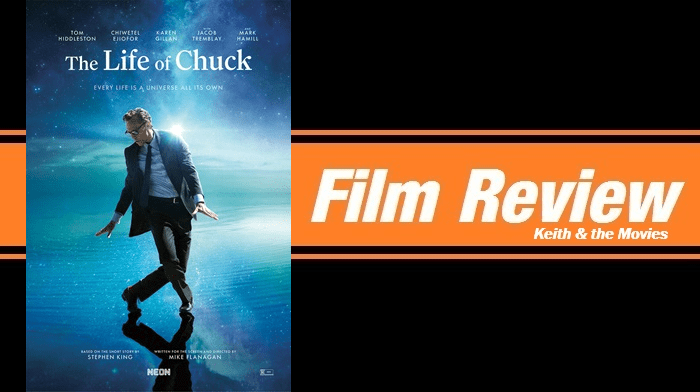
2025 saw writer-director-producer-editor Mike Flanagan taking on one of Stephen King’s more strikingly unique and surprisingly moving stories. “The Life of Chuck” was a previously unpublished novella from King that was finally released in a 2020 collection titled “If It Bleeds”. It told a peculiar yet engaging story that ended up in a much different place than where it began. The film follows that same course.
Flanagan passionately takes on the daunting task of adapting King’s story which is split into three acts. Each act is set at a key juncture on the film’s timeline. The tricky part comes in telling the three acts in reverse chronological order. It’s an approach that sounds unnecessary and even a little gimmicky at first. But Flanagan follows King’s lead, finding emotional purpose in the structure while posing a number of thoughtful questions along the way.
Nick Offerman’s narration ushers us through this existential treatise, starting with Act Three which is titled, “Thanks, Chuck”. It introduces us to an earth that is on the brink of destruction. The domino effect begins with news of a devastating earthquake in Northern California. We later hear of floods, sinkholes, volcanic eruptions, strange animal deaths, and even suicides. Shortly after, the entire world is knocked offline as the internet crashes. Television stations go off the air, mobile phone networks go down, and entire cities lose electricity.
We see most of the unfolding cataclysm through the eyes of a middle school teacher named Marty Anderson (Chiwetel Ejiofor) and his ex wife Felicia (Karen Gillan). Rather than making a spectacle of the disasters, Flanagan concentrates on the personal impact on Marty, Felicia, and a handful of people in their lives. No one knows what to expect, but they all have one thing in common. As they collectively brace for what’s to come, they all wonder who the heck is Charles Krantz – the bespectacled man plastered across billboards who’s being thanked “for 39 great years”.
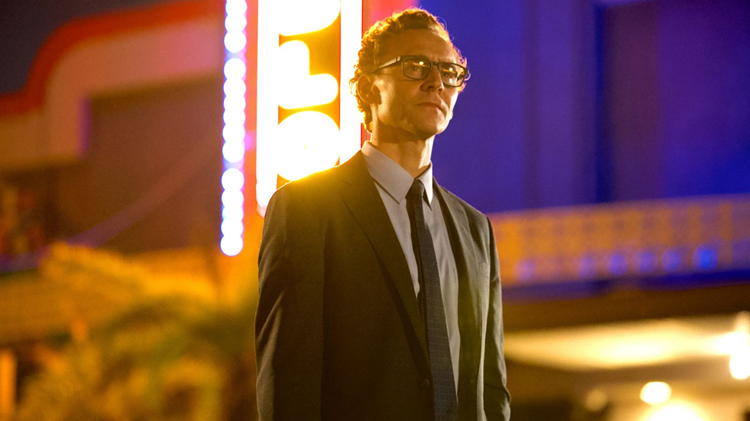
Act Two, titled “Buskers Forever”, transports us back in time nine months. It’s where we meet a mild-mannered accountant named Charles “Chuck” Krantz (Tom Hiddleston). He’s in town for a week-long banking conference but is sidetracked by the rhythms of a street drummer named Taylor (Taylor Gordon). Chuck breaks out in an impromptu dance and is joined by a heartbroken stranger named Janice (Annalise Basso) who was just dumped by her boyfriend of sixteen months.
This extended dance sequence is a dramatic shift from anything that came before it, and any connection to the previous act is vague in the moment. But its bursting with energy and pizzazz, all while showing an impressive new side of Flanagan. And by the time the end credits roll, the sequence’s heartfelt relationship with the movie’s central themes come more into focus.
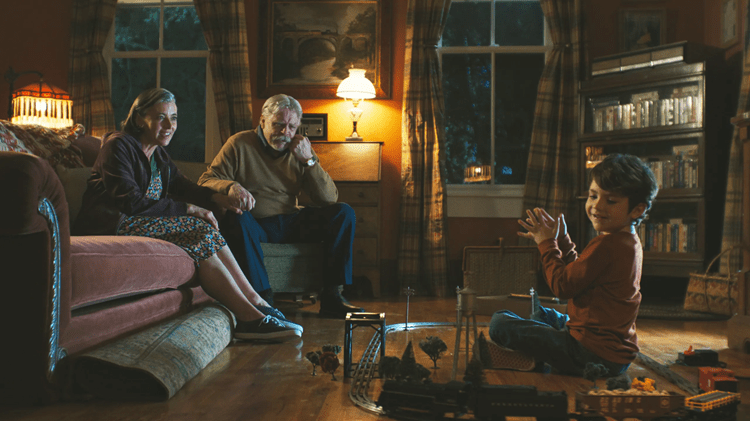
Act One, titled “I Contain Multitudes” takes us even further back in Chuck’s life. He was only 7 years old when his parents were killed in a car crash. As a result, young Chuck (played at different points by Benjamin Pajak and Jacob Tremblay) was raised by his loving grandparents, Albie (Mark Hamill) and Sarah (Mia Sara). We get some wonderful moments between Chuck and his grandmother who Sara plays with such maternal tenderness. There’s also a touch of mystery, especially regarding the mysterious cupola that sits perched atop of their old Victorian home.
By the end of Act One, you may be left with feelings of confusion and frustration. But as “The Life of Chuck” moves from one point to the next, the story begins to take shape. Its questions turn more insightful and its themes grow richer. As for the non-linear approach to storytelling, it may not be essential, but it does keep us more involved while allowing Flanagan to examine characters through several different lenses. Interestingly, none of the cast gets a ton of screen time. But the film is full of terrific performances that bring emotional truth to this curious, otherworldly story. All that’s missing is a Rod Serling introduction.
VERDICT – 4 STARS









 Keith & the Movies