REVIEW: “The Lesson” (2023)

(CLICK HERE to read my full review in the Arkansas Democrat-Gazette)

Richard E. Grant, Julie Delpy, and Daryl McCormack make for a tantalizing trio in the new thriller “The Lesson”, a film you can file in with the ever-growing number of movies dealing with the troubles and tragedies of the rich and famous. This focused and wily confection uses characters entrenched in their own misery to tell a story about pent-up pain, resentment, and dark family secrets. With its (mostly) single setting and relatively small cast, “The Lesson” plants us in a tightly structured environment with people whose poorly veiled dysfunction eventually reaches its breaking point.

Much of the film (an impressive feature debut for both director Alice Troughton and screenwriter Alex MacKeith) is shown from the perspective of Liam Sommers, a recent literature graduate and an aspiring writer. He’s played by McCormack who grabbed a lot of attention for his performance in last year’s “Good Luck to You, Leo Grande”. When not working as a tutor Liam spends his personal time writing away on his first novel. And then along comes the opportunity of a lifetime.
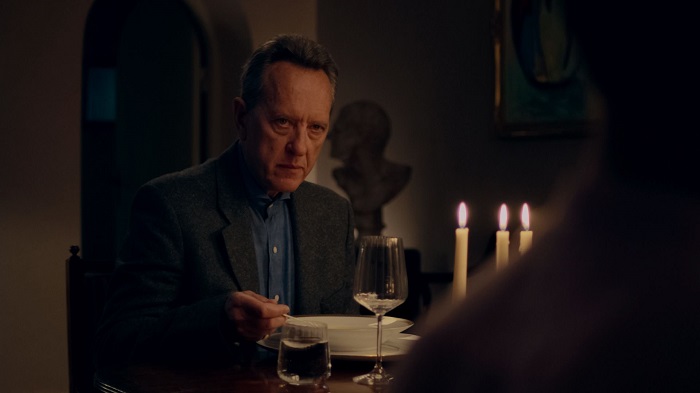
Image Courtesy of Bleecker Street

Liam is hired to be the live-in tutor for Bertie Sinclair (Stephen McMillan). Bertie happens to be the bratty son of J.M. Sinclair (Grant), a revered author and Liam’s literary idol. Grant is pitch-perfect playing a pompous egomaniac whose condescending smile can’t quite hide his ever-present feelings of intellectual superiority. His slithering smugness and feelings of self-importance seep through every look, gesture, and word Grant delivers. It’s truly a savory performance.

Delpy is also good as J.M.’s enigmatic wife Hélène. She’s the one who actually hired Liam and gets him set up once he arrives at their remote country estate. Hélène is hard to read. We learn she’s an art curator but otherwise she keeps her thoughts, emotions, and any possible secret agenda to herself. She’s aware of Liam’s adoration for her husband yet she still brought him in to help her moody son prepare for his upcoming Oxford entrance exams. “He has to get in,” she stresses in a deathly serious tone.

It doesn’t take long for Liam (and us) to notice the undercurrent of bitterness and contempt running through the Sinclair home. But Liam is a bit of a cipher himself, ingratiating himself with the Sinclairs (especially J.M.) while donning a kindly innocence and a sheepish smile. But he’s also sharp-eyed, closely watching his hosts and cataloging his observations on yellow Post-It notes carefully organized on his bedroom mirror.

So we’re left pretty much questioning everyone’s self-interests and motives. We’re treated to a series of awkward dinners and tense encounters that begin with a subtle dark comedy edge. But as the truths start to surface, especially the revelation that the Sinclairs had a son named Felix who died two years earlier, the proverbial plot thickens and the thriller elements take over.

Image Courtesy of Bleecker Street

As MacKeith’s sleek and savvy script uncoils within its crisp ‘prologue – three act – epilogue’ structure, Troughton shows good instincts in keeping things moving at a smart and steady pace. Meanwhile DP Anna Patarakina captures the beauty and austerity of the Sinclair manor in a way fitting of a place housing so much unpleasantness. And it’s all surrounded by Isobel Waller-Bridge’s mischievous score which ranges from playful to all-out ominous.

Interestingly nothing about “The Lesson” feels particularly new or fresh (in fact it immediately reminded me of a similar film from earlier this year called “The Tutor”). Yet there’s a hard to pinpoint draw to movies like this specifically when they’re done well. Troughton keeps us engaged throughout, using all the pieces she’s given to their fullest. And it’s hard not to love the cast led by a deliciously noxious Richard Grant. He alone is worth the cost of a ticket. “The Lesson” is out now in select theaters.

VERDICT – 3.5 STARS

RETRO REVIEW: “L.A. Confidential” (1997)

It’s tough being a fan of film noir in 2023 – a time when the genre (that’s not exactly a genre) has all but dried up. The influence of film noir is still seen and felt in some movies today. And occasionally we’ll get a new film that fits the somewhat established description of film noir (last year’s superb “Decision to Leave” being the most recent example) – they have a certain style; there’s an element of mystery; they have seedy settings; they’re led by cynical protagonists. But sadly, there’s just not that many of them.

While I enjoy the new neo-noirs that occasionally come down the movie pipeline, rewatching “L.A. Confidential” reminded me of how much I love it when a filmmaker embraces the form to the fullest. “L.A. Confidential” feels like a time capsule movie, both in its style of storytelling and filmmaking. It has most of the markings of the great classic noirs while also having the willingness to tinker with the formula, similar to a film like “Chinatown”. And while I wouldn’t put it on the same level as Polanski’s picture (few movies are), in many ways “L.A. Confidential” follows in the footsteps of that 1974 gem.

“L.A. Confidential” comes from director Curtis Hanson who works from an Oscar-winning screenplay he co-wrote with Brian Helgeland. Their story is based on James Ellroy’s 1990 neo-noir novel of the same name, the third book in his L.A. Quartet series. As it turns out, Ellroy’s work makes for prime movie material as Hanson would show in his smart, sinister, and sultry telling of an L.A. crime story – one rooted in violence, corruption, and betrayal.

Image Courtesy of Warner Bros.

The title is taken from a 1950’s gossip rag called Confidential founded by Robert Harrison. In the movie it’s represented as Hush-Hush magazine which is ran by the sleazy Sid Hudgens (Danny DeVito). He’s our opening narrator who introduces us to 1953 Los Angeles and the key players in the story. From there it all unfolds like a pulpy crime novel, but with so many cinematic flourishes that help vividly bring the characters and the setting to life.

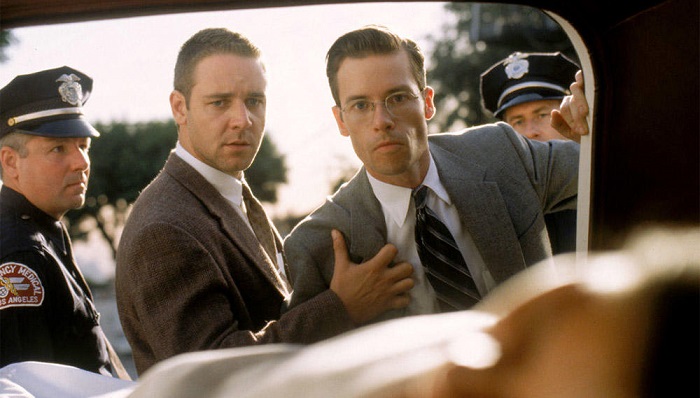
Anchored by a stellar cast, “L.A. Confidential” follows three very different LAPD officers navigating rampant mob violence and police corruption. Sergeant Edmund Exley (Guy Pearce) is an ambitious, by-the-book officer trying to live up to his late father’s good name on the force. An idealist at heart, Exley is determined to make a difference, even testifying against fellow officers and earning a promotion as a result. Needless to say, it doesn’t earn him many friends at his precinct.

Detective Wendell “Bud” White (Russell Crowe) is a plainclothes officer with an edge. He’s not afraid to rough up men who beat up women (a result of watching his own mother beaten to death by his father), and he has no reservations about strong-arming criminals. He also detests Exley for testifying against his partner, Dick Stensland (Graham Beckel) and getting him kicked off the force. There’s a palpable tension between the two that only intensifies.

Image Courtesy of Warner Bros.

And then there is Detective Jack Vincennes (Kevin Spacey), an officer in the narcotics division with an affection for the Hollywood spotlight. When not serving as an advisor on the television cop drama “Badge of Honor”, he takes money on the side from Sid Hudgens who tips him off to various celebrity mischief. Vincennes then lets Sid photograph the high-profile arrests for his magazine. Quite the racket.

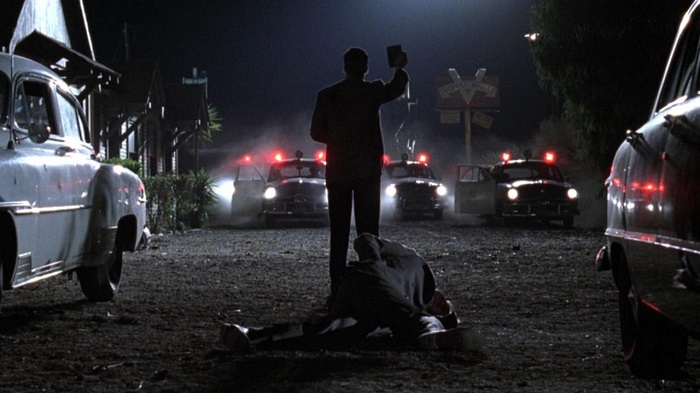
The three cops are ultimately drawn together by a grisly multiple murder at a coffee shop called The Nite Owl. Among the dead is Dick Stensland. Three young African-American hoods are arrested and charged and the case is quickly closed. But the truth behind the crime is hidden behind a haze of blackmail, scandal, and corruption. As Hanson and Hedgeland’s script thickens, we’re treated to a fittingly brutal and sordid tale. One that takes a well-traveled genre and infuses it with new life. One that drags us deep into the mire of the “City of Angels”. One that keeps us hooked with every crooked twist and every shady double-cross.

It may be 25-years-old, but “L.A. Confidential” still holds up remarkably well today. And despite playing to a well-traveled genre (which I still love to this day), Curtis Hanson gave film noir a jolt that can still be felt today. The flawless ensemble (I haven’t even mentioned the terrific Kim Basinger, James Cromwell, and David Strathairn), the masterfully written story, the vibrant yet gritty vision of 1950s LA – most everything clicks in this fittingly cynical and undeniably seductive period crime thriller that still maintains its style and sizzle.

VERDICT – 4.5 STARS

REVIEW: “The Locksmith” (2023)

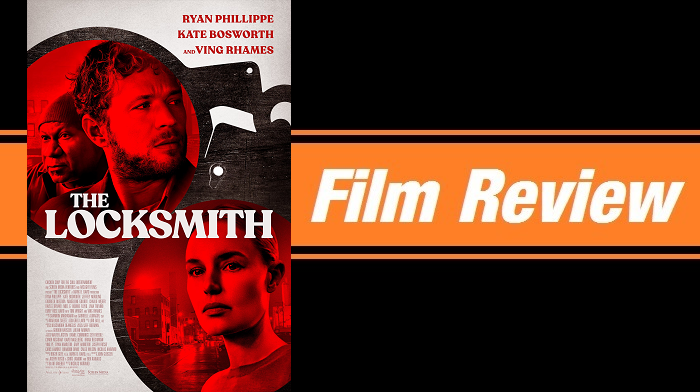
Ryan Phillippe has a brand new film called “The Locksmith” although there’s a good chance you didn’t know about it. That’s because the modest crime thriller came with barely a whisper of promotion. It’s actually a fairly entertaining time-burner that has no trouble holding your attention. At the same time, it turns out to be too straightforward for its own good. There are no unexpected twists and no real surprises of any kind.

Call it noir-lite, “The Locksmith” marks the directorial debut for Nicolas Harvard. A total of four writers penned the script, John Glosser, Joe Russo, Ben Kabialis, and Chris LaMont, from a story conceived by Blair Kroeber. In addition to Phillippe, the film features supporting turns from an intriguing cast that includes Ving Rhames, Kate Bosworth, and Jeffrey Nordling.

In a brief prologue we meet Phillippe’s Miller Graham, a master safecracker struggling to provide for his wife Beth (Bosworth) and their young daughter. He convinces his equally struggling best friend Kevin (George Akram) to help him on a job that’s orchestrated by Detective Zwick (Nordling), a corrupt vice cop who’s pretty high up on the department’s food chain. But things quickly go south. Zwick guns down Kevin to cover his tracks, and Miller is left to take the fall.

Miller keeps his mouth shut and serves ten years in prison. After being released, he’s given a handyman job by his loyal and wise friend, Frank (Rhames). But his main focus is on mending his relationship with his now ex-wife Beth and being a father to his now 12-year-old daughter Lindsay (Madeleine Guilbot). But things get complicated when he’s approached by April (Gabriela Quezada), Kevin’s kid sister. She’s gotten in too deep with a wealthy and powerful real estate developer, Garrett Field (Charlie Weber) who secretly runs an extensive prostitution and sex-trafficking ring. She wants out and she needs Miller’s help.

Image Courtesy of Screen Media

While Frank warns him not to get involved, a guilt-ridden Miller feels its his responsibility to help his late friend’s sister. So despite being hassled by Zwick and his two goons (for reasons I’m still not sure of), Miller and April hatch a plan to steel a bag of money from Garrett. It goes about as well as expected, putting Miller, his friends, and his family in danger.

Nothing that happens from there will catch anyone by surprise. Yet it’s clear that Harvard and the team of writers genuinely care for their characters. Both them and their relationships (as conventional as they may be) are given the time and attention they need. There’s an earnestness between Miller’s efforts to win back Beth’s trust and her willingness to give him a chance. There’s a sweetness to his relationship with Lindsay. There’s a sincerity in his friendship with the mentor-like Frank.

As for the villains, they’re all pretty one-dimensional. Garrett as a typical rich baddy who’s more of a plot device than an interesting or memorable character. Zwick is a different story. In many ways he’s your prototypical corrupt cop without a single redeemable characteristic or shade of nuance. But Nordling is so deliciously vile and despicable that he makes the character fun and steadily entertaining.

But “The Locksmith” tries to incorporate a little too much into its straight-line crime story – safe-cracking, assault, robbery, murder, prostitution, kidnapping, sex-trafficking, police corruption, plus some. There are also some pretty noticeable lapses in logic. Take April’s belief that it’ll take $500,000 (!!!) just to “start a new life“. Or Miller’s incredibly bad plan to steal the cash. Or Zwick’s irrational obsession and harassment of Miller.

As for Phillippe, it seems he has found a home in these B-movie thrillers. But to his credit there’s never a sense he’s slumming it or just cashing a check. He’s a sturdy lead who finds ways to make each of his characters interesting. It’s the same with “The Locksmith”. Phillippe earns our empathy and keeps us engaged, regardless of how dense Miller can seem and how head-scratching his choices can be. “The Locksmith” is now showing in select theaters and on VOD.

VERDICT – 2.5 STARS

REVIEW: “Last Seen Alive” (2022)

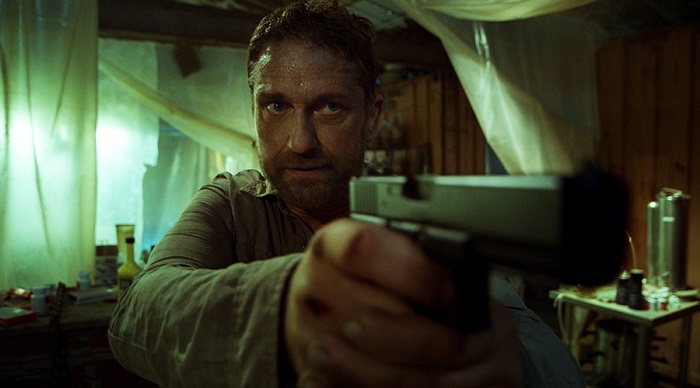
Will and Lisa Spann are going through a tough patch. Their marriage is on the rocks, and Lisa has asked for some time apart so she can sort things out and clear her head. Will wants to forgive and move on (there are hints of infidelity), but Lisa needs some space. So he’s driving her to her parents home where she plans on staying a few weeks until she can figure out what to do next. With only a few miles left, Will stops at a convenient store for gas. And so begins “Last Seen Alive”, the new(ish) yet not-so-new action thriller starring Gerard Butler.

Directed by Brian Goodman from a screenplay by Marc Frydman, “Last Seen Alive” is a case of a genuinely interesting setup that goes nowhere. And while it’s essentially an action thriller, the action is scarce and the thrills are nonexistent. So we’re left waiting for a movie that grabs our attention in its first fifteen minutes to take us someplace…anyplace. It never does. It never develops or maintains any tension. It can’t make the characters worth our investment. And the stakes never feel as high as they should.

Image Courtesy of Voltage Pictures

At the convenient store, Lisa (Jaimie Alexander) goes inside while Will (Butler) fills up their tank. After waiting a bit he goes in to check on her but can’t find her anywhere. He checks the bathrooms, asks the unhelpful clerk (Michael Irby), and even make circles outside the building asking motorists and truckers if anyone has seen her. Convinced something is terribly wrong, he calls the police. Detective Paterson (Russell Hornsby) eventually responds and begins one of the most perfunctory and scattershot investigations ever put on screen.

Of course we predictably run through the whole ‘Will as a suspect’ angle. And with this being a Gerard Butler movie, you kinda know at some point he’s going to take matters into his own hands. But as Will’s actions and reactions get more bizarre (unintentionally, mind you), it gets harder and harder to buy into him or the story. And no amount of super-seriousness from Butler can change that. Meanwhile Hornsby (who’s a really good actor) is handcuffed by an aggressively generic cop character – a carbon copy of the kind we’ve seen in countless movies through the years.

While nobody seems to be phoning it in, no one is able to bring any energy to “Last Seen Alive” (which is something it desperately needs). It turns out to be one of those maddening movies where people routinely do dumb things, don’t ask the obvious questions, and seem completely oblivious to common sense. And with no compelling characters or exciting action to pick up the slack, the movie sits stuck in neutral and basically squanders a promising start. “Last Seen Alive” is now streaming on VOD and Netflix.

VERDICT – 2 STARS

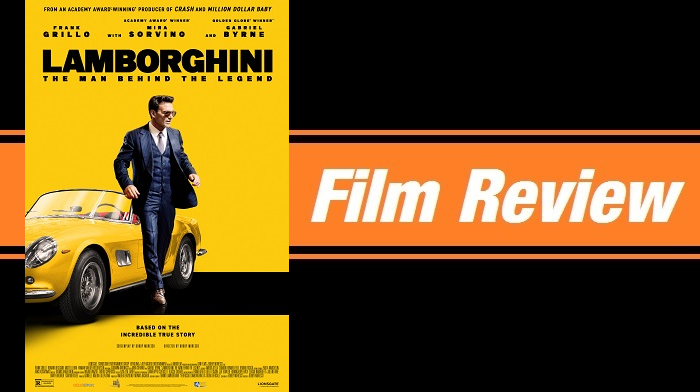
REVIEW: “Lamborghini: The Man Behind the Legend” (2022)

I’ve always been a fan of Frank Grillo and have often found him to be underrated as an actor. A lot of it may have to do with his choices of roles, some of which aren’t especially good at showing off his talent. That’s why it’s nice to see him get a meaty lead spot in a movie like “Lamborghini: The Man Behind the Legend” – one that doesn’t rely so heavily on Grillo’s bankable tough-guy persona. And to no surprise, Grillo is quite good playing luxury car maker and namesake Ferruccio Lamborghini. If only the film itself wasn’t so disappointingly flavorless.

Sadly, “Lamborghini” turns out to be a frustratingly bare-bones biopic that never gets out of neutral. What we end up getting is more of sketch than a full-fledged portrait of the man behind the world famous automobiles. The film hits on the most basic points in Ferruccio Lamborghini’s life, many of which are easy to predict mainly because they stick so close to the tried-and-true biopic formula. As a result, the film does nothing that makes Lamborghini’s story stand out against the countless other celebrity biographies that have came down the movie pipeline.

Image Courtesy of Lionsgate

The film opens in 1982 at the Lamborghini vineyard in Umbria, Italy, where an aged Ferruccio Lamborghini (Grillo) sits alone, looking down at a model of a blue Lamborghini Countach. He begins to recall his past life, including a seemingly friendly street race he had with rival Enzo Ferrari (a woefully underused Gabriel Byrne) that never amounts to much. I’m still not sure whether the older Ferruccio’s reflection is meant to be a framing device. It’s too vaguely presented to know for sure. Either way, writer-director Robert Moresco quickly ushers us back in time to kick off his story.

In Cento, Italy shortly after World War II had ended, a younger Ferruccio Lamborghini (played by Romano Reggiani) returns home from the war. His first order of business is to surprise his girl Clelia (Hannah van der Westhuysen). Then he heads home to see his father and brothers. We learn Ferruccio was a mechanic during the war and learned all about engines. Now he wants to take that knowledge to make and sell tractors, much to the chagrin of his farming father. But Ferruccio’s ambition and thirst for success can’t be quenched.

From there the movie chronicles Ferruccio’s push to turn his dream into a reality. He and his best friend Matteo (Matteo Leoni) go to work building building their first engine and designing their first tractor. Soon they’re starting up their own company. But as Ferruccio’s ambition turns to obsession, he finds himself alienating those closest to him.

Image Courtesy of Lionsgate

Later, Moresco hops ahead to 1963 when Ferruccio (now played by Grillo) runs his own successful tractor company. But he wants more. After being turned down and insulted by Ferrari, Ferruccio decides to get into the luxury car game. He puts together a crack team of engineers and designers who tell him his vision in impossible. But Ferruccio’s zeal is infectious and soon he’s showing the Lamborghini 350 GT at the prestigious Geneva Auto Show. But his desire for greatness keeps driving him, resulting in him becoming one of the most renowned car makers in the world. It also sees him once again alienating those who have loved and stood by him.

I’m sure it all sounds familiar to anyone who has seen a high-profile biopic and for good reason. There is a dramatic turn or two that feels meaningfully personal, and we get a few stretches of car talk that gearheads will probably appreciate. Also, Moresco is more than capable with the camera, capturing some beautiful imagery with a vibrant palette. But the movie is missing what it needs most – personality. It has an interesting subject with an equally interesting life to explore. Sadly, we only get glances of what made Ferruccio Lamborghini a compelling figure.

VERDICT – 2 STARS

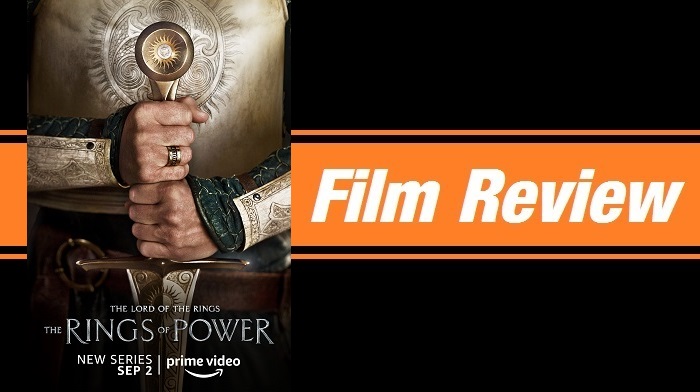
REVIEW: “The Lord of the Rings: The Rings of Power” Ep. 1 & 2

It’s safe to say Amazon is pretty serious about “The Lord of the Rings”. The mega-company forked out $250 million for the television rights to the J.R.R. Tolkien classic following the successes of two Peter Jackson-helmed movie trilogies. Even more, Amazon has committed $1 BILLION to their new Prime Video streaming series, “The Lord of the Rings: The Rings of Power”. In unison with the Tolkien Estate, Amazon is eyeing five seasons and around fifty episodes to tell their massive story set thousands of years before Tolkien’s “The Hobbit”.

Regardless of the amount of money spent, venturing back into Middle-Earth, the place that Peter Jackson envisioned and visualized so well, was going to be a massive undertaking. And while I don’t hide my preference of the movie trilogy format over a streaming series, Amazon and their showrunners J. D. Payne and Patrick McKay presented a pretty compelling vision of their own. That didn’t remove every question/concern I had, but it did encourage me with its potential.

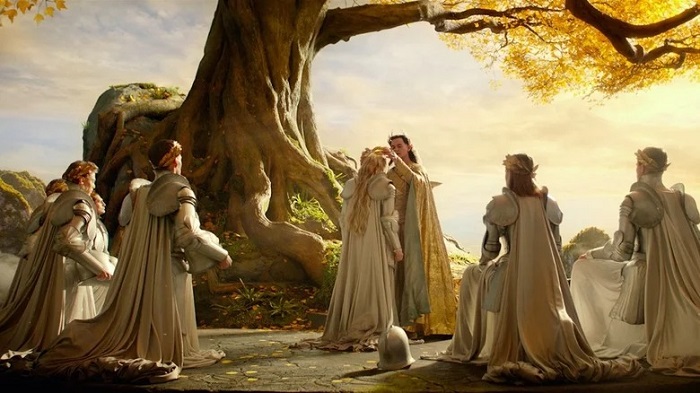
Based on Tolkien’s “The Lord of the Rings” novel and its appendices, “The Rings of Power” sets out to cover all of the key points of Middle-Earth’s Second Age (basically the period and events summarized in the five-minute prologue in “The Lord of the Rings: The Fellowship of the Ring”). Episodes 1 and 2 are all about introducing (and in some cases reintroducing) us to Tolkien’s vast and sprawling world. There are plenty of new places and even more new faces. But we also get some familiar locations and a few names fans know by heart.

Image Courtesy of Amazon Studios

Episodes 1 and 2 are directed by J. A. Bayona whose first two feature films were the dramatically different yet equally well made “The Orphanage” (2007) and “The Impossible” (2012). He later made “Jurassic World: Fallen Kingdom” (but let’s not talk about that one). With “The Rings of Power”, Bayona seems to have a good grasp of his critical task. It’s up to him to lay the enormous groundwork for what’s to come, and do it in a way that not only captivates audiences but leaves them hungry for more. Even more challenging, Bayona has to evoke those feelings of returning to Middle-Earth, recapturing the magic of the Jackson movies while presenting it a fresh new way. In a nutshell, he succeeds.

The eight-episode first season kicks off with two shows dedicated to table-setting and world-building, not unlike the first half of “The Fellowship of the Ring”. The big difference here is the series is much broader in scope meaning more characters and more time spent introducing them. Bayona and the team of writers do a good job putting faces and voices to these characters who undoubtedly will have pivotal roles to play going forward. But with so many players to ground in the world, we get a lot less action. Some might call it slow, and it occasionally is. But it’s also crucial to locking in our investment.

Among the many inhabitants of Middle-Earth we meet are a young Galadriel (played by Cate Blanchett in the Jackson movies and by a fabulous Morfydd Clark here). She’s an Elven warrior, driven by the death of her brother to root out a gathering evil that she believes is on the horizon. There’s also Elrond, a High Elven architect and politician (played by Hugo Weaving in the movies and in the series by Robert Aramayo). This young Elrond is optimistic and outgoing – much different than the cynical and world-weary leader he would become.

We also meet Durin IV (Owain Arthur), Dwarven prince of Moria (known here as the flourishing city of Khazad-dûm). And Arondir (Ismael Cruz Córdova), a Silvan Elf and soldier who has a forbidden love for Bronwyn (Nazanin Boniadi), a human healer in a small Southlands village. Then there’s also the adventurous young Nori Brandyfoot (Markella Kavenagh), a Harfoot who are this show’s hobbits. These are just some of the characters we meet in the first phase of this journey.

Image Courtesy of Amazon Studios

The performances are uniformly excellent with everyone feeling at home in their uniquely defined regions of the world. Much of Middle-Earth is still settling itself in the aftermath of war, and that weighs heavier on some races than others. This alone allows for a variety of stories to be told and an interesting range of performances. It’ll be fun watching these different experiences change and eventually meld together as this rebirth of evil once again plunges Middle-Earth into darkness.

Back to the world itself, everything looks magnificent, including the stunning production design, the exquisite costumes, the breathtaking locations, and the spectacular special-effects. You can tell Amazon tapped into the talent pool behind the Jackson movies, bringing back several people who helped to so vividly bring Middle-Earth to life. There’s still a long way to go with the series, but if it keeps this level of visual quality, we’re in for a treat.

A fundamental part of what made “The Lord of the Rings” movies so special was the sheer wonder of the creative vision combined with how beautifully it flowed from start to finish. My biggest concern with “The Rings of Power” is in its ability to maintain that same creative cohesion. Can such an massive story with so many moving parts and even more directors flow as gracefully as the movies did before it? Time will tell, but I love what they’ve given us so far. The first two episodes of “The Rings of Power” are a visual feast, and the character-building helps lay a solid foundation for what’s to come. I don’t know how it will all come together, but I can’t wait to find out.

“The Lord of the Rings: The Rings of Power” is streaming now on Prime Video.

VERDICT – 4 STARS