
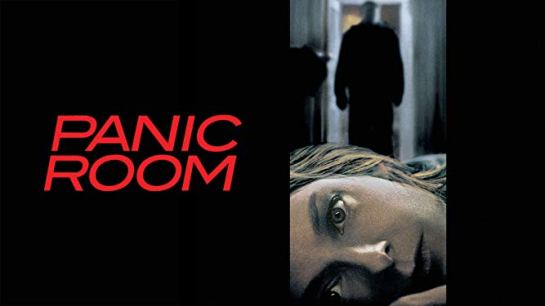
By the time David Fincher made “Panic Room” he had already earned a name for himself as an audacious filmmaker. He had “Se7en” and “Fight Club” under his belt, both bucking the mainstream in their own grimly unique ways. “Panic Room” saw him working in more conventional thriller territory. But as you would expect from any Fincher project, he gives you more to chew on than you would first expect.
The film opens with a snooty real estate agent (a hilariously snide Ian Buchanan) showing off an swanky upper west side property to recently divorced Meg (Jodie Foster) and her eleven-year-old daughter Sarah (Kristen Stewart). The four-story brownstone is fresh on the market following the death of its previous owner – an elderly millionaire hermit who happened to install an impenetrable bunker upstairs. The panic room is made of reinforced concrete and steel, features a state-of-the-art security system with closed-circuit television, and comes with its own private phone line.
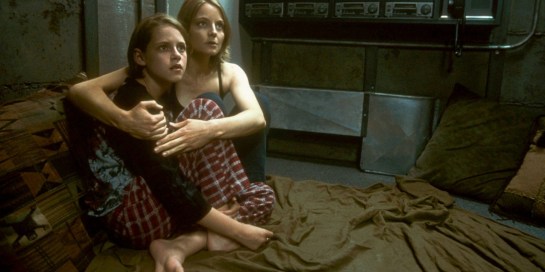
PHOTO: Columbia Pictures
Despite being a little creeped out by the panic room, Meg takes the house. But wouldn’t you know it, their first night at their new place turns into a nightmare. Three men begin skulking around eventually finding their way into the house. A corn-rowed Jared Leto, a blue collar thief with a conscience Forest Whitaker, and a mysterious masked Dwight Yoakam form the inept trio who are surprised to find the new owners at home.
Meg hears the intruders prompting her to grab Sarah and escape into the panic room just in the nick of time. Turns out the burglars are there for $3 million the previous owner has stashed away in his house. And guess where the cash is hidden…yep, the panic room. What follows is an entertaining game of cat-and-mouse between a mother protecting her child and a pack of dysfunctional hooligans.
David Koepp’s screenplay is pretty basic on the surface but thematically he does some intriguing things. Most of them have to do with the Meg character. Nicole Kidman was initially cast but forced to leave due to a knee injury she suffered while filming “Moulin Rouge”. Kidman’s portrayal was set to be more powerless and vulnerable. After casting Foster the character was rewritten to be stronger, quick-thinking, and more resourceful. The new combination of feminine grit and maternal instincts allowed for a fresh female representation and Foster was fully committed.
Hayden Panettiere was originally set to play Sarah but dropped out and was replaced by a 12 year-old Kristen Stewart. It was only Stewart’s second film role and she leaves quite a mark. Not only does she have a great mother/daughter chemistry with Foster, but she brings spirit and personality to what could have been another stock kid character. It’s a deeply grounded performance and she’s a real attention-getter especially in some of her later scenes.

PHOTO: Columbia Pictures
But it’s also true that Fincher isn’t trying to do anything too profound. He’s still very much making a genre film and you can see him enjoying the familiar structures that come with it. He seems to have the most fun with his camera. Playing within the confines of a single setting, Fincher’s camera (with the help of the occasional digital effect) seemingly utilizes every inch of the mammoth sized house. We know the layout pretty well thanks to the sly early scene with the real estate guy. Next is watching the director use the place in a variety of cool and crazy ways.
“Panic Room” ends up being a genuinely thrilling nailbiter, skillfully laid out both visually and plot-wise. Led by strong performances top to bottom and a clear-eyed understanding of what it aims to be, “Panic Room” is a straight genre movie but with enough Fincher flourishes to give it an extra kick. It will never be considered among the filmmaker’s most beloved pictures, but it’s great seeing it on his resume. And personally speaking, I actually like it better than “Fight Club”, but that’s a fight for another day.
















 Keith & the Movies