
REVIEW: “Presence” (2025)

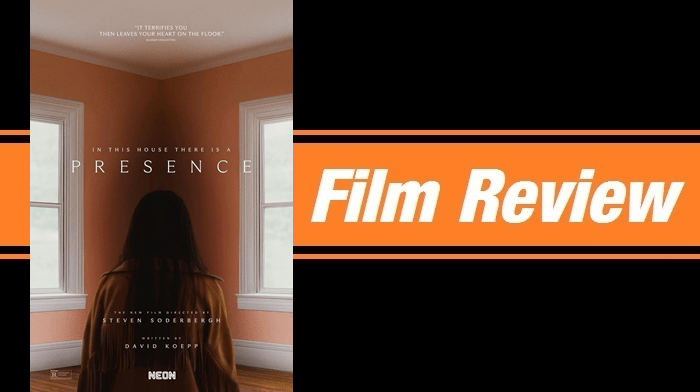
Steven Soderbergh dips his toes into the horror genre (at least on paper) with his latest film “Presence”. The always intriguing Soderbergh directs, shoots, and edits this visually striking and atmospheric supernatural feature that had its premiere a year ago at Sundance. It took a while, but after some cryptic and creepy teases, Neon has finally brought it to theaters. And like so many others, it’s a movie that should be viewed on the big screen.

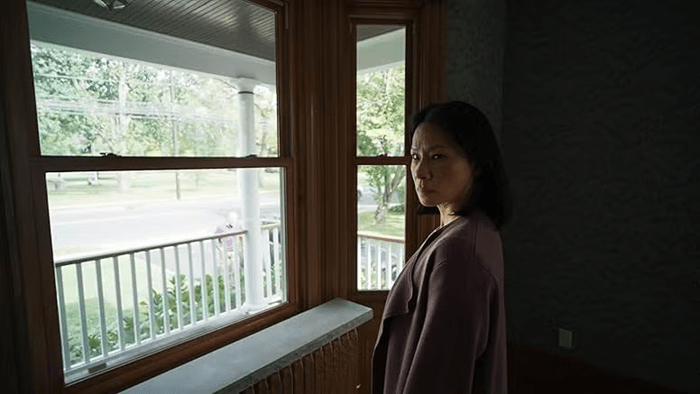
But despite those chilling teases, scares in “Presence” are hard to come by. That’s because from its fascinating opening to its abrupt finish, the movie is much more akin to a sad dysfunctional family drama than a creepy supernatural chiller. In fact, it’s hard to even categorize it as ‘horror’. It just all happens to play out from the point-of-view of a ghost who is sharing a house with its new owners.

Image Courtesy of NEON

Screenwriter David Koepp’s story is built upon a really compelling premise. Unfortunately it never blossoms into something bigger than its concept. Visually it’s a stunner, sharpened by Soderbergh’s keen instincts and firm control. And several of its thematic through-lines strike a heartbreaking chord as we watch this family crumble through a set of fresh eyes. Things click more into place when approaching the film from this angle. But its advertising doesn’t do it any favors. And in this case it’s best to ignore the trailers altogether.

The entirety of “Presence” consists of brief scenes filmed from the ghost’s first-person perspective. They mostly consist of static shots and tracking shots, each ending with a quick cut to black. On the surface it may seem like a showy technique. But as we get in tune with the movie’s disconsolate rhythm, Soderbergh’s methods make more and more sense.

After a hypnotic tracking shot gives us a tour of the suburban house, were introduced to the Payne family – parents, Rebecca (Lucy Liu) and Chris (Chris Sullivan) and their teenage kids, Tyler (Eddy Maday) and Chloe (Callina Liang). At first the four seem to make up a strong and fully functioning family. But through the ghost’s eavesdropping and spying we quickly learn that each member has their own issues, some of which threaten to tear them apart.

For example, Rebecca is an aggressively take-charge woman who does a poor job hiding her favoritism towards her son. Chris is overly reticent and passive to the point that his frustration is eating him up inside. Tyler is spoiled and self-centered with a hateful side that comes out more as the movie progresses. Chloe is quiet and withdrawn, still emotionally reeling from the recent death of her best friend. Together their burdens build domestic tensions which slowly take their toll on the household.

Image Courtesy of NEON

As for the ghost, it’s little more than a lens, only occasionally showing emotion and letting its presence be known. Where did it come from? Why is it there? Does it have a connection to this family? Minus a couple of speculations, these questions largely go unanswered. This leaves you wondering if the ghost exists solely to give Soderbergh a reason to play around with his camera.

But again, “Presence” is far more interested in the family. Soderbergh’s near experimental filmmaking leaves too many gaps in their story and the characters never get the room they need to fully form. The final ‘twist’ gets even less time to play out which ends the movie on a fairly awkward note. Yet there’s something alluring in Soderbergh’s heady yet delicate approach. At times he draws us so far in so deep that we nearly forget the ghost conceit. The film is at its best in those moments. It’s only when you think about the film that its flaws become most evident.

VERDICT – 2.5 STARS
REVIEW: “The Prosecutor” (2025)

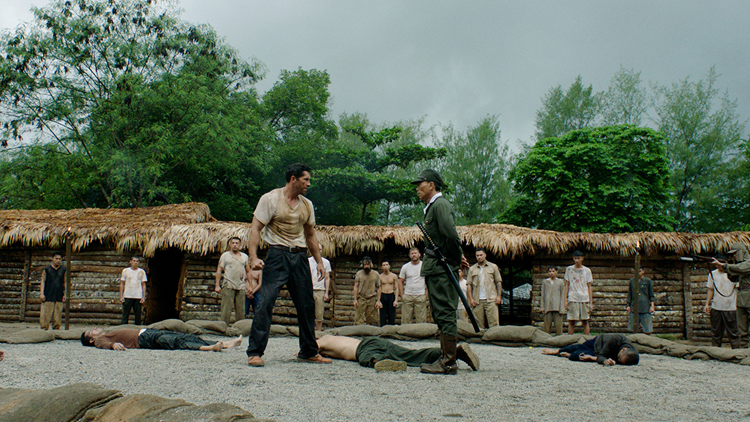
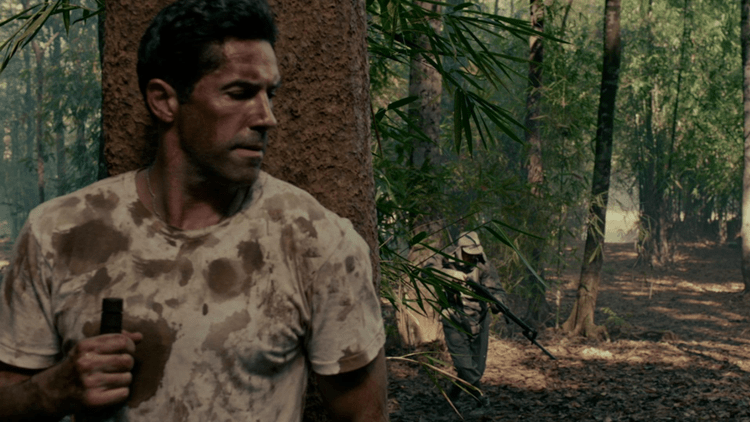
The renowned Donnie Yen directs, co-produces, and stars in “The Prosecutor” – the 80th film from the 61-year-old legend of Hong Kong action cinema. Of course fans know that Yen has frequently crossed over to the United States, starring in such movies as “Blade II”, “Rogue One: A Star Wars Story”, and most recently “John Wick: Chapter 4”. Yet in many ways “The Prosecutor” sees Yen at home in his comfort zone, adding another sturdy action-thriller to his impressive résumé.

“The Prosecutor” sprinkles in ingredients from an assortment of genres. It’s as much a legal thriller as it is a crime thriller. It has a healthy amount of courtroom drama while also featuring the signature action scenes that have been highlights of Yen’s remarkable 40-plus year career. At the same time, the movie takes a critical look at such weighty subjects as class, corruption, and the justice system to go along with its impressive visual panache.

Image Courtesy of Well Go USA

Reteaming with screenwriter Edmond Wong from the “IP Man” quadrilogy, “The Prosecutor” takes its inspiration from a true case. Yen plays Fok Chi-ho, a police officer transferred from the force after a case goes bad. He’s assigned to the Department of Justice where he’s to serve as a prosecutor under the leadership of the seasoned Bao Ding (Kent Cheng).

Fok’s first case involves a young man named Ma Ka-Kit (Fung Ho Yeung Mason) who is accused of drug trafficking after unknowingly lending his address to a local syndicate that uses parcels to import cocaine and contraband. Fok suspects the young man was manipulated and doesn’t deserve to be prosecuted. But Kit’s defense attorneys, Au Pak Man (Julian Cheung Chi Yu) and Lee Sze-Man (Shirley Chan) convince their client to plead guilty, assuring him it will result in a reduced sentence and barely any jail time.

But it quickly becomes evident that Kit’s attorneys aren’t giving him a fair shake. That prompts Fok to begin his own investigation which puts him at odds with both the defense and his own team of prosecutors. Even more, after the syndicate’s involvement becomes clear, Fok has to fall back on his old police training after both he and Kit become the gang’s chief targets.

Image Courtesy of Well Go USA

While the story employs a few common courtroom tropes, the script is smart enough to keep us engaged. And it’s helped by the performances from Yen and the really strong supporting cast. We get lots of legal wrangling and verbal jostling both in the courtroom and behind the scenes as Fok’s colleagues push for him to forget his righteous crusade and fall in line with the system. It all adds several nice layers to the drama.

And of course there’s the action. While maybe not as plentiful as in many other films from Yen’s catalog, “The Prosecutor” still treats us to the some lights-out action scenes, from the blistering warehouse shootout to open the film to a ferocious subway fight sequence near the end. All are thrillingly choreographed and sharp reminders that even in his sixties Donnie Yen remains a star of the genre. And it’s that star-power that drives “The Prosecutor”, even when it tries to juggle a little too much.

VERDICT – 3.5 STARS

REVIEW: “Past Lives” (2023)

It took me a while but I finally had the chance to catch up with what has been one of the most talked about movies of the year. “Past Lives” from writer-director Celine Song (in her feature film debut) premiered at the 2023 Sundance Film Festival and has since received widespread acclaim. It’s easy to see why. Not only does Song weave together a sophisticated and bittersweet story, she also directs it like someone well beyond their filmmaking years.

“Past Lives” is an endearing drama with a surprising thematic heft to it. Song’s story poses a number of thoughtful questions, among them being the often pondered but rarely answerable “What If”. The film is infused with a heartfelt longing for what might have been while also acknowledging fate and its unpredictable nature.

Image Courtesy of A24

At the same time Song doesn’t neglect the tender romance at the center of her story – one that mostly goes unspoken. The deep feelings of the two main characters are undeniable, no matter that one person tries to suppress them while the other person won’t quite pursue them. The characters often talk around their feelings yet the two lead performances, especially from the superb Greta Lee, tell us all we need to know.

Nora (Lee) and Hae Sung (Teo Yoo) were childhood friends while growing up in Seoul, South Korea. They had a sweet relationship that looked to be blossoming into something more. But then Nora’s artistic parents up and moved their family to Canada. She seems indifferent about the move at the time but Hae Sung takes it hard. That was 24 years earlier.

Twelve years pass and Nora is a writer and playwright living in Manhattan. Hau Sung is still in Seoul where he is enrolled in engineering school. Through the magic of the internet the two reconnect. It’s a bit awkward at first, but the two are quickly reacquainted and soon they are talking to each other everyday via video calls. They want to meet up but neither have the time to make the trip overseas. So Nora decides she wants to take a break in order to focus on her upcoming writers retreat.

Suffice it to say their “break” turns into another twelve years. During that time Hau Sung did a stint in the military, later met a girl, and eventually broke up with her. Meanwhile Nora met, fell in love with, and married a fellow writer named Arthur (John Magaro). Hau Sung travels to New York for “a vacation” (or so he tells his friends), but he’s really goes to reconnect (again) with Nora. But things have changed dramatically since they last spoke. Have they missed their window? Did they ever really have a window?

Image Courtesy of A24

Of course the two reunite and I won’t dare spoil how it goes. To her great credit, Song shows remarkable maturity and control by never letting her movie veer into cliche. She maintains a steady authenticity in how she defines her characters and their complicated relationship. The charming chemistry between Lee and Yoo is essential. Lee is the standout, always working at just the right temperature in what is an emotionally complex role. It’s one of my favorite performances of the year.

Equally impressive is Song’s smart and assured work with the camera. Aided by her DP Shabier Kirchner, she fills her film with evocative city imagery, first in Seoul and later New York City. It’s shot in beautiful 35mm film with no extravagant flourishes to speak of (a couple of great tracking shots excluded). It’s hard not to be enamored with the meticulous compositions she spreads across three distinct periods of time. It’s yet another testament to Celine Song’s strong instincts as a filmmaker, and her debut feature marks the emergence of an exciting new cinematic voice. I can’t wait to see what she does next.

VERDICT – 4.5 STARS

REVIEW: “Poor Things” (2023)

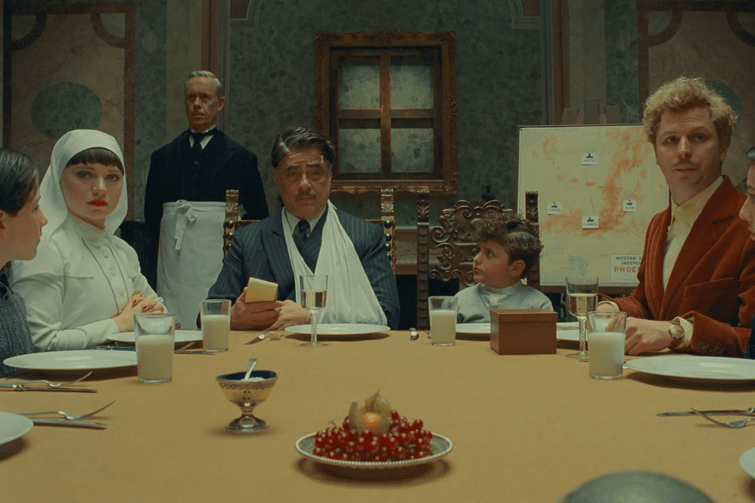
For me Yorgos Lanthimos is something like a taste I have yet to acquire. His latest, “Poor Things” won’t do much to change that. If anything it only reinforces my feelings towards a filmmaker with extraordinary talent, but whose cinematic self-obsessions often wring the meaning out of the movies he makes. Never before has that been more true than with “Poor Things”, yet another self-satisfying exercise where indulgence and excess masquerades as daring and subversive.

Working from a head-scratching screenplay by Tony McNamara, Lanthimos wastes no time plunging us deep into his bizarre world. It’s one that visually lets him stretch his creative self as far as he ever has. The early scenes are stunning, shot in crisply detailed black-and-white and full of wacky off-kilter imagery. Some of it is incredibly creative; some of it is downright funny (a bulldog with a goose’s head???). The production design is exquisite, shifting from Victorian elegance with a dash of steampunk to the more glaring artifice of elaborate studio stage creations. DP Robbie Ryan and production designers Shona Heath and James Price are the film’s biggest assets.

But as is too often the case, Lanthimos tends to get carried away. In “Poor Things” some of his visual flourishes have particular purposes specifically it terms of perspective. Others are done repeatedly for no discernible reason whatsoever. Lanthimos’ penchant for immoderation extends to his near gluttonous delight in pushing the envelope. Here we see an almost childlike preoccupation with body horror and gratuitous sex, most of which comes across as more attention-hungry and narcissistic.

Image Courtesy of Searchlight Pictures

Set in a time that mixes the past with the otherworldly, “Poor Things” spins a Frankensteinesque yarn. In London, a scar-faced mad scientist named Dr. Godwin Baxter (the always refreshing Willem Dafoe) secretly retrieves the dead body of a pregnant woman who committed suicide. In a rather macabre experiment (I’ll spare you the details), Godwin reanimates the corpse and names her Bella (Emma Stone). Bella’s toddler mind and adult body have yet to synchronize, but her intelligence is increasing at a rapid rate which leads to several of the film’s funnier absurdities.

In need of help Godwin hires one of his medical students, the meek and demure Max McCandles (Ramy Youssef) as his assistant. Max’s job is to observe and meticulously document Bella’s progress. It requires following her around with pencil and notepad, collecting data such as nutritional intake and growth of vocabulary. Max, a starstruck fan of Godwin, doesn’t fully understand Bella. He’s first told she has a brain injury but quickly learns the morbid truth.

With little explanation why, Max soon becomes infatuated with Bella, eventually making a pact with Godwin to marry her. There’s so much that could have been said here about the insidious nature of controlling men, both father figures and suitors. But Lanthimos is fine with alluding to it. Instead he’s much more interested in introducing Bella to sex. And its sex that immediately becomes a focal point for Lanthimos. It fuels much of his storytelling. And it both shapes and defines the film’s warped idea of freedom, agency, and empowerment.

This is best seen with the sudden appearance of a lawyer named Duncan Wedderburn (Mark Ruffalo). He’s a sniveling lecherous cad who pops up and then two scenes later is whisking Bella away on a debauchery-filled trip around the world. It’s here that the story’s intents are both clarified and undermined. What’s meant to be a coming-of-age tale of liberation and self-discovery is more of a shallow impression of womanhood marked by the director’s obsession with his own batty and bawdy style. So much so that it prompted a woman who watched with me to deem it “insulting“.

Image Courtesy of Searchlight Pictures

Though being touted as bold and courageous, Stone’s scenes of pure brilliance (and there are several) are diminished by Lanthimos who too often turns her into sexual fodder for his camera. There are countless scenes where she’s made into little more than a spectacle for the male gaze – scenes where she’s put into one graphic sexual situation after another, all in the misleading name of freedom and discovery. Lanthimos gets so caught up in leering at Stone that he sabotages the messages he’s trying to promote.

There are so many potent issues that “Poor Things” could have confronted. There’s so much that could have been said about misogyny, patriarchy, societal expectations, and the female experience. Instead it shallowly skims over such things, investing more into its director’s unbridled lust for shock and showmanship. Somewhere within this intemperate backfire are the pieces for a really good movie – one that doesn’t see female empowerment and liberation through such a narrow lens.

For a while it’s easy to get caught up in the visual artistry, the extravagant staging, and the smattering of good laughs. In many ways the film is a technical marvel, and some of the gags are laugh-out-loud hilarious. But once you see what’s underneath the silly and shiny veneer, the frustrating reality of what this could have been sets in. “Poor Things” hits select theaters December 8th.

VERDICT – 2 STARS

REVIEW: “The Promised Land” (2023)

The ever magnetic Mads Mikkelsen delivers yet another awards worthy turn in “The Promised Land”, a Danish historical drama based on Ida Jessen’s book “The Captain and Ann Barbara”. Directed and co-written by Nikolaj Arcel, “The Promised Land” is the kind of sweeping period epic that doesn’t come around much these days. There’s a classical form to its storytelling yet its sturdy framework allows Arcel to push a few boundaries.

Arcel and his co-writer Anders Thomas Jensen set their story in 18th century Denmark where a proud war veteran, Captain Ludvig Kahlen (Mikkelsen) has returned home after 25 years of military service which included fighting in the Silesian Wars. Ludvig is a patriotic yet ambitious man whose love for country is only outdone by his desire to be recognized by it. Though left to live in a crowded poorhouse for vets, his desire is to gain the attention of the king and be granted status among the society’s elite. And he has a plan to do it.

In order to get things rolling Ludvig will need to do some persuading. He presents his plan to the king’s royal cabinet and seeks their permission to establish a colony in the treacherous heath of Jutland. It’s a vast and forbidding part of the country noted for the brutal elements, barren soil, and violent outlaws who terrorize those who dare venture into it.

Image Courtesy of Magnolia Pictures

Though considered untamable, Ludvig is convinced he can earn the favor of his king by building the first heath settlement. He even agrees to finance it with his meager captain’s pension. All he wants in return is “a noble title, along with an estate manor and servants.” The rulers agree (for their own self-serving reasons) and soon Ludvig is setting out to stake his claim.

After finding a patch of land, Ludvig goes looking for workers to help him get up and running. But finding laborers willing to risk the heath is no easy task. Among the few he gathers is a young couple, Johannes (Morten Hee Andersen) and his wife Ann Barbara (Amanda Collin) who we learn have been on the run from a cruel land baron. They’ve remained hidden thanks to a good-hearted young priest named Anton (Gustav Lindh) and now head out into the wild with Ludvig.

The ragtag group’s presence in the heath catches the attention of Frederik De Schinkel (Simon Bennebjerg), a rich and merciless nobleman who has declared the land his own. De Schinkel first tries intimidation and later coercion. But the steadfast Ludvig stands his ground. “It’s the king’s land. I work for the king.” This sets in motion the film’s fierce central conflict that quickly intensifies from posturing to all-out brutality.

Image Courtesy of Magnolia Pictures

From the very outset Arcel captures time and setting with impressive period detail. But it’s once we’re thrust into the heath that the film’s visuals are magnified. The harshness of the land is exquisitely realized through DP Rasmus Videbæk’s camera. But he also captures beauty in the stark rugged landscapes. Even more, Arcel and Videbæk often use the camera to paint striking visual contrasts between Ludvig’s arduous life on the heath and De Schinkel’s lavish excesses. Much like Ludvig’s lofty dreams of privilege juxtaposed with his much different reality.

Among the most compelling aspects of the story is Ludvig’s early delusions of grandeur. Despite the meagerness of his accommodations, Ludvig is stern and demanding, as if he’s living a life of nobility in his mind. He insists that his food be served a certain way and cooked to his strict specifications. He even names his new homestead King’s House, obviously named out of his loyalty to his king but perhaps also a reflection of his own blind ambition.

But reality can be a sobering thing. For Ludvig it comes at the hands of the very elites he has longed to be a part of. There’s also the addition of an abandoned child named Anmai Mus (Melina Hagberg) who adds some unexpected emotional layers to the story. Through it all Mikkelsen maintains a captivating presence. No one does steely and stoic like the 58-year-old Dane. And few can say as much through an ice cold, granite-hard stare. Arcel knows what he has in his star and uses him as an anchor for what is one of the year’s best films.

VERDICT – 4.5 STARS

REVIEW: “Pet Sematary: Bloodlines” (2023)

I’m not sure how, but the “Pet Sematary” franchise keeps rising from the dead (cheap and obvious pun intended). The latest installment is “Pet Sematary: Bloodlines”, a Paramount+ original movie directed and co-written by Lindsey Anderson Beer. Ever so loosely based on Stephen King’s 1983 novel, “Bloodlines” serves as a prequel to the underwhelming 2019 series reboot. But much like its predecessor, this mostly lifeless effort fails to justify its existence.

For those unfamiliar with the premise, deep in the forest near the small town of Ludlow, Maine there exists ancient tribal burial grounds with a very malevolent power. It can bring the dead and buried back to life although not in the same state as they were before death. With “Bloodlines” Beer and her co-writer Jeff Buhler step back in time to tell a story set in 1969 where members from the founding families of Ludlow have managed to keep the existence of the sinister burial grounds secret.

Image Courtesy of Paramount+

Fresh out of high school, Jud Crandall (Jackson White) and his girlfriend Norma (Natalie Alyn Lind) are ready to leave behind their hometown of Ludlow and head to Michigan where they plan to join the Peace Corps. Now astute Pet Sematary fans (assuming passionate Pet Sematary fans exist) will remember Fred Gwynne playing an older Jud in the original 1989 movie while John Lithgow played him in the remake three decades later. It’s a cool idea for a story but it never really goes beyond that.

Meanwhile a Ludlow local Bill Baterman (David Duchovny) gets the tragic news that his son Timmy (Jack Mulhern) has been killed fighting in Vietnam. In one of the movie’s many wild moves, Timmy’s body is transported back to Ludlow where his heartbroken father secretly buries him in the demonic patch of earth, somehow without the townsfolk knowing. Needless to say Timmy is resurrected but with a uncontrollable appetite for human blood. And just like that the curse of the not-so-sleepy New England town is once again unleashed.

Jud notices something different about his old friend Timmy since he “returned” from the war (that’s the story his father is telling). But as the truth is revealed through one violent and extremely gory attack after another, Jud and his classmate Manny (Forrest Goodluck) are forced to face off against a reanimated and seemingly possessed Timmy. Along the way they learn of the founding families and the curse they’ve tried to keep hidden for generations.

Image Courtesy of Paramount+

In addition to Duchovny, the film also stars Henry Thomas (“E.T.”) as Jud’s cryptic father Dan. And it features and subsequently wastes the great Pam Grier. All three would have made for more compelling protagonists than their younger counterparts yet all get back-burnered, especially Grier who barely gets any screen time. I don’t know, maybe it’s for the better. Even the more prominent characters ring hollow and fail to register dramatically or emotionally.

At this juncture in Pet Sematary history the similarities with King’s original work seem only surface level. Beer does muster a few unexpectedly gory moments which horror fans should enjoy. And the film deserves credit for at least attempting to do something new with the franchise’s mythology. But it’s hard to get onboard when everything else in “Bloodlines” feels so shallow and pointless. And despite its efforts, nothing in this latest entry adds the kind of new energy this franchise desperately needs. “Pet Sematary: Bloodlines” is now streaming on Paramount+.

VERDICT – 2 STARS