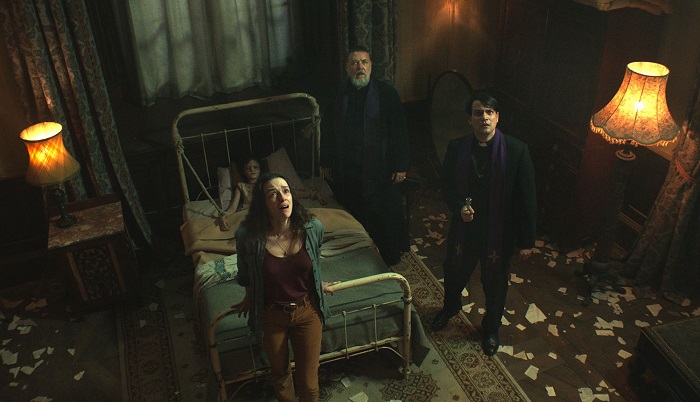
RETRO REVIEW: “Piranha” (1978)

1978’s “Piranha” was one of many low budget B-movies that happily rode the massive success of Steven Spielberg’s “Jaws”. Released only one month after “Jaws 2”, the Joe Dante directed and co-edited “Piranha” did well at the box office despite its mixed reception from critics (the legendary Gene Siskel and Roger Ebert were notoriously brutal in their critiques). Yet over time the film has grown into a genuine cult classic.

“Piranha” is best described as a horror-black comedy with a small dash of satire thrown in for good measure. Dante directs John Sayles’ script with his tongue firmly in cheek. But it’s not so glaringly obvious as to make this a full-blown spoof. There’s just enough seriousness to add some genuine tension to what is a pretty silly story. Better yet, Dante shows a real love for genre filmmaking and there’s some impressive B-movie craftsmanship in this undeniable yet wildly entertaining “Jaws” knockoff.

Image Courtesy of New World Pictures

The movie begins with two teen hikers sneaking into an old abandoned fish hatchery. After slipping through a fence with a big No Trespassing sign the two geniuses decide to go skinny-dipping in a treated pond. Unfortunately for them this isn’t an abandoned hatchery. It’s actually an unmarked secret test site ran by the U.S. military. And in the pond are schools of ravenous genetically-altered piranha who make a quick lunch out of the dimwitted divers.

Soon after, a scatterbrained skiptracer named Maggie McKeown (Heather Menzies) is sent to locate the missing teens who were last seen near Lost River Lake. Her first stop is at the house of the down-on-his-luck and hard-drinking Paul Grogan (Bradford Dillman) who reluctantly agrees to guide her around the area. While investigating the old hatchery they find evidence that the teens had been there. In a hilarious mishap, they attempt to drain the pond to look for bodies but inadvertently let the piranha loose in the nearby river. Oops.

Maggie and Paul are confronted by a skittery scientist named Dr. Robert Hoak (Kevin McCarthy) who warns them of what they’ve unleashed. He tells them about “Operation Razor-Teeth” (I still laugh every time I say it), a government sanctioned secret program that genetically enhanced the piranha, turning them into ferocious man-eating weapons. And now they’re loose in the river heading downstream towards a children’s summer camp and the bustling Lost River Resort.

As our two protagonists race to warn the potential human fish food of what’s coming, we’re treated to several fun nods, especially to Spielberg’s classic. We also get countless funny lines and some even funnier characters (Paul Bartel’s pompous camp counselor Mr. Dumont instantly comes to mind). Then you have these amusing little Dante touches scattered throughout the movie. Like the crudely animated stop-motion lizard creature that’s hiding in Dr. Hoskins lab. We see it in one scene and then never again. It’s weird, but I love that Dante takes those crazy swings.
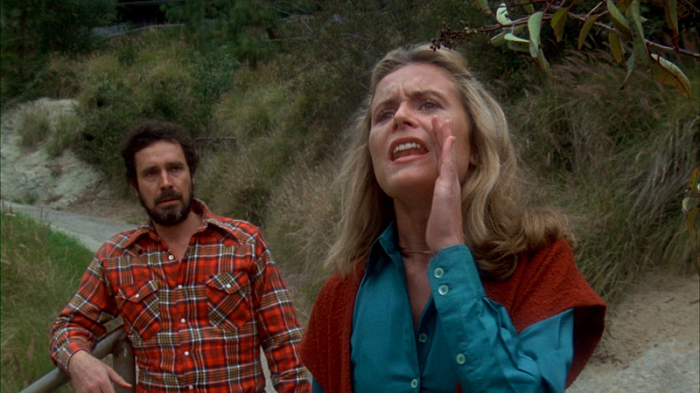
Image Courtesy of New World Pictures

But what’s most surprising are the unexpected flashes of humanity that often come at the most unexpected times and from the most unexpected people. Several specific scenes showing the real human depth of emotion have stuck with me. I don’t want to oversell it – “Piranha” is still very much a genre film with a keen awareness of what it is. But you may be surprised at its human pulse.

“Piranha” has its flaws, many of which are related to its minimal budget and resources. But that also highlights another of the film’s strengths – Joe Dante’s ability to do much with little, whether its in his storytelling or the special effects (his brilliantly edited piranha attacks are delightfully fierce and at times bloody terrifying). Ultimately Dante is the star and his personality seeps from ever pore of the movie. From his snarky jabs at the military and political apparatuses to silly flourishes that seem to come from out of the blue, Dante’s fingerprints are everywhere.

VERDICT – 3.5 STARS

REVIEW: “The Pod Generation” (2023)

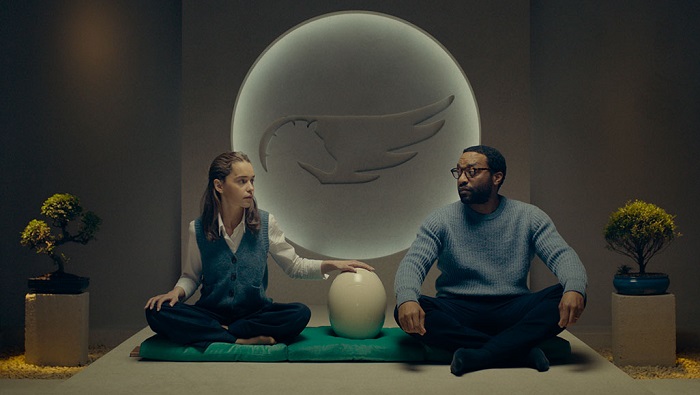
Sophie Barthes returns to the director’s chair with “The Pod Generation”, her first feature film since 2014’s “Madame Bovary”. This kinda wacky, oddly alluring, and slyly funny sci-fi satire sees Emilia Clarke and Chiwetel Ejiofor (both very good) playing a married couple looking to start a family in a dystopian society marked by its dehumanization and artificiality.

In our current day when dependence on technology has never been higher and something as simple as human connection is quickly becoming a foreign concept, “The Pod Generation” makes for a timely movie. The not-so-distant future that Barthes envisions is a world where nature has become a commodity and society has been severed from any tangible connection to it. People rely on artificial intelligence in nearly every facet of their lives. It runs many of their homes, doing everything from fixing their breakfast to measuring their serotonin levels and gauging their “bliss index”. Even human psychiatrists have been replaced by A.I. therapists.

Image Courtesy of Vertical

Nowhere is this unhealthy disconnect more evident than in the area having children. While some still practice the archaic ritual of a natural childbirth, most go to companies that specialize in having your baby for you. They claim to be the answer to the declining birth rate which they blame on inconvenience. “Let us do the heavy lifting while you enjoy your babies.”

Enter Rachel (Clarke), a middle-aged businesswoman working for a large firm who just acquired such a company. It’s called the Womb Center (that’s 1-800-WOMB for those interested in a tour) and it is highly esteemed in its field. For the most part Rachel has bought into the tech-driven world of her day unlike her husband Alvy (Ejiofor), a botanist who spends much of his time growing plants in their apartment and lamenting their world’s detachment from nature.

At the aggressive urging of her boss, Rachel visits the Womb Center and schedules a tour without telling Alvy. They both want to have a child and he’s thinking natural birth. But she’s leaning the other way especially after her boss’ more self-serving recommendation. They ultimately decide to use the Womb Center which ends up taking their marriage in a number of unexpected directions as they face the convenient ups and more concerning downs of having a custom-made baby.

Image Courtesy of Vertical

Barthes has a lot of fun with her concept and her movie turns out to be a lot funnier than I expected. She pulls some good laughs from the sheer absurdity of we see and hear. Yet there is a not-so-subtle warning throughout that is worth listening to. Not everything done in the name of “progress” is for our good especially if we’re trading in the very essence of our humanity. Losing our identities, trying to manufacture happiness, sacrificing our individualism for convenience – just some of the thoughts that came to mind as I watched.

Unfortunately the movie loses its way a bit in the last act and ends without ever really satisfying the interests it raises in us along the way. I appreciated the hint of optimism we get in its final scenes, but was left wondering about the movie’s convictions. Still, Barthes poses a number of thought-provoking questions and has a lot of fun playing around in her cool futuristic sandbox. The movie looks great and the performances from Clarke and Ejiofor are key to centering us in the wacky world their characters inhabit. If only the movie a little more bite. “The Pod Generation” hits theaters August 11th.

VERDICT – 3 STARS

REVIEW: “Prisoner’s Daughter” (2023)

After premiering at last year’s Toronto International Film Festival, director Catherine Hardwicke’s film “Prisoner’s Daughter” is finally getting its proper release. The rather straightforwardly titled drama is written by Mark Bacci who puts together a touching yet routinely formulaic story. Yet he crafts characters who are easy to invest in largely because of the two terrific performances from Kate Beckinsale and Brian Cox.

“Prisoner’s Daughter” is a nice return for Hardwicke whose earlier 2023 film “Mafia Mamma” didn’t exactly hit its marks. Here she explores a number of familiar themes yet they’re ones rooted in real-life circumstances. It explores shattered relationships, forgiveness, and second chances in a way that won’t catch anyone by surprise. Still the sincerity that Hardwicke and her cast bring out of these characters forms the backbone of what is a heartwarming family drama.

Image Courtesy of Vertical

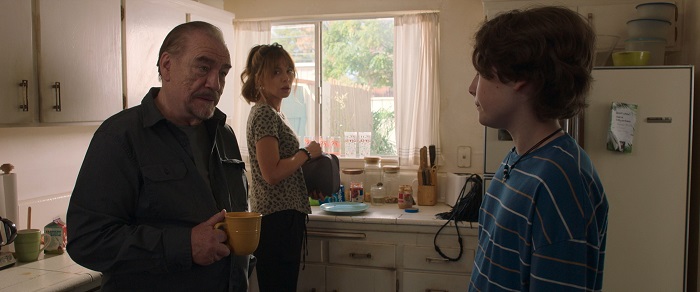
Cox plays Max MacLeary, a well respected inmate in a Las Vegas prison who is diagnosed with terminal pancreatic cancer while serving his sentence. His doctor gives him four maybe five months to live. Elsewhere his estranged daughter Maxine (Beckinsale) struggles to support her whip-smart twelve-year-old son Ezra. She works long hours at several low-paying jobs and still can’t afford her son’s epilepsy medication. To make matters worse, her deadbeat drug-addicted ex Tyler (Tyson Ritter) keeps showing up and causing trouble.

Max is surprised when the prison’s sympathetic warden informs him of an opportunity. He can leave prison and spend his remaining days under house arrest. But there’s one significant catch – his daughter must agree to let him live with her. At first Maxine wants no part of it. She hasn’t spoken to her father in twelve years and the wounds from their turbulent past are still deep. But due to her desperate need of money, she agrees so long as he pays rent and covers his own expenses.

This sets up the family dynamic that sits at the core of the “Prisoner’s Daughter”. Its overall trajectory is pretty obvious and (again) not much about it will catch you by surprise. The only real suspense comes in the last 15 minutes where the film takes a clever yet not especially cathartic turn. Still we remain engaged thanks to Beckinsale and Cox who create and develop an organic and compelling central relationship through performances that feel rooted in the real world.

Image Courtesy of Vertical

There are a few more touches that I enjoyed. For example I always enjoy seeing Ernie Hudson. Here he plays Max’s old friend who mentors and trains young boxers at his downtown gym. I also appreciated how Hardwicke tells her story while (mostly) steering clear of schmaltz.

Overall “Prisoner’s Daughter” may not do enough to set itself apart from the multitude of other redemption and reconciliation movies out there. But it gets by on the heartfelt chemistry of Kate Beckinsale and Brian Cox. They take a fairly routine arc and infuse it with a welcoming emotional heft that keeps us invested even if we have a good idea of where their story is going to end up. “Prisoner’s Daughter” releases in select theaters on June 30th.

VERDICT – 3 STARS

REVIEW: “Peter Pan and Wendy” (2023)

There wasn’t anything that had me itching for a new Peter Pan movie. I’ve never been a big fan of his story and haven’t really connected with the various movie adaptations we’ve gotten over the years. But then I heard David Lowery was directing a new Peter Pan movie and my curiosity kicked in. Suddenly I found myself interested in seeing yet another version of the J. M. Barrie children’s classic.

Lowery is a fascinating director who has strikingly unique movies like “A Ghost Story” and “The Green Knight” to his credit. Yet interestingly this isn’t his first collaboration with Disney. He also made 2016’s charming live-action adaptation “Pete’s Dragon”. With “Peter Pan and Wendy” Lowery sticks pretty close to the source material, updating in a few places while expanding in some others. It’s certainly a well made movie with Lowery once again showing his knack for visual storytelling. Yet I can’t help but ask, did we really need another Peter Pan movie?

Image Courtesy of Walt Disney Pictures

I pose that question because there isn’t a lot in “Peter Pan and Wendy” that we haven’t seen before. There’s clearly passion in Lowery’s direction and in his faithfulness to the source material. He and his co-writer Toby Halbrooks have an obvious affection for Barrie’s original work and for Disney’s 1953 animated film, drawing inspiration from both equally. But even with the dazzling visuals, spot-on performances, and effervescent spirit it all feels a bit too familiar and lacks enough of its own flavor to make it seem necessary.

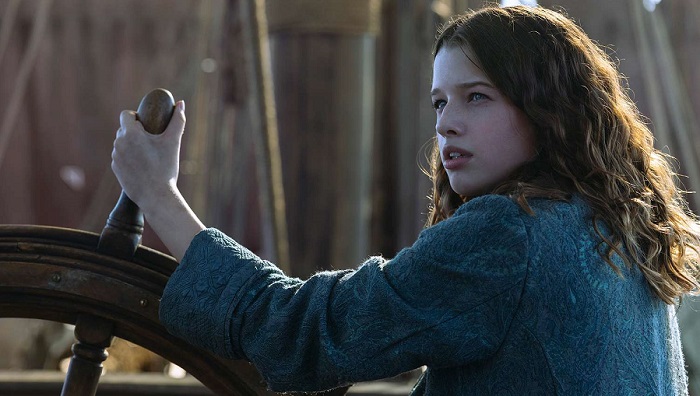
That said, I can still see long-time fans of Peter Pan really enjoying this most recent adaptation. And there’s enough eye-popping spectacle and wonder for children to enjoy. It follows many of the beats you expect. We meet Wendy Darling (nicely played by Ever Anderson, daughter of Paul W.S. Anderson and Milla Jovovich) on the eve of being sent off to boarding school.Wendy is at the stage in her life where growing up has become a reality and the pains of change are weighing on her. She wants things to stay the way they are.

Then one night Wendy and her two brothers, John (Joshua Pickering) and Michael (Jacobi Jupe) are paid a visit by an adventurous young boy named Peter Pan. Along with his best friend Tinker Bell (Yara Shahidi), a sprightly little fairy who enables him to fly, Peter whisks Wendy, John, and Michael away from their home in London to Neverland, a magical island where you never grow old.

Neverland is gorgeously realized through Lowery’s lens. It a place of lush forests, tall cliffs, sun-soaked hills, and a sparkling sea. It’s a home for fairies, mermaids, a native tribe, and Peter’s gang of fellow children called the Lost Boys (but with girls). Oh, and there are also pirates – a ship full of them led by Peter’s arch-nemesis Captain Hook (played by a fun yet tame Jude Law). As you probably expect, their adventure eventually brings our young heroes face-to-face with Hook and his marauders. Through it all Wendy learns a few good life lessons and gains a new perspective on growing up.

Image Courtesy of Walt Disney Pictures

A few of Lowery’s changes are more noticeable. For example he adds a little more meat to Peter and Hook’s backstory. Tinker Bell feels less involved. And he plays around a bit with the ending. But none of the alterations to the story have much of an impact. They neither help or hurt. And that gets to the movie’s biggest issue. While it looks great, sounds great, and at times plays great, it doesn’t have much of a lasting effect.

Here’s the thing, there are a couple of terrific set pieces but it could’ve used more. It has a few tender moments but not quite enough of them. We get some laughs but not that many. Overall I can’t help but believe that with a few extra touches here and there “Peter Pan and Wendy” could have been truly memorable. As it is I’m guessing only the Peter Pan faithful will hold it dear. It’s hardly a bad movie. David Lowery is too good of a filmmaker for that. And anything he does is worth watching. But it doesn’t fully utilize his talents either. And ultimately that’s what left me feeling a bit indifferent. “Peter Pan and Wendy” is now streaming on Disney+.

VERDICT – 2.5 STARS

REVIEW: “The Pope’s Exorcist” (2023)

Within the realm of horror movies lies a number of fun sub-genres. There’s zombie horror, vampire horror, haunted house horror, slasher horror, etc. etc. etc. Among the most explored over the years is the realm of supernatural horror. Movies from this sub-genre tend to branch out in a number of different directions. Possession films are a clear favorite of filmmakers and we get another one with the new Russell Crowe led chiller “The Pope’s Exorcist”.

Directed by Julius Avery from a script by Michael Petroni and Evan Spiliotopoulos, “The Pope’s Exorcist” is based on the memoirs of Gabriele Amorth, a Catholic priest and exorcist for the Diocese of Rome from 1986 to 2016. A controversial figure in modern Catholicism, Amorth gained international notoriety for the thousands of exorcisms he has performed. The film pulls elements of its story from two of Amorth’s books, “An Exorcist Tells His Story” and “An Exorcist: More Stories”.

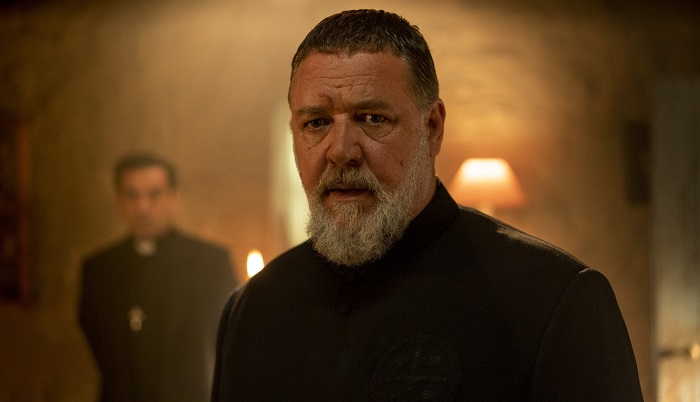
Russell Crowe is a nice fit playing Father Amorth. He’s the movie’s biggest strength, selling us with his believable look, demeanor, and a really good handling of the Italian language. It’s the type of seasoned turn that can carry a film. And there are times in the movie where Crowe does just that. It’s a fascinating performance that’s sincere yet delightfully wacky. Whether Crowe was intensely going toe-to-toe with a malicious demon or puttering around Rome on an undersized Vespa while fully decked out in priestly regalia, I was onboard.

Image Courtesy of Sony Pictures Releasing

Overall, there’s really nothing here we haven’t seen before, and if you have at least a couple of exorcism movies under your belt, there’s not much here that will catch you by surprise. Yet Avery builds some good atmosphere and cranks up enough tension to keep things entertaining. He even cooks up a fun but admittedly lightweight demonological Da Vinci Code-esque mystery that really emphasizes the movie’s open-armed embrace of the fantastical.

Set in 1987, Father Gabriele Amorth is summoned before a panel led by the insufferable Cardinal Sullivan (Ryan O’Grady). Sullivan is part of a youth movement who are anxious to move the Catholic Church away from its older practices and towards things that are more “relevant” in their modern world. Gabriele’s exorcisms fall among those “older practices”, but he’s having none of it. Gabriele is quick to remind them of who he works for – none other than the Pope himself (played by the one and only Franco Nero).

Meanwhile, a recently widowed mother named Julia (Alex Essoe), along with her rebellious teen daughter Amy (Laurel Marsden) and introverted younger son Henry (Peter DeSouza-Feighoney), leave the States and travel to rural Spain after she learns her late husband has inherited a long vacant old abbey. In desperate need of income, Julia is having the place fixed up to sell. But when the construction team unearths a hidden chamber in the cellar, they inadvertently release a malevolent spirit who immediately possesses young Henry.

After getting word of the potentially powerful demon, the Pope sends Gabriele to Spain to help Julia and her family. Once there he’s joined by an inexperienced local padre named Father Tomas Esquibel (Daniel Zovatto). The pair quickly learn that they are dealing with a particularly evil spirit – one who knows their deepest secrets and who is ready to use their past sins against them. The mystery angle is set in motion once Gabriele sets out to discover the demon’s name in order to cast it out. From there Avery runs with the craziness. The story takes some bonkers turns as a host of secrets are revealed.

Image Courtesy of Sony Pictures Releasing

The batty final act is a hoot despite being a little hard to follow (I’m still not sure why certain things were happening). It’s where we get to watch Crowe go full-tilt, hamming it up yet maintaining a surprising amount of warmth. The best thing about Crowe is that he’s not just playing for the camera and cashing a check. He remains engaged and takes on the material with tenacity and integrity. The Oscar-winner brings seriousness and levity to the movie, embracing its wilder elements yet also showing earnestness and affection.

While Avery creates some good atmosphere, the movie isn’t particularly scary. We get several conventional attempts at frights (noises within the walls, whispers in the night, and so on). And Henry has all the signs of possession that many of us know by heart (a menacing demonic voice, deep cuts across his skin, violent convulsions, etc.) Yet there is a persistent eeriness in large part thanks to production designer Alan Gilmore and DP Khalid Mohtaseb. And we get some pretty splashy visual effects that really lets the blood flow (quite literally).

“The Pope’s Exorcist” may not fully differentiate itself from the myriad of other exorcism movies that have come before it, but it did hit me with a few things I wasn’t expecting. I mean who knew this was really a buddy priest movie with Conjuring-like franchise ambitions? I sure didn’t. And again there’s Russell Crowe. He’s at a stage in his career where (sadly) the roles aren’t always what they used to be. It’s great to see he’s embracing it and still doing the kind of work that can elevate whatever he’s in. “The Pope’s Exorcist” is in theaters now.

VERDICT – 3.5 STARS

REVIEW: “Paint” (2023)

(CLICK HERE to read my full review in the Arkansas Democrat-Gazette)

There’s just something that feels right about Owen Wilson in an offbeat indie comedy playing a soft-spoken Bob Ross-esque television painter. That’s exactly what we get in the aptly titled “Paint” from writer-director Brit McAdams. Wilson has always been able to slide right into the skins of his many eccentric and slightly maladjusted characters. TV artist Carl Nargle is certainly in the actor’s wheelhouse.

This silly, slightly uneven, but often funny feature is mostly set in and around a Burlington, Vermont public television station and lives off of the inherent wackiness of its lead character. Wilson’s Bob Ross inspired performance is spot-on, overtly calling back to the late real-life artist and PBS staple. That ends up being enough to keep things entertaining while also making the story’s handful of misfires easier to get past.

“Paint with Carl Nargle” has been Vermont’s top-rated painting show for nearly three decades. It’s made Carl somewhat of a regional celebrity, with his loyal viewers entranced by each stroke of his brush and every whisper-soft word he utters. He even has groupies at the station who wait on him hand and foot and who vie for their chance to “go to a special place” with Carl (often in the back of his van). Meanwhile, the station’s assistant manager and Carl’s old flame, Katherine (Michaela Watkins) endures it all while secretly considering a new job offering in Albany.

Image Courtesy of IFC Films

In very Bob Ross fashion, Carl’s show consists of him painting one landscape per episode (mostly of the nearby Mount Mansfield, but no one seems to mind). Carl seems content with his local fame, yet deep down what he wants most is to have a painting in the Burlington Museum of Art. Unfortunately for him, the museum’s crusty curator Dr. Bradford Lenihan (Michael Pemberton) has no interest in Carl’s work.

Meanwhile budget cuts are making things tough on the station’s director, Tony (Stephen Root). To pep things up, he brings in a younger and more energetic new painter named Ambrosia (Ciara Renée). As she grows more popular she quickly begins stealing Carl’s thunder. Soon they have a full-blown rivalry between the old stalwart and the fresh new flavor. It all comes to a head during a hysterical PBS telethon where McAdams really shows his instincts for good comedy. But after that high point, the movie slowly loses some of its steam.

It’s the story that begins to sputter. And even at an economic 96 minutes, it has a hard time filling its running time. That’s not to say there aren’t still funny moments sprinkled throughout. Quite the opposite. The humor stays pretty consistent with McAdams utilizing Wilson’s comic quirkiness in a variety of fun ways. It’s the story itself that loses its zing. There’s a good central storyline about Carl’s deflated ego leading him to finally see what’s important in life. It’s the relationship stuff that just doesn’t click.

Image Courtesy of IFC Films

The biggest victim of this happens to be one of the more interesting characters – Katherine. Watkins gives a really good performance and it’s a role that deep down has a lot of potential. But the script handcuffs her character with weird choices that aren’t at all convincing. Take the awkward and seemingly out of the blue fling she has with Ambrosia. Nothing about it feels authentic or necessary. Then there’s her relationship with Carl – not so much where it ends up, but the questionable path it takes to get there. None of it does her character any favors.

All of that said, McAdams still hits many of his marks and fans of offbeat low-key humor (and Owen Wilson) will find things to enjoy. Just know “Paint” is in no way close to biographical. But it certainly plays around with Bob Ross’ likeness, from his distinctly tranquil demeanor to that unmistakable perm. Those of us who fell under the incredibly gifted artist’s spell while watching “The Joy of Painting” will get a kick out of how McAdams uses his well established image.

As for those who are unfamiliar with Ross and his popularity, I’m curious to see how the movie plays for them. I doubt they’ll get much out of the many references and nods which are scattered throughout its brisk runtime. And I know the film’s mellow and restrained sense of humor won’t be everyone’s cup of tea. For me, those were some of the film’s most admirable strengths. It’s some of the second half storytelling that ultimately holds it back. “Paint” is now showing in select theaters.

VERDICT – 2.5 STARS