REVIEW: “The Wonderful Story Of Henry Sugar” (2023)

The delightfully eccentric artistry and craft of Wes Anderson is on full display with “The Wonderful Story Of Henry Sugar”, the first film in a four-part series of shorts adapted from the works of Roald Dahl. Written, directed, and produced by Anderson, the 38-minute short film is based on Dahl’s 1977 story of the same name. It’s soaked in the filmmaker’s signature style which turns out to be a perfect fit for Dahl’s flavorful verbiage.

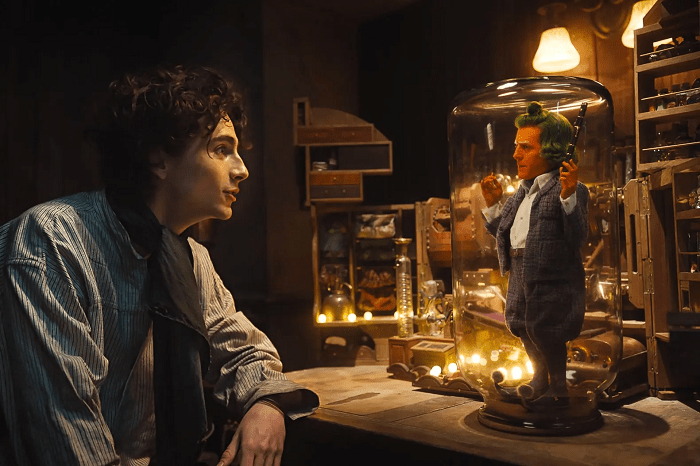
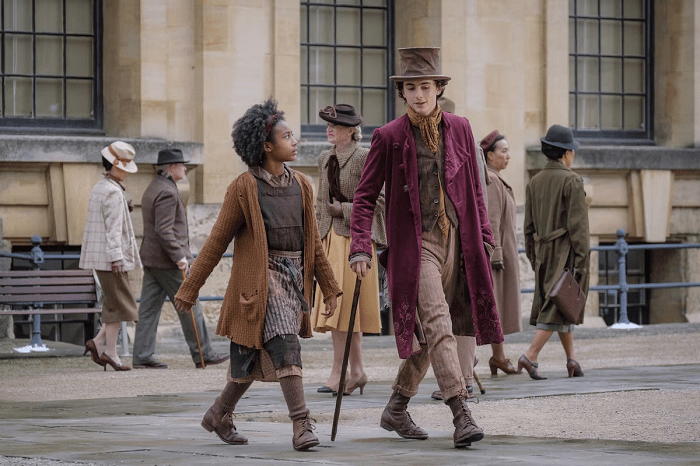
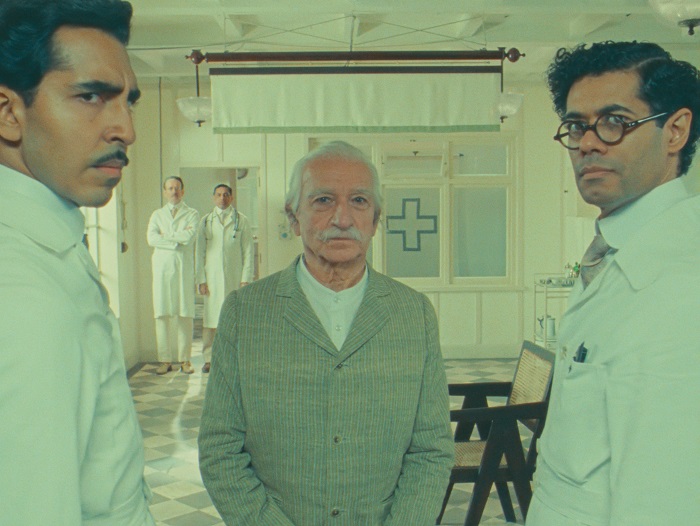
“The Wonderful Story of Henry Sugar” is some of Anderson’s most visually striking work to date. He uses a distinctly theatrical approach in staging scenes and in ushering the audience from one scene to the next – utilizing elaborate moving sets, sumptuously painted backdrops, and richly detailed dioramas. And of course it’s all bathed in Anderson’s unique storybook color palette.

Image Courtesy of Netflix

As for the storytelling, Anderson sticks close to Dahl’s own words, pruning it a bit to seamlessly flow with his on-screen vision. The film stars a handful of Anderson reliables who each serve as both characters and narrators. They peer straight into the camera, addressing the audience directly while delivering the fast-paced dialogue with astonishing precision and fluidity.

Ralph Fiennes plays a version of Dahl himself who gives us an introduction to his story from inside his cramped but cozy “writing hut” (later Fiennes shows up as a policeman in one of the film’s funniest bits). A delightfully wry Benedict Cumberbatch plays the titular Henry Sugar, a self-involved and unashamedly bad gambler who finds himself consumed with the contents of a book he swipes while visiting a rich friend’s estate.

The book contains the story Imdad Khan (Ben Kingsley), a man who claimed to have the ability to see without using his eyes. Within the small volume Khan recounts his meeting with an old mystic who taught him how to see things with his mind rather than eyes. Unyielding in his desire to get ahead, Henry sees an opportunity. If he can study the book and learn the ancient skill, he could use it to win (cheat) at the blackjack table.

Image Courtesy of Netflix

While every performance hits just the right note, Dev Patel may steal the show. He plays Dr. Chatterjee who chronicles his encounters with Imdad Khan. Together with his colleague Dr. Marshall (an equally fantastic Richard Ayoade), the two find themselves in utter awe and unable to explain the strange man’s ability. Patel is an absolute riot, meticulously detailing every impression and emotion they felt yet doing so in the most deadpan way imaginable. He’s hilarious.

Anderson’s story within a story within a story structure is ingenious and he pulls it off to near miraculous perfection. It’s fascinating to watch as he takes such specific usages of visuals, narrative, and performance and caramelizes them into something so precise and flavorful. Overall this is a far cry from the filmmaker’s more understated(ish) earlier work. Yet nothing here is done for mere eccentricity’s sake. There’s such a wonky harmony between Dahl’s words and Anderson’s profoundly unique style which makes this quirky short film such a delight. “The Wonderful Story Of Henry Sugar” is now streaming on Netflix.

VERDICT – 4.5 STARS

REVIEW: “Wham!” (2023)

The latest in the long line of musical documentaries is “Wham!”, Netflix’s new film chronicling the rise of the eponymous English pop duo which became a global sensation during the early and mid 1980s. It may be easy for some to forget the far-reaching popularity of Wham! in large part due to George Michael’s solo career success. But during their four-year run Wham! would sell over 30 million records worldwide.

“Wham!” is directed by Chris Smith who has found himself a comfy home on Netflix. Coming out on the 30th anniversary of the duo’s debut album “Fantastic”, his documentary tells the story of friends Andrew Ridgeley and George Michael through audio interviews and archive footage from concerts, television appearances, and home videos. All together it follows a pretty basic music doc formula, but it should be a nice ‘turn back of the clock’ experience for fans.

Image Courtesy of Netflix

The film touches on Ridgeley and Michael’s childhood including their first meeting as preteens at Bushey Meads School in Bushey, Hertfordshire, England. But it doesn’t waste much time before jumping into their music career starting with their early struggles to get their feet in the door with record companies. Then came their big break when they were unexpectedly scheduled to perform on the popular BBC television show Top of the Pops.

Suddenly Wham! was getting noticed and after signing with Epic Records and embracing a more poppy image they became known worldwide. As their story progresses Smith finds room for nearly every one of their songs including early stuff like “Wham Rap” and “Club Tropicana” to their chart-topping hits like “Wake Me Up Before You Go-Go”, “Careless Whisper”, and “Everything She Wants”.

To a much lesser degree Smith also looks at the duo’s personal lives. It includes Michael’s well-documented struggle with his sexuality and his embrace of his pop-star persona as a means of defining his true self. And there is a little about Ridgeley’s experiences falling into Michael’s shadow as well as hints of his hard partying lifestyle which became tabloid fodder.

Image Courtesy of Netflix

But the documentary doesn’t offer much past that, coming to a full stop with the duo’s sold-out 1986 farewell concert at Wembley Stadium. It doesn’t touch on anything beyond their final show. Nothing about Ridgely’s post-Wham! life which was mostly out of the public eye and nothing about Michael’s legal troubles or drug issues.

As a fan piece “Wham!” works pretty well. It highlights the bands ups while steering mostly clear of the downs, and it’s full of the music fans love. As a meatier documentary it falls a little short. It does a good job reminding people just how big Wham! became (something I admit to have forgotten) and we get a little insight into their creative processes. But some things remain unexplored leaving us with a fun time capsule movie but not much more than that. “Wham!” is now streaming on Netflix.

VERDICT – 2.5 STARS

REVIEW: “White Men Can’t Jump” (2023)

(CLICK HERE to read my full review in the Arkansas Democrat-Gazette)

Ron Shelton’s 1992 basketball comedy “White Men Can’t Jump” lived and breathed off of the electric personalities and hilarious chemistry between its two leads, Woody Harrelson and Wesley Snipes. When hearing a remake was on the way I immediately wondered if there was any way it could recapture that kind of energy? In a word, no. And in many ways not even close. In fact, it’s accurate to say this “update” barely resembles its inspiration.

This bland and frankly needless remake comes from director Charles Kidd II aka Calmatic. In it Sinqua Walls plays Kamal Allen a former high school basketball phenom who was projected as a “can’t miss” player. He was heavily recruited by colleges and NBA teams alike. But an arrest for assault during his senior year tarnished his reputation and scared away every interested party. So now he’s stuck in a minimum wage job driving a deliver truck, barely scraping by and trying to support his wife Imani (Teyana Taylor) and their young son. He can still hoop, but he’s given up on ever playing professional basketball.

(L-R): Jack Harlow as Jeremy and Sinqua Walls as Kamal in 20th Century Studios’ WHITE MEN CAN’T JUMP. Photo by Parrish Lewis. © 2023 20th Century Studios. All Rights Reserved.

Jeremy (played by rapper Jack Harlow in his acting debut) once had a promising basketball future of his own and was a standout player at Gonzaga University. But two blown ACLs sidetracked his dreams. So now he’s selling cheap bottled health drinks and hustling streetball games for cash. He desperately wants to play basketball again and he has the wild idea that “regenerative medicine” is his ticket to the NBA G League. But his girlfriend Tatiana (Laura Harrier) wants him to focus more on their future together.

The two former ballers cross paths at a neighborhood gym where Jeremy promptly hustles Kamal out of $300. It understandably leaves a sour taste in Kamal’s mouth. But with both of them in desperate need of money, they end up teaming together to play in a two-on-two streetball tournament with a massive payout going to the winners. First, they’ll have to hustle a few neighborhood games to pay for their entry fee. Second, they’ll have to do it without killing each other. That proves to be a tough ask.

From the very start, the story just doesn’t have the energy or the spirit of the 1992 original. And at times it doesn’t even seem try. The script occasionally attempts (but falls terribly short) at recreating the playful banter, the culturally tinged back-and-forths, and the hilarious insults that Snipes and Harrelson fired off so naturally. A lot of it has to do with the lukewarm chemistry between Walls and Harlow. Individually their performances are fine, but neither have the charisma of a Snipes or a Harrelson. And together there simply isn’t much of a spark between them.

To compensate, the movie ventures off into some more dramatic directions, none of which work particularly well. Co-writers Kenya Barris and Doug Hall attempt to cook up some interest in Kamal and Jeremy’s home life. But these side dishes consist of little more than Imani and Tatiana understandably losing patience with their bone-headed beaus.

(L-R): Jack Harlow as Jeremy and Sinqua Walls as Kamal in 20th Century Studios’ WHITE MEN CAN’T JUMP, exclusively on Hulu. Photo by Parrish Lewis. © 2023 20th Century Studios. All Rights Reserved.

We find some hope in these family scenes in the form of the late Lance Reddick who plays Kamal’s father, Benji Allen. At first he comes across as an overbearing LaVar Ball type. But over time we get a sense that there’s actually more to his character. Unfortunately we’re left to wonder because Reddick doesn’t get much screen time and the father-son relationship is left painfully underserved.

So we’re left with everything else, nothing of which will stick with you past the closing credits. The humdrum humor certainly won’t as it rarely registers. And there’s definitely not enough personality or charm to leave any kind of mark. Even the basketball scenes fall flat. And I’m still trying to figure out why they even bothered calling it “White Men Can’t Jump” considering how little it has in common with the considerably better original. Maybe the idea looked better on paper. Maybe it’s a cash grab. Either way, it doesn’t make for a good movie. “White Men Can’t Jump” is now streaming on Hulu.

VERDICT – 2 STARS

REVIEW: “War” (2019)

The third installment in the now expanding TRF Spy Universe is the aptly titled “War”, a brawny Bollywood blockbuster that rivals any big-budget tentpole movie Hollywood puts out today. It’s a bit like “Mission: Impossible” meets “Fast and Furious” but with its own special sauce that fans of Indian action cinema will immediately recognize. It makes for a movie that’s exhilarating from start to finish and one with enough pizzazz to keep its audience glued to every eye-popping frame.

“War” is directed with style and verve by Siddharth Anand who more recently has directed the universe’s fourth film, 2023’s “Pathaan”. In “War”, Anand went BIG with his action scenes and clearly spared no expense. Taking place in stunningly shot locations all around the world, his set pieces are second to none and include a wild shootout in Tikrit, a killer pursuit across the rooftops of Marrakesh, a jaw-dropping motorcycle chase through Lisbon (that must be seen to be believed), and a sports car showdown in the Arctic Circle.

Adding to film’s list of strengths are the terrific lead performances from its two leads, Hrithik Roshan and Tiger Shroff. Both have leading man charisma as well as the gritty physicality their roles demands. But they also have the ability and the smarts to dial their performances down whenever a scene needs them to. Ultimately it adds a level of believability to their characters, even in the instances when the delightfully over-the-top action sticks them in some pretty wild and crazy situations.

The story moves at a propulsive pace and is full of twists and unexpected turns. Shroff plays Captain Khalid Rahmani, a RAW agent desperate to regain his family’s honor after his disgraced father betrayed his country and was killed as a result. Khalid was trained by one of RAW’s best agents, Major Kabir Dhaliwal (Roshan). Kabir was hesitant to take Khalid into his special unit, because of his father’s bad name. But Khalid proves himself in the field and earns Kabir’s trust. Kabir agrees to train Khalid, and the two develop a friendship.

But when Kabir suddenly assassinates a high ranking RAW official, it’s left to a shocked and hurt Khalid to hunt down and eliminate his former mentor. But that proves to be easier said than down as Kabir always seems to be one step ahead of Khalid and his team (much like the movie is with its audience). Every time we feel we have a grasp of where things are going, Anand throws us a curveball. Admittedly, a couple of the twists are utterly preposterous. But they’re also wildly entertaining.

While its story (written by a team of four that includes Anand) earns its spy thriller stripes, there’s so much more that makes “War” click. I mentioned Roshan and Shroff who are in perfect tune with their characters and each other. And again, there’s the incredible vistas that are exquisitely shot by DP Benjamin Jasper. There’s also the remarkable fight sequences put together by South Korean martial arts choreographer Se-yeong Oh. The extraordinary production design, the (mostly) incredible digital effects, the energetic but not overbearing score – all key ingredients that Anand uses to the fullest.

“War” is a thrilling ride built on a big vision and even bigger ambition. There’s not a dull moment to be found in the film’s hefty 154-minute runtime, and it does a great job leaving its audience hungry for more. As for its standing in the growing TRF Spy Universe, it’s hard to tell right now. A sequel to “War” is said to be in the works, and its connection to “Tiger 3”, the fifth film in the universe due out later this year, remains to be seen. But even on its own, “War” delivers everything action fans will want, plus some. “War” is available on VOD and streaming on Amazon Prime Video.

VERDICT – 4.5 STARS

REVIEW: “Winnie-the-Pooh: Blood and Honey” (2023)

Following its announcement, I’m guessing “Winnie-the-Pooh: Blood and Honey” prompted a slew of different reactions from belly-laughs to eye-rolls. I can see some immediately hopping onboard while others instantly checked out. And I bet there were just as many (myself included) left scratching their heads. Well, I can honestly say that after watching this baffling concoction I’m still scratching my head.

So how did this movie come about? On January 1, 2022, A. A. Milne and E. H. Shepard’s 1926 Winnie-the-Pooh book entered the public domain. Previously the rights had been owned by Disney since 1966. Disney was able to retain the character likenesses they created, but the actual characters themselves (Pooh, Piglet, Eeyore, Owl, Rabbit, etc.) went into the public domain. So what was the first thing someone immediately did? Why turn the beloved children’s characters into deranged homicidal maniacs of course.

Now at first glance “Winnie-the-Pooh: Blood and Honey” resembled the kind of self-aware grindhouse schlock I could get behind. It opens with some promise both in its embrace of its patently silly premise and its willingness to poke fun at the slasher genre. But it quickly runs its central conceit into the ground, and it gets increasingly harder to separate the jokes from more serious scenes that happen to be really bad. And it doesn’t help that the movie is such a technical mess.

Image Courtesy of Altitude Film Distribution

That’s hard for me to say, especially as someone who loves watching talented filmmakers, old and new, do incredible things with minuscule budgets. But here, everything is sub-par. The cinematography is bad. The editing is bad. The sound is bad. The lighting is bad. Again, budget constraints should always be considered. But when the characters speak so low we can’t hear them, or the lighting is so dim we can’t make out what’s going on, or the camera is shaking so much we can’t follow the action, or the cuts either come too quick or leave us stuck on a scene way too long, it makes for an exploitation film of the lowest order.

If anything, director, writer, and producer Rhys Frake-Waterfield certainly seized an opportunity when he saw it. I mean countless filmmakers with original ideas struggle to find a screen for their work, especially in the horror genre. But Frake-Waterfield takes anthropomorphic animals from countless childhoods and turns them into Leatherface knock-offs and is able to nab a big screen “event”. That’s more impressive than anything in the actual movie.

As for the story, the amusing setup goes something like this: Years ago a young boy named Christopher Robin met and befriended the walking and talking Winnie-the-Pooh, Piglet, Eeyore, Owl, and Rabbit inside the Hundred Acre Wood. Christopher fed them, played with them, and essentially grew up with them. They were his closest friends.

As he got older, the time came for Christopher Robin to head off to college. But with CR no longer there to feed and care for them, his animal friends began to starve. Desperate for food, they killed and ate Eeyore which pushed them over the edge. Enraged, Pooh, Piglet, Owl, and Rabbit formed a pact. They renounced their human side and swore never to talk again. Instead they went back to their animalistic roots. After five years away Christopher Robin (Nikolai Leon) returns, anxious to introduce his new fiancée Mary (Paula Coiz) to his old friends. But rather than a warm reunion, they are savagely attacked by a feral Pooh (Craig David Dowsett) and Piglet (Chris Cordell).

Image Courtesy of Altitude Film Distribution

Jump ahead a couple of years and we meet Maria (Maria Taylor) a young woman dealing with a trauma that the movie never seems all that interested in. Her therapist recommends she takes some time away to “disconnect”. So she and four girlfriends from college rent a two-story cabin deep in the Hundred Acre Wood, apparently within shouting distance of the vengeful, murderous Pooh and Piglet’s place (there are so many obvious questions about this scenario, but don’t expect any answers).

I shouldn’t have to tell you where things go from there. Yes Pooh, with his overalls and beer-gut, and Piglet, with his bad leg and sadistic love for chains, terrorize the young women, picking them off one by one in a number of grisly ways. And it isn’t that hard. Their victims are way too stupid to stand a chance, leading to a handful of laughs – some intentional but more that aren’t. Even calling them characters seems a stretch. They’re thinly sketched and the movie clearly doesn’t care about them so why should we?

To the film’s credit, the audience I watched it with seemed to have a good time (although I’m pretty sure they were laughing more AT the movie than WITH it). Clearly a big chunk of the budget went into the over-the-top gory kills which can be fun (when we’re able to make them out). But it’s one thing to spoof dumb and chintzy slasher movies. It’s another thing to become one. And it’s one thing to revisit your one big gag. It’s another thing to milk it dry before your movie is half over. Just more things to add to a laundry list of problems that make this potential romp feel like a dirt-cheap cash grab.

VERDICT – 1.5 STARS

REVIEW: “The Wonder” (2022)

Florence Pugh continues to deliver strong performances through a fun and eclectic variety of well chosen roles spanning numerous genres. Her latest is “The Wonder”, a period drama with a tinge of psychological thriller from Chilean director Sebastián Lelio. The film is set in 1862 where Ireland has been stricken by a great and devastating famine. But in a rural Irish village a young girl has inexplicably been able to survive without eating. Some including her family insist it is a miracle from God. Skeptics believe the attention is unwarranted and that it’s all a ruse.

Lelio, who co-wrote the screenplay with Emma Donoghue and Alice Birch, spends a lot of time exploring the tensions between faith and science, more specifically those who prescribe to one side with no regard for the other. Pugh plays an English nurse named Mrs. Elizabeth Wright who is summoned to the remote village by a committee of local dignitaries (Toby Jones, Ciarán Hinds, and Brían F. O’Byrne). She’s joined there by a nun, Sister Michael (Josie Walker). The committee wants the two to observe a 9-year-old girl named Anna O’Donnell (Kíla Lord Cassidy). After 14 days, they are to report back to the committee with their findings, Elizabeth from a medical perspective; Sister Michael through the eyes of faith.

Image Courtesy of Netflix

It’s said to have been four months since the seemingly healthy young Anna last ate and the townsfolk are baffled. How can she still be alive? “I don’t need to eat,” she tells Elizabeth in one of their first meetings, “I live on manna from Heaven.” Elizabeth and Sister Michael begin their observation in shifts and are instructed not to confer with each other before reporting back to the committee. Tom Burke pops up playing William Byrne, a reporter from London’s The Daily Telegraph with a special interest in the girl (and later in Elizabeth). He’s there to sniff out a story – is it something scientific that they don’t yet understand or is it something spiritual and supernatural?

The truth slowly comes into focus as Lelio patiently begins putting his pieces together. Many of them come from Anna’s family which includes her mother Rosaleen (Elaine Cassidy), her father Malachy (Caolán Byrne), and her older sister Kitty (a terrific Niamh Algar who’s also the story’s unconventional narrator). Through them we learn the O’Donnell’s are deeply religious and a certain family tragedy still looms over their household. Much the same, Elizabeth has a deeply buried grief of her own which drives her desire to get to the truth.

Image Courtesy of Netflix

“The Wonder” provokes some intriguing questions as it moves along, answering them from what seems like a fairly cynical point of view. The final act is a little shaky, but Lelio holds it together, ultimately ending in a place of hope while still making his overarching message abundantly clear. Interestingly, the movie is book-ended by scenes from a warehouse movie set where our narrator speaks to the value and persuasive power of stories while encouraging the audience to engage with them. It’s an interesting idea that doesn’t quiet land the way it intends.

It may have a few shortcomings, but they don’t outshine the many things “The Wonder” does well. Lelio shows an exceptional management of tone and the way he captures and uses his period setting enhances the story in a number of ways. He also knows what he has in Florence Pugh whose standout performance is both thoughtful and haunting. She keeps the movie centered and engaging, even in the few instances where its sputters. “The Wonder” is now streaming on Netflix.

VERDICT – 3.5 STARS