REVIEW: “The Zone of Interest” (2023)

Since first hearing about it, Jonathan Glazer’s “The Zone of Interest” has been among the 2023 movies that has intrigued me most. This is Glazer’s first feature film since 2013’s “Under the Skin” and he couldn’t have picked heavier subject matter. “The Zone of Interest” is loosely based on a 2014 Martin Amis novel of the same name and concentrates on Rudolf Höss, the real-life first commandant of the Auschwitz concentration camp.

But “The Zone of Interest” is no standard issue biography. Nor does it resemble any other Holocaust movie that came before it. Rather it’s a daringly precise and artfully calculated historical drama – one so quietly chilling that the true insidious nature of what we see may creep up on some viewers. But if you go into the film knowing what Glazer is doing, you’ll find yourself uncomfortably gripped from the very first scene until the sobering final frame.

You could almost call Rudolf Höss (played with a deafening restraint by Christian Friedel) an instrument in Glazer’s creative hand – a tool that allows the filmmaker to examine the Holocaust from a new yet equally horrifying angle. Shooting on location in Poland, Glazer brings a startling realism to his setting. Yet he never forces us to witness a single atrocity. But their reality is felt in every scene. And what he hides from our sight is always within earshot. It’s enough to appall and disgust any person with a conscience. Yet we see nothing resembling compunction from the blind purveyors of such hate and cruelty. And that is what makes the film so unnerving.

Image Courtesy of A24

From 1940 to 1943 Rudolf Höss and his family lived comfortably in a cozy villa adjacent to the notorious Auschwitz death camp. There they built their ideal life, all while tuning out the piercing sounds of torment and death from just over the tall concrete wall. The entirety of Glazer’s film focuses on this family, illustrating what philosopher and political thinker Hannah Arendt famously called “the banality of evil”.

Despite being only a few steps away from the Holocaust’s deadliest extermination camp, Rudolf and his wife Hedwig (Sandra Hüller) live in a self-contained bubble of domestic bliss. We watch as they have picnics with their five young children, host garden parties, tend to their many flowers – basically enjoying life’s simple pleasures without a worry or a care. Glazer shoots their around-the-house activities much like a still life painting, capturing them through strategically placed stationary cameras and emphasizing their unfathomable indifference.

Yet just next door the unspeakable is happening. Again, Glazer doesn’t show us directly but he relays it effectively. For example, we witness several displays of shocking callousness. Take Hedwig proudly modeling a fur coat in front of her bedroom mirror, turning from side to side as if in a boutique. While not explicitly spelled out, the coat clearly came from a prisoner in the camp. Yet she poses on her imaginary runway without a hint of guilt or recognition. Or how about the casual way Rudolf comes home in the evening, like a businessman returning from his office after a day’s work.

Image Courtesy of A24

But what’s even more impactful and unsettling than anything we see is found in what we hear. Harrowing sounds echo from beyond the wall – the dull yet persistent roar of furnaces, the distant whistle of a train, the random pops of gunfire, the faint screams of the victims. Yet the Höss family carry on their everyday lives, never pausing for a moment from their comforts. They only seem to notice when something interferes with their pleasures. Sound plays an essential and powerful role in Glazer’s approach.

And then there’s Sandra Hüller. What a year she has had. She was staggering in “Anatomy of a Fall” and she’s equally brilliant here. Hüller gives a fearless and nuanced performance that teases innocence by ignorance early on. But later that facade is shattered by some revealing jolts of reality. Such as when Hedwig venomously scolds a Jewish housekeeper over spilled water. “I could have my husband spread your ashes,” she spews without a moment’s hesitation.

“The Zone of Interest” offers little in terms of plot nor does it feature some deep involving narrative. You won’t find an ounce of empathy, remorse, or repentance. Rather Glazer shows remarkable restraint in staying true to his vision. Even without explicitly depicting the violence, his savvy anti-drama can be difficult to watch. But it’s a vital movie and a landmark achievement both in filmmaking and as a historical reflection. Don’t miss it.

VERDICT – 5 STARS

REVIEW: “Zack Snyder’s Justice League” (2021)

JLposterr

The roller coaster story behind “Zack Snyder’s Justice League” is probably more legendary than anything the filmmaker could ever put on screen. From the troubled production of 2017’s “Justice League” to the enormous social media hashtag movement that brought Zack Snyder’s full vision to life, the history of this new four-hour epic is as fascinating as it is unheard of. News of the #SnyderCut (as it affectionately became known as) immediately stoked the excitement of legions of DCEU fans who were stung by Joss Whedon’s 2017 mess. It was also met with its share of scoffers made up mostly of soured critics, Marvel die-hards, and others who were overly anxious to write it off from the start.

To get a better understanding of the Snyder Cut‘s significance you need to know its backstory. Zack Snyder was given the keys to DC’s version of the MCU and his universe was to be anchored by the Justice League. His story arc began with “Man of Steel” followed by “Batman v Superman: Dawn of Justice” and was to wrap up with a “Justice League” trilogy. But as shooting completed for his first “Justice League” film Snyder was forced to leave the project following a devastating family tragedy. Instead of waiting for Snyder to return, an already unhappy Warner Bros. brought in Joss Whedon to oversee post-production. Whedon made major changes to the script, dramatically lightened the tone, oversaw numerous reshoots, and whittled the running time down to two hours. Cinematographer Fabian Wagner would later say only 10% of what he and Snyder shot made Whedon’s theatrical cut.
JL3

Image Courtesy of Warner Bros.

While Whedon’s “Justice League” was certainly lighter and goofier, it was also mediocre at best and considered a box-office bomb, falling $60 million short of what it needed to break even. It led to Warner Bros. abandoning Snyder’s vision and reworking their DCEU strategy. In a nutshell Zack Snyder’s “Justice League” trilogy was over before he had an opportunity to make the first movie. But then rumors of a full director’s cut began swirling around on social media. Snyder confirmed its existence and soon the call for the Snyder Cut to be released picked up steam. Even members of the cast and crew (including Gal Gadot and Ben Affleck) joined the chorus. In an unprecedented move Warner Bros. gave Snyder and his cut the green light, pitching in $70 million for added scenes, editing, and visual effects enhancements. Enter “Zack Snyder’s Justice League” now set for its big release on HBO Max.

It should be said that even without its troubled production, it was going to be an uphill climb for this “Justice League”. Many people had revolted against Snyder’s daring vision. It clashed with everything we had been programmed to expect from superhero movies. Even more, it looked at two iconic characters from pop culture at specific times in their lives that have rarely been explored. Snyder’s Batman is older, worn down from over two decades of fighting crime. The “beautiful lie” that brought Batman out of the depths is also the weight pulling Bruce Wayne further and further down. He now teeters on the precipice. Alfred knows it and now the citizens of Gotham fear this more violent Batman as much as the criminals. Bruce has lost faith in humanity and he’s reached a point where yes, we see him kill. Snyder knows the longstanding ‘rules’. So what happened to Batman? What brought him to this place? Can he find redemption?

At the same time Snyder’s Superman was just beginning his journey on earth. Both “Man of Steel” and its direct sequel “Batman v Superman” dealt with Clark finding his place in a world not ready to face his existence. With Clark’s arrival came a new era of the meta-humans and it brought him face-to-face with the uglier sides of humanity – our penchant for hating what we don’t understand; our sheep-like tendency to follow the wrong voices. In many ways Snyder’s Lex Luthor embodies that very misguided and destructive nature. It’s the world Clark’s cynical but wise father was shielding him from. So of course Superman would be conflicted and unsure of himself.

JL2

Image Courtesy of Warner Bros.

These darker layers of humanity are still missed by many of Snyder’s most vocal detractors yet they are integral to his more probing vision. This is a major reason why Whedon’s romp clashed so profoundly. But with “Zack Snyder’s Justice League” that essential narrative and tonal continuity is restored. This is the follow-up “Batman v Superman” deserved – an audacious effort that not only builds on the story its two predecessors was telling, but that opens up those films in several thrilling ways that I don’t dare spoil.

One of the biggest and best changes comes with the characters themselves. This “Justice League” feels like a meaningful continuation of some journeys and an exciting introduction to others. These aren’t the walking punchlines from Whedon’s “Avengers” knock-off. The cringe-inducing silliness has essentially been wiped away (kinda like Whedon’s name in the credits). In Snyder’s cut, he and screenwriter Chris Terrio take their characters seriously, often looking beyond their superpowers to their personal struggles, imperfections, and insecurities. These are ingredients sorely missing from the 2017 film. And while mankind has a crucial presence, this film’s chief focus remains on the heroes burdened with saving it.

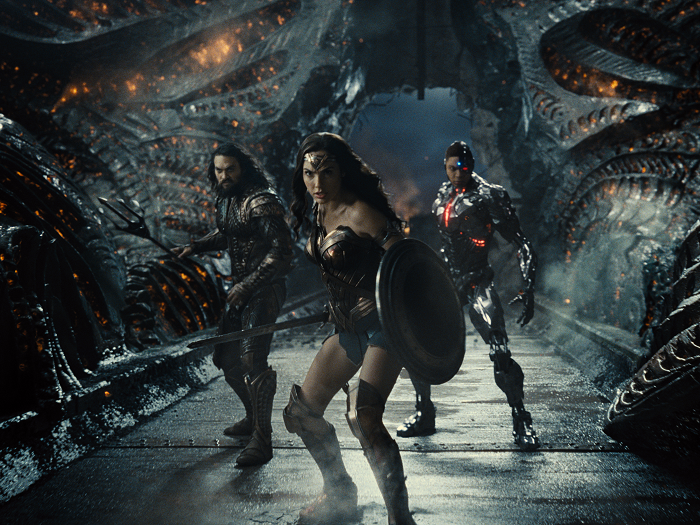
But this is still a movie based on arguably the most iconic superheroes in comic book history and Snyder does them and the genre justice. For all of the humanity infused into his characters, there is just as much out-of-this-world, super-powered awe. “ZSJL” is like a graphic novel brought to life with dazzling action sequences and digital effects that are consistently mind-blowing. The astonishing CGI helps visualize some truly magnificent worlds. It also creates these grand and sometimes edgy cinematic set pieces that are some of the best you’ll see in a superhero movie. Staying with the technical stuff, it takes no time getting used to the much talked about 1.33:1 aspect ratio. I was skeptical going in but after seeing the beautiful full images without the tops and bottoms chopped, I was quickly won over.
JL1

Image Courtesy of Warner Bros.

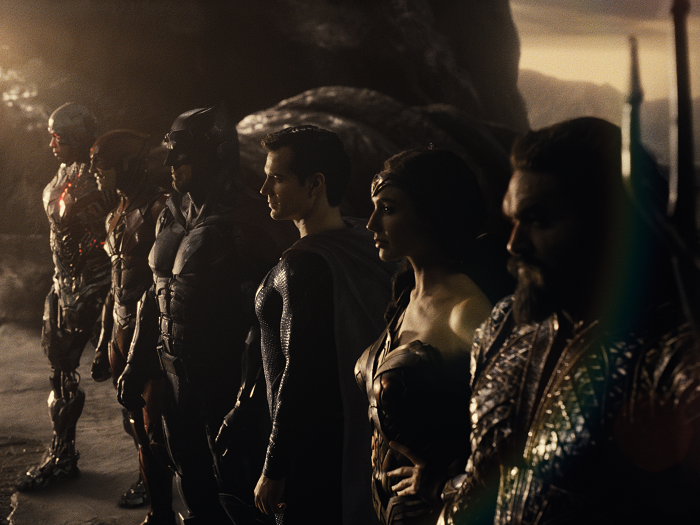
Perhaps the most amazing thing about “ZSJL” (besides its very existence) is how well it flows from start to finish. And how for four hours there is never a lull or any downtime. That’s because Snyder and Terrio pay attention to every character both intimately and in battle. None of our time with them feels wasted. Ray Fisher’s Cyborg is the biggest beneficiary. Not only is it a great performance from Fisher, but this portrait of the tortured Cyborg is so much more complete. Same with Ezra Miller’s Flash who is now naturally awkward and funny rather than an annoying stooge. Both Wonder Woman (Gal Gadot) and Aquaman (Jason Momoa) get several scenes that better link them to their solo films. And as expected Ben Affleck as Batman and Henry Cavill as Superman remain terrific fits. And unlike before, this time we get a villain that we understand. Steppenwolf (Ciarán Hinds) was egregiously shortchanged in the 2017 film. Here he’s menacing, motivated, and is a precursor to a far greater evil. Then weave in a rich, stellar supporting cast full of familiar faces and a few fascinating new ones as well.

“Zack Snyder’s Justice League” is a new movie in practically every way. You see it in the intimate character development, the flow of the story, the jaw-dropping digital artistry. It’s also refreshing. I like the MCU. I’ve seen all of the films multiple times each. But after 23 movies, nuances and all, you grow accustomed to the tone, the structure, etc. Thankfully Zack Snyder went for something different rather than copy a tried-and-true formula. But his “Justice League” is more than simply a movie full of ambition. It’s a truly great blockbuster, one that surpasses the earlier theater release in every conceivable way. Would we have ever gotten this four-hour sprawling superhero epic in 2017? Doubtful. Will this film change the minds of those determined to dislike Zack Snyder’s take on the DC universe? Also doubtful. But personally speaking, I’m thrilled this movie exists and yes, I can enthusiastically say “I want more”. “Zack Snyder’s Justice League” premieres March 18th on HBO Max.

VERDICT – 4.5 STARS

4-5-stars

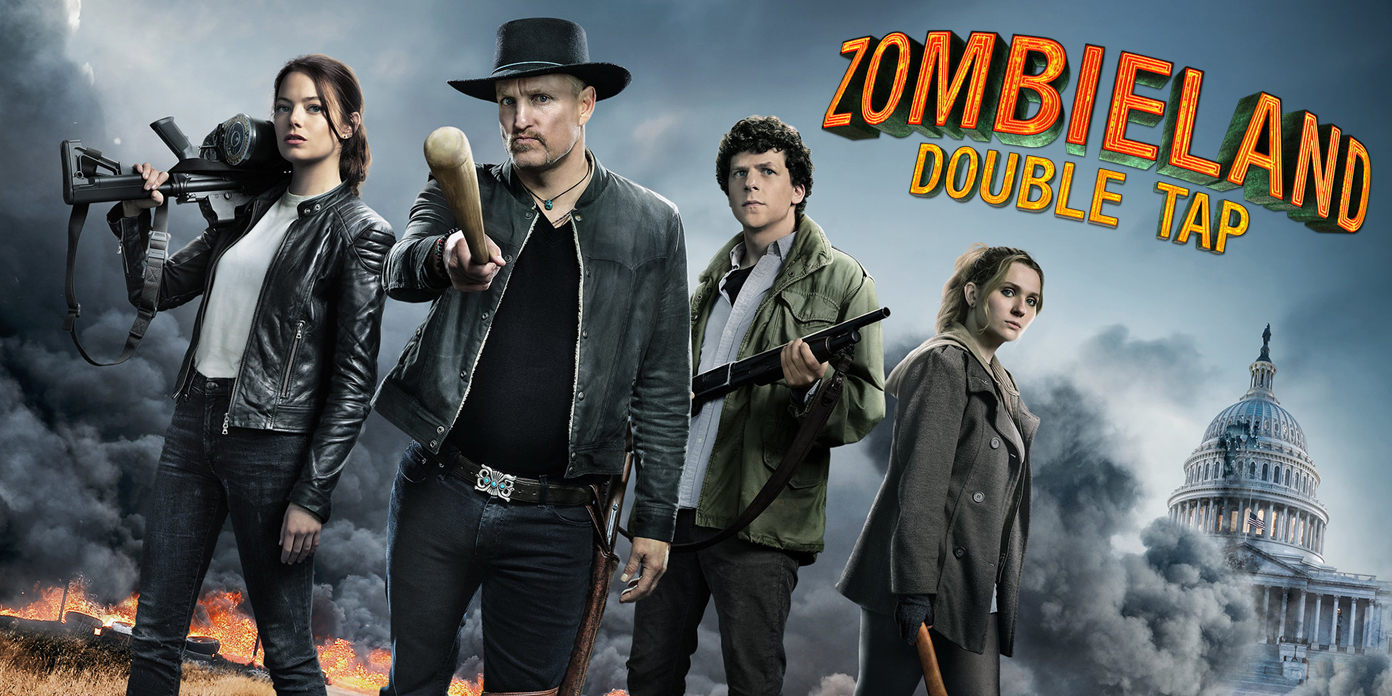
REVIEW: “Zombieland: Double Tap”

ZOMBposter

Maybe I was out of the loop, but a “Zombieland” sequel was something I never saw coming. The first film came out on 2009 and supposedly everyone was keen on immediately doing a sequel. But the idea ended up in the proverbial development hell for several years before popping up out of the blue. It would finally hit theaters in late 2019 with its original cast still intact and few new faces thrown in for good measure.

Admittedly, I wasn’t a huge fan of “Zombieland” and nothing much in the 10 years since has really changed my mind. Don’t get me wrong, it wasn’t a bad movie and I get why it has its fans. But I wasn’t one who was clamoring for sequel or who ever expected one at this point. Yet here we are with “Zombieland: Double Tap”, a second helping that feels like the first film warmed over.

ZOMB1

© Sony Pictures All Rights Reserved

“Double Tap” doesn’t have much new to offer aside from a handful of side characters. The story is pretty bare-bones while the humor misses its mark as much as sticks its landing. Returning director Ruben Fleischer works hard to recapture the overall vibe of the original and the four returning stars are certainly game. But in the end the character arcs go nowhere and the sequel struggles to maintain the energy and charm that made its predecessor a surprise hit.

The film opens with a quick reintroduction to the four original survivors: the hyper-macho but warm-hearted redneck Tallahassee (Woody Harrelson), the nerdy rule-bound Columbus (Jesse Eisenberg), the tough outspoken fireball Wichita (Emma Stone), and the rebellious teen-spirited Little Rock (Abigail Breslin). Columbus is still our narrator and he explains their new categories of zombies (Homers are my favorite) while offering a refresher on how his goofy rules system works.

The four-pack have made their way to Washington DC and now live in the abandoned White House. Columbus and Wichita are still an item, Tallahassee still loves Elvis, and Little Rock is tired of hanging out with the ‘old’ folks on Pennsylvania Avenue. Things are going good until Columbus proposes to Wichita, she freaks out and sneaks off taking Little Rock with her.

A month passes and Columbus still laments Wichita leaving while Tallahassee pushes him to get over it. During that time they run into the first (and by far the best) of several new characters, a ditzy Valley Girl named Madison (Zoey Deutch). She’s essentially a one-note character but she’s such a hoot in the most air-headed way imaginable. Wichita show’s back up informing her old friends that Little Rock has ran off with a hippie pacifist named Berkeley. Not the best idea during a zombie apocalypse.

Woody Harrelson (Finalized);Jesse Eisenberg (Finalized);Emma Stone (Finalized);Luke Wilson (Finalized)

© Sony Pictures All Rights Reserved

This basically sets the story in motion as the three (plus one blonde) set out on another road trip this time to find one of their own. Along the way they bump into a mixed bag of new characters, some work and are a lot of fun (Rosario Dawson), others not so much (Luke Wilson, Thomas Middleditch). And by the time we get to the big all-too-familair finale the story is running on fumes.

“Zombieland” helped pave the way towards further successes for most everyone involved. Fleischer would go on to direct the $860 million smash hit “Venom”. Co-writers Reese and Wernick wrote the two “Deadpool” movies that earned nearly $1.6 billion combined. Stone won an Oscar for “La La Land” while Eisenberg and Harrelson have each since received nominations. Hats off to all of them for approaching this sequel seriously and giving it their all. For me the novelty is gone. But to be fair, it wasn’t really there to begin with.

VERDICT – 2.5 STARS

2-5-stars

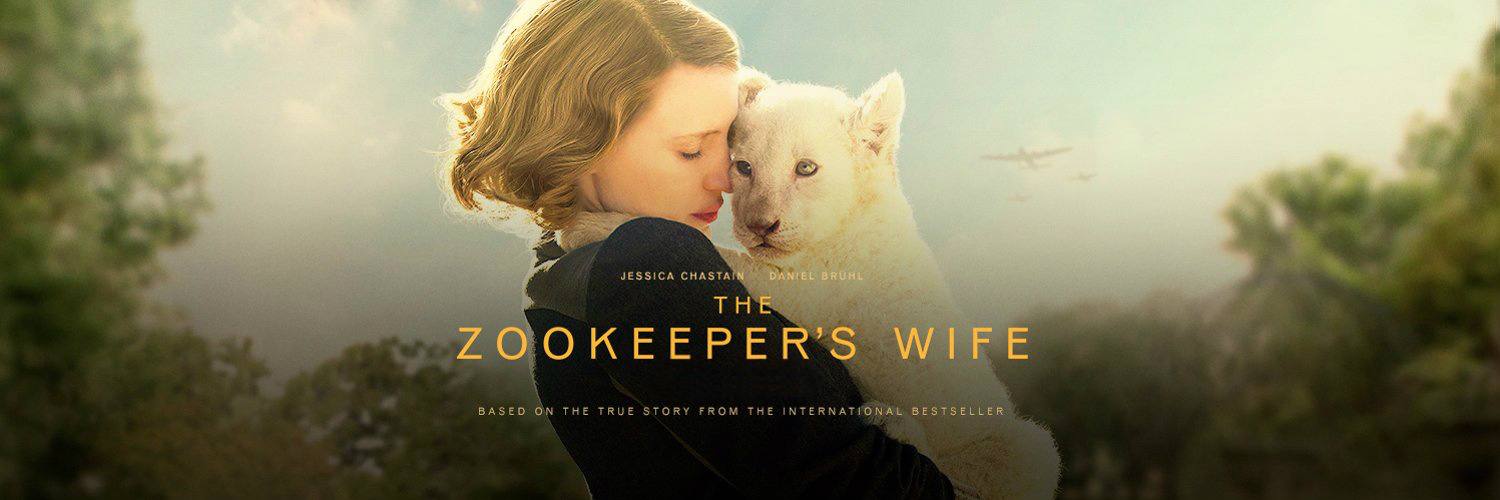
REVIEW: “The Zookeeper’s Wife”

zooposter

For decades filmmakers have plowed the dark and savage subject of the Holocaust. Countless movies have been made documenting the heartbreaking atrocities as well as self-sacrificing acts of valor. There are some who feel we are given too many of these films (a form of Holocaust movie fatigue perhaps). It’s a sentiment I can’t say I share especially when filmmakers continue to find deeply human stories and experiences to share.

Such is the case for Niki Caro’s “The Zookeeper’s Wife”. Based on Diane Ackerman’s non-fiction book, this story of Polish couple Jan and Antonina Żabiński is mostly a fact-based account set during the Nazi occupation of Warsaw. Ackerman’s book leaned heavily on the diaries of Antonina Żabiński. Caro and screenwriter Angela Workman are careful to keep the same authenticity in their telling.

zoo1

The film begins just before the September 1, 1939 Nazi invasion. In its idyllic opening scene Antonina (Jessica Chastain) glowingly rides her bicycle through the Warsaw Zoo which she operates with her husband Jan (Johan Heldenbergh). She makes her way to the front gate where people have gathered. She opens the zoo and greets the visitors as they enter.

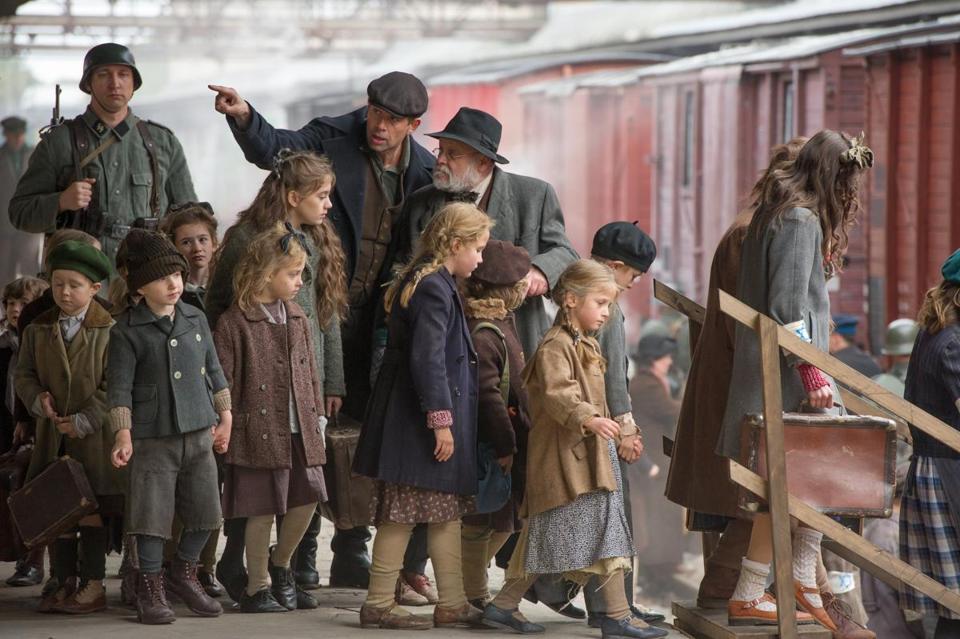
This opening scene sets up the inevitable clash that comes when the Nazis invade Poland. The zoo is ravaged by aerial bombers and like Warsaw is soon under Nazi occupation. Seeking a way to keep their zoo and with practically no animals left, Jan turns to pig farming as a way to support the German war effort. But in truth it’s a guise to hide the Żabiński’s true conviction – to save as many Jews as they can and right under the Nazi’s noses, particularly that of German zoologist Lutz Heck (Daniel Brühl).

zoo3

On the surface Workman’s script doesn’t place a heavy focus on the horrors that took place. We do get glimpses and often quite potent ones. Yet some feel the film doesn’t go far enough in its depictions of the atrocities. In reality there were quieter stories that required just as much heroism despite garnering little attention. Workman is rightly content to stay within her narrative bounds.

Caro’s direction works much the same. She doesn’t anchor her film in a tortuous visual representation. To the film’s benefit she’s clearly not interested in meeting common war movie expectations. Instead there is a soulful grace to her presentation that oozes empathy yet still manages to be tense and harrowing.

zoo2

Most importantly both Caro and Workman wisely lean on their biggest strength – Jessica Chastain. She gives us an earnest and unassuming Antonina with a strong moral conviction that drives her heroism. Chastain masterfully juggles her character’s fortitude and stoicism with human elements of fear and uncertainty. It’s a delicate balance that makes this portrait of courage all the more inspiring. Chastain’s work is deserving of some genuine Oscar consideration.

Despite its many positives the film’s final act is a bit bumpy. The story darts forward in time more than once and some fairly big developments happen with little attention given to them. It’s easy to follow but it did seem as though the back end was rushed even though it still packed some strong emotional punches. But that doesn’t undermine some wonderful work from a talented group of women. “The Zookeeper’s Wife” may not satisfy those looking for a more visceral experience, but not every Holocaust story requires that approach. Many of these stories weren’t as pronounced, yet they were just as powerful and inspirational. This is such a story.

VERDICT – 4 STARS

4-stars

REVIEW: “Zootopia”

ZOOPOSTER

I think it has become abundantly clear that Pixar isn’t Disney’s only animated money maker. Recently Walt Disney Animated Studios has blown away the box office. It should be said that their films always make money, but their last three animated features have made just under $3 billion. Those films include 2013’s “Frozen”, 2014’s “Big Hero 6”, and now this year’s surprise mega-hit “Zootopia”.

“Zootopia” was predicted to perform well, but no one expected it to break numerous box office records. It shattered projections and has earned over $1 billion globally. Not only did people come out to see it, but most critics lauded it with some even calling it one of the best animated films ever made. That is hefty praise especially for a movie I could never fully embrace.

ZOO1

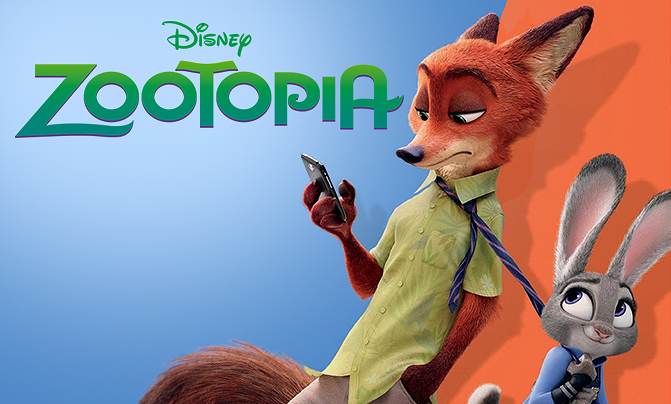
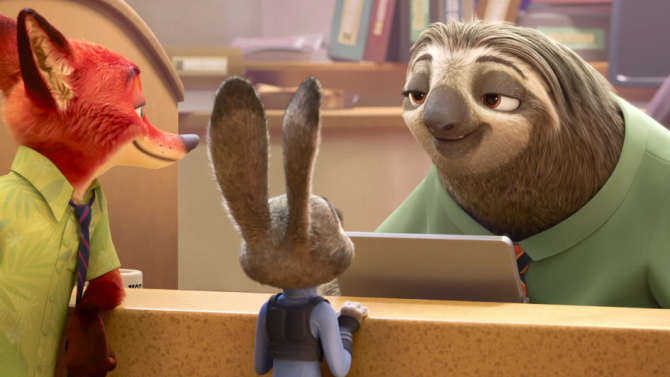
There are two sides to “Zootopia” that provoked two different reactions from me. Let’s start with the good. In part “Zootopia” is a fun, playful buddy cop film that also tells a touching story of a young bunny setting out to accomplish her dreams despite the numerous obstacles thrown her way. Ginnifer Goodwin plays Judy Hopps, a young country rabbit who sets out to accomplish her dream of being a police officer in the metropolis of Zootopia. But everyone tells her she can’t do it, she’s too small, that no rabbit has ever made the police force.

Judy presses on against a barrage of opposition, graduates from police academy, and lands a job at a Zootopia precinct. But even there she faces a bigotry that lands her on traffic duty. Themes of sexism and prejudice resonate and are handled smartly and effectively. When the film keeps this lean focus it can be surprisingly and subtly thought-provoking.

ZOO2

Unfortunately the film doesn’t maintain its subtlety. In fact it obliterates it. It becomes so ridiculously heavy-handed in its indictments of intolerance, prejudices, and stereotyping. It doesn’t allow for you to think about and chew on their message. It spells everything out in the most obvious ways. At times it feels like they are presenting political talking points instead of a movie script.

And this isn’t an issue found in scattered instances. It’s a drum the writers and directors beat over and over again. They don’t just hit you over the head with their social message. They bludgeon you to death with it. And the problem isn’t that they have a message. It’s that their lack of subtlety and tact subvert the power of it. It resonates early in the film. Later it begins to feel like a big lecture emanating from almost every pore of the story.

ZOO3

Thankfully we do find moments where we can catch our breath. The central relationship between Judy and a con-artist red fox named Nick (slickly voiced by Jason Bateman) is a lot of fun. There are also some really funny moments. A hysterical bit from the extended trailer involving sloths and the DMV is still laugh-out-loud hilarious. Also seeing Idris Elba playing a cape buffalo police chief is inherently funny.

Clearly “Zootopia” has several things going for it. The humor often hits its mark. Judy and Nick have a sparkling relationship. The deeper themes are provocative and absorbing when wisely explored. Negatively the animation doesn’t blow you away and things can occasionally get a little silly. But those aren’t the biggest problems. The collection of seven writers and two directors get so caught up in their statement that it nearly smothers the message. We aren’t allowed to glean much for ourselves or come to our own conclusions. Instead it becomes a relentless social politics lecture with a handful of breaks in between.

VERDICT – 2.5 STARS2.5 stars

REVIEW: “Z for Zachariah”

Zposter

The post-apocalypse has become one of the favorite settings for modern day filmmakers. Think about it. We’ve witnessed the aftermath of an earth ravaged by everything from nuclear war to energy depletion to zombie outbreaks. And while some may argue it has been done ad nauseam, I have to say I love it. It’s a setting that offers filmmakers opportunities to put human beings through a plethora of powerful emotional and relational situations.

So right off the bat “Z for Zachariah” places itself in this familiar setting. But the film, directed by Craig Zobel and based on a novel originally published in 1974, shows us several new things and quickly differentiates itself from the post-apocalyptic norm. Flickers of science fiction can occasionally be seen but for the most part it lingers in the background. Instead the film focuses on the most compelling and absorbing dynamic – human drama.

Z1

The movie begins after what appears to be a nuclear holocaust. There is no widespread destruction or vast wastelands. Only emptiness and radiation – vacant mountain cities filled with remnants of a once vibrant past. It is here that we meet Ann (Margot Robbie) rummaging through a radiation-soaked town before heading back to her home – a farmhouse in a miraculously radiation-free pocket of territory high in the mountains. Ann is alone, surviving by working the same farmland as her father during her childhood. She also shares her father’s deep faith believing God has sheltered their land for His own purposes.

One day while out hunting Ann is stunned by what she sees – another human being. Roaming a winding mountain road in a radiation suit and pulling a cart full of his belongings is John Loomis (Chiwetel Ejiofor). After a complicated first meeting, Ann brings John to the farm where he begins sharing in the work. John was a scientist and an engineer and is respectful of Ann’s beliefs and gracious for her hospitality. We watch as a unique human relationship is formed, each approaching it from very different walks of life. But things get complicated when a mysterious stranger named Caleb (Chris Pine) arrives; a veritable ‘third wheel’ who brings an entirely new set of emotional complexities to the relationships.

Z2

This is the story Zobel seeks to tell. There are no mutated monsters, hordes of zombies, or packs of marauders. Simply three people dealing with their internal and external situations. They could just as well be the last people on Earth which adds a unique perspective to the story. Even in their incredible instances of survival, the basest and most primal human instincts still must be dealt with. And despite their miraculous situations, people will always birth conflict.

But Zobel and writer Nissar Modi look at these things through different lenses. For example there is a deep spiritual element that we see in Robbie’s character and through the rich symbolism sprinkled in the story. It allows for the pondering of several compelling points. But Loomis and Caleb bring interesting twists of perspective that ask a number of thoughtful questions. This was one of the many things that impressed me. Even in its simplicity, the story is an intelligent and nuanced exercise in human examination and internal exploration.

Z3

And what a telling performance from Margot Robbie, an actress I had given little attention. She is sublime, turning in a beautifully delicate and stripped-down performance. She is the heart of the film and in many ways its frail moral compass. But right behind her is Ejiofor. In a sagacious performance he gives us the most layered and complex character of the film. Even Chris Pine, and actor who hasn’t always impressed me, is very good in giving us an interesting and cryptic third character. These three make up the entire cast and each deliver on a high level.

“Z for Zachariah” is a breath of fresh air, a post-apocalyptic morality yarn that may play out too slowly for some. It unwinds at a deliberate pace, patiently touching on its subjects while never spelling itself out. Yet there is such a satisfying effectiveness to the slowness. Zobel engages his audience not through the normal and expected genre machinations, but by peeling back revealing layers of humanity. Layers that, when examined by an honest eye, can sometimes be quite ugly. Personally, I found it fascinating.

VERDICT – 4 STARS