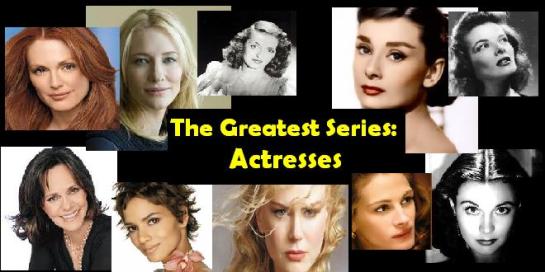
Tackling a definitive list like this is something I’ve generally avoided in the past, but for a while I’ve felt drawn to this project. Several months back I entered the first installment to what I’m simply calling “The Greatest” series. This time I’ve went through the grueling task of putting together a list of who I think are the 10 greatest actresses of all time. This is the second installment of a series that I hope to branch out in a number of interesting directions. I hope you enjoy it and take time to share you’re thoughts below.
There are some brilliant actresses who are favorites of mine but who don’t yet have the body of work to be considered a member of THE GREATEST. I’m talking about talents such as Jessica Chastain, Emily Blunt, Carey Mulligan, Elizabeth Olsen just to name a few. I love these ladies and with a few more great performances under their belts they could join this list. But for now let’s get started by listing #11 – #20:
#20 – Jodie Foster
#19 – Rachel Weisz
#18 – Helen Mirren
#17 – Maureen O’Hara
#16 – Kate Winslet
#15 – Nicole Kidman
#14 – Vivian Leigh
#13 – Deborah Kerr
#12 – Meryl Streep
#11 – Bette Davis
Now let me introduce my 10 Greatest Film Actresses of All Time:
#10 – Juliette Binoche
 It may surprise some people to see Juliette Binoche in such a prominent spot on this list, especially those unfamiliar with her body of work. For me few actresses can give a more deeply personal and emotionally committed performance than this immensely talented French actress. Her abilities speak for themselves, but you gain a better understanding of her appreciation by simply looking at the great filmmakers who have put her in their films: Jean-Luc Godard, Krzysztof Kieślowski, Michael Haneke, and Abbas Kiarostami just to name a few. Binoche has an amazing knack of versatility. I don’t know if a role exists that she can’t play. There are certainly some bigger names behind her on this list, but for my money any movie with Juliette Binoche attached to it is automatically interesting.
#9 – Grace Kelly
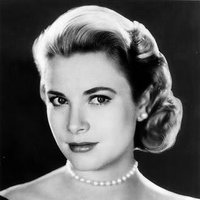 Some may cry foul and say that Grace Kelly lacks the body of work to be considered one of the greatest actresses of all time. I can certainly understand that sentiment. At the same time I believe Kelly’s beauty, elegance, sincerity, and natural abilities helped her portray some truly magical characters. Grace Kelly was an profoundly talented actress and she had an effortless grace. And she could hold her on with any of the big named actors she worked with whether it was James Stewart, Cary Grant, Clark Gable, or Bing Crosby. In fact, Grant would later call Grace Kelly his favorite actress. Kelly starred in one of my favorite westerns “High Noon” and in two of my very favorite Alfred Hitchcock pictures “Rear Window” and “Dial M for Murder”. She was an Academy Award winner and beloved by the entire industry.
#8 – Cate Blanchett
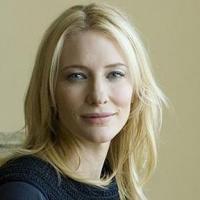 In the world of modern moviemaking few actresses can consistently amaze me like Cate Blanchett does. There are so many things about her acting that I appreciate. One of the things I love are the old-school sensibilities you see in various degrees in all of her work. But Blanchett has also shown a willingness to branch out of her comfort zone and she has always excelled. She’s played in small intimate independent films and huge grand-scaled blockbusters. But the unbelievable consistency of quality that she brings to each project is a testament to her amazing range and impeccable talent. She has been nominated for six Academy Awards and has won two all by the age of 45. It’s hard to argue against Cate Blanchett’s place on this list and she is one of those rare performers who truly makes whatever film they are in better.
#7 – Elizabeth Taylor
 Many people will remember Elizabeth Taylor for a number of reasons. It may be her very unusual friendship with Michael Jackson. Or it could be for her seven marriages and numerous other romances. What she should be remembered for is being one of the most emotional and dynamic actresses ever to grace the big screen. Taylor was successful at an early age. She started as a child star and reluctantly moved to adult roles. It was there where her career skyrocketed. Taylor was not only a tremendous actress, but she was also one of the most beautiful women ever in the business. She often used these two gifts to create some of the most sultry, sexy and provocative characters you’ll find. She would go on to earn six Oscar nominations winning two of them and cementing her name among the greatest actresses of all time.
#6 – Barbara Stanwyck
 This may be a little high on the list for some people, but simply put I think Barbara Stanwyck was a phenomenal actress. In many ways she was an underappreciated performer and you rarely hear her named mentioned by many modern day moviegoers. In fact she is the only actress in my Top 10 to never win an Academy Award. That’s hard to believe. Just think back to some of her great work in movies like the fabulous “Stella Dallas”, the hilarious Howard Hawks comedy “Ball of Fire”, one of the greatest movies ever made “Double Indemnity”, the holiday classic “Christmas in Connecticut”, and the character-driven “Titanic”. These just scratch the surface on what was a brilliant film career. Stanwyck was the consummate professional and was loved by everyone she worked with from her co-stars to the film crew. She was also one of cinema’s truly great actresses.
#5 – Audrey Hepburn
 In so many ways Audrey Hepburn embodied the idea of a big movie star. She had exquisite beauty and an undeniable fashion sense. But Hepburn was much more than that. She was also a fabulous actresses who played several signature roles in films that still stand as classics. Hepburn set the movie world ablaze in the 1950s through the 1960s. Her popularity launched in 1953 with the beautifully romantic “Roman Holiday”. She would go on the win the Best Actress Oscar for that performance. The very next year she would get another Oscar nomination for her work in Billy Wilder’s “Sabrina”. Many other great performances followed in “War and Peace”, “The Nun’s Story”, and of course “Breakfast at Tiffany’s”. Audrey Hepburn is a true screen legend, but I often think her great acting gets lost behind her iconic image. That should never be the case.
#4 – Olivia de Havilland
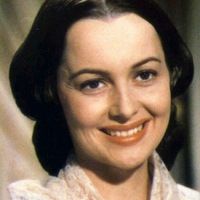 I’ve always found Olivia de Havilland’s career to be a fascinating one. From her wonderful assortment of movies to the positive impact she has had on the industry, de Havilland has an important place in the history of cinema. She was also an actress who weathered the trials of early studio contract work to blossom into one of the most versatile performers we have ever had. She was always good even during those testy early years. She really became noticed working alongside Errol Flynn. The two would star in eight movies together. But she got a tremendous break when she landed a role in “Gone with the Wind”. This performance lead to the ability to seek more challenging roles. She was tremendous in films like “The Heiress”, “Hold Back the Dawn”, “To Each His Own”, and “The Snake Pit”. Olivia de Havilland is one of the few of that era still with us today – one of the true great actresses.
#3 – Marion Cotillard
 I always love actors and actresses who don’t allow themselves to be pigeon-holed and who aren’t consistently within their comfort zones. Marion Cotillard is one such actress. Some may scoff at her being so high on this list but I find her to be one of the most captivating actresses working today. I’m always amazed at the sheer heart and emotion that she brings out of her characters. Her career started in France and she earned some much deserved attention. But her big break came when she landed the starring role in the Edith Piaf biopic “La Vie en Rose”. Her performance has been rightly praised and its impression is still felt. She would go on to give a number of challenging performances in the French ensemble film “Little White Lies”, “Rust and Bone”, and most recently “The Immigrant”. And that doesn’t include the perfect touches she brings in her supporting work. “Midnight in Paris”, “Inception”, and “Nine”.
#2 – Katharine Hepburn
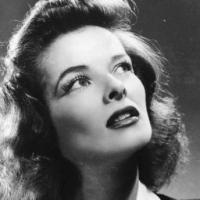 It is impossible to even consider the greatest actresses of all time without Katharine Hepburn being mentioned. For over six decades Hepburn entertained audiences with performances that spanned nearly every genre. She worked with some of the best actors including Humphrey Bogart, Cary Grant, Henry Fonda, Jimmy Stewart, and long time partner Spencer Tracy. She had an equally impressive list of directors who sought her for their roles. Hepburn’s journey wasn’t without its troubles. At one point she earned the reputation of being hard to work with and her career declined. But several big roles and great performances changed that. “The Philadelphia Story” brought her back to prominence and “The African Queen” did the same thing for her several years later. Her success continued into who elder years and by the end she had won an unprecedented four Academy Awards. It was an amazing career.
#1 – Ingrid Bergman
 Narrowing down such a list has proved to be an almost impossible task, but from the very beginning I knew who would occupy my top spot. For me it has to be the Swedish beauty Ingrid Bergman. She was an actress always known for her innate natural looks and abilities when it comes to acting. In fact her first American movie role (“Intermezzo: A Love Story”) made her an instant star. Through the years that followed her roles would garner more attention and her performances only got better. Perhaps her most recognized role is Ilsa from the classic “Casablanca”. But who can forget her Oscar-winning work in “Gaslight” or her collaborations with Alfred Hitchcock “Spellbound” and “Notorious”? There was “The Bells of St. Mary’s”, “Joan of Arc”, “Anastasia” and so many more. She continued to shine on through the late 1970s even winning her third Oscar for “Murder on the Orient Express”. It was a magical life and career that has left us with so many wonderful cinematic treasures.








 Keith & the Movies