For Star Wars Day: Five Awesome Darth Vader Moments in Star Wars…

With Star Wars Day upon us, I couldn’t think of a better way to celebrate this beloved franchise than by focusing on one of its most beloved characters. Darth Vader is considered by many (myself enthusiastically included) to be one of the greatest big screen villains of all time. It’s a legitimate claim that can backed up by simply perusing the vast catalog of great Vader moments from movies, streaming series, comics, etc.

Anakin Skywalker (aka Darth Vader) has been the narrative centerpiece for much of the Star Wars story, beginning with the prequel trilogy, on through the original trilogy, and in much of the animated universe. Even when other characters are the main focus, the shadow of Vader looms over whatever story is being told. Also he’s just an incredibly cool villain who has given us so many great Star Wars moments over the decades.

So in light of Star Wars Day, I thought it would be fun to highlight five of the most awesome Darth Vader moments in all of Star Wars (with video of the scenes included). There are so many to choose from so it’s impossible to call this a definitive list. At the same time, it’s hard to argue that these five moments aren’t amazing. Check them out below and be sure to share your picks in the comment section below.

(Be warned, if you haven’t seen Star Wars but plan to, there will be a few spoilers ahead)

#5 Vader Appears – “Jedi: Fallen Order”

“Jedi: Fallen Order” released in late 2019 and it quickly became one of the franchise’s most acclaimed games. While playing was an incredible experience all its own, it was the canonical story and rich character building that made the game special. Set five years after the events of “Revenge of the Sith”, the story follows one of the few survivors of the Empire’s Great Jedi Purge. It all builds towards an epic appearance of Darth Vader at his most powerful. While I’m sure most non-gamers haven’t seen it, it’s a moment that shouldn’t be missed.

#4 – Vader Pulls Down a Ship – “Obi-Wan Kenobi”

While it doesn’t rank among the most significant moments in Darth Vader’s storied history, there’s something about Vader pulling down an entire ship with his force powers that is just awesome. He does that very thing in the Disney+ series “Obi-Wan Kenobi” and it is every bit as cool as it sounds. As members of the underground desperately try to escape, Vader force grabs what he believes is their ship and yanks it back to the ground. It’s an amazing show of power even if the results aren’t quite what the dark lord expected.

#3 – The Mustafar Duel – “Revenge of the Sith”

The lightsaber duel between Obi-Wan Kenobi and Anakin Skywalker remains both exhilarating and heart-wrenching. It’s true that Anakin wasn’t yet in his ominous black suit. But he had been given the name Darth Vader by his new master so this choice certainly applies. The two former best friends and brothers unleash an epic lightsaber showdown that starts in a hidden Trade Federation base before spilling outside amid the dangers of the volatile volcano planet. Everything about the duel works, from the buildup to the execution to the dramatic payoff.

#2 – Vader’s Redemption – “Return of the Jedi”

Darth Vader’s tortured and violent story culminated in a moment of redemption that not only triggered the end of the Galactic Empire, but saved his son Luke who was able to turn his father back to the light. It took place in the Emperor’s throne room on the second Death Star. The gravity of Vader’s choice to save Luke by killing Palpatine can’t be overstated. It’s one of the most significant moments in Star Wars. And it (mostly) wraps up the story of Anakin Skywalker, whose tragic life ends with what you might call peace.

#1 – The Hallway Massacre – “Rogue One”

Though it doesn’t carry anywhere near the weight of my previous pick, no Dark Vader scene has shown him more menacing and merciless than in the heralded hallway scene in “Rogue One”. Vader is nothing short of terrifying in this brief but jaw-dropping sequence at the end of the film which directly connects it to “A New Hope”. Vader unleashes his full wrath on the helpless rebels. The siren, the creaking metal, the lightsaber’s ignition, the swelling music, the desperate screams – it all plays into what is one the franchise’s most iconic moments. It never fails to give me goosebumps.

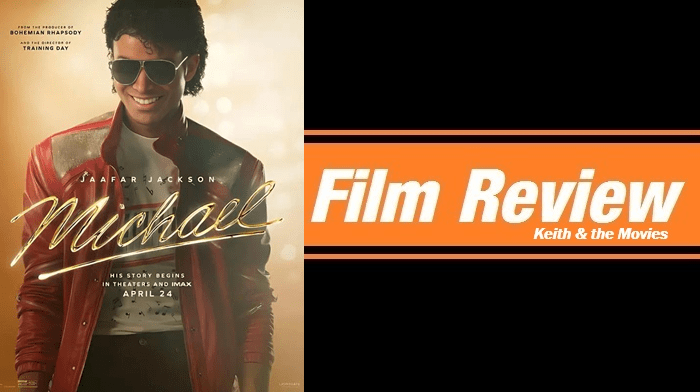
REVIEW: “Michael” (2026)

The latest music biopic to come down the pipeline is none other than “Michael”, a film highlighting the King of Pop himself, Michael Jackson. But surprisingly much of the early conversation has revolved around the scathing reception from a cynical segment of fellow critics, who desperately wanted a darker, more incisive character study rather than a celebration of music and artistry that defined an era. That’s certainly their prerogative. But there’s a fine line between critiquing a movie for what it is and for what you want it to be.

That’s not to say “Michael” should be free from criticism or that it isn’t due some. It’s true that the film’s starstruck perspective doesn’t allow much room for a deeper understanding of Michael Jackson the man. And it doesn’t draw clear lines from some of the issues it itself introduces to the root causes of them. But “Michael” is far from the disaster it’s portrayed to be. It’s an engaging and often electrifying tribute that centers on the one thing about Jackson that is undeniable – his music took the world by storm and is still beloved today.

Image Courtesy of Lionsgate

Director Antoine Fuqua doesn’t stray too far from the standard biopic formula. But he energizes it with a strong focus on the timeless music and unforgettable performances that made Michael Jackson a legend. But there is more to “Michael” than just great tunes. Screenwriter John Logan (“Gladiator”, “Skyfall”) hones in on a specific sliver of Michael’s family life. His story tells of a domineering father, a nurturing mother, and a talented son eager to take charge of his own career.

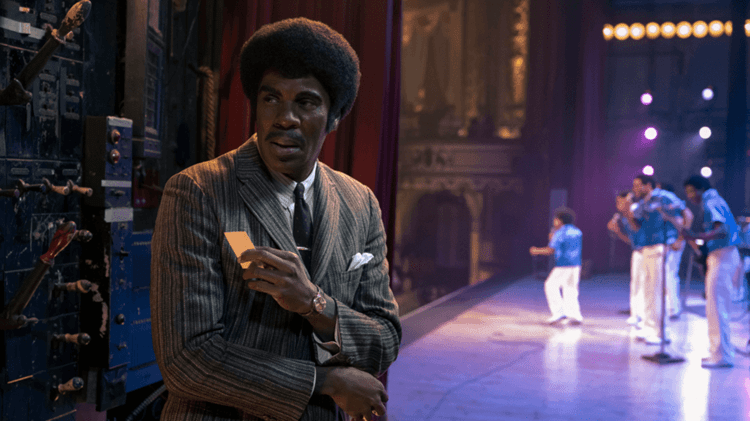
The story begins in 1966 with the blue-collar Jackson family living in Gary, Indiana. That’s where Joseph Jackson (portrayed with uncomfortable intensity by Colman Domingo) brings his five sons together to form a music group he calls the Jackson 5. The youngest is 10-year-old Michael (played by an extraordinary Juliano Krue Valdi), the group’s sweet yet eccentric lead singer who loves Peter Pan and watching movies with his mother, Katherine (Nia Long).

The cold-hearted and abusive Joseph sees the Jackson 5 as his ticket out of the steel mill. So he pushes his sons through a punishing schedule of rehearsals and area gigs until they’re finally noticed and signed by Motown Records. It doesn’t take long for their album to reach the top of the charts and the Jackson 5 quickly becomes a household name. Joseph wastes no time moving his family out of Gary and into a mansion in Encino, California.

Image Courtesy of Lionsgate

As years go by, the Jackson 5 remain a successful act while growing up on stage for the entire world to see. But by 1978, Michael (now played by MJ’s real-life nephew Jaafar Jackson) had grown tired of Joseph’s suffocating control. So he teamed up with producer Quincy Jones (Kendrick Sampson) to make a solo album. “Off the Wall” was Michael’s chance to reintroduce himself to the world. The album was a smash hit, much to the chagrin of Joseph who only saw himself as the reason for Michael’s success. This sets up the father-son conflict that propels much of the story.

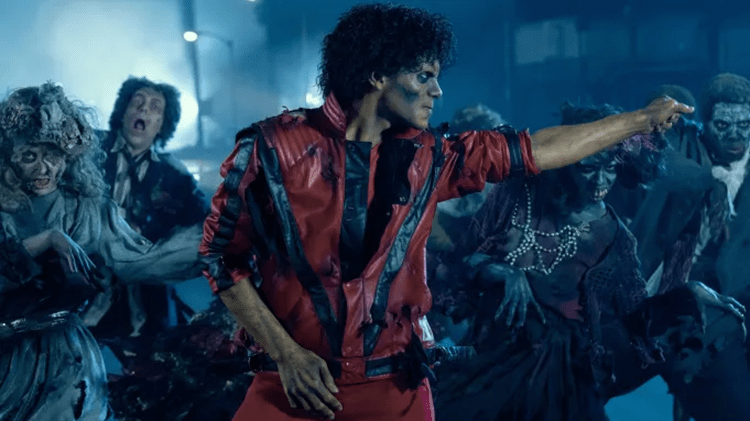
I won’t spoil every stop on the movie’s timeline, but Fuqua hits several key points in Michael’s career, my favorite being the development of the all-time best-selling album, 1982’s “Thriller”. We see the origins of “Beat It”, his close partnership with attorney John Branca (played by Miles Teller), his push to get his videos on MTV, the Pepsi incident, the Don King promoted Victory Tour, and so on. More personally, we’re shown Michael’s insecurities in his “friendship” with animals, in his childlike private life, and in his first cosmetic surgery (“I have to be perfect.”).

But undoubtedly many will be quick to point out what the movie doesn’t include. It’s true that the film avoids the more complicated parts of Jackson’s legacy. We never see the growing tension between Michael and his brothers; nothing about the construction of Neverland; no mention of his whirlwind marriages or his growing health issues; and it never addresses the sexual abuse allegations which he vehemently fought against. But in fairness, “Michael” ends in 1984 before the bulk of the controversies played out. And Fuqua teases there may be more to come by ending his film with an exhilarating recreation of Jackson’s 1988 performance of “Bad” at Wembley Stadium followed by the words “His story continues”.

Image Courtesy of Lionsgate

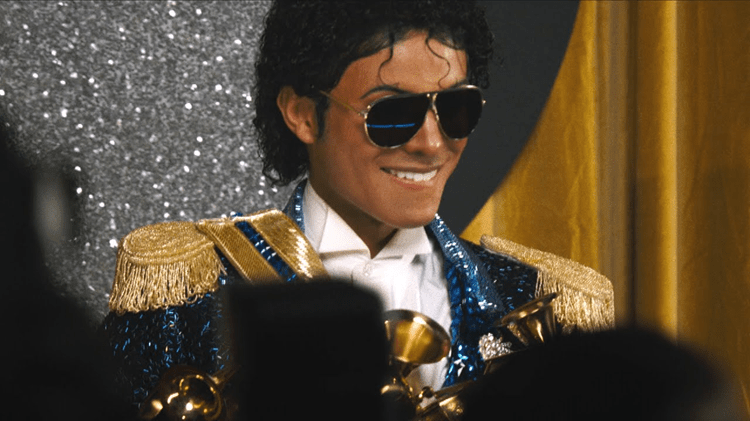
“Michael” is worth seeing for the enduring music alone. But you’ll be just as blown away by the performances that bring the King of Pop to life. Valdi is astonishingly good, fully capturing a younger Michael’s tenderness at home and his magnetic charisma on stage. But most people will be talking about the amazing debut performance from Jaafar Jackson whose uncanny resemblance to his superstar uncle can’t be overstated. From his vocals and mannerisms to his incredible dancing, Jaafar poured years into studying and mastering Michael’s moves. But it’s the added touches of vulnerability that make this more than a mere impression.

You wouldn’t be wrong to say “Michael” was made by Michael Jackson fans for Michael Jackson fans. In that regard, the movie knows what it is and who it’s for. That won’t sit well with those hungry to have certain personal feelings about the singer fed. But it’s a cinematic experience that is sure ramp up the pulses of fans all across the globe. It’s slick and polished entertainment. It’s also nothing short of dazzling. And if you go in with the right expectations, you’ll be tapping your foot, bobbing your head, and fighting the urge to sing for most of the film’s music-filled two hours. I know I was.

VERDICT – 3.5 STARS

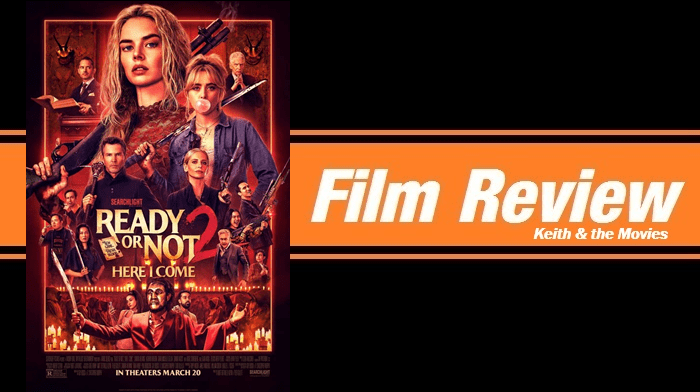
REVIEW: “Ready or Not 2: Here I Come” (2026)

“Ready or Not” released in 2019 and quickly became one of the biggest surprise hits of the year. The horror comedy thriller was picked up and distributed by Fox Searchlight Pictures who gave it a proper theatrical release. They were rewarded when the film brought in $58 million against its modest $6 million budget. Even better, the film was well-received by critics who were quick to brand it as an instant cult classic.

The only thing more surprising than the first film’s success is that it birthed an unexpected sequel, “Ready or Not 2: Here I Come”. The key creative minds return including co-directors Matt Bettinelli-Olpin and Tyler Gillett and co-writers Guy Busick and R. Christopher Murphy. But the most crucial returning piece is Samara Weaving, reprising her role as Grace MacCaullay, the lone survivor of the Le Domas family blood bath.

Image Courtesy of Searchlight Pictures

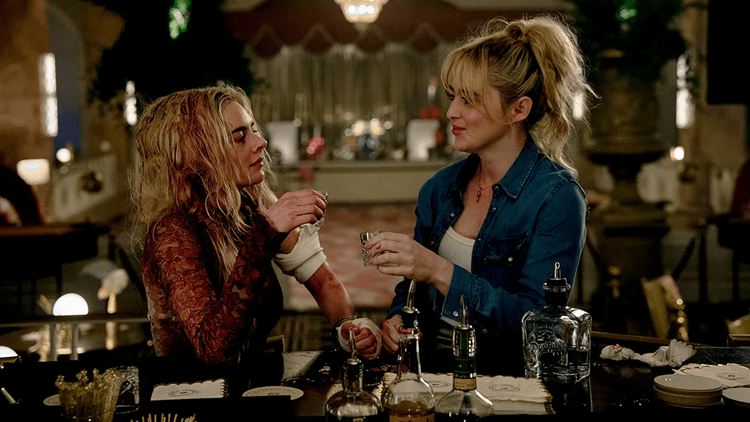
“Ready or Not 2” plays like an extension of the first film, picking up exactly where part one left off. Following what was quite literally the wedding ceremony from Hell, Grace (Weaving) passes out on the steps of the Le Domas family mansion, soaked in the blood of her dead devil-worshipping in-laws. After being transported to the local hospital, she’s visited by her estranged younger sister Faith (Kathryn Newton). The combative siblings waste no time dragging out old baggage.

But little do the sisters know, the Le Domas clan was just one of six families in an international cult of upper-crust worshippers of Le Bail. And their death triggered a clause in the by-laws putting the leadership of the cult’s ruling council up for grabs. So the heads of the remaining families converge on the lavish Danforth estate in Newport, Rhode Island, each vying for the all-powerful high seat. To win it, all they have to do is be the one to kill Grace, and by association Faith, in another game of Hide-and-Seek.

So Grace and Faith are kidnapped and brought to the Danforth mansion where they’re introduced to a new batch of pampered and power-mad hunters. Among them is the domineering Ursula Danforth (Sarah Michelle Gellar) and her impetuous twin brother Titus (Shawn Hatosy), the pompous Ignacio El Caido (Néstor Carbonell), the conniving Wan Chen Xing (Olivia Cheng), and the playboy Viraj Rajan (Nadeem Umar-Khitab).

But there are rules that must be followed, and Le Bail takes his rules seriously. So much so that the consequences for breaking them are…messy. The rules are laid out by a mysterious lawyer for Le Bail (a really fun Elijah Wood) and there are A LOT of them. Most are dropped in overly long information drops. Others pop up out of the blue, feeling more like devices to get the plot from one point to the next. But at its core it’s the same as before- Grace and Faith must survive until dawn if they want to live.

Image Courtesy of Searchlight Pictures

From there the bulk of ”Ready or Not 2” is more of the same but at a different venue and with different villains. Bettinelli-Olpin and Gillett once again playfully lather us in blood and guts. The only thing more prevalent than the chunky red stuff are the ludicrously forced f-bombs. The pointlessly potty-mouthed script dumbs things down, sometimes to the point of being a distraction. We also get a lot more lore building, but it’s nothing that will pique your interest.

While “Ready or Not 2” floods us with more gore, more lore, and more mind-numbing f-bombs than before, it also features less laughs and even fewer surprises. Still Weaving and Newton give it their all, making it easier to navigate the frustrations along the way. The inevitable kills can be fun and the overall goofiness of it all makes it easier to digest. But it’s ultimately a sequel that doesn’t offer up enough to justify its existence. And Grace probably would be better off still sitting on the Le Domas estate steps.

VERDICT – 2.5 STARS

REVIEW: “Iron Lung” (2026)

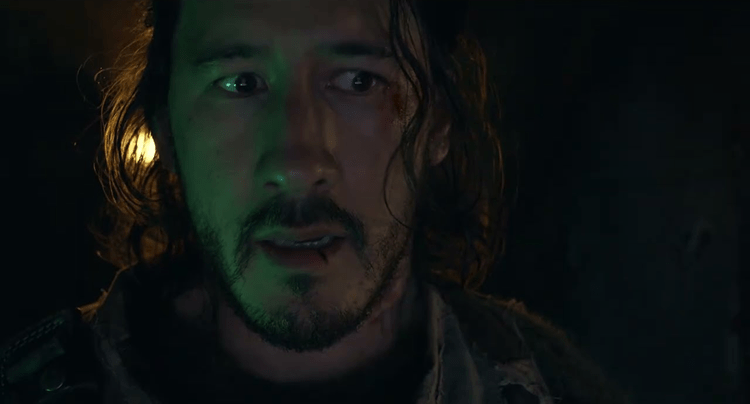
The potential game-changing success of “Iron Lung” has become a compelling story on its own. The science-fiction horror film is written, directed, edited, and produced by Mark Fischbach, a popular YouTuber who goes by the online name Markiplier. He sits as one of the most popular streamers on the platform with over 38 million channel subscribers to date.

Fischbach self-financed “Iron Lung” for $3 million. Even more impressive, he self-distributed his film, initially only negotiating a small release in 60 independent theaters across the United States. He then reached out to his fans who spearheaded a massive grassroots campaign which caught the attention of several major theater chains. As of now, the film is showing in over 4,100 screens worldwide and made over $21 million in its opening weekend.

“Iron Lung” is based on a 2022 indie game developed and published by David Szymanski. It was a first-person simulation horror experience set entirely within a cramped midget submarine. The movie follows suit, keeping us confined inside a small iron shell for the duration of its two hours. The confinement itself is never an issue. But the two-hour runtime is, with Fischbach too often dragging things out considerably longer than he needs to.

The story is set in a distant future where mankind has colonized space. But a catastrophic event called the Quiet Rapture caused all star systems to vanish. Planets, stars, moons – all gone. And nearly all of humanity disappeared with them. The only survivors are the small numbers of people who were onboard space stations and starships. Those remaining desperately do what they can to stave off their extinction.

Enter Simon (strongly played by Fischbach), an antsy convict about to go on a dangerous mission as penance for a crime that we learn more about as the movie progresses. His mission is to descend deep into an uncharted ocean of blood on a desolate moon believed to hold information and resources crucial to human survival. His handlers have nothing but surface scans. So Simon is tasked with exploring the deep and photographing his findings in exchange for his freedom.

Simon’s small single-chambered submarine is welded shut and the lone porthole is sealed to prevent leaks due to the ocean’s intense pressure. That leaves him completely blind when submerged. His only means of navigation are his instruments and the crude images of an x-ray camera. His chief handler on the surface is the stern and cryptic Ava (Caroline Rose Kaplan) who barks Simon’s orders through a small speaker while trying to keep him focused.

There’s not a lot in terms of plot, but the first half-hour is riveting both narratively and technically. The early storytelling is equal parts harrowing and mysterious as new revelations raise the stakes while introducing an array of physical and psychological dangers. Tensions simmer, trust erodes, and deeper questions emerge. At the same time, Fischbach impressively acquaints us with the “Iron Lung” vessel, skillfully capturing the claustrophobia and peril through his camera and rich sound design.

But things take a frustrating turn as the film goes beyond slow-burning to meandering. Fischbach stretches his already limited story beyond its bounds, overextending sequences and repeating himself in scenes to the point of tedium. The gaps between new information get wider as Simon slowly navigates an assortment of drawn-out side quests that end up opening more questions than the movie ever answers.

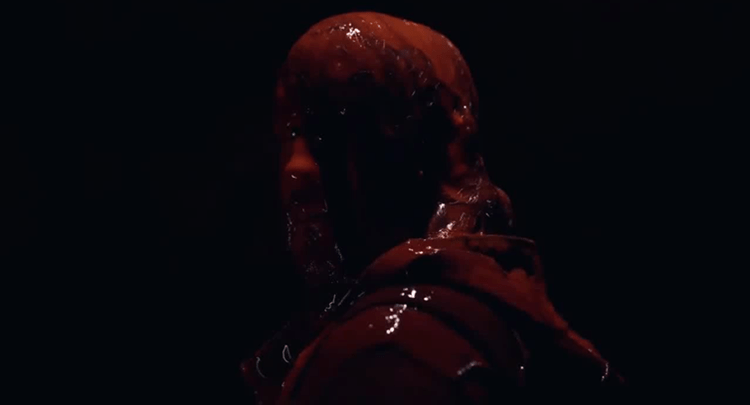
Things do pick up in the final half-hour as Fischbach lets the blood gush (and I say that in its most literal sense). He and his team serve up a gory, blood-drenched ending that’s realized through a series of gnarly practical effects. And though it’s sometimes hard to discern what’s happening amid the dim lighting and shaky camera, the film’s ending goes for the jugular, more so visually than narratively.

In the end there is so much to admire about “Iron Lung” – the concept, the craftsmanship, the ambition, the determination. Markiplier shows some real creative chops, both in front of and behind the camera. Unfortunately the middle-hour’s languid pacing really stymies the movie’s momentum and zaps it of its tension, making the experience more grueling than thrilling. It’s a bummer because somewhere in “Iron Lung” is a tighter and more focused 90-minute movie that I would have loved.

VERDICT – 2.5 STARS

REVIEW: “The Plague” (2025)

There’s so much to admire about Charlie Polinger’s gripping directorial debut, “The Plague”. It may also be one of the toughest films you watch due to its uncomfortably honest treatment of its serious subject matter – preteen bullying. This psychological drama pulls no punches in its depiction of cruelty masked as horseplay. And it doesn’t shun from showing the consequences. It can be bleak, but urgent and enlightening as well.

Polinger writes and directs the film which takes place in the summer of 2003 at the Tom Lerner Water Polo Camp for Boys. Ben (Everett Blunck) is a sensitive twelve-year-old who recently moved to the area from Boston. Ben’s home life isn’t the best, which is why he doesn’t mind going away to summer camp. But not knowing anyone has its challenges, especially for the anxious and awkward Ben. He finds support with his coach (Joel Edgerton), but fitting in with the other boys proves difficult.

Image Courtesy of Independent Film Company

Among the many compelling elements to Polinger’s story is his recognition of social structures, even among preteens. Here it’s a tight-knit group of six boys, who by shallow external measures might be considered the “cool kids”. Ben desperately wants to join their ranks, even enduring mockery from the pack’s alpha, Jake (Kayo Martin) in order to be accepted into their circle.

But deep down, Ben is a good kid, which is why he’s alarmed when witnessing some of the group’s antics. They’re openly loud and rowdy. But Ben learns they’re also crude and vulgar. Much worse is their cruelty which is seen most in their targeting of Eli (Kenny Rasmussen), an eccentric and introverted outcast. Jake claims Eli is the carrier of a highly contagious “plague” which the group uses to mock and ostracize him. As for Ben, his desire to win the group’s approval ends up blinding him to his own complicity.

Yet Ben’s conscience weighs on him which keeps him from being as cold and callous as the others. But his internal conflict seeps through to the surface after he dares to show compassion to Eli, even befriending him when no one else is looking. It immediately puts him in Jake’s crosshairs. Suddenly the group Ben desperately wanted to join has made him their prime target. It all makes for a heartbreaking chain of events that moves towards a finish that is as inevitable as it is troubling.

Polinger’s stylish and confident direction is helped by some truly standout performances from the mostly young cast. Blunck and Martin are especially strong, with each being fully convincing in dramatically different roles. Blunck conveys as much through observations as interactions, expressing Ben’s insecurities and anxiety despite his character working hard to conceal them. It can be a quietly devastating performance, but not without nuance. Martin is surprisingly sinister, hiding his ruthlessness behind a seemingly harmless smirk and curly mop of blonde hair. He’s both infuriating and terrifying.

Image Courtesy of Independent Film Company

As the film plays its hand, any obviousness is discarded in the final act. What begins as a unique spin on the coming-of-age formula turns darker, using dashes of shock and body horror to make us squirm. But Polinger never loses his grip on the material. And the final shot offers a ray of hope, depending on your interpretation. DP Steven Breckon shines, especially with his otherworldly underwater photography, while Johan Lenox’s score offers an unnerving mix of experimental and orchestral.

“The Plague” can feel a bit too broad at times, both with its handling of certain characters and anything resembling their motivations. It will also leave you with a handful of questions, none bigger than wondering where is the adult supervision? It can also be tough distinguishing between the real and metaphorical. But Polinger shows himself to have a remarkable vision, using the various arms of cinema to open our senses to a profoundly serious topic. Overall, “The Plague” is a remarkable and significant big screen debut.

VERDICT – 4 STARS

REVIEW: “The Housemaid” (2025)

Sydney Sweeney and Amanda Seyfried square off in Paul Feig’s “The Housemaid”, a movie that starts off as a fun campy throwback before nosediving in its final act by taking the cheapest and most predictable route available. It’s a shame because Feig has all the ingredients he needs, from a game cast to a genre formula that audiences tend to enjoy. But all of its entertaining buildup is wasted on a ridiculous and trite final act that narratively and thematically rehashes ideas we’ve seen several times before.

In fairness, “The Housemaid” is based on Freida McFadden’s 2022 novel of the same name and from all indications it sticks pretty close to the book’s central story. But if you’re unfamiliar with the novel and hoping for a movie with the slightest original punch, you might leave this adaptation disappointed. For me, seeing potential squandered for something this obvious is more frustrating than disappointing.

Image Courtesy of Lionsgate

Sweeney plays a young woman named Millie Calloway who we first meet as she’s arriving at a lavish estate in Great Neck, New York. There she meets Nina Winchester (Seyfried), a wealthy wife and mother who has invited Millie to interview for a live-in housemaid position. It’s an important opportunity for Millie who isn’t quite who she claims to be. While she hides it from Nina, we learn Millie is fresh out of prison after serving ten years of a fifteen-year sentence for a crime which comes to light later. And she needs a steady job to meet the requirements of her parole.

Millie gets hired and wastes no time moving into a cramped A-frame attic space in the Winchester’s home. The converted bedroom isn’t much, but it beats sleeping out of her car. Millie is also introduced to Nina’s young daughter Cece (Indiana Elle) and her hunky husband Andrew (Brandon Sklenar). It looks like the ideal scenario for Millie. Cleaning, organizing, some light cooking, and helping with Cece in exchange for living in a nice house with a nice family for a nice salary.

But of course Millie’s scenario turns out to be far from ideal. It starts with Nina’s wild fits of rage. She then begins lashing out at Millie, blaming her for things she hasn’t done. Things get even more twisted when Nina begins framing Millie to make her look foolish. In normal circumstances, Millie would quit on the spot. But she desperately needs the job to stay out of prison. Thankfully she finds an ally in the endlessly charming Andrew who routinely steps in to reassure and reinforce Millie with his dreamy eyes and winning smile.

Image Courtesy of Lionsgate

Without giving too much away, screenwriter Rebecca Sonnenshine wastes no time ratcheting up the drama before eventually turning the story on its head. Seyfried does unhinged well while Sweeney wins our sympathy and our suspicion. But neither performance hits every right note, mostly due the material. The script cunningly pushes both characters to their breaking point only to undo its own good work with a lame reveal that’s more interested in being relevant than original.

Sadly the predictable big twist lets all the air out of “The Housemaid”. Not only does it sour the good stuff that came before it, but it kills the film’s finish where things get wackier and bloodier. But even without the story’s eye-rolling “surprise”, the final 20 minutes are a wobbly mess. It’s an ending littered with arbitrary actions, an overly long explain-it-all flashback, and a final scene with ludicrous implications. But to be honest, by that point it didn’t really matter. The damage had already been done.

VERDICT – 2 STARS