REVIEW: “Exodus: Gods and Kings”

EXODUS POSTER

I can’t help but wonder if it’s actually possible for a ‘by the good book’ movie to be embraced and appreciated within the arena of contemporary film criticism. Don’t misunderstand me, I’m not saying critics have been given a lot of quality Bible-based movies to consider. I’m just curious if a receptive environment exists in criticism these days for movies like Cecil B. DeMille’s “The Ten Commandments”? Is this why a flawed movie like “Noah”, which drastically alters the biblical account, is widely accepted among critics? Is this why Ridley Scott chose to omit some key portions of the Moses story in his new film “Exodus: Gods and Kings”?

Now make no mistake, thankfully “Exodus” is no “Noah”. Darren Aronofsky used his Noah story as a platform to promote everything from environmentalism and animal rights to redefining the God of the Bible in several unsavory ways. Ridley Scott doesn’t do that in “Exodus”. “Noah” was also utterly ridiculous and downright dumb at times. “Exodus” doesn’t have that problem either. Scott takes several dramatic liberties, but he does maintain a level of respect for the source material. Instead it’s the numerous omissions that hold the film back a bit.
EXODUS1

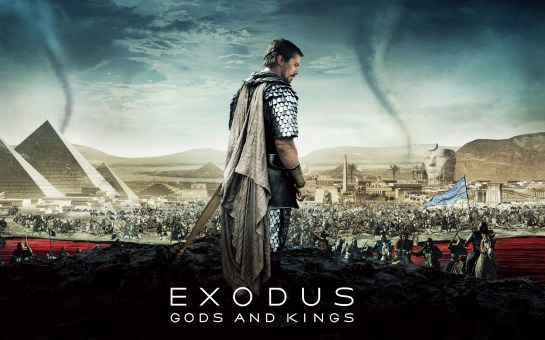
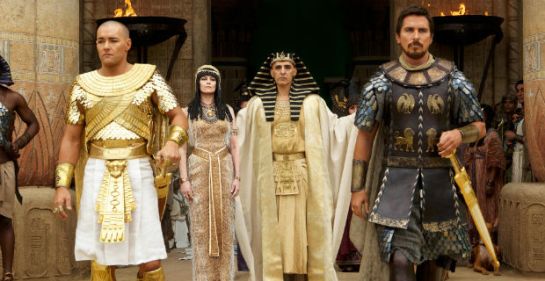
It may be an overused term, but “Exodus” is by definition an epic. Ridley Scott is definitely playing in a familiar period piece sandbox and the sheer scope of the production is jaw-dropping. Over 1,500 special effects shots and some incredible costume and set designs were used to create this vast and vivid landscape. This may be the most visually arresting movie I’ve experienced this year, and it could be said that it should be seen on the big screen to fully appreciate its accomplishments.

The sweeping story begins in 1300 B.C. with Moses (Christian Bale) serving as a general in the Egyptian army. He holds a place of prominence after being adopted into the royal family as an infant and raised with friend and Pharaoh-to-be Prince Ramesses (Joel Edgerton). The Moses of this film is a very complex character. We see him as stubborn, defiant, and conflicted. These traits really come out after God appears to him and tasks him with leading His chosen people out of Egyptian slavery. The film paints Moses as a reluctant prophet at first – one who often disapproves of God’s actions. Only over time does he finally understand that God is with them.

EXODUS2

Now “Exodus” could be theologically picked apart, but I felt its central focus was on target. But there were interpretive decisions that puzzled me. For example, when God speaks to Moses He does so through a messenger – a young boy. I’m sure there is some deeper meaning behind that imagery, but it’s completely lost on me. I also think Moses’ reluctance to follow God and general lack of faith carries on for too much of the film. I think it robs the story of some of its deeper meaning.

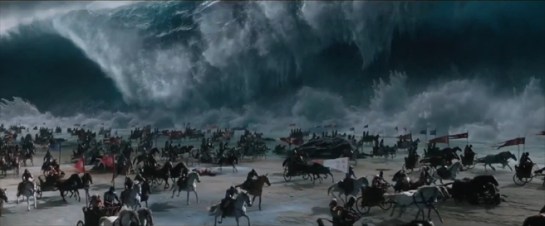
On the other hand there are some interpretations that really intrigued me. For instance, I love the way Scott presents the ten plagues. Aside from the odd way the film launches them, there is a natural connection between several of plagues that is very well realized. Some people have voiced displeasure with the use of nature, but I think it works because the plagues are still clearly supernatural. The same with the parting of the Red Sea. It’s definitely a different approach and some of the changes are unnecessary. But the entire sequence is tense and thrilling. It’s an incredible visual spectacle.
EXODUS3

There has also been criticism about the casting of predominately white actors playing Hebrew and Egyptian characters. Some have gone as far as to ask for a boycott. I don’t like these objections because they automatically assume a degree of racism is behind the casting even though no evidence exists to support it. I also think in this case they ignore some really good performances. Bale gives a solid performance that skillfully moves his character from prominent Egyptian royalty to tired and destitute Hebrew leader. And Joel Edgerton is very good as Ramesses. It’s an incredibly committed performance that could have gone terribly wrong in lesser hands. Both actors put all into their characters and I have nothing bad to say about their casting.

“Exodus” is an interesting Bible-inspired epic. There are a number of Bible omissions and deviations that actually hurts the plot. There are also some unfortunate narrative jolts – moments where the story leaps ahead without giving us the information we need to fill in the gap. But the movie doesn’t disrespect the Biblical account and there no hidden or secret agendas as with Aronofsky’s “Noah”. And then there is the overall presentation from director Ridley Scott. No one can visualize huge and ambitious period pieces like he does. I can’t tell you how many times I said “Wow” while sitting in the theater. It’s that visionary style that ultimately brought this amazing and beloved story to life for me. I doubt it will resonate with most critics, but I’m hoping it finds an audience.

VERDICT – 4 STARS

Random thoughts on the Golden Globes

GOLDEN GLOBES

The 72nd Annual Golden Globe nominations have been announced and the awards season is officially underway. I have to admit I get really excited this time of the year. Many people dismiss the various awards and often times for good reason, but I find them to be a great time to reflect back on the movie year and jockey for the films I find the most deserving.

This year’s nominations were announced today and they started off on the right note. I mean Kate Beckinsale announcing nominees? Brilliant! As for the actual nominations, as expected there were several surprises, several snubs, and several absurdities. There were also several fun observations that have me excited for the show and the days leading up to it. So without further ado here are a few random thoughts on this year’s Golden Globe nominees.

– I was surprised at the number of movies represented that I still need to see. The Imitation Game, Big Eyes, Into the Woods, Foxcatcher, Selma, Still Alice, and Wild just to name a few. I have some fun catching up to do.

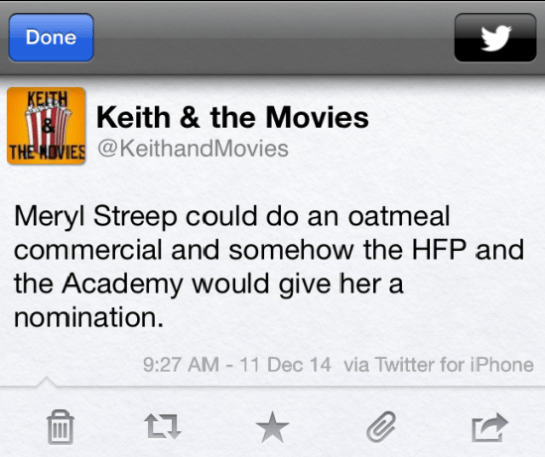
– I shared this tweet shortly after hearing the nominees:

TWITTER

– “The Theory of Everything” was nominated for the big one, Best Motion Picture -Drama? Many would say it’s simply an okay movie with two fabulous performances. Is that enough for a nomination?

– Where is the nomination for Marion Cotillard? Her work in “The Immigrant” was brilliant.

– “Interstellar” gets shut out with the exception of Hans Zimmer for Best Original Score. Can’t say I’m surprised, but I vehemently disagree with its omission.

– I LOVE seeing “Ida” in the foreign language category. It would be robbery if it wasn’t there. But once again I ask why is such a tremendous film restricted to one lone category.

– It was a big morning for one of my favorite filmmakers Wes Anderson. Unfortunately it is for one of my least favorite films from him. Not bad by any means, but not Wes Anderson greatness.

– EVERYTHING IS AWESOME! Love seeing “The Lego Movie” getting some love!

– What the heck is “Cake”?

– Could Emily Blunt finally be getting the recognition she deserves? Even though I haven’t seen “Into the Woods” I love that it has given Blunt some attention.

– Did I mention Meryl Streep was nominated? Oh never mind, of course she was.

– The 72nd Annual Golden Globes will once again be hosted by Tina Fey and Amy Poehler. I for one am very happy about that.

– George Clooney is getting a lifetime achievement award at age 53? Isn’t he a tad young for that? Surely this was just a way to get him into the show.

– This year there are several nominees that may not make their way onto Oscar’s list, but it looks like “Birdman” and “Boyhood” are the two sure things.

– The Quvenzhane Wallis nomination was a real surprise especially since every trailer I’ve seen for “Annie” has been absolutely cringe-worthy.

– It’s a good thing J.K. Simmons was nominated. If he hadn’t been I think the “Whiplash” fans would have rioted. I can’t wait to see this film.

Those are just a few random thoughts about this year’s nominations. The winners will be announced January 11, 2015 on NBC. Here are all of the movie nominees:

Best Drama

  • “Boyhood”
  • “Foxcatcher”
  • “The Imitation Game”
  • “Selma”
  • “The Theory of Everything”

Best Musical or Comedy

  • “Birdman”
  • “The Grand Budapest Hotel”
  • “Into the Woods”
  • “Pride”
  • “St. Vincent”

Best Director

  • Wes Anderson, “The Grand Budapest Hotel”
  • Ava Duvernay, “Selma”
  • David Fincher, “Gone Girl”
  • Alejandro González Iñárritu, “Birdman”
  • Richard Linklater, “Boyhood”

Best Actress in a Drama

  • Jennifer Aniston, “Cake”
  • Felicity Jones, “The Theory of Everything”
  • Julianne Moore, “Still Alice”
  • Rosamund Pike, “Gone Girl”
  • Reese Witherspoon, “Wild”

Best Actor in a Drama

  • Steve Carell, “Foxcatcher”
  • Benedict Cumberbatch, “The Imitation Game”
  • Jake Gyllenhaal, “Nightcrawler”
  • David Oyelowo, “Selma”
  • Eddie Redmayne, “The Theory of Everything”

Best Actor in a Musical or Comedy

  • Ralph Fiennes, “The Grand Budapest Hotel”
  • Michael Keaton, “Birdman”
  • Bill Murray, “St. Vincent”
  • Joaquin Phoenix, “Inherent Vice”
  • Christoph Waltz, “Big Eyes”

Best Actress in a Musical or Comedy

  • Amy Adams, “Big Eyes”
  • Emily Blunt, “Into the Woods”
  • Helen Mirren, “The Hundred-Foot Journey”
  • Julianne Moore, “Map to the Stars”
  • Quvenzhané Wallis, “Annie”

Best Supporting Actress

  • Patricia Arquette, “Boyhood”
  • Jessica Chastain, “A Most Violent Year”
  • Keira Knightley, “The Imitation Game”
  • Emma Stone, “Birdman”
  • Meryl Streep, “Into the Woods”

Best Supporting Actor

  • Robert Duvall, “The Judge”
  • Ethan Hawke, “Boyhood”
  • Edward Norton, “Birdman”
  • Mark Ruffalo, “Foxcatcher”
  • J.K. Simmons, “Whiplash”

Best Screenplay

  • Wes Anderson, “The Grand Budapest Hotel”
  • Gillian Flynn, “Gone Girl”
  • Alejandro González Iñárritu, Nicolás Giacobone, Alexander Dinelaris, and Armando Bo, “Birdman”
  • Richard Linklater, “Boyhood”
  • Graham Moore, “The Imitation Game”

Best Foreign Language Film

  • “Force Majeure Turist,” Sweden
  • “Gett: The Trial of Viviane Ansalem Gett,” Israel
  • “Ida,” Poland/Denmark
  • “Leviathan,” Russia
  • “Tangerines Mandariinid,” Estonia

Best Animated Feature

  • “Big Hero 6”
  • “The Book of Life”
  • “The Boxtrolls”
  • “How to Train Your Dragon 2”
  • “The Lego Movie”

Best Original Song

  • “Big Eyes” from “Big Eyes” music and lyrics by Lana Del Rey
  • “Glory” from “Selma,” Music and lyrics by John legend and Common
  • “Mercy Is” from “Noah,” Music and lyrics by Patti Smith and Lenny Kaye
  • “Opportunity” from “Annie,” Music and lyrics by Greg Kurstin, Sia Furler, Will Gluck
  • “Yellow Flicker Beat” from “The Hunger Games Mockingjay Part 1,” Music and lyrics by Lorde

Best Score

  • “The Imitation Game”
  • “The Theory of Everything”
  • “Gone Girl”
  • “Birdman”
  • “Interstellar”

REVIEW: “The Purge: Anarchy”

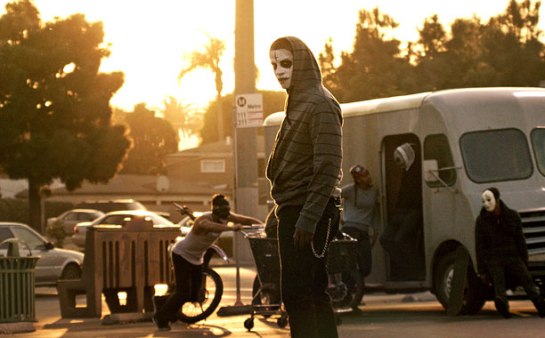
PURGE POSTER

The first “Purge” movie was a strange mixture of intriguing ideas and wasted potential. It was built upon an absurd concept, but one that could have been explored in an assortment of compelling ways. Instead it turned into a preposterous and heavy-handed mess. Now we have a sequel titled “The Purge: Anarchy” and it offers an interesting contrast to the first film. It examines some of those provocative possibilities I wanted from the first movie. Unfortunately it also makes some of the same frustrating mistakes that may not completely undermine the film, but it does keep it from being as good as it could be.

One beneficial thing about the entire Purge series is that it doesn’t revolve around a specific character or group. This allows it to tell new stories and dive into new ideas. In “Anarchy” we are introduced to three personal storylines. Eva (Carmen Ejogo) is a waitress who is struggling to support her teenaged daughter and terminally ill father. Shane and Liz (Zach Gilford and Kiele Sanchez) are a young couple on the verge of splitting up. Leo (Frank Grillo) is a man tormented by a past tragedy. He loads several weapons and heads out just as the Purge is about to begin. As you can guess, their lives intersect on the night of the Purge.

Film Title: The Purge: Anarchy

Now for those unfamiliar with the idea, the Purge is an annual nationwide event where all law enforcement, fire, and medical services are unavailable and all crime (including murder) becomes legal for a 12-hour period. The idea is that the Purge acts as a catharsis of sorts for the citizens of this new America. In reality it’s used as a means of government-sponsored selective population control implemented by the totalitarian New Founding Fathers. It weeds out the poor and more undesirable sections of the population making the world a better place for the rich and affluent.

The whole concept is still absurd, yet writer/director James DeMonaco does offer up some intriguing metaphors and biting social allegory. It’s probably not as audacious or provocative as it thinks it is, but it does ask a few good questions and it doesn’t mind pointing fingers at specific problems. When DeMonaco has these things under control they actually add a slightly unnerving and effective undercurrent to the film. Unfortunately he doesn’t maintain control and soon the movie commits the same annoying mistakes as the first film.

This is really frustrating because I was onboard with what DeMonaco was going for. But he doesn’t know when to dial it back and he soon begins to bludgeon you to death his class warfare message. Again, earlier in the film we see this used effectively. Later DeMonaco jettisons all subtlety and tact instead choosing to drown us with heavy-handed preaching on the evils of wealth and upper-crust white people. He also goes beyond the class messaging and into an arguably tasteless direction. There is a sequence where an underground Black Panther-like movement has a gunfight with the guards of a psycho rich group. Now perhaps its the current sociopolitical climate, but the scenes of white people and black people in a violent, bloody shoot-out divided strictly on racial lines came across as senseless and borderline insensitive (not to mention dumb).

The film’s complete lack of any craftiness or interesting nuance during these later scenes had me rolling my eyes and checking out. I don’t think filmmakers should be bound to subtlety when relaying a message or point, but they can wound their story and smother everything else in the film. You can also lose your grasp on telling a good story and that is the case with “The Purge: Anarchy”. The narrative suffers. The characters suffer. The effectiveness of the message suffers.

PURGE1

All of that is truly a shame. “The Purge: Anarchy” wasn’t a great film from the start, but it was surprisingly entertaining. Frank Grillo gives a really good performance and I found myself caring about him and the other characters. But whether it’s due to DeMonaco’s lack of self-control or a conceit he has regarding his central message, the movie flies off the rails and turns into a silly and potentially distasteful joke. Despite the movie’s blundering detour it does get back on track just in time to provide an unexpected satisfying ending.

“The Purge: Anarchy” had a small $9 million budget yet it pulled in over $110 million at the box office so you know another sequel is coming. Hopefully the next installment can capture what this film did well while avoiding the annoying flaws that this film embraced. There is potential here for a biting look at some relevant social and political issues. We see that in “Anarchy”. But it may take someone besides DeMonaco in the driver’s seat before we get it. As it stands “Anarchy” is much better than the first film. It’s just frustrating when you realize it could have been even better.

VERDICT – 3 STARS

5 Phenomenal Best Picture Winners (since 2000)

movie_theatre - Phenom 5

That time is approaching where all of us movie bloggers begin to ponder and discuss our favorite films of the year. We put together Top 10 lists that some people dislike but I personally love. That leads into awards season highlighted by the Oscars. In light of that I was thinking about past Oscar Best Picture winners specifically since the year 2000. That lead to this installment of the Phenomenal 5. Now Oscar’s choices are always subject to good debate and my list is no exception. Therefore calling this the definitive list would be silly. But I have no problem calling these five Best Picture winners simply phenomenal.

#5 – “A Beautiful Mind”

BEAUTIFUL

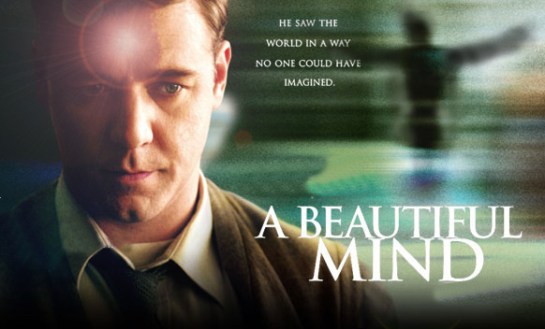
Ron Howard did some amazing things in 2001’s “A Beautiful Mind”. He puts us in the head of a brilliant man struggling with a mental disorder and creates a level of empathy only captured in truly great films. Russell Crowe shows off his immense acting range and a wonderful supporting cast featuring Jennifer Connelly, Ed Harris, and Paul Bettany make things even better. The film has been criticized for its inaccuracies and by those who don’t care for Howard’s style. I think it’s a beautiful movie that tells an incredible story.

#4 – “Slumdog Millionaire”

SLUMDOG

In 2008 “Slumdog Millionaire” was the movie that seemed to come out of nowhere. The vision of British director Danny Boyle was so vivid and energetic and the story was captivating. I remember the debate at the time particularly from those who couldn’t connect with the film. Personally I found it to be a magnetic, poetic, searing, and heartbreaking experience. I’ll give the detractors this, there are moments where the movie stumbles, but overall “Slumdog” is still a great film both from a story and style perspective.

#3 – “The Artist”

ARTIST

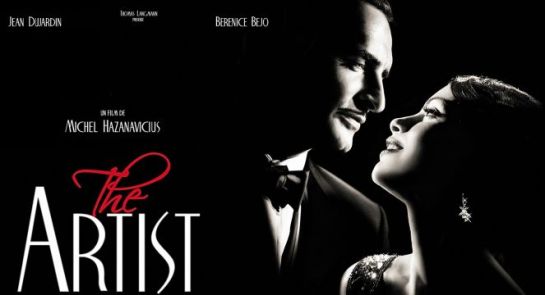
My appreciation for “The Artist” is hard to express in one simple paragraph. Looking at it one could say it was a film made for awards. I think that is cutting it short. Director Michel Hazanivicius deserves a ton of credit, not just for having the guts to make a silent picture in a finicky modern movie era, but for doing it with incredible detail and precision. And then there is the performances especially from Jean Dujardin. Watching it again only impressed me more and the perfection of his casting is undeniable. I love “The Artist”.

#2 – “Gladiator”

Gladiator

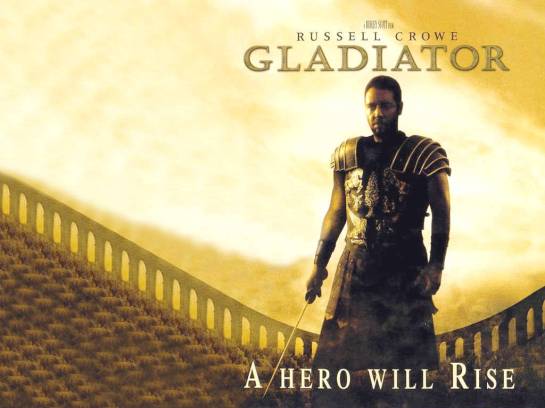
Russell Crowe and Ridley Scott teamed up for 2000’s “Gladiator” and the results were magical. Scott’s epic-sized direction and Crowe’s period-perfect performance drove what would become an enormous box office hit. The film had its critics including Roger Ebert who called it dull and indistinct. I couldn’t possibly disagree with him more. “Gladiator” has so many scenes that I adore and Russell Crowe owns the screen every time the camera is on him. Pulse-pounding action, glorious epic scale, and a fine central story. I’m a big fan of this film.

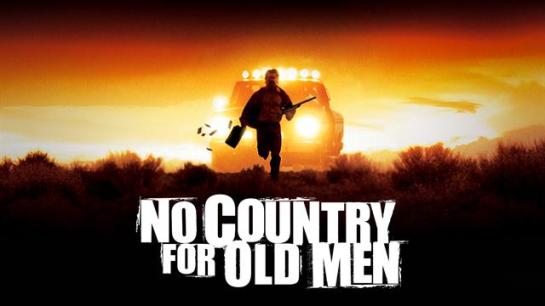
#1 – “No Country for Old Men”

NO COUNTRY

Frequent readers of Keith & the Movies shouldn’t be a bit surprised to see the Coen Brothers’ near perfect modern day classic “No Country for Old Men” at the top of my list. For me few movies from the last fifteen years can compete with it. Joel and Ethan Coen’s faithful adaptation of the stellar Cormac McCarthy novel is a visual masterpiece laced with their signature quirky humor and gritty tone. Every performance hits the right note, and there isn’t a wasted scene in the entire film. I’ll say it again, “No Country for Old Men” is as close to perfection as I’ve seen in years.

So there you have my five top five Best Picture winners since the year 2000. What about you? See something that I missed? Please take time to share your thoughts in the comments section below.

REVIEW: “Ida”

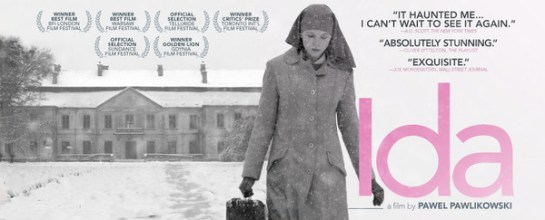
IDA POSTERWithin its compact 80 minute running time the Polish film “Ida” tells its story and creates its visual landscape with a precision and an artistry unlike any other film I’ve seen this year. Shot in striking black and white and told with an unbridled humanity, “Ida” feels as if it would be at home in the filmography of Robert Bresson. It’s a stark and penetrating story working with an aesthetic that is both grim and intensely beautiful.
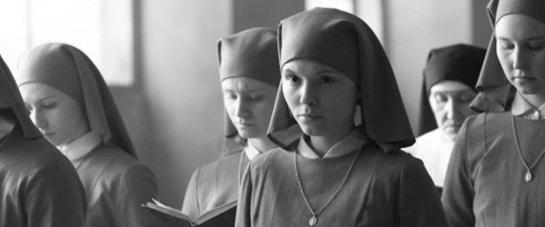
In the very first shot we are introduced to 18-year old Anna who is played by the wonderful Agata Trzebuchowska. She is a novice nun who is a few days away from taking her vows. But prior to the ceremony her superior instructs her to go visit her one living relative, an aunt who Anna never knew existed. We learn that Anna has grown up in the convent and she basically has no knowledge of her past. The life that Anna does know has been defined within the walls of the convent and for her everything else is a mystery.

IDA1“Ida” is a movie about self-discovery. It’s about a young girl finding her identity and dealing with the revelations of who she is and where she comes from. Helping in her journey is the aforementioned aunt, Wanda Gruz (Agata Kulesza), a hard-drinking Communist judge who has watched her career and life suffer due to her self-destructive behavior. Kulesza is marvelous in her depiction of Aunt Wanda. There are several depressing complexities at Wanda’s core, but she also provides some surprising moments of dark humor. These are refreshing little breathers in a film otherwise full of bleak and troubling turns.
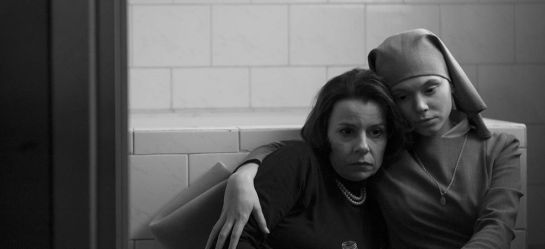
Director Pawel Pawlikowski has a meticulous eye for visual detail which is only overshadowed by the sheer beauty of so many of his shots. You could make a coffee table book full of stunning still images from this film. The story is set in early 1960s Poland and filming in black and white enhances the feelings that we are in the proper time and place. But it isn’t just the look of the film that makes it such a visual delight. It’s also about what Pawlikowski tells us with his camera. We obtain a wealth of information simply by observing and soaking in what the camera is showing.

Let me give you an example. There is a beautiful shot of Wanda and Anna in a car. The camera is in the backseat and we just see the back of their heads as they are driving down a long, straight road. Both are silent and staring straight ahead. Critic Josh Larson points out that in this film “the spiritual meets the secular” and this scene shows that even down to their appearance. Both have head coverings but for very different reasons. Both are heading down a road filled with conflicting emotion and uncertainty. This brief shot, while beautiful in its execution, also tells us a great deal about the two main characters.

IDA2

Pawlikowski also knows how to bring the most out of his two leads. Make no mistake, these are two of the best performances of the year, but the director uses their strengths to the film’s benefit. Trzebuchowska’s big, dark, expressive eyes explain to us the range of emotions her character experiences throughout the film. Likewise Kulesza’s stern, hollow stares often point to an emptiness within her that she can’t quite handle. Both actresses reveal these things to us, but Pawlikowski is a smart filmmaker and he allows them to express without holding our hands and baby feeding us everything.

There are so many other good things I could say about “Ida”. For example the clever use of sound. Background noises are so well implemented whether it be a crow cawing in the distance or the tinging of spoons hitting soup bowls. I also love the way music is employed. There is some great music in this film, but in every instance (as far as I noticed) it was being played in the movie itself either by a band or a record player. This was a cool little shift from the norm – musical scores playing over scenes.

“Ida” will never get mainstream love and that is a shame. We get annual Transformer-type movies by the dozens, each greeted at the box office with millions of dollars. Yet a film like “Ida” can go easily unnoticed. It certainly deserves attention. Pawel Pawlikowski takes a dramatic turn from his last film (“The Woman in the Fifth”) and shows exceptional craft and technique to go along with two top-notch performances and some really good material. In the end “Ida” offers more in its captivating 80 minutes than many big movies are capable of delivering with more time and a lot more money.

VERDICT – 4.5 STARS

REVIEW: “Only Lovers Left Alive”

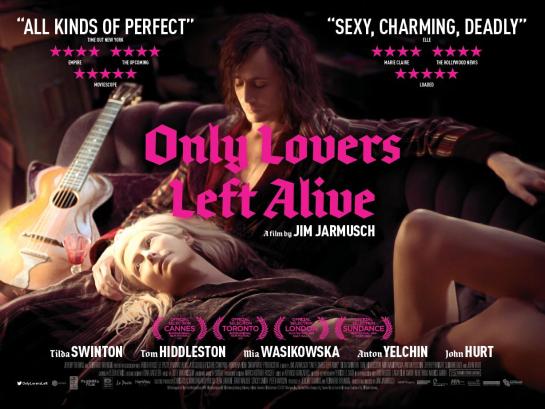
LOVERS POSTER

Several years ago vampires became all the rage in modern pop culture. “Twilight” made millions from novels and movies. “True Blood” was a hugely popular television series. And while I can’t say many flattering things about the quality of these properties, fans could get their vampire entertainment fix almost anywhere. Now, as the vampire craze appears to be fading, writer and director Jim Jarmusch gives us a vampire tale that is boldly unique and intelligently metaphoric. It would also send Twilight fans running for the exits.

“Only Lovers Left Alive” could be described as a mood piece. Like other Jarmusch films, this is more centered around developing characters than developing plot and your enjoyment of the movie will probably depend on how much you enjoy being with these people. As you can guess the two main characters are vampires, but part of the film’s genius is how it uses vampire concepts while stiff-arming the usual tropes and gimmicks. In fact it seems like calling it a ‘vampire movie’ is actually doing it a huge disservice.

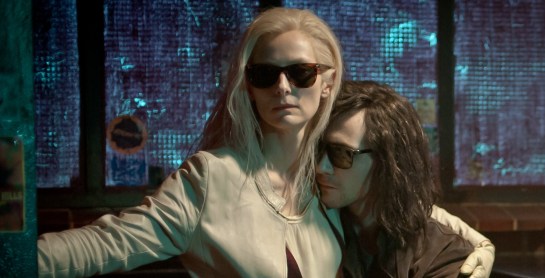
At the core of the film lies the love story of a centuries old vampiric couple. Adam (Tom Hiddleston) is a recluse living in an old two-story Victorian on the abandoned outskirts of Detroit. He surrounds himself with out-of-date electronic gadgets and his music. His wife Eve (Tilda Swinton) lives in Tangier, Morocco where she spends most of her time enjoying books and literature. The two are very different. Adam has grown forlorn and sour due to the current state of the world. Eve is more playful and optimistic, choosing to embrace hope and happiness. Yet despite these differences the two soulmates deeply love each other.

LOVERS1

Sensing Adam’s depression Eve travels to Detroit where the two are reunited. From there the film opens up the characters and their relationship by simply following along with them. We listen to their conversations which range from scientific theory to makes and models of classic guitars. We listen to Adam lament the death of creativity at the hands of humans (who the couple call zombies). We listen to Eve remind him of the great artists and innovators they have known through the centuries. These are fascinating individuals who have a number of fascinating discussions, but they all aim to serve the movie’s greater points.

In many ways “Only Lovers Left Alive” is an indictment of humanity, or at the very least a call for introspection. We hear how humanity’s appreciation for the arts has declined. In fact, in what may be Jarmusch’s jab at modern moviemaking, we hear Los Angeles refered to as “zombie central”. We see how humanity has destroyed what it has created as evident by the hollow and empty Detroit landscapes. We learn about humanity’s destruction of the environment particularly through a couple of references to the scarcity of clean water. Humanity has even destroyed themselves. Vampires are forced to seek alternate methods of acquiring blood because humans have poisoned their own. None of these things ever get to the point of being preachy. Instead they are thoughtful story components that are clever and thought-provoking.

LOVERS2

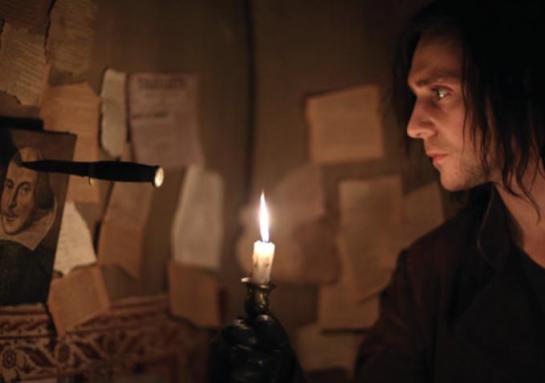
The film also has a smart sense of humor which shows itself most when the vampires are relating to the past. For example Eve reminding Adam of his time spent playing chess with Lord Byron or sharing creative ideas with composer Franz Schubert. Then there are several gags tied to John Hurt’s character. He plays Eve’s dear friend and fellow vampire Christopher Marlowe – yes, the 16th century playwright. Some fun is had with the conspiracy theory that he wrote many important pieces of literature under the assumed name of William Shakespeare.

It also helps that Jarmusch cast the two best possible people for the parts of Adam and Eve. Tom Hiddleston and Tilda Swinton are so intensely convincing both in their intelligent coolness and blanched physical appearances. You never doubt them as connoisseurs of fine art and music, and you never doubt their vampire status. They are two of the most compelling and strangely attractive characters I’ve seen this year. I loved spending time with them.

“Only Lovers Left Alive” can be called a vampire movie, but in reality it bucks nearly every common vampire trend. It’s a slick, stylish, and moody character piece that doesn’t shy away from asking good questions and prodding reflection. It’s also great fun watching a true independent director like Jarmusch work with top talents like Hiddleston and Swinton. This certainly won’t be up everyone’s alley, but I found it to be mesmerizing entertainment and a refreshing jolt to the 2014 movie year.

VERDICT – 4.5 STARS