REVIEW: “One Night Only” (2026)

The new romantic comedy “One Night Only” is what you get when you combine two immensely talented young stars with an utterly ridiculous premise. You’re drawn in by the appeal of seeing two charming and charismatic performances. But once in you’re constantly being pushed away by the sheer absurdity of the story being told. That insurmountable clash is what makes “One Night Only” far more frustrating than romantic or funny.

Director Will Gluck of “Easy A” fame teams with screenwriter Travis Braun to tell a story set in a hokey pseudo-fascist America where a congressional mandate has made it illegal to have sex outside of marriage. For reasons that never make much sense, the government has designated one night of the year where singles are legally allowed to hook up. It’s when seemingly normal people turn into rabid horn-dogs for twelve hours just because this ridiculous premise needs them to.

Image Courtesy of Universal Pictures

The story kicks off as ‘singles night’ is about to begin. Callum Turner plays Owen, the owner of a Manhattan pizza shop who has big plans for the evening. He’s all set to propose to his girlfriend, Malika (Maya Hawke). But before he can, she randomly informs him that she’s going to sleep with someone else that night. She offers no meaningful explanation other than it being an “abnormal circumstance”. That leaves Owen on his own to find someone he can share the night with.

Elsewhere, Allie (Monica Barbaro) is an aspiring vocalist who has settled on singing jingles for medication advertisements. Her plans for the evening are shattered after her flaky best friend Jacinta (King Princess) ditches her at a bar for the first guy she meets. Suddenly Allie too is on her own which sets up the first of several meet-cutes with Owen. Things don’t go well at first, as the two deny their obvious mutual attraction and look to hook up elsewhere. But after each failed attempt, Allie and Owen bump into each other again. And as you can probably guess, each time they meet the romantic spark gets a little hotter.

Image Courtesy of Universal Pictures

The goofy premise alone immediately puts “One Night Only” behind the 8 ball. But the issues don’t stop there. The movie doesn’t seem to know what it wants to be. Much of it plays like a dime-a-dozen romcom that’s made watchable by two likable leads. But then you have the lazy attempts at being a raunchy sex comedy which is where the movie spectacularly falls on its face. Whether it’s the forced vulgarity-for-laughs from a 12-year-old kid or an embarrassingly bad scene for Molly Ringwald and LeVar Burton – these off-putting and glaringly unfunny choices knock the movie completely off the rails.

It also doesn’t help that the “One Night Only” has nothing of value to say about anything. It’s only at the very end that we get something resembling a point. But by then I had already spent all of my goodwill and was ready for the credits to roll. It’s a shame because Barbaro and Turner give it their all and have some pretty decent chemistry. But they’re in desperate need of better material. And no matter how hard they try, there’s just too much for them to overcome.

VERDICT – 2 STARS

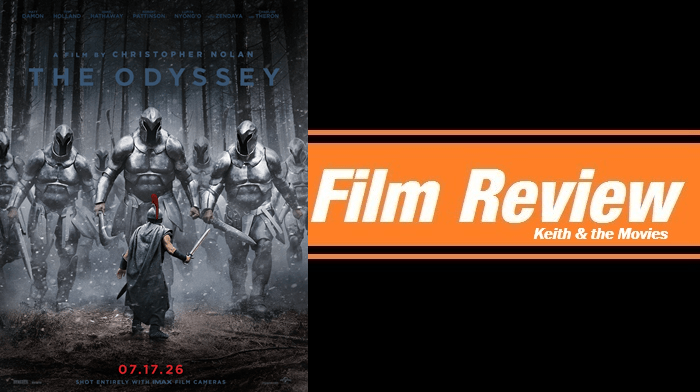
REVIEW: “The Odyssey” (2026)

Some may disagree with this statement, but I say it with unfettered confidence – Christopher Nolan has yet to make a bad movie. Obviously some of the thirteen feature films he has directed (twelve of which he also wrote) stand out more than others. But through his incredibly diverse catalog of movies, Nolan has firmly established himself as both a master craftsman and storyteller. Every one of his movies has impressed me, with a whopping seven of them being my favorite film from their year of release.

Nolan’s stellar track record certainly isn’t tarnished with his latest, “The Odyssey”. It’s the visionary filmmaker’s spectacular cinematic adaptation of Homer’s Greek literary classic. It may also be his boldest swing to date. Nolan skillfully retells the story of Odysseus, the king of Ithaca, who leads his battle-weary men on the perilous, decade-long journey home after fighting in the Trojan War. The film is an epic in every sense of the word, transporting us to a place equally defined by myth and humanity, and created through the bravura filmmaking of a director who is as daring as he is confident.

One thing from Nolan’s breathtaking masterwork that will immediately grab you is its massive scope and grand scale. This is a gargantuan production that painstakingly puts every penny of its enormous budget on the screen. Scene after incredible scene openly displays the kind of jaw-dropping movie magic that will have you asking yourself, “How on earth did they do that?” It’s rapturous movie-making that would almost feel old-fashioned if it wasn’t for the groundbreaking spectacle that is on a scale unlike anything we’ve seen before.

Image Courtesy of Universal Pictures

Yet even more amazing is Nolan’s ability to balance such grandeur with an emotionally grounded thematic richness. Some of the film’s core elements revolve around such heavy subject matter as war trauma and guilt. Nolan shrewdly explores the deep psychological toll war can take. He challenges the notion that a soldier can simply put aside the death and violence of the battlefield and return home the same as they were before. But Nolan also emphasizes the driving force that is love, and the life-sustaining hope that can spring from it.

Even more, in its own way, Nolan’s film celebrates humanity’s long history of telling stories. We learn much from the numerous stories shared to others by bards, soldiers, mystics, servants, the undead, and more. Nolan organically incorporates them throughout the film in ways that seamlessly fit within his compelling non-linear structure. And they’re visually relayed across immersive canvases, highlighted by stunning real locations, stellar production design, and practical effects work that grounds us in the peril.

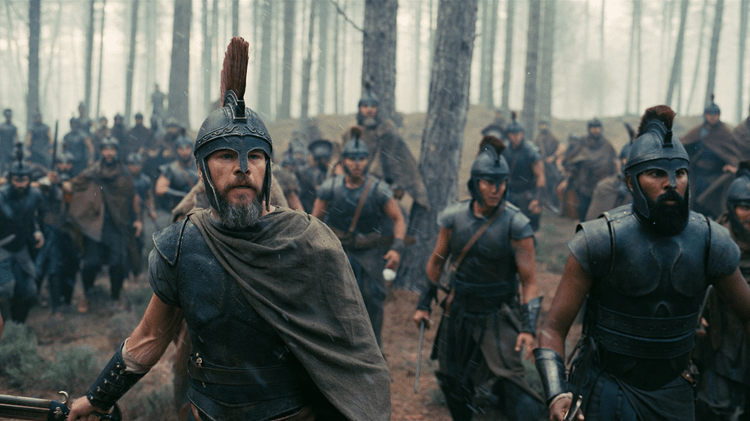
In a career defining performance, Matt Damon plays Odysseus, the weary and burdened king of Ithaca who has spent ten years away from home fighting the Trojan War. Following the fall of Troy, Odysseus and his men finally begin the long trek back to Ithaca. But their journey is thwarted by a series of deadly mythical encounters that ultimately lead to them being lost at sea. Along the way many of his men are killed, leaving Odysseus bearing even more guilt for the mounting lives lost under his command.

Image Courtesy of Universal Pictures

Meanwhile in Ithaca, Odysseus’ wounded but resolute wife Penelope (Anne Hathaway) and their son Telemachus (Tom Holland) still hold out hope that the king may return. But in his absence, dozens of self-serving suitors have gathered in hopes of courting Penelope in order to stake their claim on Odysseus’ throne. The most aggressive among them is the devious and scheming Antinous (Robert Pattinson), who will do anything necessary to be king. That includes killing Telemachus who is wise to Antinous’ twisted ambition.

While the events in Ithaca play out in the present tense, much of Odysseus’ story unfolds through flashbacks. Many of them come after he washes up on the shores of Ogygia. There he begins regaining his memory with the “help” of the mysterious nymph Calypso (Charlize Theron). Of course the past and “present” inevitably collide in a final act that brings this epic tale to a riveting and emotional satisfying conclusion. It’s a finish that does justice to both the spirit of Homer’s foundational work and Nolan’s original vision.

Damon’s full-bodied performance offers up a multifaceted Odysseus whose emotional journey is as crucial as his physical one. He’s a rugged warrior and a brilliant strategist who has earned the respect and loyalty of his men. But he’s also cocky to a fault, with a willingness to defy the gods no matter the consequences. But Odysseus’ facade slowly cracks under the weight of everything he has done and everyone he has lost. And Damon conveys it all with captivating precision, either as the legendary hero or a broken wanderer.

Image Courtesy of Universal Pictures

Several other stand-out performances help flesh out Nolan’s epic. Hathaway brings stoicism and resilience to Penelope while Holland’s boyish innocence hides Telemachus’ steadfast determination. Pattinson is fittingly slimy. Himesh Patel is terrific as Odysseus’ loyal lieutenant Eurylochus. Benny Safdie’s hulking Agamemnon is an intimidating presence to behold. John Leguizamo has never been better than as Odysseus’ blind swineherd Eumaeus. Samantha Morton enchants and terrifies as the sorceress Circe. And the gritty Jon Bernthal is a nice fit as Sparta’s King Menelaus.

But as with most Nolan movies, the conversation always seems to come back to the craftsmanship. “The Odyssey” sees him working in top form to deliver a landmark technical achievement that reminds us of why we still go to the theaters. Nolan’s virtuosic savvy is certainly key. But he also has the smarts to surround himself with geniuses. DP Hoyte van Hoytema’s exquisitely tactile realism roots the movie in reality while still capturing the mythological aura and sweeping scale. And composer Ludwig Göransson masterfully immerses us through his clever blending of traditional and experimental tunes.

Odyssey purists may gasp at Nolan’s willingness to peel away the prestigious veneer from Homer’s work for something more grounded and relatable. They might recoil at the modernized languages and reimagined ending. But Nolan never pretends to be making a by-the-letter adaptation. Much of Homer’s original vision is retained. But just like old tales often take new forms the more they’re shared over time, Nolan tells Homer’s story from an honoring yet fresh perspective. And when joined by his unmatched technical prowess, we end up with a testament to the resonating power of cinema. And I for one am grateful there is a filmmaker able to pull something like this off.

VERDICT – 5 STARS

REVIEW: “Office Romance” (2026)

“Office Romance” is the latest dime-a-dozen romantic comedy to come down the streaming pipeline. It’s also among the more inconsistent ones as director Ol Parker struggles to make something worthwhile out of its many romcom clichés and misguided swings. Jennifer Lopez puts in the work and ultimately makes the film tolerable. But she can only carry so much of the load. And she can’t make the movie’s numerous uninspired choices make sense.

Lopez plays Jackie Cruz, the hardened CEO of a major airline AirCruz. The business was founded by her father Jack (Edward James Olmos) who still pops up every so often. But it’s Jackie who turned the fledgling business into a massively successful company. It hasn’t been easy, especially with a constantly critical board breathing down her neck. For that reason, Jackie has created an intimidating and almost unapproachable presence at work, intensely focusing on the job rather than making any real human connections.

After her ruthless hotshot attorney Peter (Bradley Whitford) chokes on a burrito and is hospitalized, Jackie hands over the day-to-day operations of AirCruz’s legal department to the company’s number-two attorney, Daniel Blanchflower (Brett Goldstein). He’s sharp, savvy, and handsome (a romcom prerequisite) but a bit oafish once he meets Jackie for the first time. A mutual attraction is evident, but any sparks are instantly quenched by an embarrassingly dumb gag – one of many that plague this movie.

Image Courtesy of Netflix

Despite her company’s strict “no fraternizing” policy, a forbidden romance blooms, putting both Jackie and Daniel in precarious professional positions. I won’t spoil where things go from there, but it isn’t too hard to figure out. That’s because “Office Romance” follows the very same blueprint that so many others do. (1) Two good-looking people unexpectedly fall in love. (2) An eventual conflict threatens it all. (3) They overcome it to have their ‘Happily Ever After” moment.

While the predictability is one issue, it’s the lack of romantic chemistry that is far more glaring. The script (co-written by Goldstein and Joe Kelly) doesn’t put the time into building anything resembling an authentic central relationship. Instead it wastes too much energy on humor that simply doesn’t land. The attempts at raunchy comedy are especially cringe-inducing and often feel as though they belong in an entirely different movie.

The supporting characters don’t fare well either. Olmos isn’t given enough to do. Betty Gilpin is trapped inside a one-dimensional and tiresome comic relief role. Jodie Whittaker is wasted as Daniel’s foulmouthed incarcerated sister. And there is a smattering of generic office workers who do little more than fill up space in certain scenes. That leaves it all up to Lopez and Goldstein who sadly don’t have nearly enough good material to make this romcom misfire worth a watch.

VERDICT – 2 STARS

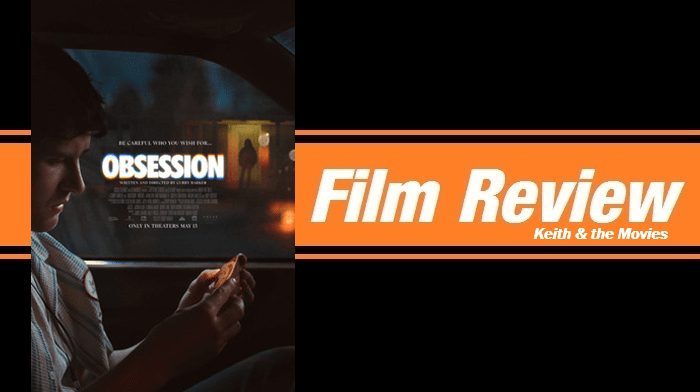
REVIEW: “Obsession” (2026)

After premiering nearly eight months ago at the 2025 Toronto International Film Festival, the well-received “Obsession” is now getting it official release. It’s the sophomore effort from 26-year-old filmmaker Curry Barker who was recently announced to be writing and directing a new reimagining of “The Texas Chain Saw Massacre” for A24. That came as a surprise to many of us. But after seeing what he does in “Obsession”, it makes sense.

In the film Michael Johnston plays Baron “Bear” Bailey, a timid and insecure twentysomething who has developed feelings for his childhood friend and record store co-worker Nikki (Inde Navarrette). Bear is trying to work up the courage to finally tell Nikki how he feels. He seeks advice from their mutual friend Ian (Cooper Tomlinson) while remaining oblivious to the obvious affections of their other mutual friend Sarah (Megan Lawless).

Image Courtesy of Focus Features

After failing once again to express his love to Nikki, Bear stops by a novelty shop to buy her a gift. There he finds and buys a cheap wooden trinket called the “One Wish Willow”. More out of frustration than expectation, Bear follows the instructions on the box and wishes that Nikki loved him more than anything else in the world. To his shock, his wish comes true and Nikki instantly falls in love with him.

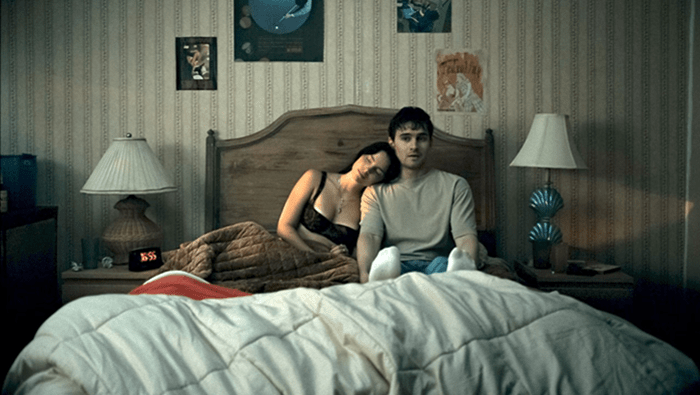
Their new romantic relationship seemingly starts great despite the suspicions of Ian and Sarah. But over time, Nikki starts to crack. Her adoring love turns into an unhinged obsession marked by psychotic episodes, violent mood swings, and uncontrolled jealousy. And things only get worse from there as Barker offers a dark, twisted, and satisfyingly gory examination of autonomy and codependency.

“Obsession” has its shocking moments, with some being gruesome enough to nearly earn the film an NC-17 rating. But the real terror comes in Navarrette’s chilling performance and in Barker’s unnerving use of sound. Blood-curdling screams and loud bangs offer jolts that are more than simply jump-scares. They’re authentic within the story and keep us on edge. Meanwhile Navarrette nails an incredibly demanding role that asks her to run the gamut of emotional extremes, often changing on a dime. She’s genuinely and shrewdly unsettling.

Image Courtesy of Focus Features

Sadly not everything in “Obsession” hits its mark. While Nikki is as captivating as she is frightening, Bear ends up stuck in one gear. He stays in shocked mode for nearly the duration, only occasionally showing another side of himself. Also, practically nothing is told about what’s behind it all. We never know the true source (is it magic, is it supernatural, is it something else?) and the rules seem plucked out of thin air. Thematically it’s not a big deal as Barker is far more interested in ideas of agency, attachment, etc. But narratively it leaves holes that I wish had been filled.

Still, it’s not easy to find fresh and original premises in the well-traveled horror genre. We get one with “Obsession”. It marks the emergence of Curry Barker, an exciting new voice with a big future. And for many of us, it introduces Inde Navarrette, an impressive young actress who fully deserves the praise she has been getting. Both energize what is a wickedly clever cautionary chiller that may stumble in spots yet plows some exciting new ground in horror.

VERDICT – 3.5 STARS

REVIEW: “One Spoon of Chocolate” (2026)

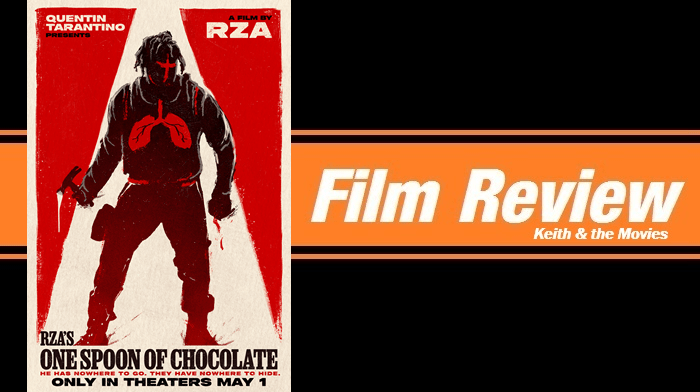
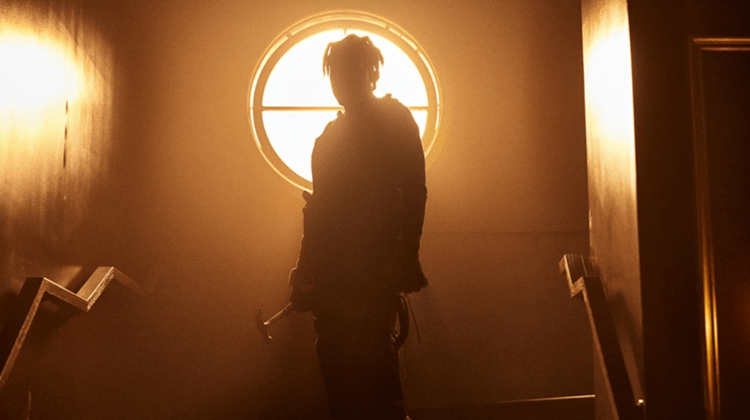
“Quentin Tarantino Presents” is a tag that is certain to grab attention for a film. It’s stamped prominently in front of “One Spoon of Chocolate” – an ode to exploitation films written and directed by RZA. Tarantino serves as executive producer, and knowing the filmmaker’s deep reverence for grindhouse cinema, it’s pretty obvious why he chose to be involved. “One Spoon of Chocolate” is dripping in exploitation influence which RZA proudly uses to its fullest.

RZA’s film draws the bulk of its inspiration from 1970s blaxploitation, classic martial arts cinema, and early Tarantino films (even Red Apple cigarettes make a surprise appearance). His movie features an assortment of characters, many heightened to near comical levels, who work tensions into a lather, setting the table for the blood-splattered “revenge-a-matic” it becomes.

Image Courtesy of 36 Cinema

The film claims to be “inspired by real events”, yet it’s a fictional work that isn’t based on any specific true account. Rather it’s the filmmaker’s sociopolitically charged view of America, pieced together over the course of the script’s 13-year development. Knowing that makes it difficult to read how seriously we’re supposed to wrestle with its commentary, especially considering how over-the-top things get. It works better when its themes are considered more broadly and its genre elements are front and center.

The story follows Randy “Unique” Joneson (Shameik Moore), an Army veteran with anger management issues who we meet as he is being released from New York’s Upstate Correctional Facility. He served two years in prison for assault and battery after putting his abusive wife-beating neighbor in a coma. With the help of his sympathetic parole officer (Blair Underwood), Unique is transferred to Karensville, Ohio to be close to his lone family member, his cousin Ramsee (RJ Cyler).

But Unique learns the small town of Karensville is full of trouble after he and Ramsee have a run-in with a cartoonishly racist gang of white supremacists. Their argument turns violent, which puts Unique and Ramsee in the crosshairs of the gang’s hyper-racist and hedonistic leader, Jimmy (Harry Goodwins). And to make matters worse, Jimmy is the son of the corrupt and (you guessed it) equally racist Sheriff McLeoud (Michael Harney) whose nefarious dealings go well beyond just protecting his depraved son.

Image Courtesy of 36 Cinema

A handful of other characters play into the story, most notably Ramsee’s girlfriend Aretha (E’myri Crutchfield) and Aretha’s best fried Darla (Paris Jackson) who takes a liking to Unique. They join the others in this small town powder keg where conflicts escalate to the extent that Unique finally reaches his breaking point. This opens the door for RZA to unload in a revenge-fueled ultra-violent final act. Brutality meets silliness in a fitting climax that fully satisfies, right until its unfortunate choice for an ending. It’s frustratingly abrupt and not in a savvy way. Rather it shortchanges nearly everything that came before it.

“One Spoon of Chocolate” may generalize too much for its themes to register as profoundly as they could have. Still, it’s easy to appreciate what RZA is trying to say. But most satisfying is the go-for-broke grindhouse style which the filmmaker proves to have a firm grasp of. At least right up until his movie’s screeching stop of a finish, which ends up being much too clever for its own good. It’s borderline maddening, but thankfully it doesn’t erase everything RZA does well with the characters, the camera, and the carnage.

VERDICT – 2.5 STARS

REVIEW: “One Battle After Another” (2025)

It feels as if Paul Thomas Anderson’s “One Battle After Another” runs the risk of facing two different knee-jerk responses, each driven by contrasting views of current events. The angry and cynical-minded folks, who look for politics in everything they watch, might see the film as an dire reflection of a dubious America and an urgent call to action. The equally angry but more defensive crowd, who want to excise politics from everything they call entertainment, might dismiss it as another vain expression of Hollywood’s growing disdain for the country. Whatever.

But then there’s a third contingent – the PTA faithful, whose love for Anderson’s movies transcends politics or worldviews. They find their happy place in everything PTA does and often grade his movies on a curve. For me, there’s a level of self-indulgence that can often plague PTA’s filmmaking and storytelling. It’s an issue that’s noticeable (and by extension, frustrating) in some films more than others. At the same time, Anderson has made one of the greatest movies of our time with “There Will Be Blood”. And the sheer genius of “Phantom Thread” can’t be overstated.

So what to make of Anderson’s latest, “One Battle After Another”? Inspired by Thomas Pynchon’s 1990 novel “Vineland”, this proudly defiant and slightly neurotic concoction has more stuffing than a Thanksgiving turkey. At times it wants to be an action movie. At other times a bonkers black comedy. It even shoots for being a thoughtful daddy-daughter drama. But more than anything it’s a surprisingly one-the-nose political jaunt that only sees our modern times through one restricted lens. And in its desperate efforts to ‘say something’ at every turn, it forsakes simple things like character building and narrative cohesion.

Image Courtesy of Warner Bros. Pictures

The movie’s problems start early and pretty much persist for the duration of the film’s lengthy 160 minutes. First there’s Anderson’s struggle with juggling his film’s abject absurdity and finger-wagging seriousness. The lines frequently blur together, making it too preposterous to be taken seriously and too serious and self-important to be funny. Then there’s Anderson’s chaotic storytelling which bounces us from one point the next while rarely slowing down to let anything develop organically.

The film opens with an extended prologue where we’re introduced to the French 75, a domestic terrorist group hiding behind the gentler title of “revolutionaries”. They’re a sundry yet organized faction with plenty of weapons and all the favorite hashtagged anti-establishment slogans. They blow up buildings, rob banks, and invade outposts (with very little condemnation), all under the emotionally charged leadership of Perfidia Beverly Hills (Teyana Taylor). She has a relatively small amount of screen time, but she ends up driving much of the story in some really bizarre ways.

Perfidia is tough as nails and extremely dedicated to her radical cause. But as we watch, Anderson seems conflicted on how to portray her. For the most part he’s smitten to the point of venerating her despite her unhinged antics which don’t always make sense. Look no further than her wacky first encounter with one of the more ridiculous characters of the year, Colonel Steven Lockjaw (Sean Penn). During a raid on a detention center, Perfidia apprehends Lockjaw. Her bizarre actions trigger some weird psychosexual infatuation within him that sets his course for the remainder of the movie.

The bulk of the story unfolds 16 years later with Perfidia long gone, leaving her tag-along lover and former French 75 member, Bob Ferguson (Leonardo DiCaprio) to raise their daughter Willa (Chase Infiniti). A teenager now, Willa spends more time looking after her perpetually paranoid and stoned father than enjoying her high school years. But their lives are rattled when Bob gets word that Lockjaw has discovered their location. Still driven by his twisted (and quite baffling) obsession with Perfidia, Lockjaw gives orders to kill Bob on sight and take Willa alive.

Image Courtesy of Warner Bros. Pictures

From there Anderson bops across his vision of America with the Bob-Perfidia-Lockjaw triangle in tow. As he does, his heroes are helped by an assortment of allies including a karate teacher who moonlights as a Harriet Tubman for illegal migrants (Benicio del Toro), a former French 75 loyalist (Regina Hall), and a convent of pot-growing nuns. As for PTA’s villains, they’re all very bad and very white. They range from cops, soldiers, and congressmen to the Christmas Adventurers Club, a cartoonishly silly and shallow white supremacist outfit so weakly sketched they would’ve been better left on the cutting room floor.

As for the talent-rich cast, no one is given much room to deliver a truly great performance. DiCaprio is the biggest victim, spending the film’s first half developing a unique and intriguing character only to spend the rest of his time frantically running around and clownishly yelling into oblivion. Del Toro is briefly terrific but is firmly handcuffed to Bob’s erratic story. As for Penn, he does what he’s asked. Sadly for him it results in nothing more than a farcical one-note caricature who’s too vile to be funny and too ludicrous to be menacing. The true bright spots come from Infiniti’s strong feature debut, and Hall who routinely grounds the film in some semblance of reality.

“One Battle After Another” is the kind of movie custom-made for an awards season push. It’s certain to be heralded as a modern “masterpiece”, an “important” film, an “essential” movie of our time, etc. Frankly, it’s none of those things, falling well short of PTA’s finer works. There are a couple of well-staged car chases and an invigorating score from Jonny Greenwood. But the film is 160 minutes of unfocused energy, fueled by plot gimmicks, careless romanticizations, and pulpit pounding that takes lazy potshots at real-world issues rather than actually examining them.

VERDICT – 2 STARS