
REVIEW: “Isn’t It Romantic”

ROMANTIC poster

I’m starting to wonder if there are enough of these ‘character bumps their head, wakes up to some wacky side effects, then has a life-changing epiphany’ movies to qualify as a genre? Probably not, but the latest one “Isn’t It Romantic” is certainly not the first movie to build itself around this narrative gimmick.

To be honest this was not something I originally planned to see. I’m not all that high on either Rebel Wilson or Liam Hemsworth and the film’s trailer was pretty cringy. But then I began reading good things about it. Suddenly its attempt at spoofing the romantic comedy genre sounded a little more intriguing. It does start promising but begins to chug in the middle before becoming more or less the very thing it’s satirizing.

ROMANTIC1

Any issues I have with “Isn’t It Romantic” can’t be traced to Wilson who gives a sincere and sympathetic performance. It’s hard not to feel for her character Natalie. She’s a young New York architect with self-esteem issues who seems content with the hapless hand she has been dealt. She’s taken advantage of by her co-workers and even her company’s new billionaire playboy client (Hemsworth). The one exception is Natalie’s best friend Josh (Adam DeVine) who is clearly smitten with her but (of course) she’s oblivious to it.

Enter the big bump on the noggin that knocks Natalie out cold. She wakes up in an alternate reality with hunky guys galore and all of them head-over-heels for her. Tops on the list is Hemsworth’s snobbish and studly Blake, now a airheaded dolt. Several other weird anomalies leads Natalie to conclude she is trapped inside a romantic comedy.

Director Todd Strauss-Schulson gets as much mileage as he can out of his rom-com parody. It works best in the film’s first half where everything is still nice and fresh. Anyone who has watched their fair share of romantic comedies will get a kick out of several gags that poke fun at many of the genres most overused tropes. And Wilson does a good job falling into the wackiness of the whole concept. Hemsworth is equally good as the good-looking goofball, reminding me of the role his brother Chris played in the not-so-great 2016 “Ghostbusters” reboot.

ROMANTIC2

But the second half doesn’t fare quite as well. Strauss-Schulson takes a handful of jokes and milks them dry. A cringe-worthy gay sidekick and a constantly obscured f-bomb top that list. And then there is what I alluded to above, the movie becoming what it’s spoofing. You can actively see the movie working to differentiate itself from the standard romantic comedy norm, but at the same time it very much ends up feeling really similar – silly, a little sappy, and utterly predictable.

“Isn’t It Romantic” is a decent entry into the head bonk genre. It’s not a terrible movie, but it’s far from being the sharp-witted satire that it very well could have been. It’s a movie that leans heavily on its central conceit but doesn’t really see it all the way through. That’s a shame because the cast certainly seems game. It’s the material that let’s them down in the end.

VERDICT – 2.5 STARS

2-5-stars

First Glance: “The Highwaymen”

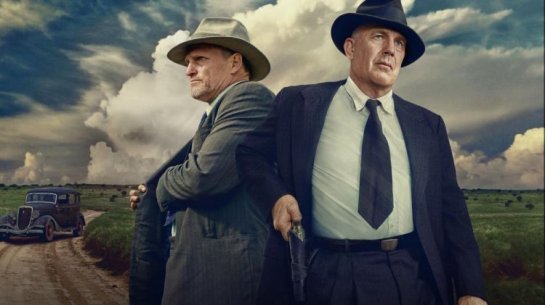
HWYmen

Kevin Costner and Woody Harrelson as former Texas Rangers hot on the heels of the infamous Bonnie and Clyde? I’m all in! Netflix continues to put out interesting projects and this one is right up my alley.

Set in 1934 during America’s gangster era, Bonnie and Clyde had become celebrities – seen more as glamorized legends than cold-blooded killers. Costner and Harrelson are commissioned to stop the famed duo’s spree of robbery and murder.

I have to admit, I’m pretty giddy for this one and we won’t have to wait long. “The Highwaymen” debuts on Netflix March 29th. Watch the trailer below and let me know if you’ll be seeing it or giving it a pass.

REVIEW: “The Boy Who Harnessed the Wind”

BOY3

In my eyes Chiwetel Ejiofor has clearly established himself as an exceptional actor. Netflix’s latest original film “The Boy Who Harnessed the Wind” proves that Ejiofor has more in his filmmaking skill set than what we have seen in front of the camera. Here he not only stars in the film, but directs and writes the screenplay for what is at its core a soulful and affecting family drama.

“The Boy Who Harnessed the Wind” is based on the true story of a 13-year-old boy who built a wind turbine out of scrap to save his small African village from a devastating famine. So you kind of know from the start where the movie is heading. But as cliché as it may sound, this film is genuinely all about the journey and the characters who make up its center – characters who Ejiofor clearly cares about and who are given plenty of room to develop.

The Boy Who Harnessed the Wind

Ejiofor plays Trywell Kamkwamba, a husband and father who farms a dry patch of land in the small village of Wimbe. It’s hard work but Trywell and his wife Agnes (Aïssa Maïga) have managed to put enough back to send their bright and resourceful son William (an excellent Maxwell Simba) to middle school. Their older daughter Annie (Lily Banda) anxiously awaits her chance to go to college once her turn comes back around.

But a series of misfortunes dramatically changes things not only for the Kamkwambas but the entire region. Flooding during the sowing season and a crippling drought that follows leads to a poor harvest. An upcoming election has the troubled government in political turmoil making it an unreliable source for any kind of aid. Economically-strapped villages are left to fend for themselves which sends many into chaos.

This brings a heartbreaking strain on the Kamkwamba family. During this time Ejiofor subtly shifts the point of view from Trywell to William. He observes his father slowly cracking under the pressure, his frustrated sister fighting the urge to leave the village, and his mother desperately trying to keep their household together. Ever the inventive one, William conceives a wild plan to build a wind-powered turbine to provide water for his village. But will anyone buy into his idea?

I really appreciate Ejiofor’s willingness to look at his characters through different lenses. These people are fleshed out and multidimensional with real strengths, faults, and a range of organic emotions. They feel like a living, breathing part of the world Ejiofor vividly presents. It also helps that he shot on location in Malawi. Oscar-nominated cinematographer Dick Pope, much as he did in “Mr. Turner”, creates a beautiful and immersive canvas that is visually stunning but with enough subtlety to keep from drawing attention to itself.

The Boy Who Harnessed the Wind - Still 1

I loved “The Boy Who Harnessed the Wind”. The predictability may be a hurdle for some and it could be a bit too restrained for those looking for edgier storytelling. But I found it to be a beautiful and at times heartbreaking slice of real life. Ejiofor’s script and direction captures the heart of William Kamkwamba’s touching and inspirational memoir. The performances are even better with Ejiofor rivaling his Oscar-nominated work from “12 Years a Slave” and young Simba standing out as a true revelation.

Ejiofor has said he bought the films rights to this incredible story after being drawn by its optimism and hopefulness. Next he found it essential to be as authentic as possible by learning and incorporating the Chichewa language and by shooting on actual Malawi locations. Finally it was about telling William’s story – a young boy far removed from the privileges we tend to take for granted, living in a village crippled by a famine, but with the heart and know-how to help. The results of Ejiofor’s efforts are exceptional.

VERDICT – 4.5 STARS

4-5-stars

K&M Commentary: Spielberg vs. Netflix

IMG_1001-0For movie fans it has been hard to miss the buzz surrounding Steven Spielberg and his crusade to keep streaming movies, most notably Netflix, out of consideration for the Oscars. Spielberg hasn’t spoken publicly since the announcement of his upcoming meeting with fellow members of the Academy’s board of governors, but past comments more than reveal his position.

Spielberg wants to preserve the movie theater experience, something I completely understand. I love going to the theater. It’s one of my favorite forms of entertainment and it allows me to see movies on the best screen and in the best setting. I can get behind filmmakers working to hold onto what many of us believe is the ideal way to view a movie.

But that’s about as far as I can go in defending Spielberg’s crusade. As well-intended as he may be, he seems to be overlooking the realities of the current movie watching landscape. It may hurt to admit it, but fewer and fewer people have or are developing the same deep affection for the theater experience that many of us have. But the benefits to having Netflix around go beyond that.

Filmmakers, specifically those who make independent movies, have been vocal in expressing how difficult it can be not only to get their films made but to get them to an audience. Netflix not only provides them creative freedoms and in some cases financial support. It also provides them a platform to reach people who otherwise would have a tough time seeing their movie. Obviously this isn’t a huge deal for the big budget pictures that Spielberg is known for.

But this isn’t just good for the filmmakers. Spielberg should know that not everyone lives in a big market. Not everyone has a slew of movie theater options. Personally speaking, I live in a state that either has to wait months before certain movies arrive or misses out on these films altogether. This is particularly true for indies and foreign films which eventually are made available on (ironically) streaming platforms.

There are several points where Spielberg’s position falls apart. Take this shot he took at Netflix: “I don’t believe that films that are given token qualifications, in a couple of theaters for less than a week, should qualify for Academy Award nominations“. This is funny considering how many movies pop up for a week on select big city screens at the end of year just to qualify for the Oscars.

Also, you would be tempted to think Spielberg judges movies by the size of the screen they appear on rather than the actual quality of the film. Obviously this is problematic for him. Let’s say a movie premieres at a festival and is picked up by A24. Everyone is fine. There is no outcry that the film should be disqualified from the Academy Awards. Now let’s say Netflix outbids A24 and lands the very same movie. Suddenly it’s treated as a different film simply because of the screen it’s viewed on.

Again, Spielberg has a genuine concern and preserving the movie theater experience is something many of us care about. At the same time you have to be realistic and forward-thinking. And as more celebrated filmmakers like Martin Scorsese and Alfonso Cuaron tap into the benefits of Netflix, guys like Spielberg can either be open-minded or die fighting on that hill. And as I’ve said elsewhere, wouldn’t you love to be a fly on the wall when Spielberg tells Cuaron (“Roma”) or Scorsese (“The Irishman”) that their movies belong at the Emmys and not the Oscars?

As for the Academy, if they want to find a way to be even more irrelevant as some already perceive them to be, just ram through Spielberg’s proposal and tell filmmakers and viewers they aren’t making or watching Oscar-worthy movies. Watching the backlash would be far more entertaining than any Academy Awards broadcast of the last decade.

I would love to see these efforts put towards coexisting instead of separating. My biggest hope is that we can find a way to preserve the big screen experience while embracing the opportunities Netflix provides filmmakers and movie lovers. Sounds great doesn’t it? But is it even remotely realistic? I guess we’ll find out.

REVIEW: “Greta”

GRETAposterSMALL

Over the years Isabelle Huppert has proven herself to be an incredibly versatile actress. With over one hundred movies to her credit the 65-year-old Huppert has done a little bit of everything. She is certainly no stranger to playing unhinged and unsettling characters. Look no further than her role in Michael Haneke’s “The Piano Teacher” – still one of the most disturbing movies I’ve ever watched.

Huppert taps back into that outright derangement with her new film “Greta”. It’s not as nuanced as the role she played in “The Piano Teacher”. This is a much more straightforward psychological thriller and her madness comes into focus pretty early on.

GRETA1

Chloë Grace Moretz plays Frances, a young woman who has recently moved to New York from Boston following the death of her mother. She shares an apartment with her best friend Erica (Maika Monroe) and waits tables at an upscale Manhattan restaurant. Her father (Colm Feore) has moved on with his life which has caused tension between the two. Frances hopes her new start will help her cope with the loss of her mom.

But then she finds a purse left behind on the subway. Turns out it belongs to a lonely piano teacher (ironic) named Greta (Huppert). A kind-hearted Frances finds an address and takes the purse to a surprised and relieved Greta. The two end up hitting it off, each seemingly filling a void in both of their lives. But when Frances makes an alarming discovery she cuts ties which pushes the obsessive Greta over the edge.

Moretz does a good enough job but a large chunk of the script keeps her handcuffed. Several of Frances’ scenes with Erica and all of them with her father come across as shallow and they leave out some potentially good character development. It’s as if director and co-writer Neil Jordan wasn’t interested in letting Moretz dig further into her character’s background. The overwhelming focus is on Frances and Greta which admittedly is the strength of the movie.

GRETA2

It is Huppert who makes it all work mainly because she is so convincing. Her turn from uncomfortably obsessive to full-blown maniacal is utterly seamless. She delivers such a genuinely unsettling character who melds right into the New York City canvass due to her unassuming appearance and mild-mannered demeanor. Even when Greta comes unglued Huppert maintains an element of that creepy gentle facade. It’s a really good performance.

Almost inevitably things get pretty crazy in the film’s final act which I feel works pretty well. The problem is there are some gaping holes in logic that are simply too hard to overlook. Still “Greta” manages to deliver what most fans of the psychological thriller genre are looking for. I was still left thinking it could have better. At the same time I admit to being entertained by its madness.

VERDICT – 3 STARS


3-stars

First Glance: “Five Feet Apart” Trailer

FIVEFEET

Haley Lu Richardson is one of the most exciting young actresses making movies today. Her stand-out work in “Columbus”, “Support the Girls”, and “The Edge of Seventeen” is only the tip of the iceberg for this immensely talented 23-year-old. She has two movies set for 2019, one being the romantic drama “Five Feet Apart”.

The movie follows Stella and Will who are both battling cystic fibrosis. They meet in the hospital during their treatments and develop a touching friendship. Judging by the trailer “Five Feet Apart” could be a real tearjerker. Here’s hoping director Justin Baldoni does it justice.

“Five Feet Apart” hits theaters March 15th. Check out the trailer below and let me know if you’ll be seeing it or skipping it.