
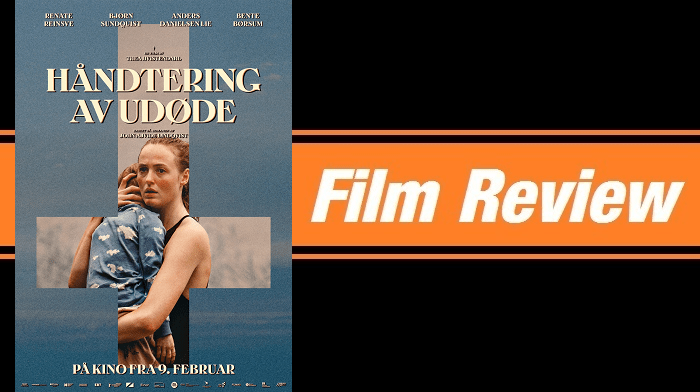
Director Thea Hvistendahl weaves a creepy and captivating web with “Handling the Undead”, a Norwegian horror drama based on Swedish writer John Ajvide Lindqvist’s 2005 novel of the same name. Aside from its genuinely intriguing premise, the feature film adaptation (which just showed at the 2024 Sundance Film Festival) stars Renate Reinsve who dazzled audiences with her performance in 2021’s critically acclaimed “The Worst Person in the World”.
The story of “Handling the Undead” (written for the screen by Hvistendahl and Lindqvist) is in many ways a metaphor-rich meditation dressed as a genre film. Yes, it’s a zombie movie but with an intensely human focus. Hvistendahl isn’t concerned with carnage and chaos. Instead she takes three unrelated families in Oslo, each in different stages of grief, and explores the raw emotions and internal conflict that might follow a loved one being reanimated from the dead. It’s an audacious and strikingly original approach that shatters expectations.
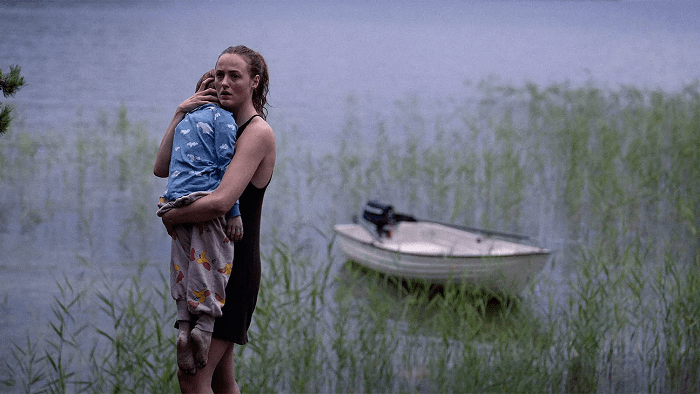
While the idea of the dead coming back to life is a central ingredient, it’s the cutting social realism intrinsic to Hvistendahl’s storytelling that sets the movie apart. It’s seen from the opening scene where we’re introduced to the first of the three families. A man named Mahler (Bjørn Richard Sundquist) bags up some food from his fridge and walks it over to an apartment building where his daughter Anne (Reinsve) is getting ready for work. The two barely speak – a lingering aftereffect following the recent death of Anne’s young son Elias.
Elsewhere an elderly woman named Tora (Bente Børsum) is the lone attendee at a funeral for her partner Elisabet (Olga Damani). She pays her last respects before a funeral director wheels away the casket holding the remains of her loved one to the back of the stylishly cold and echoey parlor. Tora then gets in a taxi and returns to her spacious and now heartbreakingly empty home.
Then there is a mostly stable family of four that includes a father David (Anders Danielsen Lie), a mother Eva (Bahar Pars), their teenage daughter Flora (Inesa Dauksta), and their younger son Kian (Kian Hansen). Aside from the occasional spat with the rebellious Flora, everything looks great until Eva is involved in a serious car accident that leaves her on life support. A devastated David has to break the news to their children while struggling to get any updates from the hospital.
Then out of the blue a shrill high-pitched sound pierces the air, setting off car alarms, knocking out radio signals, making traffic lights go haywire, and sending flocks of birds into a swirling panic. The chaos eventually ends with a brief blackout. And then a short time afterwards and without warning, the dead begin coming back to life.

The source of the disturbance is never revealed and what follows it is never explained. But those aren’t the kind of questions Hvistendahl or her characters are interested in. Instead David wants to know if his dying wife’s suddenly strong heartbeat means she’s on the mend. Tora is just happy that her crippling sorrow and loneliness is over following the sudden reappearance of Elisabet. Anne and Mahler are more concerned with the government taking Elias away if they find out he’s alive again. These are the kinds of deeply personal and viscerally human concerns that Hvistendahl surveys.
Again, it can’t be stressed enough that this isn’t a movie about some grisly apocalypse. Yes, it involves the reanimated dead. But rather than brain-munching terrors, Hvistendahl views the few zombies we see as shades of people once loved. Despite their gruesome appearances, Elias, Elisabet, and Eva are seen through the eyes of their loved one. It’s a painful perspective especially as we watch family members love on their recently resurrected only to get nothing in return. No acknowledgment; no response. It poses a number difficult questions.
Of course the zombie genre conventions are never too far out of mind and loom just enough to maintain a low-simmering sense of dread. They eventually surface in the final act but even then Hvistendahl handles things with remarkable restraint. That very same kind of control is seen all throughout “Handling the Undead”, making it a hauntingly unique movie and a penetrating first feature from an exciting new filmmaker.
VERDICT – 4 STARS

 Keith & the Movies
This sounds like a unique enough approach to what has become for me quite an otherwise “stale” world of cinematic zombies. I’ll be on the lookout for it!
Not sure what kind of release it is going to get but it is WELL worth checking out. Vastly different than any other “zombie movie”. In fact I’m hesitant to even call it one.
I like the sound of this one, will keep an eye out for if it streams.
It defies expectations. “Zombie movie” doesn’t really do this one justice.
I have this in my watchlist as I’ve heard great things about this.
It was really an absorbing and unexpectedly thoughtful film. Looking forward to seeing it again.
Wow! Sounds good, I’ll be checking this one out so thanks the heads up about it.
Absolutely. I’m guessing you’ll be surprised at the way it approaches things. I was impressed.