

The first season of “Andor” caught many people by surprise. While it was very much a Star Wars installment, creator Tony Gilroy’s interests lied beyond lightsaber duels and spaceship battles. His vision was intensely character-driven, focusing on the human element at the center of the Empire’s tightening grip on the galaxy and the fledgling rebellion’s rise against their authoritarian oppressors. The results were pretty great.
Season Two featured a much different (and notably better) release schedule than its predecessor. The show’s twelve episodes take place over the course of four years. Each week a block of three episodes were dropped. The show would jump ahead one year from week to week, leaving us with four blocks set over four years and leading directly into the 2016 Gareth Edwards feature film “Rogue One”. While I loved the three episodes per week cadence, the show’s attempt at covering four years left some significant gaps. More about them later.
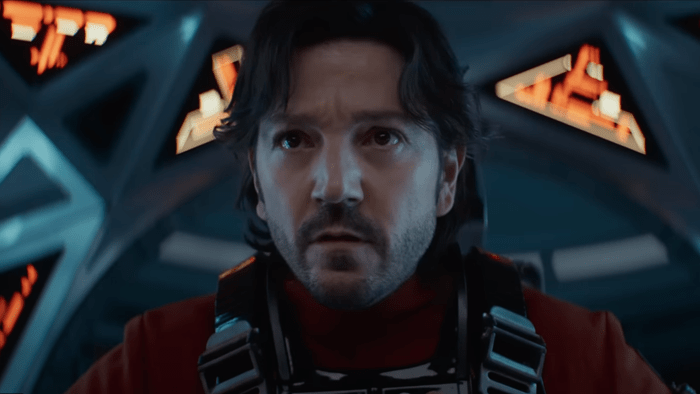
Season One featured a single line of dialogue that really speaks to the heart of the series – “Oppression breeds rebellion.” Season Two attempts to explore that idea through the inner workings of the established Empire and the struggles of a young Rebellion. While it is named “Andor”, the series follows a number of characters who are cogs in a rapidly changing galaxy. Some are Imperial loyalists, some are rebels in the making, some are politicians, some are militant insurgents. The breadth of characters allow the show to explore a wide range of perspectives.
As for the storytelling, “Andor: Season Two” takes its time kicking into gear with the majority of its first six episodes dedicated mostly to table-setting. Without question there is some good character building as Gilroy and company reacquaint us with old players and introduce us to several new ones. Many (if not most) are spies, conspirators, or simply living double lives of some kind. And the majority are given plenty of screentime to develop.
Diego Luna reprises his role as the show’s namesake, Cassian Andor, a thief turned rebel who discovers his destiny over the course of the series. Following the tragic events of the first season, Cassian is still (sometimes reluctantly) carrying out missions for Luthen Rael (Stellan Skarsgård). When he’s not secretly igniting fires in the name of the nascent rebellion, Luthen poses as a high-end antiquities dealer on Coruscant. But as we see over the course of the season, Cassian’s relationship with Luthen is complicated at best.
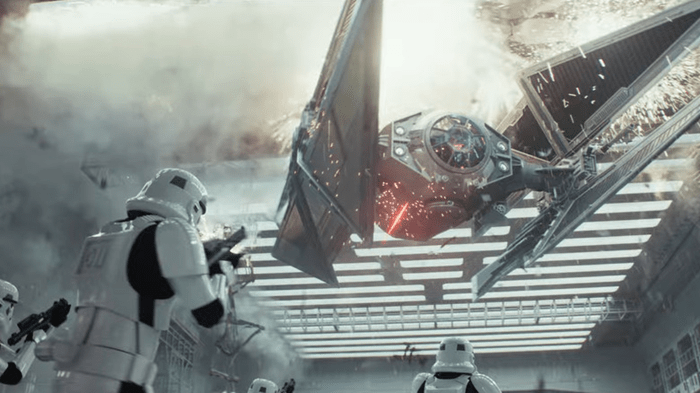
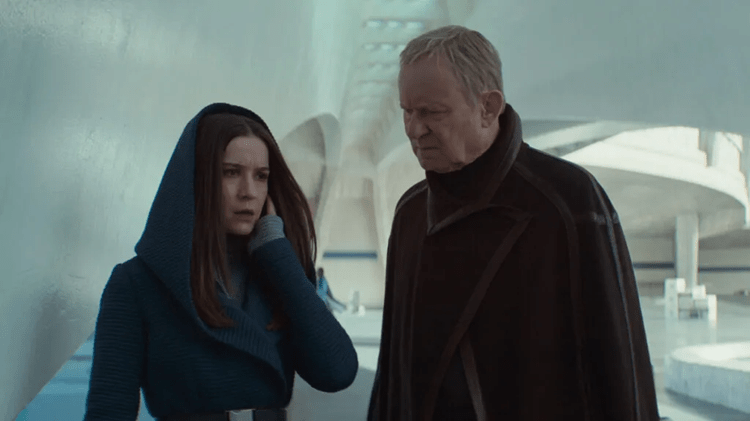
Luthen remains one of the show’s most fascinating characters. He’s very much a behind the scenes power-player who is pulling the strings from the shadows. His actions and decisions sometimes color him cold and callous. And his tight control of information often puts him at odds with those he relies on. But it’s all out of necessity. He knows the stakes and is focused on the endgame. He also understands the hard choices and their consequences. He has sacrificed everything and is resigned to his fate as he knows it.
Luthen is one of many interesting characters who grow or evolve throughout the second season. Bix (Adria Arjona) takes an emotionally wrenching journey, haunted by trauma yet determined to find her place in the galaxy. We see a new phase in the relationship between Dedra Meero (Denise Gough) and Syril Karn (Kyle Soller). She is still an ambitious member of the Imperial Security Bureau and he is still a naively willing pawn in desperate need for acknowledgment. They make for a bizarre and darkly funny couple whose lives take a dramatic turn.
Of course among the show’s biggest players is Mon Mothma, played again by the wonderful Genevieve O’Reilly. Every facet of Mon’s life changes in season two, both at home and in the senate, as she moves from secretly funding the underground to leading the rebellion. O’Reilly gets lost in some of the earlier episodes as Gilroy and company slowly move all of their pieces into position. But she is a captivating force in the second half, giving one of the show’s several Emmy-worthy performances.
So many other superb faces fill out the incredible cast. Benjamin Bratt (filling in for Jimmy Smits) as Bail Organa; Ben Mendelsohn reprising his role as Orson Krennic; Forest Whitaker back as insurgent leader (and personal favorite) Saw Gerrera; Anton Lesser as ISB Commander Partagaz; the great Kathryn Hunter as Syril’s mother Eedy; Elizabeth Dulau as Luthen’s capable assistant Kleya; and so many others. It is a truly tremendous ensemble.

The first block of three episodes are a little erratic and struggle to find cohesion or momentum. And they’re hampered by the only case of on-the-nose writing in the entire season (specifically in episode one). The second block slowly begins pulling together the wandering storylines while giving us a strong sense that the show is building up to something big. And that ‘something big’ comes in the form of the Ghorman Massacre.
The third block is dedicated to the Ghorman Massacre and its massive fallout. It features some of the finest television in the Star Wars franchise and beyond, offering exhilarating yet horrifying storytelling through a brilliant mix of visuals, writing, and performance. The seed for the massacre was planted as early as episode one with the Empire’s interest in Ghorman centering around a precious rare mineral near the planet’s core. It’s needed for the secret construction of the Death Star, but mining the mineral would make the planet unstable and uninhabitable.
So the Empire ruthlessly goad the Ghorman people into rebelling, portraying them as unruly insurgents in an effort to justify their gouge-mining of the planet for resources. Ironically Luthen also wants rebellion on Ghorman but for a much different reason. He wants the Empire to overstep which will expose their oppression, causing them to lose support as other planets rise up against them. The brutal massacre that follows reverberates across the galaxy and changes the lives of nearly every character involved.
The final block brings most things to a fitting conclusion as it attempts to tie up loose ends and put things in place for “Rogue One”. With so many characters and story threads it’s inevitable that some are shortchanged. But Tony Gilroy has made it clear he’s not concerned with connecting every dot. This proves to be a strength of the show but also its one big weakness. It certainly affords Gilroy a certain creative freedom. But some characters and arcs needed more than a small spot in a final montage.
Regardless, the second season of “Andor” is an exceptional Star Wars entry that will be talked about for years to come. The thrilling spycraft, the array of compelling characters, the sublime worldbuilding – it all fuels this rousing accomplishment. As with the first season, it sometimes lacks the ‘feel’ of Star Wars which may appeal to the lukewarm casuals while being an adjustment for die-hard fans. And it takes its time out of the gate, slowly laying the groundwork for what’s to come. But (again) as with the first season, the payoff is well worth the wait. It not only brings together all the early table-setting, but it adds even more weight to “Rogue One” which you’ll immediately want to revisit once the “Andor” credits roll.
VERDICT – 4.5 STARS

 Keith & the Movies
I am so far out of the the Star Wars universe, and I’m happy with that. It sounds so convoluted.
It’s actually surprisingly cohesive thanks to its stunning second half which brings most everything together.
Then “Andor” is a good place to start, because it leads directly into “Rogue One” which leads directly into “A New Hope.”
Yep. For sure.
For me, this is the best series of the Star Wars franchise as the last 2 block of episodes is top-tier Star Wars. The Ghorman massacre was just unsettling. I love how grounded the series is and the element of suspense that occurs. I love the finale as we do lose some key characters such as Commander Partagaz as I thought at least he went on his own terms and one of his colleagues did that for him.
I wouldn’t mind another spin-off as it relates to those who would steal plans for the Death Star II. Even as it brings back some of the characters from the series. It is a great show.
It was really, really good. Most of my early season concerns were washed away with the incredible second half. Love how it brought most things together and set the course for Rogue One.
Partagaz’s ending was surprisingly almost touching. Several villains in this show illustrated C. S. Lewis’ argument that villains are only as effective as they possess various virtues; someone who only has vices isn’t going to rise above street thug.
That’s one of the things about him that I was drawn to. Especially in the last scene. He is a great character and he at least died with some dignity instead of either blown up by the Death Star or be killed in the Death Star.
Yep. I think he knew his fate. The investigation was going to fall back on him so he went out on his own terms.
I just finished watching season one this past weekend. Everyone says that season two is just as good.
It’s VERY good. Slow out of the gate, but things come together nicely and the payoff is well worth it.
My husband loves this show! 🙂
It’s really good and quite different than any other Star Wars content.
I was really surprised and impressed with the ending of several character arcs, especially when some of them realize the true nature of who they work for. I’ve read enough history to find Season 2 entirely plausible, psychologically anyway.