

“Josephine” is the harrowing second feature from writer-director Beth de Araújo that deserves every bit of the buzz it has generated at this year’s Sundance Film Festival. “Josephine” features superb performances from Gemma Chan and Channing Tanning along with a remarkable debut from young Mason Reeves. But the film’s profound emotional resonance is established most in de Araújo’s potent and powerful direction.
Affected by a specific personal experience, de Araújo begin writing her script for “Josephine” in 2014. It was challenging material to begin with, but it was even more challenging getting her film made, especially after COVID stalled her progress. But things finally began falling into place, especially after finding her young star at a San Francisco farmer’s market. What de Araújo is able to accomplish through the eyes of Reeves will stay with you for days after the final credits.
The movie starts with eight-year-old Josephine (Reeves) and her father Damien (Tatum) playfully jogging through Golden Gate Park. While racing, the two get separated, with Josephine wandering into a remote section of the park. It’s there that she witnesses the brutal rape of a woman by a man hiding and waiting. De Araújo doesn’t hold back, forcing her audience to watch the assault as Josephine sees it. It’s graphic and disturbing, but captured truthfully and with purpose.
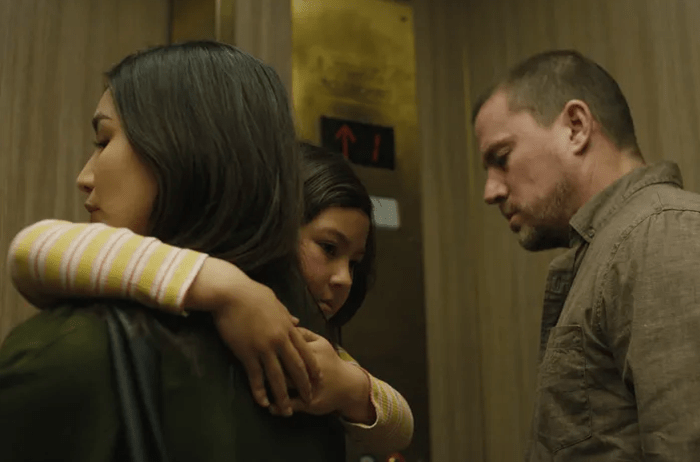
Damien arrives as the assailant is fleeing and chases him until the police arrive and make an arrest. As for the tender and impressionable Josephine, she takes in the horror and chaos as it unfolds in front of her. Once away from the scene, Damien and his wife Claire (Chan) try to normalize things for their daughter. But Josephine struggles to process what she has seen. The rush of complex emotions makes her question every part of her once innocent and safe world. It impacts how she sees everything, from strangers in public to displays of affection between her parents at home.
Josephine’s struggles are truly devastating to observe, largely because we witness everything through her eyes. De Araújo’s powerful use of perspective gives us startling insight into a child’s trauma. It’s seen in Josephine’s heartbreaking moments of withdrawal and more vividly as she begins lashing out in numerous ways at home and at school. De Araújo even adds a horror element to her depiction via the haunting, reoccurring projections of the rapist (Philip Ettinger) from Josephine’s mind. It’s a creative choice that emphasizes her inability to escape her trauma.
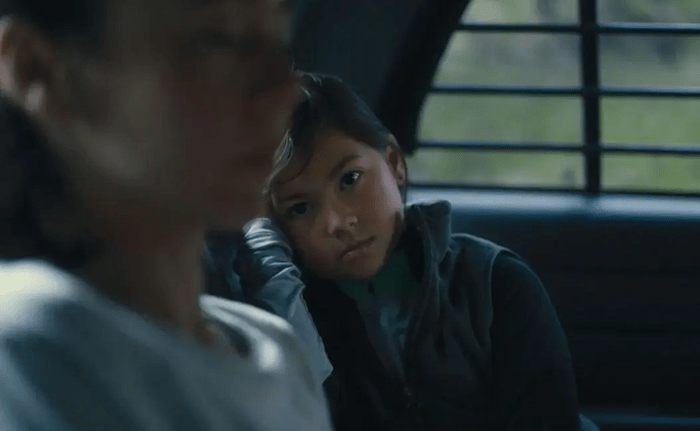
But the film also takes time to convey the struggles of parents navigating their child through such a scarring ordeal. Damien and Claire have clashing approaches based on their individual life experiences. Neither are portrayed as bad parents. Rather they’re both doing the best they can in a painfully hard situation. Their difficulties mount after Josephine is called upon to testify in court as the lone witness. De Araújo uses the trial scenes to make some perceptive comments on our shockingly flawed legal system.
“Josephine” is a devastating examination of trauma and its crushing effects, not just on a small child, but on a family as well. De Araújo’s fearless direction, accompanied by three equally bold performances, make this an uncomfortably authentic yet deeply sensitive treatment of some truly difficult subject matter. And while I genuinely hate throwing around words like “important”, there is an urgency to “Josephine” that goes beyond the riveting drama. The film forces us to reckon with uneasy yet consequential issues. And it does so with clear-eyed conviction, which is precisely what this kind of material needs.
VERDICT – 4.5 STARS

 Keith & the Movies
A must-see with Tatum, the plot, and your rating.
It’s a stunner. Not an easy watch by any means. But the subject matter is handled so incredibly well.