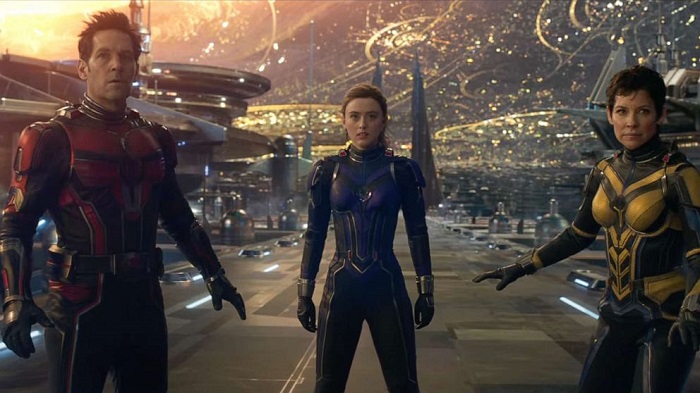
Hey look, an upcoming marvel movie that may help wash away the bad taste left by their last film, “Thor: Love & Thunder”! As someone who genuinely likes the comic book characters, Thor’s latest wasn’t a happy experience. And the steady stream of mediocre television hasn’t exactly helped the MCU’s current state. And then along comes the trailer for “Ant-Man and the Wasp: Quantumania” and suddenly I’m feeling a slight reason for optimism.
Both of the previous Ant-Man movies have been flawed but fine when it comes to entertainment. This third feature looks as if it has a lot more significance than what we have seen before. Paul Rudd, Evangeline Lily, Michael Douglas, and Michelle Pfeiffer all return, while MCU newcomer Kathryn Newton takes over as Cassie Lang (still not sure why, but ok). But the big attraction from the trailer is Jonathan Majors reprising his role of Kang the Conqueror. There are several other teases to be found if you look close. But most importantly, it looks like we’re finally getting a movie that (hopefully) will bring some of these MCU properties together.
“Ant-Man and the Wasp: Quantumania” hits theaters February 21st. Check out the trailer below and let me know if you’ll be seeing it or taking a pass.
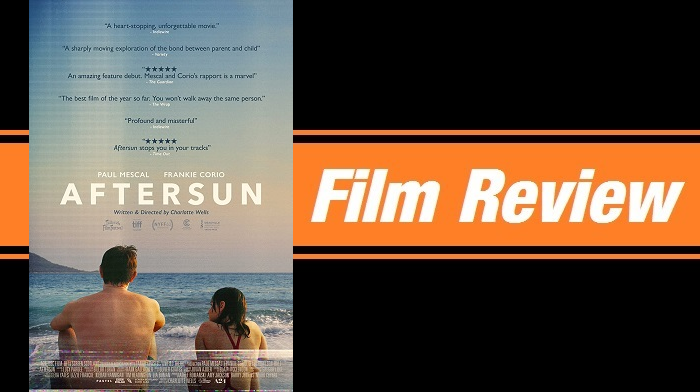
Writer-director Charlotte Wells makes her feature film debut with the alluring yet frustratingly elusive new drama “Aftersun”. Not far off its highly acclaimed premiere at this year’s Cannes Film Festival, “Aftersun” comes to us courtesy of A24 and is an unquestionably personal film from Wells. And it’s anchored by two thoughtful and true performances that only highlight her emotional connection to the material.
But while it’s impossible to miss the heartfelt feeling behind “Aftersun”, staying connected to film proves to be a chore especially for anyone looking for character development and anything resembling a plot. To be fair, when it comes to the art of cinema, not every film hinges on those elements. I can list several movies that I dearly love as examples. But Wells omits so much and keeps the details incredibly vague, to the point that I can see many people seeking information from outside the movie just to connect with what’s happening within it.
Image Courtesy of A24
A woman named Sophie (played in a scattered handful of scenes by Celia Rowlson-Hall) recalls an idyllic summer vacation from her childhood twenty years ago. It’s when she and her father traveled to Turkey and spent a week or so at a seaside resort. Resembling a flashback, the story unfolds as adult Sophie thinks back on that time. Yet as she does, we sense a sadness within her. But we only get a sense of it, and we can only speculate the reason. That’s because adult Sophie gets very little screen time. And much of it is bathed in assaultive strobe-lighting, an odd and not too revealing metaphor for her memory (or maybe something more. It’s hard to tell because everything about her remains so opaque).
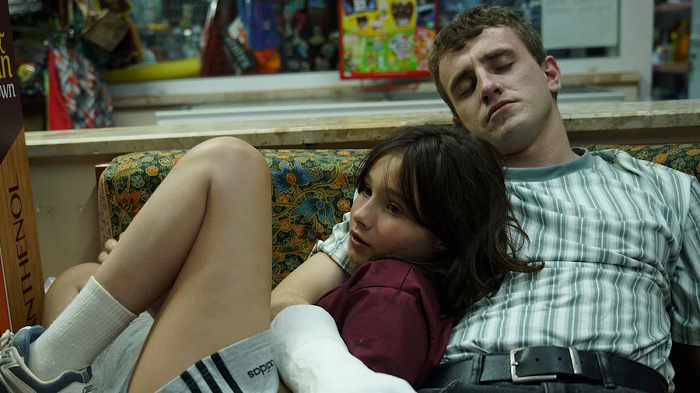
The vast majority of our time is spent on vacation with 11-year-old Sophie (an impressively natural Frankie Corio). She and her father Calum (Paul Mescal) spend their days swimming, playing pool, taking mud baths, and laughing at the resort’s other guests doing the Macarena (it’s the 90’s after all). And with that you have the story in a nutshell. Relaxed to a fault, Wells milks her understated approach dry, content with just following Sophie and Calum around on their holiday. Yes it plays like a memory. But another person’s memory (much like watching other people’s home movies) isn’t always interesting. We do get clues that hint at problems yet little in terms of answers. We get small pieces of information but little glue to hold them together.
That said, Corio and Mescal have a strikingly organic chemistry. Corio is a revelation, bringing childlike innocence face-to-face with sudden maturity. She’s one example where Wells’ choice of leaving things unsaid works. Corio conveys volumes through her mannerisms, tone, and sometimes a simple look. Through Mescal, Calum is tough to read. He’s a puzzle box, clearly trying to be a good dad. Yet later there are moments when he appears aloof and disconnected, as if he’s lost in some inner darkness. But this (like so much else in the movie) is mostly guesswork and speculation.
Image Courtesy of A24
“Aftersun” is sure to please those who aren’t necessarily looking for answers and who enjoy filling in the blanks themselves. Others will be frustrated by its evasive nature and its unwillingness to do more (not all) of the heavy-lifting. Myself, I don’t mind ambiguity, and I enjoy following breadcrumbs and piecing together clues left behind by a filmmaker. These things can be especially potent when a project is so personal to its creator.
But for me, “Aftersun” is too hazy and blurred. Some of its techniques are effective (the grainy camcorder video, the use of 90s music including one specific REM tune in a karaoke scene that’s too good to spoil, etc.). But it’s a movie that hinges on your ability to put a big portion of yourself into it. For me that requires a deeper connection – one that comes from an understanding of the characters that (for one reason or another) I never had. So it ends up being a movie I sincerely admire and desperately wanted to love. But without that internal connection, it feels as if you’re just plugging holes rather than sharing in something meaningful.
While the Marvel Cinematic Universe veers off in countless strange and indulgent directions, the DC Extended Universe sits suffering from a glaring identity crisis. What exactly is the DCEU? Who’s running the DC ship? Is there a roadmap? Which movies and what characters are a part of it? There was a time when I could answer those questions, but not these days. It’s all so convoluted and confusing, which is frustrating considering the iconic characters in their catalog.
Zack Snyder had a well defined blueprint he was following. Unfortunately, his vision was “too dark”, “too gloomy”, and “too serious” for many who cut their teeth on the MCU. That, along with the Joss Whedon debacle and a considerable amount of studio meddling, insured that Snyder’s vision would never be fulfilled. So here we are, still wondering where they go from here. Sure, DC Films has put out some incredible movies (“The Batman”, “Joker”, etc.) that aren’t connected to their extended universe. But what about the DCEU?
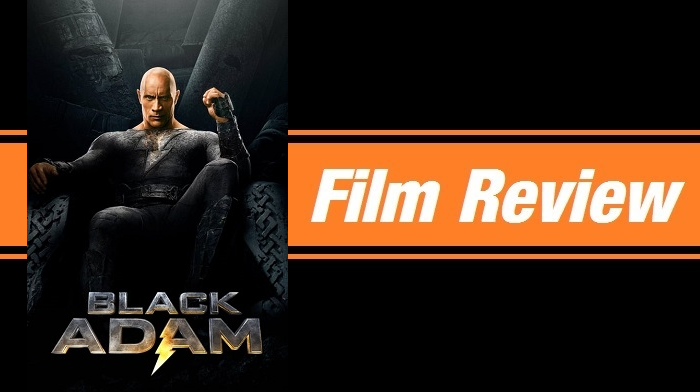
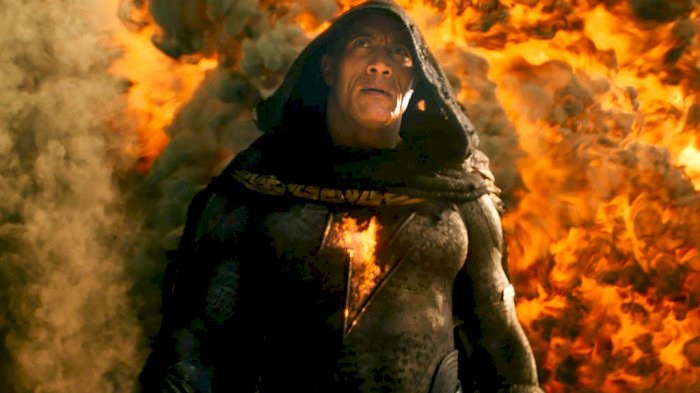
Enter Dwayne Johnson and “Black Adam”, a pairing that attempts to bring balance and (more importantly) direction to the DCEU. The engrossing superhero epic “Zack Snyder’s Justice League” aside, “Black Adam” is the first DCEU film since 2018’s “Aquaman” that genuinely feels a part of something bigger. I’m not knocking smaller and more individual projects, but a sprawling universe needs interconnectivity and continuity. With “Black Adam”, it looks like the DCEU is finally ready to deliver that once again.
Image Courtesy of Warner Bros. Pictures
One of the film’s biggest strengths was also one of its biggest question marks – Dwayne Johnson. The wrestler turned movie star brings loads of influence and notoriety to whatever film he’s in. But he also has a truly larger-than-life personality which begs the question: would we be able to see beyond Dwayne Johnson to see Black Adam? The answer turns out to be a resounding “Yes”, and it’s in large part due to Johnson himself who gives a lights-out performance. He’s surprisingly restrained, intense and menacing, and slyly funny in some good moments of levity.
Directed by Jaume Collet-Serra and written by the trio of Adam Sztykiel, Rory Haines, and Sohrab Noshirvani, “Black Adam” quite intentionally avoids heavy exposition within its origin story framework. The most we get comes in a prologue where we’re taken back to 2600 BC. In the country of Kahndaq, a despot named Anh-Kot enslaves his own people, forcing them to mine for a mysterious metal called Eternium. The corrupt king wants the metal to forge the powerful Crown of Sabbac, but the people revolt. Legend says a champion named Teth-Adam was granted the power of Shazam which he used to kill Anh-Kot and free Kahndaq.
In the present day, Kahndaq is oppressed by a high-tech organized crime syndicate called Intergang who are seeking the location of Crown of Sabbac. Knowing the dangers if Intergang gets its hand on the Crown, archaeologist Adrianna Tomaz (Sarah Shahi) tracks the artifact to a secret chamber deep in a mountain. It also happens to be the tomb of Teth-Adam. When she and her team are ambushed by a squad of Intergang soldiers, Adrianna recites an inscription that summons Teth-Adam himself (Johnson), an incredibly powerful being who immediately slaughters all of the Intergang soldiers.
With Adam’s arrival, the people of Kahndaq believe they have finally found their champion. But his powerful presence is discovered by Amanda Waller (Viola Davis), a ruthless government official who dispatches the Justice Society of America to apprehend him. With a team consisting of the Nth metal empowered Hawkman (Aldis Hodge), a master sorcerer Dr. Fate (Pierce Brosnan), the wind controlling Cyclone (Quintessa Swindell), and Atom Smasher (Noah Centineo), who can grow enormous heights by manipulating his molecular structure, the JSA set out for Kahndaq.
Image Courtesy of Warner Bros. Pictures
A big chunk of the movie operates within an interesting moral gray space as it wrestles with the questions: is Adam the hero longed for by the people of Kahndaq, or is he a dangerous villain who needs to be taken into custody? They’re questions that shape the very battles between the JSA and Adam as well as their inevitable team-up later on, once a more sinister threat arises. The movie offers no easy answers. Adam’s willingness to brutally kill his enemies clearly poses a problem for the JSA who are much more by-the-book. But where were the JSA and earth’s other heroes during Kahndaq’s centuries of oppression? This opens up some of the film’s deeper themes. And things only get more complicated as facts of Adam’s past come to light.
All of that makes for the kind of compelling dynamic that superhero movies rarely engage these days. But make no mistake, this is a popcorn genre film through-and-through. “Black Adam” is the epitome of ‘action-packed’ with Collet-Serra putting together several terrific set pieces. Every character gets their moment to shine, with Hodge’s Hawkman and Brosnan’s Dr. Fate making intriguing new additions. But this is Black Adam’s show. Johnson energizes things with his magnetic antihero grit and gnarly kills which push the PG-13 rating, yet are still very much in tune with his character.
In its noble effort to avoid the usual origin story trappings, “Black Adam” bypasses a lot of meaningful backstory, leaving us with a few too many questions. I was hungry to know about the Justice Society, and what is Waller’s connection to them? That said, “Black Adam” does a admirable job introducing new pieces and charting new courses for the DCEU, all within a mostly self-contained story. Obviously those quick to roll their eyes at franchise-building or DCEU movies in general will find plenty to nitpick. But “Black Adam” accomplishes everything it needs to. It offers big action and cracking new characters. It puts its own unique stamp on the superhero origin story. And it sets the DCEU on an exciting new trajectory. “Black Adam” is now showing in theaters.
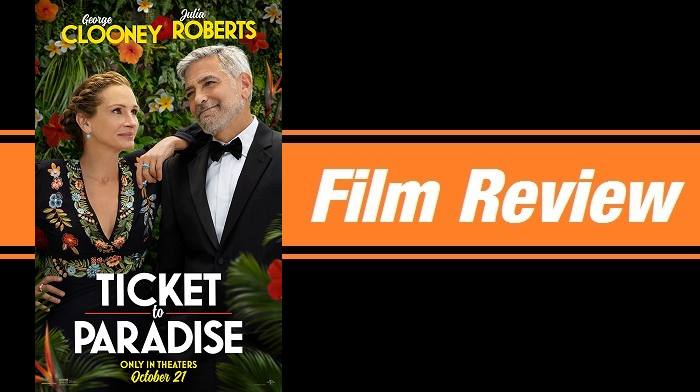
Aside from its half-fun and half-cringey trailer, “Ticket to Paradise” advertised a potentially fun throwback romantic comedy built on the backs of two Hollywood A-listers. For some of us, it’s hard not to be drawn to the prospect of George Clooney and Julia Roberts hamming it up again on the big screen. And considering both have dialed back their workload in recent years, it’s nice seeing them again even if this is a pretty by-the-numbers romcom.
Built on Clooney’s charm, Roberts’ effervescence, and their effortlessly fun chemistry together, “Ticket to Paradise” (from director Ol Parker) is the kind of movie that calls back to decades ago when mega-stars frequently took these gigs, often between bigger and better projects. The movies were always light and frothy and they stuck to a pretty strict formula. Eventually these movies ran their course and were even looked down upon as tastes went a little more highbrow.
Image Courtesy of Universal Pictures
Don’t get me wrong. Like many other people, I too grew tired of these uninspired studio products and haven’t exactly been longing for their return. That said, I did feel a slight tingle of nostalgia when “Ticket to Paradise” was announced. I like Clooney and Roberts and seeing them together in one of these romcom concoctions of yesteryear wasn’t the worst thing in the world. And for me personally, sometimes I enjoy stepping away from the heavier stuff and taking in something like this.
Well, I can honestly say that “Ticket to Paradise” didn’t disappoint. Not because it’s something extraordinary, but because it’s exactly the kind of movie you think it is. It’s strongly beholden to the well-known romantic comedy formula, both in its handling of characters and in its storytelling. And it’s a movie where you know exactly how things are going to play out. Nothing will catch you by surprise. You’ll have figured out the ending before the opening credits have finished. But that will hardly bother the audience the film is aiming for.
Clooney plays a Chicago architect named David Cotton. Roberts plays a Los Angeles art dealer named Georgia. The two have been divorced for five years, and in this case time has not healed their wounds. It’s safe to say David and Georgia detest each other. Each blame the other for their split. Each relish the opportunity to degrade their former spouse. Together they’re an undeniably toxic recipe, but Clooney and Roberts, along with co-writers Parker and Daniel Pipski, offer up some pretty hilarious verbal jabs, needles, and takedowns, with both stars playing off each other extremely well.
Image Courtesy of Universal Pictures
The lone bit of joy David and Georgia share is their daughter, Lily (Kaitlyn Dever) who takes a trip to Bali with her best friend, Wren (Billie Lourd) to celebrate their recent graduation from law school. While there, Lily meets and falls in love with a local seaweed farmer named Gede (Maxime Bouttier). Only 37 days later, David and Georgia get emails from Lily informing them that she and Gede are engaged. Convinced Lily is throwing her life away, David and Georgia hop a plane for Bali, reluctantly join forces, and hatch a plan to discourage their daughter from getting hitched. Hijinks ensue.
Parker soaks us in crystal blue waters and lush green forests (courtesy of Queensland, Australia) so we always have something pretty to look at. Meanwhile the story plays out like your typical crowdpleaser, hitting most of the notes and checking most of the boxes. The antics range from cute and amusing to facepalm worthy. But the sheer star wattage of Clooney and Roberts keep the movie afloat. Their individual presences mixed with their smile-inducing chemistry ensure that those going to see “Ticket to Paradise” leave with exactly what they came for. “Ticket to Paradise” is now showing in theaters.
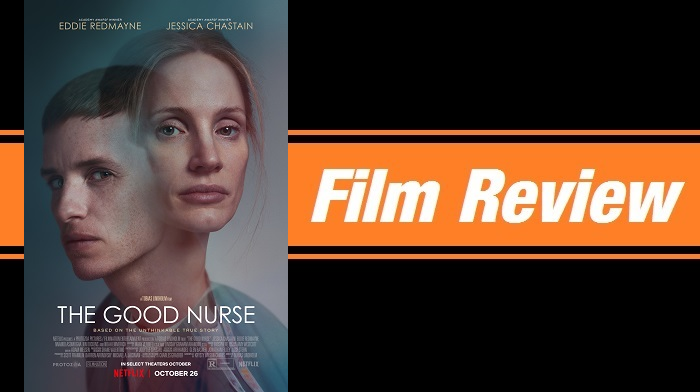
Tobias Lindholm is the screenwriter behind two of my very favorite movies of the last ten years, 2012’s “The Hunt” and 2020’s “Another Round”. He steps back behind the camera for the first times since 2015 to direct his English language debut, “The Good Nurse”. Though known most for his writing, Lindholm gives way to Krysty Wilson-Cairns (“1917”, “The Last Night in Soho”) who pens this thoroughly enthralling biographical crime drama that leans on the powerhouse performances from two Oscar winners.
Based on Charles Graeber’s 2013 book of the same name, this smart and surprisingly dense feature at times plays a little like a television medical procedural (and I say that as a compliment). Other times it has distinct old-school thriller vibes. It’s also biographical, telling the unsettling true-crime story of Charlie Cullen, a nurse who was confirmed to have murdered 29 patients (suspected to be as many as 400) in various hospitals over a 15-year span. Despite several suspicious incidents, hospitals chose to protect themselves rather than turning Cullen in. This allowed him to continue to find work up until a fellow nurse named Amy Loughren worked with New Jersey law enforcement to bring Cullen down.
The opening credits set a good tone. In 1996 at a Pennsylvania hospital, a nurse named Charlie Cullen (Eddie Redmayne) steps away from a patient who suddenly codes. Doctors rush in to attempt to resuscitate. But the camera stays focused on Charlie, slowly zooming in on his face as he watches the doctors frantically try to save the patient’s life. During this disquieting single shot, Charlie’s visible concern slowly erodes into a cold stare as a doctor takes off his gloves and announces the time of death. Redmayne nails the scene, and from that moment on we no longer see him. We see Charlie Cullen.
Image Courtesy of Netflix
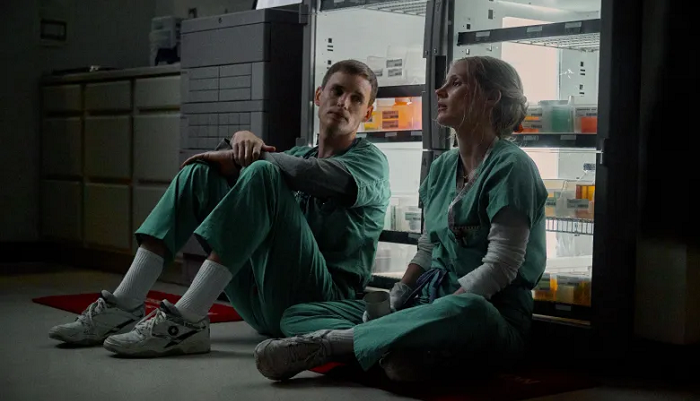
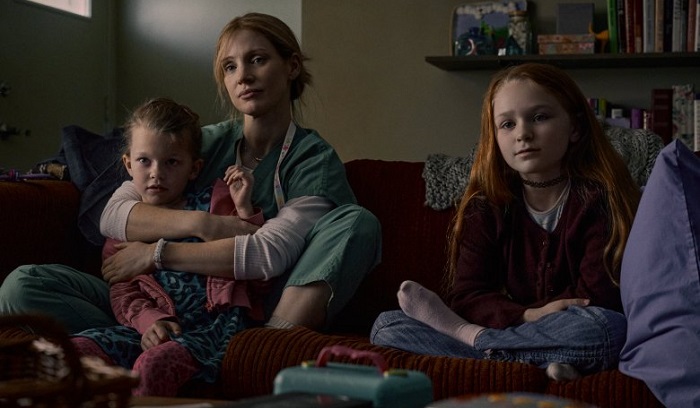
Jumping ahead to 2003, we’re introduced to Amy Loughren (Jessica Chastain), an ICU nurse at a New Jersey hospital. As the movie’s title suggests, Amy is a good nurse. She takes her job seriously and genuinely cares for her patients. She also has a serious heart condition, one that calls for a heart transplant. But she has to work at the hospital for one year before qualifying for health insurance. She has four months to go. If that wasn’t bad enough, she’s also a single mother struggling financially. She works long hours to provide for her two daughters, but with her medical bills it’s barely enough to scratch by.
Short on staff and hampered by budget cuts, the hospital hires Charlie Cullen to help the overworked night shift. Thin and slight, with sloped shoulders and dangling arms, Charlie has a quiet and unassuming presence. He’s the kind of person who easily disappears into the background. Amy shows him the ropes, and over time the two become close friends. Before long Charlie becomes a fixture in Amy’s life, driving her to work and even helping with her daughters. And after learning of her medical condition, he covers for her at the hospital, determined to see her through until she can get insured. For someone struggling like Amy, Charlie seems like a godsend. But then one of Amy’s patients unexpectedly dies, and the true-crime elements really kick in.
Led by their buttoned-up and aggressively corporate risk manager (a very good Kim Dickens), the hospital administrators immediately go into self-preservation mode, gathering what information they can and keeping it hid behind the veil of an “internal investigation”. It’s a full seven weeks after the death that they’re forced to notify the police. The two New Jersey homicide detectives assigned to investigate (Nnamdi Asomugha and Noah Emmerich) are incensed by the delay especially after learning the patient’s family has already cremated the body. No body means no autopsy which means no case.
Image Courtesy of Netflix
But the hospital’s lack of promptness and obvious stonewalling only raises the suspicions of the detectives who eventually set their eyes on Charlie. But getting through the hospital bureaucracy proves to be a chore. They need someone on the inside – someone close to Charlie who could help them get the evidence the hospital is intent on hiding.
So often movies like this can wander, especially when topping two hours. But “The Good Nurse” remains compelling throughout thanks to some good behind-the-camera choices. Rather than making Charlie, his motives, and his pathology her centerpiece, Wilson-Cairns builds her story around Amy. Together with Chastain, she hooks us emotionally and adds a penetrating human layer. And Lindholm’s crisp and methodical dramatic pacing has us glued to every frame. He keeps this talky restrained thriller from ever feeling dry, and his management of tone is spot-on.
The real-life events behind “The Good Nurse” is inherently chilling, so no additives needed in that department. But it does require a specific kind of performance to pull it off. Redmayne fits the bill plus some. Everything he does lands well, from his unnerving reticence to the small hints of the monster within. Then you have Chastain, our emotional connection who grounds the story with her remarkable restraint. Both are key ingredients to fleshing out this terrifying true story that will leave you second-guessing your next hospital visit. “The Good Nurse” is out now in select theaters and streams October 26th on Netflix.
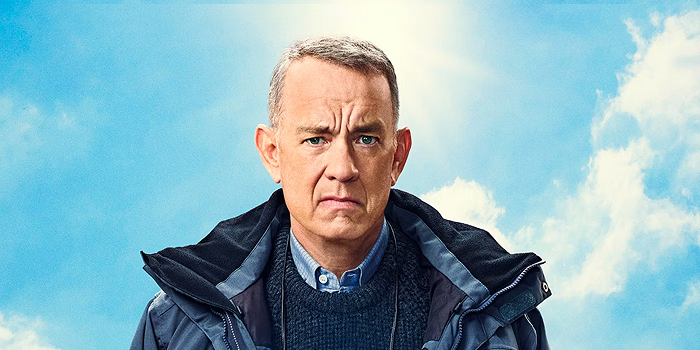
I loved the 2015 Swedish dramedy “A Man Called Ove”, and I remember thinking then that an American remake was all but guaranteed. It actually took longer than I expected to get here, but now we have “A Man Called Otto” from director Marc Forster. And playing the titular curmudgeon is none other than Tom Hanks. I’m always a believer in Hanks, but this felt like an odd role for him. Then I saw the new trailer. In typical Hanks fashion, he falls right into the character and I’m looking forward to seeing where he takes it.
Storywise, Otto is in a bad way. His wife has died, and he was forced out of a job he loved. So he’s decided to end his life. But every attempt is accidentally thwarted by his sweet and lively new neighbors. Soon this single mother, two young daughters, and one persistent gray cat help Otto see that he has more to live for. The original film was dark yet funny. I’m not sure how far this version will go, but the trailer looks really promising.
“A Man Called Otto” opens in theaters January 13th. Check out the trailer below and let me know if you’ll be seeing it or taking a pass.









 Keith & the Movies