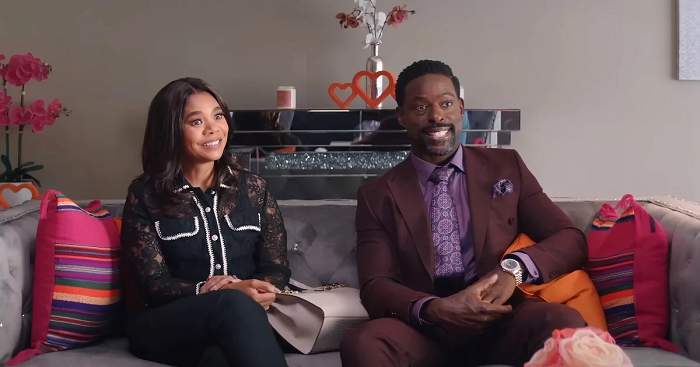
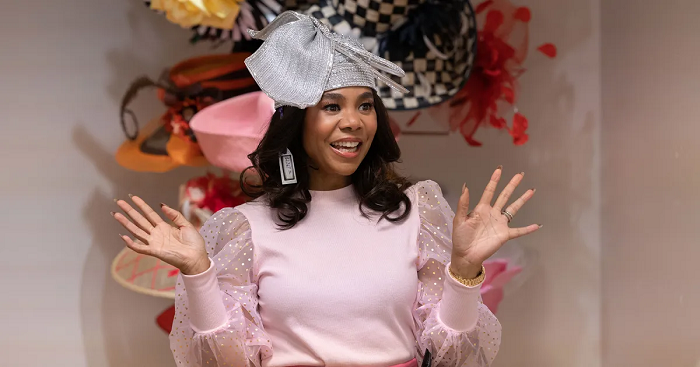
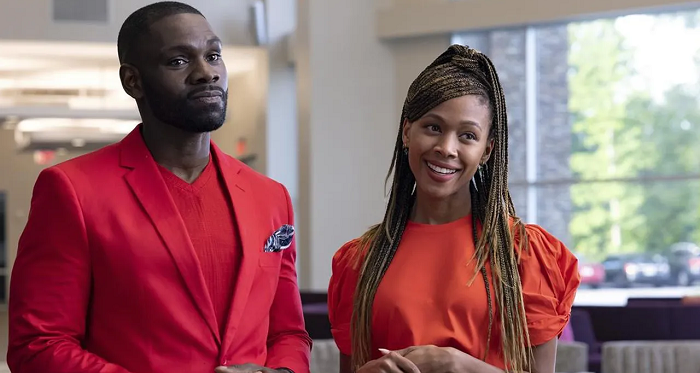
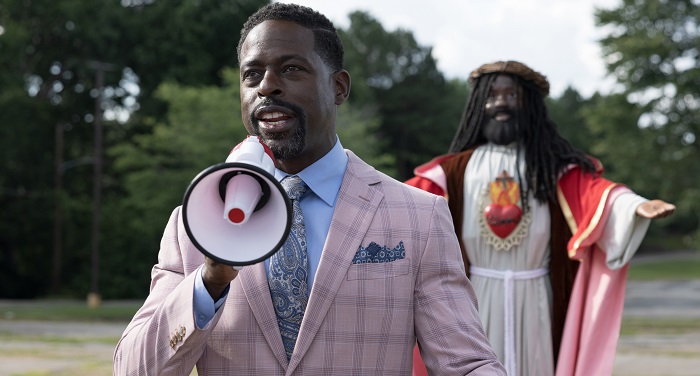
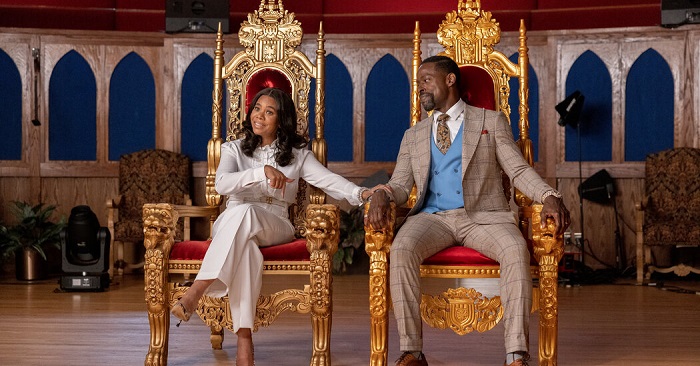
One of my favorite films from this year’s Sundance Film Festival was “Honk for Jesus. Save Your Soul”, a biting and often hilarious critique of pseudo-Christianity and megachurch corruption. Now Universal Pictures Home Entertainment is bringing this snarky satire home with a brand new Blu-Ray Collectors Edition. The film marks the feature directorial debut for writer-director Adamma Ebo and stars the superbly cast Regina Hall and Sterling K. Brown as a megachurch power couple trying to bounce back following a huge public scandal. You can read my full film review HERE.
This new Blu-Ray Collector’s Edition of “Honk for Jesus. Save Your Soul.” hit shelves NOVEMBER 1, 2022. See below for a full synopsis and breakdown of the bonus features.
OFFICIAL SYNOPSIS:
Year: 2022
Rating: R
Runtime: 102 Minutes
Director: Adamma Ebo
Starring: Regina Hall, Sterling K. Hall, Nicole Beharie, Conphidance, Austin Crute, Devere Rogers, Avis Marie Barnes
“Honk for Jesus. Save Your Soul.” is a satirical comedy starring Regina Hall as Trinitie Childs – the proud first lady of a Southern Baptist megachurch, who together with her husband Pastor Lee-Curtis Childs (Sterling K. Brown), once served a congregation in the tens of thousands. But after a scandal forces their church to temporarily close, Trinitie and Lee-Curtis must reopen their church and rebuild their congregation to make the biggest comeback that commodified religion has ever seen.
AVAILABLE TO OWN NOW ON BLU-RAY AND DVD FROM UNIVERSAL PICTURES HOME ENTERTAINMENT
BONUS FEATURES:
Alternate Opening – Watch the never-before-seen alternate opening for a different take on the beginning of Honk for Jesus. Save Your Soul.
Deleted/Extended/Alternate Scenes – Watch unreleased scenes from the laugh-out-loud comedy.
Showtime
Skate Rink
Childs in the Attic
Trinitie in the Bath
Highway Pedestrian Guy
Trinitie Bringing Food
Trinitie Praying Over Lee-Curtis in Bed
Trinitie Sees Sidewalk Woman Again
Anita Speaks
Gag Reel – A highlight reel of bloopers and outtakes featuring main cast.
Aspect Ratio: 16:9 1.78:1 Anamorphic Widescreen
Subtitles: English SDH, French Canadian, Latin American Spanish
Languages/Sound: English (Dolby Digital 5.1 for Feature and Dolby Digital 2.0 for Bonus Content) and Latin American Spanish (Dolby Digital 5.1)
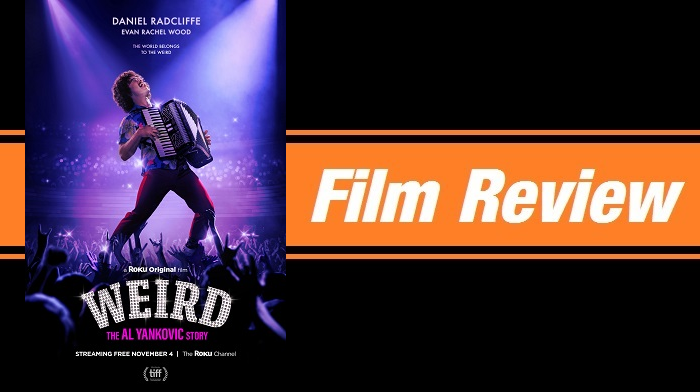
Easily one of the more unique success stories in music entertainment is that of Alfred Matthew Yankovic. Born October 23, 1959, this polka-loving accordion-playing kid from Downey, California would become a five-time Grammy winner with six platinum and four gold records to his credit. Over his extraordinary 46-year career, “Weird Al” (who he would become known as) has parodied songs from Michael Jackson, Nirvana, Madonna, Joan Jett, Coolio, and Lady Gaga among others while also finding success as a record producer, actor, and children’s author.
So naturally a star like Weird Al needs his own music biopic, right? Well he gets one…sort of…with “Weird: The Al Yankovic Story”. But rather than tell his true-life story, “Weird” is a full-on unabashed parody of the Hollywood biopic formula that has become so wildly popular today. This wacky and at times utterly hysterical creation leans heavy into the music/celebrity biopic tropes. There’s the ambitious dreamer, the meteoric rise to stardom, the seduction of fame, the crushing fall, and the inevitable ascension from the ashes. But you’ve never seen it exaggerated quite like this.
But here’s the thing, most of what we get in “Weird” is absolutely malarkey – outlandish fiction conceived from the minds of co-writers Eric Appel and Weird Al Yankovic himself. And while it may not make for the most accurate account, this outright ridiculous spoof is loaded with laughs, especially the first half which is some of the funniest material I’ve seen all year. There are tidbits of truth scattered throughout (Al was introduced to the accordion by a door-to-door salesman; his mother did forbid him from listening to Dr. Demento; Coolio wasn’t too happy with Al’s “Gangsta’s Paradise” parody, etc.). But don’t take too much of what you see seriously.
Image Courtesy of Roku
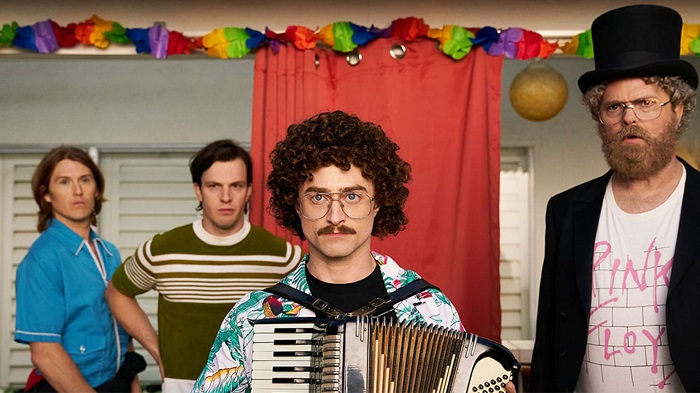
None other than Daniel Radcliffe is tasked with filling the Weird one’s shoes, and he turns out to be a great fit. His big glasses, curly mop, two-piece mustache, and loud Hawaiian shirts certainly nail the appearance. But it’s Radcliffe’s unshakable earnestness that’s the icing on the cake. Regardless of how ludicrous things get, he always sells us on his character’s sincerity. It’s quite the performance – odd, funny, strangely empathetic, and 100% committed.
But before the baton is handed to Radcliffe, Appel (who also directs the film) carries us back in time to highlight some key not-so-real moments from Al’s youth. We see his struggles with his uptight mother, Mary (Julianne Nicholson) and his temperamental (and borderline deranged) father, Nick (Toby Huss). Al’s mother doesn’t condone what he listens to, especially the Dr. Demento radio show, his favorite. Meanwhile his father sees all of his interests as a complete waste of time. Instead, Nick believes his son should be working at the town’s hilariously indistinct factory (there is a joke there) with all the other ‘real’ men.
That doesn’t make for an easy road to stardom, but Al’s desire to make music is insatiable. He becomes a closet accordion player, hiding his real self from his disapproving father. But when things get a little too wild at a teen polka party (as they tend to do at teen polka parties), Al’s love for the accordion is exposed. It causes a rift between him and his family leading to Al leaving home as quickly as he can.
Image Courtesy of Roku
But in one magical (and utterly absurd) moment of inspiration, Al Yankovic’s dream is set on a path to reality. While hanging out and making sandwiches for his three roommates, he hears the 1979 pop hit “My Sharona” from The Knack. Suddenly Al grabs his accordion and plays as the words “Oh, my little hungry one, hungry one. Open up a package of My Bologna” streams through his lips. “Dude I’ve got chills“, expresses one of his awestruck pals. And a star is born. Soon Al is playing his first gig at a rough-and-tumble biker bar where none other than Dr. Demento (Rainn Wilson) hears his act. Smitten, Demento takes Al on as his protégé, introducing him to a wild assortment of other eccentric entertainers and (more importantly) playing his music on his radio show.
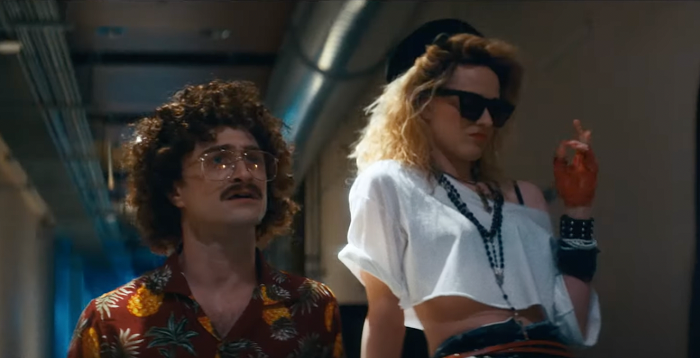
The entire first half is filled with one funny bit after another. It’s a farcical assembly line of hilarious conversations and outrageous dialogue, and all spoken with straight-faced conviction. It features a cavalcade of funny cameos including Jack Black, Conan O’Brien, Lin-Manuel Miranda, Patton Oswalt, David Dastmalchian, Quinta Brunson, Will Forte, and even Weird Al himself. The zany first half culminates in a whirlwind romance with a gum-smacking Madonna (a scene-stealing Evan Rachel Wood who looks as if she stepped right off the “Desperately Seeking Susan” set).
The second half isn’t quite as snappy, and its better gags are a bit more sporadic. But it still has its moments, especially as the movie goes completely over the top with the silliness. Appel’s insistence on never taking anything seriously (even when it looks like he’s taking something serious) keeps things light. Yet the movie has an unexpected amount of heart underneath its goofy veneer in large part thanks to Radcliffe. He gives us just enough of a real character to care which turns out to be all we need. That’s because most of our time will be spent laughing at just how bonkers Weird Al’s not-so-true story gets. “Weird: The Al Yankovic Story” premieres tomorrow, November 4th exclusively on The Roku Channel.
The story of Emmit Till is unsettling, unspeakable, and infuriating. Yet out of such a cold-hearted and hate-driven crime came another story – one of unimaginable courage. And while the story of Emmit Till, his murder, and the travesty of justice that followed inescapably brings feelings of heartache and indignation, the story of his mother, Mamie Till-Bradley is one full of inspiration and power.
It was the summer of 1955. Emmit Louis Till was only 14-years-old when he hopped on a train in Chicago bound for Mississippi. There he was to spend a couple of weeks visiting family. A few days into his visit, he and his cousins entered Bryant’s Grocery and Meat Market to buy candy. While inside Emmit, an African-America boy, had an encounter with Carolyn Bryant, the white co-owner of the store. What exactly took place in the store is still disputed, but what followed isn’t. On August 28, 1955 young Emmit Till was kidnapped, tortured, and lynched.
Image Courtesy of United Artists Releasing
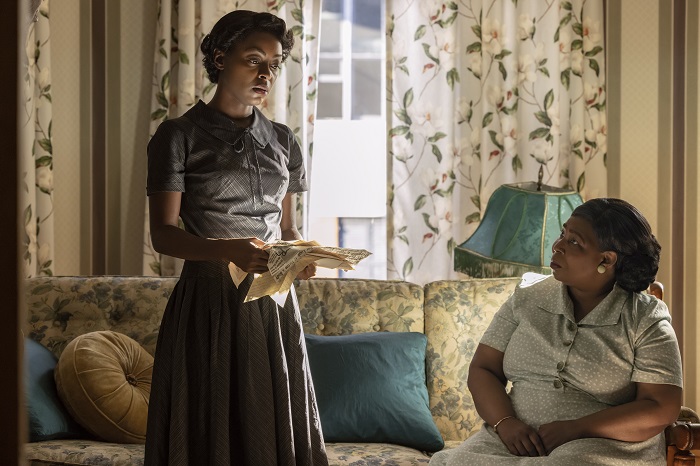
Dramatizing stories like this in movie-form is always tricky. But rather than honing in on the barbaric killing of Emmit Till (and risk unintentionally exploiting it in the process), director Chinonye Chukwu puts her focus on Mamie Till-Bradley. Told mostly from Mamie’s perspective, “Till” spares us the visual horror of Emmit’s murder, but the pain of his death is felt in every single frame and in the emotionally raw and revelatory performance of Danielle Deadwyler whose name should be on every awards season ballot. She invigorates the role of Mamie who makes the agonizing journey from shattered mother to civil rights crusader.
“Till” features much of the same precision seen in Chukwu’s 2019 debut film, the terrific yet woefully underseen “Clemency”. This is a considerably bigger undertaking both in terms of size and scope. But Chukwu manages it well, showing off keen instincts both technically and narratively. The production design and costumes are top-notch, as is her control of the camera, from framing a shot to knowing when to keep it still. Most importantly, Chukwu and her co-writers Michael Reilly and Keith Beauchamp maintain a grounded and crushingly authentic approach to storytelling.
Emmit is played by Jalyn Hall whose big smile and outgoing personality can light up a room. He’s shown to be sweet, full of life, and the apple of his mother’s eye. When we first meet him he’s bubbling with excitement over visiting his cousins down South. But Mamie is uncomfortable with letting her son leave Chicago. She knows the dangers that may await a young boy of color in the Mississippi Delta, warning him, “Be small down there.” Yet despite her visible concern (aka mother’s intuition), Mamie puts her beloved son on the train with his uncle known as Preacher (John Douglas Thompson). Little did she know, that was the last time she would see her son alive.
For African-Americans in the Jim Crowe-era South, you could find yourself in a lot of trouble for simply looking at a white person the wrong way. As the well-meaning and naturally friendly Emmit enters Bryant’s Grocery and Meat Market, Chukwu ensures we sense the weight of what’s about to happen. And as Emmit has his ill-fated exchange with Carolyn Bryant (played by Haley Bennett), Chukwu turns up the tension. It’s palpable, from the time he leaves the store until a few days later, when Carolyn’s husband Roy (Sean Michael Weber) and his pack of goons kidnap Emmit in the dead of the night, savagely beating him beyond recognition, and then killing him. Chukwu’s handling of these scenes are masterful – showing you don’t always have submit your audience to brutality in order for them to feel it’s affects.
Image Courtesy of United Artists Releasing
Back in Chicago, Mamie gets word of Emmit’s kidnapping and is directed to Rayfield Mooty (Kevin Carroll) who uses his connections to get the NAACP involved. But then comes word of Emmit’s fate, and Mamie is left devastated. Rayfield encourages her to speak out and utilize the public’s attention, but Mamie has no interest. She just wants Emmit’s body brought home. But then she sees his brutalized remains and makes a bold decision. Mamie has an open-casket public wake, determined that people actually see what happened to her son. This launches her campaign for justice which leads to a Mississippi court where her son’s killers are put on trial. “There is no testimony like a mother’s.”
Interestingly, “Till” does stumble on a few of the real-life details. Most are small, such as Emmit’s stutter which pops up in one lone scene then suddenly vanishes. Others are puzzling, like the sanitizing of Emmit’s father and his troubling backstory. But they’re hardly deal-breakers, especially in a movie that speaks with such honesty and clarity. Add to it some of the very best ensemble work of the year, impeccable 1950s period design, and storytelling that’s every bit as heart-wrenching as it needs to be. “Till” is out now in theaters October 28th”.
In “Nocebo”, Eva Green plays a fashion designer who’s suffering from a unexplained illness. She’s seen several doctors and has been prescribed numerous medications, but nothing has seemed to help. Her husband (played by Mark Strong) is growing impatient which has put a strain on their marriage. But when a mysterious woman shows up at their door, the story moves from a family drama to something darker and far more twisted.
That might be the basic setup for the movie, but “Nocebo” has quite a bit going on under its surface. It’s a creepy and sometimes gnarly psychological horror film. Yet at times it plays like a socio-political thriller, especially in its sly digs at class, greed, entitlement, and corporate oppression. Director Lorcan Finnegan finds room in his film for both genre and commentary. And while I’m still not sure how well all of the pieces connect, Finnegan, along with screenwriter Garret Shanley, craft something that’s both entertaining and surprisingly thought-provoking.
Image Courtesy of RLJE Films
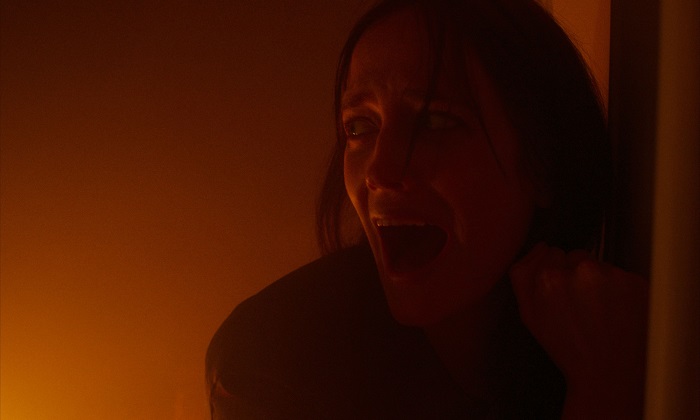
Christine (Green) has enjoyed a successful career designing children’s clothing. She lives in a posh home in an upscale neighborhood with her marketing strategist husband, Felix (Strong). Their daughter Bobs (Billie Gadsdon) attends an expensive private school. Without question it’s a comfortable life of plenty, but that suddenly changes. While presenting her latest clothing line at a fashion show, Christine is jarred by a frightening vision (or is it a vision?). She sees a mangy, milky-eyed dog covered in large clumps of blood-gorged ticks. I won’t spoil the details of this genuinely creepy and deliciously gross scene, but it ends with her snapping back as if from a dream yet with one pretty nasty tick bite on the back of her neck.
Shortly following her ghastly vision, Christine begins suffering from an assortment of symptoms such as headaches, tremors, trouble sleeping, and absentmindedness. Eight months pass and her condition has only worsened, affecting her life at work and at home. But then she’s suddenly surprised when a petite Filipina caregiver named Diana (Chai Fonacier) shows up at her door seemingly unannounced. The mysterious and unassuming woman says Christine hired her and this was to be her first day. Fearing she’s having another memory lapse, Christine invites Diana in and gives her a room upstairs.
Image Courtesy of RLJE Films
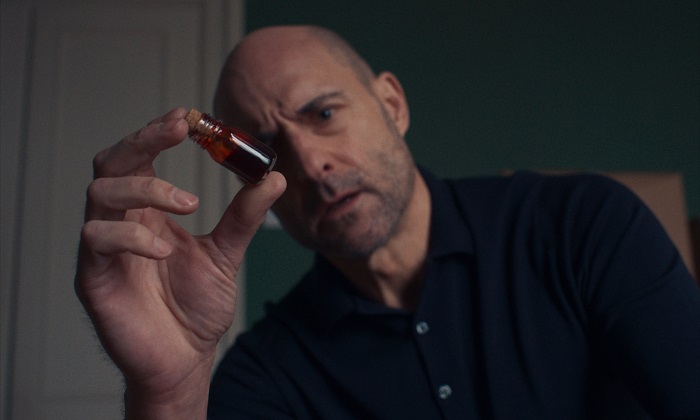
So did Christine hire Diana and forget or is there something more sinister going on? That’s a key question and we feel we know the answer pretty early on. But much of the fun comes from watching Finnegan and Shanley carve in the details as they unpack the truth. And the cast gets some good material to work with, especially after Diana arrives. Her creepy yet cryptic presence drives a wedge between Christine and Felix. He quickly grows suspicious of Diana’s strange medicines and folk remedies while Christine slowly grows more dependent on them. Green, Strong, and Fonacier are a proficient trio with each filling in certain pieces of the overall puzzle. Green is especially good, especially in the second half as her character begins to completely unravel.
“Nocebo” earns points for it’s underlying message which comes to the surface through Diana’s interwoven backstory. It’s a well shot and well incorporated addition even if it doesn’t quite pack the final punch it could have. Still, the message in itself is potent and makes us look at the story through a new lens. And while most of the film relies on the audience’s patience, it loses some of that trust in a final act that’s a touch on-the-nose. But none of those things lessen the fun or dull the film’s psychological edge. And Lorcan Finnegan shows himself to be a compelling craftsman, using folk horror (yes, the ticks return) and evocative symbolism to dole out some genuinely unsettling scenes. “Nocebo” opens in select theaters this Friday, November 4th and on VOD November 22nd.
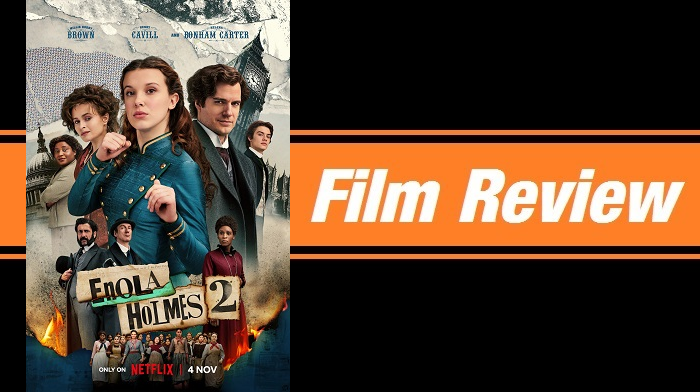
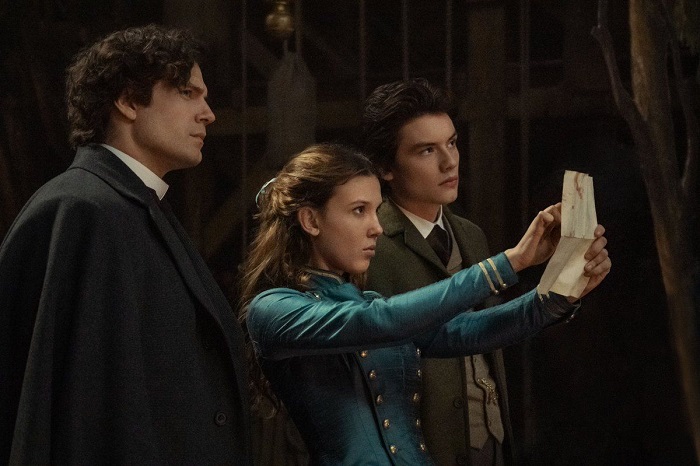
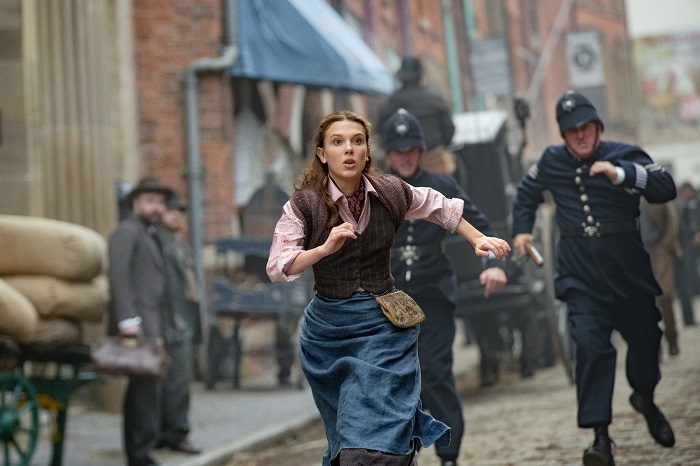
One of the biggest surprises (and quite frankly one of the biggest treats) of 2020 was the jaunty mystery film “Enola Holmes”. Based on the young adult series of detective novels (that I know practically nothing about), the feature film adaptation sported good direction from Harry Bradbeer, a great script by Jack Thorne, and a terrific supporting cast that included Henry Cavill, Sam Claflin, and Helena Bonham Carter. But it was the magnetic charisma of its star, Millie Bobby Brown that made the film such a delight.
Following the success of its predecessor, Netflix was quick to green-light “Enola Holmes 2”. Brown reprises her titular role, brandishing the same personality and charm. Bradbeer returns to the directing chair with Thorne again handling the screenwriting. Also returning is Cavill as Enola’s brother, the renowned detective Sherlock Holmes, and Carter as her loving renegade mother, Eudoria who’s still on the run (see the previous film) and who has quite the affection for explosives. Several other familiar faces return along the way (but where’s Sam Claflin???).
Image Courtesy of Netflix
Following the success of her unofficial first case in the first film, Enola is all set to become a full-time detective. She opens up Enola Holmes Detective Agency, but quickly finds that securing clients isn’t easy for a young lady in her late teens, especially in the patriarchal Victorian England of the 1880s. She also finds herself still living in the shadow of her famous older brother Sherlock. After a long stretch of no cases and no income, Enola is set to call it quits and move back to Ferndell Hall.
But while boxing up her things Enola is surprised by a visitor – a young girl named Bessie (Serrana Su-Ling Bliss) seeking help in finding her missing sister, Sarah (Hannah Dodd). After doing a little investigating, Enola decides to take the case which (to no surprise) turns out to be more than a missing woman. Soon Enola finds herself in a web of greed, corporate corruption, extortion, oppression, and women’s suffrage. And as her case intensifies, she discovers that she doesn’t have to go at it alone. Sometimes everyone can use a little help.
While the first film was all about finding herself, “Enola Holmes 2” is a straight detective story, with Enola following in the footsteps of her famous older brother yet carving her own path and honing her young super-sleuthing skills. She’s still smart, perceptive, and fiercely independent. And she still routinely breaks the fourth wall to offer us some hilarious commentary or sometimes just to get things off her chest. This is where Brown’s performance really shines. Her ability to shuffle between comedy and drama is impressive. And she’s able to retain Enola’s playfulness from the first film while also showing some meaningful growth. Brown fully embodies her character.
While Brown is unquestionably the star, she’s surrounded by an array of wonderful supporting players. Cavill works at just the right temperature and fills his character’s sizable shoes well. He and Brown have a sweet chemistry and share some great scenes together, especially in Sherlock’s Baker Street flat. Louis Partridge remains a nice fit as the geeky yet noble Lord Viscount Tewkesbury. “He’s still a nincompoop,” Enola tells us as she tries to hide her fondness for him. Carter doesn’t show up much but is a lot of fun when she does. And new to the cast is David Thewlis, the film’s snarling heavy.
Image Courtesy of Netflix
As happens often in these kinds of movies, some aspects of the mystery are a tad too convenient, as some clues seem to fall right into Enola’s lap. And there’s a significant final act reveal that’s certainly ambitious but not as impactful as it wants to be. Those things aside, it’s hard not to be (once again) swept up in a playfully energetic Enola Holmes adventure. This well-oiled sequel has all the heart and humor of the first film, yet it’s also not afraid to dip its toes into some pretty weighty themes.
“Enola Holmes 2” might not be as light on its feet as its predecessor. But the snappy direction, the smart and witty script, a great supporting cast, and (most importantly) Millie Bobby Brown’s infectious presence make this a more than worthy follow-up. And best of all, it shows there’s plenty of mileage in this series if Netflix chooses to keep it going. So yes, the game is afoot…again. And I am completely onboard for more. “Enola Holmes 2” premieres November 4th on Netflix.
2022 has been a pretty lackluster year for the horror genre. It’s been a year where “big swings” by filmmakers have become more important than good stories or (dare I say it) actual scares. It’s been a year where several old franchise favorites have returned in what amounted to pretty dreadful reboots. Thankfully there have been a few welcomed exceptions such as “Pearl”, “Smile”, “Fresh”, and “Orphan: First Kill”. Otherwise it has been pretty unremarkable.
New to the fold is “Prey for the Devil”, a supernatural horror film from director Daniel Stamm and screenwriter Robert Zappia. Arriving just in time for Halloween, “Prey” doesn’t do much to change the course of the 2022 horror movie year. And while it might grab itself an audience who are hungry for some holiday frights, it’s unlikely to stick with you for very long afterwards. That’s because it plows some very familiar ground, and it doesn’t give us much that we haven’t seen before. Yet it has a few things going for it that helps make it fairly entertaining.
Image Courtesy of Lionsgate
Jacqueline Byers plays Sister Ann, an ambitious young nun with a troubled past who finds herself face-to-face with a malevolent demon that’s had its eye on her since she was a child. Sister Ann grew up in a troubled home with an abusive mother (Konya Ruseva in flashbacks) who was diagnosed with depression and schizophrenia. But Ann loved her mother and was convinced there was something else wrong. That belief and her childhood trauma led her to become a nun where she began learning about possession.
Noting a sudden increase in possessions around the globe, the Vatican decides to reinstitute exorcism training. Sister Ann has an immediate interest, but women are prohibited from performing the rite of exorcism. But she finds an advocate in Father Quinn (a solid Colin Salmon) who admires her eagerness and recognizes her special gifts. He agrees to let her sit in as an observer as he trains a group of young priests. This doesn’t sit well with the stern Sister Euphemia (Lisa Palfrey) or the skeptical psychiatrist Dr. Peters (Virginia Madsen). But Father Quinn sees something in our protagonist.
As expected, their training quickly turns into something much more sinister after Father Quinn and his group of exorcists-to-be encounter a 10-year-old girl named Natalie (Posy Taylor). Her family believes she may be possessed (I suppose sudden scars all over her body, the snarling voice, and ability to climb walls like Spider-man can lead to such suspicions). As the evil spirit starts manifesting itself in more violent ways, Sister Ann begins to suspect it’s the same demon that tormented her late mother. With the help of her friend and fellow trainee Father Dante (Christian Navarro), Sister Ann covertly bends a few church rules to prepare for what’s to come. It leads to an inevitable supernatural showdown that unfortunately fizzles rather than frightens.
Surprisingly, the movie’s strongest moments aren’t the one-on-ones with the demon. Those scenes are pretty by-the-book and come packaged with many of the usual tricks – milky eyes, gnarly body contortions, super-human strength, etc. Instead it’s the more serious-minded procedural aspect of the training, the church politics, the internal discussions over the Vatican’s process of handling “terminal” possession cases. There’s also an interesting consideration of the psychological versus the supernatural. Sure, all of these things could have been explored more. But they add some unique and compelling layers to the story.
Image Courtesy of Lionsgate
There are also things to appreciate about Stamm’s direction, such as his use of silence which leads to some legitimate edge-of-your-seat tension. And there’s a couple of good jump scares that actually don’t feel annoyingly cheap. Stamm also gets some fitting atmosphere from his Sofia, Bulgaria shooting locations. On a sad note, the brilliant Ben Cross who plays Cardinal Matthews passed away only ten days after finishing his scenes. This marks the final feature film for the talented English actor.
Interesting bits aside, “Prey for the Devil” still can’t quite get over the hurdle of familiarity. There’s just too much that feels rehashed from countless other films. And it’s not helped by a rather unsatisfying ending that doesn’t exactly provide the payoff the film needs. It’s a visually dark and murky climax by choice that, rather than adding atmosphere, just makes it tougher to decipher than it needs to be. Together, these frustrations are simply too pronounced, and the movie doesn’t have enough ingenuity of its own to overcome them. “Prey for the Devil” is now showing in theaters.