REVIEW: “Confess, Fletch” (2022)

(CLICK HERE to read my full review in the Arkansas Democrat-Gazette)

Now here’s an series reboot I never saw coming. In fact, I can’t imagine anyone did. “Fletch” (1985) and “Fletch Lives” (1989) were moderately popular Chevy Chase vehicles, neither of which I would call comedy classics. Yet they did have some memorably funny moments in large part thanks to Chase’s madcap comic energy. The Fletch-verse (my snarky title; not a real thing) expands with “Confess, Fletch”, a well-meaning misfire that never captures the zaniness of the 80’s films.

“Confess, Fletch” (directed by Greg Mottola from a screenplay he wrote with Zev Borow) starts with promise, and for a while it had me rethinking what seemed like peculiar casting of Jon Hamm in the Chevy Chase role. But over time the snark gets old, the gags run dry, and no matter how hard Hamm tries, he can’t make his version of Irwin M. “Fletch” Fletcher interesting. Tack on a murder mystery that grows more tedious by the minute, and you’re left with a reboot that probably should have stayed on the shelf.
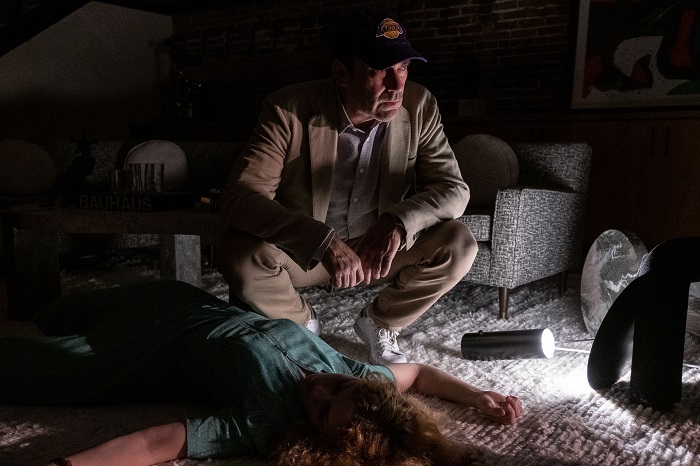
Image Courtesy of Paramount Pictures

Hamm brings the occasional quick wit, goofy aliases, and signature Los Angeles Lakers ball cap that Chase brought to the Fletch character. But gone are the wacky disguises and the even wackier encounters they would lead to (perhaps that brand of 80s silliness doesn’t screen as well today). And while the story plucks plot points from the previous movies, it doesn’t add much to them. So ultimately we’re left with a film that doesn’t do much with the older material and has nothing noteworthy to add of its own.

The Fletch we get here is a freelance writer who has spent the last two years traveling Europe and writing about art for in-flight magazines. After a month in Rome he returns to the States, stopping in Boston where he rents a swanky townhouse from a free-spirit named Owen (John Behlmann). But upon arriving at his two-week ‘home away from home’, Fletch makes an alarming discovery – the body of a dead woman, face-down in the townhouse’s living room floor.

The police arrive on the scene and the investigation is headed by the ever-sleepy Detective Monroe (Roy Wood Jr.). He’s the father of a newborn who keeps him up all night, leading to a running joke that (like much of the movie) eventually runs out of gas. Monroe and his partner in training, Griz (Ayden Mayeri) eventually tag Fletch as their prime suspect. But our sardonic protagonist sets out to solve the case himself, relying on his credentials of once being an investigative journalist “of some repute“.

Meanwhile there’s this side story (which may or may not be linked to the murder) involving Fletch’s wealthy Italian girlfriend Angela de Grassi (Lorenza Izzo) and her abducted father. His kidnappers want the de Grassi’s priceless Picasso painting as ransom, but someone has recently stolen it along with several other pieces from the family’s collection. Fletch has traced the recent sell of one of the paintings to Boston which is why he’s in Beantown.

Image Courtesy of Paramount Pictures

As these two story paths inevitably converge, we’re introduced to a handful of other mildly interesting characters who may or may not be involved with the murder. There is a germophobic art maven named Horan (Kyle MacLachlan) who is the middle-man in a number of Boston area art dealings. There’s the gossipy stoner Eve (Annie Mumolo) who lives next door to the townhouse Fletch is renting. Then there’s Countess de Grassi (Marcia Gay Harden), Angela’s stepmother who may or may not be heartbroken over her husband’s kidnapping. They even throw in Hamm’s fellow “Mad Men” alum John Slattery as Fletch’s foul-mouthed and disgruntled former boss who now works for a struggling Boston rag. Sadly, with the exception of a stray laugh or two, none of the supporting players bring much to the story.

So we’re left with Fletch and Mottola’s new spin on the character. Hamm puts in the effort, and early on it looks like he just might pull it off. But his act loses steam, the jokes grow repetitive, and nothing that we’re given feels like a worthy reason for an update. Chase’s version of the character was goofy enough to make his two movies fun (to varying degrees). Hamm can’t make the same claim. But it’s hard to put the blame on him, especially when the material he’s asked to sell has no lasting value. “Confess, Fletch” is now showing in theaters.

VERDICT – 2 STARS

REVIEW: “See How They Run” (2022)

(CLICK HERE to read my full review in the Arkansas Democrat-Gazette)

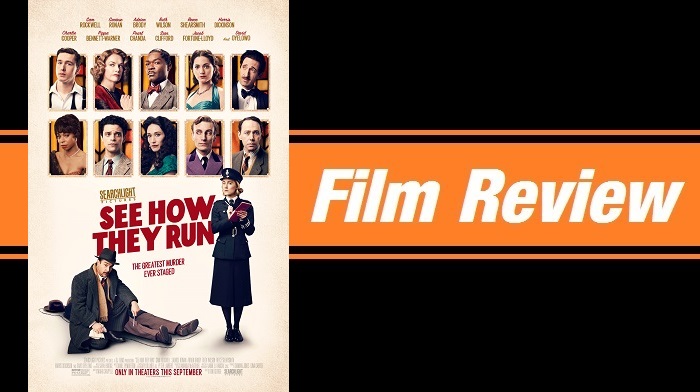
First time feature film director Tom George teams with screenwriter Mark Chappell for the old-fashioned mystery caper “See How They Run”. With a strong cast and plenty of nostalgic charm, this playful and thoroughly enjoyable whodunit is a full-blown homage that balances suspense with a healthy dose of chuckles. It’s as much of a comedy as it is a murder mystery – one full of dry humor, deadpan deliveries, and a not-so-subtle air of absurdity that had me laughing quite a bit.

Among the many amusing things about “See How They Run” is its connection to Agatha Christie’s renowned stage play “The Mousetrap” which opened in 1952 at London’s Ambassadors Theater. Now here we are, 70 years later, and it’s still being performed in London’s West End. Despite a 14-month mandatory shutdown in 2020 due to the COVID-19 pandemic, “The Mousetrap” remains the world’s longest-running play, with nearly 29,000 performances to date.

Yet there has never been a proper film adaptation of “The Mouse Trap”. That’s because Christie had worked a clause into her contract that said no film could be made until six months after the production closed. Seven decades later and the show is still going strong. “See How They Run” waggishly plays with that obvious constraint by creating an original whodunit around Christie’s beloved whodunit. More specifically, the film is loosely based on early plans to make “The Mouse Trap” into a movie. But with a little fictional murder thrown in, of course.

Image Courtesy of Searchlight Pictures

Set in 1953 London, the cast and crew of “The Mouse Trap” are at the Ambassadors Theater celebrating the play’s 100th performance. This snappy opening is narrated by the ghost of Leo Köpernick (a terrific Adrien Brody) who’s recounting the events that led up to his murder. Leo describes himself as a “big shot Hollywood director“, but he’s more of a condescending lush. And within the film’s first few minutes, he’s bumped off in the theater’s backstage costume room. But why is a Hollywood guy like Leo at the party? Even more, who would want him dead?

We learn in Leo’s introduction that prominent theater impresario Petula Spencer (Ruth Wilson) has sold “The Mouse Trap” film rights to John Woolf (Reece Shearsmith), the famed British producer behind “The African Queen”. Woolf has hired Leo to direct his adaptation once the play closes (and following Christie’s six month stipulation). While at the party Leo butts heads with the film’s preening and forcefully proper screenwriter, Mervyn Cocker-Norris (David Oyelowo). He even comes to comical blows with the play’s dashing young star, Richard Attenborough (Harrison Dickinson) after Leo makes a play for the actor’s wife, Sheila Sim (Pearl Chanda). And just like that, we have the first draft of our suspect list.

In very Agatha Christie fashion, George and Chappell offer up ample motives for these characters to want Leo dead. Could it be creative differences? Maybe he has dirt on them? Perhaps it’s something more complicated? All we need is someone the untangle this mess of a mystery. Enter the unlikely Scotland Yard duo of Inspector Stoppard (Sam Rockwell) and Constable Stalker (Saoirse Ronan).

Image Courtesy of Searchlight Pictures

The not-so-hard-boiled Stoppard looks fresh out of a low-budget 1950s noir with his felt hat, frumpy suit, and wool topcoat. He checks off many of the boxes – cynical, world-weary, prefers to work alone. But Rockwell brings an understated goofiness to the character and pulls some good laughs out of the Stoppard’s obvious detachment. The chatty, enthusiastic Stalker makes a perfect foil for her aggressively aloof partner. Ronan is delightful and channels a similar comedic energy as in her movies with Wes Anderson. She not only gives us the story’s most likable character, but also its funniest.

“See How They Run” is full of creative flourishes that work really well. Take Leo’s opening narration where he gets sidetracked talking about how whodunits work (“You’ve seen one, you’ve seen them all.”). He amusingly recites the very rules our movie will be playing by. You also have George’s clever incorporation of flashbacks and his stylish use of split-screen which may feel a little arbitrary at first, but that makes sense once you realize what the movie is going for. There are also some fun inside jokes for theater fans and some good ribs at Old Hollywood. And the movie looks great and period proper, from Odile Dicks-Mireaux’s fantastic costumes to Amanda McArthur’s stellar production design.

Now I don’t want to oversell it. “See How They Run” isn’t something revolutionary. Yet I kinda love this cheeky throwback. Sure, it plays it safe and doesn’t take its genre to any bold new place. But you could say that’s the point. As Leo emphasizes, we know the rules. We’ve seen these movies before. Yet (much like “The Mousetrap”) they’re still here, we still watch, and we still enjoy them. George and Chappell look to celebrate these classic whodunits while poking fun at them along the way. It turns out to be a charming mix. “See How They Run” opens today in theaters everywhere.

VERDICT – 4 STARS

REVIEW: “Blonde” (2022)

We’ve seen several attempts at bringing at least some portion of Marilyn Monroe‘s complicated and ultimately tragic life to the big screen. The latest comes from writer-director Andrew Dominik who has chosen to go with a fictionalized take on the life of the iconic American actress, somewhat similar to what Pablo Larraín did with Diana, Princess of Wales in last year’s “Spencer”. What we end up with here is a dour and depressing 2 hours and 45 minutes of misery and despair.

“Blonde” is a problematic psychological drama that’s adapted from the 2000 novel of the same name by Joyce Carol Oates. It’s far from a plot driven movie, instead playing like a pieced together series of imagery and vignettes. And while its intent may be to put us inside Marilyn’s skin so that we can experience her life the way she did, the movie remains so intensely focused on her suffering that key aspects of her humanity never make it to the screen. These missing pieces ensure that we never get a clear picture of who Marilyn Monroe truly was.

Because of Dominik’s approach, we don’t really learn anything new about Marilyn. Instead we’re forced to watch pain and exploitation that we already knew existed. So rather than giving Norma Jeane a deserved respite, “Blonde” just runs her through the wringer yet again. I certainly don’t think that’s Dominik’s intent. He has bigger themes on his mind. But his film comes across as cold and endlessly cruel to a woman whose life has often been defined by cruelty. And if my count is right, Dominik only gives her one lone scene in the entire overly long 166 minutes that features any semblance of true happiness.

Image Courtesy of Netflix

The film’s star Ana de Armas deserves a lot of credit for exquisitely capturing Marilyn Monroe’s glamor and her vulnerability. But sadly the script doesn’t go much further than that. Dominik only seems interested in honing in on her unraveling life. We see Monroe’s anxiety, her fraying mental health, her descent into drugs and alcohol. We’re shown misogyny, sexual assault, and physical abuse. Through it all, de Armas disappears into her character, and we never doubt it’s Marilyn Monroe we’re seeing on screen. Unfortunately she’s confined to Dominik’s strict vision.

Beginning in 1933 Los Angeles, Dominik establishes how the trajectory of Marilyn’s life was shaped by her traumatic childhood. She was born Norma Jeane Mortenson and grew up with an abusive mother (a really good Julianne Nicholson) who was a paranoid schizophrenic and an absent father who haunts Marilyn throughout the film. But the bulk of the story takes place through the 1950s as Norma Jeane Mortenson transforms from magazine and calendar cover-girl to the biggest celebrity in all of Hollywood.

But once again, Dominik isn’t really interested in Marilyn’s rise to fame. He doesn’t seem to care about her qualities as an actress or even a woman. Instead “Blonde” is all about chronicling her decline in depressing detail by stitching together scene after scene of mental and/or physical anguish. There are some standout moments such as when we see the real Norma Jeane expressing her feelings about her studio-made Marilyn Monroe persona. And there are numerous sequences that, on their own, are impactful. If only the movie was more cohesive and worked better as a whole.

In fairness, it’s completely true that “Blonde” is all about the dehumanization of Marilyn Monroe by the industry, the public, and everyone in between. That’s why it’s so grim and torturous. But that doesn’t erase the film’s missteps, nor does it excuse its own decisions, many of which do nothing but drag Monroe through the mud. I’m talking about bizarre inventions of its own, such as Marilyn being involved in a throuple with the party-going sons of Charlie Chaplin (Xavier Samuel) and Edward G. Robinson (Evan Williams). As if documenting her own sins and consequences weren’t enough, the choice was made to needlessly add some new ones.

Image Courtesy of Netflix

And what of the film’s much talked about NC-17 rating? The push to make “Blonde” racier does more to draw attention to the movie than bring anything meaningful to Marilyn Monroe’s story or the bigger themes Dominik is interested in. The most explicit scenes simply adds to the long list of indignities the movie puts the troubled Hollywood star through.

One thing you can’t knock is the craft behind the movie. Dominik has an incredible eye for framing shots, capturing emotion through his lens, and creating images that are both beautiful and hard to watch at the same time. There are several techniques that enhance the film, such as Dominik’s use of different aspect ratios. And there is his choice of oscillating between color and black-and-white. It’s something I could never get in sync with, but it does offer some visually impressive transitions from one scene to the next.

Without question “Blonde” works best as an examination of celebrity status, exploitation, and self-destruction rather than an actual treatment on the life of Marilyn Monroe. It can’t be stressed enough – this is no biopic. It’s a work of fiction milking from the fame of a fallen Hollywood star. But by using Marilyn Monroe’s name, likeness, and troubled history to explore its own themes, you could say “Blonde” is doing the very thing it’s critiquing, just in a slyly different way. And that turns out to be a hurdle the movie can never quite clear. “Blonde” hits Netflix September 28th.

VERDICT – 2 STARS

REVIEW: “I Came By” (2022)

Just a few days ago Netflix stealth dropped a chilling new potboiler called “I Came By”. Co-written and directed by Babak Anvari, this crafty yet overly ambitious thriller has a hard time finding the balance between social politics and straightforward genre filmmaking. Yet it still scratches at some meaty themes, and the genre thriller elements are a lot of fun. And it’s nice seeing a movie break from convention, even if its pieces don’t always fit.

Anvari takes an interesting approach to storytelling, ending his film in a dramatically different place than he begins it. He changes perspective several times, shifting between three different protagonists throughput the course of the movie. This infuses the movie’s fairly familiar premise with some unexpected layers. And there are more than a few surprises that keep the story simmering.

Image Courtesy of Netflix

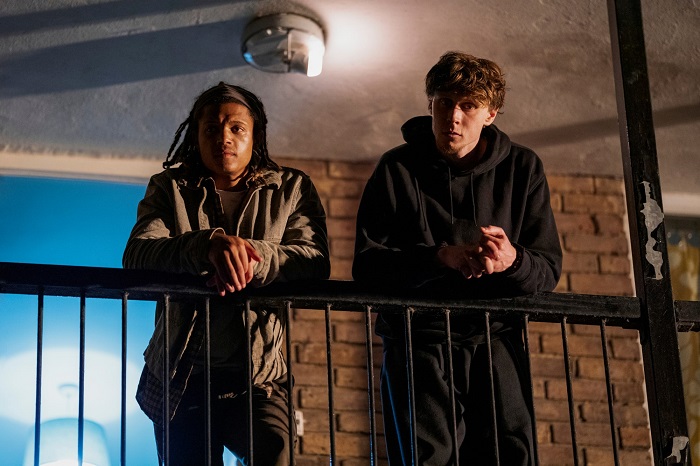
Best friends Toby (George MacKay) and Jay (Percelle Ascott) have gained notoriety as what newspapers call “renegade graffiti vandals”. The masked duo targets wealthy and affluent Londoners, break into their swanky homes, and adorn their walls with their signature graffiti tagline, “I Came By”. Driven by their angst-filled convictions, Toby and Jay are products of a radical underground youth culture who are fed up with the establishment’s ways.

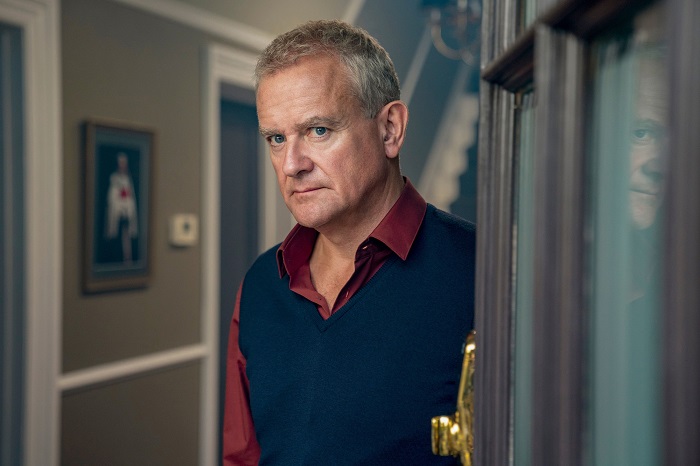
But their crusade against the rich hits a speed bump after Ray learns he and his wife Naz (Varada Sethu) are going to have a baby. He bows out of their cause, determined to settle down and be the best father he can be. A frustrated Toby chooses to carry on without his partner in crime, taking aim at a new mark – a recently resigned high court activist judge named Hector Blake played by a deliciously sinister Hugh Bonneville. This is a truly twisted turn from the man who plays the kindly Mr. Brown from the “Paddington” movies.

Image Courtesy of Netflix

Saying much more would be doing a disservice as this truly is a movie built around subverting your expectations. So the less you know the better. But it’s safe to say the movie’s change of perspective is key. It starts with Toby but soon shifts to his single mother Lizzie (Kelly Macdonald). She has a hard time connecting with her embittered son, and their turbulent relationship is rooted in some deep-seated pain. Macdonald is excellent, and while I wish Anvari would have dug deeper into her character, Macdonald does a good job making us care. Later, the movie shifts to Jay’s perspective which offers a much different take on the unfolding events.

But it’s Bonneville who makes the movie and takes it to some unsettling places. The film is at its very best when it lets him loose to uncoil the secret side of his otherwise esteemed character. It makes for some gnarly genre entertainment. Yes, shots at capitalism, greed, and corruption are certainly taken. But they don’t quite resonate the way the movie wants. They’re interesting additions that show the film has some things on its mind. But they don’t go far enough to leave an impression. Instead, it’s the thriller elements that energize the movie. Anvari shows himself to be a savvy filmmaker with enough tricks up his sleeve to keep us guessing. And that’s a big part of the fun. “I Came By” is now streaming on Netflix.

VERDICT – 3 STARS

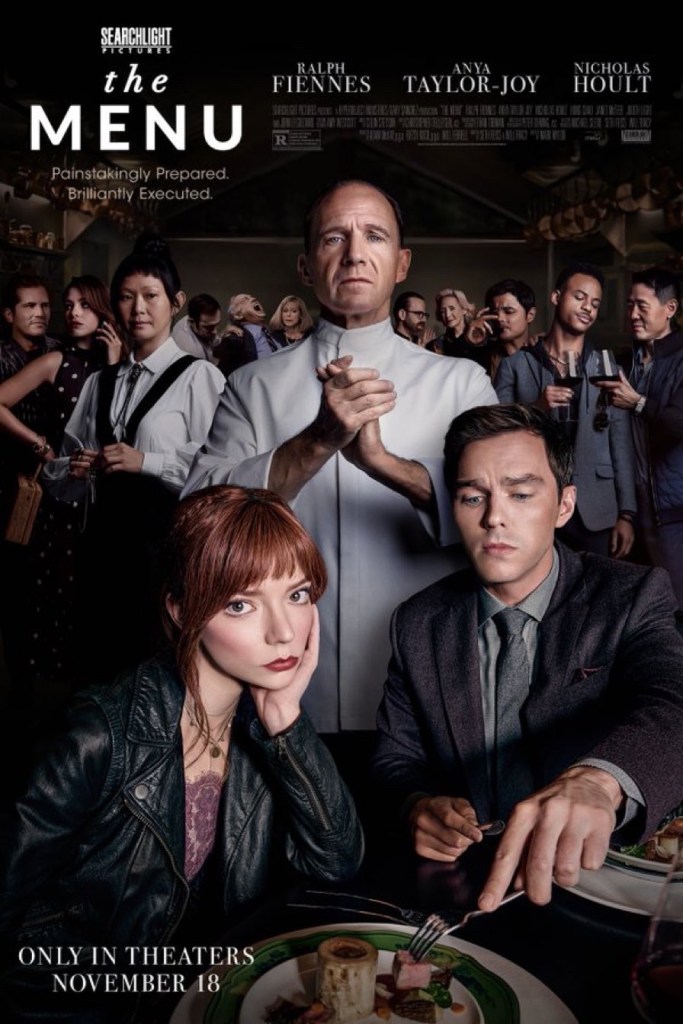
Movie Poster Spotlight: “The Menu”

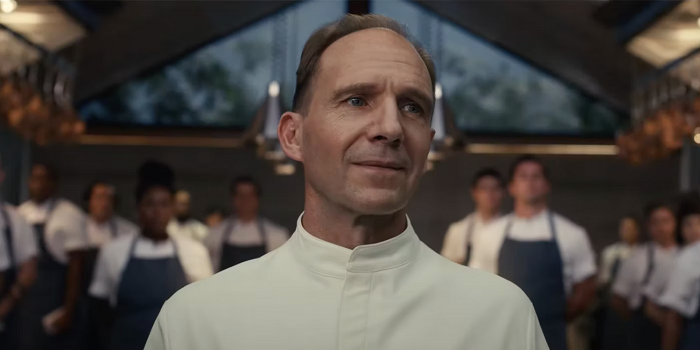
The trailer for “The Menu” was a surprising black comedy and horror mash-up that was hard to read. It was tough to tell if it was a genuinely smart satire, a corny genre exercise, or a potential guilty pleasure. Maybe a little of all. But I really did like what I saw, and the early reaction from its premiere at the Toronto International Film Festival have made it sound even more tasty. Now Searchlight Pictures has released the new poster which is as odd as the movie sounds. It’s also just as alluring. What do you think?

DIRECTOR – Mike Mylod

WRITER – Seth Reiss, Will Tracy

STARRING – Ralph Fiennes, Anya Taylor-Joy, Nicholas Hoult, Judith Light, Hong Chau, Janet McTeer, John Leguizamo, Reed Birney, Paul Adelstein, Aimee Carrero, Arturo Castro.

RELEASE – November 18, 2022

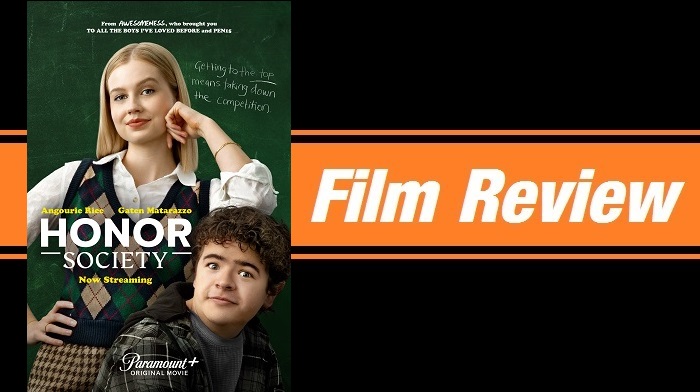
REVIEW: “Honor Society” (2022)

Director Oran Zegman and screenwriter David A. Goodman team up for “Honor Society”, a high school coming-of-age comedy wedged right between freshly original and disappointingly conventional. It’s a movie with plenty of its own ideas and a charismatic star who helps the film consistently subvert our expectations. But there are also times where it resorts to the more familiar teen movie formula. That’s when you can see the filmmakers checking boxes and leaning on tropes rather than using them in interesting ways.

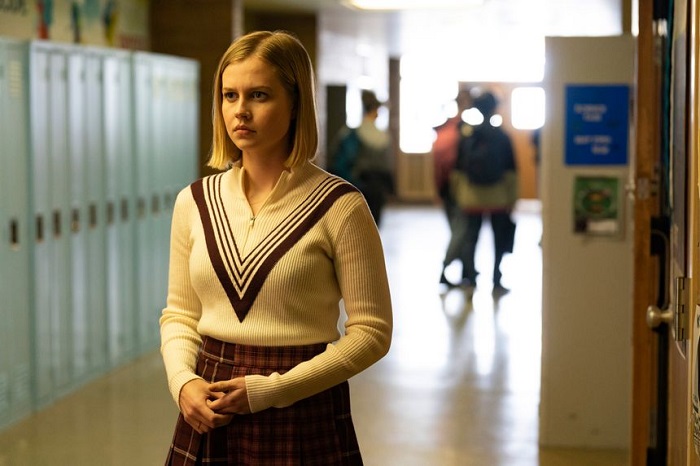
While “Honor Society” may not be the most balanced movie, it does have its own distinct personality and allure which keeps you locked in. It all starts with the film’s lead character, Honor Rose, played by a delightfully snarky and devilishly charming Angourie Rice. Honor is an ambitious and determined overachiever in the final days of her senior year of high school. Since her freshman year, Honor has stuck to her own strict and obsessive four-year academic plan with only one goal in mind – acceptance into Harvard. There are no contingency plans, no second choices, no rethinking it if something goes wrong. It’s Harvard or bust, and she’ll trample anyone in her path to get there.

Image Courtesy of Paramount+

The framing of the story is interesting. Basically, Honor is walking us through her story, constantly breaking the fourth wall to let us know how she really feels about what we’re seeing. It’s revealing as we learn she’s not only brutally honest, but also conceited, condescending, and astonishingly self-serving. She’s ready to ditch her small town and leave middle-class life in the dust. And she lets us know she has just the kind of ego to do whatever it takes to make it happen. Rice conveys all of these qualities with jarring clarity, and she gives us a character we are appalled by but also strangely admire. I mean her point-of-view on certain things may be a bit harsh, but they can also resonate.

Essential to Honor’s plan is her perverted guidance counselor, Mr. Calvin (Christopher Mintz-Plasse) who happens to have Harvard connections. Honor needs him to write her a letter of recommendation and has tried to use his utterly inappropriate feelings towards her to her advantage. But instead of writing her the letter, he informs her that she’s among his top four choices. Only one will get his Harvard recommendation. Of course that is unacceptable for Honor who immediately starts putting together her next course of action.

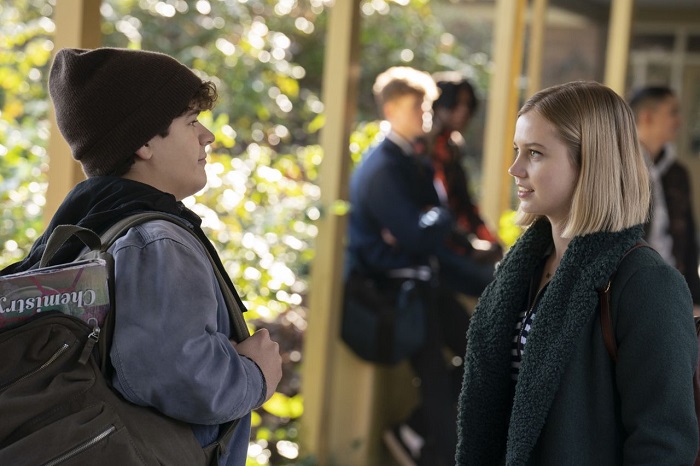
Honor narrows down her competition to Travis Biggins (Armani Jackson), the hunky captain of the lacrosse team; Kennedy Park (Amy Keum), an eccentric and ignored introvert who wears historical costumes to school; and Michael Dipnicky (Gaten Matarazzo), a brilliant but bullied outcast. Honor hatches several plans to preoccupy the three so that they bomb their mid-terms. But in her efforts to manipulate everyone for her benefit, she unknowingly ends up changing some of their lives for the better.

Image Courtesy of Paramount+

As the plot unfurls more characters are introduced which is where the movie begins to veer towards the conventional. Collectively most feel like typical teen movie types and neither them nor their story angles move beyond that. Some characters fare better than others. But most hit all too familiar beats with very predictable trajectories. And it’s not without its corn and cringe. Take the all too tidy finale that comes right after a smart and surprisingly wicked twist. The sappy and groan-worthy final few moments land with a thud.

But the most stable force from start to finish is Angourie Rice. This should be an attention-getting performance and a star-making turn for the 21-year-old Australian. Regardless of where the story goes she keeps us anchored, brilliantly juggling acting directly into the camera and with other actors. And despite a few tired conventions, there’s still some good material here that let’s Rice take her character to some unanticipated places. That’s when “Honor Society” is at its best. “Honor Society” is now streaming on Paramount+.

VERDICT – 2.5 STARS