I have to admit, back in 2020 my expectations for a “Sonic the Hedgehog” movie were pretty low. And while Jeff Fowler’s zany action-adventure comedy was far from perfect, I was surprised at how entertaining it managed to be. Fowler returns with the inevitable sequel that brings back the anthropomorphic hedgehog with lightning fast speed. And this time Sonic brings along a few new faces from is long running video game mythology.
The new action-heavy trailer sees Sonic (once again voiced by Ben Schwartz) duking it out with a evil mustachioed Dr. Ivo “Eggman” Robotnik (Jim Carrey), a mad scientist with serious world domination ambitions. This time Robotnik has brought some muscle – a red echidna named Knuckles (voiced by none other than Idris Elba). So Sonic teams with an orange fox named Tails (Colleen O’Shaughnessey) to stop the villains and save earth. Meanwhile James Marsden returns as the straight man to Sonic’s nuttiness. I’m not sure what to think about this one. The effects look pretty great, but it also could be a case of overkill. Hopefully not.
“Sonic the Hedgehog” races into theaters April 8th. Check out the trailer below and let me know if you’ll be seeing it or taking a pass.
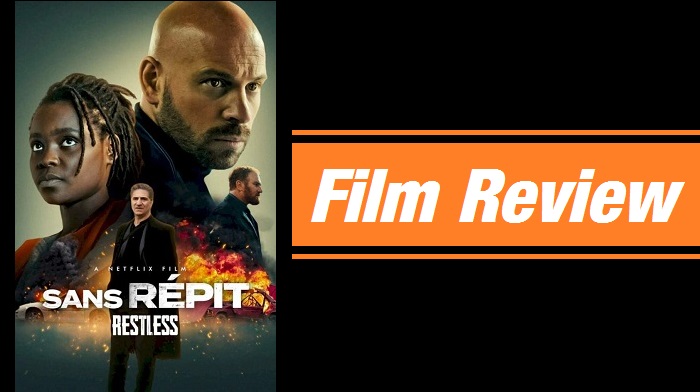
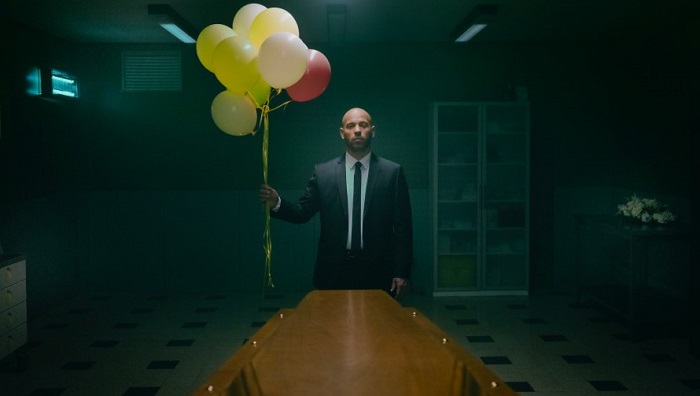
Régis Blondeau directs Netflix’s new French thriller “Restless”, a remake of a 2014 South Korean film. In it Franck Gastambide plays Thomas, a crooked lieutenant with the local police’s crime division who finds himself neck-deep after an attempted cover up. The movie is a strange one that often feels at odds with itself. One minute it seems to be going for a grittier crime thriller vibe, but then you wonder if it’s really a dark comedy. I’m still not sure.
Gastambide’s Thomas is already trouble the moment we meet him. Word is out that several in the precinct are taking bribes from criminals to look the other way. Now Internal Affairs has opened up an investigation and are on their way for a surprise visit. Thomas’ captain (Serge Hazanavicius) gets wind of it and scrambles to make sure there’s no trail for the investigators to follow. Thomas’ friend and fellow officer Marc (Michaël Abiteboul) and an idealistic rookie Naomi (Tracy Gotoas) also work (although begrudgingly) to get rid of any incriminating evidence around the station.
Image Courtesy of Netflix
Meanwhile Thomas is out trying to tie up some shady loose ends. But he also has a personal crisis. His mother has died and his sister Agathe (Jemima West) is waiting for him at the hospital for final arrangements. Thomas also has a little girl named Louise (Victoire Zenner) who stays with Agathe and wonders why her father is never home.
After getting word the IA is on their way, Thomas rushes to the station. But on the way he doesn’t see a man step out of the night and in front of his car. He hits the man killing him. But rather than reporting the death, Thomas throws the body in his trunk, apparently feeling the attention would draw unwanted attention to his list of dirty vices. It leads to a snowball effect of problems as Thomas spends the rest of the movie trying to cover his tracks.
Despite its best efforts, “Restless” never quite hits the marks it seems to be shooting for. Nearly the entire first half of the movie is filled with these borderline wacky moments as Thomas tries to dispose of the body. Some of the scenes are so absurd that you swear the movie is meant to be a straight comedy. Yet they’re not convincing enough for us to say whether the humor is intentional or not. The movie seems to take them seriously, but I was never sure whether I was supposed to.
Image Courtesy of Netflix
Then you get to the second half where any hint of humor evaporates, and the movie ratchets down on the grittier crime element. We get a couple of fight scenes and a twist or two, neither of which are as gnarly or interesting as they need to be. The insertion of a shady mystery man (a palpably threatening Simon Abkarian) adds a little suspense, but he comes along a little too late to make much of a difference.
“Restless” bounces around, seemingly unsure of what kind of movie it wants to be. Or maybe it does know, but it can’t quite bring those elements together in a satisfying way. It’s competently made and it’s shot with a good understanding of how to frame a scene. The performances are solid and the cast does what it can with the material. But it’s hard to stay connected with the story which never gets a firm footing and lacks the originality to make it stand out. “Restless” is now streaming on Netflix.
The new film “Against the Ice” is based on the remarkable true story of Danish explorer Ejnar Mikkelsen and his 1909 polar expedition across the frozen tundra of Northeastern Greenland. This man-versus-nature survival thriller from director Peter Flinth is inspiring but also quite harrowing, putting just as much emphasis on the psychological toll as it does the physical. And while it may lack the overall tension you might expect from a movie like this, the film still does a good job immersing you in its story and setting.
Nikolaj Coster-Waldau (who penned the script alongside Joe Derrick) plays Ejnar Mikkelsen, the captain of a crew long into their search for a missing arctic expedition. During a recent venture into the icy wild, Ejnar discovers a diary containing a map. The map reveals the location of a cairn where Captain Ludvig Mylius-Erichsen of the lost expedition hid his final records of Northeast Greenland. Denmark had hopes of reaching the uncharted territory before the Americans, but the loss of Mylius-Erichsen and his team had them second guessing their investment in Greenland. That made Mikkelsen’s expedition all the more important.
Image Courtesy of Netflix
Desperate to reach the cairn and retrieve Mylius-Erichsen’s records, Ejnar asks for a volunteer to accompany him on a second and more arduous sledge journey, this time further across the treacherous ice cap. His tired and homesick crewman know the dangers and aren’t eager to risk their lives, especially so close to their time to sail home. A wide-eyed mechanic named Iver Iverson (Joe Cole) is the only one to step up and soon the two head off on their perilous adventure to the northern edge if Greenland.
A fairly big chunk of the movie follows Ejnar and Iver as they battle nature and the elements with two teams of sled dogs and limited supplies. Cinematographer Torben Forsberg shoots the landscapes as sparse and forbidding. He thrusts the characters and us into a harsh, jagged, and ice cold setting that truly tests the bounds of survival. But then in the second half there’s an interesting transition to the psychological as cabin fever becomes as dangerous as the environment. It’s an unexpected turn but a compelling one.
Image Courtesy of Netflix
Yet strangely through it all we only get a couple of scenes of true edge-of-your-seat peril. That doesn’t mean the movie is a slog, but its an odd choice for a survival story in this mold. There’s also painfully little told about the two main characters. Ejnar wears a locket of a woman he left back home, but she’s little more than an vague image. The sketch we get of Iver is even thinner. We’re told even less about him, his background, etc. These things aren’t deal-breakers, but it’s a lot easier to invest in characters when you there’s something personal to latch onto.
Still “Against the Ice” does what it sets out to do, and it tells this incredible story by pulling us into the brutal setting with its characters. Coster-Waldau gives yet another rock-solid performance – grizzled, stoic, and sturdy. Cole is a good compliment and both actors turn it up a notch in the headier second half. And while it make lack the grittier edge that would have made the movie great, cinema is made for stories like this and Flinth’s movie is a good grab for Netflix. “Against the Ice” is now streaming.
Shawn Levy’s “The Adam Project” is a Ryan Reynolds vehicle in that head-scratching vein of projects that dress themselves up as family movies but then push past the bounds of what’s often considered “family friendly”. For me it’s often hard to tell what audience these things are aiming for. Written by the team of Jonathan Topper, T.S. Nowlin, Jennifer Flackett, and Mark Levin, “The Adam Project” takes its playful spin on time travel and combines it with a surprisingly layered family drama. It’s all bound together by that all-too-familiar Ryan Reynolds brand of snappy irreverent comedy. Fans of his shtick will probably be onboard. Those wearied by the 45-year-old Canadian’s go-to high jinks may have a harder time.
In fairness, “The Adam Project” isn’t full-on Ryan Reynolds nuttiness. Levy pulls the reins back just a bit and tries to capture as much heart as humor. That’s a good thing because the likable Reynolds is usually at his best when he’s kept on his leash. Still, chunks of the script are written with his comedy act in mind meaning you’re guaranteed at least a variation of the same character type he almost always plays.
This time around Reynolds plays Adam Reed, a time-traveling fighter pilot from the year 2050. His story begins with the weirdly straightforward disclaimer: “Time travel exists. You just don’t know it yet.” From there, we see the wounded Adam flying his damaged “time jet” through a wormhole he creates as he frantically attempts to escape from the clutches of the film’s antagonist, Catherine Keener’s Maya Sorian (more on her later).
Image Courtesy of Netflix
We then swing back to 2022 where Adam’s smart-mouthed 12-year-old self (played by newcomer Walker Scobell) spends more time suspended from school than in class. We learn it’s been over a year since his father Louis died in a car accident and young Adam is having a hard time adjusting. His mother Ellie (Jennifer Garner) does her best to fill the shoes of both parents, but she too is struggling to pick up the pieces. Despite being connected by a similar pain, they both feel miles apart.
Can you see where this is going? Older Adam accidentally crash-lands his jet in 2022 where he encounters his younger self. It turns out that time jets are tuned to the pilot’s DNA. But with older Adam injured, his jet won’t clear him to fly. So he recruits younger Adam to help him fix his plane so he can carry out his mission. What mission you ask? To travel to 2018 where he hopes to uncover the truth about his missing wife Laura (Zoe Saldaña). An ace time-hopper herself, Laura traveled back to 2018 against the wishes of her superiors and hasn’t been heard from since.
Inevitably we end up with older Adam and younger Adam traveling further back in time with the sinister Sorian (remember her) hot on their heels. And once there, the two Adams seek the help of their still alive father Louis (Mark Ruffalo), a college physics professor who happens to know a little about time travel. As the three work together to essentially save the world, they’re also given the opportunity to heal old wounds and truly appreciate the time they had together.
Image Courtesy of Netflix
Underneath the good-looking action sequences, hit-or-miss humor, and out of the blue needle drops is a surprising amount of heart. Levy and company put a lot of effort into pulling us in emotionally as they use this unorthodox family dynamic to explore feelings of love, loss, grief, and regret just to name a few. And even if it’s pretty easy to see where it’s all heading, the movie still manages to hit you in your feels.
At the same time it’s hard to avoid the silliness, especially when the film starts going on about “magnetic particle accelerators”, a “diamond-hard neuromorphic processor”, or the “Infinitely Shifting Plasma Containing Algorithm”. And while there are several terrific action scenes, the visual effects aren’t always convincing (take the erratic digital de-ageing of one specific character – it’s bad). It’s also a bummer when Garner all but vanishes for most of the second half (she only has one meaningful scene with Ruffalo so sorry, no “13 Going on 30” reunion here).
“The Adam Project” might lean a little too heavy on the zany charisma of its lead actor, and it gets a little lazy going for cheap laughs (am I the only one tired of the ‘little kid throwing out profanity just for giggles’ device?). But there’s a fun story at the core of it all, and I challenge you not to be moved by where the story goes, specifically one heartfelt scene in the final minutes. It’s a moment that grounds the movie it makes all the frustrations a little easier to digest. “The Adam Project” premieres today on Netflix.
Burdened souls retreating to the wilderness in an effort to escape their grief or remorse has become fairly familiar in the world of movies. Yet it’s a trope that I always gravitate to. Aside from the obvious symbolism, there’s just something about the way these movies deal with the human condition that has always moved me (to varying degrees, of course).
The latest film to plant itself in this well-plowed ground is the new thriller “The Girl on the Mountain”. It’s written and directed by Matt Sconce and taken from a story he conceived with Christopher Mejia. It delves into heavier themes of guilt, grief, loneliness, and trauma. Meanwhile gorgeous shots of California’s Sierra Nevada Mountains soak into the background like paint on a Bob Ross canvas. Unfortunately the genre elements end up clashing with the deeper human moments despite Sconce’s efforts to keep our emotions in tune with what matters most.
Image Courtesy of Saban Films
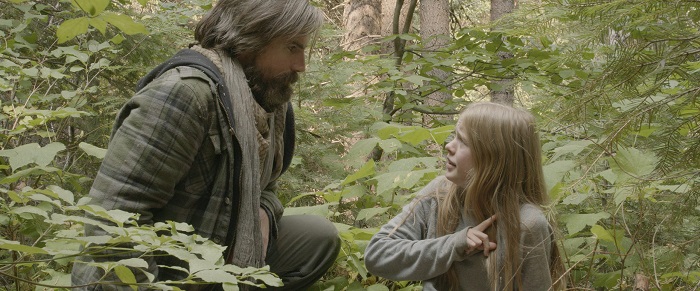
Daniel O’Reilly plays Jack Ward, a former classical music conductor haunted by a crushing family trauma. Overtaken by sorrow and guilt, Jack has escaped deep into the mountains where he lives out of a pup tent and fights off daily impulses to end his life. As movies like this tend to do, we get flashbacks that fill us in on what drove Jack to such a troubling condition. Sconce means well and the early allusions to Ward’s past are handled well. But the later flashbacks get a little too on-the-nose.
While washing up in a mountain stream Jack is surprised by a young mute girl (Makenzie Sconce) who grabs his backpack and quickly runs away. After a short chase he catches the girl – holes in her clothes, lips chapped, dirt smeared across her face. Conveniently, Jack knows sign language so he learns the girl is on the run from a comically over-the-top antagonist Big Al (D.T. Carney). As you can probably guess, an inevitable bond forms between the tortured Jack and the traumatized young girl. But Big Al and his redneck goons are determined to find the girl, no matter what it takes.
The movie starts off on a pretty strong foot as it emphasizes Jack’s anguish and grounds us in his seclusion. The way Sconce shoots the scenic locations is nothing short of stunning, and the early scenes allow O’Reilly the space to convey his character’s pain and loose grip on life. And the first moments between Jack and the girl are effective in showing their shared fear and trepidation while also touching on our more human instincts of survival and companionship.
Image Courtesy of Saban Films
Sadly the film can’t stay on course as the script really struggles after the table-setting first act. It’s not just the story that suffers, but the characters too. While sweet on the surface and well intended, Jack’s sudden transformation from downcast and hopeless to chipper and playful is so abrupt that it doesn’t feel natural at all. And the dialogue during these scenes doesn’t exactly help. Their back-and-forths get pretty mushy and (I hate to say it) hokey to the point of cringe. It’s unfortunate.
Even worse, things really fall off once Sconce tries to rev up the action in the final 15 minutes or so. The framing of the shots, the weird use of slow-motion, the jarring way it clashes with the rest of the movie. Nothing about the “big” ending feels authentic. It almost seems copied and pasted from other thrillers. Without question, the budget has something to do with it, and you hate to knock a small indie like this that actually does several things well. But ultimately the movie can’t quite overcome its issues, and it can never get back on track once it loses its footing. “The Girl on the Mountain” is now streaming on VOD.
Even at 72, Spanish filmmaker Pedro Almodóvar is still churning out his unique brand of movies at a strong and steady rate. It’s clear the two-time Oscar winner still relishes the opportunity to tell specific stories stamped with his own distinguishing marks. His films often revisit the same handful of repackaged themes, and they often feature the same stylistic flourishes, both narratively and visually. Reoccurring motifs, vibrant colors, and creative indulgences are key ingredients to the veteran filmmaker’s mise-en-scène.
Almodóvar’s latest is “Parallel Mothers”, a percolating melodrama about motherhood that once again echoes much of the style and many of the interests from the writer-director’s past projects. As someone who tends to be ambivalent towards his films, I feel this is easily one of Almodóvar’s more accessible features, with characters and a story audiences should immediately connect with. Yet it’s a movie with pieces that don’t always click into place. One with a sublime first hour that’s among the filmmaker’s best work, but a spotty second half where some of Almodóvar’s storytelling choices makes things needlessly messy.
Shot in just one month during the pandemic, “Parallel Mothers” stars Penélope Cruz, a terrific actress who seems to do her best work under Almodóvar’s direction. This is their seventh film together and the two possess an almost symbiotic chemistry as filmmaker and performer. Here the sure-footed Cruz takes on a meaty role and turns in an emotionally rich performance – one that won her the Volpi Cup for Best Actress at Cannes.
Image Courtesy of Sony
Cruz plays Janis, an accomplished professional photographer living in Madrid. Single and approaching 40, Janis longs to start a family but worries her window for having children is closing. We first meet her at a photo shoot for a handsome forensic anthropologist named Arturo (Israel Elejalde). After the shoot she approaches Arturo about helping her with a personal matter. Janis tells him about her great grandfather and several other men from his village who were killed in a state-sanctioned slaughter during the Spanish Civil War. She asks if he would lead an excavation of an unmarked mass grave where the victims are believed to be buried.
As Janis and Arturo work through the details of the potential excavation, it’s pretty obvious there’s a spark between them. Before long the two begin an affair, and shortly after that Janis learns she’s pregnant. The problem is Arturo is married and doesn’t want a child (go figure). But Janis chooses to have her baby and frees Arturo of any obligations.
In the first of several leaps forward in time, it’s suddenly nine months later and Janis is in a maternity ward about to give birth. She shares a room with Ana (Milena Smit), a much younger soon-to-be single mother. “I don’t regret it”, an enthusiastic Janis tells Ana. “I do,” replies the frightened teen whose pregnancy we learn was the result of a traumatic encounter. The two new mothers bond as a sympathetic Janis comforts and assures the apprehensive Ana. But they quickly fall out of touch once they leave the hospital with their newborn daughters.
As Janis settles into single motherhood, Arturo pops back into the picture, casting doubts on whether the baby is his. Meanwhile Ana has went from an insecure teenager to a responsible mom. Her scenes unpack her backstory which includes a troubled family life. We hear about her vindictive absent father and see her tense relationship with her mother (Aitana Sánchez-Gijón) who can’t let something like her daughter’s pregnancy hinder her acting career.
Predictably Janis and Ana’s paths inevitably cross again, but to say much more would undermine the big soapy twists the story hinges on. Some of them work well and add layers that feels rooted in real world truth. They’re helped by Cruz who’s as assured as she is luminous. She shrewdly portrays every facet of Janis, from her sophistication to her vulnerability. And despite her character’s seemingly dubious choices, Cruz still captures our empathy. Smit’s performance starts strong, especially as she conveys Ana’s fear and doe-eyed naïveté. But later, as the story takes some unusual turns, Smit can seem stiff and cold, especially when next to Cruz.
Image Courtesy of Sony
But not every twist works. Well into the second half, Almodóvar wedges in an out-of-the-blue romantic angle that never fully rings true. Aside from being woefully underdeveloped, it needlessly complicates an already compellingly intricate relationship. Even worse, the movie all but forgets about it almost as quickly as it’s introduced. Clearly Almodóvar wants there to be a lingering affect, but it’s handled so casually that it comes across as superficial.
And then there’s the jarring transition back to the excavation storyline. It doesn’t return until the very end where it feels like an afterthought. It’s a shame because the prospect of Almodóvar digging into Franco’s reign of terror is a fascinating one. And the notion of not only exhuming loved ones, but exhuming a country’s painful past – a past that has yet to be fully reckoned with – is riveting. But those final scenes, though really good on their own, don’t connect to the rest of the film quite the way Almodóvar wants. Nor do they haunt the overall story as effectively as they could have with just a little more attention.
“Parallel Mothers” shines brightest as a female-centric examination of motherhood, complete with all its joys and heartaches. Single parenting, absent fathers, family history – they all factor in. Yet Almodóvar’s scattershot second half wastes time tacking on half-baked layers to the melodrama rather than connecting us to the more serious story that bookends the movie. It left me admiring what he was going yet frustrated by his inability to fully convey it. “Parallel Mothers” is now out in limited release.









 Keith & the Movies