First Glance: “A Hidden Life”

A new Terrence Malick film brings a lot of excitement and just as many questions. He’s a filmmaker who manages to provoke a wide range of responses due to his distinctly Malickian (how’s that for a word) style of moviemaking. I’m prone to love much of what he does even though some of his most recent work missing their marks.

His latest “A Hidden Life” has me more excited for a Malick film than I have been in several years. He tells the story of Franz Jägerstätter, an Austrian conscientious objector who refused to fight for Hitler’s Third Reich during World War II. The new trailer shows Malick exploring the ideas of faith, morality, and oppression. And of course we get glimpses of the visual beauty this film is guaranteed to have.

The trailer hits all the right notes for me. I can’t wait to see it when it lands in theaters December 13th. Check out the trailer below and let me know if you’ll be seeing it or taking a pass.

REVIEW: “Light of My Life” (2019)

LIGHTposter

I’m always drawn to movies that highlight fathers and daughters and explore the dynamics that often define their relationships. You can probably guess why, but movies that do it well really speak to me. Last year it was Debra Granik’s brilliant “Leave No Trace”. This year Casey Affleck’s “Light of My Life” strikes many of the same powerful chords.

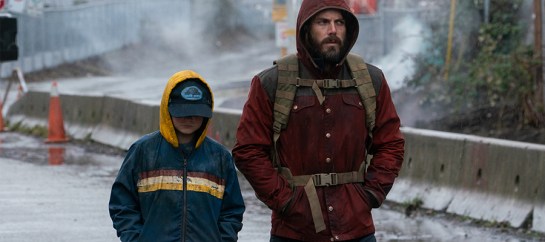
Affleck directs, writes, co-produces, and stars in this slow-brewing but intimate survival drama. It uses some of the same elements found in Granik’s film and laces them with the dystopian flavor of Cormac McCarthy’s “The Road”. It’s a compelling stew, but at its core it’s still a story about a dad named Caleb (Affleck) and his daughter Rag (played by impressive newcomer Anna Pniowsky).

The story takes place a decade after a devastating plague has wiped out almost all of the world’s female population. Included among the casualties is Caleb’s wife and Rag’s mom (played in a handful of flashbacks by Elisabeth Moss). Affleck paints a bleak portrait of a world without women. It’s dark, ugly, and on the brink of total collapse.

LIGHT2

In one scene Caleb explains the crumbling world as being unbalanced. An inquisitive Rags asks “When will it be balanced?” Her father can only respond “When there are more women.” It’s all he knows to say. He’s being honest while trying to offer his daughter a glimmer of hope. At the same time he knows the outlook is grim and there is no guarantee that the world will ever be the same again.

Caleb and Rag live along the outskirts of this shell of civilization. Rag’s hair is kept short and she dresses as a boy in order to keep safe. The reasons why are both obvious and ominous, bringing a heightened level of tension and suspicion to every encounter. Affleck’s fierce development of atmosphere and mood causes us to question the motives and intents of every person they meet.

The setting is undeniably dour, but Affleck’s interests are considerably more intimate. As the movie’s title implies, it’s a story about paternal love, the anxieties of parenting, and growing up in unforgiving circumstances. The film tosses aside practically every modern convention and puts an extraordinary amount of time into its two main characters. Take the opening scene where Caleb lays next to Rag telling her a version of Noah’s Ark. It’s a gutsy long take featuring a static camera locked on Affleck and Pniowsky. It may go a hair too long but it’s still an ambitious character-focused approach.

LIGHT3

Elsewhere we get heart-to-heart conversations about mortality, the state of the world, and the difference between morals and ethics. We even get a lighthearted dinner table scene where Caleb awkwardly attempts to cover everything from racism to…(you know)…’THE talk’ all in one uncomfortable sitting. It’s a tender and welcomed moment of levity that shines a light On the fantastic chemistry between Affleck and Pniowsky.

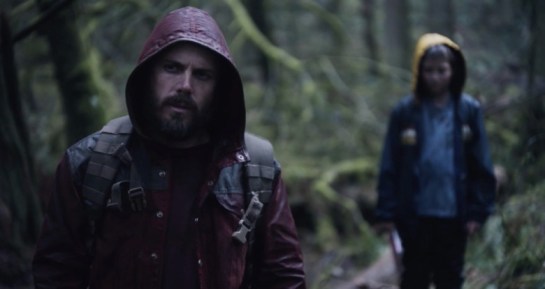
But then you have the film’s dark side vividly seen in its sketch of a male-dominated society. Aside from being a potent metaphor, Affleck’s grim milieu and its undercurrent of savagery makes for some harrowing sequences. Cinematographer Adam Arkapaw coats his images in blues, whites, and grays while shooting in a way that highlights the emptiness of the landscapes. And when we do get glimpses of approaching men in the distance it can be genuinely frightening.

At the end of Caleb’s Noah’s Ark story Rag challenges her father “You said it would be about the girl, why do you keep talking about the boy? You can’t miss the subtle indictment in light of how male-centered our perspectives can be. And considering this is a movie about a father driven to shield his daughter from aggressive men, you can’t help but wonder if this is Affleck dealing with his past transgressions. It’s hard to say, but the film’s message is forceful, its approach is thoughtful, and its storytelling is raw and unflinching. It’s sure to be too slow for some and too gloomy for others. I fell in with its rhythm and found plenty of heart to light a path through the darkness.

VERDICT – 4.5 STARS

4-5-stars

REVIEW: “The Farewell” (2019)

FAREWELLposter

Lulu Wang’s “The Farewell” debuted at the 2019 Sundance Film Festival to a ton of buzz. It has taken some time, but the movie is slowly making its way into more theaters across the country and the critical praise has steadily grown. Wang’s intensely personal family dramedy pulls from her own life experiences with her ailing grandmother, a story she first shared on the Chicago-based radio program “The American Life”.

“The Farewell” could be considered one part biographical sketch and one part meditative think piece. Wang (who serves as writer and director) gives us a central character not only dealing with the illness of a loved one, but straddling the pull of two profoundly different cultural points-of-view. Wang does no finger pointing and her film makes no harsh judgments. Instead she sketches, explores and informs through an observant and sincerely human lens.

FAREWELL2

Awkwafina gives what may be the most eye-opening performance of the year. The edgy comedian/rapper gained a lot of attention for her supporting turn in “Crazy Rich Asians”, a role that essentially restricted her to comic relief. “The Farewell” offers her meatier and considerably more challenging material which the evocative actress absolutely crushes.

Awkwafina plays Billi, a twenty-something New Yorker who has never quite got her footing in the Big Apple. She has lived there since she was 6-years-old after she and her parents (played by Tzi Ma and Diana Lin) moved to the United States from China. An independent spirit and aspiring writer, she’s a bit down-on-her-luck after being denied a grant from the Guggenheim Foundation.

But she receives even worse news, her beloved grandmother (Zhao Shuzhen) is diagnosed with terminal lung cancer and is given only three months to live. Per a common Chinese custom the diagnosis is hidden from her grandmother (affectionately called Nai Nai). Billi doesn’t like the deception but she doesn’t want to stir up trouble with her family. This leaves her in a state of incertitude, struggling to both understand and cope with her grandmother’s condition.

FAREWELL1

The family concocts a fake wedding for Nai Nai’s grandson and his Japanese girlfriend, but it’s actually just an excuse to bring everyone back to China one last time to say their final goodbyes. Over the next several days Billi joins everyone else in not only hiding the truth from her grandmother but concealing her own heartache.

Wang’s subject matter is heavy but never overbearing. That’s because her movie isn’t strictly about death and grief. Underneath its main story conceit you’ll find several universal themes that hit home regardless of country or culture. But it’s the unexpected playfulness and humor that makes the film feel truly authentic. Wang embraces the peculiarities of family while never pushing it too far. The humor is always at just the right temperature.

Just as essential is Anna Franquesa Solano’s delicate, elegantly framed cinematography and Alex Weston’s supple, melancholy score. They both are impressive on their own, but when working together with Wang’s bittersweet script and a pitch-perfect ensemble cast, we end up with gentle, thoughtful, and profoundly earnest storytelling that often speaks volumes without a word of dialogue.

FAREWELL3

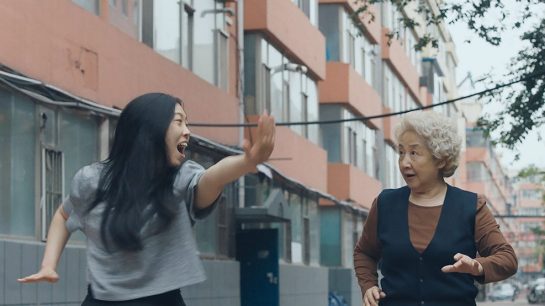
I mentioned how much I enjoyed the soulful and restrained Awkwafina performance. But I can’t say enough about Zhao Shuzhen. I have read this is her first feature film but you would never know it. She effortlessly fits into her character’s skin, giving an energetic and strikingly authentic portrayal, the kind you would see from a wily screen veteran with 50 movies under her belt. She’s a joy to watch and a true scene-stealer. Hopefully the Academy pays attention come Oscar time.

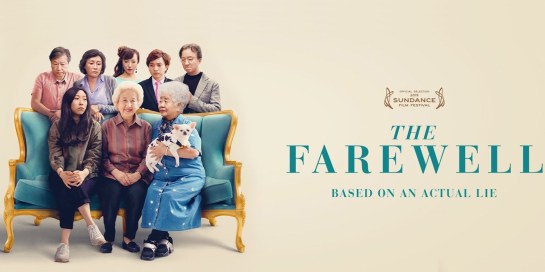
An opening title card tells us this is a film “Based on an actual lie.” Funny thing is “The Farewell” is one of the truest movies about illness and grief I’ve seen in a while. At the same time it asks a variety of questions about individuality, cultural tradition, and the messiness of family among other things. Lulu Wang shows herself to be a filmmaker to watch, exhibiting a keen management of tone and the sincerest treatment of her characters. These are signatures of a really good filmmaker, and they come with only two movies to her credit. Talk about exciting.

VERDICT – 4.5 STARS

4-5-stars

REVIEW: “Pet Sematary” (2019)

PETposter

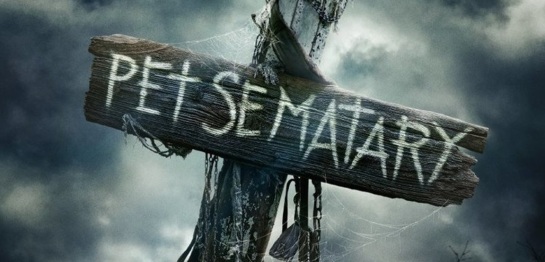
It has been 30 years since the original movie adaptation of Stephen King’s “Pet Sematary”. It was a peculiar slice of genre entertainment that was essentially a twisted horror fable on death and loss. And even with King writing the screenplay himself, it never quite overcame the goofiness of its concept to be a truly effective horror film. The same could be said for 2019’s version

The duo of Kevin Kölsch and Dennis Widmyer direct from a screenplay by Jeff Buhler. Their film follows the same basic blueprint but with a handful of noticeable changes, none of which makes this a particularly better picture.

PET1

Jason Clarke plays Louis Reed, a Doctor from Boston who moves his wife, two children, and the family cat (yes, it’s important that I mention the cat) to the idyllic small town of Ludlow, Maine. His hope is to exchange the hustle and bustle of the big city for quiet rural living. It probably goes without saying, but things don’t exactly go as planned.

It starts when his daughter Ellie (Jeté Laurence) stumbles upon an old pet cemetery in the woods near their house. She bumps into their creepy neighbor Jud (John Lithgow) who warns her that the woods are a dangerous place (as they always are in movies like this). When the aforementioned family cat is killed on the highway Louis sets out to bury it at the cemetery. But Jud recommends a patch of ground deeper into the woods – one apparently built on a studio set yanked straight out of the Dark Shadows television series.

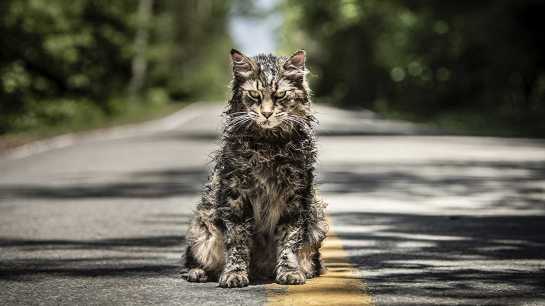
Louis takes Jud’s advice but is stunned the next morning when he discovers the formerly dead cat is (gasp!) alive. He has no believable explanation for his skeptical wife Rachel (Amy Seimetz), I mean who would? But things get really hairy when they realize that their kitty isn’t the same cute, cuddly feline he once was. In fact, he has a bonafide mean streak.

That sets the groundwork for the film’s more macabre turn after the family is hit with a far more devastating tragedy. A bad idea gives birth to even worse decisions and the consequences are tremendous. Similar to the 1989 film, there is something to this story that has potential to be both creepy and provocative. But the movie can’t quite nail it down. It’s never able to sell us enough on its premise.

PET2

“Pet Sematary” leans on too many genre tropes instead of doing what could have been a lot better – blending in more psychological horror. Also the script has several issues ranging from illogical character actions to underserved side stories. Take Rachel’s lingering mental trauma following a childhood family tragedy of her own. A decent amount of time is put into it yet the story thread never feels particularly relevant. It feels tacked on rather than thoughtfully incorporated into the film.

It’s a shame because there are a handful of decent sequences as well as some clever work with the camera that helps build some much needed tension. And it’s not a movie you have labor through. But it’s one that will leave you constantly questioning its logic and always aware of its unfulfilled potential.

VERDICT – 2 STARS

2-stars

REVIEW: “Ash is Purest White”

ASHposter

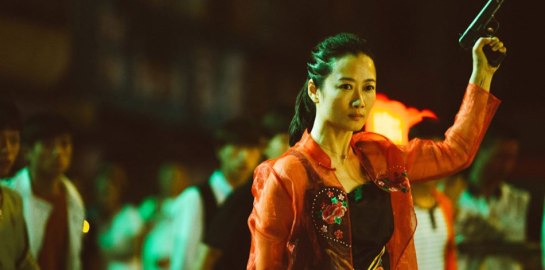
In Jia Zhangke’s three-chapter drama “Ash is Purest White” our focus is placed on a woman named Qiao (Tao Zhao). We observe as she navigates three very different phases of her life, all to a shifting Chinese landscape. It’s a cynical yet strikingly realistic portrayal of love, devotion, and the consequences that can come with them.

It’s hard not to be drawn in by Jia Zhangke’s intoxicating visual technique. Just as much story is told through the poetic gaze of his camera as through the film’s dialogue. This approach demands a capable, multifaceted central performance and we certainly get it from Tao Zhao. The sheer range of emotion and experience she brings is truly impressive. She crafts a character full of grit and determination, but also sensitive and mournful.

ASH2

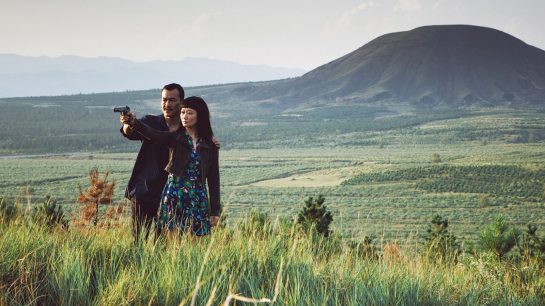
The film begins in 2001 where Qiao lives a life of plenty with her boyfriend Bin (Liao Fan). He has considerable clout as a crime boss in Datong where local industry is succumbing to China’s sweeping economic change. Bin runs his crew by a strict code of ethics which demands respect and honor among thieves. But his rule hits a wall when he is beaten by a gang of young thugs. In a quick moment of sacrifice, Qiao saves Bin’s life but ends up in prison for her efforts.

From there Qiao’s journey makes two significant stops on Zhangke’s timeline. First in 2006 where she is released from prison and setting out to find Bin who she hasn’t heard from since being incarcerated. The final stop is present day where we find Qiao and Bin’s relationship taking on yet another drastically different form. Throughout her journey Qiao shows a quiet ferocity and unshakable ability to take care of herself. At the same time you see a growing melancholy as certain truths become clearer to her.

Again, you can’t help but notice the parallels between the film’s central relationship and the dramatic evolution of the country itself. China’s cultural and economic transitions play out mostly in the background but Zhangke’s camera has a way of making them a part of the story. They are broad changes with seemingly no regard for the people they leave behind. And there is an unmistakable harmony between them and what we see between Qiao and Bin.

ASH1

Whether his focus is on a love story or the criminal underworld, Zhangke’s storytelling has a hypnotic quality to it. With a few rare exceptions, his film features no dramatic highs or lows. It gets in no hurry and moves to its own slow and steady rhythm, perhaps too slow at times. But even as it wanders there is no shortage of captivating visuals or thoughtful character work to take in.

“Ash is Purest White” is full of empathy, longing, and a surprising amount of restraint considering the film’s gangster element and the eruptive metaphor within its title. It’s an auteur’s epic spotlighting a personal journey through a land of intense modernization. And the feeling it conveys through the camera and Tao Zhao’s performance is cinema in its purest form.

VERDICT – 4 STARS

4-stars

REVIEW: “Stranger Things 3”

STRANGER3

With “Stranger Things 3” three things struck me right out of the gate. First, the little town of Hawkins, Indiana is a little bigger than I remembered. Big enough in fact to support a brand spanking new double-decker shopping mall that’s always full of people. Second, I was reminded of just how fast kids grow up. Seeing how the younger cast members have grown in only a year’s time really brought that to light. Third, if their security was half as bad as what we see this season, then it’s no wonder the Soviet Union crumbled.

“Stranger Things 2” ended on a sweet and tender note but with a brief reminder that things in the not-so-small town of Hawkins still isn’t quite right. Season 3 puts even more emphasis on its youngsters. We start out by seeing the relationship between Mike (Finn Wolfhard) and Elle (Millie Bobby Brown) intensifying much to the chagrin of her acting father Jim Hopper (David Harbour). Lucas (Caleb McLaughlin) and Max (Sadie Sink) are still an item. Dustin (Gaten Matarazzo) returns from summer camp bragging about the perfect girl he met who may or may not really exist. And Will (Noah Schnapp) is left longing for the days of playing games with his buddies.

Elsewhere Nancy (Natalia Dyer) and full-time beau Jonathan (Charlie Heaton) both work at the hyper-chauvinistic local newspaper while Joyce still works in the general store on Main Street which is slowly drying up thanks to the the Starcourt Mall. Steve (Joe Keery) works at an ice cream parlor in the mall with new character Robin (Maya Hawke). And then there’s over-the-top bad boy Billy (Dacre Montgomery), who you could say triggers the story’s supernatural bend.

STRANG1

“Stranger Things 3” sees the series take a noticeable shift. Show creators and overseers the Duffer brothers return and you can instantly see them moving away from their early roots. Season 1 was a near flawless eight episodes that steadily built tension while growing its characters and adding just the right amount of humor. Season 3 goes all-in with the comedy, leaning especially heavily on the tired ‘potty-mouthed kid’ trope. Yes, the horror/sci-fi elements are still there, but as someone who absolutely loved ST1, this felt like a departure.

Don’t get me wrong, the humor can be really funny. Minus the above mentioned annoyance, the kids still have a great chemistry and tons of personality. The showrunners use them to great effect and they continue to be characters we genuinely care about. At the same time, the season is decidedly sillier and not just the comedy itself but certain story beats as well. Take the multi-episode storyline that sees Steve, Dustin, Robin, and Erica (Priah Ferguson) investigating a possible Russian plot. It starts good but steadily gets more and more preposterous. I’m assuming it is intentional, but it’s hard to tell.

That gets to one of my biggest gripes about “Stranger Things 3” – its inconsistent tone. Maybe its my ingrained preference for movies, but tone management can be a big deal. All too often ST3 bounces back-and-forth between super serious and straight comedy. It makes tension-building needlessly difficult and robs several scenes of any real suspense. Again, Season 1 had its moments of humor and they were injected at just the right times, never subverting the tension and sometimes catching you off guard. I miss that.

STRANE2

But enough of the negatives. “Stranger Things 3” gets a lot more right than wrong and it starts with the characters. Hopper remains the most entertaining character on the show. This season he’s still the short-tempered, impulsive, bull in a china shop who you can’t help but love. But we also see him attempting to fine-tune his fatherly instincts as well as wrestle with certain feelings the show has hinted at since the first season. And I still find myself drawn to Elle and the emotional tug of her story. The only characters that feel shortchanged is Nancy and Jonathan. Outside of the first episode, their relationship takes no meaningful strides forward.

It’s also worth saying this is the best looking season to date. The effects take a huge step up and they really add to the horror element. It don’t think it’s a spoiler to say there is a pretty grotesque monster that plays a significant role in the story. It’s visualized through some really good CGI and a couple of standout set pieces. And the Duffer bros still know how to capture the 1980s. From the most obvious inclusions to the smallest details, the sheer number of callbacks to the summer of 1985 is astonishing.

ST3 says some interesting things about small town Americana, Cold War paranoia, and the ups and downs of growing up. But ultimately it’s an adolescent comedy built around a science-fiction/ horror premise. That’s not a description that would have originally fit the series, but for better or for worse that’s what “Stranger Things” has become. Regardless, you simply can’t watch Season 3 and not still be attached to these characters and invested in their relationships. I just wish a little more energy was spent on the mystery and suspense; the science-fiction and the conspiracies. In other words, I wish it would get back to its Season 1 roots. But that’s just me.

VERDICT – 3.5 STARS

3-5-stars