2016 BlindSpot Series: “The Last Picture Show”

lastshowposter

Peter Bogdanovich was 31 years-old when he first came across the book “The Last Picture Show”. The author was Larry McMurtry and the story was a semi-autobiographical novel about his life in small town Texas. Bogdanovich collaborated with McMurtry to pen a script that stayed true to the novel’s simple coming of age story.

Bogdanovich had spent time in film criticism and was heavily influenced by the writers of the French magazine Notebooks on Cinema. Many of those writers would spearhead the great French New Wave movement. Bogdanovich desired to follow the leads of Truffaut, Godard, and Rohmer by stepping outside of criticism and into filmmaking. “The Last Picture Show” was the perfect opportunity. It enabled him to not only step behind the camera, but to make a movie that was undeniably his own. It would be a critical success and would go on to earn eight Academy Award nominations.
lastshow1

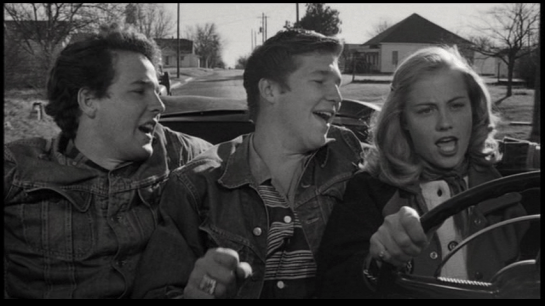
Bogdanovich’s cast is a mix of first-timers, relatively unknowns, and seasoned dependable pros. Set in 1951, Timothy Bottoms (in his second career role) plays Sonny Crawford, a high school senior living in the small dried-up town of Anarene, Texas. Interestingly, Anarene is represented by McMurtry’s hometown of Archer City in northern Texas. Bogdanovich shoots it like a wasteland -dusty and barren minus its handful of residents. You can barely define what they are doing as living. They are existing – going through the motions dictated by their circumstances. You could say Anarene represents the lives of the citizens.

The film doesn’t get bogged down in plot because there really isn’t any. It more or less follows the everyday events of Anarene with Sonny at its centerpiece. Other townsfolk we meet include Sonny’s rambunctious best friend Duane played by a young Jeff Bridges. In her film debut Cybill Shepherd plays Jacy Farrow. She’s the prettiest girl in town and a bit of a tease. She uses her good looks (and bad judgement) to get whatever she wants. Bogdanovich cast Shepherd after seeing her on the cover of Glamour magazine. There’s also Randy Quaid playing the town goofball in his first movie role.

These kids are the focus but the adults play a big role as well and are just as misguided as the town’s youth. The one exception is Sam (played by the always reliable Ben Johnson). Sam is the beating heart of Anarene. He owns the town’s pool hall, diner, and corner movie house. He supplies the people some semblance of activities but even Sam seems beaten down by the dying town and life in general. Aside from Sam, Ellen Burstyn plays Jacy’s promiscuous and disillusioned mother Lois. Cloris Leachman plays the lonely, depressed wife of the town’s high school coach. Clu Gulagar plays a despicable oil field worker and Eileen Brennan plays a weary waitress going through life’s motions.

lastshow2

Bogdanovich and McMurtry take their characters through a cluster of shameful, unscrupulous acts often with little attention to motive or reason. While the characters are fascinating to a degree, the film sometimes lacks the introspection to keep the town from feeling like anything but a cesspool of immorality. This isn’t always the case. There are moments of conviction and internal struggle and some character’s motivations are crystal clear. But other times Bogdanovich’s intent is hard to discern and I routinely found myself wrestling with what felt meaningful and what felt exploitative.

But a true strength of the film is its visual presentation. As I mentioned, the town is shot as isolated and dated. Even the seemingly everpresent Hank Williams songs wailing in the background convey a dreary sense of hopelessness. The choice to shoot in black-and-white is also effective (a decision made after Bogdanovich discussed his film with Orson Welles). It sets the right tone while also giving the film a real sense of time. There is rarely a wasted shot.

“The Last Picture Show” has remained a beloved film since its 1971 release. Of its eight Oscar nominations it won two (for Johnson and Leachman, both in Supporting categories). To some degree I get the strong affections many have since there is a lot to admire. But it isn’t a movie free of issues and some of them I couldn’t quite shake regardless of how hard I tried.

VERDICT – 3 STARS

3 Stars

Merry Christmas


Wanted to take a brief moment to wish all of you the Merriest Christmas. Thank you for reading, commenting, sharing, liking, and discussing these great things we call movies. All of you make this endeavor worthwhile.

Merry Christmas!!!

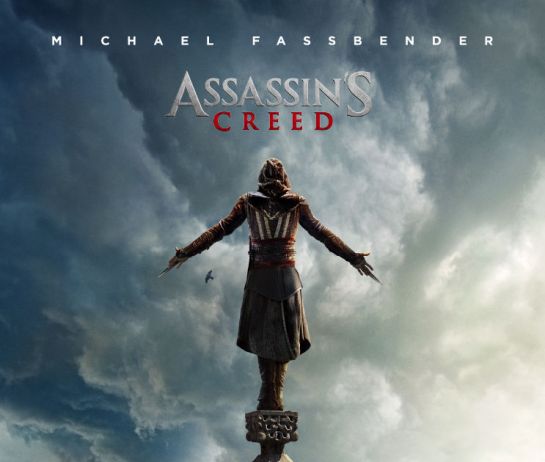
REVIEW: “Assassin’s Creed”

creed-poster

I just knew they existed even before the first screenings of “Assassin’s Creed” – the haughty dismissive jabs at yet another ‘video game movie’. Nevermind that video games have evolved from simple pixels and sprites into vast interactive experiences often times anchored by deep, thoughtful stories. Forget that video games have surpassed both Hollywood and the music industry in the entertainment market. Many people simply won’t treat video games or their movie adaptations seriously, so in that regard “Assassin’s Creed” was already behind the proverbial eight ball.

But there is another unavoidable truth. Filmmakers aren’t doing much to quell these attitudes. In fact, video games have a history of spawning some truly terrible film adaptations. Look no further than “Super Mario Bros.”, “Street Fighter”, “Mortal Kombat: Annihilation” just to name a few. But isn’t “Assassin’s Creed” different? I mean it stars Michael Fassbender, Marion Cotillard, Jeremy Irons, Brendan Gleeson, Charlotte Rampling. With that amount of talent it can’t be as bad as many are saying, right? The short answer – no it isn’t, but it’s complicated.

creed-3

The immensely popular Assassin’s Creed video game franchise from developer Ubisoft is ripe with big screen potential. This film clearly intends to be a launching point for a film series. The games have never been restricted to certain characters which enables to movie to create entirely new ones and tell a new story within the same universe. Fassbender latched on early in the process not only starring but also co-producing.

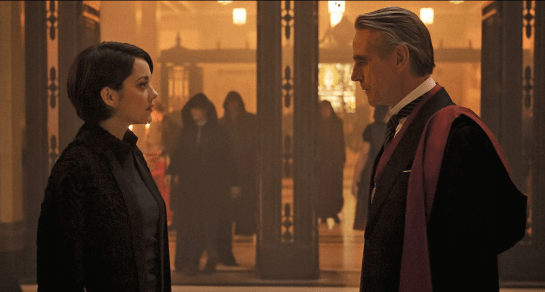
The story takes place during two time periods – 2016 and 15th century Spain during the Spanish Inquisition. An age-old war between the Knights Templar and the Assassins has bled over into modern day driving the mysterious Abstergo Foundation to create the Animus. The machine allows Abstergo to connect people with their descendants in order to glean information from the past. The foundation is ran by Alan Rikkin (Irons) but the Animus creator Sophia Rikkin (Cotillard) oversees the project. Both father and daughter have very different ideas for its use.

Enter Callum Lynch (Fassbender), a death row inmate who wakes up to find himself in an Abstergo facility. Lynch is the descendent of a 15th century Assassin named Aguilar de Nerha who may hold the key to locating a powerful relic called the Apple of Eden. Sophia sees the relic as a tool for global peace while others at Abstergo have much more nefarious intentions.

creed2

Let’s get this out of the way. “Assassin’s Creed” isn’t the wretched, soulless dreck its Rotten Tomatoes score would have you believe. In fact, a solid two-thirds of its running time is a ton of fun especially for those familiar with the franchise. The film nicely juggles Creed’s signature crazy mix of action, historical drama, and science fiction while tossing out several nods to fans. But you don’t need to be an aficionado to understand what’s going on, at least until the last act. At that point things get a bit muddled and messy as the film tries to tie up its many layers of plot.

Director Justin Kurzel (who had previously worked with Fassbender and Cotillard in “Macbeth”) offers several interesting touches as he works in two very different time periods and locations. The 15th century sequences are exhilarating particularly one street chase that may be my favorite action sequence of the year. Kurzel and regular cinematographer Adam Arkapaw shoot the scenes with gusto and great detail. When it moves back to modern day it leaves the dusty, dirty shades of brown for cold, dreary blues and greys. This is where most of the story plays out.

creed1

But now I get back to that third act. Overall I disagree with the criticisms calling the plot convoluted and overblown, at least for the majority of the film. But as it wraps things up it does get a little confusing. The story moves into full franchise setup mode, putting characters and tensions in places that clearly points to follow-up movies. There are some good elements to the finale, but some messiness as well. Even the action takes a step down in last 15 minutes.

Still, I had fun with “Assassin’s Creed” particularly with its wildly unique (and admittedly wacky) story. It also doesn’t hurt to have this level of acting talent in front of the camera. It does fall victim to some of the usual franchise-building frustrations, but at the same time it sets itself up for limitless possibilities. Where does it go next – the Civil War, the French Revolution, the Cold War? I don’t know. First it will depend on the box office and so far that hasn’t looked too promising.

VERDICT 3 STARS

REVIEW: “Train to Busan”

trainposter

The zombie sub-genre is probably the fastest growing in all of horror. While it seems to have slowed down a tad, there are still countless numbers of films about the undead. Not surprising, a lot of it is waste, but there are also thoughtful, intelligent zombie movies that manage to terrify while also having something to say.

Director Sang-ho Yeon’s blistering South Korean zombie picture “Train to Busan” is one of the good ones. More survival thriller that straightforward horror, Yeon’s film pulls influence from several movies. It’s a bit of “Snowpiercer” meets “28 Days Later” but with a dash of “World War Z” tossed in for good measure. I’m not the first person to make those comparisons but they’re almost impossible to avoid. But that’s not a bad thing. “Train to Busan” doesn’t hang its hat on those influences. It has enough of its own ideas to make it unique.

train2

The film’s central relationship is between a father and daughter (right off the bat it had me – I’m easy.) Gong Yo plays a workaholic fund manager named Seok-Woo. He’s recently divorced and spends more time at the office than with his young daughter Su-an. His disconnect with his daughter is best illustrated in one scene where he gives her a birthday gift. It’s the exact same thing he recently gave her for another occasion. Frustrated, Su-an pleads with her father to take her to her mother in Busan.

The next morning father and daughter board a bullet train from Seoul to Busan. Once onboard Yeon and writer Park Joo-suk introduce us to several side characters who will impact the story in a variety of ways. There’s a blue collar husband and his pregnant wife, two elderly sisters, a self-centered CEO, a train-hopping homeless man, and even a high school baseball team. But there is one more noteworthy passenger – a staggered young woman with a bite mark in her leg. She begins to convulse, attacks an attendant, and soon the zombie spread begins leaving a handful of survivors trapped on a speeding passenger train.

There are no guidelines to how movie zombies operate. Some creep and stumble while others run full-throttle. Some return to life over time while others turn quickly. Yeon’s zombies are fast, ferocious, milky-eyed terrors. Their transformation from victim to zombie is instantaneous. This makes for several remarkably intense sequences especially considering the claustrophobic confines of a fast-moving train. Sang-ho and cinematographer Lee Hyung-deok create some stellar scenes brimming with viciousness yet not fully relying on graphic gore. Don’t get me wrong, the zombie violence is bloody but far from excessive.

train1

And as with the best zombie flicks, it’s the human elements that makes this one rise above genre expectations. Take the key daddy/daughter relationship. For them it becomes more than a train ride and zombie attack. It’s a wake-up call for Seok-Woo and a chance at righting his relationship with his daughter. There is also a running theme of kindness and charity in the face of great horrors. Repeatedly characters are faced with the options of working together or alone. Their decisions often impact whether people live or die. The film also examines paranoia, selfishness, sacrifice, and more.

I went into “Train to Busan” expecting a thrilling, edge-of-your-seat zombie romp and it’s very much that. It’s a tension-soaked blast of a movie but with plenty of smarts both in front and behind the camera. Its good characters, deeper themes, and impeccable execution helps it to defy any dismissive genre perceptions some folks may have. Sure, it still won’t appeal to everyone, but for me “Train to Busan” is an injection of freshness into its genre and easily in the upper tier of zombie movies.

VERDICT – 4.5 STARS

4.5 STARS

REVIEW: “Rogue One: A Star Wars Story”

rogueoneposter

When Disney bought the Star Wars franchise I don’t think anyone expected it to be three movies and done. You don’t exactly spend $4.06 billion just to make three films. Of course Disney being Disney means that Star Wars has become an annual cinematic event featuring new installments/episodes of the main story mixed with one-shot movies meant to fill in some of the gaps between previous films. The first of these one-shots is “Rogue One”.

These stand-alone ‘Star Wars stories’ will apparently be aplenty. Already rumors of a young Han Solo adventure and a Boba Fett origin story are swirling. “Rogue One” notches in just ahead of Episode 4 on the Star Wars timeline. It tells the story of how the original Death Star plans were stolen from the Empire. You know, the ones Princess Leia hid inside of R2-D2 just before being captured by Darth Vader. Just from that you can probably tell fan service is at a premium, but “Rogue One” packs plenty more to give it its own identity and a firm standing among the Star Wars films.

rogueone2

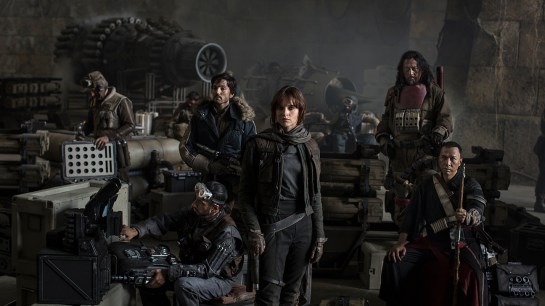
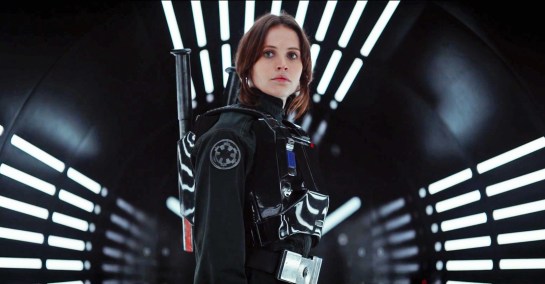
“Rogue One” introduces a new band of characters living within this vivid established world Star Wars fans know well. A strong and heady Felicity Jones plays Jyn Erso, a young woman with a history marked with distress, most notably the separation from her parents as a young child by the hand of Orson Krennic (Ben Mendelsohn). He’s the Empire’s weapons research director who’s tasked with creating a planet-killing superweapon. Years back Krannic forced Jyn’s father Galen (Mads Mikkelsen), a weapons designer, to help complete what would become the Death Star essentially leaving Jyn to be raised in hiding.

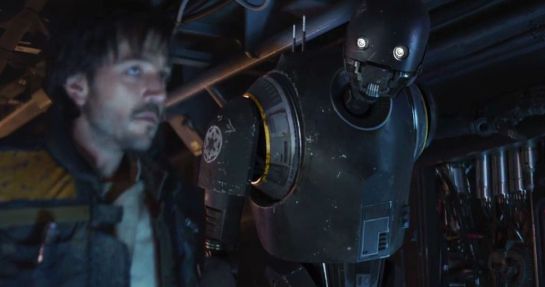
Jump ahead 15 years. Jyn is rescued from an Imperial prison by Cassian (Diego Luna), an officer in the fledgling rebellion. Aware of her identity, the rebels have a very specific yet complicated purpose for Jyn which leads her from being a pawn to a potential hero. But to make that journey she will need the help of a good cast of characters – Donnie Yen as the blind mystic Chirrut along with his sidekick/protector Baze (Jiang Wen), an Empire defector named Rook (Riz Ahmed), and the deadpan, scene-stealing droid K-2SO (voiced by Alan Tudyk).

rogueone1

Gareth Edwards directs and follows up his 2014 reboot of “Godzilla”. In that film Edwards’ deliberate and slow-revealing tempo invigorated some audiences (like me) while frustrating others. There is a bit of that approach here, but for the most part this is an energetic, steady moving picture. Chris Weitz and Tony Gilroy’s screenplay at first feels like a very different Star Wars movie yet over time its place in this beloved far, far away galaxy is much more cemented. By the end “Rogue One” not only feels like a Star Wars film, it holds its own within the franchise.

Now I’ve already heard the frustrations of some who desperately wanted this film to be something boldly unique. Complaints that Edwards and company play it safe have merit but there is a reason they do so. “Rogue One” is unshakably tied to Episode 4 and it shouldn’t surprise anyone that this film stays within that same style and framework. It’s a wise creative decision which actually helps the film effectively meld into the Star Wars macrocosm. With so many other Anthology films coming, there will still be plenty of opportunities for risk-taking. I don’t think this is it.

rogueone3

“Rogue One” looks amazing, the effects are stunning, the action is energetic, the nostalgia is delightful, there’s the right amount of humor, and it tells a good story. But what surprised me the most was how much I liked its characters. They’re fun and compelling with each having a good franchise footing. Each are easy to root for (or against) particularly as they navigate the film’s themes of loss, sacrifice, heroism, and war. Jones, Mikkelsen, Luna, Mendelsohn, Yen, and Tudyk – great performances and that’s not including the handful of familiar faces we meet along the way.

The original 1977 film alluded to the mission to steal the Death Star plans and the brave rebels who carried it out. The danger was intense and the cost was high. “Rogue One” tells that story with spirit and at times grit. I had confidence this could be good but with a degree of caution. I’m so pleased that my caution proved unwarranted and “Rogue One” turned out to be an absolute treat. Time will tell whether Disney’s Star Wars saturation wears thin, but as for now one thing is for sure – “Rogue One” is a sound reminder that the franchise is in very good hands.

VERDICT – 4.5 STARS

4.5 STARS

REVIEW: “Nights of Cabiria”

CABIRIA poster

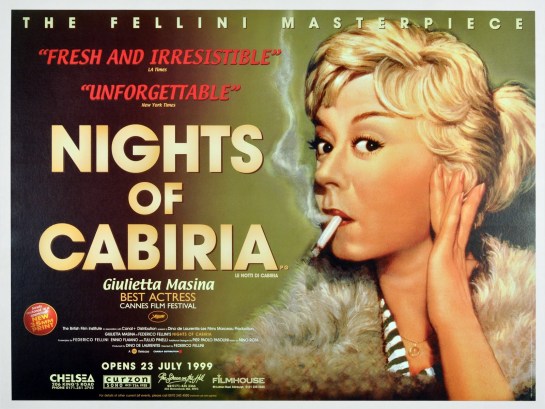
Nestled within Federico Fellini’s impressive filmography is “Nights of Cabiria”, a scintillating Italian drama that is rarely mentioned among the director’s greats (“8 1/2”, “La Dolce Vita”, etc.). It’s a shame considering the film earned Fellini one of his four Academy Awards and is regarded by some as his finest work. I find it hard to argue against the movie’s brilliance and greatness.

“Nights of Cabiria” sits firmly between Fellini’s shift from classical Italian Neorealism to the extravagant sensory experiences we would get later on. The neorealist’s spotlight on working class society and  economic hardships is represented from title screen to the film’s final frame. But we also see Fellini experimenting with a more crafty and stylish form of storytelling. It’s the early stages of what would literally burst into form three years later in “La Dolce Vita”.

Getting the film made wasn’t easy. Fellini peddled his story to a number of producers each of whom turned him down. It wasn’t until Dino De Laurentiis approached him with a five-film contract offer that Fellini was able to make his movie. With funding set Fellini then cast his wife Giulietta Masina in the lead role. This was a critical step since the lead character is in practically every scene and since the story hinges on her emotion and personality. Masina would go on to win the Best Actress Award at the Cannes Film Festival.

cabiria 1

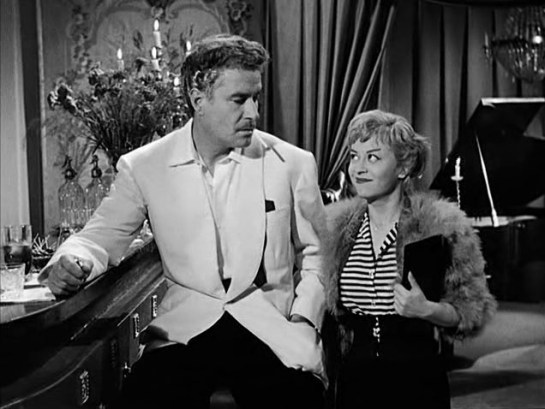
Masina plays a ‘lady of the night’ but not in the usual vein. Her name is Cabiria and there is more to her than her occupation. She is different – unique is several regards. She is significantly smaller than all the other ladies who work with her. She isn’t the most alluring or attractive. She wears her emotions on her sleeve. Simply put, Cabiria isn’t a woman who would naturally grab your attention, but that doesn’t sway her. Regardless of her obstacles, Cabiria pushes forward clinging to any semblance of happiness and holding onto an internal hope that somewhere true love awaits.

Despite her deeper innocence and naiveté, Fellini doesn’t portray Cabiria as a weak woman. She’s a tough cookie. She truly is a victim of circumstance who has survived due to her determination and wiles. For the audience her tiny shack of a home on the city outskirts is a sign of her tough life, but to Cabiria it’s a symbol of accomplishment. She proudly tells several people that she is a homeowner. And she isn’t afraid to be whisked away by a good dance tune – an effect of her sprightly optimism.

Cabiria2

But deep down there is a disappointment that she is deeply in tune with. The very first scene reveals it with uncomfortable clarity. She and her boyfriend are walking by the river in what resembles a romantic stroll. That is until he pushes her in and runs off with her purse full of money. We never see him again. The film is a series of encounters most with cruel outcomes. And Cabiria always seems to expect the disappointment and she accepts the hand she is dealt and moves on. Instead of concentrating on plot Fellini focuses on several tragic themes that grow more vivid with each of Cabiria’s encounters.

When developing the Cabiria character, both Fellini and Masina were said to be highly influenced by Chaplin’s Little Tramp. You can see it in her expressions, her mannerisms, and of course in many of her circumstances. There are moments when the resemblances feel a tad foreign to the tone of a specific scene, but for the most part it fits surprisingly well and it has such a unique contrast with several of the characters Cabiria meets.

“Nights of Cabiria” is filled with fine supporting performances, interesting visual touches, and poignant emotional moments. Fellini’s true-to-life themes simmer throughout the picture and many of them would resurface in “La Dolce Vita”. And at the core is Masina and her magnetic performance. She makes it impossible for us to lack sympathy for Cabiria despite some of the character’s poor decisions. We want her to rise above her circumstances and find the love she longs for. But as things progress Fellini leaves us cynical and skeptical. Like her we want to cling to the hope for happiness but ultimately fear the cloud of disappointment will be to much for her to overcome.

VERDICT – 4.5 STARS

4.5 STARS