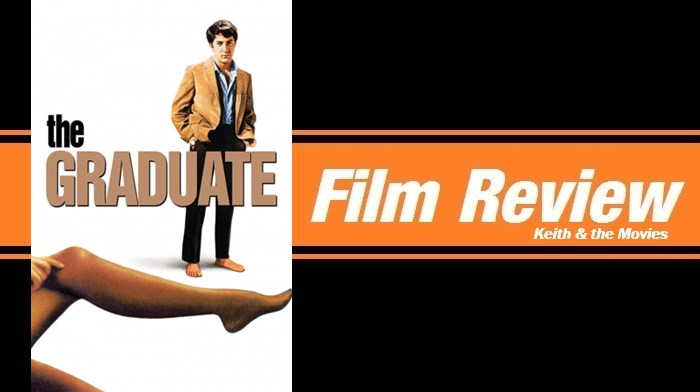
RETRO REVIEW: “The Graduate” (1967)

It could be called a comedy, a drama, or a romance. But truth be told, “The Graduate” is a little of all those things. More importantly, it’s a sharply conceived and slickly crafted film that in several ways ushered in a new approach to filmmaking. It’s been touted as a highly influential feature and has held high spots on some pretty prestigious movie lists. While I’ve never been as enamored with it as many have, it’s still a good film with its share of memorable moments.

“The Graduate” would go on to receive seven Oscar nominations, winning one for Mike Nichols’ direction. Screenwriters Buck Henry and Calder Willingham penned the script which was an adaptation of Charles Webb’s 1963 novella of the same name. The film was also a massive commercial success, becoming the highest grossing movie in 1967 by a pretty large margin. But what’s more interesting is hearing how it has aged in the minds of fellow critics.

This wasn’t Dustin Hoffman’s first official acting credit. That honor goes to the few seconds he appeared in “The Tiger Makes Out”. But it was “The Graduate” that gave him his breakthrough role. Hoffman plays Benjamin Braddock, a disconnected and isolated recent graduate from an east coast college. His parents throw him a graduation party to celebrate his accomplishments, but it does nothing to dent his general apathy towards grad school and his uncertainty for the future.
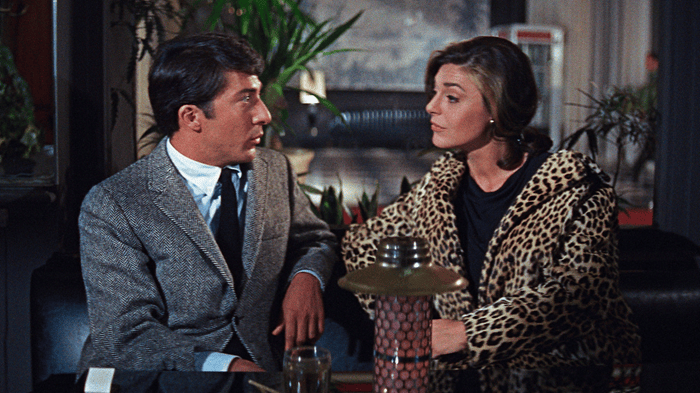
Benjamin is a fascinating character whose complexities show themselves in a variety of ways. He’s a bit of a social pariah who can sometimes come across as an irreverent jerk. He can be flippant and impudent, but he’s also a sad and melancholy soul. And we find out early on that Benjamin has a hard time discerning how to approach this new stage of his life. That internal struggle, though muted at times, lies at the core of the story.

Perhaps all of this is why Benjamin is such easy prey for Mrs. Robinson (Anne Bancroft). She’s a much older friend of the family who is married for the wrong reasons and is clearly unhappy with her circumstances. She baits Benjamin into an illicit affair which over time adds even more complications to his already muddled life. Much like the movie itself, opinions of Mrs. Robinson have also changed over the years.

Some have argued that Mrs. Robinson is the most appealing and alive character in the film. They praise her for seeing things as they are and pursuing her own happiness. I still see her a little differently. She can just as easily be viewed as shameless, dishonest, and self-absorbed. She too is in a difficult situation. But she goes the route of disgraceful self-indulgence with little to no moral conviction. And her maliciousness shows itself even more when Benjamin unexpectedly falls in love with her daughter Elaine (played by Katharine Ross).
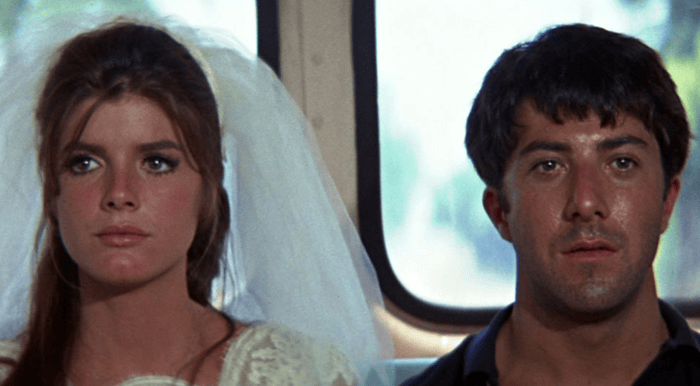
My biggest issue still centers around Elaine. Ross gives a solid performance but her character could really use more depth. At times it’s impossible to understand Elaine’s thinking, and her decision making can be rash and out of the blue. A tighter script might have sold the romance better in the second half by opening up her relationship with Benjamin and upping the stakes. I still love the ending. But things get a little clunky before we get to that unforgettable final scene.

While some views of the “The Graduate” have changed, for me it has maintained its resonance and insight, neither of which has been hurt by the passing of time. The film’s moments of humor are still funny, Benjamin is still a compelling character, and the iconic ending shot is still as potent as ever. Simon and Garfunkel’s perfectly placed songs still give several scenes an extra punch, and the direction from Mike Nichols is still satisfying.

After nearly 60 years, “The Graduate” has proven to deserve the near universal respect it has been given. It may not have the most tight-knit script and some key character relationships may be slightly underwritten. But it’s anchored by some rich themes, terrific performances, and a great soundtrack. It’s also a movie with a significant cultural legacy that still speaks to its many fans both old and new.

VERDICT – 4 STARS

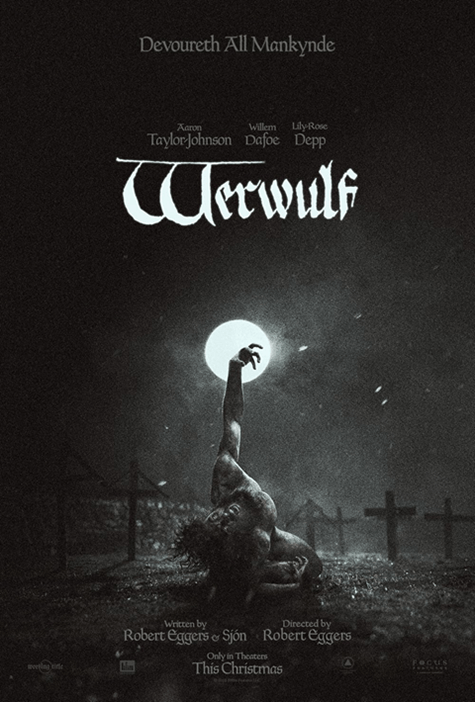
First Glance: “Werwulf” Official Trailer and Poster

Robert Eggers follows up the critical and commercial success of his 2024 remake of “Nosferatu” with another venture into the world of classic horror. This time he’s moving from vampires to lycans in “Werwulf”, yet another intensely atmospheric period chiller that is right up the filmmaker’s alley. The first full trailer released over the weekend and showed off all of Eggers’ signatures – the grainy black-and-white, the tactile period production design, and the terrifying imagery.

Eggers reteams with Sjón to write the script for what looks to be a genuinely unsettling spin on the werewolf subgenre. The story is set in 14th century-England where a struggling village comes face-to-face with a brutal evil. A local man (Aaron Taylor-Johnson) is a afflicted with a savage curse that sees him transforming into a ghastly beast. His wife (Lily-Rose Depp) attempts to save her husband while also looking after their children. As you can guess, the results are horrifying. I can’t wait to see more.

“Werwulf” roars into theaters on Christmas day. Check out the trailer and poster below and let me know if you’ll be seeing it or taking a pass.

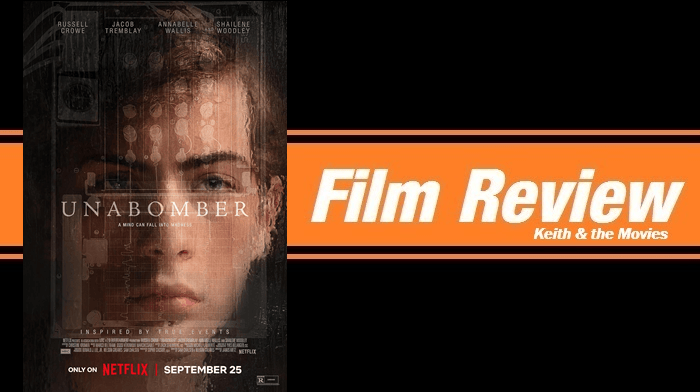
REVIEW: “Unabomber” (2026)

In “Unabomber”, director Janus Metz takes two different routes in exploring the story of Ted Kaczynski, the mathematics prodigy turned domestic terrorist whose 17-year mail bombing campaign resulted in three deaths and 23 injuries. The efforts to find and apprehend Kaczynski resulted in what was the longest and most expensive investigation in the history of the FBI.

“Unabomber” highlights two distinct eras from the Ted Kaczynski timeline. Screenwriters Sam Chalsen and Nelson Greaves look back at a young Theodore Kaczynski in an advanced academics program at Harvard College. But they also hone in on the last months of the FBI’s manhunt, which finally resulted in Kaczynski’s 1996 arrest. The two storylines attempt to offer a well-rounded portrayal of who Kaczynski was versus who he became. Unfortunately some of the film’s fictional flourishes keep it from reaching its potential.

Image Courtesy of Netflix

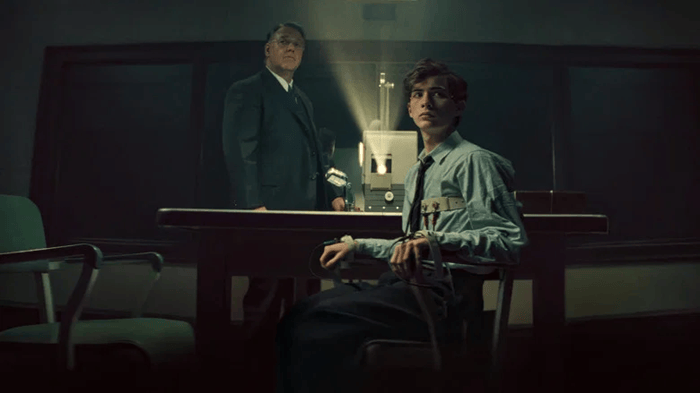
In 1958, 16-year-old math whiz Theodore “Ted” Kaczynski (Jacob Tremblay) enrolls at Harvard College. His special interest in psychology leads to him being recruited for a series of debate experiments being performed by professor Henry Murray (Russell Crowe). His admiration for Murray along with some coaxing by Murray’s co-director Christiana Morgan (Annabelle Wallis) drives Ted to disobey his parents and volunteer for the program. But he soon learns he has been lured into something shady, unethical, and abusive.

Jump to 1995, where the FBI is intensifying their investigation into a series of mail bombings by a domestic terrorist dubbed the “Unabomber”. Agent Joanne Miller (Shailene Woodley), a linguistics expert on the UNABOM Task Force, begins narrowing down her list of suspects after the mysterious culprit releases his 35,000 word manifesto. But getting the mostly all-male team to trust her instincts becomes an obstacle to the entire investigation.

The film’s two-timeline structure is effective, with Metz frequently cross-cutting back and forth to build a believable psychological connection. It’s the mix of fact and fiction that trips up the story. And it’s an issue found in both timelines. Despite there being no evidence that Murray mentored Kaczynski or shared personal moments with him, the movie puts a lot of time into that very thing. While it eventually amps up the drama, it comes across as a bit too contrived and obvious The charismatic Crowe makes it enjoyable, as does Wallis, despite being stuck in her own go-nowhere fictionalized angle.

Image Courtesy of Netflix

The creative liberties hamper the FBI storyline even more. Woodley’s character was conceived for the movie and handcuffed to a half-baked story about a capable woman hindered at every turn by her male colleagues. Nothing about it feels authentic. Also, the role of Kaczynski’s family is dramatically downplayed to make Joanne more of a prototypical 90s crime-thriller protagonist. It results in some borderline ridiculous events as she takes matters into her own hands.

Despite some noteworthy issues, “Unabomber” remaining entertaining in its own unusual way. But the film’s wobbly melding of fact and fiction proves to be an obstacle too big to overcome. I’m all for filmmakers having creative license to make the movie they want to make. But when using such a serious true story and with inventions this dramatic, you need to make sure the changes deliver where it counts. Sadly they don’t for “Unabomber”, which is a shame considering its potential and the amount of onscreen talent attached.

VERDICT – 2.5 STARS

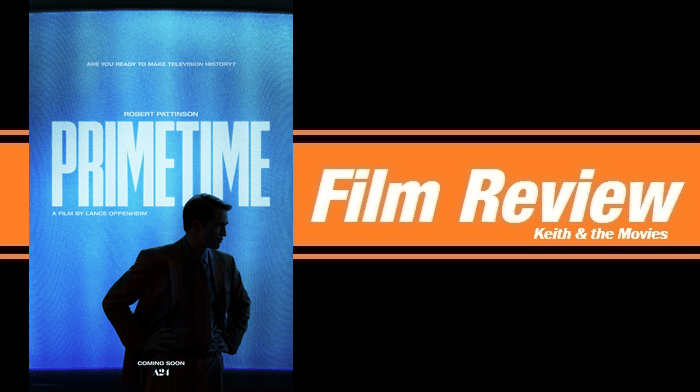
REVIEW: “Primetime” (2026)

Documentarian Lance Oppenheim makes his narrative feature directorial debut with “Primetime”, a biographical drama / psychological thriller hybrid that gives its star Robert Pattinson what should be some of the meatiest material of his already impressive career. Pattinson plays Chris Hansen, the real-life television journalist who for three years hosted a popular Dateline NBC segment titled “To Catch a Predator”. The respected yet controversial segment featured sting operations designed to catch potential online child predators.

Hansen has been highly critical of Oppenheim’s film, calling it an “insult”, “bizarre”, and “detached from reality”. Hansen views “Primetime” as an exploitative misrepresentation of him and an affront to the team who worked alongside him. Hansen points out that he was never consulted by the filmmakers, who took his story and turned it into a horror-tinged gonzo thriller rather than an accurate portrayal of his work. From Hansen’s personal perspective, it’s an understandable frustration.

Image Courtesy of A24

But from an entertainment perspective, “Primetime” never resonates as strongly as it should. A big reason is its lack of focus. Oppenheim and screenwriter Ajon Singh admirably avoid the standard biopic formula. Instead they shoot for something hyper-stylized and often amped up to ridiculous levels. And rather than concentrating on its main story, the movie sometimes veers off into other directions, following supporting characters down thinly sketched side roads that never go anywhere.

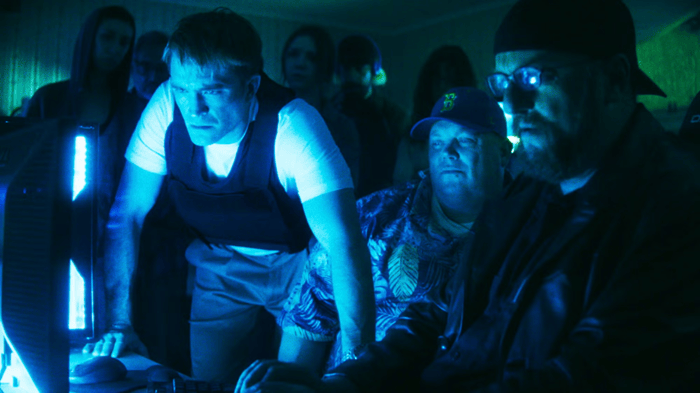
Singh’s script is an adaptation of Luke Dittrich’s 2007 article for Esquire magazine titled “Tonight on Dateline This Man Will Die”. The piece detailed the botched sting operation during the filming of “To Catch a Predator” which led to the suicide of assistant district attorney Bill Conradt. But Singh and Oppenheim take their time getting to that point. Instead, most of their film is spent piecing together a congested backstory bathed in film grain and neon lighting.

Pattinson fully submerges himself into this version of Chris Hansen. From his icy calm voice to his slithering mannerisms, the darkly magnetic actor embodies Oppenheim’s vision of Hansen as ratings-driven sociopath. The film follows Hansen and his production team as they lure child predators from online chat rooms to bait houses. Once there, adult decoys posing as children set the table for Chris, who confronts them with a full camera crew before handing them over to the police.

Chris’ successes are enough to get him a spot on Dateline NBC. His ambition only rises from there, driving him to push what is perceived as a noble cause into morally murky territory. His craving for notoriety drowns out any sense of conviction. And his festering narcissism puts him at odds with his loyal staff that includes his ruthless producer Andie (a terrific Merritt Wever) and a naive aspiring actor Dan (Skyler Gisondo) who is hired as Chris’ newest decoy.

Image Courtesy of A24

As Chris’ self-obsession intensifies, it sends his professional and personal lives careening out of control. He begins crossing lines that go beyond just moral ambiguity. And he puts himself and his team in an untenable situation. It’s here that the film’s overbearing style and scattershot storytelling kicks into another gear. So much effort is put into the fever dream visuals and being luridly provocative that the story is ineffectual and the intentions behind it obscured.

If anything, “Primetime” comes across as a movie far more interested in tabloid television than investigative journalism. In fact, it offers a much more critical indictment of personalities like Chris Hansen than the vile pedophiles he targets. As for Pattinson, he is fascinating to watch. But there is a theatrical element to his performance that was hard for me to shake. It can be equally tough making sense of his character’s mindset. But most of all, it’s difficult to connect with Pattinson’s character on a human level. And for me, the same can be said for the movie as a whole.

VERDICT – 2 STARS

REVIEW: “Heart of the Beast” (2026)

Brad Pitt fans and dog lovers will both find much to love about the new survival thriller “Heart of the Beast”. The ageless 62-year-old actor teams with a charming German Shepherd to tell a gripping story set in the rugged untamed Alaskan wilderness. Pitt is every bit as sturdy and charismatic as we have come to expect. But the real star of the film is Uber, a scene-stealing canine who gives one of the best animal “performances” ever to appear on screen.

“Heart of the Beast” is directed by David Ayer, who previously collaborated with Pitt on the 2014 war film “Fury”. Here he works from a script by Cameron Alexander, who turns a straightforward and somewhat familiar premise into a powerful story of shared trauma and the unbreakable bond between a man and his dog. The action is harrowing, the central relationship is deeply moving, and the journey we take is as inspirational as it is entertaining.

Image Courtesy of Paramount Pictures

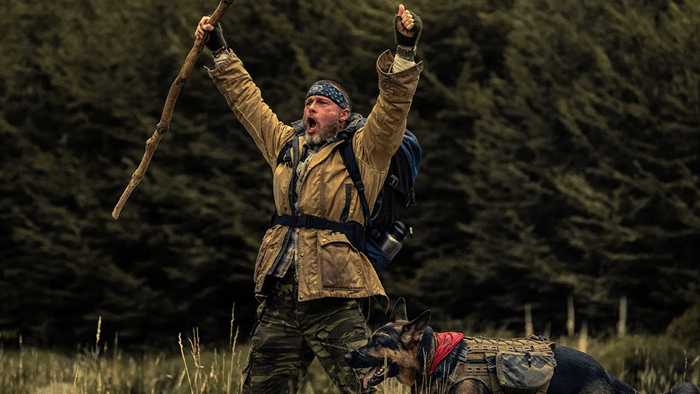
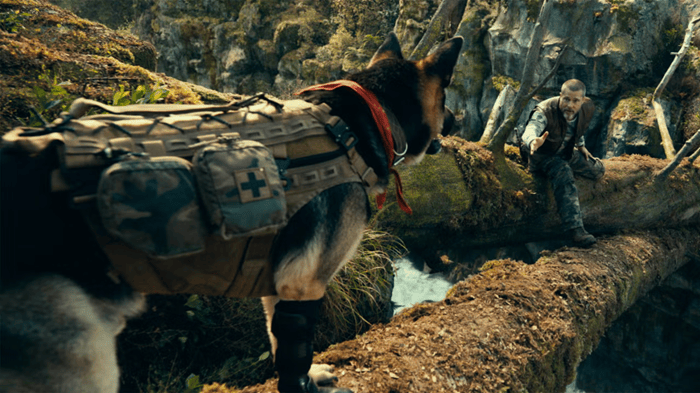
Pitt plays Army Special Forces veteran James Belmont. Since retiring from the military, James spends his time in the Alaskan wild with his military combat dog Odin (Uber). Together they travel in his seaplane to the most remote parts of the wilderness, sleeping under the stars, well away from the hustle and bustle of society. For James and Odin it’s a needed retreat and a chance to heal from the active duty wounds they share.

We learn that the relationship between James and Odin goes back years and has remained intensely close. They didn’t just serve in the military together. They faced the horrors of the fiercest combat and both have the scars to prove it. Odin’s can be seen etched into his face. He also has a prosthetic leg and a few titanium teeth to replace those he lost. But there’s also the emotional toll. Both James and Odin suffer from PTSD, and the only comfort they find is in each other.

Their story takes a terrifying turn after James has a heart attack while flying over the forest. Their plane crashes and sinks to the bottom of an icy river. He and Odin manage to survive and salvage as many supplies as they can. After spending the night recuperating and getting their bearings, James determines they are 58 miles from the nearest road. So the two friends set off on a grueling journey across the forbidding Alaskan wilderness. Along the way they’re forced to maneuver through rugged terrain, dangerous wildlife, and their own injuries to make it to safety.

Ayer makes sure there is no shortage of jaw-dropping scenery for us admire. The stunning South Island of New Zealand steps in for Alaska and offers one breathtaking vista after another. But he also captures the peril that coexists with the natural beauty. With the vibrant outdoor setting in place and the high stakes firmly established, much of the rest relies on the two stars. Despite the physical and emotional demands, Pitt delivers a remarkably restrained performance. His intense commitment shows itself in every scene, and the raw authenticity he brings shines, never more than in his captivating chemistry with his canine co-star.

Image Courtesy of Paramount Pictures

As for Uber, he isn’t your prototypical Hollywood trained pup. He spent time as a mountain search-and-rescue dog which made him comfortable in the harsh and sometimes treacherous shooting locations. But it’s the unexpectedly soulful aspect of his performance that makes it such an achievement. He does more than run when needed and bark on command. He conveys real emotion as he navigates grief, fear, and exhaustion. Whether it’s through his mannerisms or his gaze, Uber becomes the most essential ingredient to the storytelling.

I don’t really consider myself a “dog guy”. But that didn’t stop me from being swept away by “Heart of the Beast”. That’s because the film doesn’t rely on the usual ‘man-and-his-dog’ conventions. Instead it defines and sustains a richly genuine relationship rooted in love, loyalty, and unwavering trust. Even the coldest hearts will be warmed by the deeply moving friendship that unfolds on screen. I know I was.

VERDICT – 4 STARS

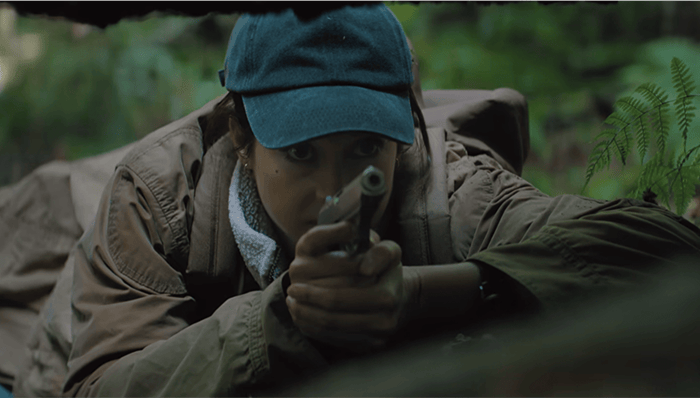
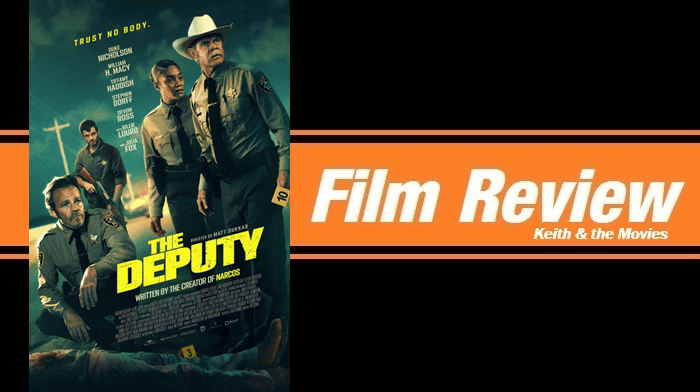
REVIEW: “The Deputy” (2026)

In the new film “The Deputy”, Toby Sawyer doesn’t leave the most flattering first impression. He comes off as a hapless irresponsible deadbeat, plagued by selfish ambition and poor judgement. Toby has big dreams of becoming a full-time sheriff’s deputy. So much so that he accepts a low-paying part-time job at the Norman County Sheriff’s Department rather than better paying work at a nearby fertilizer plant, much to the chagrin of his frustrated girlfriend. But Toby gets the chance to prove himself to everyone over the course of one wild, violent, and unpredictable night.

That’s the basic premise for director Matt Sukkar’s feature directorial debut, “The Deputy”. Written by Carlo Bernard, this black comedy crime thriller is based on the 2009 novel of the same name by Victor Gischler. It’s a movie that leans into its rundown small-town setting. It relies heavily on the quirky and colorful community. And it tells a story that is equal parts gritty, grounded, and goofy. It doesn’t always find the right balance between them. But it keeps our attention, and it routinely surprises us in some entertaining ways.

Image Courtesy of Well Go USA Entertainment

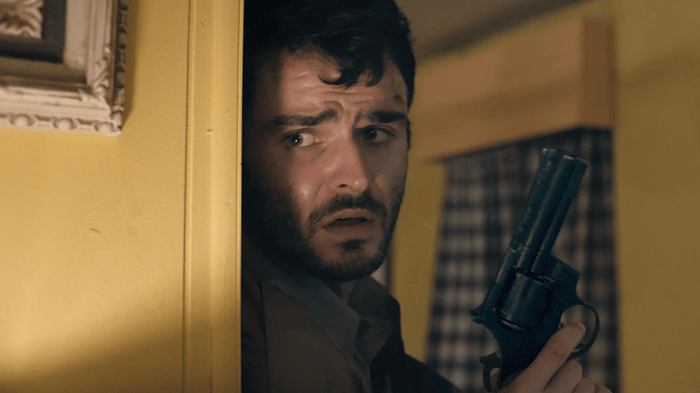
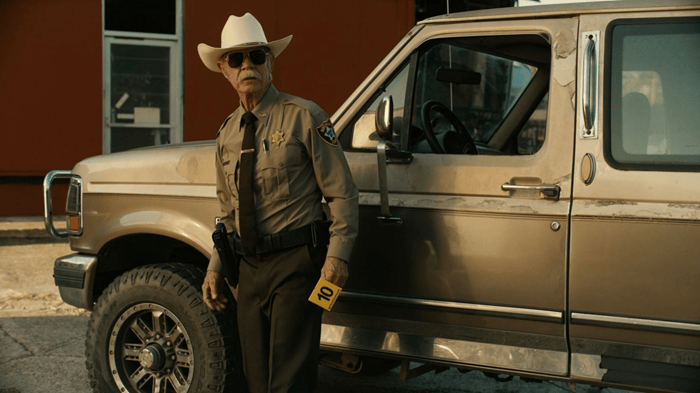
Early one evening, Toby (played with quiet sincerity by Duke Nicholson) is called in to work by Sheriff Frank Krueger (William H. Macy). He’s told the matter is urgent, so he clips his holster onto his flannel sleep pants, pins his badge on his ripped up t-shirt, heads out of his beat-up mobile home and heads into town. There he learns that a man named Luke Jordan has been shot and killed, his body left lying on the pavement next to his pickup truck.

With his chief deputy still not there, Sheriff Krueger tasks Toby with watching over the body until the coroner comes while he drives out to inform the Jordan family of Luke’s death. It shouldn’t be that hard of a job for Toby. But a couple of really dumb choices lead to Luke’s body disappearing and Toby wondering who took it. Chief Deputy Billy Banks (Stephen Dorff) finally arrives, and after hearing of Toby’s debacle, angrily sends him home.

But Toby’s night is far from over. Before long he finds himself trapped in a web of human trafficking, dirty money, violent Mexican coyotes, and small-town corruption. To complicate matters even more, Toby’s girlfriend Doris (Billie Lourd) takes off, leaving him with their infant son. Ultimately Toby is forced to step up, take responsibility, and fight for his life and his little town as the violence escalates to near comical extremes.

Image Courtesy of Well Go USA Entertainment

Sukkar has a blast maneuvering his unlikely protagonist from one difficult scenario to the next. He does so with an ample amount of thrills and some shocking jolts of violence, often when you’re least expecting it. Even more, he routinely injects moments of pitch-black humor to ensure things never get too heavy. But best of all, Sukkar always keeps us guessing. He throws us one curveball after another. And while they don’t all hit their mark, the story’s unpredictability is a welcomed treat.

All of that said, it does feel as if chunks of the story are missing. It’s not a significant enough issue to completely undermine the central narrative. But it left me with too many fairly obvious questions that I couldn’t answer – questions that I’m sure were answered in the book. The movie also introduces several themes that it essentially does nothing with. Still, “The Deputy” is a pulpy, character-rich genre cocktail that never ceases to entertain or surprise its audience.

VERDICT – 3.5 STARS