
REVIEW: “Slingshot” (2024)

I tend to be a sucker for cerebral science fiction as it’s one of the more fascinating slices of the sci-fi genre. It generally comes in all shapes and sizes. It can be a movie as seminal as Stanley Kubrick’s “2001: A Space Odyssey”, as epic as Christopher Nolan’s “Interstellar”, or as contained as Duncan Jones’ “Moon”. It may be something more metaphysical such as Andrei Tarkovsky’s “Solaris” or more psychological like James Gray’s “Ad Astra”.

Director Mikael Håfström goes the cerebral route with “Slingshot”, a science fiction thriller that’s less about pulse-pounding action and more about the psychology of its main character played by a well-cast Casey Affleck. The story comes from screenwriters R. Scott Adams and Nathan Parker who place us with three astronauts aboard a tight-quartered state-of-the-art ship as it journeys across deep space. It’s their interactions and inevitable tensions that propel the movie. But Adams and Parker pepper their story with flashbacks to add some much needed context.

Image Courtesy of Bleecker Street

Affleck plays John, one of three men aboard the Odyssey 1. Their mission has them venturing to Saturn’s largest moon Titan. There they hope to tap into its infinite supply of methane in an effort to create a new clean energy alternative to save a dying Earth. But reaching Titan will be a challenge. It will require a dangerous gravity-assisted slingshot around Jupiter, catapulting them towards Saturn.

Joining John is his commander, Captain Franks (Laurence Fishburne) and the team’s engineer, Nash (Tomer Capone). Their long, arduous trip requires 90-day cycles of deep hibernation. In between their three-month sleeps the crew takes time to inspect the ship, confirm their course, get in some exercise, and take psyche evaluations. Then it’s back into their pods for another cycle. But for John, the drugs used to induce hibernation start having side effects. He begins forgetting details from his past. Even more jarring, he occasionally sees visions of Zoe (Emily Beecham), his girlfriend he left behind on Earth.

After yet another cycle, a sudden collision puts a dent in the ship’s hull. The damage sparks a debate on whether to continue the mission or return to Earth. Nash wants to turn around and head home. Franks sees no credible threat to the ship, and with only two more cycles to Jupiter’s orbit, he’s determined to keep going. That leaves John caught in the middle, weighing both positions while masking the psychological toll the mission is taking on him.

Image Courtesy of Bleecker Street

Affleck’s performance is tempered to fit a man full of suppressed regret and slowly losing his grip on reality. The 49-year-old has always possessed the ability to keep his feelings bottled up. But he can also convey a quiet intensity that simmers to the point of exploding. Both are key facets and precisely what his character needs. Fishburne is effortlessly rock-solid as usual while Beecham does good with what she’s given, appearing exclusively in flashbacks and giving form to the name and face haunting John.

I’m guessing Håfström worked with a modest budget, but he makes great use of every penny. There are no elaborate set pieces and much like the astronauts, we’re mostly confined to the ship. Yet “Slingshot” is a visually striking movie. Håfström and production designer Barry Chusid conceive a claustrophobic yet believably futuristic ship design with its sterile white interior, bright computer screens, and interesting technology. Meanwhile the flashbacks give us a welcomed reprieve while adding a necessary layer of humanity that comes fully into play during the film’s twist-filled finish. “Slingshot” opens in theaters today.

VERDICT – 4 STARS

REVIEW: “Across the River and Into the Trees” (2024)

Ernest Hemingway’s “Across the River and Into the Trees” is rarely mentioned among the American writer’s more celebrated works. But it’s one I hold a special affection for. The work was first serialized in 1950 for Cosmopolitan magazine before being published as a novel later that year. Despite being met with negative reviews from the press, “Across the River” would become Hemingway’s only novel to top the New York Time’s bestseller’s list. As is often the case, literary critics and scholars have been more receptive of the work over time.

Director Paula Ortiz, working from a script by Peter Flannery, brings “Across the River and Into the Trees” to the screen in an adaptation that seeks to explore the DNA of Hemingway’s beguiling treatise on facing death, the prospect of love, and the emotional ravages of war. Their updated and safer spin first premiered at Idaho’s Sun Valley Film Festival back in March of 2022, and now it will be available for more people to wrestle with. And as with Hemingway’s novel, the reactions should be interesting.

Image Courtesy of Level 33 Entertainment

Those familiar with the novel will immediately notice the movie’s streamlined approach to setting up the story. Flannery’s script bypasses many of the book’s early details and makes some pretty significant narrative alterations. It still revolves around a complicated protagonist, the grizzled and truculent Colonel Richard Cantwell (played by Liev Schreiber). He’s a 51-year-old American Army officer and renowned hero of both World Wars stationed in Italy.

In many ways the Colonel is a quintessential Hemingway protagonist – world-weary and cynical in spirit. His ice-cold granite demeanor conceals more than the terminal illness he was recently diagnosed with. It also hides a lost soul deeply scarred by sorrow and trauma. The Colonel is a self-destructive man who drinks like a fish, is a heavy smoker, and pops nitroglycerin pills to keep his heart from exploding. Yet there’s a poorly veiled romantic side to the man which really comes out in his love for the city of Venice.

Ignoring the warnings of his concerned friend and physician Captain Wes O’Neill (Danny Huston in a small but effective role), the stubborn Colonel is determined to travel to Venice for a weekend duck hunt. O’Neill relents but assigns him a driver, the chatty Private Jackson (Josh Hutcherson). It doesn’t take long for the Colonel to shake his escort and hitch a boat ride into the city with an arresting young woman named Renata Contarini (Matilda De Angelis). He’s instantly fascinated by her which distracts him from his real reason for being in Venice.

In what feels like fate, the Colonel and Renata meet again and spend the night walking around the city marked by its beautiful sites and winding canals. It’s revealed that Renata is a countess from a once affluent family. She’s now unhappily engaged to a wealthy aristocrat named Antonio (Giulio Berruti) more to satisfy her ambitious mother than out of any feeing of true love. There’s a hint of Linklater as the two walk and talk across the alluring Italian città. But here the charm is shadowed by a looming sense of despair. It’s what makes the film both enchanting and tragic.

Image Courtesy of Level 33 Entertainment

Ortiz makes great use of her locations which are exquisitely shot by DP Javier Aguirresarobe. The film is a visual feast but in a self-restrained way that keeps it from becoming just a pretty travelogue. The camera serves the characters and their emotional pilgrimage. Venice is undoubtedly a key character, but at its heart “Across the River” is conversational and thoughtful. Flannery’s dialogue is organic and revealing; occasionally uneven but mostly authentic to the spirit of Hemingway’s prose.

With a title derived from the last words uttered by Confederate General Thomas “Stonewall” Jackson, “Across the River and Through the Trees” offers a bittersweet examination of love while emphasizing the toll war can take on the human spirit. Not all of the film’s liberties work, but Ortiz shows good instincts in keeping her film character-focused, and she captures the era’s post-war sensibilities which is a crucial element to the story. Add in a solid performance from the sturdy Schreiber and you have a warm yet haunting film that adds its own spin to one of Hemingway’s most underappreciated works. “Across the River and Into the Trees” releases in select theaters on August 30th.

VERDICT – 3.5 STARS

REVIEW: “Reagan” (2024)

These days there are few things more acidic than modern day politics. To be fair, politics have always been competitive and sometimes contentious. But there was a time when rival parties good duke it out in the hallowed halls of Washington DC and then have drinks together afterwards. I may be wrong, but we seem far removed from that today, especially at the national level.

Ronald Reagan had a way of connecting with people regardless of which side of the political aisle they sat. Like all presidents he had his detractors, but he was able to speak in a way that earned him the moniker The Great Communicator. During Reagan’s presidency people were inspired when he called on Mikhail Gorbachev to tear down the Berlin Wall. People were consoled when he addressed the nation following the Space Shuttle Challenger disaster. And people were collectively shocked when he was nearly assassinated by John Hinckley Jr. It was a different time.

Sean McNamara directs “Reagan”, a long developed biographical drama based on the life of the 40th President of the United States. Written for the screen by Howard Klausner and Jonas McCord, it’s based on Paul Kengor’s 2006 book “The Crusader: Ronald Reagan and the Fall of Communism”. It’s an ambitious project that attempts to cover more ground than it probably should, often resembling a rapid-fire series of dramatized news clips more than a fully fleshed out story. Yet, “Reagan” remains as intriguing as its subject who is portrayed by a thoroughly committed Dennis Quaid.

Image Courtesy of Showbiz Direct

The movie is framed by a conversation between a young Communist politician (Alexey Sparrow) described as the “rising star of Mother Russia” and an aged former KGB agent (Jon Voight) who followed Ronald Reagan’s rise which helped precipitate the Soviet Union’s fall. It’s through their discourse that we are transported back in time to key points in Reagan’s history. They include his small town childhood with his devout mother Nelle (Amanda Righetti) and his alcoholic father Jack (Justin Chatwin), his time as a lifeguard at Lowell Park, doing radio broadcasts, and playing football at Eureka College.

A lot of time is spent on Reagan’s Hollywood years where he made numerous feature films before and after enlisting in the military. But rather than focusing on his movies, McNamara hones in on the Reagan behind the scenes including his marriage to actress Jane Wyman (Mena Suvari) and their eventual divorce, his busy tenure as president of the Screen Actors Guild, and of course his first meeting with his future wife, Nancy Davis (Penelope Ann Miller). Through it all the film attempts to emphasize Reagan’s willingness to tackle problems head-on as well as his growing concern over the spread of Communism. And they factor into the next phase of his life – politics.

From there the movie chronicles Reagan’s rise through the political ranks beginning with his election as California Governor where he served eight years. It covers his loss to Gerald Ford in the 1976 Republican primary and his landslide 1980 victory over incumbent Jimmy Carter to become President of the United States. The filmmakers try to hit most major targets during his presidency: “Reaganomics”, Hinckley’s assassination attempt, the Iran-Contra affair, the Korean Air Lines tragedy, the famous Berlin Wall speech, and his Cold War chess match with Mikhail Gorbachev (Olek Krupa) just to name a few.

On more personal notes, McNamara often takes us back to Reagan’s loving relationship with his mother, stressing the impact she had on his life. We’re shown his mutual admiration and respect with Margaret Thatcher (Lesley-Anne Down), his friendship with Democratic Speaker of the House Tip O’Neill (Dan Lauria), and the endless support he receives from Nancy. It all culminates in the film’s touching finish that addresses his failing health including being diagnosed with Alzheimer’s disease.

Image Courtesy of Showbiz Direct

“Reagan” features an enormous cast, most of who deliver solid performances. But it’s Dennis Quaid who rightly earns the most attention. It takes some time and effort, but he is ultimately convincing with his look, voice, and mannerisms. In an attempt to make him look younger, some early scenes are visually awkward with too much digital gloss. But the story reaches a point where Quaid falls rather seamlessly into Reagan’s skin. It’s here that his performance really elevates.

The film does run into a few common biopic traps. For example its story structure is fairly routine, the writing can be rose-tinted and a little on-the-nose, and it overdramatizes a couple of key scenes. But the movie’s biggest issue is its ambition. It simply tries to cover too much. As a result, several events in Reagan’s life get shortchanged. And it can be hard to follow along as McNamara darts from one significant moment to the next. It’s a bit like watching a CliffsNotes version of Reagan’s life.

Even with its issues, “Reagan” takes us on a fascinating biographical journey through an extraordinary American life. It’s a well-made and well-acted feature that looks at Ronald Reagan through an undoubtedly sympathetic lens yet without ever turning overtly political. Instead its interests are in exploring Reagan’s challenges and achievements, balancing them with the man he was underneath. It offers a compelling perspective on a broad timeline of events. And like Reagan himself, it’s a movie that can speak to anyone who can hear beyond their own political affiliation. “Reagan” opens in theaters August 30th.

VERDICT – 3.5 STARS

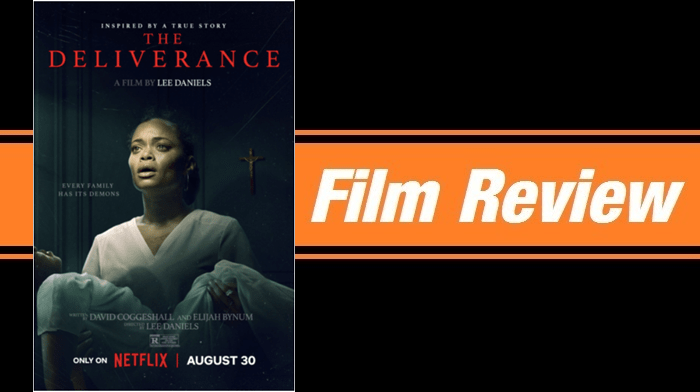
REVIEW: “The Deliverance” (2024)

Looking for a much-needed fresh start, a struggling single mother named Ebony Jackson (Andra Day) moves her three children to a new house in Pittsburgh. That opens up the story of “The Deliverance”, the latest film from director Lee Daniels that happens to be one of most baffling movies of the year. What starts out as a sincere dysfunctional family drama turns into a hokey supernatural horror thriller that erodes any chance of us taking it seriously.

The film is based on the real-life case of LaToya Ammons, an Indiana mother who claimed her house was haunted by demonic spirits who eventually possessed her children. Mercifully, that messy element of the story doesn’t kick into gear until the final act. We get several supernatural hints sprinkled throughout, but the bulk of the movie focuses on the family as they attempt to navigate their domestic conflicts and social challenges. That’s when “The Deliverance” is at its best.

Image Courtesy of Netflix

A solid cast brings the movie credibility. Andra Day plays Ebony, a well-meaning but troubled single mother whose life is a reflection of her own violent childhood. She recently moved into a house in Pittsburgh with her oldest son Nate (Caleb McLaughlin), middle daughter Shante (Demi Singleton), and youngest child Andre (Anthony B. Jenkins). Ebony’s struggle with her past unfortunately manifests itself in her own abuse against her children. And her resurfacing alcoholism only makes things worse.

Ebony’s overbearing mother Alberta (Glen Close) agrees to move in and help with the kids which adds a whole new layer to the story. To make things more stressful, they’re constantly under watch by the state and paid visits by a dogged social worker named Cynthia (Mo’Nique). Nate is routinely roughed up by a neighborhood bully, Shante desperately misses her father, and Andre is his happiest hanging out with his imaginary friend Trey. That’s a lot of drama, but through it Daniels, along with co-writers David Coggeshall and Elijah Bynum, give us a grounded portrait of a family in crisis.

Image Courtesy of Netflix

But looming is the story’s unfortunate horror component. It starts with strange odors from the basement and buzzing flies around its door. We get the usual loud bangs and doors mysteriously opening. Then there is Andre’s peculiar behavior including his concerning conversations with Trey. And what’s with the strange woman (Aunjanue Ellis-Taylor) who keeps showing up outside their house?

It all culminates in a trope-riddled final act that goes full Exorcist mode. Ebony faces demonic voices, body contortions, levitations, and even a stigmata as her motherly instincts kick in and she fights for the souls of her children. There seems to be some admirable allegorical intent. Sadly it’s all but lost as the movie turns into a generic copy-and-paste possession flick. The final 30 minutes end up clashing with nearly everything that came before it while wasting a fierce performance from Andra Day along the way. “The Deliverance” premieres on Netflix August 30th.

VERDICT – 2 STARS

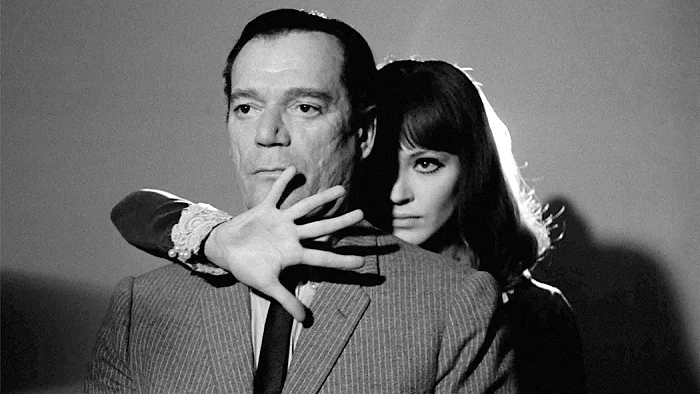
New on Home Video: “Alphaville” on 4K Ultra HD + Blu-Ray

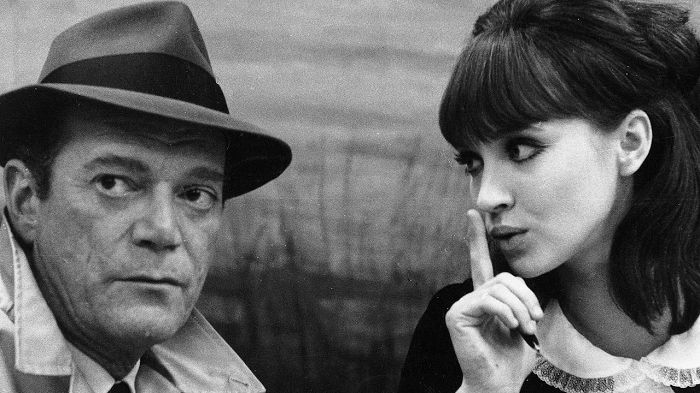
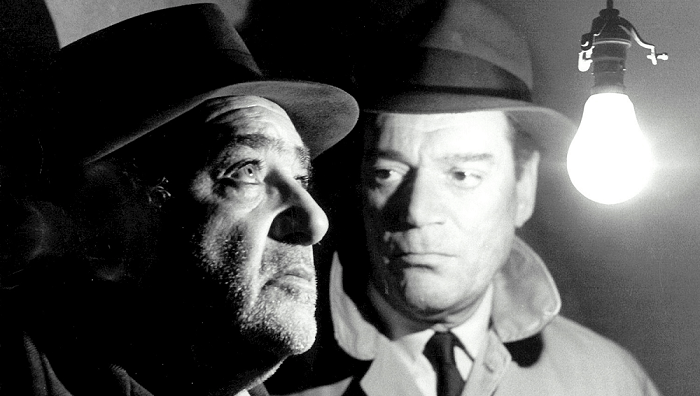
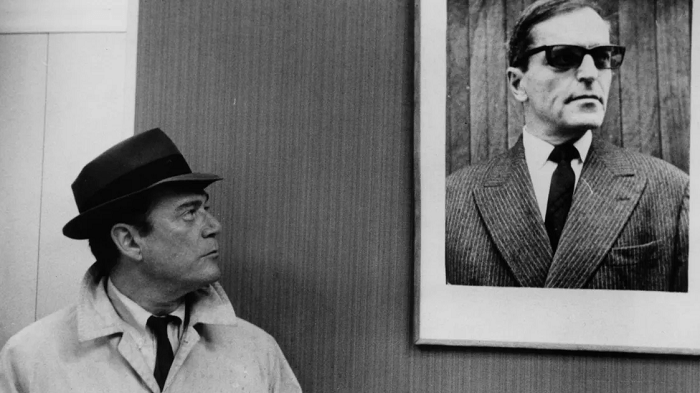
Kino Lorber Studio Classics is bringing Jean-Luc Godard’s influential classic “Alphaville” to home video in an exciting new 4K Ultra HD edition. It features an HDR/ Dolby Vision master by StudioCanal – from a 4K scan of the original camera negative. Mixing heady science-fiction with classic noir, “Alphaville” is considered a signature film of the French New Wave. It’s story is set within a futuristic and technocratic dystopia and stars the timeless Eddie Constantine and longtime Godard muse Anna Karina. This is a must-have for fans and collectors.

This 4K Ultra HD edition of “Alphaville” also includes the film on Blu-ray and will be available to purchase on August 27th. See below for a full synopsis and release information including special features.

About the Film:

Year: 1965

Runtime: 99 Minutes

Director: Jean-Luc Godard

Screenwriter: Jean-Luc Godard

Cast: Eddie Constantine, Anna Karina, Akim Tamiroff, Christ Lang, Valérie Boisgel, Jean-Louis Comolli, Michel Delahaye, Jean-André Fieschi, Jean-Pierre Léaud, László Szabó, Howard Vernon

Rating: NR

American secret agent Lemmy Caution (Eddie Constantine, “Attack of the Robots”) is sent to the distant space city of Alphaville where he must find a missing person and kill the inventor of fascist computer Alpha 60. Anna Karina (“The Nun”) and Akim Tamiroff (“Touch of Evil”) co-star in this cockeyed fusion of science-fiction with pulp characters and surrealist poetry. Godard’s irreverent journey to the mysterious Alphaville remains one of the least conventional films of all time. Beautifully shot in glorious black-and-white by Raoul Coutard (“Jules and Jim”, “First Name: Carmen”).

Special Features:

Bonus Content for “Alphaville” includes:

  • 2023 HDR/Dolby Vision Master by StudioCanal – From 4K Scan of the Original Camera Negative
  • Audio Commentary by Novelist and Critic Tim Lucas
  • Anna Karina Interview (4:31)
  • Colin McCabe Introduction (5:26)
  • Includes Both Original French and English Audio with Optional English Subtitles
  • Theatrical Trailer

REVIEW: “Strange Darling” (2024)

Hollywood has been serving up the serial killer movies as of late. In the last few weeks we’ve gotten NEON’s extraordinary “Longlegs”, the not nearly as good “Crescent City”, and M. Knight Shyamalan’s “Trap” which falls somewhere in between. Now we can add a new one to the bunch. “Strange Darling” is the sophomore effort from JT Mollner and it too has a serial killer as its centerpiece. But Mollner has his own unique recipe which separates his film from the others.

“Strange Darling” opens with a creepy scroll clearly inspired by Tobe Hooper’s 1974 classic “The Texas Chain Saw Massacre”. It informs us that the movie chronicles the last known series of murders committed by one of the country’s most prolific serial killers. From there the film is segmented into six chapters and topped off with an exclamation point epilogue. The film is set in rural Hood River County, Oregon and shot entirely on 35mm film by actor-turned-DP Giovanni Ribisi.

Image Courtesy of Magenta Light Studios

While his story may be chaptered, Mollner makes an interesting choice – he begins midway through with chapter 3. It kicks things off with a bang as we see a terrified young woman only known as the Lady (Willa Fitzgerald) speeding down a country road. Close behind is a man in a black pickup truck who the credits call the Demon (Kyle Gallner). Their high speed chase ends after the Demon shoots out her back glass causing her to crash. The Lady is able to crawl out of the wreckage and escape into the forest before the Demon arrives.

From there Mollner hops from one chapter to another, filling in bits of his story along the way. We learn the Lady and the Demon met at a bar and after some heavy drinking got a room together at a nearby motel. But both learn neither is who they seem to be and their twisted one-night-stand leads to the Lady fleeing with the Demon in pursuit. Other players factor in including an old hippie couple, Frederick (Ed Begley Jr.) and Genevieve (Barbara Hershey). They live in farmhouse deep in the forest where they share doomsday conspiracies and try to fend off imaginary sasquatches.

Image Courtesy of Magenta Light Studios

As Mollner darts from chapter to chapter, it’s tempting to view what he’s doing as pretentious and unnecessary. But just as his storytelling method begins to run out of gas, he hits us with a gonzo twist that sheds a new light on everything we have seen. Instantly his approach is seen as more than just a gimmick. Instead it feels like a well-devised stratagem that alters our focus. The approach also gives a new perspective to a number of critical character choices that propel the story towards its inevitably violent conclusion.

By the time the end credits roll it’s hard not to be wowed with what Mollner has crafted. Not only does he impress with his unconventional storytelling, but he also shows off an auteur’s control. His tone management and ability to build tension are crucial. But it’s clear he also possesses a love for genre and that gives ”Strange Darling” it’s gnarly edge. There are a couple of slow patches, but they dissolve once Mollner kicks things back into gear. And you’ll be glued to the screen as his twisted and often gruesome game of cat-and-mouse plays out. “Strange Darling” is in theaters now.

VERDICT – 4 STARS