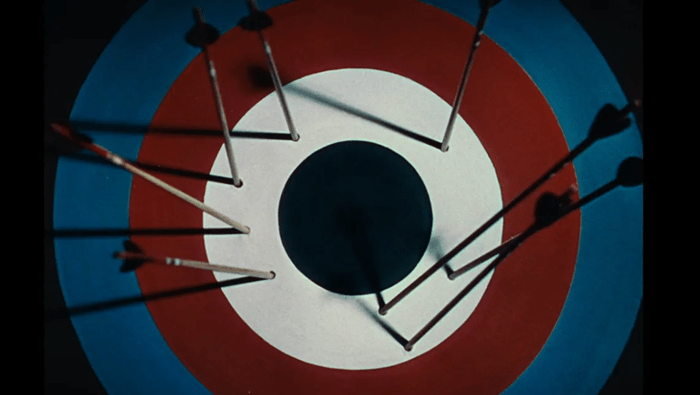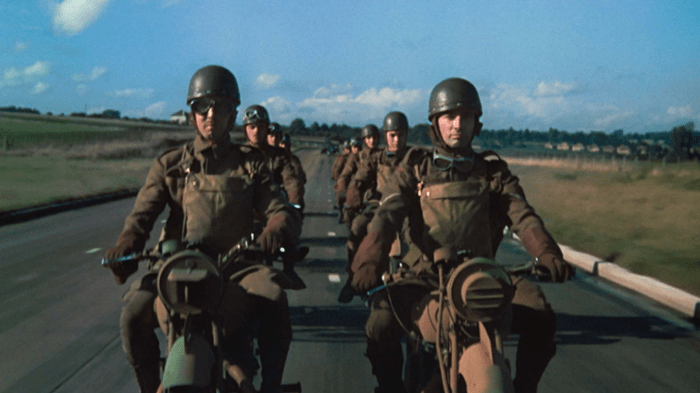
Warner Bros. Discovery Home Entertainment are bringing the Summer’s best movie to home video. “Furiosa: A Mad Max Saga”, the high-octane prequel to 2015’s stellar “Mad Max: Fury Road”, sees visionary filmmaker George Miller returning to the dystopian wasteland he first introduced us to in 1979. This exhilarating spin-off digs into the backstory of Furiosa, played in “Fury Road” by Charlize Theron and here by Anya Taylor-Joy.
This 4K Ultra HD Blu-ray edition with Digital Copy of “Furiosa: A Mad Max Saga” will be available for purchase on August 13th. See below for a full synopsis and release information including special features.
About the Film:
Year: 2024
Runtime: 148 Minutes
Director: George Miller
Screenwriter: George Miller, Nico Lathouris.
Cast: Anya Taylor-Joy, Chris Hemsworth, Tom Burke, Alyla Browne, Lachy Hulme, John Howard, George Shevtsov, Angus Sampson, Nathan Jones, Josh Helman, Charlee Fraser, Elsa Pataky, Dylan Adonis, Lee Perry, David Collins, Clarence Ryan, Matuse
Rating: R for sequences of strong violence, and grisly images
Anya Taylor-Joy and Chris Hemsworth star in Academy Award-winning mastermind George Miller’s “Furiosa: A Mad Max Saga”, the much-anticipated return to the iconic dystopian world he created more than 40 years ago with the seminal Mad Max films. Miller now turns the page again with an all-new original, standalone action adventure that will reveal the origins of the powerhouse character from the multiple Oscar-winning global smash “Mad Max: Fury Road”. The new feature from Warner Bros. Pictures is produced by Miller and his longtime partner, Oscar-nominated producer Doug Mitchell (“Mad Max: Fury Road”, “Babe”), under their Australian-based Kennedy Miller Mitchell banner.
As the world fell, young Furiosa (Taylor-Joy) is snatched from the Green Place of Many Mothers and falls into the hands of a great Biker Horde led by the Warlord Dementus (Hemsworth). Sweeping through the Wasteland, they come across the Citadel presided over by The Immortan Joe (Hulme). While the two Tyrants war for dominance, Furiosa must survive many trials as she puts together the means to find her way home.
Miller penned the script with “Mad Max: Fury Road” co-writer Nico Lathouris. Miller’s behind-the-scenes creative team includes first assistant director PJ Voeten and action designer Guy Norris, director of photography Simon Duggan (“Hacksaw Ridge”, “The Great Gatsby”), composer Tom Holkenborg, supervising sound editor Robert Mackenzie, editor Eliot Knapman, visual effects supervisor Andrew Jackson and supervising colorist Eric Whipp. The team also includes other longtime collaborators: production designer Colin Gibson, editor Margaret Sixel, production sound Ben Osmo, costume designer Jenny Beavan and hair and makeup designer Lesley Vanderwalt, each of whom won an Oscar for their work on “Mad Max: Fury Road”.
Special Features:
“Furiosa: A Mad Max Saga” Premium Digital Ownership, 4K UHD and Blu-ray contain the following special features:
Released on June 20, 1974, the rightly heralded “Chinatown” has firmly held its status as a classic for 50 years. Part old-fashioned film noir, part searing takedown of the ruling class and their institutions – “Chinatown” would go on to earn eleven Academy Award nominations, eleven BAFTA nominations, and nine Golden Globes nominations. But beyond all the accolades, what defines “Chinatown” most is how brilliantly it holds up today.
My last rewatch of “Chinatown” was inspired by Sight and Sound magazine’s most recent “Greatest Films of All Time” poll. For those unfamiliar with it, the poll has been taken every ten years since 1952. A select group of film critics and industry insiders are asked to vote for the ten greatest movies of all time. It has generally been a highly regarded poll partly due to the exclusivity of its voting body. But 2022 brought both controversy and skepticism, with S&S boosting its voters to 1,639 hand-picked participants (there were 145 in the 2002 poll; 846 in 2012). Naturally it resulted in some dramatic and head-scratching changes to list.
Here’s the thing, I didn’t revisit “Chinatown” because of its prominent place on the latest S&S list. No, instead it was because the landmark 1974 classic was booted from the list entirely. On the surface it seems like a mind-blowing omission and a real shock to the poll’s credibility (“The Godfather Part II”, “Rio Bravo”, “Raging Bull” and others also got the boot). So I fired up the film to see if something had changed. Nope, it still hits every mark and impressed me more this time than during any of my previous viewings. Sorry Sight and Sound. You got this one wrong.
Image Courtesy of Paramount Pictures
“Chinatown” comes from director Roman Polanski, a blemish that alone probably cost the film several S&S votes. But the pure quality of the movie itself stands on its own. As does the exceptional Oscar-winning screenplay from the late Robert Towne. As does the cool and charismatic lead performance from Jack Nicholson – arguably the best of his career. As does the stellar supporting work from Faye Dunaway and John Huston. As does the period set design and costumes. As does Jerry Goldsmith’s transporting score. I feel like I could go on and on.
Set in 1937 Los Angeles, Nicholson plays a private detective named J. J. “Jake” Gittes. One afternoon a woman (Diane Ladd) identifying herself as Evelyn Mulwray comes to his office. She suspects her husband, Hollis Mulwray (Darrell Zwerling), is having an affair and she wants Gittes to find out. He takes the job and upon investigating learns that Mulwray is the chief engineer at LA’s Department of Water and Power. Gittes starts tailing Mulwray, eventually snapping some photos of him with a young woman – photos that mysterious end up in the newspaper.
The next day Gittes is confronted by the real Evelyn Mulwray (Dunaway) who hits him with a lawsuit. Steamed that he’s been used by someone to disgrace Hollis Mulwray, Gittes and Evelyn cut a deal. He’ll find out who set up her husband, and she’ll drop the lawsuit. Seems simple enough, but of course it’s not. What started as an infidelity case soon gives way to lies, city corruption, and (as in most good noirs) murder. Even worse, there’s something far more sinister underneath it all.
For lovers of classic noirs, “Chinatown” fits snugly within the bygone genre and feels right at home next to the many films that undoubtedly inspired it. Yet Polanski and Towne add their own special seasoning which makes this more than just a copy-and-paste experience. Much of it is in the way Polanski plays with POV or how he shoots his sun-baked Los Angeles (DP John A. Alonzo received an Oscar nomination). But it’s also evident in Polanski’s willingness to tinker with genre conventions, to the point that we’re never certain where he’s taking us.
Image Courtesy of Paramount Pictures
Then you have Towne’s absorbing screenplay. It has a few signature noir movie twists with everything being revealed at the very end (Interestingly, Polanski added some grit to the ending, changing it up in a way that initially frustrated Towne. Later, Towne would admit that Polanski’s climactic finish was the right choice). But there is so much more to Towne’s dense and complex story. He offers a deep and compelling spin on the California Water War and all the political deception and chicanery that went with it.
Towne also does some incredible character work. Written specifically for Nicholson, Gittes is a cynical wisecracking sleuth but with an uncommon sense of decency at his core. Dunaway’s Evelyn is an elegant and high-class femme fatale who does her best to hide her fragility. And of course there’s the devilishly good John Huston playing Evelyn’s wealthy and powerful father, Noah Cross. Towne fleshes them all out through his crackling dialogue and his patient attention to detail. They all have roles to play within his winding story, but they are also given plenty of room to develop.
“Chinatown” spends a lot of time covering a lot of ground, yet it’s surprisingly efficient. There’s simply no wasted scenes, no meaningless lines, and no throwaway moments. And while the disgraced director’s post-“Chinatown” offenses undoubtedly hang over his work, there’s a richness to Polanski’s direction. And I love how he entrusts his audience to follow along. In the end, every facet of great filmmaking can be found in “Chinatown”. And I hate to say it, but it’s hard to take a “Greatest Films of All Time” list seriously that doesn’t include this 1974 gem.
Filmland 2024 is just around the corner and the Arkansas Cinema Society has just announced this year’s lineup of feature films and shorts. Filmland is an annual curated celebration of local, national, and international cinema that takes place in Little Rock, Arkansas. Past guests have included Richard Linklater, Jessica Chastain, Adam Driver, Michael Shannon, Joel Edgerton, Chloé Zhao, Will Forte, Ted Danson, David Arquette, Mary Steenburgen, David Gordon Green, and ACS co-founder Jeff Nichols among others.
This year’s Filmland begins Thursday, August 15th and continues through Sunday, August 18th. As usual, it will include feature films, blocks of short films, workshops, and numerous Q+A sessions with directors, writers, producers, and actors. Variety is serving as Filmland’s official Media Partner with chief film critic Peter Debruge hosting the inaugural Southern Storytellers Panel (more details below). All events will be held at the Arkansas Museum of Fine Arts – Performing Arts Theater.
Here is a rundown of the Filmland 2024 line-up so far, with more programming to be announced later this week….
Thursday – August 15th
(2:00 PM) “Voices of the Ogahpah” – “Voices of the Ogahpah” is a captivating journey into the heart of a resilient people whose history stretches back long before European colonization. This documentary delves deep into the origins, struggles, and triumphs of the Ogahpah, uncovering the layers of their unique culture. From their ancient traditions to their modern-day challenges. Voices of the Ogahpah is a living testament to the endurance and culture of a proud people. Through voices both past and present, this film brings to life the story of a people whose legacy continues to shape their identity and inspire those who hear their tale.
(3:30 PM) “The Peanut Butter Falcon” – A down-on-his-luck crab fisherman embarks on a journey to get a young man with Down syndrome to a professional wrestling school in rural North Carolina and away from the retirement home where he’s lived for the past two and a half years. Stars Shia LaBeouf, Zack Gottsagen, Dakota Johnson, John Hawkes, Jon Bernthal, and Thomas Haden Church.
(7:00 PM) “Los Frikis” – Inspired by true events, Los Frikis is a powerful coming-of-age story set in early 90s Cuba, centering around 18-year-old Gustavo who idolizes his older brother Paco and his punk, “Frikis” bandmates. When word reaches the Frikis of a potential reprieve from the effects of the economic crisis, they do the now unthinkable: deliberately inject themselves with HIV to live at a government-run treatment home. It’s there that these teenagers create their own utopia full of joy, rock’n’roll, and freedom.
Friday – August 16th
(12:30 PM) “I’ll Be There” – As the youngest of five children, Grace’s blended family was never easy to explain to her friends. As soon as graduation came around, she left the confusion and rawness of her home life behind. When the film finds her more than a decade later, she has built a new life for herself in Los Angeles and cemented her place as the outsider of the family. But her new life is upended when she learns that her older brother AJ has cancer and her now estranged family comes to town to support him. The film is set during the days after Michael Jackson’s death in the Los Angeles hospital that is next door to the L.A. Coroner’s Office, where the King of Pop was autopsied. As we unravel the family’s traumatic past, the pivotal role AJ played as Grace’s protector, and the chasm that now exists between them as adults, Grace comes to terms with the ghosts of her past and her former role as the family’s “Golden Child.” Michael Jackson played an important role in the siblings’ childhoods and the irony of the timing isn’t lost on Grace. As she tries to reconcile her complicated relationships with her siblings, she’s also saying goodbye to the icon who was the soundtrack to that chapter of her life.
(2:30 PM) “All Happy Families” – Haroula Rose’s charming dramedy stars How I Met Your Mother’s Josh Radnor as Graham, an actor and writer in a slump and still waiting for his big break while his hugely successful brother Will (Rob Huebel) stars in his own sitcom. On the weekend before new tenant Dana (Chandra Russell) is due to move into their childhood home, the siblings and their parents find themselves unexpectedly under the same roof again, where every corner reveals secrets and surprises and the family airs out long-held resentments. This slice-of-life film features a terrific ensemble cast, including the pitch-perfect Becky Ann Baker as Sue, the matriarch who’s tired of having to hold everything together and John Ashton as Roy, a grump who needs to change his ways but doesn’t seem capable of doing so. With a heartfelt and witty script co-written by Coburn Goss, Rose delicately weaves a deeply relatable portrait of family dysfunction, with all of its delightfully entertaining mess coming to the surface over the course of one eventful and unforgettable weekend.
(5:00 PM) “I Do This for a Living” – Jeff, a mechanic and southern family man, navigating the life of his recovering addict son who starts a relationship with a trans girl.
(7:00 PM) “Daddio” – New York City. JFK airport. A young woman jumps into the backseat of a yellow taxi, the cabbie throws the vehicle into drive as the two head out into the night toward Manhattan, striking up the most unexpected conversation resulting in a single, epic remarkable journey. Stars Sean Penn and Dakota Johnson.
Saturday – August 17th
(10:45 AM) Student Shorts: Block 1 – The first block of student shorts features the work of filmmakers Jonathan Michael Peterson, Janie Gentry, Aidan Kolokithas, Sophie Barnes, Paula Blanco Perez, Vita Long, and Ren Tsukamoto.
(12:30 PM) Student Shorts: Block 2 – The second block of student shorts features the work of filmmakers Brinson Davenport, Lexie Mosby, Nathaly M. Moreno, Christina Waterman, and Michelle Burney.
(2:30 PM) “Rise Above” – Rise Above is the riveting and potent story of an uneducated, poor, black and quietly gentle young boy who grew up in the ghetto of Augusta, GA (The Sandhills) and defied the odds of what was surely a preordained destiny of poverty for him. RISE ABOVE is the story of how a young boy- Carl Jackson, who dropped out of school at the age of ten to become the head of his household and provider for a family of 11, became an icon in the world of Golf: Longest serving Caddie from the Masters/54 years. the first Black man (non-pro) to golf at Augusta National. Black Golf Hall of Fame, Keys To The City of Augusta and Caddie Hall of Fame.
Sunday – August 18th
(10:45 AM) Pro Shorts: Block 1 – The first block of pro shorts features the work of filmmakers Kathryn Francis Tucker, Clayton Henderson, Cole Borgstadt, Alexander Jeffery and Chris Alan Evans, Hannah Alline, John Backstrom, and Brett Helms.
(1:30 PM) Pro Shorts: Block 2 – The second block of pro shorts features the work of filmmakers Ethan Edwards, Russell Sharman and Laura Shatkus, Emmanuel Joel Rodriguez, Chris Churchill, and Johnnie Brannon.
(3:45 PM) Variety’s Southern Storytellers Panel – Variety’s Chief Film Critic Peter Debruge will host the inaugural Southern Storytellers Panel, presented by Variety, with Jeff Nichols (The Bikeriders), Michael Schwartz (The Peanut Butter Falcon, Los Frikis), Christy Hall (Daddio, It Ends With Us), Clint Bentley (Sing Sing, Jockey, Train Dreams) and Monique Walton (Sing Sing, Bull, Hollow Tree).
(6:30 PM) “Sing Sing” – Divine G, imprisoned at Sing Sing for a crime he didn’t commit, finds purpose by acting in a theatre group alongside other incarcerated men in this story of resilience, humanity, and the transformative power of art. Stars Colman Domingo, Paul Raci, Clarence “Divine Eye” Maclin, and Sean San José.
Zack Snyder’s newly released two-part director’s cut for his sprawling original space epic “Rebel Moon” has finally brought the filmmaker’s true vision to the screen. It was made possible through a partnership with Netflix which also came with a stipulation – Snyder would have to first make and release trimmed down PG-13 versions of the films. He agreed and the two parts came out to solid viewership numbers but a harsh reception from critics.
For the record, the PG-13 cuts were entertaining but lacking in ways that made it evident they were lesser versions of something much bigger. Now Snyder and Netflix have released his director’s cuts. Part One (you can read my review HERE) essentially covered the same ground but expanded the world, gave several characters more weight, and did a better job building up what was to come.
Image Courtesy of Netflix
And that leads to Part Two which is titled “Curse of Forgiveness”. With a runtime of nearly three hours, the film adds 50 minutes of new footage not seen in the earlier cut. As with Part One, the extra time and attention gives this film some much-needed weight while adding more layers to Snyder’s meticulously imagined universe. But here the director’s cut pays even bigger dividends. Part Two is a significant step up from its pruned PG-13 iteration and gives “Rebel Moon” the feeling of completion (sort of – more on that in a second) that its shorter form was missing.
“Curse of Forgiveness” makes several key improvements, the biggest being its efforts to build up its characters, and more specifically their relationships, leading up to the Kurosawa-inspired Battle of Veldt. It all begins with the story’s central protagonist, Kora (Sofia Boutella) returning to her small farming village with fellow local Gunnar (Michiel Huisman) and a motley crew of warriors to defend their land against the ruthless Admiral Atticus Noble (a suitably vile Ed Skrein) and his oppressive Imperium forces.
Veldt proves to be crucial to the story of “Rebel Moon”, but its deeper significance struggled to resonate in the earlier films. Part Two of the director’s cut does a substantially better job conveying what the small village represents and why it’s worth fighting for. Snyder takes his time, using a series of flashbacks to share detailed backstories of Titus (Djimon Hounsou), Nemesis (Bae Doona), Tarak (Staz Nair), and Milius (Elise Duffy), each revealing lives brutally altered by the Imperium. Even more focus is put on the warriors assimilating into the village. As relationships are forged, the stakes are raised and the inevitable losses hit much harder.
As for their inevitable showdown with Noble and his army, it’s clear that Snyder was let off his PG-13 leash. As a result he creates a more intense, much bloodier, and surprisingly impactful battle full of stunning imagery and fierce combat that is as gruesome as it is thrilling. It’s brought to life through a jaw-dropping mix of practical effects and digital artistry. Of course it’s all woven together by Snyder’s strikingly distinct and proudly indulgent style. That alone will likely push away the filmmaker’s more rabid detractors. But for everyone else, the violent operatic climax is something to behold.
Image Courtesy of Netflix
In “Curse of Forgiveness”, Boutella’s Kora remains a worthy protagonist. Skrein’s Admiral Noble is even more fascinating as the big villain. And Jimmy (voiced by Anthony Hopkins) has evolved into one of the film’s most compelling characters. They and many others thrive in the vast textured universe that Snyder is building. That said, Part Two does leave a lot unresolved. It’s clearly pointing towards future movies, but who knows when (or if) they will come. So we’re left to wonder and wait. That’s not necessarily a bad thing, especially if the filmmaker has a roadmap in place. So far Snyder has been quiet on when the “Rebel Moon” story will continue. I hope it’s soon.
While I somewhat liked the PG-13 versions, they were too barebones to really get their hooks in me. The expanded director’s cuts are a different story. They may stumble on occasions, especially when Snyder pushes his R-rated envelope a little too far. But they clearly offer a better expression of the filmmaker’s vision. It’s especially true with “Curse of Forgiveness”. Part Two is the culmination of Snyder’s visionary efforts. This time everything feels earned – the agony, the fury, the passion, the sacrifice. But don’t overthink it. Above all else, this is straightforward and old-fashioned entertainment. It’s an ambitious action-packed space opera that delivers everything its filmmaker promised. It just took the director’s cuts to fully realize it. Both parts of “Rebel Moon” are now streaming on Netflix.
The genesis of Zack Snyder’s epic space opera “Rebel Moon” dates all the way back to 1997. In the years that followed, Snyder would pitch his idea to LucasFilm as a new Star Wars installment. Later he attempted to turn it into a video game. And even later, he considered developing it as a television series. He would eventually make a deal with Netflix, but it came with an agreement that (so far) has led to some pretty mixed returns.
That agreement was that Snyder would be given the creative freedom to fully realize his vision for “Rebel Moon”. It would come in the form of director’s cuts that would offer longer and R-rated dives into his world and its rich mythology. But in order to get the green light, Snyder had to agree to also make a neutered PG-13 version in hopes of it having a broader blockbuster appeal. The two-part PG-13 cut earned big viewership numbers for Netflix but mostly bad reviews from critics.
To be honest, reading reactions to Zack Snyder movies can be a challenge. Viewers are often broken into two groups – the Snyder loyalists who adore anything he does regardless of its quality and the poorly veiled haters who bristle at the mere mention of his name and are as feral in their disdain for his movies as any doting Snyder fanboy. After weeding out all of the noise, the PG-13 product turned out to be entertaining. But it was clearly just a slice of something bigger and potentially better.
Image Courtesy of Netflix
Part One of Snyder’s director’s cut adds 70 minutes and gets a new title. “Chalice of Blood” essentially covers the same ground as its significantly shorter PG-13 version, but adds new layers to the overarching story, recontextualizes several character arcs, and gives the film a darker edge through its deeper world-building and amped-up brutality. Also, Snyder’s influences are clearer and better utilized. He’s made it known that “Star Wars”, “Seven Samurai”, and “Heavy Metal” magazine were among his many inspirations. Here they’re more obvious yet better realized.
Among the strengths of “Chalice of Blood” is how it sheds much needed light on several characters and their stories. Chief among them is Jimmy (voiced by the great Anthony Hopkins), one of the last remaining members of a race of sentient robotic knights. In the shortened film version, very little about his character made sense. In this cut we see his journey of self-discovery as he searches for a new sense of purpose. We get to witness the evolution of Jimmy leading to him becoming one of the young franchise’s most compelling players.
Another character to benefit from more attention is Aris (Sky Yang), a young soldier with the Imperium who sides with the villagers on Veldt. We’re shown a side of his story that adds much-needed context to the character’s actions. As for the film’s big baddie, the sadistic Admiral Atticus Noble (Ed Skrein), he’s seen as even more cold-blooded in his psychopathic loyalty to the Motherworld. As for the main protagonist, Kora (Sofia Boutella), we get a clearer understanding of the pain that haunts yet drives her. It’s mostly thanks to the flashbacks which are better realized this time around.
Image Courtesy of Netflix
Despite a runtime of 3 hours and 24 minutes, there is still that lingering sense that Snyder is trying to cover too much ground. It still feels as if there is so much more to be told. For example, the motivations for nearly every warrior who joins Kora’s group could still use more explanation. Their backstories are alluded to more than explored, leaving them too thinly sketched. Still, Djimon Hounsou, Bae Doona, and Staz Nair all make compelling heroes even if their individual backgrounds get shortchanged.
And of course the action gets a welcomed makeover via the movie’s bigger and bloodier set pieces. Those prone to push back on Snyder’s distinct style are almost certain to roll their eyes at the elaborate canvases he creates. But his visual flair fits these movies and could even be called refreshing. Take his signature use of slow-motion. At a time when so many action scenes are hacked to the point of being indecipherable, Snyder’s technique is satisfying its own stylishly indulgent way. And this time there are no constraints with the violence. It’s fittingly graphic, sometimes excessive, but often thrilling.
It’s easy to see how the director’s cut of “Rebel Moon” provides a more fully formed expression of Zack Snyder’s ambitious vision. The visuals are more eye-popping, certain scenes have more impact, and the overall stakes are higher. A few nagging problems from the PG-13 cut remains. And things occasionally veer into the gratuitous, whether it’s a gush of digital blood or a superfluous early sex scene. But for the most part Snyder keeps his focus on developing this vibrant and diverse world, this time taking us beyond a mere sample size and offering us something more established and engaging. The “Rebel Moon” director’s cuts are now streaming on Netflix.
M. Night Shyamalan’s new thriller “Trap” finds itself in an unenviable position. It’s releasing at a time that immediately puts it against box office juggernauts like the immensely fun disaster romp “Twisters” and the MCU’s fan-pandering cash cow “Deadpool & Wolverine”. But hopefully Shyamalan’s latest can find an audience because it offers more fresh and fun entertainment from a filmmaker who plays with big original ideas during a time when Hollywood seems short on them.
Shyamalan’s filmography is littered with several big hits and a handful of misses. But the writer-director nearly always offers something distinctly his own. Not every movie of his lands, but when they do (and they often do, to various degrees) he leaves you feeling as if you’ve been treated to something unlike anything else showing at your local multiplex. “Trap” continues that trend while at the same time falling somewhere between the filmmaker’s greater and lesser movies.
The film stars Josh Hartnett whose big screen resurgence really kicked into gear last year with Guy Ritchie’s rambunctious “Operation Fortune: Ruse de Guerre” and of course Christopher Nolan’s Academy Award winning epic “Oppenheimer”. To no surprise, “Trap” is a much different movie but Hartnett is equally good in it. He plays Cooper, a seemingly ordinary dad who surprises his daughter Riley (Ariel Donoghue) with concert tickets to see her favorite pop superstar, Lady Raven (Saleka Shyamalan). We’re talking legitimate ‘Father of the Year’ stuff, right?
Image Courtesy of Warner Bros. Pictures
Set in Philadelphia, the story picks up with Cooper and Riley on their way to the arena. As they ride, Cooper enjoys his daughter’s Swiftie-like enthusiasm which only intensifies once they arrive and find their seats. Before long 30,000 screaming girls and their chaperone parents are greeted by Lady Raven and the massive stage show begins.
But in one of the film’s wackier yet enjoyable turns, the entire concert is revealed to be a trap set by police to apprehend a brutal serial killer known as the Butcher. Local law enforcement and federal agents by the hundreds converge on the arena and begin setting up a perimeter. Led by a seasoned profiler, Dr. Grant (Hayley Mills), the authorities cover every exit and start scoping the crowd for their suspect. And to make things crazier, we learn in the first 15 minutes or so that Cooper is the Butcher. Scratch that ‘Father of the Year’ bid.
From there a big chunk of the story focuses on the crazy chess match between Cooper and the cops. They don’t know The Butcher’s real identity but they know he’s at the concert. Cooper discovers their trap and has to find a way to escape without being exposed. And all while hiding it from his daughter. It leads to several moments of real tension, some unexpected dark humor, and other scenes that are utterly preposterous.
Image Courtesy of Warner Bros. Pictures
The cat-and-mouse game in the arena is the movie at its most diverting. But it’s somewhat shortchanged by Shyamalan’s heavy promotion of his daughter’s music (Saleka composed 14 original songs for the movie). The concert setting is brilliantly captured and strikingly authentic. And Saleka is certainly a talented musician. But Shyamalan’s focus on her ‘show within the show’ eats up time that could have went towards making things more thrilling and plausible. And later, both Saleka and the movie struggles once he thrusts her into an acting role.
I’m betting most of the criticisms with revolve around the movie’s final 30 minutes. No spoilers here, but Shyamalan overextends his story into some surprisingly conventional directions. And as a thriller, the further it goes the less effective it becomes. To its credit, “Trap” has an undeniably delightful Hitchcockian flavor and Josh Hartnett is lights-out fantastic in the film’s maniacal lead role. It’s the scattershot script that holds the film back.
“Trap” doesn’t fall among Shyamalan’s best works largely because its story hinges on too many glaring conveniences, contrivances, and confounding character actions. At the same time, maybe it unfair to expect each of his movies to be another “Signs”, “The Sixth Sense”, or “Split”. “Trap” is best received as a straight popcorn movie – one full of big ideas that it can’t quite see through to the end. That proved to be more than enough to hold my attention, even if it left me wanting something more. “Trap” opens today exclusively in theaters.