The 50 Best Films of the Decade (So Far) #30-#21

50 Best

The decade is a little over half way gone so I thought it would be fun to look back at the first five years and see what movies have stood out the most. It is also a good chance to see how the films stand up against each other as well as how they have stood up with the passing of time. Today we are looking at #30 – #21. Let’s get going…

#30 – “Moonrise Kingdom” (2012)

MOONRISEOh how I love Wes Anderson movies. When you watch one there is no denying he is the man behind what you’re seeing. “Moonrise Kingdom” is a true gem in a filmography filled with gems. So many of Anderson’s favorites fill out the wonderful cast and the humor is the perfect measure of silly and quirky. And as with every Anderson picture there is a beautiful, warm heart at the center.

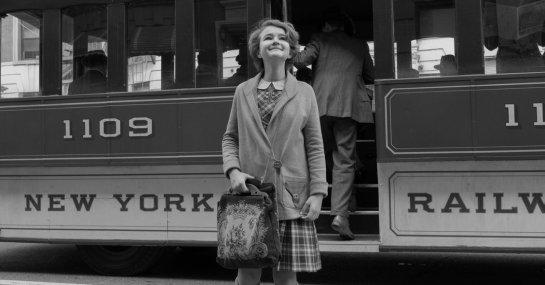
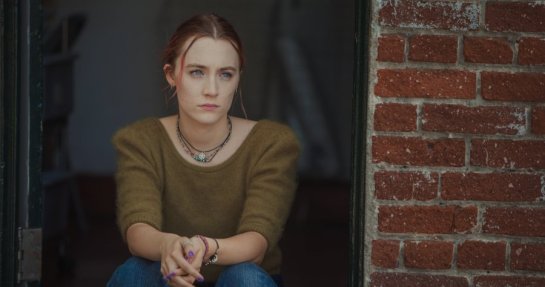
#29 – “Brooklyn” (2015)

BROOKLYN

I love that a movie which is so simple can also be so satisfying. “Brooklyn” is such a warm and sweet romantic drama, but I think many are content to leave it there. For me the film also tells the story of a young woman breaking free to take control of her own life. Saoirse Ronan gives the performance of her career and proves herself to be one of the best young actresses in the business.

#28 – “A Separation” (2011)

SEPARATION

Writer and director Asghar Farhadi won an Academy Award for his potent drama “A Separation”. As with his other work, Farhadi dives deep into the emotions of his characters and meticulously reveals each layer of moral and psychological complexity. And he goes even further by thoughtfully examining an assortment of other relevant social issues. This is a gem.

#27 – “Nebraska” (2013)

NEBRASKA

One of the best surprises to come out of 2013 was Alexander Payne’s “Nebraska”. It succeeds in being one-half road trip comedy and one-half family drama. And at its core is the wonderfully ornery Bruce Dern. He’s surly but also sympathetic especially when surrounded by his less than loving family. Shot in gorgeous black-and-white, “Nebraska” looks and feels like classic cinema. It can also be laugh-out-loud hilarious.

#26 – “The Way, Way Back” (2013)

WAY WAY

I remember having absolutely no expectations for “The Way, Way Back”. Instead I found it to be one of the most pleasant surprises of the decade. Delightfully warm and unexpectedly funny, the film hits many of the normal teen movie notes while never feeling redundant. And then there is the hysterical, show-stealing performance from Sam Rockwell.

#25 – “Sicario” (2015)

SICARIO

It didn’t take much to sell me on the border crime thriller “Sicario”. Denis Villenueve directing. Roger Deakins handling cinematography. Emily Blunt, Benicio del Toro, and Josh Brolin as the stars. All of those ingredients proved to equal an incredibly intense thriller. Blunt is excellent but it is Del Toro who keeps you glued to the screen.

#24 – “Winter’s Bone” (2010)

WINTER

Before “The Hunger Games” and before her steady run of David O. Russell collaborations Jennifer Lawrence showed her acting chops in the cold, dark “Winter’s Bone”. This small rural thriller gave Lawrence the opportunity to showcase her immense talent, but it also gave us a John Hawkes portrayal of the scariest character of the decade.

#23 – “The Intouchables” (2012)

INTOUCHABLES

Olivier Nikache and Eric Toledano could have really dropped the ball with “The Intouchables”. Instead they develop two very different characters and a central relationship that is easy to invest in. Omar Sy and Francois Cluzet have a wonderful chemistry and the script utilizes it perfectly.

#22 – “Beasts of the Southern Wild” (2012)

BEASTS

I love it when movies come out of nowhere and blow me away. That is exactly what happened with Behn Zeitlin’s drama “Beasts of the Southern Wild”. Set in the Louisiana bayou, “Beasts” speaks of a poverty that may seem other-wordly to many, but through the eyes of a six-year old dreamer named Hushpuppy, it is simply home. A moving film that manages to be uplifting and deeply depressing at the same time.

#21 – “The Hunt” (2013)

HUNT

In “The Hunt” Thomas Vinterberg pulls no punches in asking a host of thought-provoking questions regarding modern society. Mass hysteria, false judgements, gossip – these are just some of the ills at the center of Vinterberg’s story. Mads Mikkelsen gives an Oscar-worthy performance in a film that skillfully deals with troubling but important subject matter. Brilliant in every regard.

That’s it for now. Follow along and look for #20-#11 which will be coming just around the corner. Also be sure to share your thoughts in the comments section below. I would love to hear what you think of the picks so far.

The 50 Best Films of the Decade (So Far) #40 – 31

50 Best

The decade is a little over half way gone so I thought it would be fun to look back at the first five years and see what movies have stood out the most. It is also a good chance to see how the films stand up against each other as well as how they have stood up with the passing of time. Today we are starting off with #40 – #31. Let’s get going…

#40 – “Hugo” (2011)

HUGO

It still breaks my heart that Martin Scorsese’s heartwarming look at childhood and the beautiful history of cinema didn’t get the box office attention it deserved. I love “Hugo” and it left the same warm impression after a recent viewing. Scorsese stepped outside of his normal box to create a magical experience both visually and emotionally.

#39 – “Two Days, One Night” (2014)

TWO DAYS

This is the second appearance of the Dardenne brothers on this list. This time we get the same honest and grounded look at a very personal circumstance. Marion Cotillard delivers a quiet, natural, stripped down performance that conveys a plethora of emotions and never hits a false note. The same could be said for the entire film.

#38 – “The Look of Silence” (2015)

LOOK OF SILENECE

It is hard not to be shaken by Joshua Oppenheimer’s exceptional documentary “The Look of Silence”. This is the companion piece to his equally piercing “The Act of Killing”, but this time he looks at the brutal Indonesian Killing of 1965-1966 through much more personal perspectives. The film literally left me speechless. Powerful filmmaking.

#37 – “Force Majeure” (2014)

force majeure review

Underneath the lovely family exterior of “Force Majeure” lies a rotten, acidic core that reveals itself to us over the two hours we spend with a Swedish family on a ski vacation. “Force Majeure” isn’t a comfortable film to sit through, but the combustible drama builds and builds. Ultimately I couldn’t tear myself away.

#36 – “The Ghost Writer” (2010)

GHOST

I was a huge fan of Roman Polanski’s “The Ghost Writer” when it hit theaters in 2010. Sadly it didn’t get a lot of attention. Now several years have passed and the film still holds up well. It’s a hard movie to categorize. It is a political drama but it is also a low-key yet exciting thriller. Lots of mystery, a great script, and a wonderful cast.

#35 – “True Grit” (2010)

GRIT

When the Coen brothers do anything I’m intrigued, but the Coen brothers doing a remake of John Wayne’s “True Grit” was exciting beyond measure. The results didn’t disappoint. The new version beats the old in every possible category. Jeff Bridges is a blast and a young Hailee Steinfeld almost steals the show.

#34 – “Certified Copy” (2011)

CERTIFIED

Who knew watching a British author roam around Tuscany talking with a French antiques dealer could be so engrossing? When Abbas Kiarostami is at the helm it’s pretty easy. It also doesn’t hurt to have Juliette Binoche (one of the best working actresses) in the lead. This veiled, winding story is fed to us in small cryptic pieces and putting it all together is most satisfying.

#33 – “Another Year” (2010)

ANOTHER YEAR

“Another Year” is a talky British drama written and directed by Mike Leigh and I mean that in a very good way. Leigh shares his dialogue-heavy story in the most natural of ways. Every conversation or argument comes from authentic places. The film is filled with unhappy people except the two at the core. They are our anchor through these turbulent but mesmerizing dramatic waters.

#32 – “The Past” (2013)

PAST

Asghar Farhadi is one of my favorite working directors and this isn’t the only time he will make this list. “The Past” shows every reason why he is a treasure. No one handles fragile or damaged relationships like Farhadi. Here his dialogue cuts his characters open to reveal the deep, personal scars left behind by their pasts. It’s mesmerizing drama.

#31 – “Room” (2015)

'Room' is a journey out of darkness, director says

This year the Best Actress Oscar buzz has centered around Brie Larson and her devastating performance in “Room”. The attention is definitely deserved. Larson and young Jacob Tremblay give us an incredibly strong mother/son relationship that drives this entire film. The concept is captivating enough, but it’s this beautifully realized relationship that makes “Room” such a heart-wrenching yet emotionally satisfying experience.

That’s it for now. Follow along and look for #30-#21 tomorrow. Also be sure to share your thoughts in the comments section below. I would to hear where you agree or disagree with my picks.

The 50 Best Films of the Decade (So Far) #50 – #41

50 Best

The decade is a little over half way gone so I thought it would be fun to look back at the first five years and see what movies have stood out the most. It is also a good chance to see how the films stand up against each other as well as how they have stood up with the passing of time. Today we are starting off with #50 – #41. Let’s get going…

#50 – “Frances Ha” (2013)

FRANCES

The one film that perfectly encapsulates all that makes a Noah Baumbach movie special can be found in “Frances Ha”. Deliciously quirky and slyly intelligent, “Frances Ha” features Baumbach’s muse Greta Gerwig at her absolute best. Stylish black and white cinematography is an added treat.

#49 – “Contagion” (2011)

CONTAGION

I’m a bit of a sucker for medical/virus thrillers and “Contagion” is one of my favorites. Dismissed by many as flimsy, I immediately was swept away by director Steven Soderbergh’s nervous, paranoid take on a worldwide viral outbreak. A great ensemble cast and truly intense pacing. “Contagion” is an underappreciated film.

#48 – “Calvary” (2014)

CALVARY

There is such an intensity boiling under the surface of every single scene of “Calvary”. John Michael McDonagh writes and directs this story of a troubled priest (played perfectly by the always magnificent Brendan Gleeson) and the dark situation he finds himself in. A wonderful supporting cast flesh out an assortment of despicable characters at the core of this uncomfortable but hypnotic picture.

#47 – “127 Hours” (2010)

127 hours

The incredible true story of Aron Ralston was ripe for a movie adaptation but only with the right people involved. Danny Boyle and James Franco proved to be the right people. Franco gives a truly eye-opening performance and Boyle’s energetic visual style is a perfect fit. Also features a wonderful soundtrack.

#46 – “Alamar” (2010)

ALAMAR

With its small 73 minute package, “Alamar (To the Sea)” says more about a father/son relationship than most ‘bigger’ films ever accomplish. That relationship mixed with the fascinating depiction of life on the Banco Chinchorro coral reef makes for a truly beautiful experience. “Alamar” didn’t get much attention but it still deserves an audience.

#45 – “The Avengers” (2012)

AVENGERS

Speaking of bigger movies, there were so many ways “The Avengers” could have failed. It was the project that the entire Marvel Cinematic Universe was heading towards. With so many links to other films and so many characters to juggle, this could have been a disaster. Instead Joss Whedon created an incredibly fun superhero concoction that was better than most people ever expected.

#44 – “The Kid with a Bike” (2012)

KID BIKE

Jean-Pierre and Luc Dardenne have established themselves as naturalistic filmmakers who examine the human experience from the most honest of perspectives. “The Kid with a Bike” is a brilliant example. It’s a story of a troubled 12-year old boy who is let down by the most important people in his life. But grace comes from an unexpected source. It’s a heartbreaking yet beautiful drama.

#43 – “Phoenix” (2015)

PHOENIX

While watching “Phoenix” you can’t help but notice the absurdity of what you’re seeing. Yet at the same time the story is so keenly written and heart-shattering that you can’t help but invest in it. This stinging German drama features three characters brought to life through three superb performances. And then there is the crushing ending – one of the most powerful I have seen in years.

#42 – “Skyfall” (2012)

SKYFALL

Daniel Craig brought me into the James Bond franchise. 007’s adventures became important to me starting with “Casino Royale”, but “Skyfall” may be his very best so far. Everything about it hit its mark. Great action, fun villain, and a delightful use of its many entertaining side characters. This was Bond done right.

#41 – “Beasts of No Nation” (2015)

BEASTS

Great movies aren’t always easy to watch especially when dealing with disturbing subject matter. Such is the case with Cary Fukunaga’s intense “Beasts of No Nation”. It is a sometimes brutal exploration of child soldiering that visualizes it through the eyes of a young boy. Idris Elba gives the best performance of his career and young Abraham Attah is something to behold.

That’s it for now. Follow along and look for #40-#31 tomorrow. And be sure to share your thoughts in the comments section below.

REVIEW: “The Pianist”

PIANIST poster

One of the things that fascinates me about “The Pianist” is how deeply connected it is to the true life experiences of its director. Roman Polanski has had a colorful life – one which has been severely tarnished by some deplorable behavior. But his childhood is an incredible story of horror, loss, and survival. Polanski and his family were crammed into the Kraków Ghetto along with 15,000 other Jews during the Nazi’s ‘purification’ of Poland.

As a young boy he watched as his father was marched away to a Nazi work camp. His mother was shipped to Auschwitz where she was among the 1.1 million Jews murdered there. Young Polanski managed to escape the Ghetto and survived by living in a barn until the war ended. He would be reunited with his father, but the scars left from the Holocaust would never leave and they heavily influenced much of what we see in “The Pianist”.

The film is directly based on the autobiography of Polish-Jewish pianist Wladyslaw Szpilman. Like Polanski, Szpilman was seperated from his family during the Nazi occupation and found himself desperately struggling to survive. Adrien Brody plays Szpilman and gives a truly revelatory performance that garnered critical praise and earned him an Academy Award. He is in nearly every frame and the depth and range of emotion he manages to convey is staggering.

Pianist1

We first meet Wladyslaw Szpilman in 1939 where he plays piano for a Warsaw radio station. He is there when the Nazis invade and eventually takeover Warsaw. Like many at the time, Wladyslaw and his family at first underestimate the gravity of what has happened, but as the Nazi grip tightens the reality becomes clear. Jews are stripped of their jobs and forced from their homes into the overcrowded Warsaw Ghetto. Thousands of Jews die of starvation, disease, and from all sorts of Nazi brutality.

The Szpilman’s try to find normalcy among the hardships but things only get worse. They are among the thousands of Jew rounded up to be sent to the Treblinka extermination camp. An unexpected act finds Wladyslaw seperated from his family and on his own. The story becomes about survival against the grossest inhumanity.  But at the same time Polanski and writer Ronald Harwood go to great lengths to show actual humanity in many unexpected forms.

Pianist2

One of the most a compelling characteristics of Wladyslaw is that he is no hero. He is no soldier filled with courage and fight. It shines so brightly through Brody’s performance. The frailty and desperation of his character is seen clearer through each new stage of adversity he faces. But even more we see it through his means of survival. There is nothing within Wladyslaw, aside from his will to live, that keeps him alive. Instead it is the dangerous and sacrificial acts of people he meets that helps him along. Every step of the way Wladyslaw’s survival hinges on the compassion and heroism of others. It is an important story thread and the only true glimmers of light in an otherwise dark story.

Everything about “The Pianist” sets it apart as a substantial work and not enough can be said about Polanski’s obvious passion for his subject. Consider the stunning work of his cinematographer Pawel Edelman. He never wastes a scene and many are cleverly shot from Wladyslaw’s perspective. Others wonderfully emphasize the film’s brilliant production design. For Polanski accurately recreating the city was a priority as was putting a  special emphasis on detail. Whether it’s in the small space of an apartment or the broader images of a devastated city. The keen detail stands out.

PIANIST3

Polanski’s own experiences allow him to bring a steady seriousness, sincerity, and reverence to “The Pianist”. His vision isn’t hazed by lack of knowledge or understanding. But at the same time he sticks closely to the true story of Wladyslaw Szpilman. Even the ending (which some have called contrived) lines up with Szpilman’s experience. Those two components, along with Brody’s unforgettable performance, play a big part in my reaction to “The Pianist”. I see it as a master work on humanity vs. inhumanity, on the resilience and mercy of art, and on the personal horrors brought on by one of the world’s darkest events.

Some critics have complained that “The Pianist” isn’t “Schindler’s List”. Some seemed to want weightier emotion. Some complained that it does a disservice to the larger number of persecuted Jews due to its narrow focus on one man. I can’t line up with any of those criticisms. For me Polanski’s vision is honest, unflinching, and strips away any sentimentality. While it remains hard to embrace Polanski as a man, “The Pianist” makes it easier to embrace him as an artist.

VERDICT – 5 STARS

5 STARSs

5STAR K&M

REVIEW: “Hiroshima Mon Amour” 

Hiroshima2

There is an almost disorienting effect to the first fifteen minutes or so of Alain Resnais’ “Hiroshima Mon Amour”. A man and a women, their faces obscured by Resnais’ focus on their deep embrace, share an intimate moment while their skin is covered by dust and ash. The romantic but disturbingly metaphoric shot is intermittently broken up by troubling newsreel footage showing the effects of the nuclear bomb on Hiroshima, particularly to its people. A coded, hypnotic back-and-forth between the man and woman speak poetically of memory and denial.

This opening, like the film itself, has been pondered and studied since the movie opened in 1959. It was Resnais’ debut feature and is considered a pivotal film in the French New Wave. Resnais was lauded by his contemporaries for his unique approach highlighted by his gutsy subject matter and nonlinear storytelling. Marguerite Duras was instrumental. She wrote the screenplay and would earn an Academy Award nomination for her work.

HIRO1

The story basically revolves around a continued conversation broken up over a 36 hour span in Hiroshima and takes place twelve years after the war. A French actress filming a movie about peace has an overnight fling with a Japanese architect. Known only to us as He and She, The two have lives deeply influenced by the bombing of Hiroshima. His is more literal while hers is metaphorical. They embark on an extended conversation that unveils deep scars from the past and desperation and uncertainty of the future.

To divulge any more details about the plot would be doing a disservice to how Resnais and Duras intend for their story to unfold. You could call it an emotional contemplation but it turns from that and becomes a fascinating character examination. Memories are shown through quick fragmented flashbacks – a clever device which represents the resurfacing of suppressed pieces of information. And the nonlinear approach challenges us to piece together the bits of personal history we are fed.

The true centerpiece of the experience is Emmanuelle Riva. You may remember her from her Oscar nominated performance in Michael Haneke’s “Amour”. Riva immediately becomes a mesmerizing figure. Each movement and expression down to the most precise nuance hint at her character’s burdened soul. Even smiles feel like carefully constructed facades. Riva channels a genuine melancholy that intensifies with each new bit of information. She sells it as coming from a place considerably deeper than the “dubious morals” she speaks of at one point in the film.

HIRO2

Resnais’ camera loves Riva and it concentrates on her abilities to tell us so much often without a word of dialogue. Eiji Okada plays ‘He’ who often serves as our eyes. Like us, his eyes are constantly watching this mysterious woman with fascination and curiosity. The relationship between the two struggles to find sure footing and Resnais emphasizes the point of the past intruding on the present. It’s an everpresent them throughout the entire picture.

“Hiroshima Mon Amour” became a highlight of Left Bank filmmaking and a showcase of the French New Wave’s bold creative direction. It’s interesting to note that Alain Resnais initially set out to make a documentary and that original vision influences the early parts of the film. But from there it blossoms into a poignant character drama that presents its story by its own unique set of rules. It can be perplexing out of the gate, but once you are in tune with what Resnais is doing it becomes a mesmerizing cinematic experience.

VERDICT – 4.5 STARS

4.5 STARS

REVIEW: “Burnt”

BURNT poster

The Food Network, The Cooking Channel, Iron Chef, Chopped and so many other entertainment delicacies have made cooking mainstream and cool. It only follows that a movie dealing with modern culinary sensibilities would have to be hip and sexy. And of course that would require casting Bradley Cooper as not only the best chef on the planet but also the coolest, right? Well wouldn’t you know that is exactly what we get in the fashionable food feature “Burnt”.

To be fair Bradley Cooper isn’t what is wrong with “Burnt”. There are moments where he will undoubtedly have you questioning his casting, but as a whole he manages fine. The trouble is “Burnt” struggles to have a single unique idea of its own. On the broadest level there is an intriguing story here, but the guts of the plot feature a predictable storyline and one overused cliché after another.

BURNT1

Bradley plays an immensely talented but self-destructive chef named Alan Jones. He once worked for one of the finest restaurants in Paris, but his misbehavior not only brought down the restaurant but his fellow chefs and mentor as well. After a self-imposed penance in New Orleans, Alan heads to London to get back on the proverbial horse again. His ultimate goal is to reestablish himself as a top chef and go for his elusive third Michelin star. To do that will require him to mend some old relationships and repair several burned bridges.

The bulk of the film takes place in London where Alan seeks out an old colleague Tony (Daniel Brühl) who was burned by Alan’s antics in Paris. Tony now runs his father’s luxury hotel and reluctantly gives Alan the keys to his restaurant. Alan encourages a couple of old Paris kitchenmates (played by Omar Sy and Riccardo Scamarcio) to come work for him as well as a rival restaurant’s chef Helene (Sienna Miller). She finds Alan repulsive but she needs the money.

Director John Wells works hard to make the kitchen a stylishly cool place. The cooking scenes are frantically shot with constant quick cuts to buttered pans, simmering sauces, crashing dishes, and Gordon Ramsay patterned tantrums. I couldn’t quite buy into some of it but the cooking scenes are definitely strengths. It’s when the movie ventures outside of the kitchen that the flaws become obvious.

BURNT2

“Burnt” throws several supporting characters at us and puts some very talented people behind them. Unfortunately none of them are given enough to do. Aside from Cooper, it’s Brühl and Miller who get the most attention, but it feels as if huge chunks of their stories are missing. Essentially they and every other supporting character serve as plot plugs for the main character’s story. I can’t help but think that some good dramatic potential was wasted.

Despite all of the beautiful cuisine and energetic kitchen chaos, “Burnt” is simply a half-baked redemption tale. While Bradley Cooper isn’t thoroughly convincing as one of the world’s top chefs, his performance is steady and satisfying. The same could be said for the supporting performances. But all of them are let down by a weightless and conventional story that has its moments. Just not enough original ones to set it apart as something unique.

VERDICT – 2.5 STARS

2.5 stars