The decade is a little over half way gone so I thought it would be fun to look back at the first five years and see what movies have stood out the most. It is also a good chance to see how the films stand up against each other as well as how they have stood up with the passing of time. Today we are down to #10 – #1. Let’s get going…
#10 – “Boyhood” (2014)
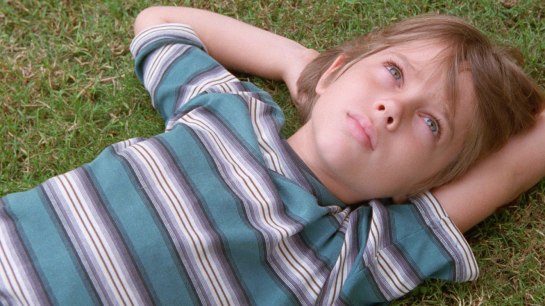
During last year’s Oscar season it became somewhat fashionable for some to hate “Boyhood”. Some even called it “Oscar bait”. Obviously these people don’t know Richard Linklater. He doesn’t make bait movies and “Boyhood” is far from it. It’s a deep look at growing up that stays away from the big and obvious life moments. Instead it looks at the things which shaped its central character. At the end of the film it gave me a greater appreciation for my son and encouraged me to be a better influence.
#9 – “The Artist” (2011)
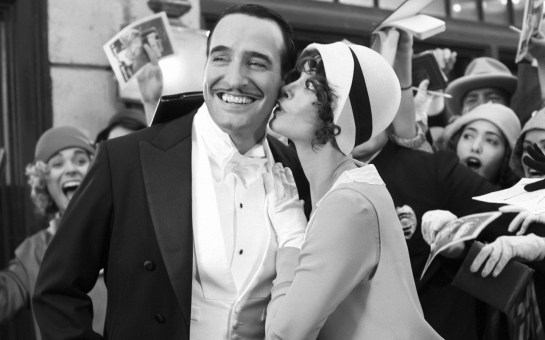
Yet another film many dismissed as Oscar bait. I think that is a ridiculous perspective. I love “The Artist” and its unashamed appreciation for the silent film era. The movie features so many stunningly accurate details and Jean Dujardin deserved his Best Actor Oscar. Everything from his expressions to his look seems pulled from that era and his chemistry with Bérénice Bejo shows in every scene they share.
#8 – “Mad Max: Fury Road” (2015)
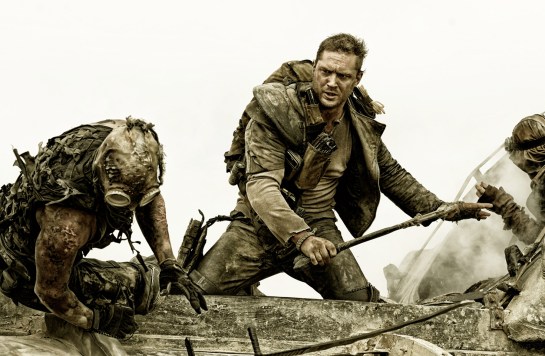
One of the most glorious visual experiences I have had came from George Miller’s return to the wasteland. “Mad Max: Fury Road” is an incredible accomplishment within the action genre. It’s a carnival of vehicular carnage but at the same time the film goes to great lengths to be more than a macho movie. Women play a big role in the story which few people expected.
#7 – “Interstellar” (2014)
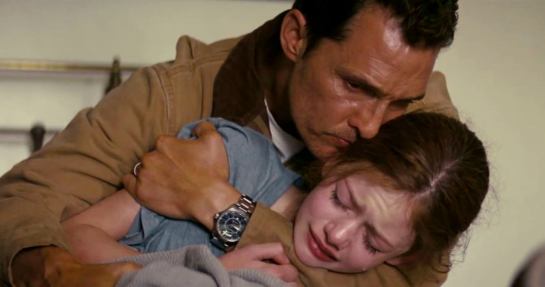
Christopher Nolan brings originality to every project he takes on. This particular movie reaches out in several interesting directions and explores several mind-bending ideas. There is a deep family element at the film’s center, but it also tips its hat to classic science fiction cinema. Some didn’t go for Nolan’s deliberate presentation. I found it fascinating.
#6 – “Spotlight” (2015)
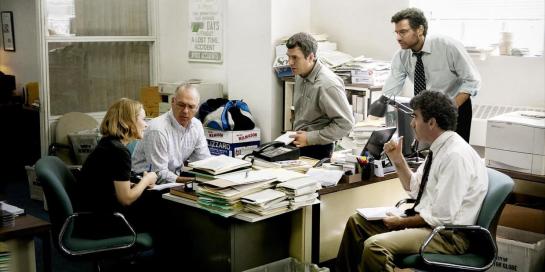
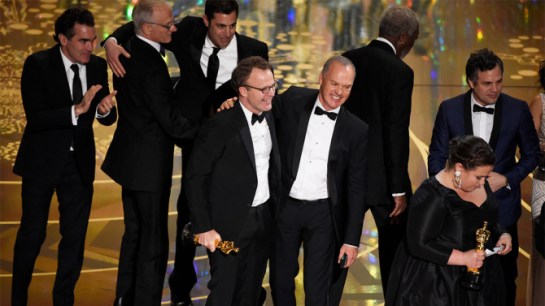
This is lofty praise but I think “Spotlight” is the best film about journalism ever made. It is ensemble work at its finest and the procedural aspect of it fascinates me. The story looks at an incredible important topic, but it never uses its subject for cheap emotional reaction. It presents its case and highlights the true story of a newspaper’s discovery. Brilliant film from top to bottom.
#5 – “The Tree of Life” (2011)
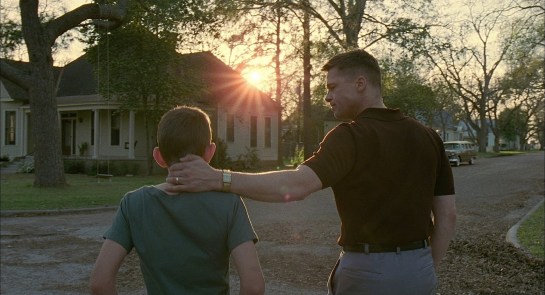
When Terrence Malick released “The Tree of Life” in 2011 the responses were all over the place. There is no denying it is a unique film that doesn’t follow any routine formula. For me it was a hypnotic and emotional experience that I found challenging and rewarding. Sorting through the film’s message isn’t easy, but I was blown away by what it meant to me personally. It is a beautiful and lyrical film both narratively and visually.
#4 – “Amour” (2012)
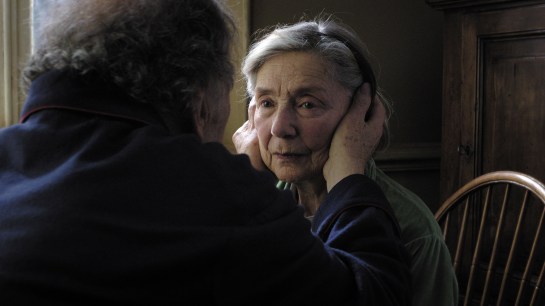
Michael Haneke is often slammed for making movies that punish his characters and his audience. Some said the same about “Amour”. I view this film from a completely different perspective. This is a film about love, true genuine love. Love isn’t easy and it certainly isn’t always pretty. It is difficult. It is sacrificial. Haneke shows a side of love that we never get in movies. It is extremely tough to sit through, but my appreciation for what he shows us is huge.
#3 – “Gravity” (2013)
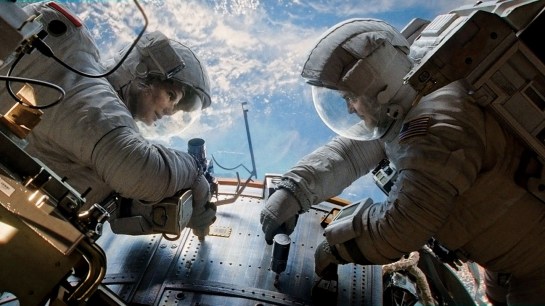
When talking about “Mad Max: Fury Road” I mentioned the incredible visual experience I had. The same could be said for “Gravity”. Alfonso Cuarón’s semi-science fiction movie offers up some of the most extraordinary visual effects I’ve ever seen on the big screen. But while others had problems with the thin plot, I found the story of self-discovery and rebirth to be powerful and satisfying. I recently rewatched “Gravity” and it still has a strong effect on me.
#2 – “Midnight in Paris” (2011)
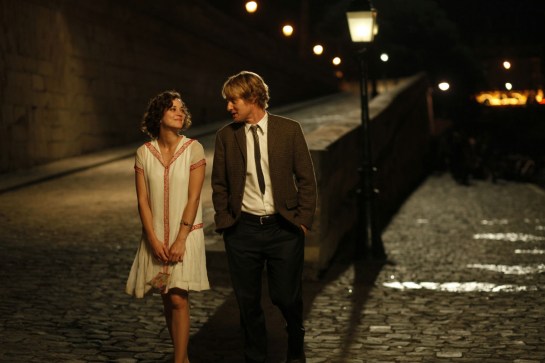
Woody Allen is such a hit-or-miss filmmaker (mostly miss for my tastes), but he knocked it out of the park with the magical “Midnight in Paris”. So much could be said as to why this film works so well. The humor is whip smart. The city of Paris is perfectly utilized through the brilliant cinematography. Owen Wilson surprises with his fantastic performance. The supporting cast is top-notch. It’s some of Allen’s best writing to date. “Midnight in Paris” is essentially flawless in my opinion from its gorgeous opening montage to the perfect final scene.
#1 – “Inception” (2010)
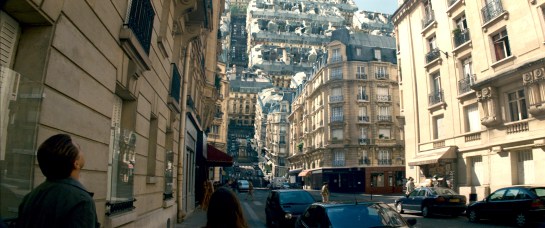
It’s an impossible task but for me the best movie of the decade so far is Christoper Nolan’s dream thriller “Inception”. Anchored by one of the most original scripts, “Inception” captivates as it twists and turns through layers of dreams and emotional baggage. The cast is superb – DiCaprio, Hardy, Cotillard, Gordon-Levitt, Caine, Page, Murphy, Berenger, Watanabe. Hans Zimmer’s score is amazing and the special effects give us some of Nolan’s greatest visuals. “Inception” may not be for everyone, but I see it as a true modern masterpiece.
That wraps up this attempt at listing the 50 best films of the decade so far. What say you? Agree or disagree with by top ten? Please sound off in the comments section below. I would love to hear from you.














 Oh how I love Wes Anderson movies. When you watch one there is no denying he is the man behind what you’re seeing. “Moonrise Kingdom” is a true gem in a filmography filled with gems. So many of Anderson’s favorites fill out the wonderful cast and the humor is the perfect measure of silly and quirky. And as with every Anderson picture there is a beautiful, warm heart at the center.