The 50 Best Films of the Decade (So Far) #50 – #41

50 Best

The decade is a little over half way gone so I thought it would be fun to look back at the first five years and see what movies have stood out the most. It is also a good chance to see how the films stand up against each other as well as how they have stood up with the passing of time. Today we are starting off with #50 – #41. Let’s get going…

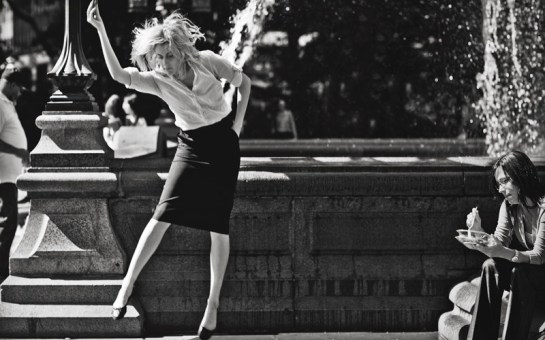
#50 – “Frances Ha” (2013)
FRANCES

The one film that perfectly encapsulates all that makes a Noah Baumbach movie special can be found in “Frances Ha”. Deliciously quirky and slyly intelligent, “Frances Ha” features Baumbach’s muse Greta Gerwig at her absolute best. Stylish black and white cinematography is an added treat.

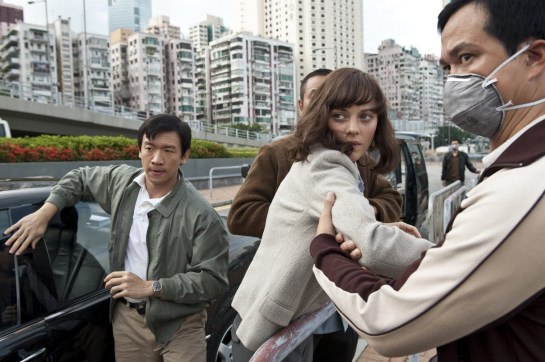
#49 – “Contagion” (2011)
CONTAGION

I’m a bit of a sucker for medical/virus thrillers and “Contagion” is one of my favorites. Dismissed by many as flimsy, I immediately was swept away by director Steven Soderbergh’s nervous, paranoid take on a worldwide viral outbreak. A great ensemble cast and truly intense pacing. “Contagion” is an underappreciated film.

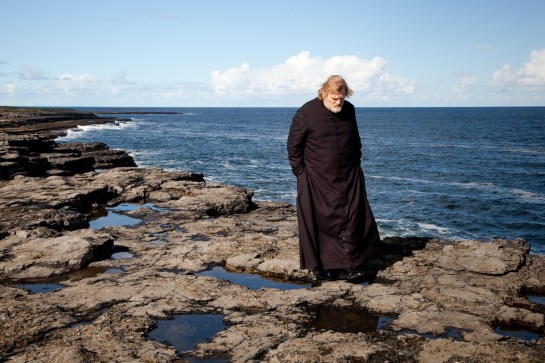
#48 – “Calvary” (2014)
CALVARY

There is such an intensity boiling under the surface of every single scene of “Calvary”. John Michael McDonagh writes and directs this story of a troubled priest (played perfectly by the always magnificent Brendan Gleeson) and the dark situation he finds himself in. A wonderful supporting cast flesh out an assortment of despicable characters at the core of this uncomfortable but hypnotic picture.

#47 – “127 Hours” (2010)

127 hours

The incredible true story of Aron Ralston was ripe for a movie adaptation but only with the right people involved. Danny Boyle and James Franco proved to be the right people. Franco gives a truly eye-opening performance and Boyle’s energetic visual style is a perfect fit. Also features a wonderful soundtrack.

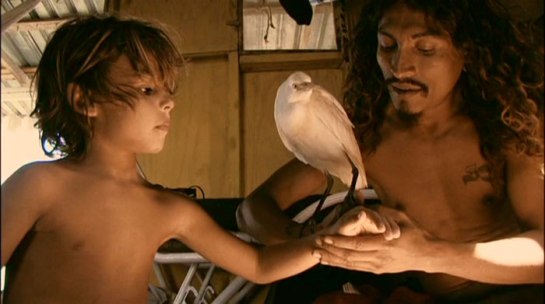
#46 – “Alamar” (2010)
ALAMAR

With its small 73 minute package, “Alamar (To the Sea)” says more about a father/son relationship than most ‘bigger’ films ever accomplish. That relationship mixed with the fascinating depiction of life on the Banco Chinchorro coral reef makes for a truly beautiful experience. “Alamar” didn’t get much attention but it still deserves an audience.

#45 – “The Avengers” (2012)
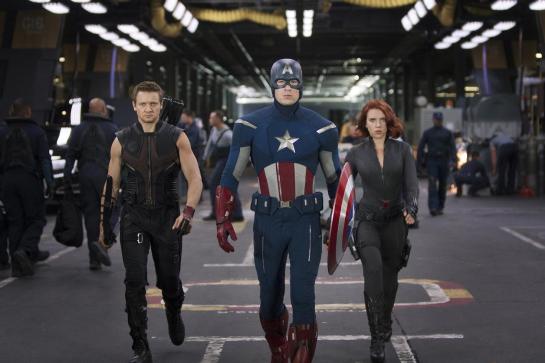
AVENGERS

Speaking of bigger movies, there were so many ways “The Avengers” could have failed. It was the project that the entire Marvel Cinematic Universe was heading towards. With so many links to other films and so many characters to juggle, this could have been a disaster. Instead Joss Whedon created an incredibly fun superhero concoction that was better than most people ever expected.

#44 – “The Kid with a Bike” (2012)
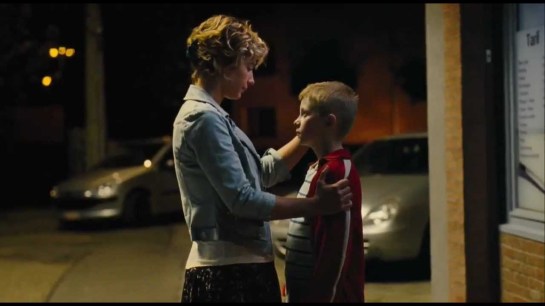
KID BIKE

Jean-Pierre and Luc Dardenne have established themselves as naturalistic filmmakers who examine the human experience from the most honest of perspectives. “The Kid with a Bike” is a brilliant example. It’s a story of a troubled 12-year old boy who is let down by the most important people in his life. But grace comes from an unexpected source. It’s a heartbreaking yet beautiful drama.

#43 – “Phoenix” (2015)
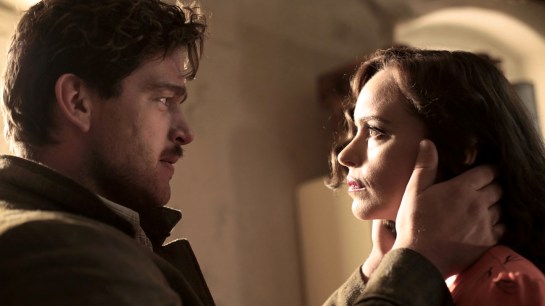
PHOENIX

While watching “Phoenix” you can’t help but notice the absurdity of what you’re seeing. Yet at the same time the story is so keenly written and heart-shattering that you can’t help but invest in it. This stinging German drama features three characters brought to life through three superb performances. And then there is the crushing ending – one of the most powerful I have seen in years.

#42 – “Skyfall” (2012)
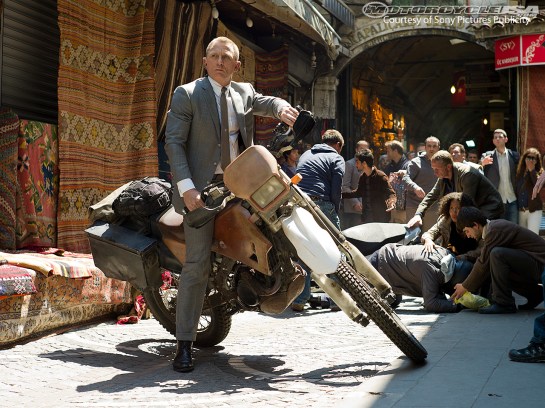
SKYFALL

Daniel Craig brought me into the James Bond franchise. 007’s adventures became important to me starting with “Casino Royale”, but “Skyfall” may be his very best so far. Everything about it hit its mark. Great action, fun villain, and a delightful use of its many entertaining side characters. This was Bond done right.

#41 – “Beasts of No Nation” (2015)

BEASTS

Great movies aren’t always easy to watch especially when dealing with disturbing subject matter. Such is the case with Cary Fukunaga’s intense “Beasts of No Nation”. It is a sometimes brutal exploration of child soldiering that visualizes it through the eyes of a young boy. Idris Elba gives the best performance of his career and young Abraham Attah is something to behold.

That’s it for now. Follow along and look for #40-#31 tomorrow. And be sure to share your thoughts in the comments section below.
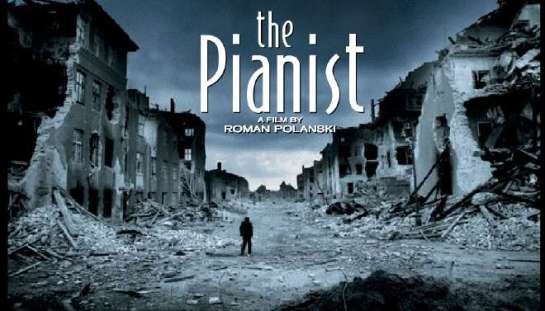
REVIEW: “The Pianist”

PIANIST poster

One of the things that fascinates me about “The Pianist” is how deeply connected it is to the true life experiences of its director. Roman Polanski has had a colorful life – one which has been severely tarnished by some deplorable behavior. But his childhood is an incredible story of horror, loss, and survival. Polanski and his family were crammed into the Kraków Ghetto along with 15,000 other Jews during the Nazi’s ‘purification’ of Poland.

As a young boy he watched as his father was marched away to a Nazi work camp. His mother was shipped to Auschwitz where she was among the 1.1 million Jews murdered there. Young Polanski managed to escape the Ghetto and survived by living in a barn until the war ended. He would be reunited with his father, but the scars left from the Holocaust would never leave and they heavily influenced much of what we see in “The Pianist”.

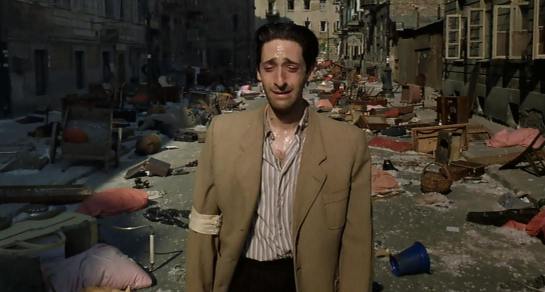
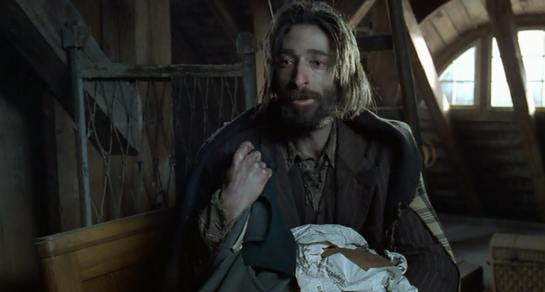
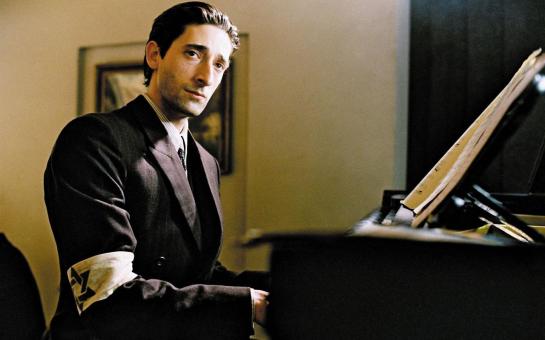
The film is directly based on the autobiography of Polish-Jewish pianist Wladyslaw Szpilman. Like Polanski, Szpilman was seperated from his family during the Nazi occupation and found himself desperately struggling to survive. Adrien Brody plays Szpilman and gives a truly revelatory performance that garnered critical praise and earned him an Academy Award. He is in nearly every frame and the depth and range of emotion he manages to convey is staggering.

Pianist1

We first meet Wladyslaw Szpilman in 1939 where he plays piano for a Warsaw radio station. He is there when the Nazis invade and eventually takeover Warsaw. Like many at the time, Wladyslaw and his family at first underestimate the gravity of what has happened, but as the Nazi grip tightens the reality becomes clear. Jews are stripped of their jobs and forced from their homes into the overcrowded Warsaw Ghetto. Thousands of Jews die of starvation, disease, and from all sorts of Nazi brutality.

The Szpilman’s try to find normalcy among the hardships but things only get worse. They are among the thousands of Jew rounded up to be sent to the Treblinka extermination camp. An unexpected act finds Wladyslaw seperated from his family and on his own. The story becomes about survival against the grossest inhumanity.  But at the same time Polanski and writer Ronald Harwood go to great lengths to show actual humanity in many unexpected forms.

Pianist2

One of the most a compelling characteristics of Wladyslaw is that he is no hero. He is no soldier filled with courage and fight. It shines so brightly through Brody’s performance. The frailty and desperation of his character is seen clearer through each new stage of adversity he faces. But even more we see it through his means of survival. There is nothing within Wladyslaw, aside from his will to live, that keeps him alive. Instead it is the dangerous and sacrificial acts of people he meets that helps him along. Every step of the way Wladyslaw’s survival hinges on the compassion and heroism of others. It is an important story thread and the only true glimmers of light in an otherwise dark story.

Everything about “The Pianist” sets it apart as a substantial work and not enough can be said about Polanski’s obvious passion for his subject. Consider the stunning work of his cinematographer Pawel Edelman. He never wastes a scene and many are cleverly shot from Wladyslaw’s perspective. Others wonderfully emphasize the film’s brilliant production design. For Polanski accurately recreating the city was a priority as was putting a  special emphasis on detail. Whether it’s in the small space of an apartment or the broader images of a devastated city. The keen detail stands out.

PIANIST3

Polanski’s own experiences allow him to bring a steady seriousness, sincerity, and reverence to “The Pianist”. His vision isn’t hazed by lack of knowledge or understanding. But at the same time he sticks closely to the true story of Wladyslaw Szpilman. Even the ending (which some have called contrived) lines up with Szpilman’s experience. Those two components, along with Brody’s unforgettable performance, play a big part in my reaction to “The Pianist”. I see it as a master work on humanity vs. inhumanity, on the resilience and mercy of art, and on the personal horrors brought on by one of the world’s darkest events.

Some critics have complained that “The Pianist” isn’t “Schindler’s List”. Some seemed to want weightier emotion. Some complained that it does a disservice to the larger number of persecuted Jews due to its narrow focus on one man. I can’t line up with any of those criticisms. For me Polanski’s vision is honest, unflinching, and strips away any sentimentality. While it remains hard to embrace Polanski as a man, “The Pianist” makes it easier to embrace him as an artist.

VERDICT – 5 STARS

5 STARSs

5STAR K&M

REVIEW: “Hiroshima Mon Amour” 

Hiroshima2

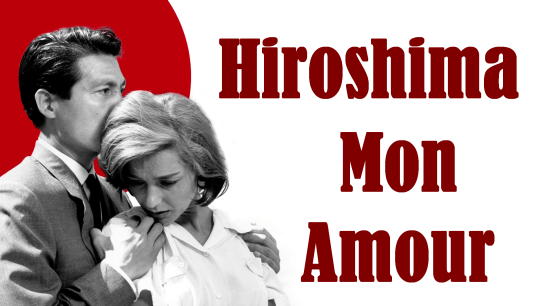
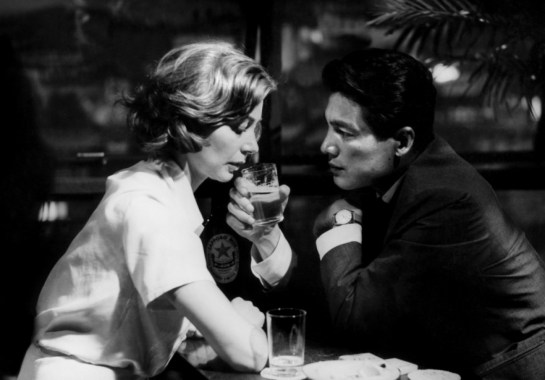
There is an almost disorienting effect to the first fifteen minutes or so of Alain Resnais’ “Hiroshima Mon Amour”. A man and a women, their faces obscured by Resnais’ focus on their deep embrace, share an intimate moment while their skin is covered by dust and ash. The romantic but disturbingly metaphoric shot is intermittently broken up by troubling newsreel footage showing the effects of the nuclear bomb on Hiroshima, particularly to its people. A coded, hypnotic back-and-forth between the man and woman speak poetically of memory and denial.

This opening, like the film itself, has been pondered and studied since the movie opened in 1959. It was Resnais’ debut feature and is considered a pivotal film in the French New Wave. Resnais was lauded by his contemporaries for his unique approach highlighted by his gutsy subject matter and nonlinear storytelling. Marguerite Duras was instrumental. She wrote the screenplay and would earn an Academy Award nomination for her work.

HIRO1

The story basically revolves around a continued conversation broken up over a 36 hour span in Hiroshima and takes place twelve years after the war. A French actress filming a movie about peace has an overnight fling with a Japanese architect. Known only to us as He and She, The two have lives deeply influenced by the bombing of Hiroshima. His is more literal while hers is metaphorical. They embark on an extended conversation that unveils deep scars from the past and desperation and uncertainty of the future.

To divulge any more details about the plot would be doing a disservice to how Resnais and Duras intend for their story to unfold. You could call it an emotional contemplation but it turns from that and becomes a fascinating character examination. Memories are shown through quick fragmented flashbacks – a clever device which represents the resurfacing of suppressed pieces of information. And the nonlinear approach challenges us to piece together the bits of personal history we are fed.

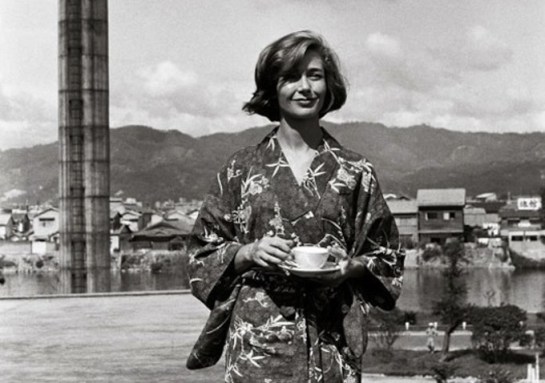
The true centerpiece of the experience is Emmanuelle Riva. You may remember her from her Oscar nominated performance in Michael Haneke’s “Amour”. Riva immediately becomes a mesmerizing figure. Each movement and expression down to the most precise nuance hint at her character’s burdened soul. Even smiles feel like carefully constructed facades. Riva channels a genuine melancholy that intensifies with each new bit of information. She sells it as coming from a place considerably deeper than the “dubious morals” she speaks of at one point in the film.

HIRO2

Resnais’ camera loves Riva and it concentrates on her abilities to tell us so much often without a word of dialogue. Eiji Okada plays ‘He’ who often serves as our eyes. Like us, his eyes are constantly watching this mysterious woman with fascination and curiosity. The relationship between the two struggles to find sure footing and Resnais emphasizes the point of the past intruding on the present. It’s an everpresent them throughout the entire picture.

“Hiroshima Mon Amour” became a highlight of Left Bank filmmaking and a showcase of the French New Wave’s bold creative direction. It’s interesting to note that Alain Resnais initially set out to make a documentary and that original vision influences the early parts of the film. But from there it blossoms into a poignant character drama that presents its story by its own unique set of rules. It can be perplexing out of the gate, but once you are in tune with what Resnais is doing it becomes a mesmerizing cinematic experience.

VERDICT – 4.5 STARS

4.5 STARS

REVIEW: “Burnt”

BURNT poster

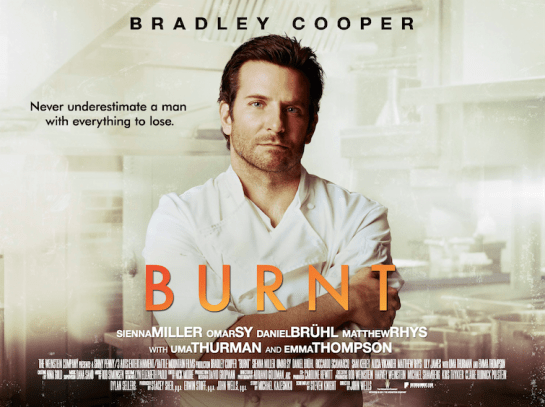
The Food Network, The Cooking Channel, Iron Chef, Chopped and so many other entertainment delicacies have made cooking mainstream and cool. It only follows that a movie dealing with modern culinary sensibilities would have to be hip and sexy. And of course that would require casting Bradley Cooper as not only the best chef on the planet but also the coolest, right? Well wouldn’t you know that is exactly what we get in the fashionable food feature “Burnt”.

To be fair Bradley Cooper isn’t what is wrong with “Burnt”. There are moments where he will undoubtedly have you questioning his casting, but as a whole he manages fine. The trouble is “Burnt” struggles to have a single unique idea of its own. On the broadest level there is an intriguing story here, but the guts of the plot feature a predictable storyline and one overused cliché after another.

BURNT1

Bradley plays an immensely talented but self-destructive chef named Alan Jones. He once worked for one of the finest restaurants in Paris, but his misbehavior not only brought down the restaurant but his fellow chefs and mentor as well. After a self-imposed penance in New Orleans, Alan heads to London to get back on the proverbial horse again. His ultimate goal is to reestablish himself as a top chef and go for his elusive third Michelin star. To do that will require him to mend some old relationships and repair several burned bridges.

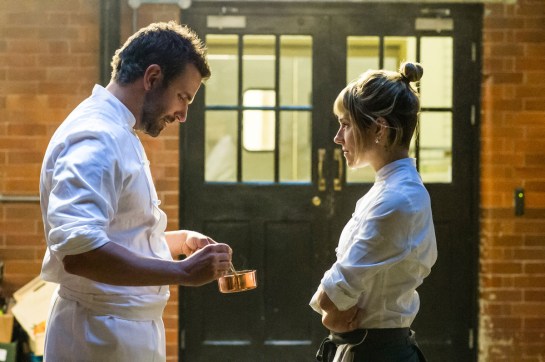
The bulk of the film takes place in London where Alan seeks out an old colleague Tony (Daniel Brühl) who was burned by Alan’s antics in Paris. Tony now runs his father’s luxury hotel and reluctantly gives Alan the keys to his restaurant. Alan encourages a couple of old Paris kitchenmates (played by Omar Sy and Riccardo Scamarcio) to come work for him as well as a rival restaurant’s chef Helene (Sienna Miller). She finds Alan repulsive but she needs the money.

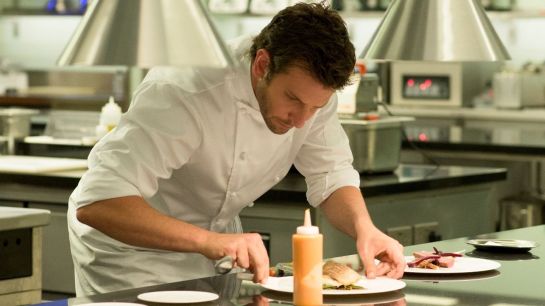
Director John Wells works hard to make the kitchen a stylishly cool place. The cooking scenes are frantically shot with constant quick cuts to buttered pans, simmering sauces, crashing dishes, and Gordon Ramsay patterned tantrums. I couldn’t quite buy into some of it but the cooking scenes are definitely strengths. It’s when the movie ventures outside of the kitchen that the flaws become obvious.

BURNT2

“Burnt” throws several supporting characters at us and puts some very talented people behind them. Unfortunately none of them are given enough to do. Aside from Cooper, it’s Brühl and Miller who get the most attention, but it feels as if huge chunks of their stories are missing. Essentially they and every other supporting character serve as plot plugs for the main character’s story. I can’t help but think that some good dramatic potential was wasted.

Despite all of the beautiful cuisine and energetic kitchen chaos, “Burnt” is simply a half-baked redemption tale. While Bradley Cooper isn’t thoroughly convincing as one of the world’s top chefs, his performance is steady and satisfying. The same could be said for the supporting performances. But all of them are let down by a weightless and conventional story that has its moments. Just not enough original ones to set it apart as something unique.

VERDICT – 2.5 STARS

2.5 stars


REVIEW: “The Walk”

WALK POSTER

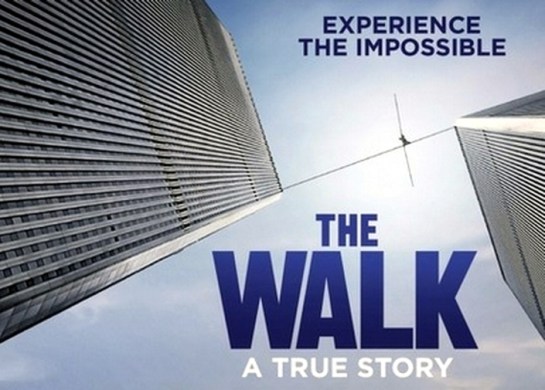
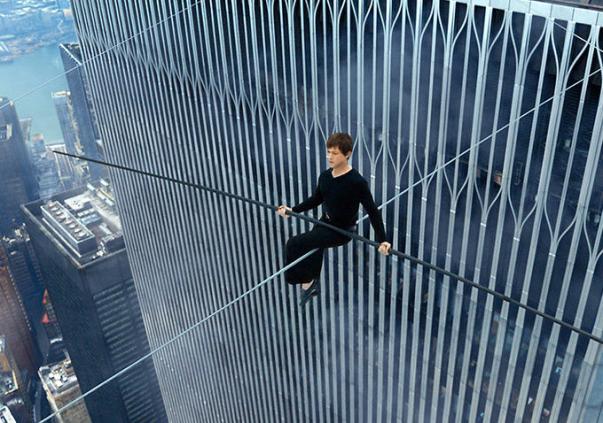
In 2008 a fascinating documentary called “Man on Wire” told the story of French tightrope artist Philippe Petit and his 1974 high-wire walk between the Twin Towers of New York City’s World Trade Center. Petit’s dream walk required an elaborate covert operation to both setup and perform the act. He extended his steel cable from the roof of one tower to the other – 138 feet across and a quarter mile above the ground. He then performed for an astonishing 45 minutes, crossing over eight times, all with no safety harness.

The documentary was based on Petit’s autobiography “To Reach the Clouds”. “The Walk” is taken from the same book but put in a more dramatic form. Robert Zemeckis directs and co-writes this unusual biopic that presents itself as a documentary with flashbacks. Joseph Gordon-Levitt’s boyish charms make him a good fit to play Petit. We spend time with him as a struggling teenage street performer and then later as an ambitious twentysomething staging a death-defying feat.

WALK 1

Zemeckis and co-writer Christopher Browne structure their film almost like a testimonial and motivational speech. Gordon-Levitt’s Petit is basically telling us his story while standing on the torch of the Statue of Liberty with the New York City skyline nestled in the background. Stylistically, it’s an odd choice.

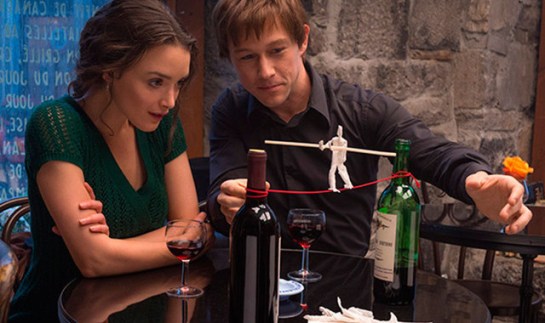
The film spends a lot of time on Petit’s early struggles in Paris. Some of the backstory is interesting such as his prickly relationship with circus leader and future mentor Papa Rudy (Ben Kingsley) as well as his initial efforts to become a high-wire artist. There is also a romance between Petit and a street musician named Annie (Charlotte Le Bon). It’s a bit undercooked, but Gordon-Levitt and Le Bon sell it thanks to a charming chemistry. Other bits of backstory don’t work as well. For example a soured relationship between Petit and his Army pilot father is shoehorned in and is terribly underdeveloped.

Once the story shifts to New York City it takes on a heist film vibe. Petit begins planning his “coup” which requires a host of accomplices. The film spends a fair amount of time putting the group together but few of these people are given much meaningful to do. James Badge Dale, armed with charisma and one funky hairdo, is the most fun of lot. They all work together to set up every detail of the wild and elaborate plan.

WALK2

Through all of the character history and careful planning the narrative sometimes sputters in its attempt to maintain a crisp pacing. But once it comes time for the big act “The Walk” is every bit as high-tension and breathtaking as you would expect. I didn’t see the film in big screen 3D or IMAX yet I still felt the amazement, lightheadedness, and nervous energy brought on by the film’s special effects wizardry.

Gordon-Levitt’s performance is pretty remarkable too. Not only did he learn tightrope walking from Philippe Petit himself, he also learned the French language and tirelessly worked on his accent with teachers and several French cast members. He’s incredibly committed and becomes the head salesman in this story of following your dreams no matter how impossible they may seem. There are lulls that hurt that message, but the film’s grand visual finale is an eye-popping treat.

VERDICT – 3 STARS

3 Stars


5 Phenomenal Hitchcock Scenes (that aren’t from “Psycho”)

PHENOM 5

Alfred Hitchcock was a cinematic master. We can all agree on that. Look back on his incredible filmography and you’re sure to find a number of classic films and unforgettable scenes. That’s what today’s Phenomenal 5 is examining – great Hitchcock scenes. Now when starting this talk there is one that will automatically come to everyone’s mind – the shower scene from “Psycho”. For that reason I’m leaving it off. There are still so many superb scenes to choose from so I wouldn’t call this the definitive list. But there is no denying these five Hitchcock scenes are certainly phenomenal. Oh, and be warned, since these are scenes within the movies there are POTENTIAL SPOILERS.

#5 – The Gas Station Scene – “The Birds”

You could probably pick out five or six scenes from Hitchcock’s 1963 horror thriller “The Birds” and each would deserve a spot on this list. I’m going to stay away from a couple of obvious choices and go with the spectacular gas station scene. Let me just put it this way, birds attack gas station, gas pours out of nozzle, man lights match near gas, BOOM!

#4 – The Murder? – “Dial M for Murder”

Why would anyone want to murder Grace Kelly – the beautiful, elegant, entrancing Grace Kelly? Ray Milland wanted to in Hitch’s 1954 crime thriller “Dial M for Murder”. There are so many dramatic threads that lead to this incredible murder scene. Hitchcock’s camera and Rudi Fehr’s strategic editing makes it one of the director’s most intense and satisfying sequences.

#3 – Intersection & Cropduster – “North By Northwest”

This particular scene from 1959’s “North By Northwest” could be broken down into two different but equally glorious parts. The first features Cary Grant alone at an isolated crossroads with farmland all around. The mystery behind the scene is enhanced by Hitchcock’s superb camera work. But then it transitions into one of Hitch’s most famous scenes – the cropduster attack. It’s equally brilliant.

#2 – The Carousel – “Strangers on a Train”

Hitchcock’s 1951 psychological thriller “Strangers on a Train” is a testament to the filmmaker’s incredible talent at creating tension and carrying it through his entire film. In this particular case it all comes to a head when our two main characters have a showdown on (of all things) a merry-go-round. The scene offers one of Hitchcock’s most visually thrilling moments.

#1 – Thorwald Returns – “Rear Window”

Here we are again, talking about great tension and Grace Kelly in trouble. Such is the case in this superb scene from 1954’s “Rear Window”, my favorite of Hitchcock’s films. You know it’s not going to go well the very moment Kelly breaks into the mysterious Mr. Thorwald’s apartment. A wheelchair bound Jimmy Stewart can only watch from his apartment window as Thorwald returns to find Kelly snooping where she doesn’t belong. And that glance Raymond Burr gives. Priceless.

So there are my choices for the best Hitchcock scenes that didn’t come from “Psycho”. See any you disagree with? How about ones that would have made your list? Be sure to share your thoughts in the comments section below.