YOUR VOICES: On the most disappointing film of 2014 (so far)

your-voices

Your Voices is a simple concept created to encourage conversation and opinions between movie lovers. It works like this: I throw out a certain topic and I’ll take time to make my case or share my opinions. Then it’s time for Your Voices. Head to the comments section and let fellow readers and moviegoers know your thoughts on the topic for that day!

Each year has its share of surprising movies, but it also brings disappointments. That’s what we are talking about today. When thinking on this topic a couple of movies instantly came to mind. Wes Anderson’s “The Grand Budapest Hotel” had many good things about it, but ultimately it fell short of Anderson’s better pictures. But I began to wonder if my reaction was heavily influenced on my expectations and deep love for the filmmaker’s other work. Therefore it’s not a film that should headline this discussion.

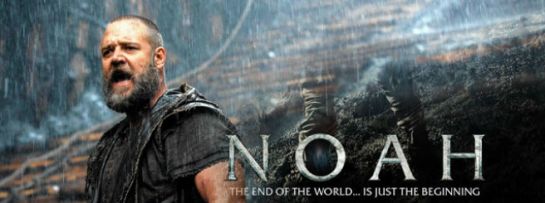
NOAH POSTER

Darren Aronofsky’s “Noah” is a different story. I was very hesitant about this film from the start because I never felt Aronofsky and this material went together. For me that proved to be true. Aronofsky’s agenda wasn’t to tell the biblical story that many people hold dear but to create a weird redefinition of the story and the characters involved. I guess it shouldn’t be a surprise considering the director’s perspectives and style of filmmaking. Still I found the approach to be a disappointment.

Even worse I didn’t expect the movie to be so clunky and at times downright dopey and ridiculous. There are moments in the film that are so absurd and holes in the story that no amount of style can cover. Perhaps Aronofsky doesn’t deserve all of the heat. A big part of the blame can go to the poorly conceived script which is at times mind-boggling bad. It’s really a shame because it wastes a great lead performance from Russell Crowe and leaves behind a ton of wasted potential. I wanted a lot more from this film and was really disappointed in it, but this isn’t all about me. Now it’s time for you to sound off.

YOUR VOICES: What is your biggest movie disappointment of 2014 (so far)?

Now it’s time for Your Voices. With so many 2014 movies to consider, which one did you find to be the biggest letdown? Please share Your Voices on today’s question. I’d love to hear from you in the comments section below.

Ten of the Greatest Beards in the Movies

FAIL

Who doesn’t love sporting a cool beard? Well, aside from any female readers I may have. Beards have a pretty interesting history when it comes to movies. So for no rational reason other than entertainment value I thought it would be fun just to look at 10 movie beards that have stood out to me. And let me tell you, just sticking with 10 was a chore in itself. Anyway, here we go…

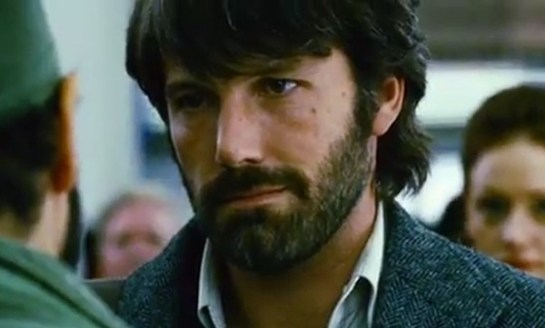
#10 – The Retro 1980 Beard (Tony Mendez – “Argo”)

ARGO

Ben Affleck’s Oscar winning “Argo” had a great opening, a great cast, and a great story. But it also features a Ben Affleck beard that hearkens back to the 1980’s. It is a bit jarring when you first see Ben in his mass of facial hair. But it actually fits well in the setting especially when combined with the bushy mop he is also sporting.

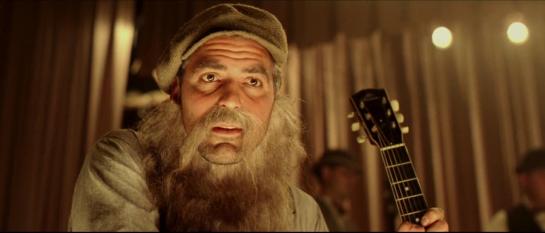
#9 – The Overtly Obvious Fake Beard (Everett – “O Brother, Where Art Thou?”)

O BROTHER

We have seen George Clooney in beards on multiple occasions but never in something that looked straight off of Duck Dynasty. Well that is what we get in the Coen Brothers deep south comedy “O Brother, Where Art Thou?”. Trying to hide your identity but also singing on a big public stage isn’t the smartest idea. Luckily Everett and his friends have the worse faux beards you’ll ever see.

#8 – The Sick, Twisted Evil Guy Beard (Calvin Candie – “Django Unchained”)

Calvin Candie

Leo DiCaprio has played a number of roles and many of them featured bits of facial scruff that had me wondering if he could even grow a full beard. Well he shut me up with his pointy bad boy beard in “Django Unchained”. His Calvin Candie is mean to the bone and a thoroughly detestable human being. But that beard he sports is unique even in a film full of bearded brethren.

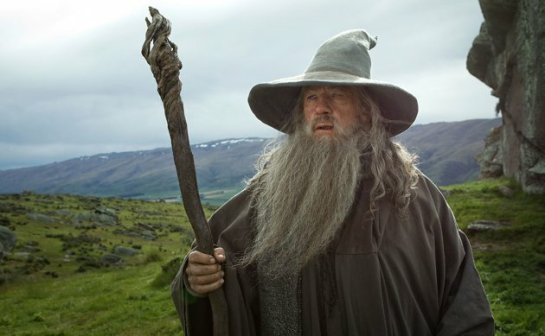
#7 – The Wise Old Wizard Beard (Gandolf – “The Lord of the Rings”)

Gandolf

I mean come on, when it comes to memorable movie beards how can you not include Gandolf and his massive mane? The Gray and white beard as sported by Ian McKellen is picture perfect as a wise old sage with a bit of magic on the side. It’s as much a part of the character as is his powers and who would ever want to see a clean cut Gandolf? Nope, not me.

#6 – The Surly Wild West Beard (Rooster Cogburn – “True Grit”)

GRIT

When the Coen Brothers decided to remake “True Grit” I thought it was an interesting choice for them. But so many of the components worked well including Jeff Bridges as the surly, cantankerous Rooster Gogburn. His unkept ratty beard actually had many similarities with the character himself. How many times does he scratch his beard during some scenes? It makes sense. I mean who knows when he washed it last?

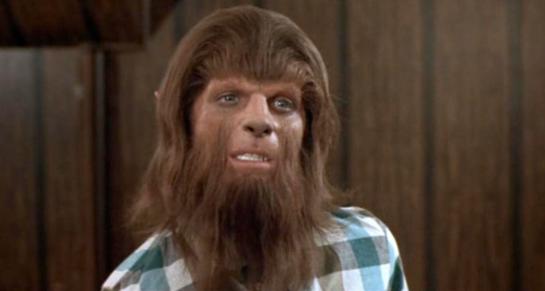
#5 – The ‘It’s Fur, Not a Beard’ Beard (Scott Howard – “Teen Wolf”)

Teen WOlf

When you think back on it “Teen Wolf” was one preposterous movie. But oddly enough and despite something inside of me telling me different, it’s an entertaining flick that feels right at home in the crazy 80’s. The story is obvious – an awkward young teen (Michael J. Fox) turns into a werewolf and becomes the social hit of his school. It starts with facial hair which we all know makes you more popular in school, right? Well for him it didn’t stop there.

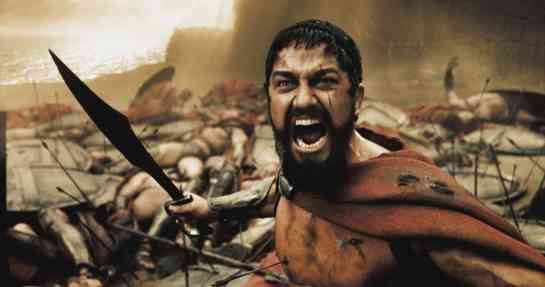
#4 – The Blood-Soaked Battlefield Beard (Leonidas – “300”)

300

Okay, whether you appreciated “300” or not you have to admit that those were some pretty tough Spartans. There is a violent and bloody artistry to the battle scenes in “300” as this group of outmanned Spartans battle an entire Persian army. But with a tough and powerful leader like Leonidas, armed with his chiseled six-pack abs and jet black warriors beard, even I (minus the six-pack and jet black beard) would run out and die in battle.

#3 – The Suave Euro Beard (Hans Gruber – “Die Hard”)

HANS

In all of movie history I don’t know if you’ll find a more suave and chic main villain than Hans Gruber. He is smart and calculated. He is thorough and precise. He has an appreciate for good food and fine suits. He sports well groomed hair and and an even better groomed beard that screams “in fashion”. It’s impossible not to be impressed with Hans even while he is shooting your boss, blowing up the building, and taking you hostage.

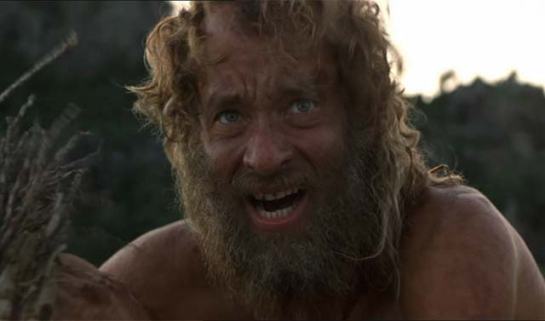
#2 – The Crazed Stranded on a Deserted Island Beard (Chuck Noland – “Cast Away”)

Cast Away

What a metamorphosis! In “Cast Away” Tom Hanks goes from well groomed and clean cut to looking like a wild man raised by a pack of wolves. But lets be honest, it is with good reason. I mean lets see how you would look after being stranded on a remote island for over four years with no razor or shaving cream. Regardless it is a beard that is unforgettable whether it’s because of its craziness or because it’s on Tom Hanks.

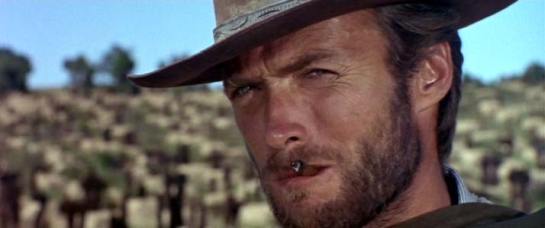
#1 – The ‘Because I’m Clint Flipping Eastwood’ Beard – (Blondie – “The Good, the Bad, and the Ugly”)

CLINT

Clint Eastwood is the man. I know that sounds silly, but Clint has been the quintessential movie tough guy for more than four decades. My first exposure to that gravely voice and patented Clint squint came in Sergio Leone’s “The Good, the Bad, and the Ugly”. The film is Clint Eastwood in a nutshell – tough as nails, quick with his sidearm, wearing a menacing serape, and of course that tough guy beard. He didn’t support it as much after the spaghetti westerns, but this tough guy look is how I first got to know him.

Remembering Lauren Bacall

BACALL BANNER

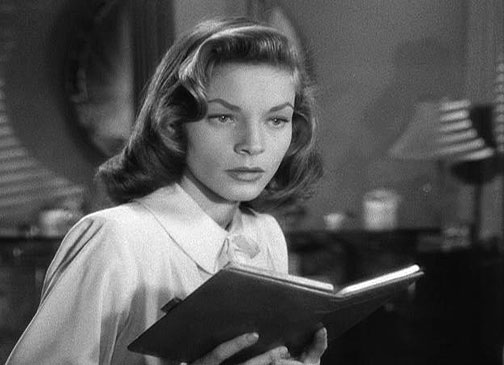
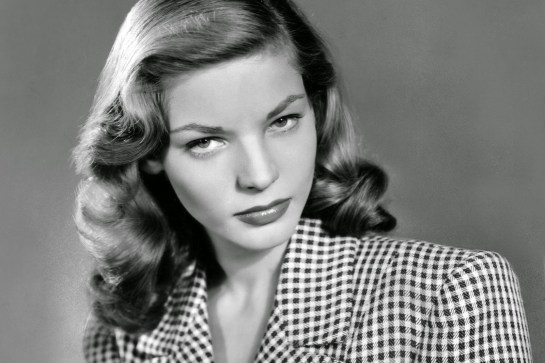
This week brought the passing of a true Golden Age treasure. Lauren Bacall died at age 89. As a humongous Humphrey Bogart fan, the passing of Lauren Bacall carries a deeper sting. The two become a huge Hollywood couple, but they were also a rare one actually built on and maintained by their strong love. They would stay married until Bogart’s death in 1957.

Bacall was born in the Bronx, New York and mostly raised by her mother. Her parents divorced when she was 5-years old and her father took off. As a teen she landed a few noticeable modeling jobs and earned a role on Broadway. But it was filmmaker Howard Hawks who would give her her big shot. He cast this relatively unknown opposite Humphrey Bogart in “To Have and Have Not”. The rest is history.

Bacall established herself as a sultry and sexy actress with a uniquely husky voice and a pair of eyes that would melt you. She would go on to make three more fantastic films with Bogart including “Key Largo”, “The Big Sleep”, and “Dark Passage”. Later she would work alongside such big names as Gregory Peck, Marilyn Monroe, Gary Cooper, Betty Grable, John Wayne, Kirk Douglas, Henry Fonda, and Paul Newman just to name a few.

Bacall’s movie career slowed down in the 60’s and 70’s but she still found the occasional standout role. She would earn her first Oscar nomination in 1997 for “The Mirror has Two Faces”. She would eventually lose the statue in what was considered by many to be a shocking upset. The Academy would later recognize her with their lifetime achievement award. It was most deserving. Bacall was a sizzling screen actress who made her impact with the big stars while only 20-years old. She went on to have a wonderful career giving us so many films we can look back on and enjoy. She not only captured Bogart’s heart, but the hearts of millions of cinema fans throughout the decades. We’ll miss you Betty!

BACALL TO HAVE

“To Have and Have Not”

BACALL BIG SLEEP

“The Big Sleep”

BACALL KEY LARGO

“Key Largo”

BACALL DARK PASSAGE

“Dark Passage”

BACALL2

BACALL1

Lauren Bacall

BACALL5

Bacall final

LAUREN BACALL (1924 -2014)

Movie Bloggers Roundtable

BANNER

The Movie Bloggers Roundtable is a feature where I join up with four esteemed movie bloggers and we share our thoughts on a certain subject. Everyone on the panel will share their thoughts and feelings on the topic of the day and then we share them with you. The panel may change from post to post and hopefully we will get a wide range and interesting mix of opinions and perspectives.

Today’s roundtable discussion is inspired by my pal Ruth over at FlixChatter (one of the absolute best movie blogs around). It’s a question that I found incredibly intriguing and it had me thinking on it for several days afterwards. It deals with the different decades and the movies that defined them. Joining me for this roundtable is Zoe from The Sporadic Chronicles of a Beginner Blogger, Michael from It Rains…You Get Wet, Cindy from CindyBruchman.com, and Richard from Kirkham A Movie A Day. Now I can easily say that I LOVE THESE BLOGS and if you haven’t been frequenting their sites you should. So lets get to this week’s question:

What has been the greatest decade for movies?

Decades


Keith (Keith & the Movies)

I had this question in mind for a later date, but after reading Ruth’s post I just had to talk more about it. This is really difficult because every decade has had its own flavor and has contributed to the world of cinema in different ways. I have a personal affection for the 1980s mainly because those were my teen years and so many of those films nurtured my love for cinema. But was it the greatest decade for movies? I don’t know. I think arguments could be made for almost every decade. But after sloshing it around for a while my pick is the 1950s.

The 1950s were an interesting time for movies. We were beginning to see a genuine shift in how movies were being made and how stories were being told. At the same time the decade still held on to some of the things that made the 1940s so special. The 50s gave us big screen debuts from all-time great performers like Paul Newman, Marlon Brando, and Audrey Hepburn. It gave us Hitchcock’s best including “Rear WIndow” and “Vertigo”, Kurosawa’s masterpiece “The Seven Samurai”, arguably the best musical ever made “Singin’ in the Rain”, and I could go on and on. The number of true cinema classics that found their genesis in the 1950s is astonishing.

More personally the 1950s also delivered some of my favorite movie trends. Science fiction and creature features were a staple throughout the decade with fun movies like “Them!”, “The Thing from Another World”, and “Godzilla” just to name a few. The late 50s also gave birth to the French New Wave, a movement that has influenced some of cinema’s greatest directors even today. Masters like Truffaut and Chabrol laid the foundation for the run of great New Wave classics that would come through the 60s. This just skims the surface of what made the 1950s great and it’s hard to find a decade any better.

Zoe (The Sporadic Chronicles of a Beginner Blogger)

So I have been thinking of the best decade for movies and I have to say, that after all the scratching, weighing up and contemplating that I have done, I am going to give it to 2000-2009. The sheer magic that was wrought in cinema during that time is simply staggering. There are amazing titles, some of the best performances of all time, and technology had so much advanced that it really made all the difference in the world. Granted, things like The Godfather, The Green Mile, Saving Private Ryan, the Indiana Jones movies, the original Star Wars trilogy, etc. came from other decades, but in terms on consistency the 2000s get it. Hands down.

There are titles to look at like The Lord of the Rings trilogy, the Bourne movies, some fantastic superhero flicks, great comedies, brilliant dramas, numerous team ups between Leonardo DiCaprio and Martin Scorsese, some solid animations (even though I am not a fan of the genre), more excellent Tarantino outings, impressive thrills from Christopher Nolan, even some relatively decent horrors, and some of the best Bond flicks of all time. In fact, each and every genre got some excellent titles to add to it. I am a fan of the 00 decade, I thought some exceptionally engaging films came forth from there. Not that it is without flaws, but overall I think that everything rounded out extremely well for the movies that were put forth from 2000-2009.

Michael (It Rains…You Get Wet)

Easily, it’s the 70s. A particular span of time that proved to be one of the most tumultuous for many in the latter half of the 20th century. A decade filled with economic downturns, disillusionment, and the realization that things really could get a Hell of a lot worst. And did. The timing for film couldn’t have been better, though. For all of its crises and missteps, corruption and loss of idealism, the Me Decade heralded some of the absolute best cinema this country had to offer for the period.

The uncertainty and controversy, which followed the waning years of the Vietnam War, aroused an atmosphere that prompted directors and producers to reflect so distinctly upon the eyes of movie audiences. Prompted seemingly from watershed moments, crossroads, and/or deflated dreams, nothing could hold the tide back. It shouldn’t surprise that the era’s off-beat and imaginative comedies, challenging dramatic themes, and the stellar crime films of the period have rarely been surpassed.

From the big and important films (The Godfather, Chinatown, Jaws, Star Wars) to the small and decidedly underestimated (Halloween, The Long Goodbye, The Driver, Sorcerer), this decade had it all…and in spades. Cast back on us via celluloid, in movie houses by filmmakers who’d tasted the same bitter tea the era had served up. Lastly, though the decade did not invent or even introduce the character of the anti-hero, that protagonist certainly came into its own during this distinct ten-year stretch.

Richard (Kirkham A Movie A Day)

So, the cynical side in me wants to believe that Keith selected me because of my clearly expressed view contained in my on-line moniker and Avatar. My ego wants to believe that I was asked because my writing on-line about movies from different time periods has been interesting enough to make it appear that I might make some insightful comments. The movie lover in my soul however knows that I’ve been asked to speak for the greatest decade in movies because of my passion. I cannot disappoint any of those selves or my friend Keith, the greatest decade of movies ever was the 1970s. If I were more knowledgeable about foreign language films, the 50s could have snuck in here or if I limited myself to the sheer quantity of great films than it might be the 30s. There are however a couple of different characteristics that I would use in defense of the 70s as the greatest decade.

I don’t think any other decade has the range of styles and subject matter that the seventies did. In 1970 “Airport” was a best picture nominee. It was a soap opera melodrama with a single unique idea, disaster, at it’s heart. Ten years later, “Apocalypse Now” was a best picture nominee and the distance traveled between those two styles of film is daunting. The studio film had given way to the movie brats of film school and their highly personalized view of cinema. In 1971 “Fiddler on the Roof” was a best picture nominee and it was as much “Tradition” as you can get. Back to 1979, and another musical is nominated for best picture, “All That Jazz”, which is a meta picture about a filmmaker, making a movie and a musical simultaneously and it is autobiographical. The mindsets between these bookend years could not be more different. In the center of the decade were films that made genre films acceptable mainstream fare; pictures like “The Exorcist”, “Star Wars” and “Superman”. The greatest film of the 1970s also changed how movies were exhibited, marketed, exploited and analyzed, “Jaws” changed everything. With the exception of the movie studios being divested of their theater chains, the box office returns and audience reaction to “Jaws” did more to change the movie business than the addition of sound. It also happens to be the greatest picture made since the 1930s.

I can’t imagine any decade could match the quantity of movies from the 1930s, after all the Dream Factory was cranking them out like cars on an assembly line. Pound for pound however, 1975 could match up against 1939 very well. The degree of autonomy that directors and writers had in the 1970s may never be seen again except in the new world of You Tube and VOD. Those are the places that movies like “Taxi Driver” or “The Conversation” would have to end up. Too many opinions from too many directions mean that more recent films will never be as raw. In the 70s, Science Fiction films could explore ideas without having to have gargantuan budgets. Off beat characters could be the focal point of a story, and everybody was OK with that. In later decades, if a character was unique in some way, that would be the marketing strategy. In the 70s, everybody just expected the characters to have character.

If you consider the firepower of 1970s films, no other decade comes close to the quality of movies made in a ten year period. Look at someones list of ten greatest movies of all time, I’d be surprised if a third of them did not come from that decade: The Godfather, Jaws, Star Wars, Rocky, Apocalypse Now, The Godfather Part II, Taxi Driver, Network, Close Encounters of the Third Kind, Alien, The Exorcist. If your list is specialized to a genre, Gangster Films, Cult Movies, Sports Films, Science Fiction, somewhere on those lists are at least two movies that were made in the 1970s, and for some lists it would be more than half. Stars still mattered in the seventies and the list of actors and actresses who made their biggest marks in the 70s is a long one. If this were a boxing match, in my view it would be like one of those Mike Tyson fights in the early part of his career, a knockout in the first or second round. The winner and undisputed heavyweight champion of movie decades, the 1970s.

Cindy (CindyBruchman.com)

It’s obvious to me that the 1990s were the best years in film. Drama defined the decade because of the contributions of Tom Hanks, Steven Spielberg, Robert DeNiro, Martin Scorsese, Quentin Tarantino, and the Coen Brothers.

Tom Hanks. He owned the decade. Sure, there were mediocre choices like That Thing You Do! in 1996 or in 1992, as Jimmy Dugan in A League of Their Own. He managed to put his personal stamp on the film with the memorable phrase, “There’s no crying in baseball!”
But consider this blockbuster list:
1990, Bonfire of the Vanities
1993, Philadelphia (Best Acting Oscar)
1993, Sleepless in Seattle
1994, Forrest Gump (Best Acting Oscar)
1995, Toy Story
1995, Apollo 13
1998, Saving Private Ryan
1999, The Green Mile
1999, Toy Story 2

Many would say Saving Private Ryan is THE best war film. His ability to represent the common man with simplistic charm reminiscent of the great Jimmy Stewart. Jimmy only won one Oscar in 1940 with The Philadelphia Story. Of course, Tom Hanks greeted the new century with strong performances but it was the 1990s where he became the legend his is today.

Steven Spielberg. His relationship with Tom Hanks in films has served them both well. Not only is Saving Private Ryan arguably the best war film which is a Spielberg masterpiece, Spielberg gets the credit for the best film ever made with Schindler’s List. That’s a subjective claim, but no one would disagree that Schindler’s List is one of the finest films in the history of film making. It happened in the 1990s. What else did Steven Spielberg put out that decade? Two personal favorites are Jurassic Park from 1993 and Amistad in 1998.

Speaking of directors and actors teaming up, how about Martin Scorsese and Robert DeNiro in the 1990s? The best gangster films combined with strong acting in DeNiro’s career:
Martin Scorsese Robert DeNiro
1990, Goodfellas 1990, Goodfellas
1991, Cape Fear 1991, Cape Fear
1993, The Age of Innocence 1993, This Boys Life
1995, Casino 1995, Heat 1997, Wag the Dog

Other explosive directors that created iconic drama in the 1990s were Quentin Tarantino and The Coen Brothers. Look what they did during the decade:
Quentin Tarantino Coen Brothers
1992, Reservoir Dogs 1990, Miller’s Crossing
1994, Pulp Fiction 1991, Barton Fink
1997, Jackie Brown 1996, Fargo
1998, The Big Lebowski
If you disagreed that Schindler’s List wasn’t the best film of the decade, then you probably think along with a million other critics that Pulp Fiction was the best film of the decade. If you are a Coen Brothers fan, then you probably are a cult follower of the Dude and drink White Russians as a token of homage. I know that’s when I was snookered with Jeff Bridges as an actor.
Finally, if the above reasons doesn’t convince you, here are more random films from the 1990s that I personally favor:
L.A. Confidential, Mission Impossible, Being John Malkovich, Rushmore,Contact, Sense and Sensibility, Elizabeth, Dogma, Last of the Mohicans, Dances with Wolves, Sling Blade, The Piano,
Star Trek: First Contact, and Run Lola Run.

Are you convinced now that the 1900s was the best decade in film-making history?

So what is the consensus?

70S

I want to thank Zoe, Michael, Richard, and Cindy for participating in this third Movie Bloggers Roundtable. You have heard our thoughts, now we want to hear yours. Do you like the feature? More importantly, which decade do you think is the best and why? There are a ton of good defenses for each. Please share your thoughts in the comments section below.
REVIEW: “The Immigrant”

IMMIGRANT POSTER

Whenever the topic of greatest working actress pops up Meryl Streep so often finds her name at the top of the list. I do belief Streep can be really good, but I believe a strong case could be made for Marion Cotillard. She is a sensational actress who has proven herself with every role she has tackled. She does it again in James Gray’s new film “The Immigrant”. This period drama was a very personal project for Gray. In an interview with Variety he said “It’s 80% based on the recollections from my grandparents, who came to the United States in 1923.” We see this personal connection running throughout the entire film.

The story starts in 1921 as Ewa (Cotillard) arrives at Ellis Island with her sister Magda (Angela Sarafyan). The two have left their home country of Poland, which has been ravaged by World War I, in hopes of starting new lives. But during the processing, Magda is quarantined for a suspected lung disease and Ewa is set to be deported due to some questionable immorality that took place on the boat to America. But she catches the eye of a man named Bruno (Joaquin Phoenix) who uses his money and influence with a particular guard to free Ewa and save her from deportation.

IMMIGRANT1

With no place to go, Ewa accepts Bruno’s offer to work for him in hopes that she can earn enough money to get her sister the medical care she needs. The problem is Bruno runs a ‘gentleman’s show’ and the women he employs are prostitutes. Bruno is charming and persuasive but he also exploits Ewa’s desperation. Ewa is torn between the moral consequences of her actions and her desire to help her sister. Things are complicated even more as Bruno develops an infatuation with her which brings with it jealousy, rage, and even violence.

The movie centers itself on its characters and the different plights of each. Ewa’s circumstances are obviously difficult and the dream of a new life seems practically unattainable. Bruno is often a despicable and detestable man, but at times we see glimpses of compassion. The reasons behind his occasional generosity is a puzzle. Is it due to a genuine love he has for Ewa or is it in the interest of making money? Jeremy Renner plays a struggling magician named Orlando. He is a cousin to Bruno but the two haven’t been close in years. He too is drawn to Ewa and he looks to be a more gentle and loving alternative. But even he shows glimpses of instability making us question who he really is inside.

These characters are magnetic of themselves but they are even richer due to the brilliant cast. Phoenix is always good and while this role doesn’t ask him to dive as deep into the character as some of his previous work, he still has moments where he just takes over a scene. Renner is also very good and he often offers some needed changes in tone which he has no problem handling. But the true standout is Marion Cotillard who once again completely immerses herself in a role. Watching her dissect her character and give her such strong emotional form is akin to watching a fine artist. It’s heavy material and Cotillard expresses it with an emotional precision that we rarely see. She also has a classic-styled radiance that fits this type of movie well and translates beautifully with the camera. Cotillard is brilliant and this is my favorite performance of the year so far.

DSC_1034.NEF

James Gray’s story is engaging and heartbreaking. His characters are interesting and compelling. But there is also a perfectly realized 1920s New York City that plays a major role in the film. Gray’s vision combined with Darius Khondji’s cinematography creates shades of the city which sometimes look bustling and vibrant but often times looks cold, harsh, and unwelcoming. It’s a portrait that walks hand-in-hand with the characters and their situations.

There are a few things in “The Immigrant” that could be picked apart and a case could be made that it has a few lulls. But for me the selling point here are these characters who I happened to latch onto instantly. It’s also a period film featuring a master class in acting by Marion Cotillard who I believe is one of our finest. She absolutely owns the screen and she leaves nothing behind. That alone makes “The Immigrant” worth seeing.

VERDICT – 4.5 STARS

Vacation Week is here…

VACATION1

It’s vacation week! It will be a slow week in terms of content on Keith & the Movies because I’m taking a few days off with the family. I’ve got a couple of things written up that I may post during the week, but if not I’ll be back next Monday. So have a great week. I know I will. Any time I have away with my family is a good time.